The Unkillable Beast: How Hearst Built a Media Empire on Ink, Blood, and Pure Audacity
Forget your 'succession' dramas – the real spectacle is the Hearst Corporation. From a single newspaper baron who practically invented fake news to a multi-billion-dollar media behemoth, this is the story of how one family carved out an empire, navigated seismic shifts, and kept the presses (and the profits) rolling for over a century. Prepare for a wild ride through ambition, scandal, and the sheer, unadulterated power of media.
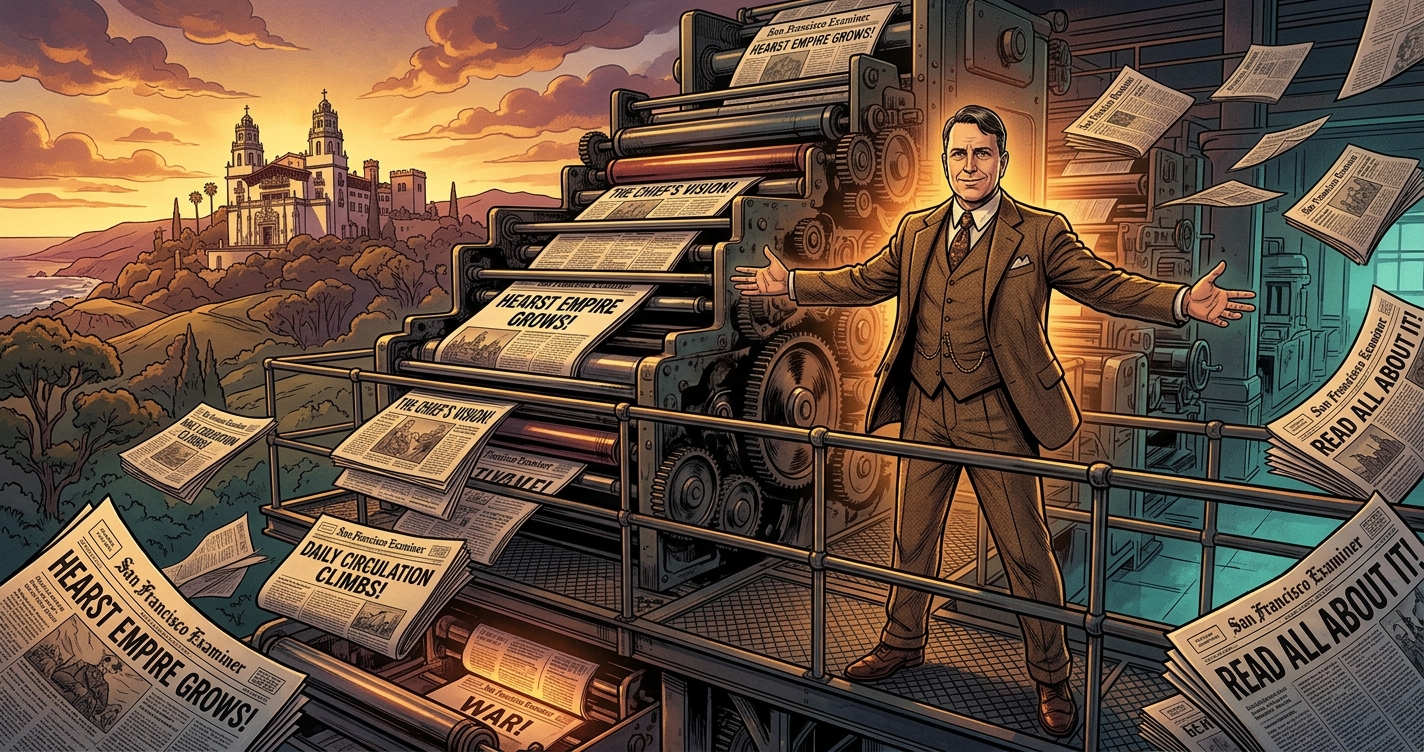
View all stories about this mogul
🔥 Chapter 1: The Golden Spoon and the Pulp King’s Insatiable Hunger
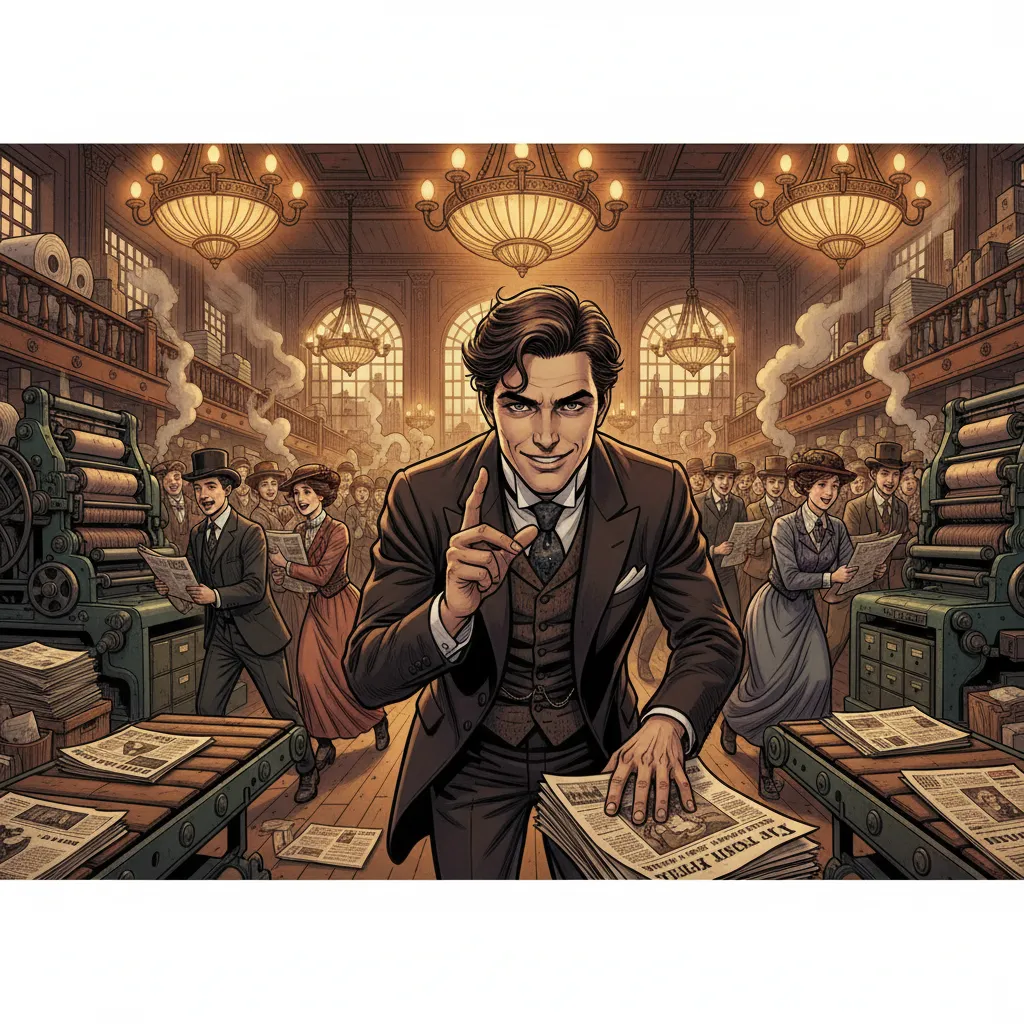
Alright, lean in. Forget everything you think you know about media empires built by quiet, calculating types. We’re about to dive headfirst into the story of the Hearst Corporation, and let me tell you, it’s less a boardroom drama and more a full-blown opera of ambition, excess, and raw, unadulterated power. This isn’t just a company; it’s a dynastic beast that devoured industries, shaped public opinion, and practically invented the modern concept of “news” as we know it – for better or for worse.
Our story begins not in a gritty newsroom, but in the lap of luxury. William Randolph Hearst, the titan at the heart of this saga, wasn’t some self-made orphan selling papers on a street corner. Oh no. He was born in 1863 to a silver-mining magnate, George Hearst, a man who struck it rich in the Comstock Lode, and Phoebe Apperson Hearst, a formidable philanthropist. Imagine being born with a silver spoon so heavy it could dent a battleship. That was young “W.R.”
His father, George, was a rough-hewn, self-taught millionaire, a senator, and a newspaper owner – he’d bought the San Francisco Examiner as a political mouthpiece. But he treated it like a hobby, a toy. His son, however, saw a weapon. A lever. A throne.
W.R. Hearst was a peculiar child. Brilliant, yes, but restless, rebellious, and deeply fascinated by the printing press. While attending Harvard, he was more interested in the Harvard Lampoon (where he served as business manager) and exploring the inner workings of Joseph Pulitzer’s New York World than his studies. He was expelled, naturally. Because for a man like Hearst, rules were merely suggestions, and formal education was a tiresome diversion from his true calling: building an empire.
He badgered his father, practically demanded control of the Examiner. George, probably amused by his boy’s youthful zeal, finally relented in 1887. He essentially handed his 24-year-old son the keys to a sputtering, money-losing newspaper. Most people would have seen a financial black hole. W.R. Hearst saw a blank canvas for destiny. He didn’t just want to run a newspaper; he wanted to be the news. He wanted to own the narrative. He wanted to bend the world to his will, one headline at a time. And he had an almost supernatural knack for figuring out what made people tick, what made them buy. He knew how to stir the pot, how to ignite passions, and how to sell, sell, sell.
⚡ Chapter 2: The Birth of Yellow Journalism and the Circulation Wars
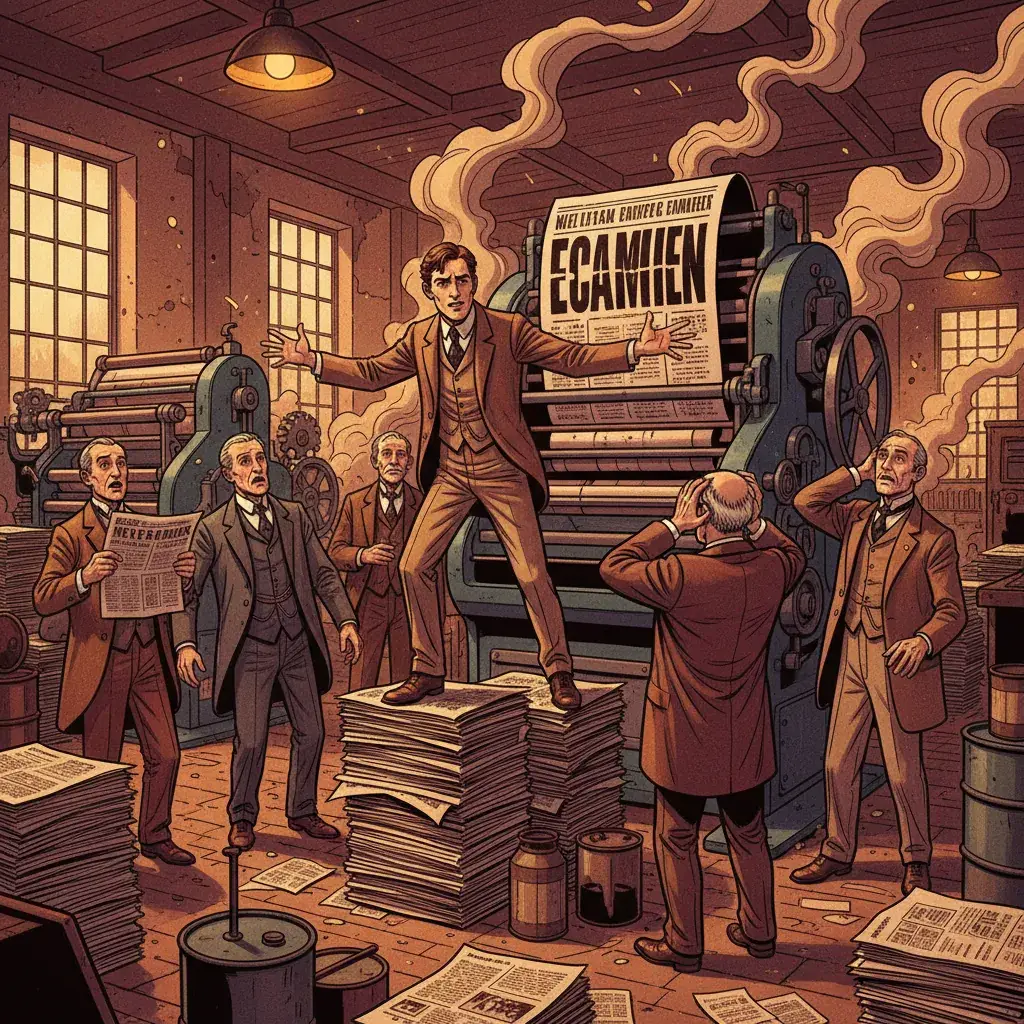
When William Randolph Hearst took over the San Francisco Examiner, it was a sleepy, respectable paper. He didn’t want respectable. He wanted sizzle. He wanted noise. He wanted the kind of headlines that screamed from the newsstands and slapped readers across the face. This wasn’t journalism as a public service; this was journalism as a gladiatorial spectacle, and Hearst was the ringmaster.
He immediately poured his inherited wealth into the paper, hiring the best writers, the most sensational illustrators, and the most aggressive reporters he could poach from competitors. He slashed prices. He invented stunts. He sent reporters undercover into insane asylums and opium dens. He ran crusades against municipal corruption, not always for altruistic reasons, but because it made for fantastic copy and sold papers like hotcakes. He understood that scandal, sex, and crime were infinitely more interesting to the average reader than sober political discourse.
His formula was simple but revolutionary: “News is what someone wants to suppress; everything else is advertising.” And boy, did he suppress boring. He embraced sensationalism, large headlines, bold graphics, and often, thinly-sourced or outright fabricated stories designed to provoke an emotional response. This, my friends, was the genesis of what would become known as yellow journalism. It wasn’t about truth; it was about impact. It was about volume. It was about winning the war for eyeballs.
In 1895, with the Examiner a roaring success, Hearst set his sights on the biggest prize: New York City. He bought the struggling New York Journal and immediately plunged into a no-holds-barred circulation war with his former idol, Joseph Pulitzer, owner of the New York World. This wasn’t just competition; it was a blood feud waged in newsprint. They stole each other’s talent, undercut each other’s prices, and out-sensationalized each other with increasingly outrageous stories.
The term “yellow journalism” itself has an interesting, if slightly apocryphal, origin. It’s often linked to “The Yellow Kid,” a popular comic strip that both Pulitzer and Hearst famously fought over, each publishing their own version. The vibrant, often crude, and wildly popular comic epitomized the era’s taste for the brash and attention-grabbing. It was a race to the bottom, or perhaps, a race to the top of the circulation charts, depending on your perspective.
Hearst perfected the art of manufacturing news when real news was slow. If there wasn’t a scandal, he’d find a way to create one. If there wasn’t a hero, he’d invent one. If there wasn’t a villain, he’d expose one. He understood that the media wasn’t just a mirror reflecting reality; it was a hammer that could shape it. And he was about to prove just how powerful that hammer could be on a global scale. The stage was set for a truly dramatic act in his unfolding empire.
💥 Chapter 3: The Spanish-American War: The Ultimate Headline Grab
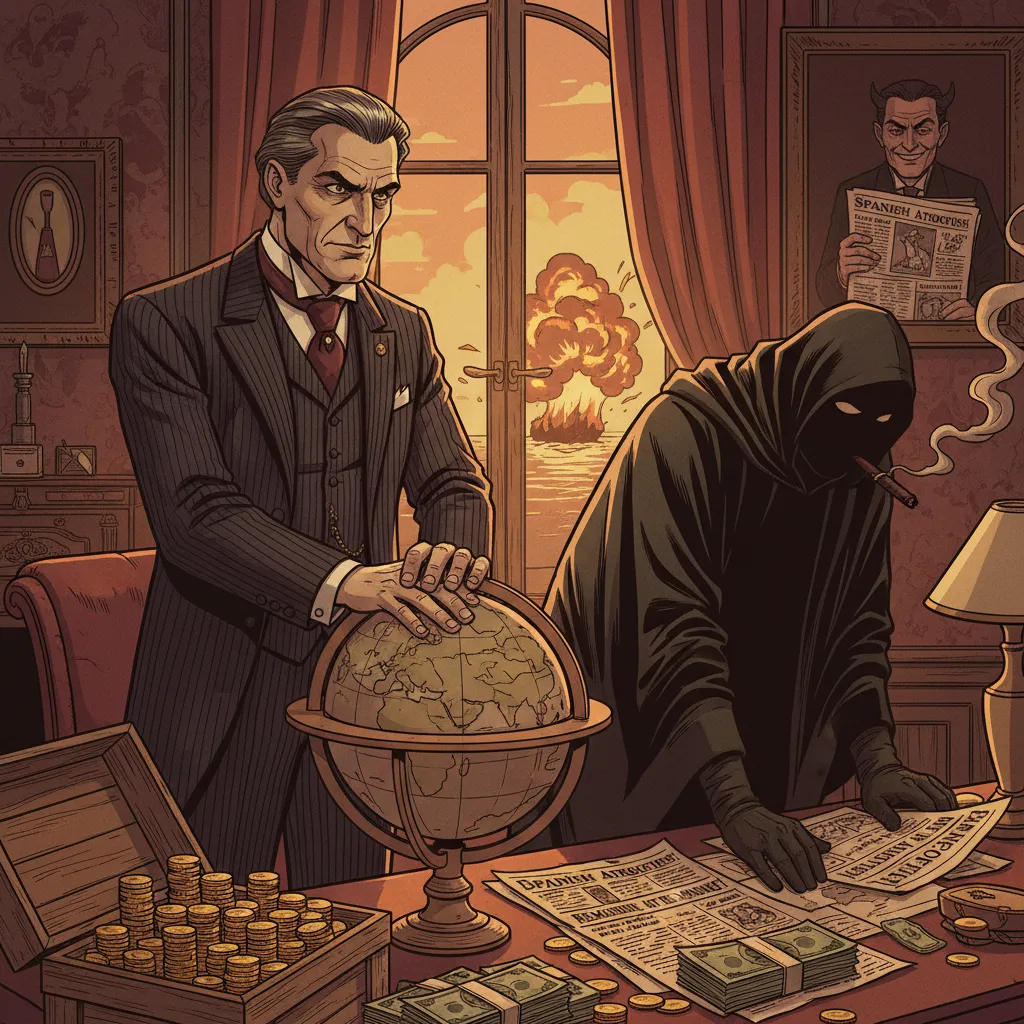
This is where the story of William Randolph Hearst veers from ambitious media mogul to something far more sinister, a man accused of literally inciting a war for profit and prestige. The year is 1898, and the stage is Cuba. The island nation, just 90 miles off the coast of Florida, was suffering under brutal Spanish colonial rule. American public sentiment was already simmering, fueled by a mix of genuine humanitarian concern and a growing sense of Manifest Destiny.
Hearst, ever the opportunist, saw not just a humanitarian crisis but a goldmine of headlines. He dispatched his star reporters and illustrators, including the famous artist Frederic Remington, to Cuba. Remington, finding the situation tense but not overtly violent enough for the kind of dramatic imagery Hearst craved, famously cabled his boss: “Everything is quiet. There will be no war. I wish to return.”
Hearst’s legendary, and chilling, reply? “Please remain. You furnish the pictures and I’ll furnish the war.”
Whether that exact exchange happened is debated by historians, but its spirit undeniably captures Hearst’s ethos. He wasn’t just reporting on events; he was actively trying to create them. His papers, particularly the New York Journal, began a relentless campaign of anti-Spanish propaganda. They published lurid, often exaggerated or fabricated, tales of Spanish atrocities against the Cuban people. They ran sensationalistic cartoons depicting Spain as a monstrous oppressor. Every minor incident was blown into a major crisis.
Then came the spark that ignited the powder keg: the sinking of the USS Maine in Havana Harbor on February 15, 1898. The cause of the explosion remains a mystery to this day, with later investigations suggesting an internal accident was more likely than a Spanish mine. But Hearst’s papers wasted no time. Without any evidence, they immediately blamed Spain. “WAR! SPANISH TREACHERY!” screamed the Journal headlines. “REMEMBER THE MAINE! TO HELL WITH SPAIN!” became the rallying cry.
The public, whipped into a frenzy by months of sensational reporting, demanded action. The phrase “yellow journalism” became indelibly linked to the conflict, cementing its reputation as a force capable of manipulating public opinion on an unprecedented scale. President William McKinley, initially hesitant, eventually bowed to the overwhelming public pressure. On April 25, 1898, the United States declared war on Spain.
The Spanish-American War was brief, decisive, and a resounding victory for the U.S. And for Hearst? It was a colossal triumph. His circulation numbers skyrocketed. He had proven that media could not only report on history but could actively make it. He had cemented his status as the most powerful, and perhaps most dangerous, media baron in America. This episode served as a terrifying, real-world demonstration of the power of the press – a power Hearst would wield for decades, shaping politics, public discourse, and the very fabric of American society. He wasn’t just selling newspapers; he was selling reality, and for a while, he was the only one with the keys to the narrative.
🏰 Chapter 4: Opulence, Power, and the Silver Screen’s Shadow
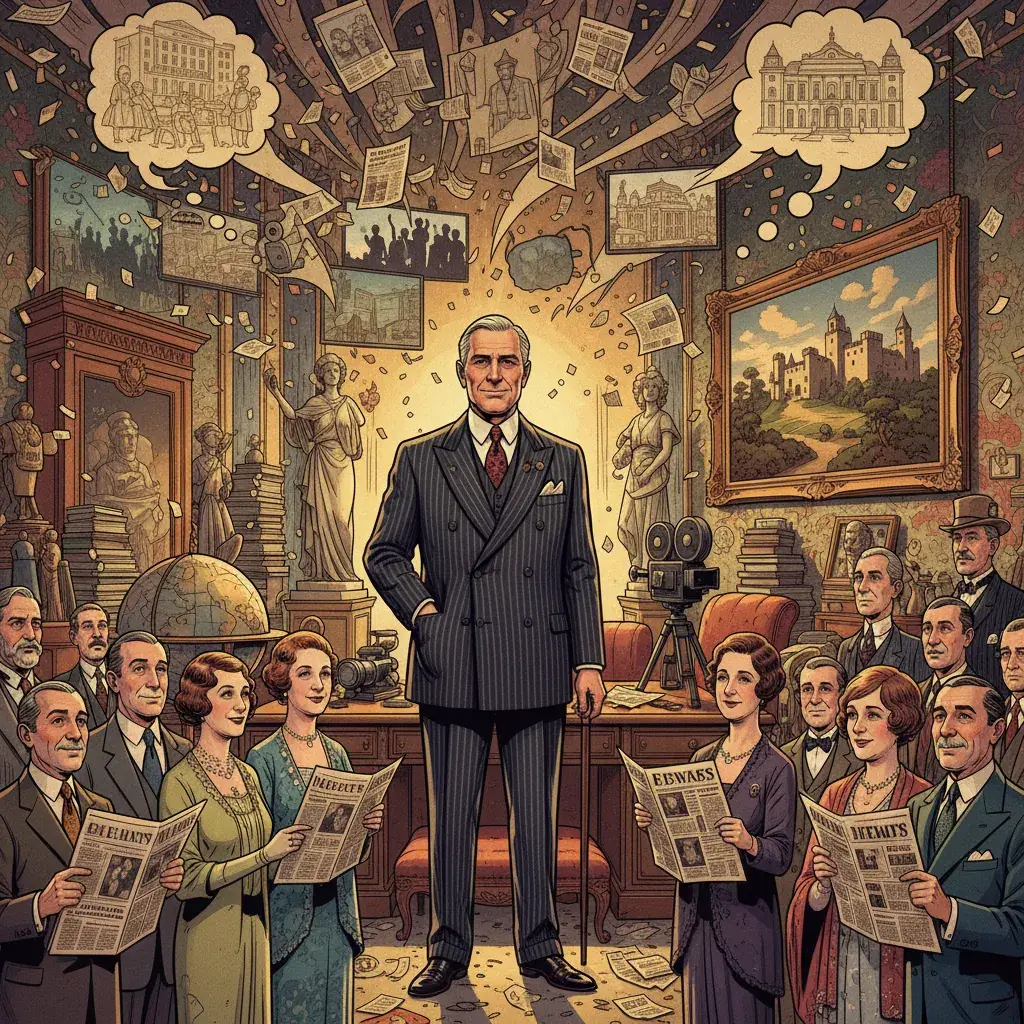
With his empire firmly established and his power undeniable, William Randolph Hearst entered an era of unparalleled excess and influence. He wasn’t just a newspaper owner; he was a cultural force, a political kingmaker (he even served two terms in Congress, though his presidential ambitions fizzled), and a man with an almost insatiable appetite for collecting – everything from art to ancient artifacts, and even entire castles.
The crown jewel of his flamboyant lifestyle was Hearst Castle, or La Cuesta Encantada (“The Enchanted Hill”), in San Simeon, California. This wasn’t just a house; it was a monument to megalomania, a sprawling, 90,000-square-foot main residence with 38 bedrooms, 14 suites, and separate guest houses, all built in a mishmash of European historical styles. It was adorned with priceless antiques, tapestries, and art collected from around the globe, often purchased in bulk and shipped across oceans. Imagine a man so rich he could buy entire European monasteries and rebuild them, stone by stone, in California. That was Hearst. The construction, overseen by architect Julia Morgan, began in 1919 and continued for decades, a perpetual work in progress, reflecting Hearst’s ever-changing whims and boundless resources.
Hearst Castle became a playground for the rich and famous, the political elite, and the burgeoning stars of Hollywood. And this brings us to another pivotal figure in Hearst’s life: Marion Davies. A vivacious, talented comedic actress, Davies became Hearst’s mistress in the late 1910s, a relationship that would last until his death. She was 34 years his junior, and their affair, while an open secret, was meticulously protected from the public eye by Hearst’s vast media machine.
Hearst was utterly smitten. He used his immense influence to promote Davies’ career, often at the expense of his own studios’ financial health. He insisted she be cast in dramas, despite her natural talent for comedy, pouring millions into her films. This period marked Hearst’s significant foray into Hollywood. He owned Cosmopolitan Productions and later partnered with MGM, leveraging his print empire to promote his films and stars. He saw the silver screen as another powerful medium to shape public opinion and, perhaps more importantly, to showcase the woman he adored.
The glamour and power of Hearst’s life were undeniable, but beneath the surface, cracks were forming. His lavish spending was legendary, even for a man of his wealth. He owned ranches, mines, and dozens of newspapers and magazines across the country, but his personal expenses were astronomical. He bought so much art that he had entire warehouses overflowing with treasures he never even unpacked. He lived a life unbound by financial constraints, believing his fortune was limitless.
This era, while defining Hearst’s public image as the ultimate media titan, also sowed the seeds of future financial turmoil. The sheer scale of his operations, combined with his personal extravagance and his somewhat quixotic decisions regarding Marion Davies’ career, would soon collide with a brutal reality: the Great Depression. The man who seemed to own everything was about to learn that even boundless wealth could evaporate, and empires, no matter how grand, were not immune to the forces of economic gravity.
📉 Chapter 5: The Empire Cracks – When the Music Stopped
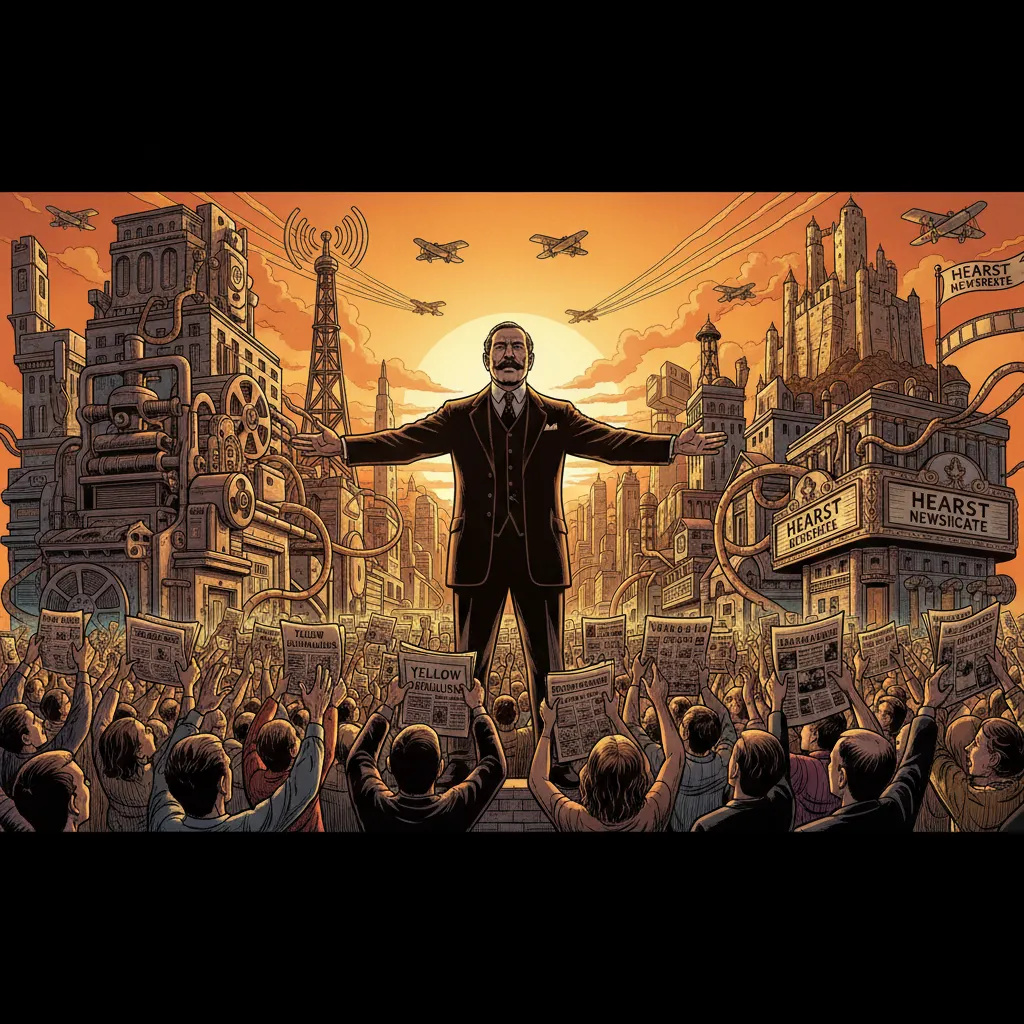
For decades, William Randolph Hearst had seemed invincible. His empire, built on a foundation of sensational headlines and an almost mystical ability to connect with the masses, had grown to encompass 28 daily newspapers, 18 magazines, 8 radio stations, and various film companies by the early 1930s. He was, without hyperbole, the most powerful media figure in the world. His personal wealth was estimated in the hundreds of millions, a staggering sum for the era. But even titans fall, and for Hearst, the fall was precipitous and brutal, brought on by a perfect storm of his own profligate spending and the economic cataclysm of the Great Depression.
Hearst’s spending habits weren’t just lavish; they were legendary, bordering on compulsive. He didn’t just buy a few paintings; he bought entire art collections. He didn’t just build a mansion; he built a castle that was constantly under construction, staffed by hundreds, and filled with acquisitions from around the globe. He owned a private zoo, a collection of homes, and an insatiable appetite for anything that caught his eye. While the money flowed in from his profitable media ventures, it flowed out even faster. He operated on a perpetual credit line, borrowing against the value of his vast, tangible assets – art, real estate, and of course, his media properties.
When the stock market crashed in 1929, the tremors were felt everywhere, but it took a few years for the full economic tsunami to hit the media industry. Advertising revenues, the lifeblood of newspapers and magazines, plummeted. Circulation numbers, once fiercely fought over, began to stagnate as people tightened their belts. Suddenly, Hearst’s massive fixed costs – the salaries for thousands of employees, the upkeep of his estates, the endless construction at San Simeon – became an unbearable weight.
His carefully constructed financial house of cards began to collapse. Banks started calling in loans. Creditors demanded payment. The value of his art collection, once a golden parachute, depreciated dramatically in a depressed market. Hearst, the man who had always been able to buy his way out of trouble, found himself cornered.
In 1937, the crisis reached its peak. The Hearst Corporation was on the brink of bankruptcy. His creditors, a consortium of banks and other lenders, stepped in and essentially seized control of his empire. They installed a committee of trustees, led by the shrewd financial manager Clarence Shearn, to manage his assets. Hearst, the autocratic “Chief” who had always made every decision, was stripped of his absolute power. He was forced to sell off vast portions of his beloved art collection, his real estate holdings, and even some of his newspapers and radio stations. Hearst Castle, his magnificent obsession, was put on hold, its construction halted, its staff dramatically cut.
“He wanted to own the world, and for a time, he did. But even the wealthiest man can’t outrun a depression and his own bottomless appetite. The empire was built on sand, and when the tide went out, the cracks became chasms.”
This was a profoundly humiliating period for William Randolph Hearst. The man who had once dictated national policy was now being dictated to by bankers. He was allowed to remain editor-in-chief of his flagship papers, but his financial authority was gone. He was effectively a figurehead in the very empire he had forged. It was a stark lesson in the difference between owning assets and maintaining liquidity, between power and solvency. The golden spoon had been tarnished, and the pulp king had been brought to his knees. But, as we’ll see, the beast wasn’t dead; it was merely wounded, and the seeds of its eventual resurgence were already being sown, albeit quietly, by others.
🩹 Chapter 6: Rebuilding from the Ashes (and the Trust’s Quiet Power)
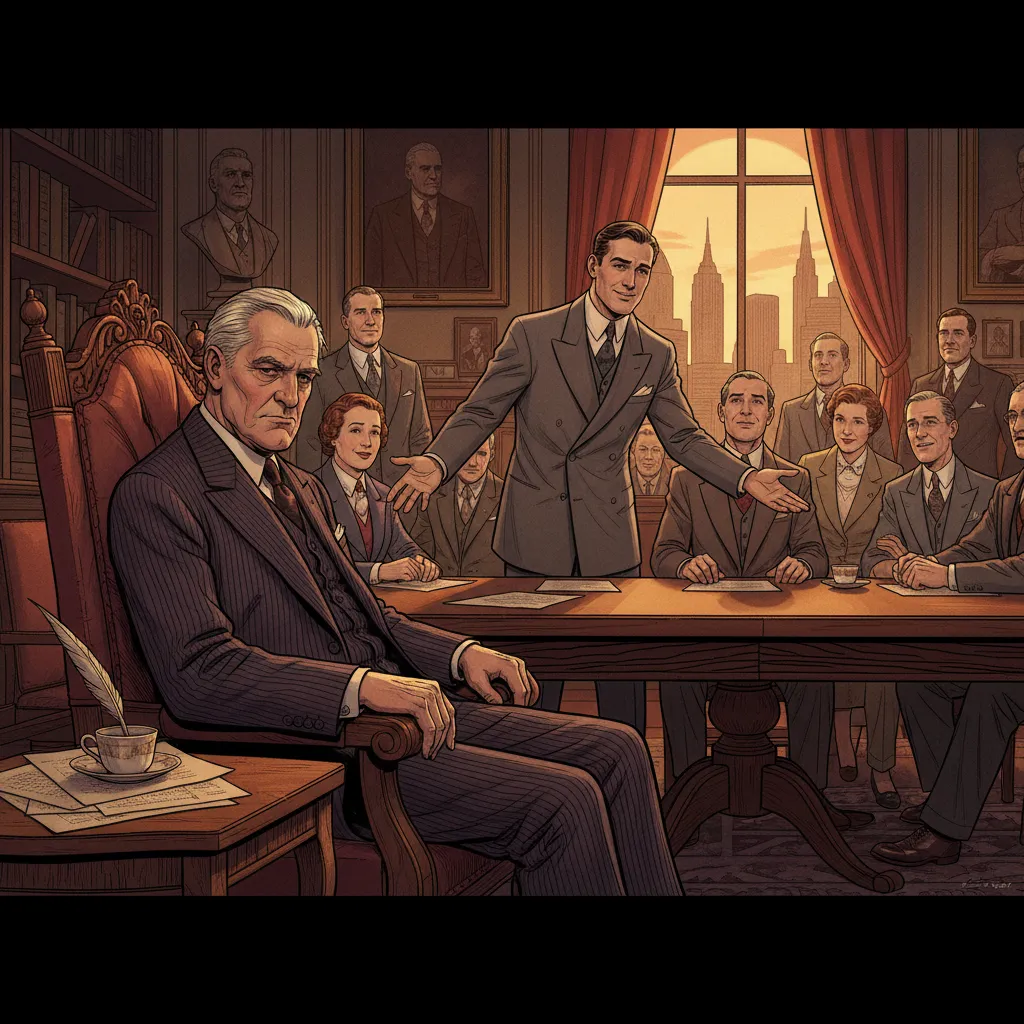
The humiliation of 1937 was a bitter pill for William Randolph Hearst. Imagine a general, accustomed to absolute command, suddenly finding himself a mere advisor in his own army. That was W.R. Hearst during the later years of his life. He still held the title of editor-in-chief, still dictated editorials, and still influenced the content of his papers, but the purse strings – and thus the ultimate power – were firmly in the hands of the trustees and the banks.
This period, however, proved to be a strange kind of salvation for the Hearst Corporation. Stripped of Hearst’s individual, often impulsive, and always extravagant financial decisions, the empire was forced to become lean, efficient, and strategically focused on profitability. The trustees, with cold, hard numbers guiding them, consolidated operations, shed underperforming assets, and brought a much-needed financial discipline to the sprawling conglomerate. It was less about sensationalism and more about sustainability.
Hearst himself, though diminished, never truly gave up. He continued to be a prolific editorial writer, his conservative voice still resonating through his remaining papers. He watched, perhaps with a mix of pride and resentment, as the corporation slowly but surely clawed its way back from the brink. The war years, specifically World War II, ironically provided a much-needed boost to advertising revenue and circulation, as the public hungered for news. This economic recovery allowed the company to stabilize and begin paying down its massive debts.
Crucially, it was during this period, in the late 1930s, that the Hearst Family Trust was established. This wasn’t just a legal document; it was the DNA of the modern Hearst Corporation. W.R. Hearst, learning from his near-catastrophic experience, understood that his personal spending had almost destroyed his legacy. The trust was designed to prevent any single individual, even a future Hearst, from having unfettered control over the company’s finances. It established a board of trustees, including family members and independent professionals, whose primary duty was to ensure the long-term solvency and prosperity of the corporation, separate from the personal whims of any one individual.
This trust structure was a stroke of genius, a concession born of crisis that would ultimately become the foundation of the empire’s enduring strength. It meant the company would always be privately held, insulated from the pressures of public markets and quarterly earnings reports. It ensured a long-term strategic outlook, allowing for patient investment and slow, steady growth. It created a system of checks and balances that, while perhaps frustrating for future autocratic Hearsts, guaranteed the survival of the enterprise itself.
When William Randolph Hearst finally passed away in 1951 at the age of 88, his legacy was complex. He was remembered as the architect of yellow journalism, the man who shaped public opinion and incited war, the extravagant collector, and the lover of Marion Davies. But he also left behind a corporation that, though chastened, was financially sound and structurally prepared for the future, thanks to the very crisis that had nearly undone him. The stage was now set for the next generation, a generation that would lead the Hearst empire into an entirely new media landscape, away from the singular vision of one man and towards a diversified, resilient future. The beast had survived, and it was about to evolve.
📈 Chapter 7: The Quiet Dynasts – Post-W.R.H. and the Pivot to Diversification
With William Randolph Hearst gone, the Hearst Corporation entered a new, distinctly different era. The era of the flamboyant, autocratic genius was over. What followed was a period of professional management, strategic diversification, and a deliberate move away from the sensationalism that had defined its founder. The family remained at the helm, but their approach was far more measured, far more focused on building a resilient, multi-faceted business rather than a personal fiefdom.
The Hearst Family Trust, established in the late 1930s, proved to be the guiding star. It mandated that the company be managed for long-term growth and stability, not for short-term profits or the personal enrichment of any one family member. This meant the company could make patient, strategic investments that public companies, beholden to shareholder demands, often couldn’t. It created an environment where the company could evolve without the constant pressure of Wall Street.
The first generation of post-W.R.H. leaders, including his sons William Randolph Hearst Jr. and Randolph Apperson Hearst, initially focused on stabilizing and expanding the core newspaper and magazine businesses. They oversaw a gradual modernization of the print operations, but more importantly, they began to look beyond ink on paper. They saw the seismic shifts occurring in media – the rise of television, the expansion of radio, and the emergence of new communication technologies.
This was the beginning of Hearst’s strategic pivot to diversification. Recognizing that relying solely on newspapers was a precarious position, especially given the founder’s near-bankruptcy, the company began to cautiously acquire and invest in new areas.
- Television and Radio: Hearst was an early mover in broadcast media. While W.R. Hearst had dabbled in radio, it was his successors who truly built out the broadcast division, acquiring television stations across the country. They understood that owning the channels of distribution, not just the content itself, was crucial. Today, Hearst Television is one of the largest and most respected groups of local TV stations in the U.S.
- Magazines: The magazine division, already strong with titles like Good Housekeeping, Cosmopolitan, and Harper’s Bazaar, was nurtured and expanded. These brands, with their consistent readership and strong advertising appeal, provided a stable revenue stream and a powerful platform for cultural influence.
- Business Information: This was perhaps the most astute and least glamorous pivot. Beginning in the 1960s and accelerating in subsequent decades, Hearst began acquiring companies that specialized in business-to-business (B2B) information services. These weren’t consumer-facing brands, but they were incredibly profitable, providing essential data, analytics, and software to industries like healthcare, finance, and automotive. Companies like Fitch Ratings (a global leader in credit ratings, later sold off, but a testament to this strategy), First Databank (healthcare information), and Motor Information Systems (automotive data) became cornerstones of the empire. This move demonstrated a sophisticated understanding of market trends: while consumer media could be volatile, specialized business information was a steady, high-margin business.
“The genius of the post-W.R.H. era wasn’t about shouting louder than the competition; it was about quietly building a fortress. They understood that true power lay not in singular dominance, but in diversified resilience.”
This era also saw the professionalization of management. While family members held key positions, they were increasingly supported by, and sometimes even led by, seasoned executives from outside the family. The culture shifted from one-man rule to a more collaborative, data-driven approach. The Hearst Corporation became less of a personality cult and more of a well-oiled corporate machine, designed for survival and growth across multiple sectors. This quiet transformation laid the groundwork for the modern media powerhouse we see today, a behemoth far more complex and robust than W.R. Hearst could have ever imagined. The beast had not just survived; it had adapted, shed its skin, and was ready to conquer new territories.
🌐 Chapter 8: The Modern Media Machine – From Print to Pixels and Beyond
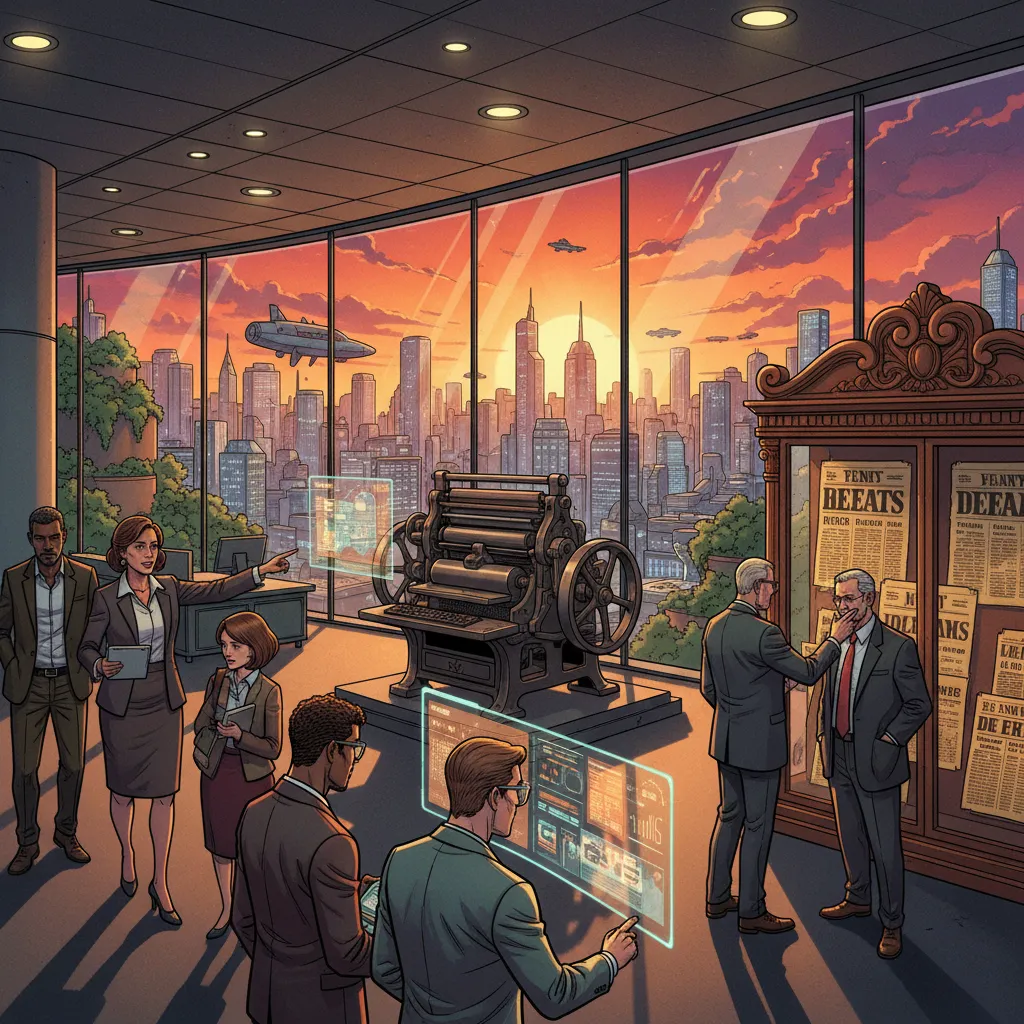
Fast forward to the 21st century, and the Hearst Corporation is a beast transformed. The days of solely relying on screaming newspaper headlines are long gone. While print still holds a cherished place in its portfolio, the company has evolved into a diversified global information and services powerhouse, a true multi-platform, multi-industry conglomerate. This isn’t just a media company; it’s an economic ecosystem.
Let’s break down the sprawling tentacles of this modern monster:
- Hearst Newspapers: Yes, they still own newspapers, including the San Francisco Chronicle (the successor to the Examiner), the Houston Chronicle, and other regional dailies. But these are no longer the primary drivers of revenue or influence they once were. They operate with a focus on digital transformation, local relevance, and leveraging their brands across multiple platforms. It’s a testament to the family’s loyalty to its roots, but also a recognition that the game has fundamentally changed.
- Hearst Magazines: This division remains a powerhouse. Think about it: Cosmopolitan, Elle, Harper’s Bazaar, Good Housekeeping, Men’s Health, Car and Driver, Esquire – these aren’t just publications; they’re iconic brands with massive global reach. They’ve aggressively embraced digital, extending their content onto websites, social media, apps, and even e-commerce. They’ve also diversified into brand extensions, licensing, and events, proving that strong content brands can thrive beyond the printed page.
- Hearst Television: This is a major player in broadcast media, owning and operating 33 television stations and two radio stations across 26 U.S. markets. These stations are affiliates of major networks like ABC, NBC, CBS, and Fox. In an era of cord-cutting, local news and sports remain incredibly valuable, and Hearst has invested heavily in digital streaming strategies for its local stations, ensuring its continued relevance in a fragmented media landscape.
- Hearst Health: This is where the “quiet money” truly shines. This division comprises several leading companies providing critical information, software, and services to the healthcare industry. Companies like FDB (First Databank), a leader in drug information databases, and Zynx Health, which provides evidence-based clinical decision support, are essential to hospitals and pharmacies. This B2B segment is high-margin, stable, and largely immune to the whims of consumer trends, offering a powerful counter-balance to the more volatile consumer media businesses.
- Hearst Business Media: Similar to Hearst Health, this division focuses on specialized information. It includes companies like Motor Information Systems (automotive data), Black Book (vehicle valuation data), and CAMP Systems (aviation maintenance tracking). These aren’t household names, but they are indispensable to their respective industries, generating robust, recurring revenue streams.
- Hearst Ventures: This is the company’s venture capital arm, actively investing in startups across media, technology, and healthcare. This allows Hearst to stay at the cutting edge of innovation, gain insights into emerging trends, and potentially acquire promising young companies.
- Real Estate: Don’t forget the original source of W.R. Hearst’s wealth! The company still owns significant real estate assets, including commercial properties and the land around Hearst Castle, which is now operated by the state of California. This provides a stable, tangible asset base and another diversified revenue stream.
The key takeaway here is synergy and strategic diversification. Hearst isn’t just a collection of disparate businesses; it’s a carefully orchestrated portfolio where different segments provide stability, growth, and cross-promotional opportunities. A successful magazine can launch a TV show. A health information company can leverage the data capabilities of another tech venture. This is a far cry from the single-minded focus of its founder, yet it is a direct evolution of the lessons learned from his triumphs and failures. The beast is now a hydra, with heads in every relevant industry, making it incredibly difficult to kill.
🔒 Chapter 9: The Private Powerhouse – Why Being Private Matters in the Long Game
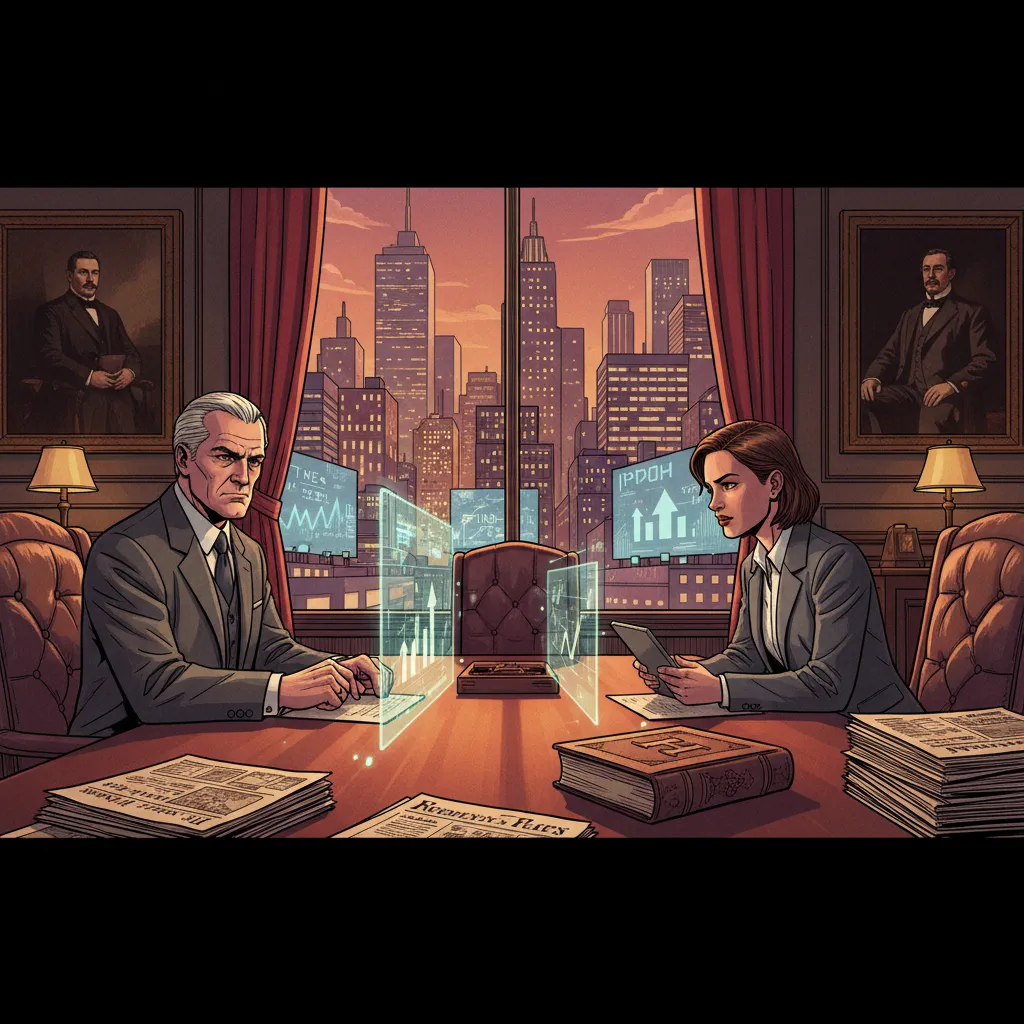
In a world obsessed with IPOs, quarterly earnings, and shareholder value, the Hearst Corporation stands as a powerful anomaly: a multi-billion-dollar media and information empire that remains privately held. This isn’t just a quirk; it’s a fundamental pillar of its enduring success and a core strategic advantage that allows it to operate on a different timeline and with a different philosophy than its publicly traded competitors.
Think about it. Public companies are perpetually on the treadmill of short-term expectations. Every quarter, they face intense scrutiny from analysts and investors. Every strategic decision, every investment, every restructuring, is judged through the lens of its immediate impact on the stock price. This often forces companies to prioritize short-term gains over long-term vision, to cut costs rather than invest in future growth, and to shy away from risky but potentially transformative ventures.
Hearst, thanks to its Family Trust structure, is liberated from these shackles.
“While Wall Street demands a sprint, the Hearst Corporation is running a marathon. Their private ownership isn’t just a preference; it’s a strategic weapon that allows them to play a totally different game.”
Here’s why this private status is such a game-changer:
- Long-Term Vision: Hearst can invest in projects that might take 5, 10, or even 20 years to pay off. They can acquire companies, integrate them, and nurture them without facing questions about immediate ROI. This patient capital allows for deep market penetration and the building of truly sustainable businesses, rather than chasing fleeting trends.
- Strategic Acuity Over Shareholder Whiplash: Decisions are made based on the company’s intrinsic value and strategic direction, not on the whims of the market. This means they can make bold moves, pivot into new industries, or double down on challenging sectors without fear of a sudden stock drop or an activist investor demanding a breakup.
- Insulation from Market Volatility: While not immune to economic downturns, Hearst doesn’t suffer the double whammy of declining revenue and a plummeting stock price. They can weather storms more effectively, focusing on operational resilience rather than appeasing panicking investors.
- Cultural Continuity and Stability: The private structure fosters a strong corporate culture and allows for leadership transitions to be managed internally, without the public drama and pressures that often accompany CEO searches in public companies. It also encourages a sense of stewardship among both family and non-family executives, emphasizing legacy over quarterly bonuses.
- Flexibility and Agility: Without the regulatory burdens and reporting requirements of a public company, Hearst can often move faster and make decisions more discreetly. This can be a significant advantage in rapidly evolving industries like media and technology.
- Privacy and Control: The family retains full control over the direction of the company, preserving its values and heritage. This also means their financial details and strategic maneuvers are not public knowledge, giving them a competitive edge.
The Hearst Family Trust is the legal mechanism that enforces this private ownership. It dictates that the company cannot be sold or taken public, ensuring its perpetual existence as a family-controlled entity. This structure was born from the founder’s near-financial ruin, a hard-won lesson that the long-term health of the enterprise must supersede individual ambition or market fads.
In essence, Hearst is playing chess on a century-long board, while many of its competitors are playing tic-tac-toe for the next three months. This fundamental difference in operating philosophy is perhaps the single most important factor in understanding how the Hearst Corporation has not only survived but thrived for over 130 years, adapting to every technological revolution thrown its way. It’s a testament to the power of patient capital and a long-term strategic mindset.
🌊 Chapter 10: Navigating the Digital Tsunami – Adapt, Acquire, Conquer

The digital age wasn’t just a ripple; it was a Category 5 hurricane that slammed into the traditional media world. Entire industries were upended, revenue models shattered, and once-invincible empires crumbled. But the Hearst Corporation, thanks to its diversified portfolio, long-term vision, and willingness to adapt, didn’t just survive the digital tsunami; it learned to surf it.
The challenge was immense. The internet democratized information, eroding the monopolies newspapers once held. Classified ads migrated to Craigslist and eBay. Display advertising shifted to Google and Facebook. Magazines faced declining print subscriptions and the rise of digital content farms. Television grappled with cord-cutting and the explosion of streaming services. For a company so deeply rooted in traditional media, this could have been an extinction-level event.
But Hearst didn’t bury its head in the sand. Instead, it embraced a multi-pronged strategy:
- Digital Transformation of Existing Assets: They aggressively moved their newspaper and magazine brands online. This wasn’t just about putting print content on a website; it was about building digital-first newsrooms, developing engaging online experiences, investing in SEO, social media strategies, and video content. Brands like Cosmopolitan.com and Elle.com became massive digital destinations in their own right, often reaching younger, global audiences that the print editions might not have.
- Strategic Acquisitions and Investments: Hearst Ventures, the company’s venture capital arm, became a crucial tool. It allowed Hearst to identify and invest in promising digital startups across media, advertising technology, and other sectors. This provided early insight into emerging trends and potential acquisition targets. They bought companies that augmented their digital capabilities or expanded their reach into new digital verticals. For example, their investment in Vice Media (though later divested as Vice struggled) showed a willingness to experiment with new content models and reach younger demographics.
- Leveraging B2B Strength: While consumer media grappled with digital disruption, Hearst’s Business Media and Health divisions found new opportunities in the digital realm. Providing specialized data, analytics, and software solutions became even more critical in an interconnected world. These divisions could leverage digital platforms to deliver their services more efficiently and reach a broader client base, providing a stable, high-growth counterbalance to the consumer-facing challenges.
- Embracing Video and Streaming: Hearst Television didn’t just sit back and watch Netflix take over. They invested in digital streaming platforms for their local news, developed original digital video content, and partnered with over-the-top (OTT) providers. They understood that content consumption was shifting, and they needed to meet audiences where they were, whether on a traditional TV screen or a smartphone.
- Data and Analytics: The digital age brought an explosion of data. Hearst, across all its divisions, invested heavily in data analytics to understand audience behavior, optimize content, personalize experiences, and create more effective advertising solutions for its clients. This data-driven approach became central to its competitive strategy.
“The internet wasn’t a death sentence for Hearst; it was a brutal stress test that proved the resilience of its diversified model. They didn’t just adapt; they evolved, proving that even a century-old beast can learn new tricks.”
One of the most remarkable aspects of Hearst’s digital navigation is its ability to maintain its core identity while radically transforming its operations. It still believes in the power of quality content and strong brands, but it’s agnostic about the delivery mechanism. Whether it’s ink on paper, pixels on a screen, or data streaming through a cloud, Hearst aims to be there, connecting with audiences and providing valuable information.
The digital tsunami continues to rage, with new technologies like AI and virtual reality constantly reshaping the landscape. But Hearst’s strategy of diversification, patient investment, and a relentless focus on adaptability has positioned it not just to weather these storms, but to emerge stronger. The beast of burden built by W.R. Hearst has become a sleek, agile predator in the digital jungle, demonstrating that longevity in business isn’t about avoiding change, but about mastering it.
🚀 Chapter 11: The Next Generation and the Unending Story

The Hearst Corporation today is a testament to the power of a well-structured trust, strategic diversification, and a deep understanding of media’s evolving landscape. But who runs this multi-billion-dollar behemoth now? It’s no longer the singular, larger-than-life figure of William Randolph Hearst, but a blend of family members and seasoned professional executives, all operating under the long shadow and guiding principles of the Hearst Family Trust.
Currently, the company is led by Steven R. Swartz as President and CEO, a non-family executive who has skillfully steered the company through the digital age. However, the family’s influence remains profound. William Randolph Hearst III, a grandson of the founder, serves as Chairman of the Board. Other family members hold various board positions and executive roles across the diverse divisions, ensuring that the dynastic legacy and the trust’s long-term vision are maintained.
The current generation of Hearsts are not the flamboyant figures of their famous ancestor. They are generally more private, often preferring to work behind the scenes, focused on stewardship and growth rather than personal celebrity. They embody the shift from a personal empire to a corporate one, where the institution itself is the star.
The challenges facing the Hearst Corporation in the future are, like the past, immense and constantly evolving:
- The Future of Local Media: While Hearst Television remains strong, the local newspaper industry continues to struggle. The challenge is to find sustainable digital business models for their regional papers and ensure their continued relevance in communities.
- Streaming Wars and Content Overload: The landscape of consumer media, particularly video, is increasingly fragmented and competitive. Hearst’s magazine brands and television stations need to continue innovating to capture audience attention amidst a flood of content.
- Data Privacy and AI Ethics: As a major information provider, especially in B2B sectors, Hearst will face increasing scrutiny over data privacy and the ethical implications of artificial intelligence. Navigating these complex waters will be crucial for maintaining trust and market leadership.
- Global Expansion: While Hearst has a significant international presence, particularly with its magazine brands, there’s always potential for further global growth, especially in emerging markets, balanced against geopolitical risks.
- Succession Planning: Even with a robust trust, managing leadership transitions, both within the family and for key executive roles, is a perpetual challenge for any long-standing enterprise.
Yet, the Hearst Corporation possesses unique strengths to tackle these challenges:
- Financial Fortitude: Its private ownership and diversified revenue streams give it incredible financial stability and the ability to invest aggressively in future growth without the pressure of public markets.
- Brand Equity: Its portfolio of iconic brands across magazines and local TV stations still holds immense value and recognition.
- Strategic Adaptability: The company has proven its ability to pivot, acquire, and transform itself multiple times over a century. This institutional agility is a powerful asset.
- Culture of Innovation: Through Hearst Ventures and internal initiatives, the company fosters a culture that encourages experimentation and embraces new technologies.
The story of the Hearst Corporation is, in many ways, an unending story. It’s a living organism, constantly evolving, shedding old skin, and growing new limbs. It began with the audacious ambition of one man, a man who saw the power of words and images to shape the world. It nearly collapsed under the weight of his excess and a global depression. It was resurrected by the quiet wisdom of a trust and the strategic foresight of subsequent generations who understood that survival meant diversification and adaptability.
From the yellow ink of sensational headlines to the gleaming pixels of digital data, the Hearst beast continues its prowl. It’s a powerful reminder that in the volatile world of business, empires are not built overnight, nor are they maintained by sheer force alone. They are forged in crisis, refined through adaptability, and sustained by a relentless, often quiet, pursuit of the long game. And that, my friends, is a story that’s still being written, one headline, one click, one data point at a time. The show, it seems, must always go on.
👑 Conclusion: The Enduring Legacy of the Unkillable Beast
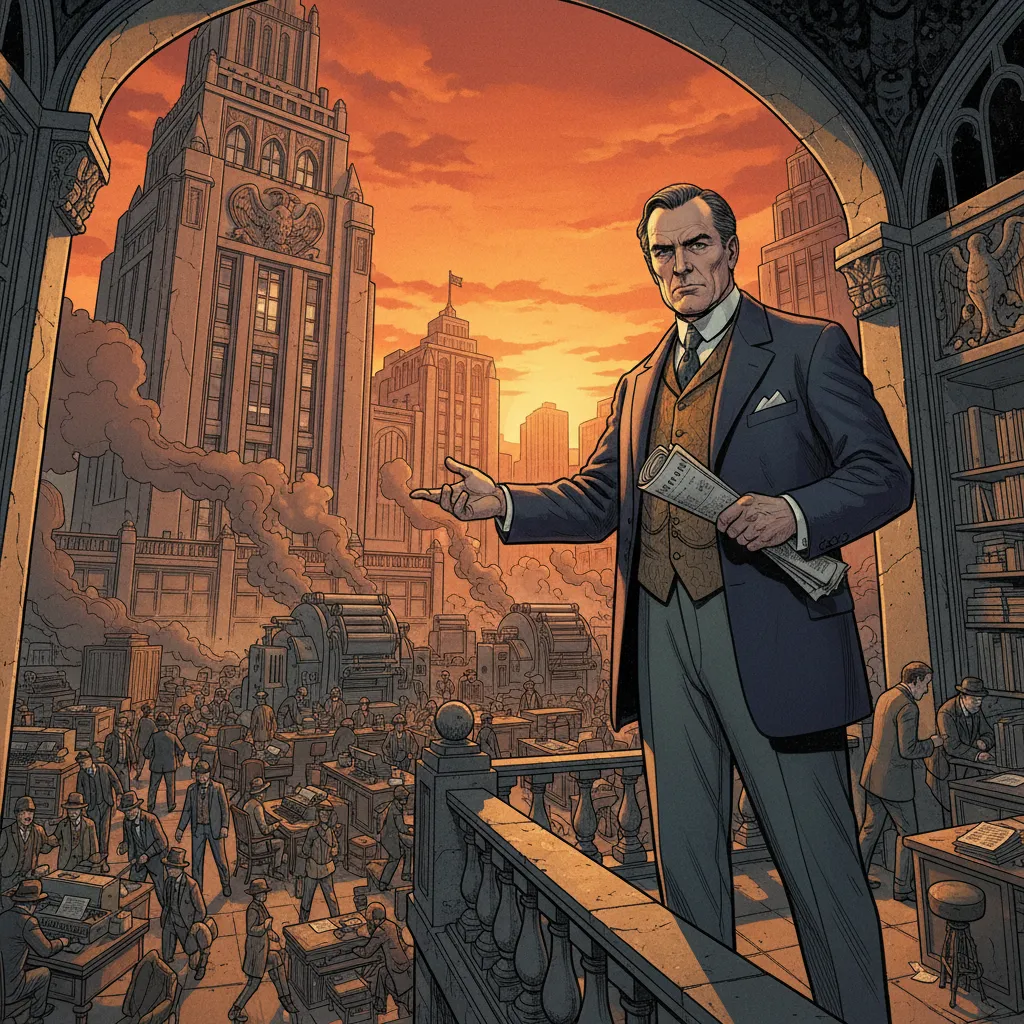
So, there you have it. The sprawling, epic, and often insane saga of the Hearst Corporation. It’s a story that began with a single, arrogant, brilliant man, William Randolph Hearst, who took a sleepy newspaper and turned it into a blaring megaphone, practically inventing the art of sensationalism and wielding it like a weapon to incite wars and shape nations. His ambition was boundless, his extravagance legendary, and his near-destruction a cautionary tale of unchecked ego meeting economic reality.
But the true genius of the Hearst story isn’t just about its flamboyant founder. It’s about what happened after him. It’s about the Hearst Family Trust, a brilliant, crisis-forged mechanism that took the reins from individual whim and placed them in the hands of long-term strategic stewardship. This trust, and the generations of leaders who respected its mandate, transformed a single-minded newspaper empire into an unkillable beast – a diversified, multi-platform, global powerhouse spanning consumer media, critical business information, and real estate.
What lessons can we snatch from this century-plus rollercoaster ride?
First, the power of private ownership is immense. In a world obsessed with quarterly reports, Hearst proves that playing the long game, making patient investments, and being insulated from public market pressures can build truly enduring wealth and influence. It allows for bold pivots and strategic resilience that public companies often can’t afford.
Second, diversification isn’t just a buzzword; it’s the ultimate survival strategy. When W.R. Hearst’s newspaper empire was threatened, the company didn’t double down; it branched out. It moved into magazines, then television, then incredibly profitable, unsexy B2B information services. This multi-tentacled approach created multiple revenue streams and hedged against the inevitable decline of any single industry. It’s like having multiple escape routes when one door closes.
Third, and perhaps most profoundly, content and brand equity are king, regardless of the medium. From the screaming headlines of the Journal to the sleek digital pages of Cosmopolitan.com or the indispensable data of FDB, Hearst has always been in the business of creating, curating, and distributing valuable information and compelling stories. The delivery mechanism changes – ink, radio waves, pixels, data streams – but the core human need for news, entertainment, and specialized knowledge remains. Companies that understand and adapt to this fundamental truth will always find a way to thrive.
The Hearst Corporation isn’t just a business; it’s a living legacy, a monument to adaptability and strategic foresight. It’s a testament to how an empire, born from the audacious vision of a single man, can evolve far beyond its founder, learn from its near-fatal mistakes, and continue to dominate the ever-shifting landscape of media and information. The beast, it seems, has many lives, and it’s showing no signs of slowing down. So, next time you pick up a magazine, click on a news link, or even hear a local news report, remember the Hearst name. Because chances are, one way or another, they’re still furnishing the pictures, and perhaps, still shaping your world.
💡 Key Insights
- ▸ Long-term vision trumps short-term gains: Hearst's private ownership structure allowed it to make strategic, sometimes risky, investments that paid off over decades, rather than being beholden to quarterly earnings reports. This ability to play the long game is a significant advantage for building generational wealth and enduring empires.
- ▸ Diversification is the ultimate survival strategy: What started as a newspaper empire nearly crumbled when the industry faltered. Hearst's pivot into television, magazines, business information, and real estate not only saved it but transformed it into a resilient, multi-faceted conglomerate. Entrepreneurs should constantly evaluate adjacencies and new revenue streams, even when their core business is thriving.
- ▸ The enduring power of brand and content: Despite radical shifts in media consumption, the core business of Hearst has always been about creating compelling content and owning valuable brands. This underscores that while distribution channels change, the human desire for information, entertainment, and connection remains constant. Investing in quality content and strong brands offers a fundamental hedge against technological disruption.
Sources
- Wikipedia: William Randolph Hearst ↗
- Hearst.com: About Us - History ↗
- The New York Times: The Quiet Power of the Hearst Empire ↗
- Forbes: The Hearst Family Behind The Media Empire ↗
- Bloomberg: The Private World of the Hearst Dynasty ↗
- The Wall Street Journal: Hearst Plans to Invest in Digital Media ↗