Hirotake Yano: How Daiso Turned One Price Into a Global Treasure Hunt
Hirotake Yano transformed a roadside discount business into Daiso by combining simple pricing, rapid assortment turnover, and a supply system built for thousands of low-cost products.
View all stories about this mogul
Hirotake Yano built Daiso around a constraint that looked almost too simple to become a strategy: sell nearly everything at one price. The promise made a store easy to understand, but keeping it credible required a sophisticated machine behind the shelves.
Daiso had to source useful products cheaply, refresh the assortment, design packaging, manage tiny unit economics, and make shopping feel like discovery rather than deprivation. Yano’s achievement was turning those operational demands into a retail format that could travel far beyond Japan.
How did a struggling mobile shop discover the power of one price?
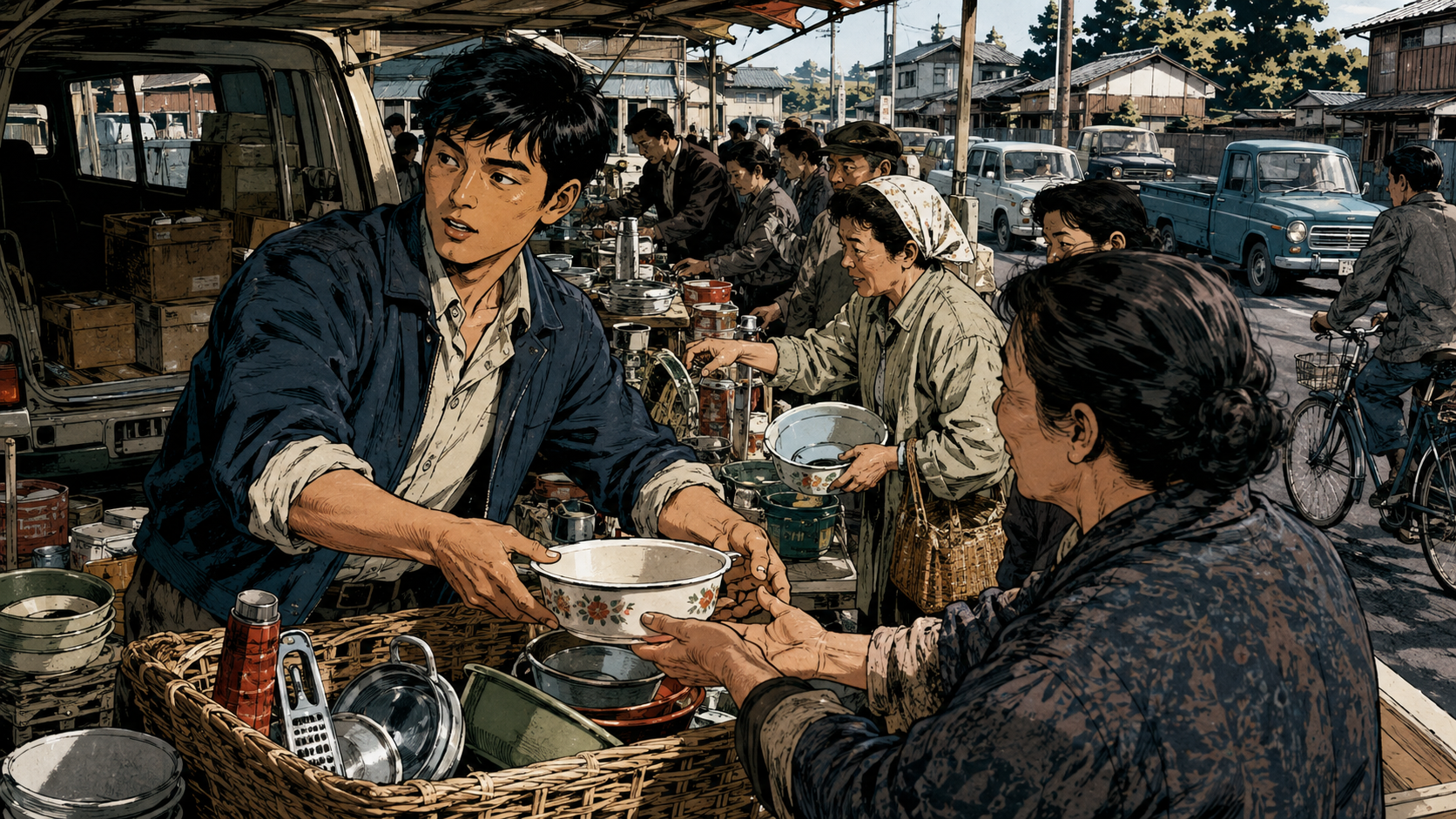
Yano was born in Beijing in 1943 and later studied at Chuo University. After several unsuccessful ventures, he entered discount retail in the 1970s with a mobile operation known as Yano Shoten, selling goods from temporary roadside locations.
Discount selling created a practical bottleneck. Different prices required labels, calculation, and negotiation while customers crowded around limited space. Standardizing items at 100 yen simplified the transaction for both sides. Shoppers could understand the offer instantly and estimate a basket without repeatedly checking price tags.
The simplification also changed behavior. A customer did not need to decide whether one small household tool was worth materially more than another. Attention moved from price comparison to curiosity: What useful thing might I find?
Yano established Daiso Industries in 1977. The name drew on a Japanese phrase associated with creating something large. The early format was modest, but the ambition was embedded in the operating system: find enough value at a fixed retail price that customers would distrust neither the goods nor the promise.
Why did Daiso need complexity behind a simple shelf?

A one-price store cannot protect margin by casually raising the price of an individual weak item. It must negotiate sourcing, redesign specifications, alter pack sizes, improve logistics, or accept that some products carry thinner margins than others.
Daiso developed a huge assortment across storage, kitchenware, stationery, crafts, cleaning, beauty, and seasonal goods. Private-label development and direct sourcing gave the company more control over cost and differentiation than a retailer merely buying whatever wholesalers offered.
Assortment breadth created a portfolio. Not every item needed identical economics if the basket worked overall. A striking product could attract traffic; ordinary replenishment goods could build habit; rapid newness could make each visit feel different.
The apparent simplicity therefore sat at the end of a complicated chain. Designers had to remove unnecessary material without making an object feel disposable. Buyers had to commit volume without drowning stores in slow inventory. Logistics had to move many small, low-value units cheaply enough that handling did not consume the gross profit.
The lesson is common in platform businesses: the customer receives simplicity because the company accepts complexity on the customer’s behalf.
How did the treasure-hunt model travel beyond Japan?

Daiso expanded through permanent stores across Japan and then internationally. The format traveled well because its central proposition required little explanation. Customers could enter, browse dense displays, and discover low-commitment products even when local tastes differed.
International growth complicated the literal one-price idea. Taxes, freight, currency movements, wages, and local purchasing power varied. Over time, Daiso stores introduced additional price tiers in some markets. The durable asset was not a sacred coin denomination; it was the expectation of surprising usefulness at a low, clearly signaled price.
Yano maintained a notably modest public profile. He often described his path as shaped by repeated failure and luck rather than invincible foresight. That humility fit a business built less on a single glamorous invention than on thousands of small decisions executed every day.
By the time of his death in 2024, Daiso had become a global retail name. Its stores demonstrated that cheap products do not have to create a joyless environment. Variety, presentation, and novelty can turn budget shopping into entertainment.
The deeper playbook is to identify a source of customer friction, remove it with a hard operating constraint, and then build the supply system capable of honoring that constraint at scale. One price was the visible rule. Relentless product and logistics work made it an empire.
💡 Key Insights
- ▸ A single price is not merely a promotion; it removes comparison work and changes how customers browse.
- ▸ Low-ticket retail can support discovery when assortment turnover gives shoppers a reason to return without a planned purchase.
- ▸ Operational simplicity at the shelf depends on complexity being absorbed by sourcing, packaging, logistics, and product design.
- ▸ A humble format can travel globally when the core customer promise is legible before translation.