J. Willard Marriott: From a Root Beer Stand to a Hospitality Empire
J. Willard Marriott turned a nine-seat Washington stand into a disciplined food and lodging company by obsessing over operations, people, and repeatable service.
View all stories about this mogul
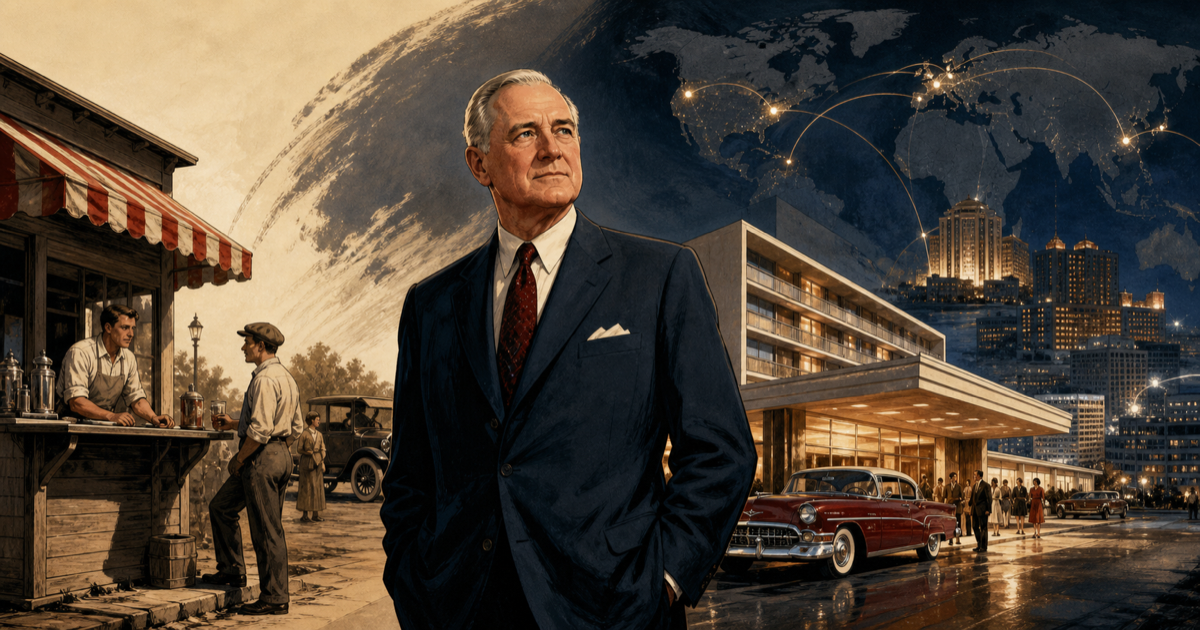
J. Willard Marriott built one of the world’s great hospitality companies before he began thinking of himself as a hotelier. His first operating laboratory had nine seats, a root-beer tap, and a Washington summer hot enough to create immediate demand.
The leap from drinks to restaurants, airline catering, hospitals, institutional food, and motor hotels looks like diversification. It was actually one repeated idea: people away from home still wanted speed, cleanliness, consistency, and personal attention. Marriott kept finding larger places to apply that idea.
His empire was not built on architectural glamour. It was built on inspections, cost controls, training, and the conviction that employees who felt respected would take better care of guests. The formula sounds obvious. Executing it across thousands of daily interactions was the hard part.
How did a root beer stand launch the Marriott empire?
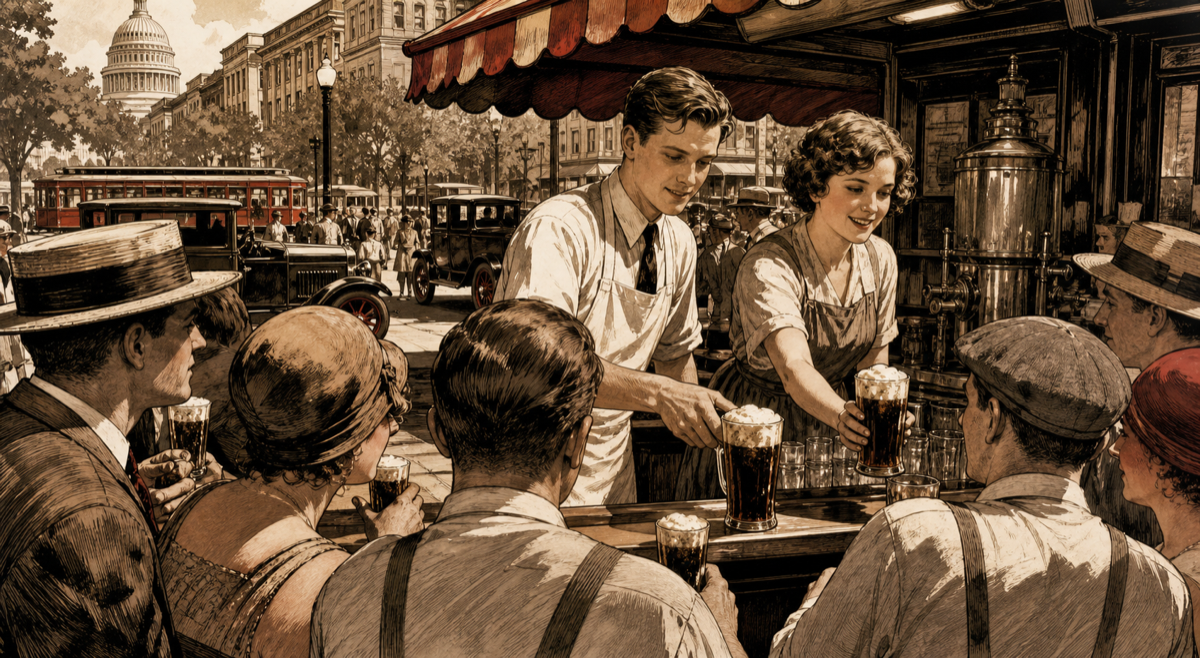
In 1927, J. Willard Marriott and Alice Sheets Marriott opened a small A&W root-beer stand in Washington, D.C. Marriott had noticed a simple mismatch: the humid capital generated intense thirst, but quick, reliable refreshment was not everywhere available.
The couple did not remain trapped by the original product. When cold weather reduced demand for root beer, they added hot food and developed the Hot Shoppes restaurant concept. The decision established a pattern that would define the company: observe the customer’s practical problem, then expand the format to solve more of it.
Alice Marriott was essential to the enterprise. She managed books, helped shape decisions, and supported the organization while Willard drove operations. The business grew through locations designed for speed and motorists, including drive-in service. It also moved into airline catering, serving travelers whose expectations for dependable meals created a new kind of logistics challenge.
Marriott’s operating intensity became legendary. He visited properties, checked kitchens and storage areas, examined cleanliness, spoke with employees, and followed details that more distant executives might classify as minor. In hospitality, minor details are the product. A late meal, dirty surface, indifferent greeting, or unready room can destroy trust faster than a corporate advertisement can build it.
| Year | Milestone | Strategic meaning |
|---|---|---|
| 1927 | Root-beer stand opens in Washington | The Marriotts identify demand and test a service format |
| 1928 | Hot food expands the concept | The company adapts beyond a seasonal product |
| 1930s | Airline catering begins | Operations move into complex, time-sensitive service |
| 1957 | Twin Bridges Motor Hotel opens | Marriott enters lodging with a motor-travel format |
| 1964 | J.W. Marriott Jr. becomes president | Succession brings a new growth phase |
| 1985 | J. Willard Marriott dies | The founder leaves a system capable of continuing without him |
How did Marriott move from restaurants into hotels?
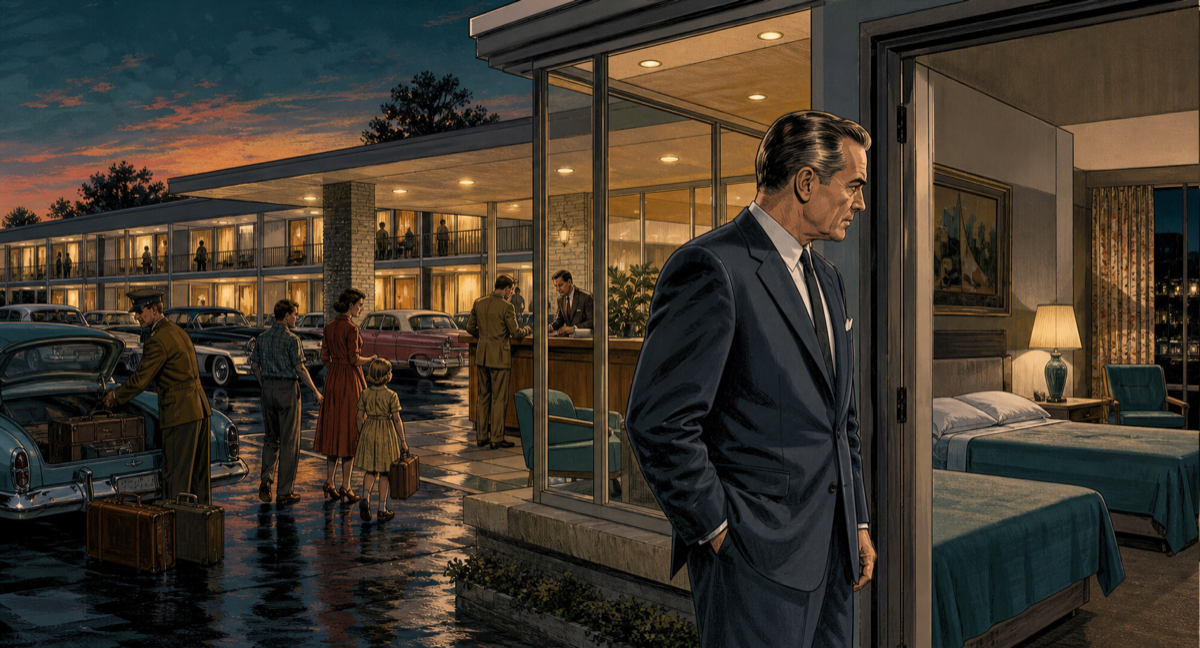
By the 1950s, American travel was being transformed by highways, cars, business mobility, and postwar prosperity. Marriott saw that the same customer who needed a reliable meal also needed a reliable place to sleep. In 1957, the company opened the Twin Bridges Motor Hotel in Arlington, Virginia.
The property was designed around the motor traveler. Guests could drive close to their rooms, while the hotel combined lodging with food-service capabilities Marriott already understood. The move reduced the conceptual distance between the company’s past and future: both businesses sold predictable care to people in transit.
Hotels raised the capital stakes. A restaurant could be demanding, but a hotel added real estate, construction, room inventory, front-desk systems, housekeeping, maintenance, reservations, and around-the-clock service. Marriott’s advantage was not prior hotel romance. It was an operating culture already trained to coordinate perishable service at scale.
The company expanded into additional properties and formats. J.W. Marriott Jr., the founder’s son, joined the business and eventually became president in 1964. The younger Marriott pushed growth while absorbing his father’s attention to detail. This was not an instant inheritance of a ceremonial title. It was succession through operating exposure.
The company also learned that hospitality growth did not require owning every building forever. Over time, the industry increasingly separated real-estate ownership from brand and management. That asset-light logic would become central to Marriott International after the founder’s era, allowing the system, reservations network, loyalty relationships, and operating standards to travel farther than the balance sheet could if every property had to be owned.
Willard Marriott’s role was to create the institutional habits that made such expansion believable. A hotel owner would hand management to Marriott only if the brand could reliably deliver. Trust was accumulated room by room.
What was J. Willard Marriott’s management philosophy and legacy?
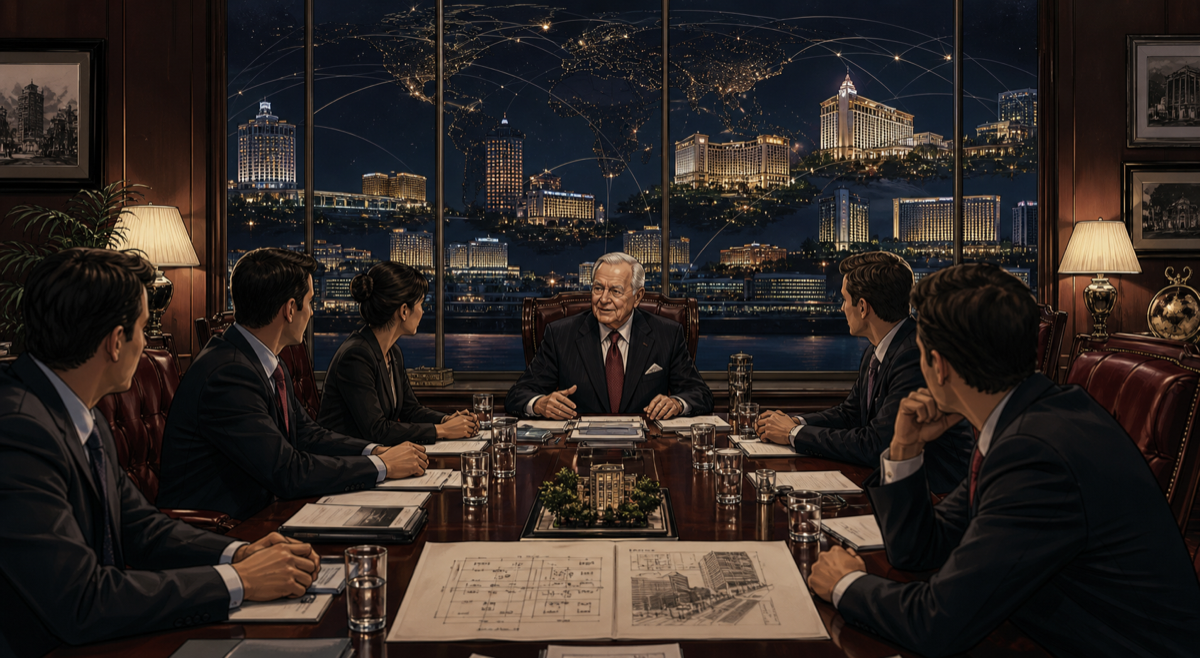
Marriott’s most durable principle is often summarized as taking care of employees so they will take care of customers. The phrase can become sentimental corporate wallpaper, but its operational meaning is concrete. Employees need training, tools, standards, capable managers, and respect. Without those, a smile campaign cannot rescue service.
The founder paired that people emphasis with relentless measurement. Hospitality margins depend on labor scheduling, occupancy, purchasing, waste, room readiness, and maintenance. Warmth toward guests did not replace controls; the controls created the conditions for reliable warmth.
He also practiced management by presence. Property visits shortened the distance between headquarters and the guest experience. They let the founder compare reports with reality and showed managers which details mattered. The danger of such a system is dependence on one inspector. Marriott’s achievement was turning many of those expectations into culture and procedure.
After his death in 1985, the company continued to evolve. In 1993, the organization split into Marriott International, focused on hotel management and franchising, and Host Marriott, which held lodging real estate and related assets. The split occurred after J. Willard’s lifetime, but it extended the logic he had established: separate the repeatable hospitality system from the capital tied up in property.
Today’s Marriott is far larger and more complex than the founder’s enterprise. Its global brand portfolio and loyalty platform belong substantially to later generations of leadership. Yet the root-beer stand remains strategically relevant because it captured the original method: find travelers with a recurring need, build a reliable service routine, and expand without losing the detail that made the routine trustworthy.
What was J. Willard Marriott’s net worth?
Reliable current-style net-worth estimates for J. Willard Marriott are not consistently documented. His family’s wealth became tied to Marriott corporate ownership, but historical holdings, transfers, and later market values make a simple personal figure misleading.
How did J. Willard Marriott make his money?
He built wealth through the food-service and hospitality company that grew from Hot Shoppes into restaurants, catering, institutional services, and hotels.
When did Marriott open its first hotel?
The company opened the Twin Bridges Motor Hotel in Arlington, Virginia, in 1957. That property marked the decisive move from food service into lodging.
Who helped J. Willard Marriott build the company?
Alice Sheets Marriott was a crucial co-founder and business partner. Their son J.W. Marriott Jr. later led the company through a major expansion era, alongside generations of operators and employees.
J. Willard Marriott’s empire began with a product that could be poured in seconds. His legacy came from everything surrounding the glass: location, timing, cleanliness, attention, employee behavior, and repetition. He understood that hospitality is not a building. It is a system that makes a stranger feel expected.
💡 Key Insights
- ▸ Service businesses scale when invisible routines become teachable systems.
- ▸ A small format can become an empire if the founder studies demand instead of defending the original product.
- ▸ Employee care is economically useful only when managers turn it into daily operating behavior.
- ▸ Succession works best when the next generation earns responsibility inside the system.