Jack Dorsey: The Monk-CEO Who Built Twitter, Lost It, and Reinvented Himself
He co-founded Twitter, got fired from his own company, came back to save it, then walked away to chase Bitcoin. The story of Silicon Valley's most contradictory founder.
View all stories about this mogul
Jack Dorsey is the founder who couldn’t stop founding things — and couldn’t stop losing control of them. He co-created Twitter with a sketch on a notepad, got pushed out by his own co-founders, spent years plotting his return, came back as CEO, then voluntarily left to bet everything on Bitcoin. Along the way he became a meditation-obsessed, ice-bath-taking, single-meal-a-day ascetic who ran two public companies simultaneously while critics said he wasn’t fully running either one. He is, depending on who you ask, a misunderstood visionary or the most frustrating CEO in tech history.
This is the story of how one man’s 140-character idea changed global communication — and how the company it created nearly destroyed him.
Chapter 1: The Kid Who Loved Maps and Radios (1976–2000)

Jack Patrick Dorsey was born on November 19, 1976, in St. Louis, Missouri. His father Tim was an engineer who worked on mass spectrometers; his mother Marcia was a homemaker. From the earliest age, Dorsey was obsessed with two things: maps and the movement of things across them. He would sit for hours watching the city’s transit system, mesmerized by the idea that vehicles were moving through a grid in real time and someone, somewhere, was coordinating all of it.
By age fourteen, Dorsey had taught himself programming. Not the casual “I made a website” kind — the real kind. He wrote dispatch routing software so sophisticated that some taxi and ambulance companies still used versions of it years later. A teenager in St. Louis was writing code that moved emergency vehicles through city streets. That’s not a normal hobby.
He attended the University of Missouri–Rolla briefly, then transferred to New York University, but never finished his degree. College felt slow. Dorsey was already thinking about real-time communication — the idea that you could broadcast what you were doing, right now, to anyone who cared to listen. He worked for a dispatch software company, moved to San Francisco, and started circling an idea that wouldn’t fully form for another few years. He wanted to build something that let people share their status — what they were doing, thinking, experiencing — in real time. He just didn’t know what it looked like yet.
Chapter 2: The Sketch on a Notepad — Twitter Is Born (2005–2006)

In 2005, Dorsey was working at a podcasting startup called Odeo, founded by Evan Williams — who had previously created Blogger and sold it to Google. Odeo was floundering. Apple had just built podcasting into iTunes, effectively nuking the company’s entire reason for existing. Williams told the team to brainstorm new ideas.
Dorsey pulled out a sketch he’d been carrying around. It showed a simple interface where a person could type a short status update and broadcast it to a group. He called it “twttr” — inspired by Flickr’s vowel-dropping convention. The status updates would be limited to 140 characters, matching the constraint of SMS text messages at the time. Williams and another engineer, Biz Stone, were intrigued. A third engineer, Noah Glass, became the project’s most passionate champion.
On March 21, 2006, Dorsey sent the first tweet: “just setting up my twttr.” It was mundane. It was historic. Within Odeo, the little side project started gaining traction. Employees were addicted to it. They could see what their colleagues were doing, thinking, eating. It was pointless and magnetic at the same time.
Williams spun twttr out into its own company: Twitter Inc. Dorsey was named CEO. But from the very beginning, the founding story was contested. Noah Glass, who had arguably been the most passionate early advocate, was pushed out almost immediately. His contributions were systematically erased. Years later, Glass would tell reporters that he’d been written out of history. The founding mythology of Twitter was messy, political, and bitter — a pattern that would define the company for its entire existence.
Chapter 3: The First Reign — CEO at 30 (2006–2008)
Dorsey was CEO of a company that was growing like wildfire and breaking constantly. Twitter’s early infrastructure was legendarily fragile. The “Fail Whale” — the cartoon image users saw when the site crashed — became more famous than most of Twitter’s actual features. The site went down during the 2007 SXSW festival, which was supposed to be its triumphant coming-out party. It went down during major news events. It went down on random Tuesday afternoons.
The problem, according to multiple accounts in Nick Bilton’s book Hatching Twitter, wasn’t just technical. It was managerial. Dorsey, the board believed, was more interested in being a CEO than in doing the job of a CEO. He left work at 6 PM to take fashion design classes. He spent company time on personal interests. His management style was described as detached and occasionally confusing — he would give contradictory directives to different teams, then seem surprised when chaos resulted.
Evan Williams, who controlled the board, made his move in 2008. Dorsey was stripped of day-to-day operational control and given the ceremonial title of board chairman. In practice, he was fired. Dorsey was devastated. He told friends he felt like he’d had his baby taken away. But instead of disappearing, he started plotting. He would spend the next seven years building an entirely separate empire while keeping one eye fixed on the company that had cast him out.
Chapter 4: Square — Building Empire Number Two (2009–2013)

Pushed out of Twitter, Dorsey channeled his energy into a new obsession: payments. He’d had a conversation with a glass artist friend, Jim McKelvey, who had lost a sale because he couldn’t accept credit cards. That friction — the inability of small businesses and individuals to process card payments easily — became Dorsey’s next problem to solve.
In 2009, Dorsey and McKelvey co-founded Square. The initial product was elegant in its simplicity: a tiny white card reader that plugged into a smartphone’s headphone jack, turning any phone into a point-of-sale terminal. It was beautifully designed, almost absurdly so for a piece of payment hardware. Dorsey’s obsession with aesthetics — the same instinct that had annoyed people at Twitter — found its perfect outlet.
Square launched in 2010 and grew rapidly. Food trucks, farmers’ market vendors, small retailers — suddenly anyone could accept credit cards for a flat 2.75% fee. No merchant account, no complicated setup, no minimum transaction requirements. The product democratized payment processing in a way that the established players like Verifone and First Data had never bothered to do. By 2012, Square was processing over $10 billion in annual payments. Dorsey had proven he could build a real business, not just a viral social network.
Chapter 5: The Return of the King (2015)
Dorsey never stopped wanting Twitter back. And by 2015, Twitter desperately needed him — or at least needed something. Under CEO Dick Costolo, Twitter had gone public in 2013 at a valuation of around $25 billion, but user growth had stalled. Facebook was eating its lunch. Instagram was eating its lunch. The product hadn’t meaningfully evolved. Wall Street was losing patience.
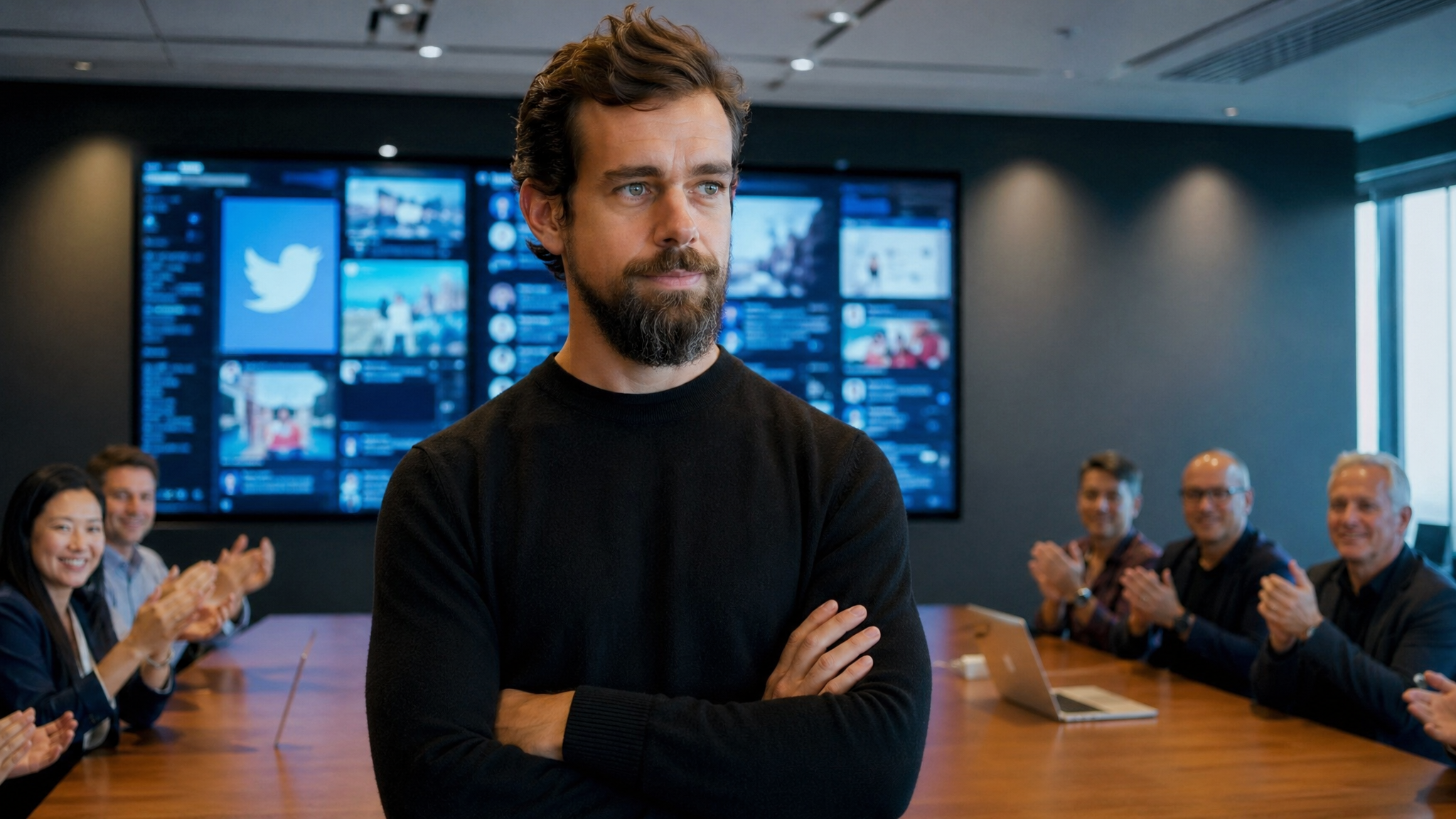
Costolo resigned in June 2015, and the board began searching for a new CEO. Dorsey, still chairman, was the obvious internal candidate — but there was a problem. He was already CEO of Square, which was preparing for its own IPO. Could one person really run two public companies? The board decided yes. In October 2015, Jack Dorsey was named permanent CEO of Twitter while remaining CEO of Square.
It was unprecedented in modern tech. And it immediately drew skepticism. How do you give 100% to two companies that each demand 100%? Dorsey’s answer was essentially that he could architect his time efficiently, that the two companies were complementary, and that great leaders delegate. Critics pointed out that Twitter’s problems were existential and required a CEO’s full, undivided attention. This tension — between Dorsey’s belief in his own capacity and the observable reality of Twitter’s stagnation — would define his second reign.
Chapter 6: Twitter Under Dorsey 2.0 — The Struggle (2015–2018)
Dorsey’s second stint as CEO started with energy and ended with exhaustion. He made some bold moves early: killing Vine (Twitter’s short-video platform that had 200 million users), laying off 8% of the workforce, and trying to refocus the company on its core product — live, public conversation.
But the fundamental problems persisted. User growth remained anemic compared to Facebook and Instagram. The advertising product was clunky and less effective than competitors. And a new, far more dangerous problem was metastasizing: Twitter had become the world’s most powerful platform for harassment, misinformation, and political manipulation. Russian bots had used Twitter to influence the 2016 US presidential election. Trolls and hate speech drove away mainstream users. Journalists and activists were systematically targeted.
Dorsey’s response was slow, halting, and often contradictory. He spoke about Twitter’s commitment to “healthy conversation” in abstract, philosophical terms while the platform burned. He testified before Congress about election interference and gave answers that satisfied nobody. Internally, employees were frustrated. The moderation team was understaffed and under-resourced. Decisions about who to ban and what content to remove were made inconsistently, often driven by public pressure rather than clear policy. Twitter under Dorsey 2.0 was a company that knew it had a problem but couldn’t bring itself to make the hard choices to fix it.
Chapter 7: The Meditation CEO — Lifestyle as Brand (2018–2020)
While Twitter struggled with existential questions about its role in democracy, Dorsey was undergoing a personal transformation that fascinated and infuriated observers in equal measure. He became Silicon Valley’s most visible wellness devotee. He practiced Vipassana meditation, sitting silent retreats for ten days at a time. He took ice baths every morning. He walked five miles to work. He ate one meal a day — sometimes fasting for entire weekends.
He traveled to Myanmar for a meditation retreat and tweeted about its beauty, seemingly unaware that the country’s military was conducting a genocide against the Rohingya people — a genocide that had been partly coordinated on social media platforms including, yes, Twitter. The backlash was immediate and fierce. It crystallized a growing perception: Jack Dorsey was more interested in optimizing himself than in fixing his platform.
The wellness obsession also fed into the dual-CEO criticism. If you have time for ten-day silent retreats, critics argued, you clearly don’t have enough on your plate. Investors began publicly questioning whether Dorsey was the right person to lead Twitter. Elliott Management, the aggressive activist hedge fund run by Paul Singer, took a stake in Twitter in early 2020 and pushed for Dorsey’s removal. It was the beginning of the end.
Chapter 8: The Pandemic, the Election, and the Ban (2020–2021)

The COVID-19 pandemic and the 2020 US presidential election turned Twitter into the most consequential — and controversial — media platform on Earth. Every major political figure, health official, and journalist was using Twitter as their primary communication channel. The platform mattered more than it ever had. And the content moderation decisions Dorsey had deferred for years became impossible to avoid.
In October 2020, Twitter made the extraordinary decision to block sharing of a New York Post story about Hunter Biden’s laptop, citing its hacked materials policy. The decision ignited a firestorm. Conservatives accused Twitter of election interference. Dorsey later admitted the blocking was wrong. Then came January 6, 2021. After the attack on the US Capitol, Twitter permanently banned President Donald Trump — its most prominent and arguably most valuable user. Dorsey wrote a long, reflective thread about the decision, saying it was correct but that he didn’t celebrate it. He acknowledged that having this much power concentrated in a private company was dangerous.
The Trump ban was a watershed moment. It demonstrated that Twitter’s CEO had more power over public discourse than almost any elected official. And it made Dorsey a target for half the political spectrum while failing to satisfy the other half, who thought the ban should have come years earlier.
Chapter 9: The Exit — Walking Away (2021)
On November 29, 2021, Jack Dorsey announced he was stepping down as CEO of Twitter. Parag Agrawal, Twitter’s CTO and a Dorsey ally, was named his replacement. In a letter to employees, Dorsey wrote: “I’ve decided to leave Twitter because I believe the company is ready to move on from its founders.”
The real story was more complicated. Elliott Management’s pressure had never fully abated. The dual-CEO arrangement had worn thin. And Dorsey himself had become increasingly obsessed with something else entirely: Bitcoin. He had been talking about cryptocurrency with growing intensity, calling Bitcoin the “native currency of the internet” and saying it would bring about world peace. He renamed Square to Block in December 2021, signaling that the payments company’s future was built on blockchain technology.
Dorsey left Twitter with a net worth estimated at over $5 billion, most of it from his Square/Block holdings. He had helped create one of the most influential communication platforms in human history, been fired from it, returned to save it, and then walked away. Within months, Elon Musk would buy the company for $44 billion and rename it X, completing a transformation that Dorsey had complicated feelings about.
Chapter 10: Block and the Bitcoin Bet (2021–2024)

Free from Twitter, Dorsey went all-in on Bitcoin. Block, formerly Square, poured resources into cryptocurrency. The company’s Cash App became one of the most popular ways for ordinary Americans to buy Bitcoin. Block started mining Bitcoin. Dorsey created TBD, a division focused on decentralized finance. He launched Spiral, dedicated to making Bitcoin more usable as a currency.
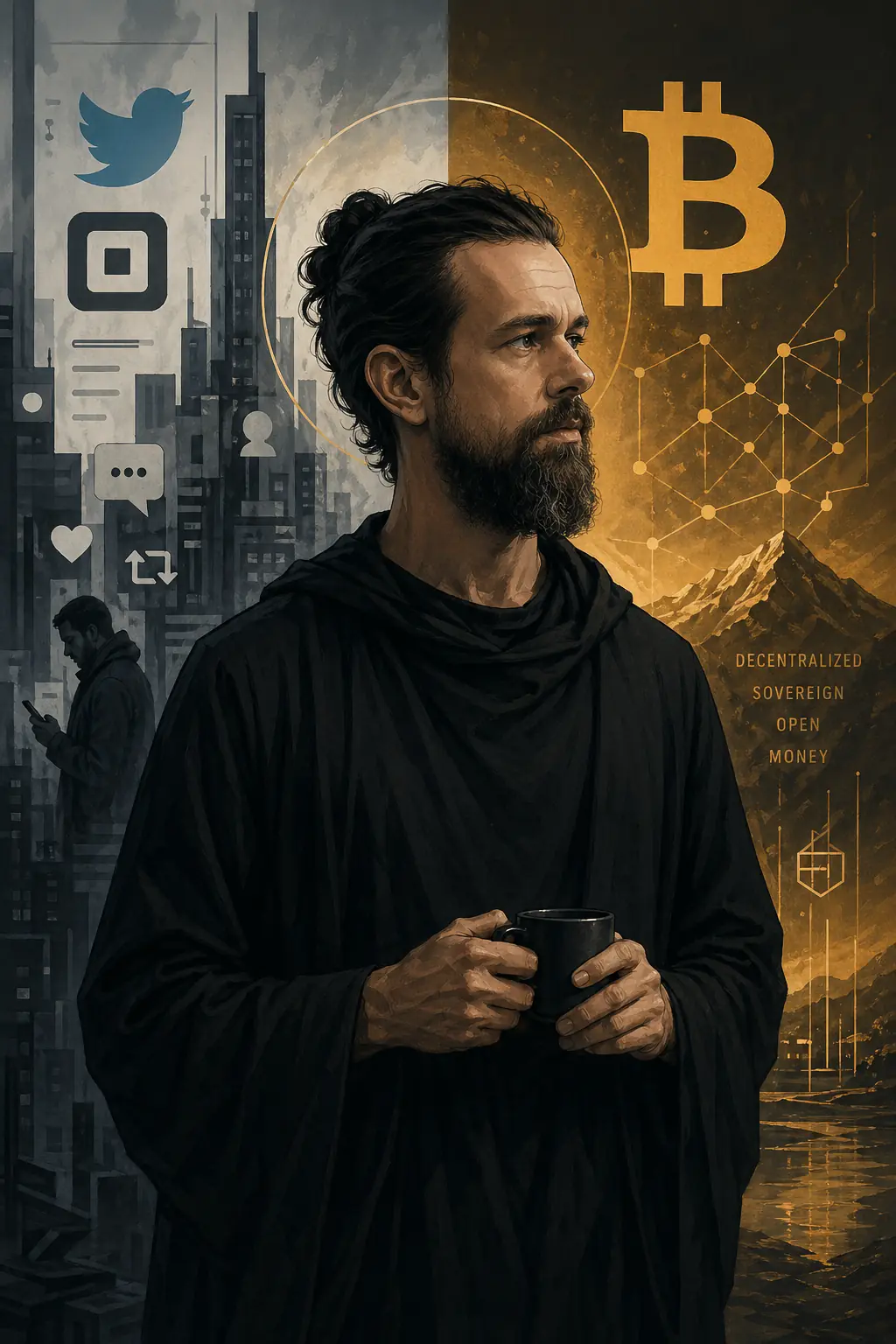
Dorsey’s Bitcoin thesis was almost spiritual. He didn’t talk about crypto the way most tech executives did — as an investment opportunity or a new financial product. He talked about it as liberation. Bitcoin, he argued, would free the world’s unbanked population, undermine authoritarian governments, and create a more equitable financial system. Critics pointed out that Bitcoin’s energy consumption, volatility, and association with speculation made it a strange vehicle for social justice.
Block’s stock price suffered. After peaking at over $280 in 2021, it fell below $50 in 2022 as the crypto market crashed. Hindenburg Research, the short-seller famous for taking down Nikola Motors, published a devastating report accusing Block of inflating user numbers and facilitating fraud through Cash App. Block denied the allegations and called the report misleading. But the damage to investor confidence was real, and Dorsey found himself defending his company’s integrity in a way that echoed the battles he’d fought at Twitter.
Chapter 11: The Musk Era and Dorsey’s Regrets (2022–2025)

Dorsey had originally supported Elon Musk’s acquisition of Twitter, even joining the group text chats where the deal was discussed. He believed Musk shared his vision of Twitter as a protocol — an open, decentralized platform that no single entity controlled. But as Musk’s ownership unfolded — mass layoffs, advertiser flight, the paid verification debacle, the rebranding to X — Dorsey grew publicly uncomfortable.
In April 2023, Dorsey tweeted that he regretted not making Twitter an open protocol like email, where no single company could control it. He endorsed Bluesky, a decentralized social network that Twitter had originally funded under his leadership. The message was clear: Dorsey believed both he and Musk had failed Twitter, just in different ways. He had failed by not being bold enough. Musk was failing by being bold in the wrong directions.
Dorsey’s relationship with Musk, once warm, cooled visibly. The two billionaires represented fundamentally different philosophies: Musk wanted to own and control the town square; Dorsey wanted the town square to be unownable. Whether either vision was achievable — or even desirable — remained an open question.
Chapter 12: Legacy — The Contradictions of Jack Dorsey
Jack Dorsey’s legacy is a study in contradictions. He created a platform that gave voice to the voiceless and amplified the worst of humanity. He was fired for being too detached, then criticized for being too controlling. He preached decentralization while running centralized companies. He advocated for the world’s poor while living a lifestyle of extreme privilege. He wanted Twitter to be a protocol and watched it become a product.
His net worth, estimated at $4–5 billion as of 2025, came primarily from Block, not Twitter. The company he loved most rewarded him least financially. The company he built as a consolation prize made him truly rich. There’s a poetry to that, if you’re inclined to look for it.
What’s undeniable is impact. Twitter changed how presidents communicate, how news breaks, how movements organize, and how strangers argue. For better and worse — and it was substantially both — Jack Dorsey helped build something that altered the fabric of public life. Whether he ever truly understood what he’d built, or was simply swept along by forces larger than any CEO could manage, is the question that will define how history remembers him.
The kid from St. Louis who loved watching things move across maps created a platform where ideas move across the world in milliseconds. He just never figured out how to control the traffic.
💡 Key Insights
- ▸ Dorsey's career proves that founding a company and running a company are fundamentally different skills. He was brilliant at conceiving Twitter but struggled repeatedly with the operational demands of scaling it.
- ▸ Running two public companies simultaneously — Twitter and Square — was either extraordinary ambition or a refusal to choose. The market eventually forced the choice for him.
- ▸ Dorsey's pivot to Bitcoin maximalism after leaving Twitter reveals how founders process loss: when you can't control the platform you built, you gravitate toward systems nobody controls.