Jack Welch: The CEO Who Made GE the Most Valuable Company on Earth — Then Left It to Collapse
He was called the greatest CEO of the 20th century. Under his watch, GE's market cap grew from $14 billion to $410 billion. After he left, the company nearly went bankrupt. What if the miracle was an illusion?
View all stories about this mogul
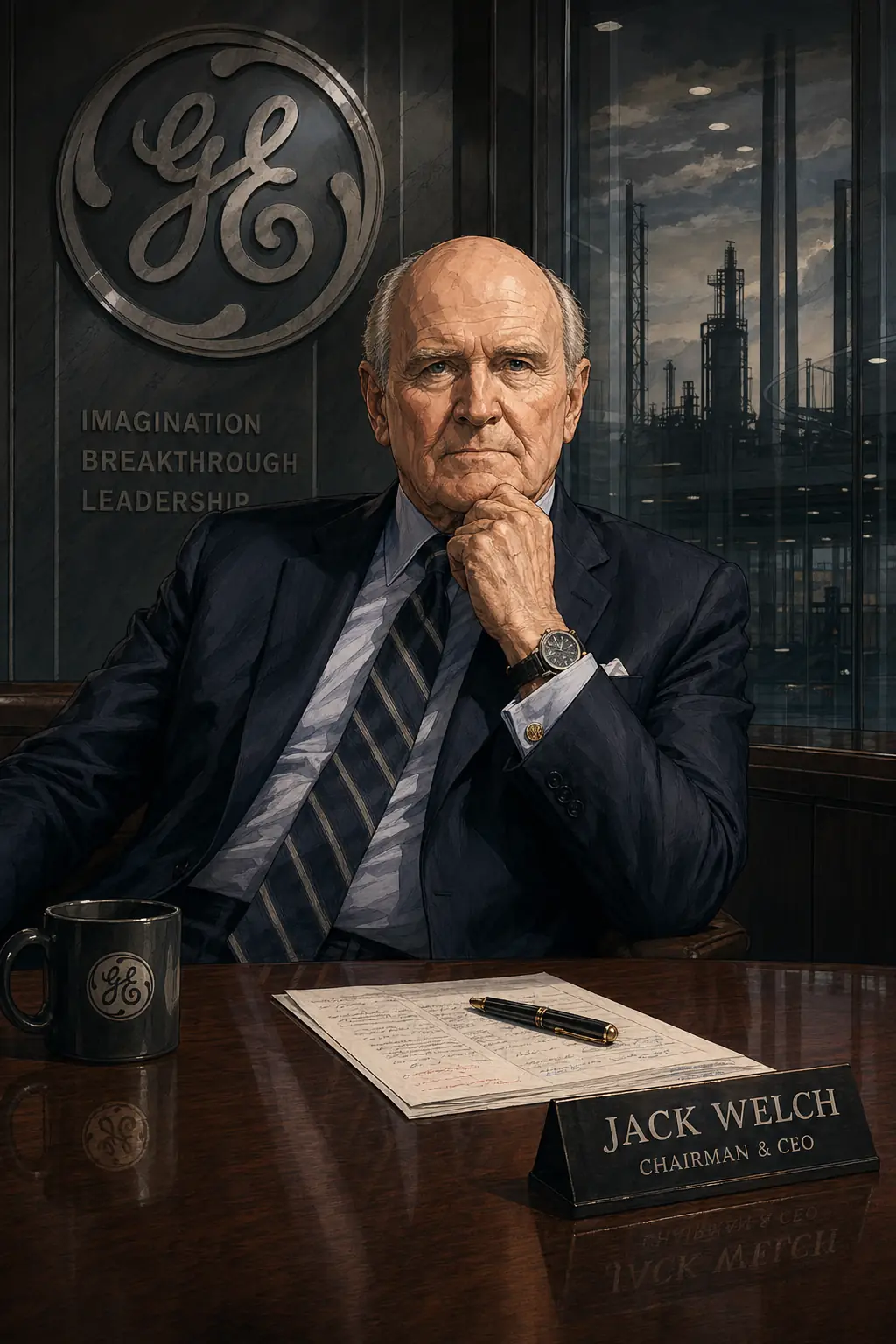
Jack Welch was called the greatest CEO of the twentieth century by Fortune magazine. Under his twenty-year reign at General Electric, the company’s market capitalization grew from $14 billion to $410 billion. He was the gold standard for corporate leadership — the tough, decisive manager who demanded excellence, rewarded winners, and mercilessly cut losers. Business schools taught his methods. CEOs imitated his style. He was, for a generation, what a leader was supposed to look like.
Then he retired, and GE fell apart. Within two decades, the company that Welch had built into the most valuable on Earth was dismantled, its stock price having fallen over 80% from its peak. The question that haunts Welch’s legacy: was he a genius, or did he just build a machine that looked spectacular while it was running but was destined to break?
Chapter 1: The Stammering Kid From Salem (1935–1960)
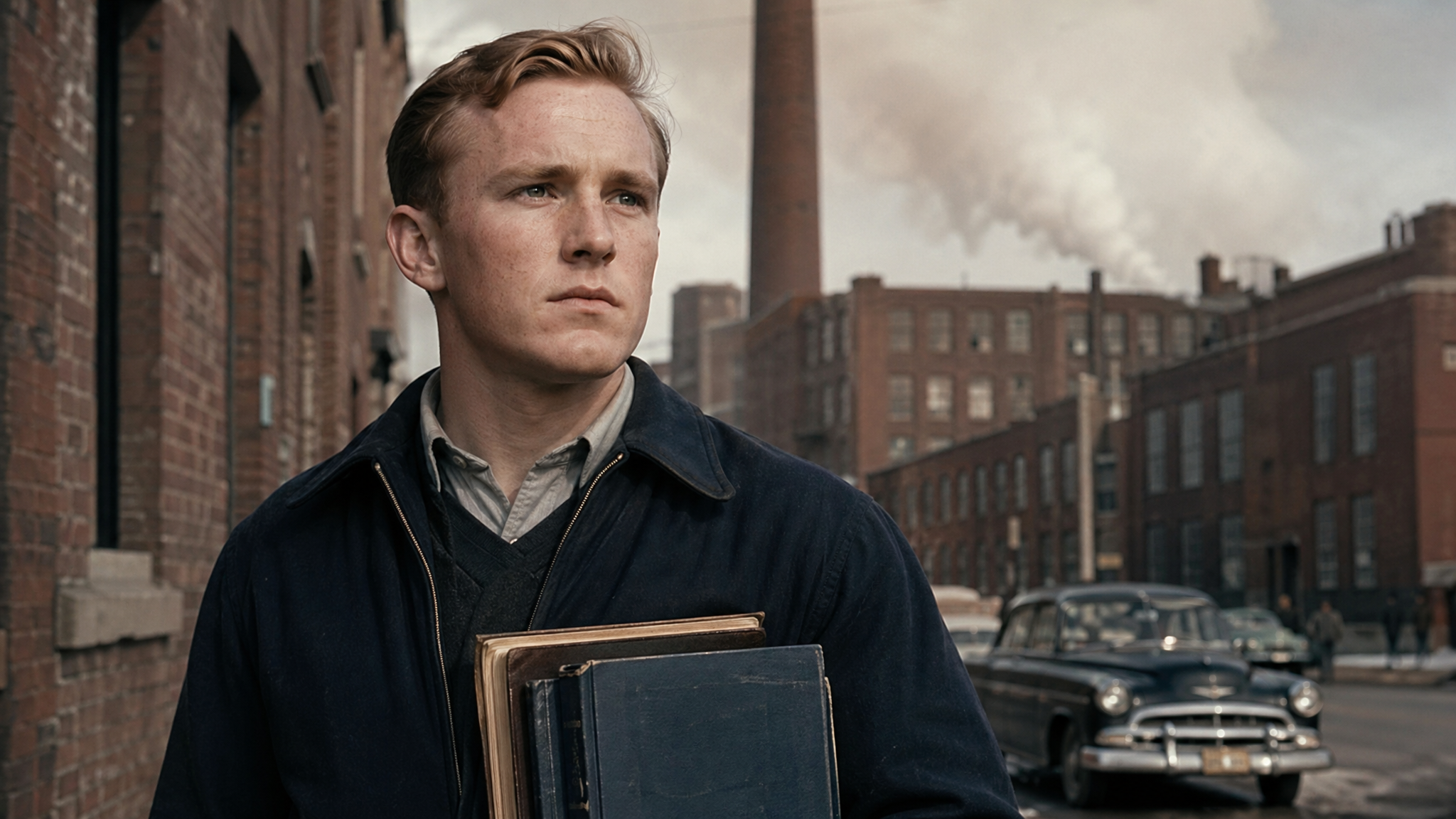
John Francis Welch Jr. was born on November 19, 1935, in Peabody, Massachusetts. His father was a railroad conductor; his mother, Grace, was the dominant force in his life. She was fiercely ambitious for her only child, pushing him relentlessly to succeed while simultaneously building his confidence. When young Jack developed a stutter, Grace told him it wasn’t a speech impediment — his brain was just working faster than his mouth could keep up.
The stutter shaped Welch’s personality. He compensated for the vulnerability by becoming intensely competitive. He excelled at hockey and baseball, not through natural talent but through ferocity. He brought the same intensity to academics, earning a degree in chemical engineering from the University of Massachusetts Amherst and then a PhD from the University of Illinois.
In 1960, Welch joined General Electric as a junior engineer in its plastics division. He was paid $10,500 a year. Within a year, he was ready to quit — a standard raise of $1,000 made him feel undervalued, and the company’s bureaucracy suffocated him. His boss convinced him to stay with a larger raise and a promise of more autonomy. It was a close call. If Welch had walked out that door, the entire history of American business might have been different.
Chapter 2: Rising Through GE’s Bureaucracy (1960–1981)
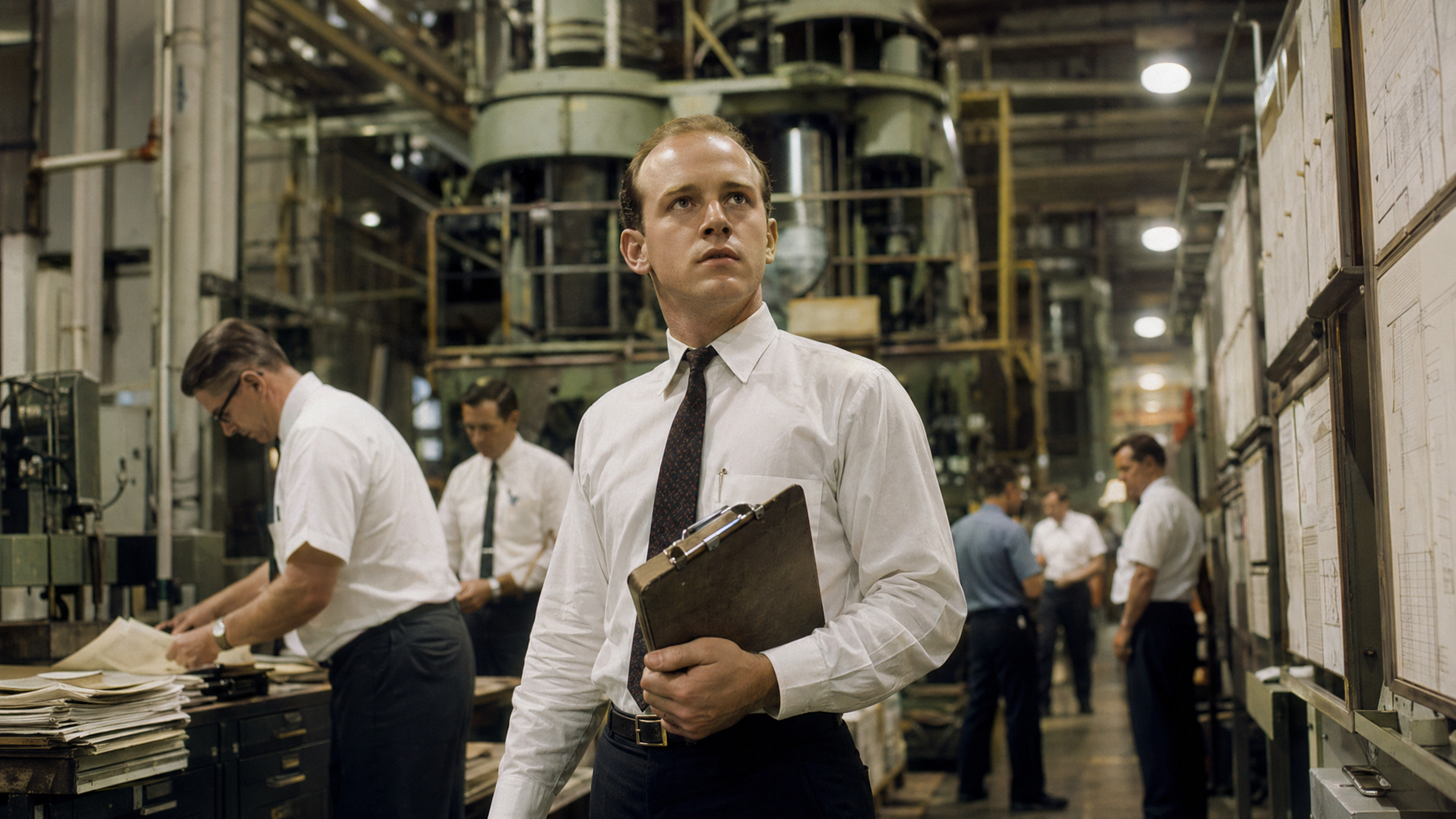
Welch spent twenty years climbing GE’s corporate ladder, and he hated almost every minute of the bureaucratic aspects. GE in the 1960s and 1970s was the most process-oriented company in America — layers of management, endless planning cycles, thick strategy documents that nobody read, and a culture that rewarded caution over action.
Welch was the opposite of cautious. In the plastics division, he grew revenue aggressively, launched new products rapidly, and built a culture of urgency that stood out in GE’s sea of corporate torpor. He blew up a factory in 1963 — literally, an explosion caused by a chemical process error — and managed to survive the incident without being fired, partly through charm and partly through the quality of his work.
He rose from engineer to division head to sector executive to vice chairman. At each level, he was the youngest person to hold the position. In April 1981, he became CEO of General Electric at age forty-five — the youngest CEO in the company’s history. He inherited a company with $27 billion in revenue, 440,000 employees, and a culture that he considered hopelessly sluggish. He planned to change all of it.
Chapter 3: Neutron Jack — The First Five Years (1981–1986)
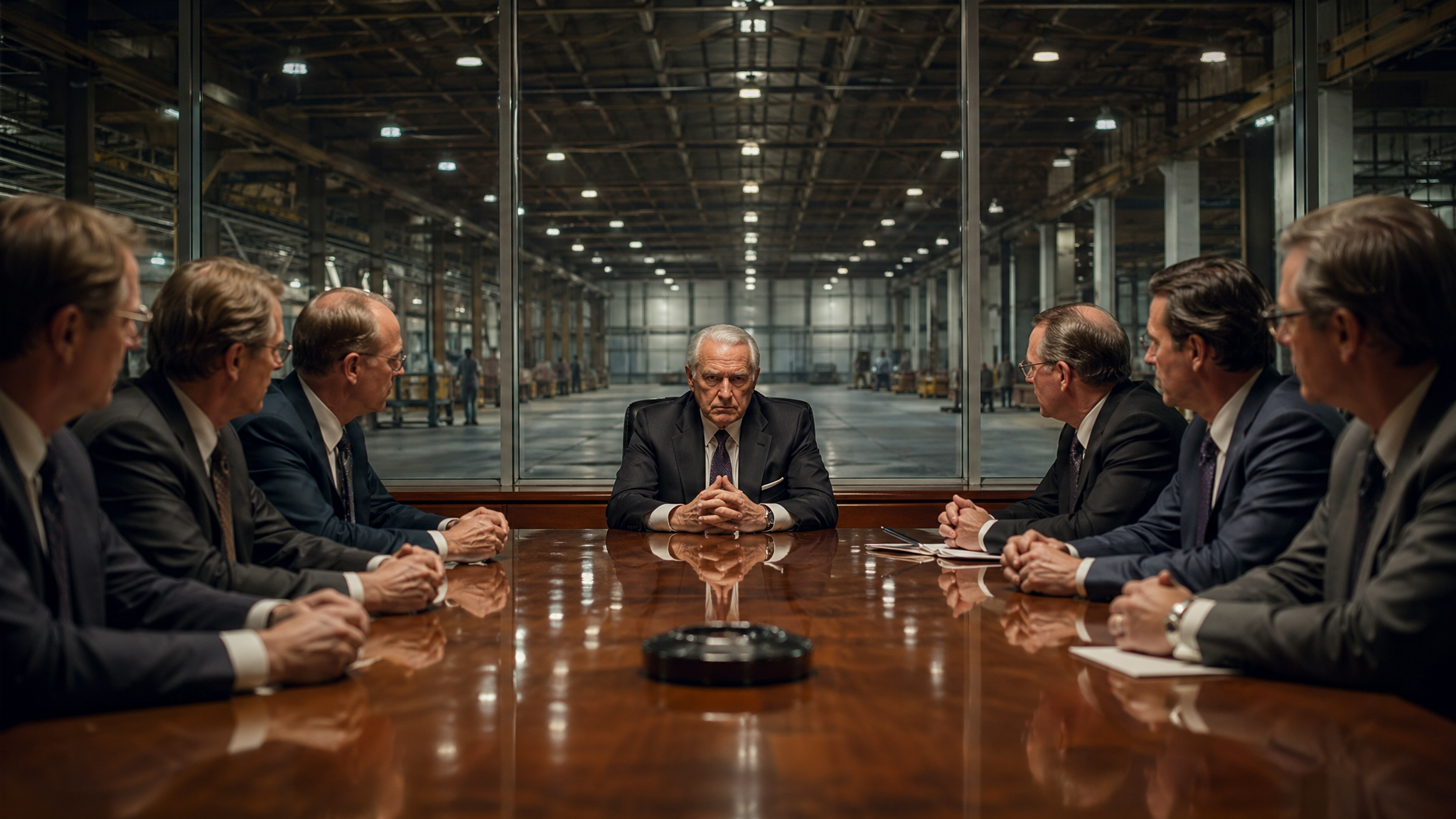
Welch’s first act as CEO was to declare that every GE business must be number one or number two in its market — or face being fixed, sold, or closed. The policy was simple, brutal, and effective. Over the next five years, GE sold or closed over 200 businesses and laid off more than 100,000 employees. Welch earned the nickname “Neutron Jack” — like the neutron bomb, he eliminated the people while leaving the buildings standing.
The layoffs were traumatic. GE had been a lifetime-employment company where workers expected to spend their entire careers. Welch’s mass reductions shattered that social contract. Towns that depended on GE factories were devastated. Employees who had given decades of loyal service were discarded. The human cost was real and visible.
But the financial results were undeniable. GE became leaner, faster, and more profitable. The businesses that survived Welch’s culling were stronger and better positioned. Revenue grew from $27 billion to $40 billion. Profits grew faster. The stock price began its legendary ascent. Welch was being validated by the only metric that mattered to Wall Street: shareholder returns.
Chapter 4: The Rank-and-Yank System (1982–2001)
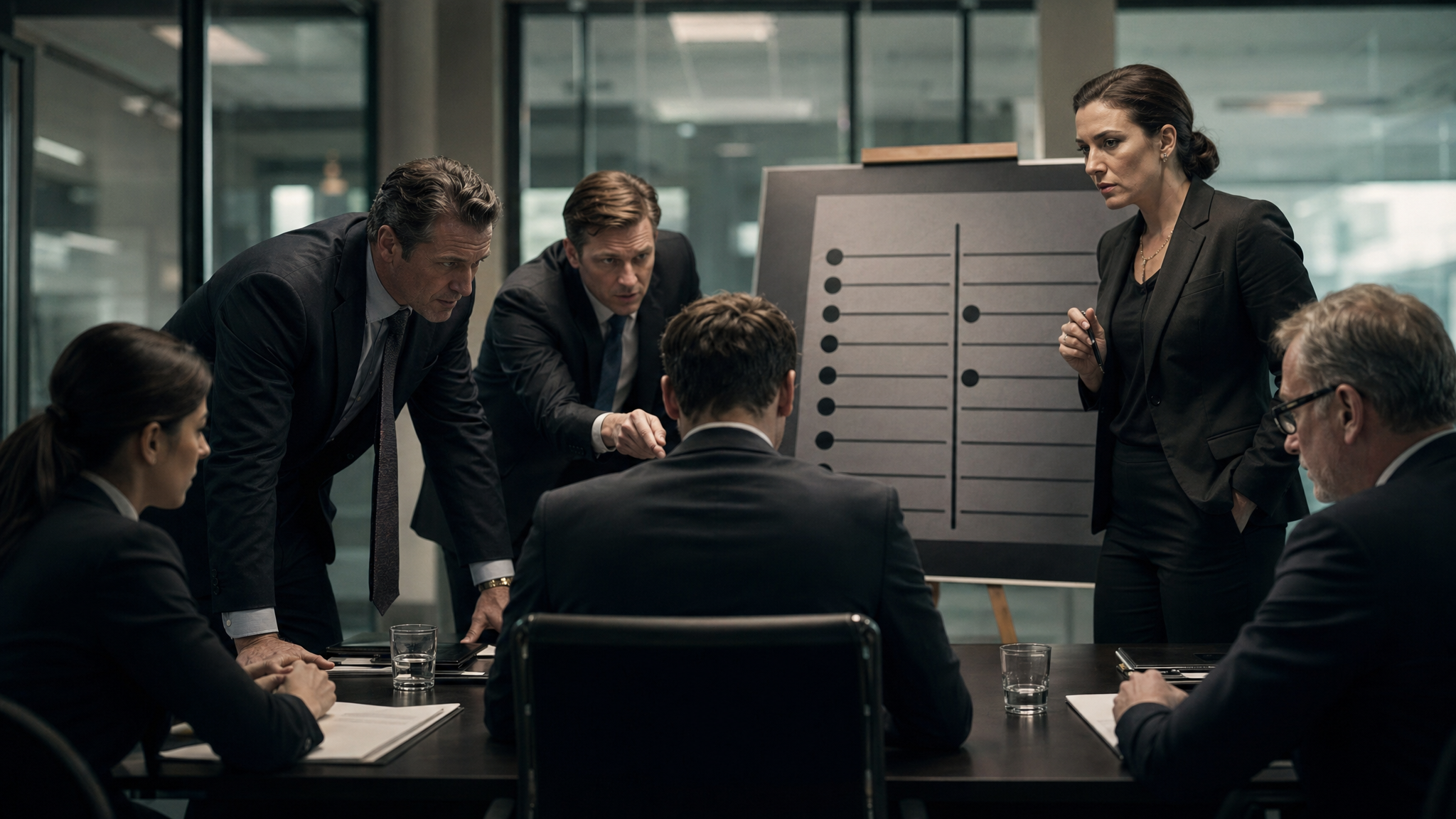
Welch’s most famous — and controversial — management innovation was the “vitality curve,” colloquially known as “rank and yank.” Every year, managers were required to rank their employees into three categories: the top 20% (stars to be rewarded), the middle 70% (adequate performers to be developed), and the bottom 10% (to be coached up or fired).
The system created an intensely competitive culture. Employees knew they were being measured, ranked, and compared constantly. The top performers received stock options, bonuses, and promotions. The bottom performers received severance packages. There was no hiding, no coasting, and no safety in seniority.
Proponents argued that rank-and-yank kept GE’s talent pool sharp and prevented the accumulation of mediocrity that plagued large organizations. Critics argued it created a culture of fear, discouraged collaboration, and incentivized short-term performance over long-term thinking. Employees who might have taken productive risks — developing a new technology that wouldn’t pay off for five years, for example — instead focused on hitting quarterly numbers that would keep them in the top 20%.
Chapter 5: GE Capital — The Hidden Engine (1986–2001)

The most consequential and least understood aspect of Welch’s GE was the expansion of GE Capital, the company’s financial services arm. Under Welch, GE Capital grew from a modest financing operation into a financial services behemoth that rivaled major banks. It provided commercial loans, consumer credit, insurance, and a vast array of financial products.
By the late 1990s, GE Capital was generating roughly half of GE’s total profits. This was, depending on your perspective, either brilliant diversification or the biggest accounting gimmick in corporate history. GE Capital gave Welch extraordinary flexibility in managing earnings. If the industrial businesses had a weak quarter, GE Capital could release reserves, time asset sales, or adjust accounting estimates to smooth the result.
The consequence was that GE reported earnings growth that was suspiciously consistent — quarter after quarter, year after year, GE met or slightly exceeded Wall Street expectations. The consistency was celebrated as evidence of Welch’s management genius. In retrospect, it raised questions about whether the earnings were managed rather than earned. A 2009 SEC investigation found that GE had used accounting techniques at GE Capital to smooth results, though the company settled without admitting wrongdoing.
Chapter 6: The Deal Machine (1986–2001)
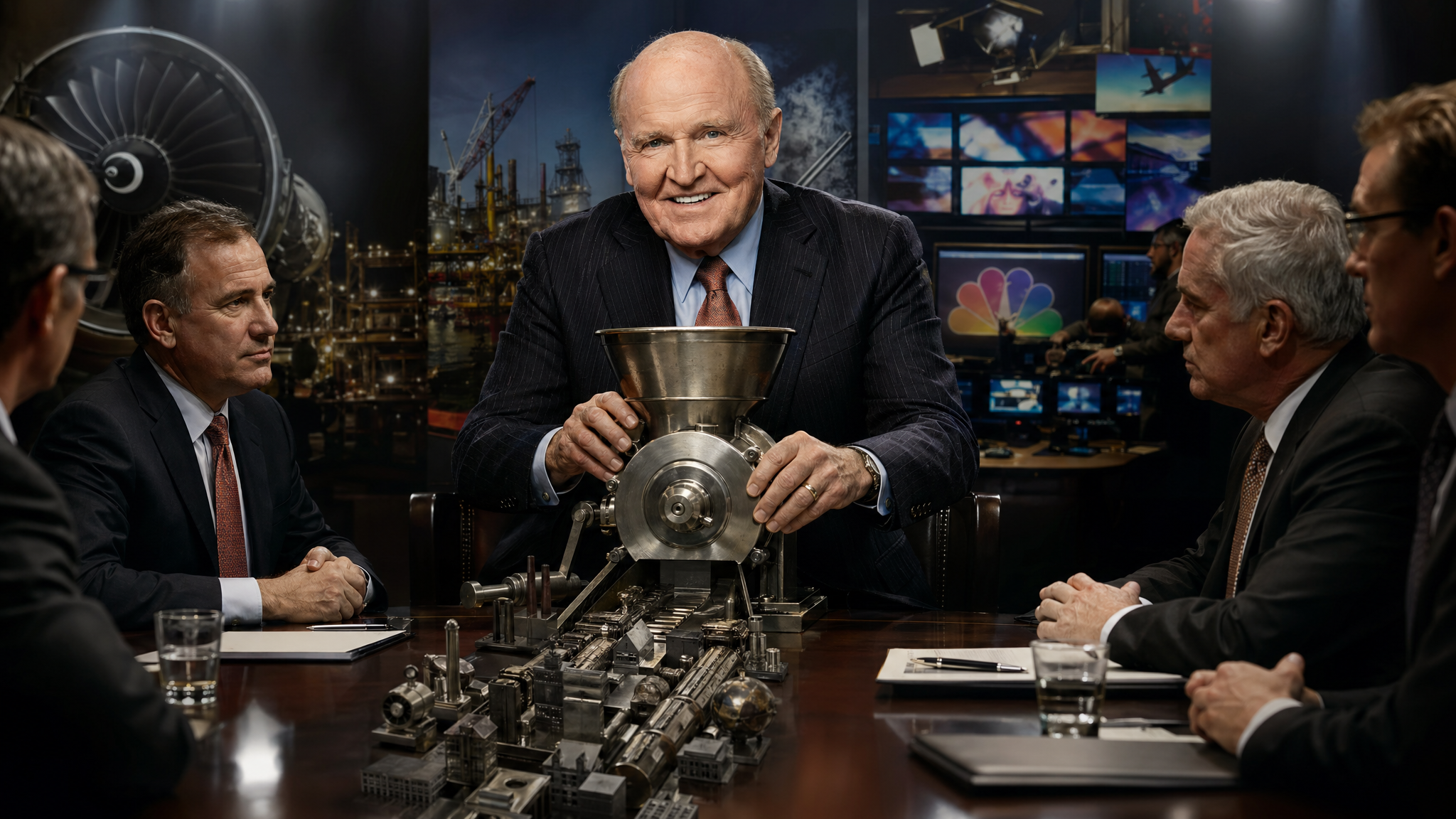
Welch was as prolific an acquirer as he was a layoff artist. During his tenure, GE completed over 900 acquisitions, spending tens of billions of dollars to enter new markets and expand existing ones. The acquisitions ranged from small tuck-ins to transformative deals like the $6.3 billion purchase of RCA (which included NBC, making GE a media company).
The acquisition strategy reflected Welch’s core belief that the way to grow a conglomerate was to buy the best businesses in every market and manage them better than anyone else. He wasn’t building products or technologies from scratch — he was assembling a portfolio of market-leading businesses and extracting maximum performance from each.
The NBC acquisition was the most culturally significant. Under GE’s ownership, NBC became the number-one television network, home to Seinfeld, Friends, ER, and The West Wing. Welch took a personal interest in the network and, according to multiple accounts, sometimes influenced news coverage. The combination of an industrial conglomerate and a major news network created conflicts of interest that would become increasingly problematic.
Chapter 7: The Celebrity CEO (1990s)
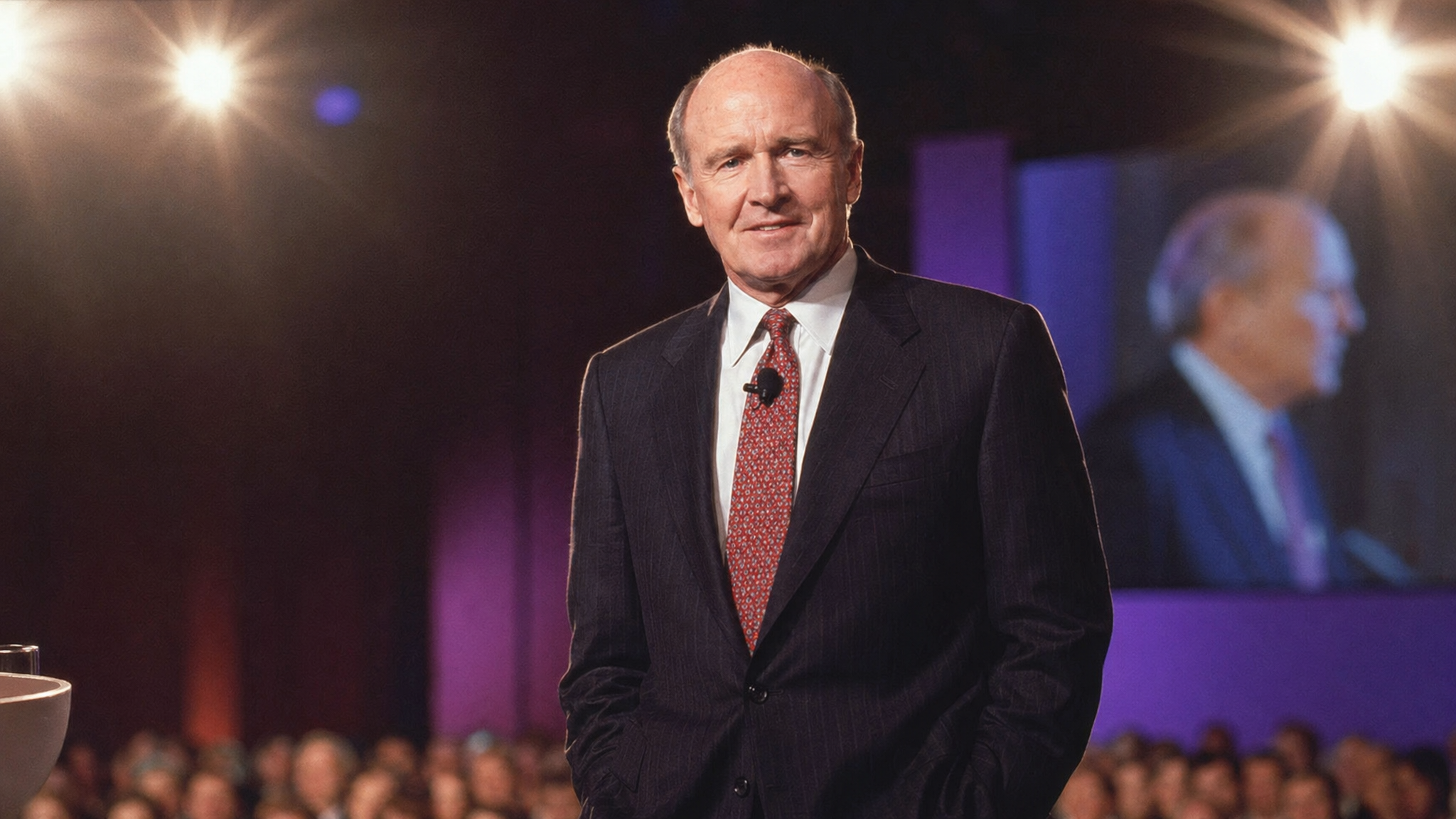
By the 1990s, Jack Welch was the most famous CEO in America. His face was on magazine covers. His management philosophy was taught at every business school. His annual letter to shareholders was required reading for corporate leaders worldwide. He was invited to speak everywhere, quoted constantly, and treated as an oracle of business wisdom.
The celebrity status fed on itself. As Welch became more famous, GE’s stock price benefited from the “Welch premium” — investors paid a higher multiple for GE’s earnings because they trusted Welch to deliver consistent growth. As the stock price rose, Welch’s reputation grew further. It was a virtuous cycle — or a bubble, depending on when you measured it.
The celebrity also insulated Welch from criticism. When employees complained about the rank-and-yank system’s brutality, they were dismissed as low performers. When analysts questioned GE Capital’s earnings consistency, they were told they didn’t understand the company’s management capabilities. When journalists probed the conglomerate’s complexity, they were given access to Welch’s famous charm. The aura of success was self-reinforcing and, for twenty years, self-fulfilling.
Chapter 8: The Failed Honeywell Merger (2000–2001)
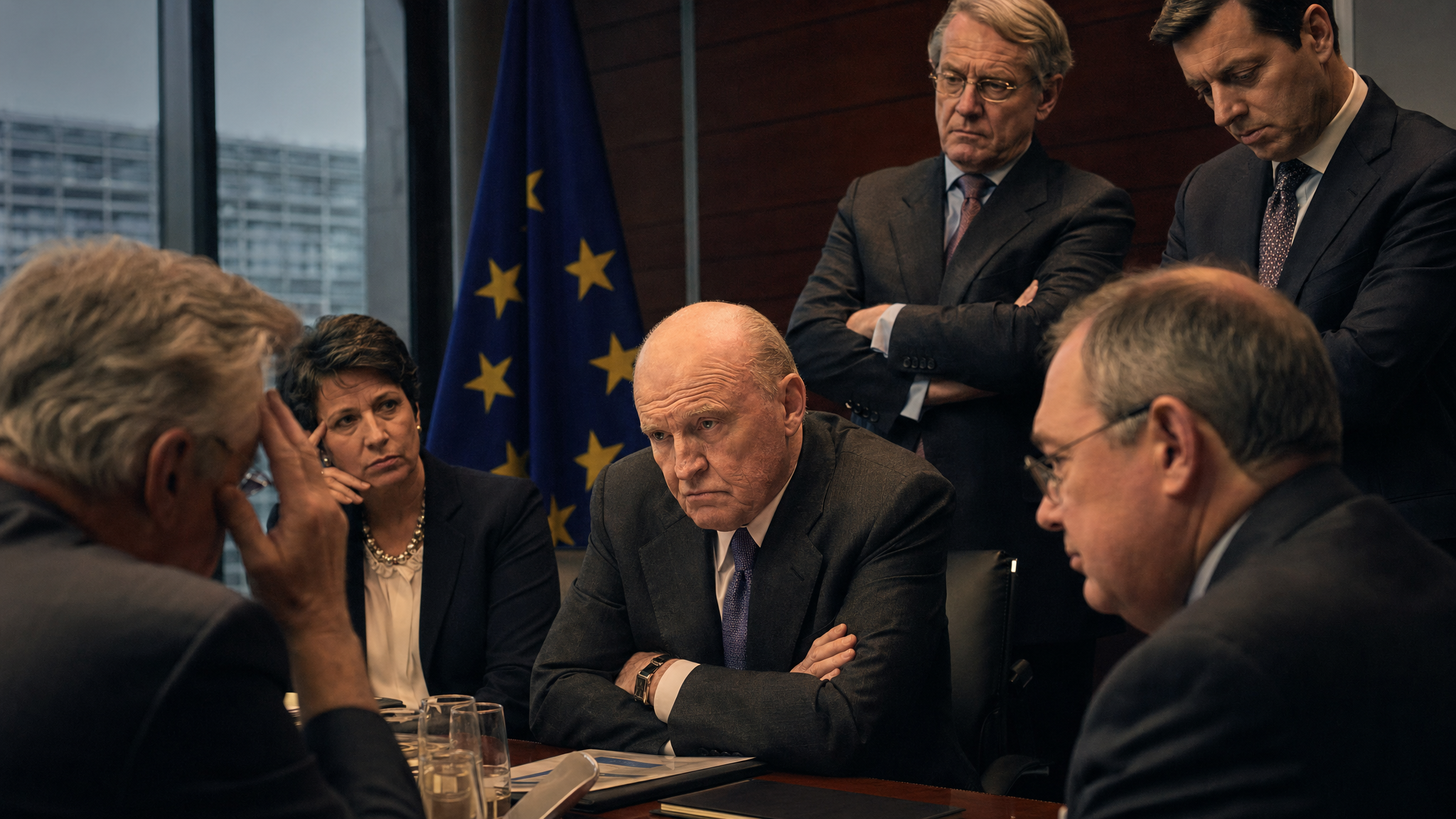
In October 2000, GE announced a $45 billion merger with Honeywell International — a deal that would have been the largest industrial merger in history. Welch came out of his planned retirement to personally oversee the transaction, which he considered the crowning achievement of his career.
The European Commission blocked the deal in July 2001, citing antitrust concerns. It was the first time a US mega-merger had been blocked solely by European regulators, and Welch was furious. He had lobbied aggressively for approval, made personal trips to Brussels, and used every tool in his considerable arsenal of persuasion. The regulators were unmoved.
The Honeywell failure was a rare public defeat for Welch, and it colored his final months at GE. He retired in September 2001, handing the company to Jeff Immelt just four days before the September 11 attacks. The timing was terrible — GE’s insurance business took massive losses from the attacks, the stock market crashed, and the economic environment turned hostile. Welch had exited at the peak, leaving his successor to deal with the consequences.
Chapter 9: Retirement and the Divorce Scandal (2001–2003)

Welch’s retirement was lavish. His severance package included a lifetime pension of $9 million per year, an apartment in Manhattan, use of corporate aircraft, and a range of other perks that, when disclosed during his 2002 divorce from second wife Jane Beasley, generated a firestorm of public outrage. The perks were legal and had been approved by GE’s board, but in the post-Enron environment, the optics of a retired CEO living at company expense were toxic.
Welch voluntarily gave up most of the perks to stop the negative publicity. But the divorce proceedings revealed details of his personal life that didn’t match the disciplined, no-nonsense image he had cultivated. He had been having an affair with Suzy Wetlaufer, the editor of Harvard Business Review, who had been writing a profile of him. The relationship was exposed, Wetlaufer resigned from HBR, and Welch’s carefully managed public image took a significant hit.
The divorce and its revelations humanized Welch in ways he probably didn’t appreciate. The CEO who had preached discipline and accountability was, in private, as messy and imperfect as anyone else. The gap between the public image and the private reality wasn’t unique to Welch, but it was especially jarring given the pedestal he had been placed on.
Chapter 10: The Collapse of Welch’s GE (2001–2021)

Under Jeff Immelt, Welch’s handpicked successor, GE slowly unraveled. The problems that Welch had masked or deferred became impossible to ignore. GE Capital’s massive balance sheet was a liability, not an asset, during the 2008 financial crisis — the company required a $3 billion investment from Warren Buffett and access to government guarantee programs to survive.
GE’s industrial businesses had been neglected during the GE Capital boom. The power division made a catastrophic bet on natural gas turbines just as renewable energy was taking off. The insurance business had long-term liabilities that had been underestimated by billions. The acquisition strategy that had defined the Welch era produced numerous write-downs as purchased businesses underperformed.
By 2018, GE had been removed from the Dow Jones Industrial Average — the index it had been a member of since 1907. The stock price, which had peaked at over $60 in 2000, fell below $7. GE announced it would break itself into three separate companies: GE Aerospace, GE HealthCare, and GE Vernova (energy). The conglomerate that Welch had built was being dismantled because the model he championed had failed.
Chapter 11: Welch’s Death and the Reassessment (2020)
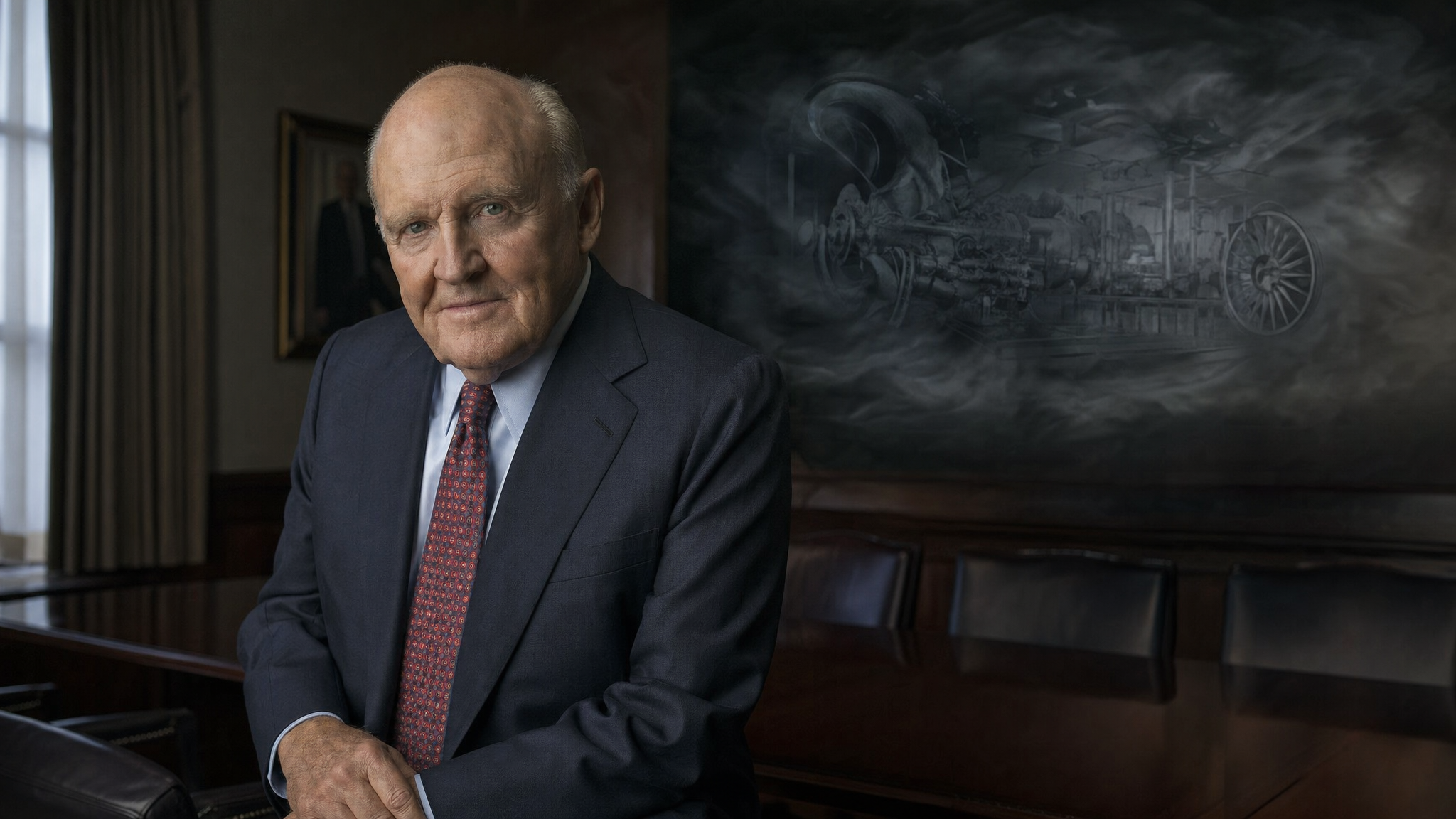
Jack Welch died on March 1, 2020, at the age of eighty-four, from renal failure. The obituaries were respectful but notably more critical than they would have been a decade earlier. The narrative had shifted: Welch was no longer simply “the greatest CEO of the twentieth century.” He was the CEO who had optimized GE for his own tenure and left a time bomb for his successors.
The reassessment was driven by the evidence of GE’s subsequent collapse. If Welch’s management system was truly superior, why did it produce a company that couldn’t survive without him? If his talent development was legendary, why did his successor — who Welch had personally selected from among GE’s best executives — fail so dramatically? If the financial results were real, why did the earnings growth stop the moment Welch left?
The answers pointed to systemic problems: GE Capital’s leverage and earnings management had created an artificial growth story. The rank-and-yank system had produced executors, not innovators. The acquisition strategy had assembled a portfolio that was too complex for any management team to oversee effectively. And the culture of meeting quarterly expectations at all costs had discouraged the long-term investments that the company needed to remain competitive.
Chapter 12: Legacy — The Question That Won’t Go Away
Jack Welch’s legacy is defined by a question: was the value real? During his tenure, GE created approximately $400 billion in market capitalization. After his departure, GE destroyed most of it. If the value creation required Welch’s personal presence to sustain, was it genuine value creation or a performance that ended when the performer left the stage?
The honest answer is probably: both. Welch genuinely improved many of GE’s businesses. The focus on being number one or number two in every market was strategically sound. The investment in talent development — however brutal the methods — produced a generation of executives who went on to lead major companies. The operational improvements were real.
But Welch also built a system that depended on growth that couldn’t be sustained organically, leveraged the balance sheet to a degree that proved dangerous, managed earnings to create an illusion of consistency, and cultivated a culture that prioritized short-term performance over long-term resilience. The greatest CEO of the twentieth century may have been the greatest CEO for the last quarter of the twentieth century — and a disaster for the first quarter of the twenty-first. The buildings are still standing. But Neutron Jack’s legacy, like the people his bombs eliminated, may ultimately prove to have been more fragile than it appeared.
💡 Key Insights
- ▸ Welch's celebrated 'rank and yank' system — firing the bottom 10% of performers annually — created a culture of fear and internal competition that optimized for short-term performance at the expense of long-term health.
- ▸ GE Capital became the engine of Welch's earnings magic. By expanding into financial services, Welch could smooth earnings, hit quarterly targets, and maintain the growth narrative. When the financial crisis hit, the leverage nearly killed the company.
- ▸ The gap between Welch's reputation and GE's subsequent collapse raises an uncomfortable question: was his management genius real, or was he just the beneficiary of favorable conditions who left the hard problems for his successors?