John Tu and David Sun: The Memory Partnership Behind Kingston Technology
Two immigrants turned a market dislocation into Kingston Technology, building a private memory giant around inventory discipline, supplier trust, and partnership.
View all stories about this mogul
Kingston Technology began with a shortage, a small surface-mount memory module, and two partners who understood that hardware fortunes are made between price cycles.
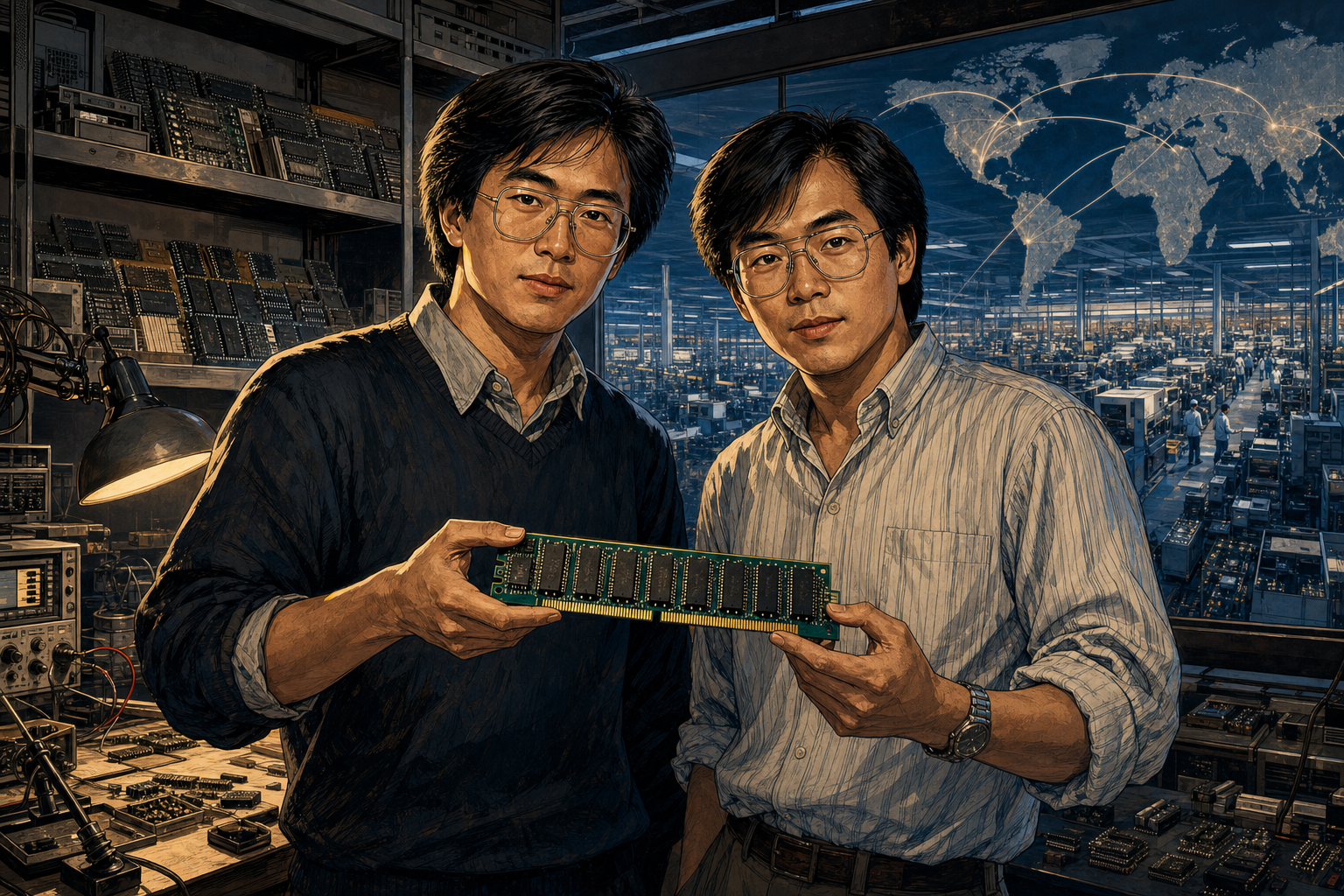
John Tu and David Sun did not invent computer memory. They built a system for buying, testing, assembling, and delivering it when customers could not afford uncertainty. That distinction turned a 1987 startup in Fountain Valley, California, into one of the world’s best-known independent memory companies.
How Did a Memory Shortage Create Kingston?
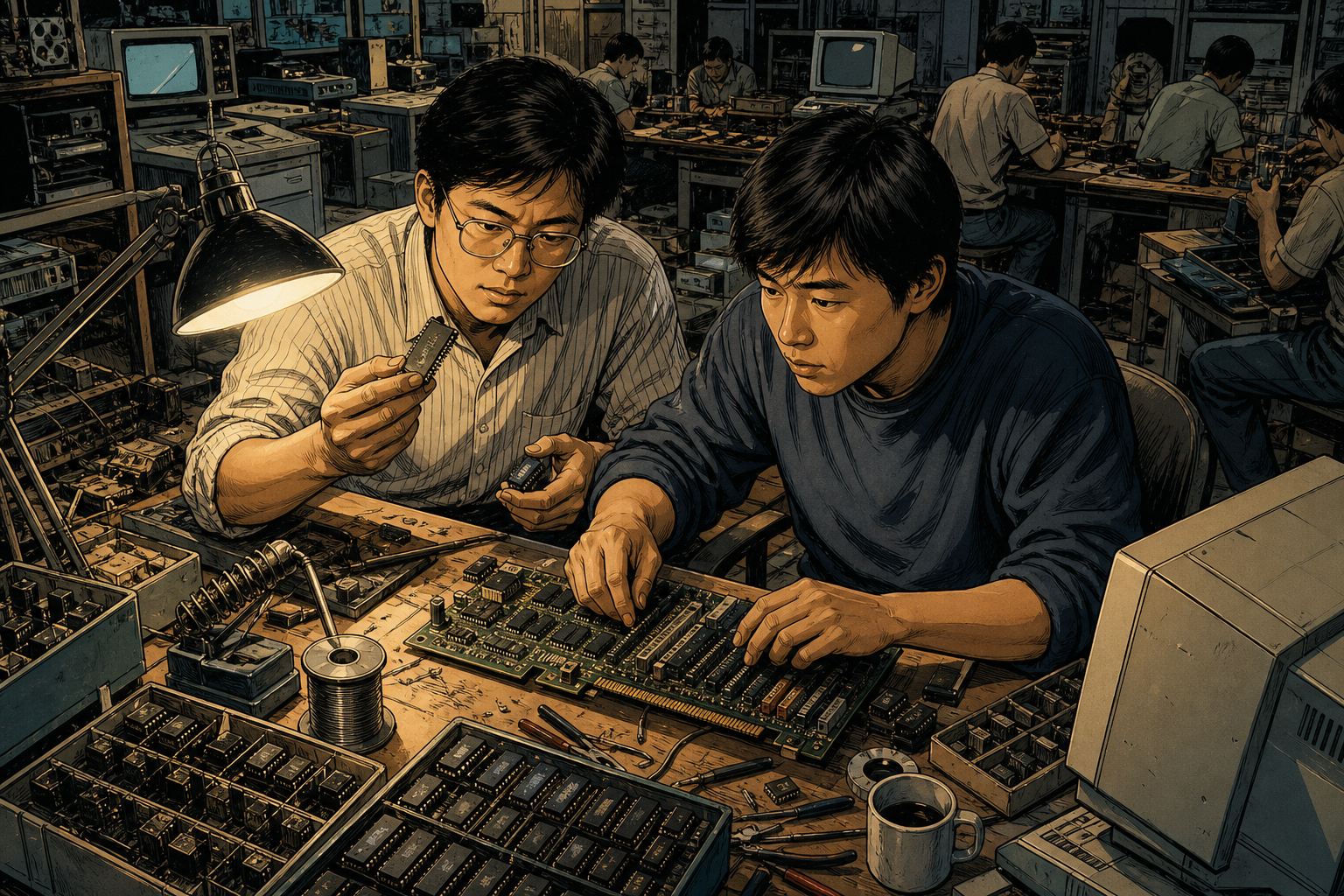
The personal-computer industry of the 1980s was expanding quickly, but its component supply chain remained cyclical and fragile. A shortage could send prices soaring and leave manufacturers scrambling for compatible parts.
Tu and Sun had already worked together in the computer business. After an earlier venture, they recognized a practical gap: personal computers needed memory expansion, and buyers wanted modules that worked without forcing them to master chip sourcing and compatibility.
Kingston’s early product combined readily available memory chips into a module designed for a specific system requirement. The value was not mystical technology. It was packaging uncertainty into something a customer could purchase, install, and trust.
That model required disciplined inventory. Memory prices can fall rapidly after a shortage ends. Stock bought at the top can destroy margins before it reaches a customer. Kingston had to move fast without confusing urgency with speculation.
Why Did the Partnership Survive Hardware Cycles?

Component companies live between powerful suppliers and demanding customers. They need allocation from chipmakers, accurate forecasts, rigorous testing, and a broad catalog of systems that change constantly.
Kingston expanded beyond upgrade modules into flash storage, solid-state drives, embedded products, and gaming hardware. Each category added technical and inventory risk, but the operating logic remained familiar: qualify components, make compatibility legible, and stand behind the finished product.
Private ownership helped. Tu and Sun could absorb industry volatility without explaining every quarter to public shareholders. That freedom did not remove market discipline; it made cash and inventory discipline even more important because the founders carried the consequences directly.
Their partnership also became part of the corporate identity. Kingston is often described through its employee culture and the founders’ long tenure together. In a sector obsessed with the newest chip, continuity in relationships can be a moat: suppliers remember who paid and behaved predictably during downturns, while customers remember which modules worked.
What Is the Real Lesson of Kingston’s Empire?
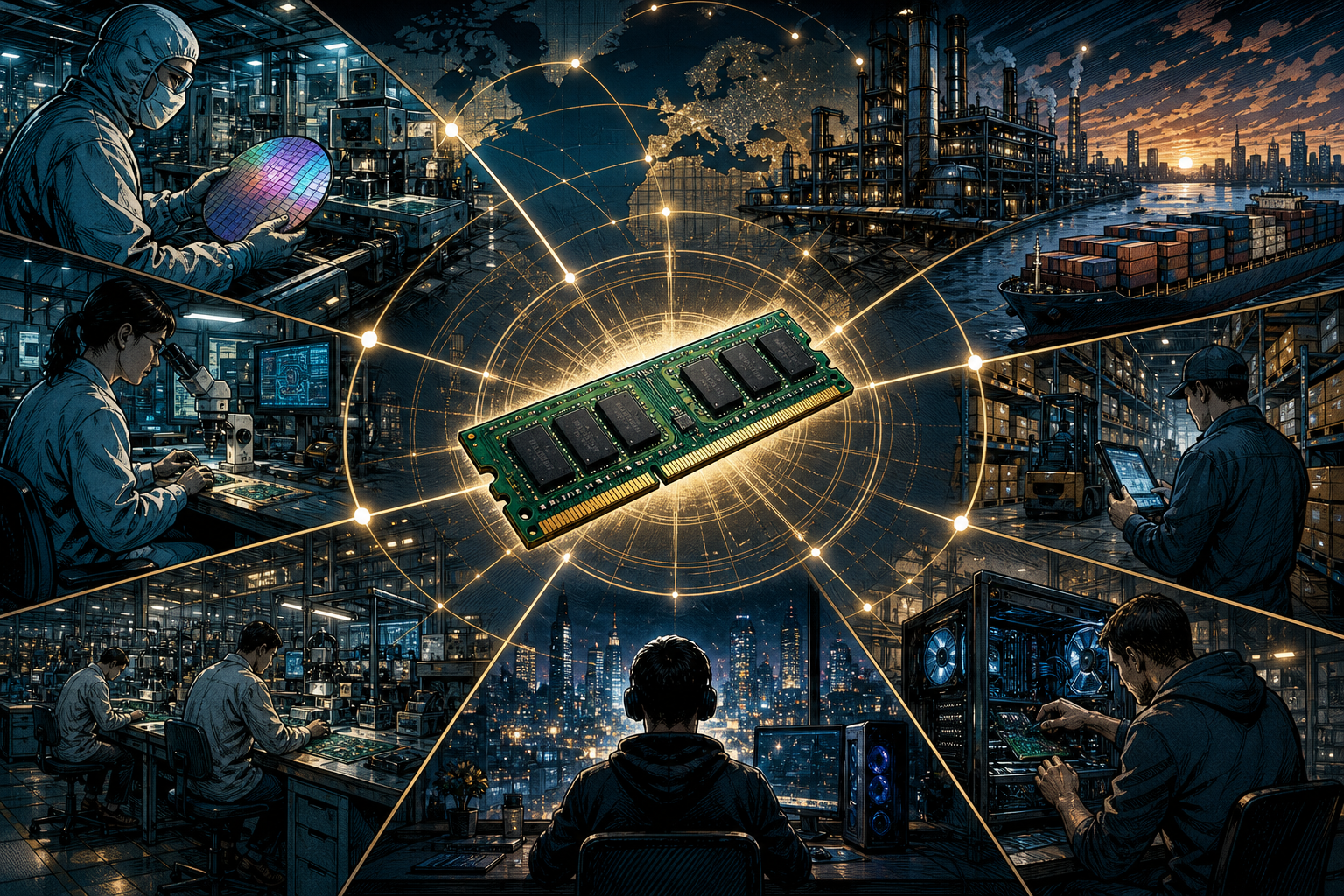
Kingston’s story is a reminder that technology empires are not built only at the frontier. Enormous value can sit in qualification, logistics, warranty, channel coverage, and the ability to turn volatile inputs into a reliable product.
The founders reportedly sold a large majority stake to SoftBank in the mid-1990s and later bought it back. Whatever the precise financial lesson, the episode reinforced the strategic value of control. Kingston remained private and continued to compound inside a market where many brands disappeared or consolidated.
The risk has never vanished. Memory remains cyclical. Major chip producers can integrate downstream, device architectures can change, and commodity pricing can compress margins. Kingston must continually prove that its layer of reliability deserves to exist.
Tu and Sun built that layer by treating partnership as infrastructure. A shortage created the opening, but four decades of operations created the empire. The memory module was small; the trust network around it became enormous.
💡 Key Insights
- ▸ A supply shock can create an opening for operators who understand inventory and customer urgency.
- ▸ Private ownership can support countercyclical decisions in a volatile hardware market.
- ▸ Supplier trust and product qualification matter as much as brand in component businesses.
- ▸ A durable partnership can become an operating advantage when roles and incentives stay aligned.