Juan Trippe: How Pan Am Turned Aviation Into a Global Network
Juan Trippe combined route rights, aircraft bets, terminals, and a premium global brand to make Pan Am the operating system of early international air travel.
View all stories about this mogul
Juan Trippe did not merely build an airline. He assembled routes, aircraft, terminals, diplomacy, and status into the first widely recognized global aviation network.
Pan American World Airways became shorthand for international flight during the middle of the twentieth century. Its blue globe appeared wherever American commercial ambition met the practical difficulty of crossing oceans.
The achievement carried a structural weakness. Pan Am was built for a regulated world in which international authority was scarce and domestic routes were politically allocated. When regulation and competition changed, the network that once looked unassailable had too little protection underneath it.
How did Juan Trippe turn route rights into a network?
Trippe was born in 1899 and learned to fly while at Yale. After wartime and early aviation ventures, he helped organize the airline that became Pan American Airways. The company began scheduled service between Florida and Cuba in 1927.
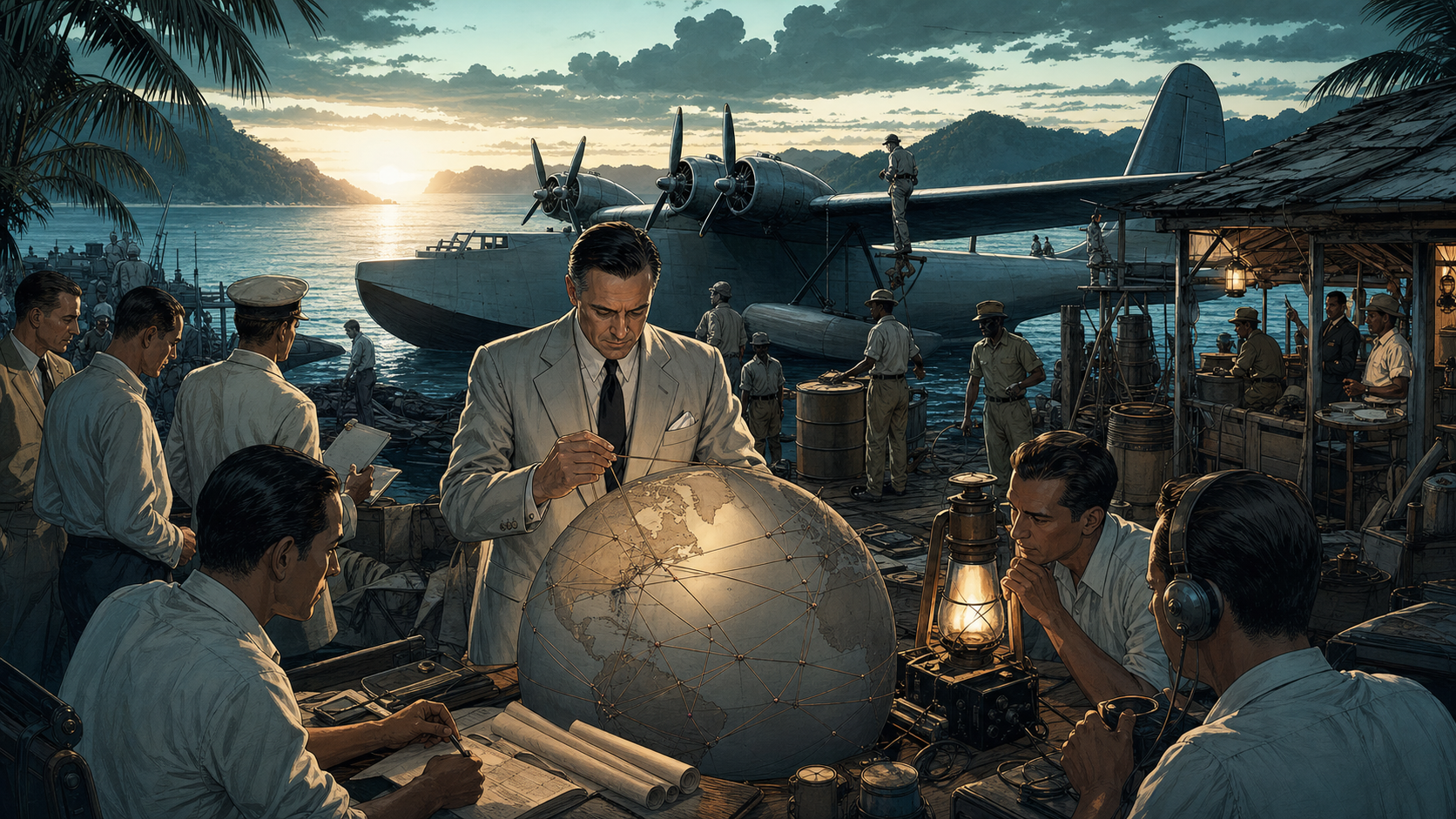
International aviation was not a normal consumer market. Every route required government permission, landing rights, diplomatic relationships, weather knowledge, radio capability, maintenance, and places for passengers and crews to stop. A line on a map represented years of negotiation and capital.
Trippe treated each new route as part of a larger system. Caribbean service created operating experience. Latin American routes added cities and political relationships. Pacific and Atlantic crossings required flying boats, island bases, hotels, terminals, and a service culture that made extreme distances feel manageable.
Pan Am’s famous Clippers turned infrastructure into theater. Passengers saw lounges, meals, uniforms, and spacious cabins; behind the experience sat navigation, maintenance, fuel planning, and geopolitics. The glamour mattered because customers needed confidence in a technology that still felt dangerous and unfamiliar.
The network benefited from scarcity. Few rivals could reproduce the permissions and physical chain Pan Am had assembled. Trippe’s product was therefore not one flight. It was reliable access across an expanding web.
Why did Pan Am keep making enormous aircraft bets?
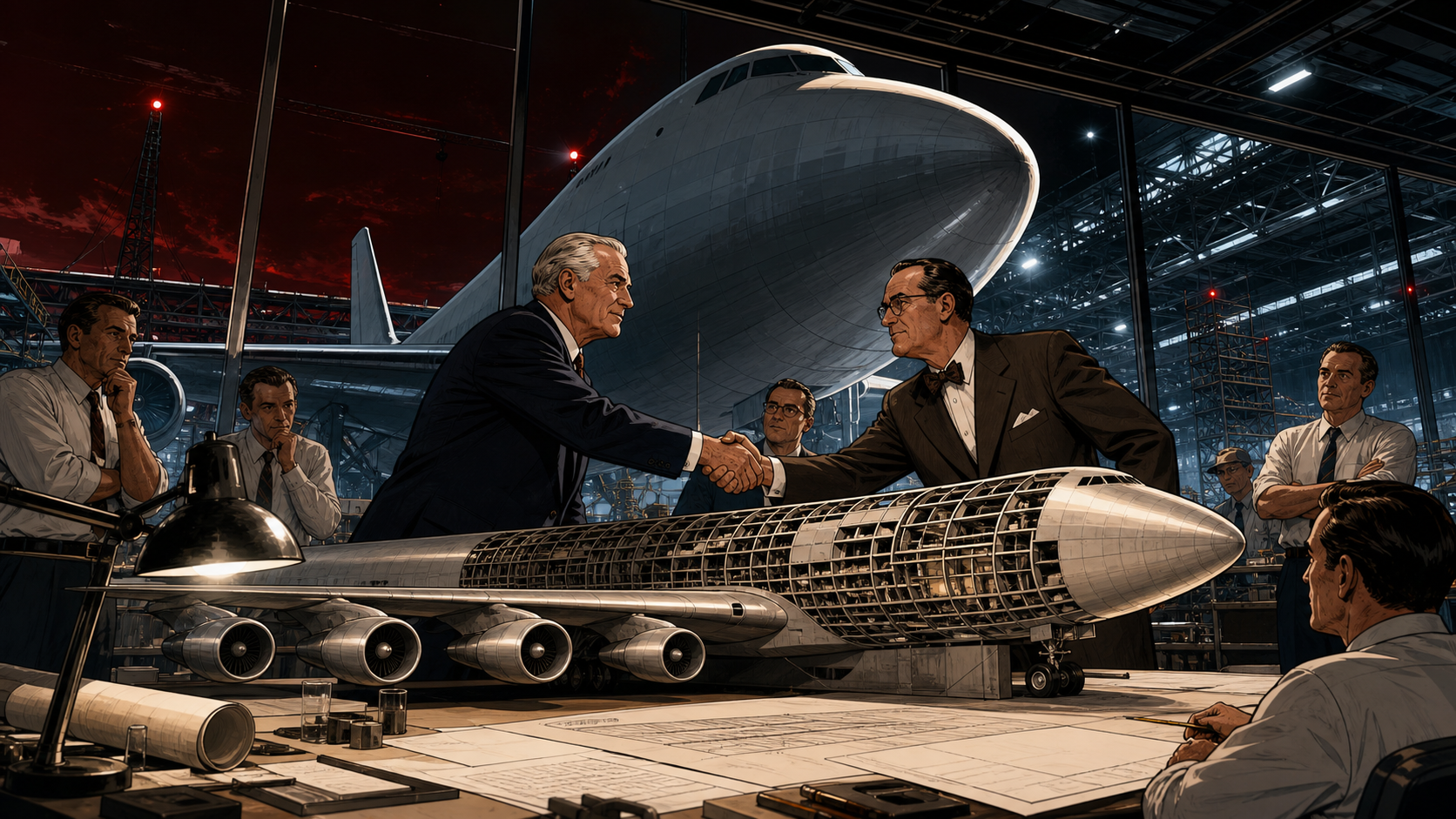
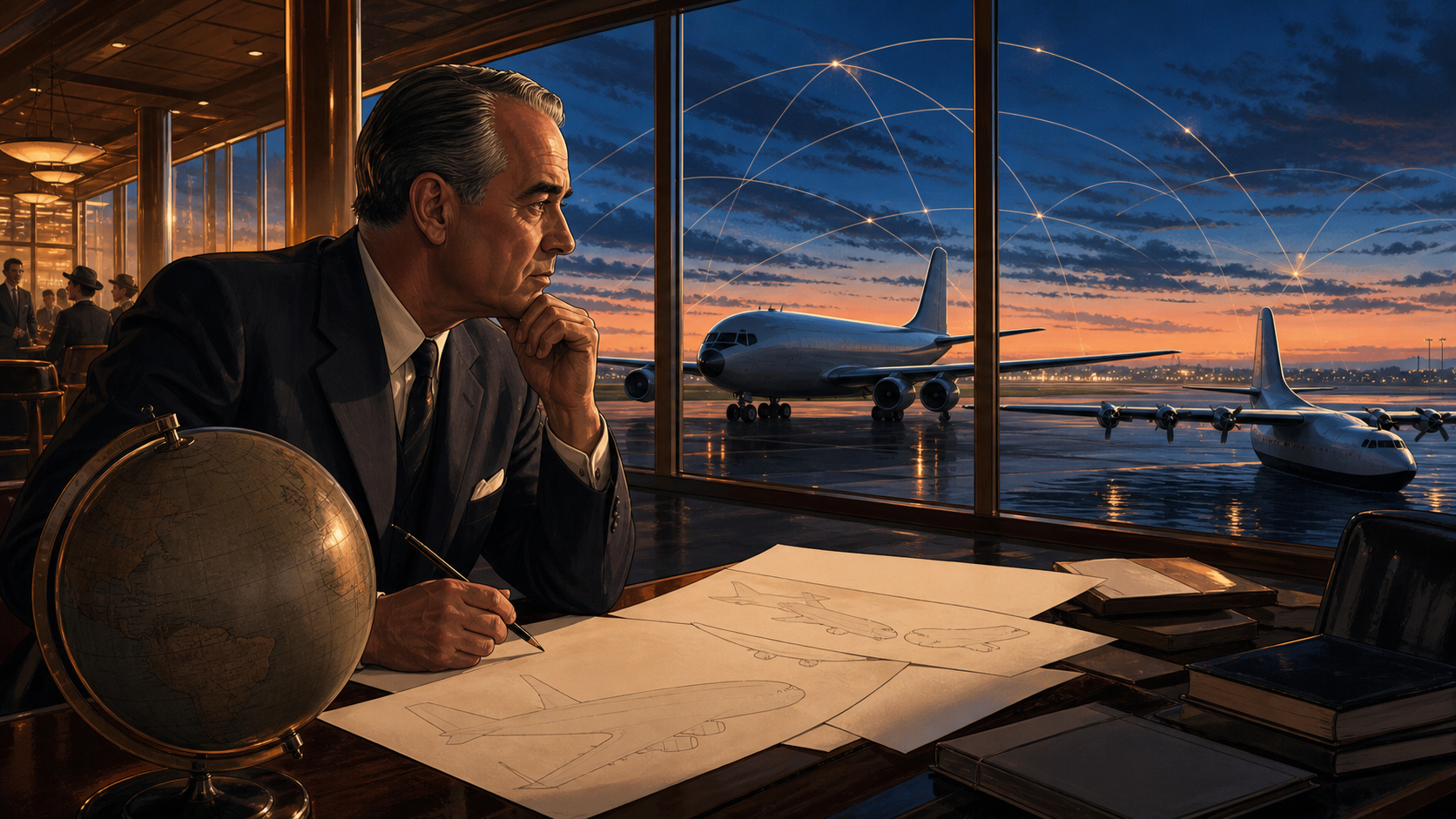
Trippe repeatedly pushed manufacturers toward aircraft that could carry more people farther at lower unit cost. Pan Am became an early customer for long-range flying boats, then embraced the jet age with the Boeing 707 and Douglas DC-8.
Jets cut travel time and changed the meaning of distance. They also demanded new airport infrastructure, training, maintenance, and financing. Pan Am used scale and brand to fill capacity, while its orders encouraged manufacturers to build the machines that would expand the whole market.
The boldest symbol was the Boeing 747. Trippe urged Boeing leader Bill Allen toward a much larger airliner, believing lower seat-mile costs would democratize international travel. The wide-body aircraft did exactly that, but it also introduced huge fixed costs. An empty large plane is not inexpensive simply because every full seat is efficient.
Trippe’s bets created a flywheel: better aircraft enabled longer routes, the network attracted passengers, traffic justified larger aircraft, and the brand reassured governments and travelers. Yet each turn increased dependence on growth, fuel economics, and favorable rules.
The strategy demonstrates the double edge of scale. Infrastructure can deepen a moat when demand grows as expected. When conditions reverse, the same infrastructure becomes an obligation that cannot be shrunk quickly.
What broke the Pan Am system—and what survived?
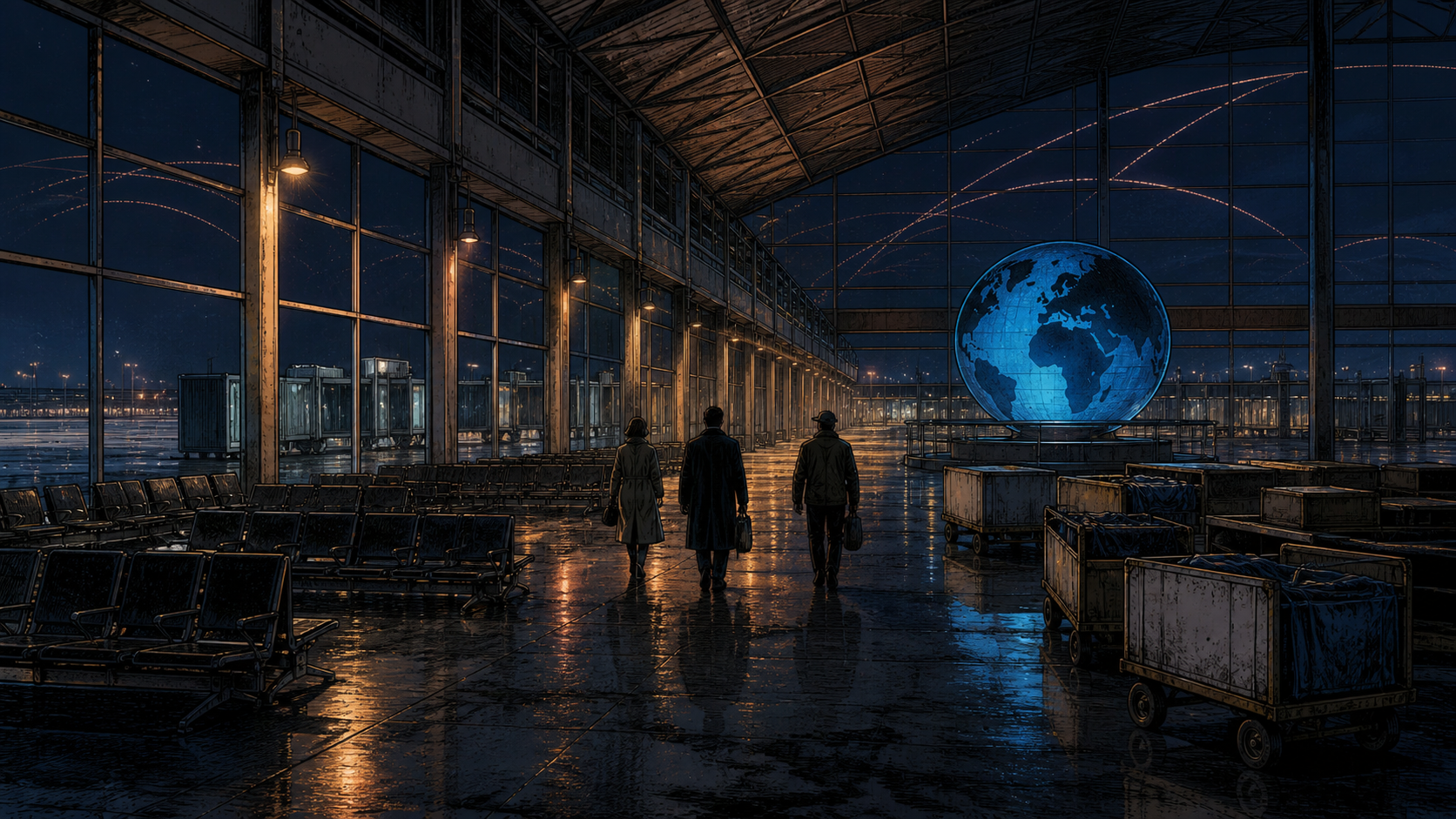
Trippe retired in 1968. Pan Am then faced oil shocks, recessions, new international competitors, and the deregulation of the United States airline industry. The company had extraordinary overseas recognition but lacked the domestic feeder network that rivals used to fill international flights.
Its 1980 acquisition of National Airlines was an expensive attempt to obtain that network. Integration was difficult, debt rose, and Pan Am sold valuable assets to keep operating. The 1988 bombing of Flight 103 over Lockerbie caused an immense human tragedy and further damaged the company. Pan Am ceased operations in 1991.
The collapse does not erase the system Trippe built. Modern global airlines still combine traffic rights, hubs, alliances, aircraft economics, premium service, and political negotiation. Wide-body travel, once a daring bet, became ordinary infrastructure.
Trippe’s enduring lesson is not to bet bigger. It is to understand the complete network your product requires—and the assumptions holding that network together. Pan Am mastered the first task. Its fall revealed how quickly the second can change.
💡 Key Insights
- ▸ In a regulated industry, political access and route rights can be as strategic as product design.
- ▸ A transportation network becomes more valuable when infrastructure, schedules, and customer trust reinforce one another.
- ▸ Large technology bets can reset industry economics while concentrating risk.
- ▸ A powerful brand cannot indefinitely compensate for a fragile cost and regulatory structure.