The WeWork Circus: How a Board of Billionaires and Visionaries Became Adam Neumann's Greatest Enablers
Unpack the epic saga of WeWork, where a charismatic founder's unchecked ambition met a board's catastrophic governance failures. This is the wild ride of how Masayoshi Son's billions and Benchmark's early bets fueled a corporate inferno, leaving a trail of breathtaking excess and a cautionary tale for the ages.
View all stories about this mogul
🔥 Chapter 1: The Visionary, The Vortex, and The Vanishing Billions
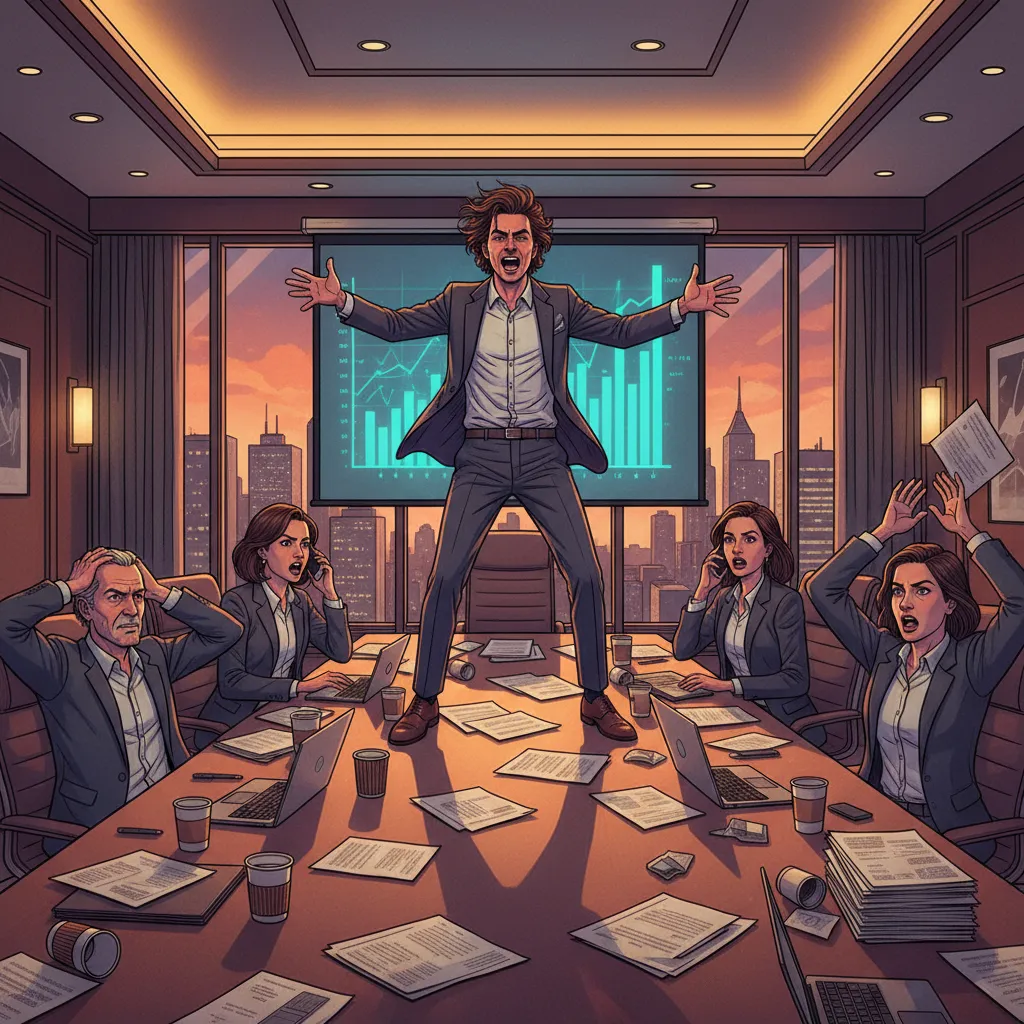
Alright, gather ‘round, folks, because I’ve got a story for you. A story so wild, so audacious, so utterly bonkers, it makes those crypto bros and meme stock maniacs look like kindergarteners playing with Legos. This isn’t just some cautionary tale; it’s a full-blown corporate horror show, a financial train wreck painted in neon and organic kombucha, starring a cast of characters who could easily headline their own Netflix series. We’re talking about WeWork, baby. Not the company itself, not the shared office spaces, but the absolute, unmitigated, jaw-dropping governance disaster that played out behind the scenes, fueled by billions of dollars and a collective blind spot the size of a small moon.
Picture this: it’s the mid-2010s. The world is buzzing. Tech is king, valuations are soaring, and the word “disruption” is practically a religious mantra. In the middle of this silicon-fever dream steps a man named Adam Neumann. Tall, charismatic, with a wild mane of hair and an even wilder vision. He wasn’t just selling office space; he was selling community, culture, a lifestyle. He wasn’t just WeWork; he was WeLive, WeGrow, WeBank, WeWhatever-He-Could-Dream-Up-Next. He was a prophet, a rock star, a guru, all rolled into one impossibly ambitious package. And people bought it. Oh, did they buy it.
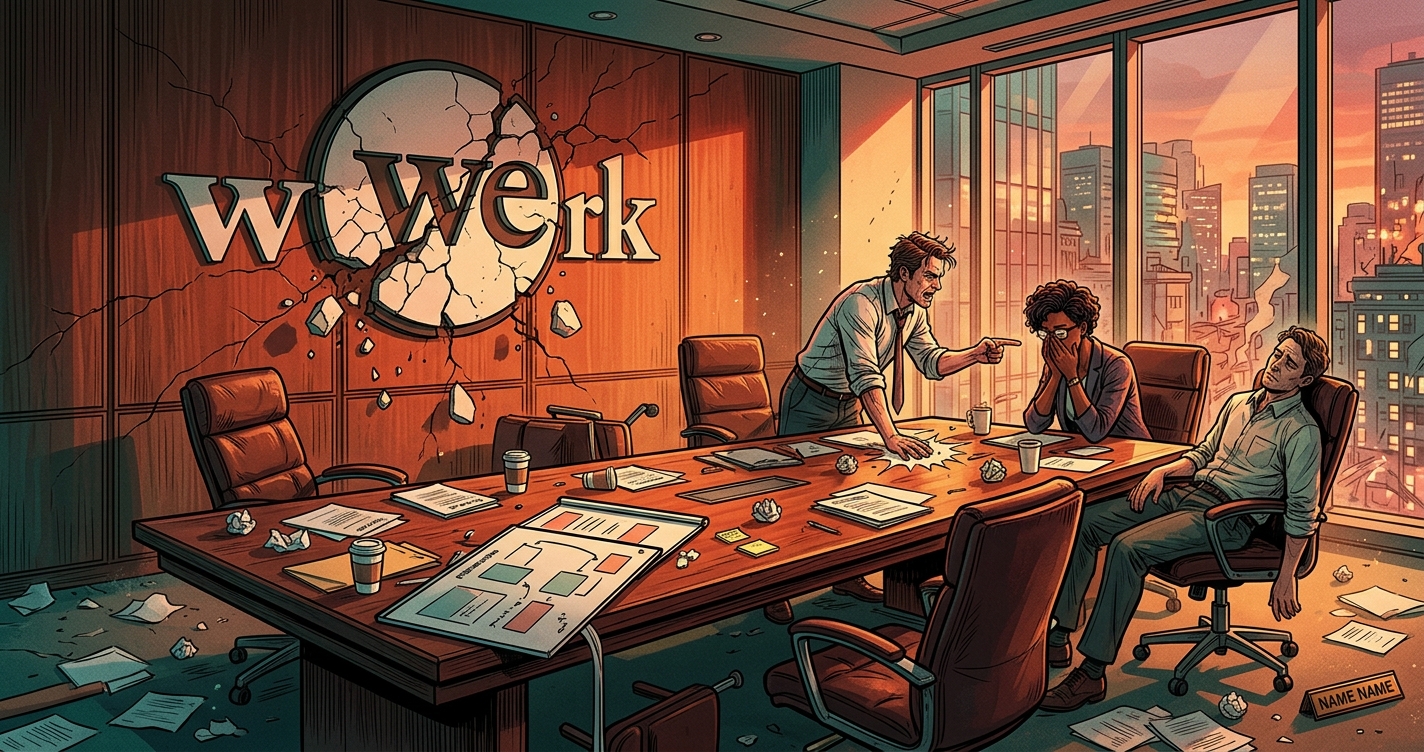
But here’s the kicker: for every visionary founder who builds something truly revolutionary, there’s a critical question that often gets overlooked in the initial frenzy: who’s holding the reins? Who’s making sure this rocket ship isn’t just blasting off, but actually heading to a sustainable orbit and not, say, straight into the sun? In WeWork’s case, the answer, tragically, was a parade of highly intelligent, incredibly successful individuals who, for reasons we’re about to dissect with surgical precision, seemed to collectively forget their primary directive: governance. They were the board of directors: the gatekeepers, the adults in the room, the fiduciary guardians. And they, my friends, presided over one of the most spectacular implosions in recent business history.
This isn’t just about Adam Neumann being Adam Neumann. That’s too easy. This is about how a board—comprised of titans like Masayoshi Son of SoftBank, the shrewd VCs from Benchmark Capital, and other supposed independent voices—stood by, watched, and, frankly, enabled the kind of excess and self-dealing that would make a pirate blush. They poured gasoline on a fire they should have been trying to contain. They allowed a founder to operate with the kind of unchecked power usually reserved for dictators of small island nations. And when the music finally stopped, the casualties weren’t just the shareholders, but the very fabric of corporate accountability.
So, strap in. Grab your drink. Because we’re about to pull back the curtain on the WeWork board’s catastrophic governance failures, unraveling the epic tale of how the very people tasked with safeguarding a multi-billion dollar enterprise became its greatest enablers, paving the way for a spectacular crash that still echoes through the canyons of Wall Street. This is the story of WeWork, told not from the polished boardrooms, but from the smoky back alleys where the real lessons are learned.
🚀 Chapter 2: The Genesis of the Guru - Adam Neumann’s Early Charms
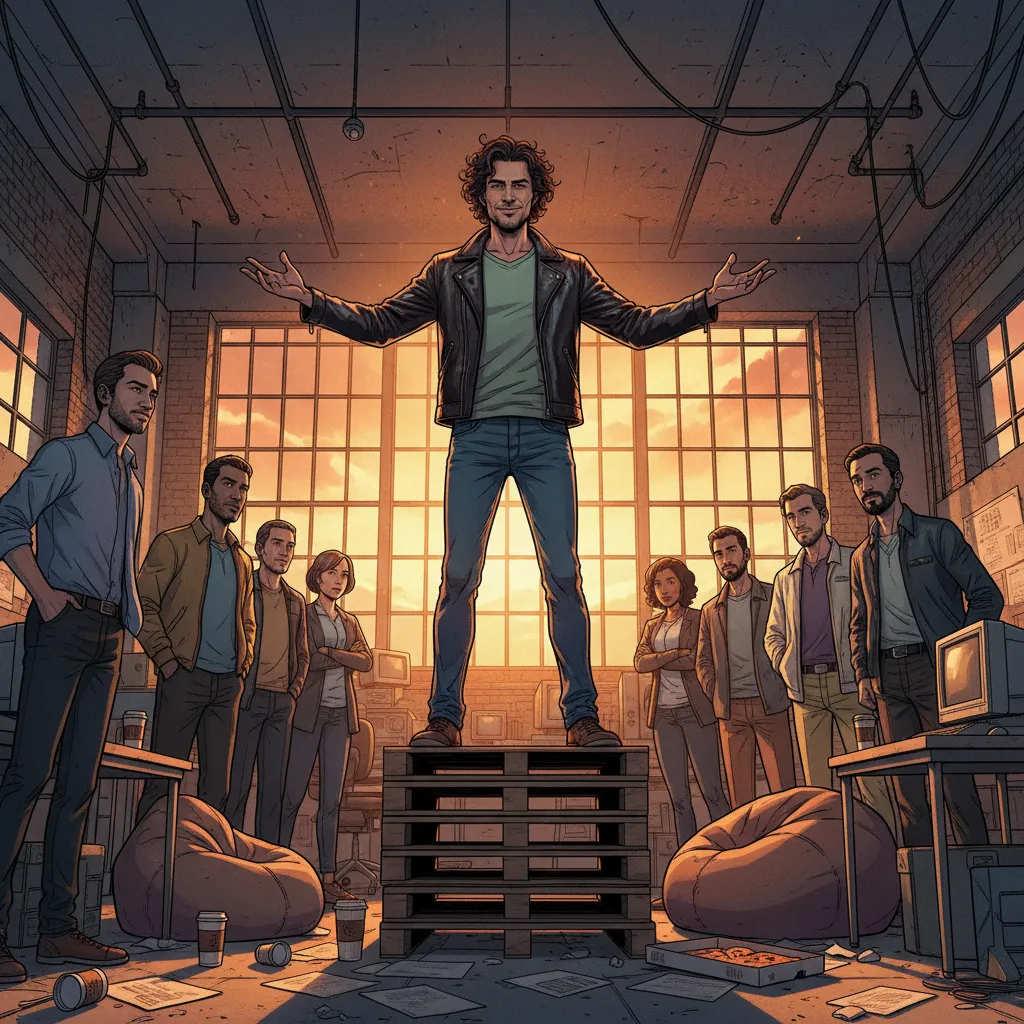
Let’s rewind a bit, to the nascent days when WeWork was less a global phenomenon and more a scrappy startup with a catchy idea. Adam Neumann wasn’t born into this kind of power; he actively cultivated it. An Israeli kibbutz native, he had a compelling origin story and an almost magnetic personality. He was a master of the pitch, not just selling a product, but selling a dream. And that dream, at its core, was simple yet profound: people don’t just need office space; they need connection, purpose, community. WeWork, he promised, would be the physical manifestation of this ethos.
In the early days, this vision was intoxicating. He and his co-founder, Miguel McKelvey, started with a single shared office in SoHo in 2010. They saw a gap in the market: small businesses, freelancers, and startups needed flexible, vibrant workspaces that fostered collaboration. It wasn’t revolutionary, but their execution, coupled with Adam’s evangelism, made it feel that way. He could walk into a room, radiate boundless energy, talk about “elevating the world’s consciousness,” and convince hardened investors that they weren’t just buying into real estate, but into a social movement.
This charisma was Adam’s superpower. He wasn’t just an entrepreneur; he was a performance artist of capitalism. He’d talk about “community” while aggressively expanding, about “purpose” while chasing ever-higher valuations. He had an uncanny ability to make people believe in his grandiose pronouncements, even when they bordered on the absurd. He could spin a narrative so compelling that basic business fundamentals seemed like mere footnotes.
His early investors, the ones who took the initial leap of faith, were enchanted. They saw the rapid growth, the packed spaces, the palpable energy within WeWork locations. They saw a company that was redefining an industry, even if the underlying economics were, shall we say, a bit fuzzy. This initial enchantment, this founder worship, would become a dangerous precedent. It laid the groundwork for a culture where Adam’s vision was paramount, and questioning it felt almost sacrilegious.
It’s crucial to understand this early dynamic: Adam Neumann wasn’t just a CEO; he was the brand. He was the face, the voice, the spirit of WeWork. And in the startup world, especially during an era of unprecedented venture capital largesse, this kind of founder-centricity often gets a pass. The narrative is that the visionary knows best, and the board’s role is to facilitate that vision, not to stifle it. This mindset, while sometimes leading to incredible innovation, can also be a direct highway to governance hell. And for WeWork, it was a first-class ticket.
💰 Chapter 3: Benchmark’s Big Bet & The Seeds of Founder Control
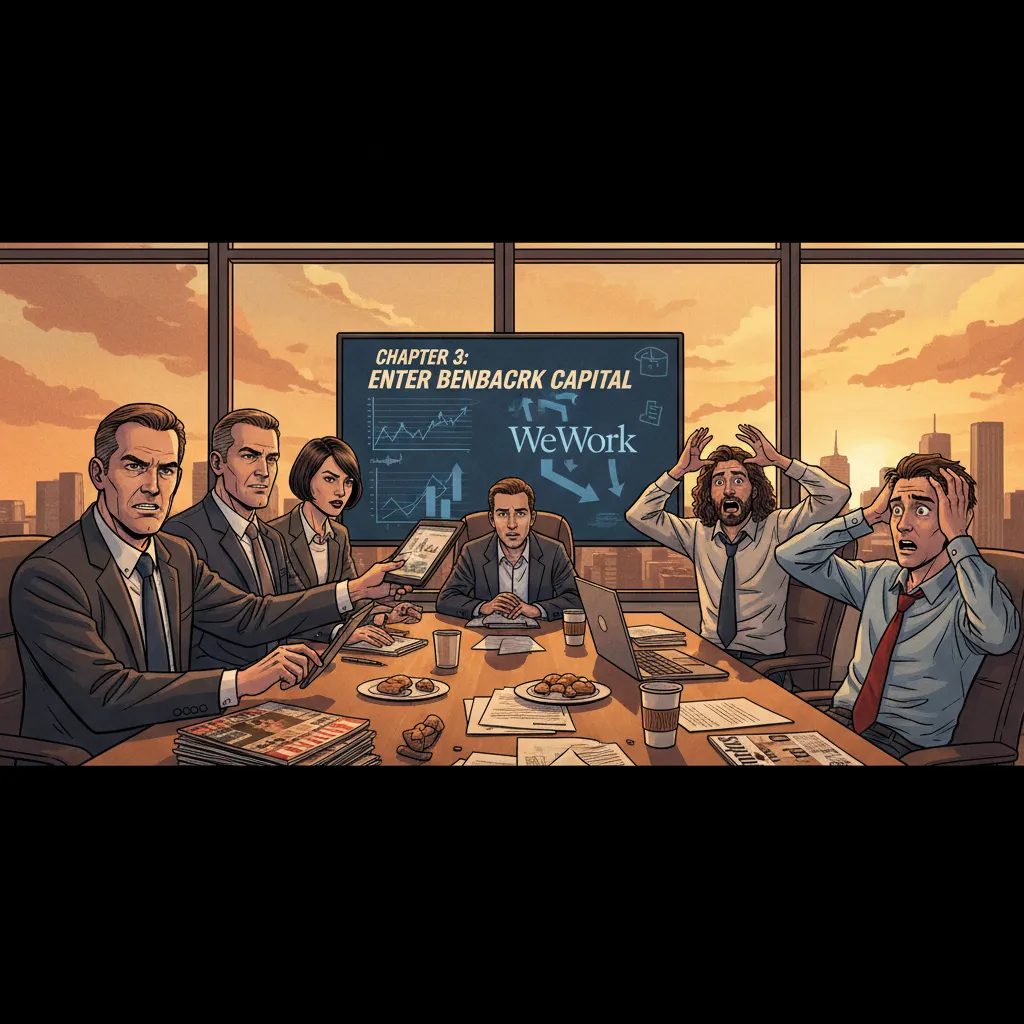
Enter Benchmark Capital. These are no slouches. They’re legendary venture capitalists, known for their shrewd investments in companies like eBay, Uber, and Twitter. When Benchmark invested in WeWork in 2012, leading a $17 million Series A round, it was a massive validation. Their imprimatur signaled to the market that WeWork was serious, that it had legs. Bruce Dunlevie from Benchmark took a seat on the board, and later, legendary VC Bill Gurley joined as an observer, offering his insights.
Benchmark’s investment was a classic VC play: find a visionary founder with a massive market opportunity and pour money into it. They understood the power of a charismatic leader. What’s less clear is how early they truly grasped the full extent of Adam Neumann’s ambition, or perhaps, how much they were willing to overlook in pursuit of a potentially massive return.
Here’s where the governance cracks first started to show, subtly at first, like hairline fractures in a foundation. As part of the early funding rounds, Adam Neumann secured unprecedented levels of control over WeWork. We’re talking about super-voting shares – stock that carried many times the voting power of ordinary shares. This mechanism is a common, albeit controversial, tool in tech startups, designed to protect a founder’s long-term vision from short-term shareholder pressures. For companies like Facebook or Google, it allowed founders to build empires without being beholden to quarterly earnings reports.
However, in WeWork’s case, the degree of control granted to Neumann was extreme. He essentially had near-absolute power, making him virtually unfireable, even if the board disagreed with his decisions. This wasn’t just a safety net; it was a gilded cage for the board itself. Why did Benchmark and other early investors agree to this?
Part of it is the inherent power dynamic in venture capital. When a company is hot, founders often have the upper hand. Investors, desperate not to miss out on the “next big thing,” might concede on governance issues, hoping that once the company matures, these kinks can be ironed out. It’s a gamble: bet on the founder’s vision, even if it means sacrificing some traditional checks and balances.
“In the red-hot pursuit of unicorns, investors often become enablers. They convince themselves that a founder’s genius outweighs any governance concerns, only to learn the hard way that genius without guardrails is a recipe for disaster.”
But it’s also a deeply problematic precedent. By allowing such founder-centric control, the board effectively neutered its own ability to perform its most crucial function: oversight. They were setting themselves up for a scenario where their advice could be ignored, their concerns dismissed, and their power diluted. This wasn’t just a passive oversight; it was an active decision to grant extraordinary power, believing that the founder’s boundless energy would always be channeled for the company’s good. They essentially handed Adam Neumann the keys to the kingdom, with very few clauses about how he could drive. And as we’ll see, he drove it straight off a cliff.
🌪️ Chapter 4: The SoftBank Storm - Masayoshi Son’s Infusion of Insanity
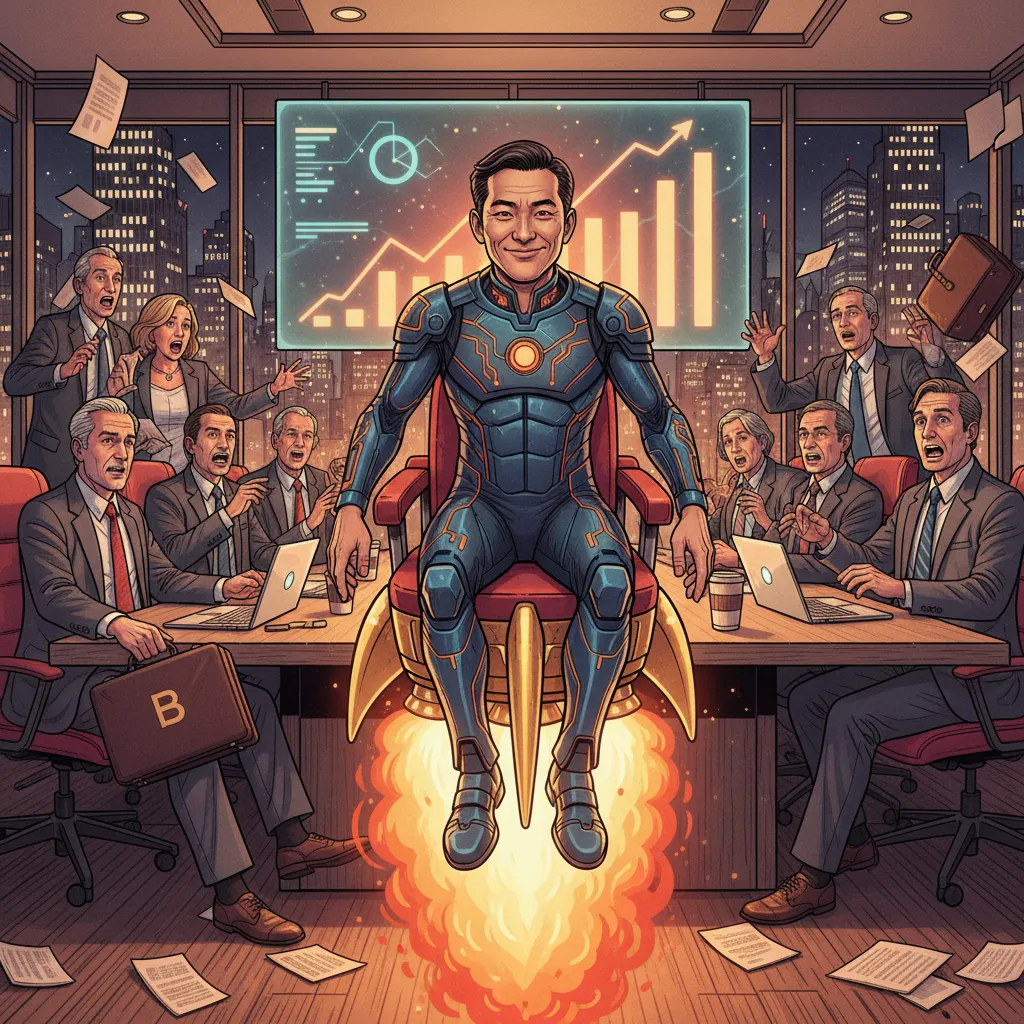
If Benchmark provided the initial fuel, SoftBank and its eccentric, visionary leader, Masayoshi Son, brought the rocket boosters – and then some. Son’s entry into the WeWork saga wasn’t just an investment; it was an event, a seismic shift that fundamentally altered the company’s trajectory and, critically, the board’s dynamic.
Son, the founder of the Japanese tech conglomerate SoftBank, had launched the Vision Fund in 2017, a colossal $100 billion behemoth designed to identify and supercharge “disruptive” tech companies. Son wasn’t interested in small bets or incremental growth; he wanted to back founders who thought in terms of “the singularity,” who aimed to change the world on an unimaginable scale. He saw himself as a “futurist,” a grand orchestrator of technological evolution.
And then he met Adam Neumann.
The story goes that Son and Neumann spent only 28 minutes together during their first meeting in Tokyo in 2016. In that whirlwind half-hour, Neumann, with his characteristic blend of ambition and spiritual rhetoric, reportedly convinced Son that WeWork wasn’t just a real estate company, but a “physical social network” that could “elevate the world’s consciousness.” Son, captivated, scrawled a crude drawing of a globe and a stick figure representing Neumann, telling him to “think bigger.” Much bigger.
This wasn’t just a casual suggestion. It was a blank check, a license to dream without financial constraint. SoftBank initially invested $4.4 billion in 2017, followed by an additional $3 billion, and then a staggering $2 billion more, bringing their total investment to over $10 billion. This wasn’t just venture capital; it was an unprecedented deluge of cash.
For Masayoshi Son, WeWork fit perfectly into his Vision Fund thesis: back a “visionary” founder with immense capital, and let them execute their grand plan without worrying about profitability or traditional metrics. Son believed in “blitzscaling” – growing as fast as humanly possible to capture market share, with profitability as a distant, secondary concern. He had done it with Alibaba, turning a relatively unknown e-commerce company into a global giant. He believed he could do it again with WeWork.
“Masayoshi Son didn’t just invest in WeWork; he became Adam Neumann’s co-conspirator in hyper-growth. He poured billions into a company that was structurally unsound, sacrificing fiscal discipline on the altar of a ‘vision’ he helped inflate.”
This massive infusion of capital had several immediate and devastating effects on governance:
- Inflation of Ambition: Neumann’s already outsized ambitions went stratospheric. Why worry about making money when you have an almost endless supply of it? The pressure to achieve profitability, which had always been a distant goal, now seemed entirely optional.
- Dilution of Dissent: SoftBank’s investment came with board seats. Marcelo Claure, a SoftBank executive, joined the board. While theoretically adding expertise, SoftBank’s sheer financial power meant that their voice, and by extension, Masayoshi Son’s philosophy, became dominant. Any dissenting voices on the board were effectively drowned out by the sheer weight of SoftBank’s investment and Son’s unwavering belief in Neumann.
- Removal of Scrutiny: With SoftBank underwriting virtually everything, traditional financial scrutiny from other board members or investors became less urgent. Why question a founder’s spending habits when a deep-pocketed patron is constantly writing checks? This created a dangerous echo chamber where validation trumped vigilance.
Masayoshi Son, in his pursuit of world-changing companies, became Adam Neumann’s biggest enabler. He wasn’t just a passive investor; he was an active participant in the creation of a corporate culture where excess was tolerated, even encouraged, and where basic financial prudence was dismissed as small-minded thinking. The SoftBank storm didn’t just rain money; it washed away the last vestiges of sound corporate governance.
💸 Chapter 5: Neumann Unchained - The Age of Unchecked Excess
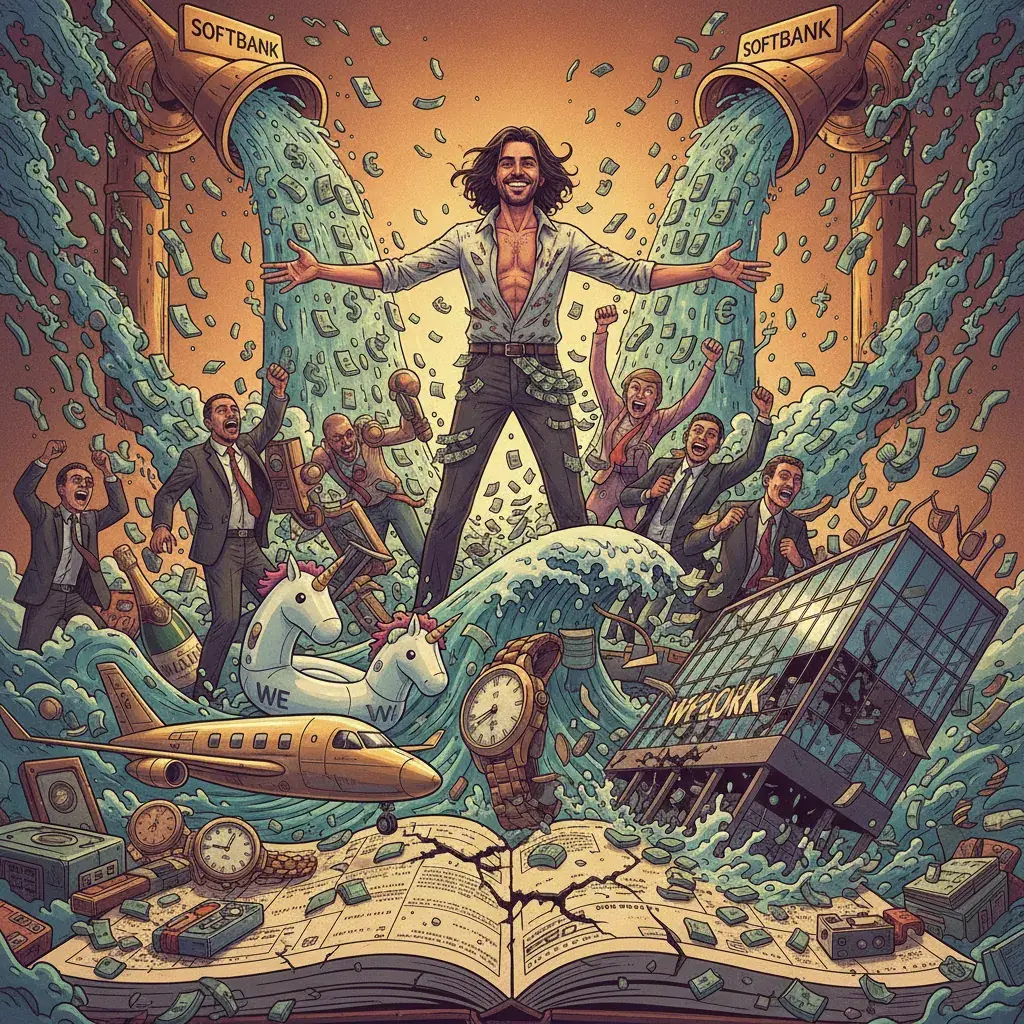
With billions flowing from SoftBank, Adam Neumann was truly unleashed. The floodgates opened, and what followed was a period of breathtaking, almost cartoonish, excess and self-dealing that should have set off every alarm bell on the board, but apparently only registered as background noise in the pursuit of “hyper-growth.”
Let’s talk about the specific examples that illustrate the board’s catastrophic failure to rein in their charismatic CEO:
-
The Private Jet: Neumann acquired a luxurious Gulfstream G650 jet, a magnificent beast of the skies, for $60 million. It wasn’t just the purchase; it was the use. Stories abound of the jet being used for personal trips, loaded with friends and family, and even allegedly transporting marijuana across international borders. This wasn’t a tool for efficient business travel; it was a personal playground funded by WeWork, a symbol of a CEO completely detached from the financial realities of his company. The board, responsible for approving capital expenditures and scrutinizing company assets, seemingly let this slide, or worse, ratified it without proper oversight.
-
Self-Dealing Real Estate Shenanigans: This is where it gets truly egregious. Adam Neumann personally owned buildings and then leased them back to WeWork. Think about that for a second. The CEO was effectively his own landlord, profiting directly from his company’s growth. He also had a stake in a company that bought buildings, renovated them, and then leased them to WeWork. This is a textbook conflict of interest, an absolute no-go in sound corporate governance. It shows a blatant disregard for the interests of shareholders and a clear exploitation of his position. The board, with its fiduciary duty to protect the company’s assets, should have immediately shut this down. Instead, they allowed it to persist, even approving some of these transactions.
-
The “We” Trademark Debacle: In another astonishing display of self-enrichment, Neumann personally trademarked the “We” name, then sold it back to WeWork for a reported $5.9 million. Yes, you read that right. He sold the very identity of the company back to the company he founded. This wasn’t a complex M&A deal; it was a founder extracting cash for something that, by all ethical standards, should have belonged to the company from day one. The board’s approval of this transaction is a monument to their dereliction of duty. It signals an utter lack of independent judgment and a willingness to prioritize the founder’s personal wealth over the company’s financial health.
-
Outlandish Investments and Ventures: Beyond the core business, Neumann launched a dizzying array of side projects under the “We” umbrella: WeGrow, a private school; WeLive, co-living spaces; and even investments in a wave pool company. While some might argue these were extensions of his “vision,” many were clearly financially dubious, distracted from the core business, and bled company cash. The board’s role is to ensure strategic focus and prudent capital allocation. Allowing a CEO to chase every shiny object, especially when the core business isn’t profitable, is a fundamental governance failure.
-
Party Culture and Questionable Spending: WeWork became infamous for its lavish parties, open bars, and a culture that blurred the lines between work and perpetual celebration. While fostering a vibrant culture can be beneficial, the scale of the spending, especially for a company losing billions, was excessive. Stories of tequila shots at meetings, employee retreats costing millions, and a general atmosphere of financial abandon painted a picture of a company out of control. The board, responsible for overseeing operational efficiency and responsible spending, seemed to turn a blind eye to the escalating costs.
“The WeWork board wasn’t just asleep at the wheel; they were in the backseat, cheering Adam Neumann on as he drove a multi-billion dollar enterprise towards a financial cliff, all while he personally siphoned off millions.”
These weren’t isolated incidents; they were systemic patterns of behavior that indicated a CEO operating without any meaningful checks or balances. The board, comprised of experienced investors and business leaders, had a fiduciary responsibility to act in the best interests of the company and its shareholders. Instead, they consistently failed to challenge Adam Neumann, allowed conflicts of interest to flourish, and ratified decisions that actively harmed the company’s financial standing and reputation. Their inaction wasn’t just negligence; it was an active enablement of the very excesses that would ultimately bring WeWork to its knees.
🙈 Chapter 6: The Board’s Blind Spot - Why They Failed to Act
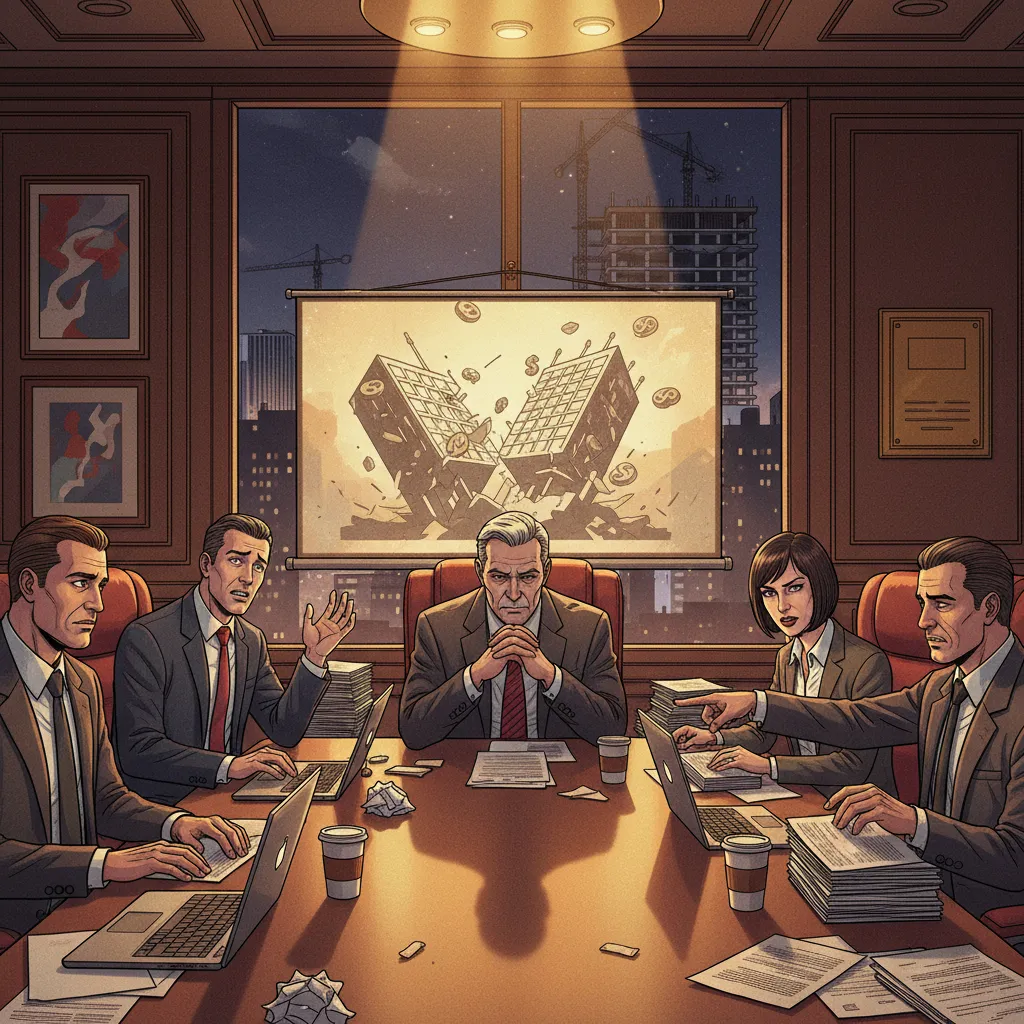
This is the million-dollar question, isn’t it? How could a board, packed with seemingly brilliant minds from Benchmark, SoftBank, and independent directors, allow such a spectacular train wreck to unfold? It wasn’t a single failure, but a confluence of factors that created a perfect storm of governance dereliction.
-
Founder Worship and Charisma: This is arguably the most potent drug in the startup world. Adam Neumann’s charisma was not just legendary; it was hypnotic. He could articulate a vision so grand, so compelling, that it made traditional business metrics seem pedestrian. Board members, like many investors, were swept up in the narrative of a world-changing founder. They wanted to believe, and this belief clouded their judgment. Challenging Adam felt like challenging the very “magic” that made WeWork special.
-
The Allure of Hyper-Growth: In the mid-2010s, “growth at all costs” was the mantra, especially with SoftBank’s Vision Fund throwing billions around. WeWork was expanding at an astonishing pace, opening new locations worldwide, seemingly fulfilling the promise of global domination. When a company is growing rapidly, even if it’s bleeding money, there’s immense pressure to keep the momentum going. Board members might have rationalized that profitability would come later, once market share was secured. The fear of slowing growth, and thus risking a lower valuation, trumped the need for financial discipline.
-
Masayoshi Son’s Dominance: Once SoftBank became the dominant investor, Masayoshi Son’s influence was immense. Son was not just an investor; he was a co-visionary with Neumann. His unwavering belief in Adam and his “think bigger” philosophy effectively silenced dissenting voices. When the largest shareholder, with billions on the line, is actively encouraging the founder’s grandiosity, it creates an environment where challenging the CEO becomes incredibly difficult, if not career-limiting for some board members. Who wants to be the one to tell the person writing the multi-billion dollar checks that their chosen prophet is off his rocker?
-
Lack of Truly Independent Oversight: While the board had “independent” directors, their independence was often compromised. In founder-led companies, truly independent voices can be rare, especially when the founder holds super-voting shares. Directors might be friends, early investors with a vested interest in maintaining the founder’s power, or simply overwhelmed by the company’s rapid growth and the founder’s sheer force of will. A truly independent board acts as a counterweight to executive power; WeWork’s board often functioned more as an echo chamber.
-
Structural Power Imbalance (Super-Voting Shares): As discussed, Adam Neumann’s super-voting shares gave him near-absolute control. This wasn’t just theoretical; it meant he could effectively override board decisions if he chose to. What’s the point of challenging a CEO when he can simply ignore you? This structural flaw, baked into the company’s DNA from early investment rounds, fundamentally undermined the board’s authority and made it incredibly difficult to enforce any kind of accountability.
-
“Too Big to Fail” Mentality: With a valuation nearing $47 billion at its peak, WeWork felt invincible. The sheer scale of the company, the number of employees, the global footprint, and the money invested created a perception that it had to succeed. This “too big to fail” mentality can paralyze a board, making them hesitant to take drastic action that might jeopardize the entire enterprise, even if that action is necessary to correct course.
-
Poor Information Flow and Lack of Due Diligence: It’s hard to imagine that some of the more egregious self-dealing, like the trademark sale, occurred without board approval. This either points to a serious lack of diligence from the board members, an active decision to overlook these issues, or perhaps information being presented in a way that downplayed the severity of the conflicts. Effective governance requires transparency and rigorous examination of all related-party transactions. This clearly did not happen.
“The WeWork board’s failure was a masterclass in how not to govern. They prioritized a founder’s charisma over fiscal prudence, growth narratives over real profitability, and the illusion of vision over the reality of accountability.”
In essence, the WeWork board became spectators to a spectacle rather than stewards of an enterprise. They were dazzled by the light show, ignoring the gaping holes in the stage. They allowed Adam Neumann to blur the lines between his personal interests and the company’s, sacrificing good governance on the altar of a founder’s vision and the intoxicating promise of untold riches. And the consequences, as we know, were devastating.
🎢 Chapter 7: The S-1 Shockwave - When the Emperor’s New Clothes Fell Apart
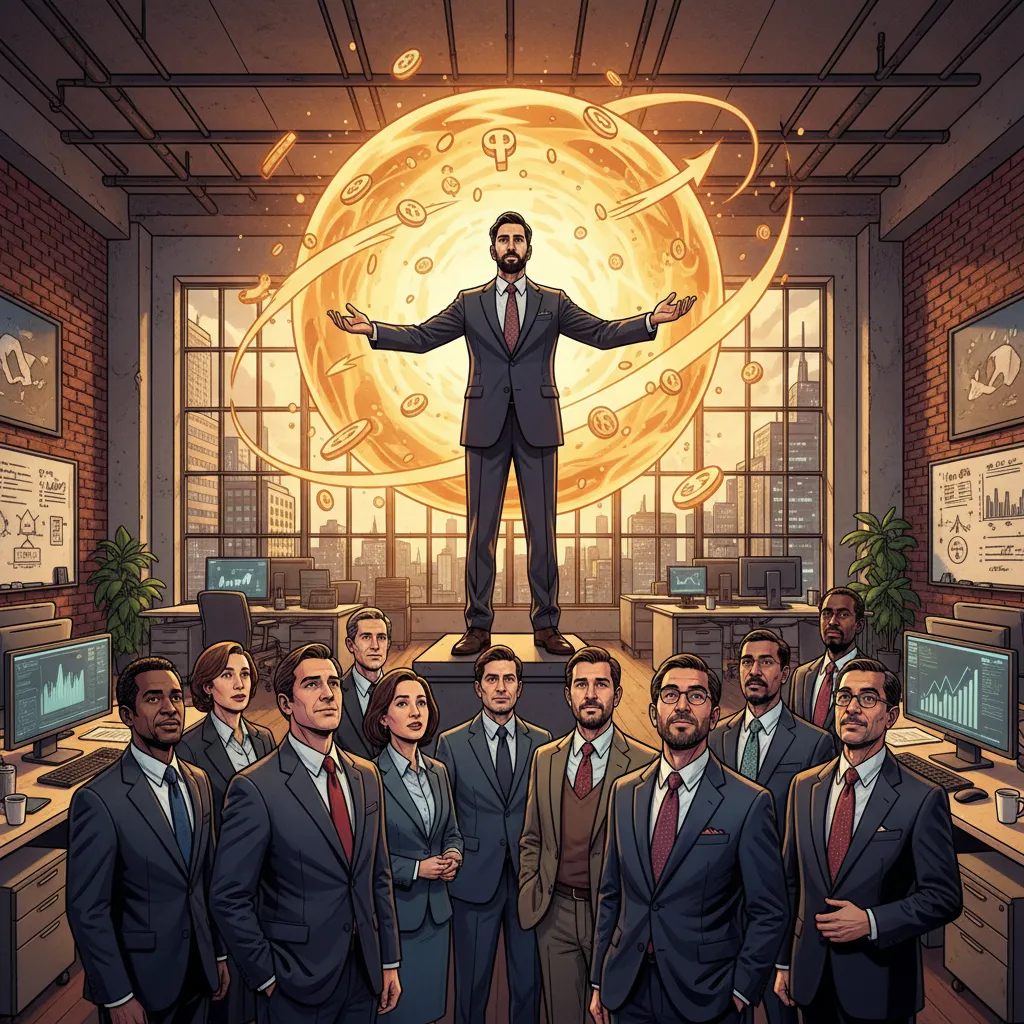
For years, WeWork operated in a kind of private equity bubble, its valuation soaring with each successive funding round, largely shielded from the harsh scrutiny of public markets. Adam Neumann was a rock star in this exclusive club, his excesses either tolerated or outright celebrated as quirks of genius. But then came the moment of truth: the Initial Public Offering (IPO).
An IPO is like a corporate striptease. Everything gets laid bare. Companies file an S-1 registration statement with the U.S. Securities and Exchange Commission (SEC), a thick document that reveals everything from financials to risk factors, executive compensation, and, crucially, corporate governance structures. This is where the private narrative meets public reality.
WeWork filed its S-1 in August 2019, and the shockwave it sent through Wall Street was immediate and brutal. It wasn’t just a document; it was a screaming exposé of everything the board had let slide. The market, unlike the private investors who had been captivated by Neumann’s charm, looked at the numbers and the governance structures with cold, hard cynicism.
Here’s what the S-1 laid bare, and why it triggered such a ferocious backlash:
-
Astronomical Losses with No Path to Profitability: The S-1 revealed staggering losses. In the first half of 2019 alone, WeWork lost $690 million on revenues of $1.54 billion. In 2018, it lost $1.9 billion. This wasn’t just “growth at all costs”; it was growth at any cost, with no clear indication of when, or if, the company would ever turn a profit. The narrative of “community company” didn’t mesh with the underlying real estate business model that required massive capital expenditures for leases and build-outs.
-
Adam Neumann’s Unprecedented Power & Conflicts of Interest: The S-1 confirmed the extent of Neumann’s control through his super-voting shares (which would give him a majority of voting power even after the IPO). It detailed the self-dealing: the trademark sale for $5.9 million, the personal property leased back to WeWork, the loans from the company. It even revealed that Neumann’s wife, Rebekah Neumann, would have a say in his successor. This was not just a founder with control; it was a founder who had seemingly merged his personal finances with the company’s, and whose family was deeply entwined in its governance.
-
Questionable Corporate Governance: The S-1 presented a governance structure that was anathema to public market investors. A board dominated by insiders and SoftBank representatives, with limited truly independent voices. The explicit intertwining of Neumann’s personal brand with the company, even to the point of potentially benefiting from his death (his shares would pass to a committee controlled by his family), was a red flag the size of a billboard.
-
Confusing and Contradictory Mission Statements: The document opened with a preamble about “elevating the world’s consciousness,” a grandiose statement that jarred sharply with the gritty financial realities presented later. Public market investors want clear business models, not spiritual manifestos. The disconnect highlighted a fundamental lack of clarity at the top.
-
The “We Company” Rebrand: Just before the IPO, Neumann rebranded the company from WeWork to The We Company, purportedly to reflect its broader vision beyond just shared office space. This seemed like a vanity project at the worst possible time, further adding to the perception of a CEO out of touch with financial realities.
The market reaction was swift and brutal. Analysts and journalists tore the S-1 apart. The valuation, which SoftBank had pegged at $47 billion earlier that year, began a precipitous freefall. Investment bankers, initially eager for the fees, grew increasingly nervous. Institutional investors, seeing the governance red flags and the unsustainable financials, balked.
“The S-1 was a mirror held up to WeWork, reflecting not the brilliant future Adam Neumann envisioned, but the ugly truth of a company bleeding cash, riddled with conflicts of interest, and run by a CEO whose personal brand overshadowed sound business practices. The market looked, recoiled, and shouted ‘No!’”
This was the moment the board’s collective blind spot became a public spectacle. Their failure to rein in Adam Neumann, to establish proper governance, to demand financial discipline, was now undeniable. The public market, unlike the private one, had no patience for the “vision” without the profits, or for a CEO who treated a multi-billion dollar enterprise like his personal piggy bank. The emperor, it turned out, was not just naked, but actively selling his clothes back to the kingdom. The IPO was pulled, and the reckoning began.
💥 Chapter 8: The Reckoning - Ousting the Architect of Excess
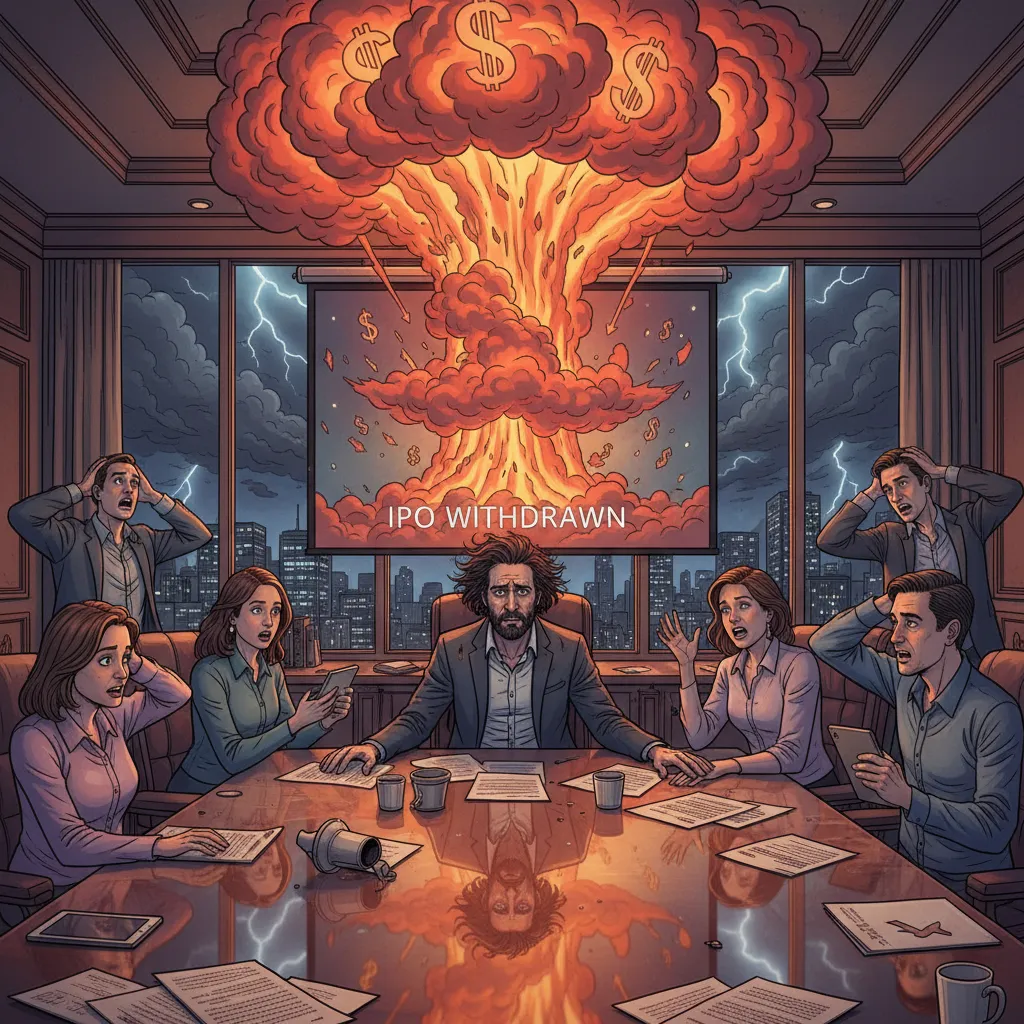
The withdrawal of the IPO was a financial H-bomb dropped on WeWork. The company’s valuation plummeted, employees panicked, and the narrative shifted almost overnight from “disruptor” to “disaster.” This catastrophic failure finally forced the board’s hand, creating an inescapable pressure cooker that even Adam Neumann’s super-voting shares couldn’t withstand forever.
The immediate aftermath was chaotic. The very banks that were supposed to underwrite the IPO, like JPMorgan Chase and Goldman Sachs, found themselves in an impossible position. They couldn’t in good conscience recommend an investment in a company with such glaring governance issues and an unchecked CEO. Investor demand evaporated. The prospect of an IPO was dead, and with it, the lifeline WeWork desperately needed to fund its continued losses.
SoftBank, the company’s largest investor, suddenly found itself holding a deeply devalued asset, bleeding cash, and facing massive write-downs. Masayoshi Son, who had championed Neumann, now faced the humiliation of his biggest Vision Fund bet turning sour. The pressure on him to act was immense, not just from his own investors, but from within SoftBank.
This is where the power dynamics on the board finally shifted. For years, Adam Neumann had held sway, protected by his super-voting shares and Son’s unwavering support. But the IPO’s collapse exposed the fragility of that power. The company was running out of cash, and the only entity capable of providing more was SoftBank. This gave Son unprecedented leverage.
The internal battle was fierce. The board, which had been so passive, was now forced into action. Key players included Bruce Dunlevie from Benchmark, Artie Minson and Sebastian Gunningham (two WeWork executives who later became co-CEOs), and Marcelo Claure from SoftBank. They had to confront the founder they had enabled for so long.
The arguments were stark:
- For Adam: He was the visionary. He built the company from scratch. His charisma was essential for its future.
- Against Adam: His erratic behavior, conflicts of interest, and the governance issues had destroyed investor confidence and made the company un-investable. WeWork needed a leader who could restore credibility, not someone who had shattered it.
The pressure mounted relentlessly. Reports surfaced of Neumann’s increasingly erratic behavior, which only strengthened the resolve of those pushing for his removal. The final straw was the undeniable fact that as long as Neumann remained CEO, no one would invest in WeWork. It was a hostage situation: either Neumann went, or the company would run out of cash and collapse entirely.
In September 2019, after intense negotiations and backroom dealings, Adam Neumann was finally ousted as CEO. He stepped down, but not without extracting a golden parachute that included a staggering $185 million consulting fee, a $500 million credit line, and the ability to sell a significant portion of his shares. This exit package, while controversial, was arguably the price SoftBank had to pay to dislodge a founder with such entrenched power. It was a bitter pill, but a necessary one to give WeWork a chance at survival.
“The ousting of Adam Neumann wasn’t a triumph of governance; it was a desperate act of triage. The board finally cut out the cancer, but only after it had metastasized throughout the entire organization, leaving a scarred and deeply wounded patient.”
The reckoning was brutal. It exposed the deep flaws in WeWork’s governance, the dangers of unchecked founder power, and the catastrophic consequences of a board that prioritizes narrative over accountability. Adam Neumann was out, but the damage was done, and the long, painful road to recovery for WeWork, and for SoftBank’s reputation, had only just begun. The architect of excess had been removed, but the ruins of his creation remained.
📉 Chapter 9: The Aftermath - A Shattered Valuation and Lingering Scars
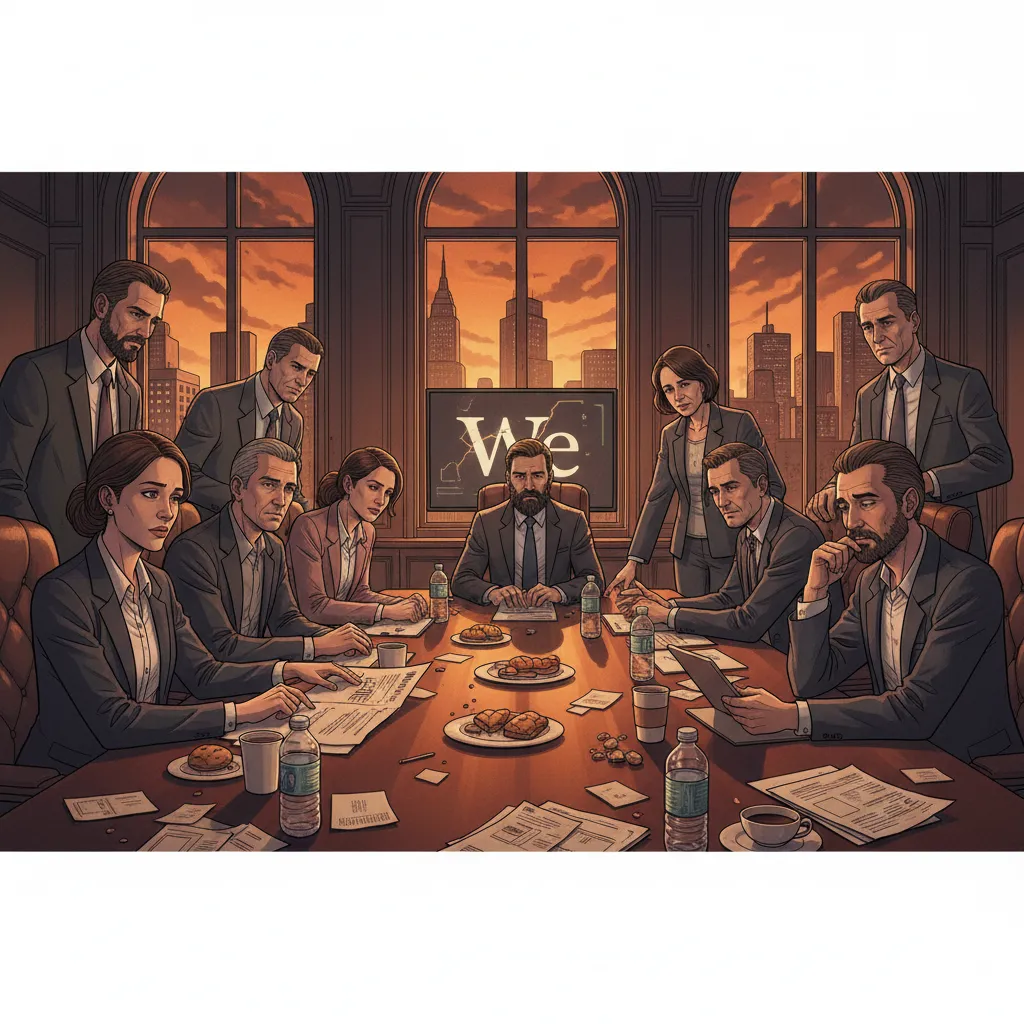
The removal of Adam Neumann was a necessary step, but it was far from a cure. The aftermath of the WeWork collapse left a trail of financial devastation, shattered reputations, and a company struggling to redefine itself. The board, now without its charismatic but destructive leader, faced the daunting task of salvaging what remained of a once-$47 billion empire.
-
Valuation Plunge: The most immediate and dramatic consequence was the collapse in valuation. From a peak of $47 billion in January 2019, by late 2019, WeWork’s valuation had plummeted to a mere fraction of that, with SoftBank eventually valuing it at around $2.9 billion in early 2020. This wasn’t just a correction; it was a decimation, wiping out tens of billions of dollars in theoretical wealth and leaving employees with worthless stock options.
-
SoftBank’s Massive Losses: Masayoshi Son and SoftBank bore the brunt of the financial hit. The Vision Fund recorded its first operating loss in 14 years, largely due to its disastrous WeWork investment. Son, once revered for his prescience, faced intense criticism and had to publicly apologize to his investors. The WeWork debacle became a cautionary tale for the entire venture capital industry, highlighting the risks of “blitzscaling” and founder worship without proper due diligence.
-
Leadership Vacuum and Restructuring: With Neumann gone, WeWork was led by co-CEOs Artie Minson and Sebastian Gunningham, who were then replaced by Marcelo Claure from SoftBank. The company embarked on a brutal restructuring: layoffs of thousands of employees, divestment of non-core businesses (like WeGrow), and a complete re-evaluation of its operational strategy. The focus shifted from rapid expansion to profitability, a goal that had been so conspicuously absent under Neumann.
-
Public Scrutiny and Reputation Damage: WeWork became synonymous with corporate excess and governance failure. Its name was invoked in business schools as a case study in what not to do. The brand, once a symbol of innovation and community, was tarnished. Restoring trust with employees, landlords, and potential investors became an uphill battle.
-
The Board’s Legacy: The board members, particularly those from Benchmark and other early investors, faced questions about their complicity. While Benchmark eventually sided with SoftBank in ousting Neumann, their early decisions to grant him such immense power and their subsequent inaction for so long left a permanent stain on their reputation. They, along with SoftBank, were seen as having enabled the very problems they eventually had to solve.
-
Adam Neumann’s Controversial Exit: Despite the company’s near-collapse, Adam Neumann walked away with a significant payout, sparking outrage among employees and the public. This demonstrated the immense power a founder can wield, even in disgrace, when early governance structures are so skewed in their favor. It cemented the perception of a system where founders win big, even when their companies crash and burn, while ordinary employees bear the brunt.
“The WeWork saga became a brutal reminder that a company’s true value isn’t just in its vision or its growth metrics, but in the integrity of its leadership and the robustness of its governance. When those foundations crumble, even the grandest empires fall.”
WeWork did eventually manage to go public in 2021, but through a Special Purpose Acquisition Company (SPAC), a much less glamorous route than the IPO it had initially sought. Its valuation was a mere fraction of its former glory. The company continued to struggle with profitability and leadership changes, battling to shed the specter of its dramatic downfall.
The scars of the Adam Neumann era run deep. The story of WeWork isn’t just about a charismatic founder; it’s about a board that lost its way, investors who prioritized narrative over reality, and a corporate culture that allowed ego and ambition to eclipse accountability. It serves as a stark, neon-lit reminder that even in the most exhilarating pursuit of innovation, the bedrock of sound governance is non-negotiable. Ignore it at your peril.
🏛️ Chapter 10: The Unwritten Rules - Key Lessons in Governance Failure
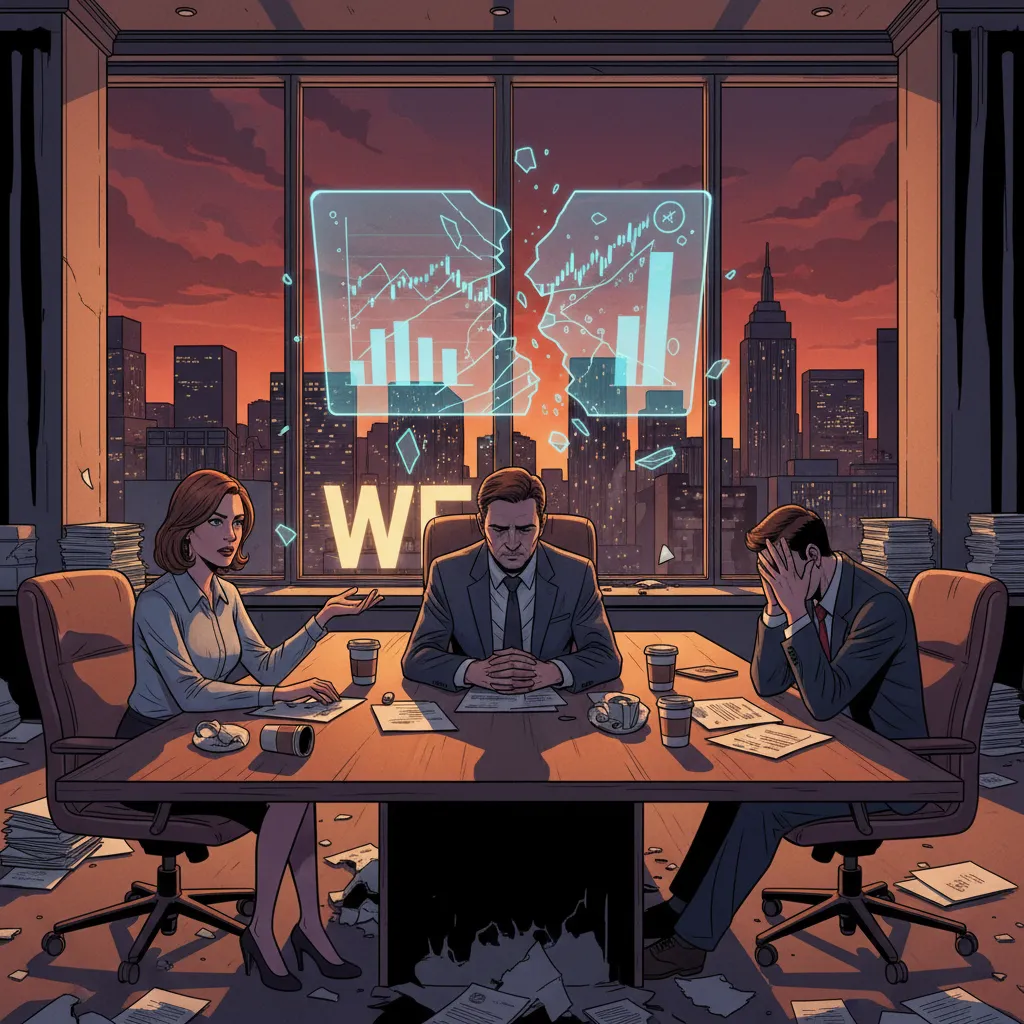
So, what do we take away from this corporate car crash, this epic saga of aspiration and implosion? Beyond the jaw-dropping headlines and the sheer scale of the financial destruction, the WeWork story offers some incredibly potent, albeit painful, lessons in corporate governance – lessons that every entrepreneur, investor, and board member should carve into their corporate commandments.
-
Founders Need Guardrails, Not Just Cheerleaders: Yes, visionary founders are essential for disruptive innovation. They bring the initial spark, the unshakeable belief. But unchecked power, especially when coupled with immense capital, is a recipe for disaster. A board’s primary role is not just to support the founder’s vision but to provide a robust system of checks and balances. This means:
- Limiting Super-Voting Shares: While some founder control can be justified, extreme versions, like Neumann’s, essentially render the board powerless. Investors should push for more balanced structures or sunset clauses.
- Strong Independent Directors: The board needs truly independent voices, not just friendly faces or representatives of major investors. These individuals must have the courage and authority to challenge the CEO, even when it’s uncomfortable.
- Clear Boundaries for Personal vs. Corporate: From day one, there must be an ironclad separation between the founder’s personal finances and the company’s. Conflicts of interest, like self-dealing real estate transactions or selling trademarks back to the company, should be immediately and unequivocally shut down.
-
Fiduciary Duty is Paramount, Not Optional: Every board member has a legal and ethical obligation to act in the best interests of the company and its shareholders. This isn’t just about rubber-stamping decisions; it’s about active oversight, asking tough questions, scrutinizing financials, and ensuring ethical conduct. The WeWork board, for too long, failed spectacularly on this front. They were spectators, not stewards.
-
Growth at All Costs is a Dangerous Delusion: The “blitzscaling” mentality, fueled by SoftBank’s Vision Fund, can be intoxicating. But sustainable growth requires a clear path to profitability, disciplined spending, and a sound business model. Boards must resist the pressure to chase ever-higher valuations at the expense of financial fundamentals. Burning billions without a clear strategy for generating actual profit is not disruption; it’s destruction.
-
Due Diligence Isn’t Just for Early Stage: While early-stage investors might take bigger risks, subsequent rounds and, critically, the path to IPO, demand increasingly rigorous due diligence. The red flags in WeWork’s financials and governance were apparent in its S-1. The question isn’t whether they existed, but why they weren’t addressed earlier by a board that supposedly consisted of sophisticated investors.
-
Culture Flows from the Top, and Boards Shape It: The excessive, party-hard culture at WeWork, coupled with Adam’s lavish lifestyle, set a tone for the entire company. A board has a responsibility to shape and enforce a culture of integrity, transparency, and accountability. When the board permits or ignores a CEO’s personal excesses, it implicitly endorses that behavior, creating a toxic environment that can permeate the entire organization.
-
The Perils of “Vision” Without Execution: Adam Neumann was a master of vision. He could inspire, motivate, and dream big. But vision without disciplined execution, robust financial planning, and ethical leadership is just a hallucination. The board’s job is to ensure that the vision is grounded in reality and supported by a viable business plan.
“The WeWork saga is a brutal masterclass in what happens when the allure of a charismatic founder and the intoxicating promise of hyper-growth overwhelm the fundamental tenets of good governance. It’s a testament to the fact that even with billions on the line, the most basic rules of corporate accountability cannot be ignored.”
Ultimately, the WeWork story is a stark reminder that a board of directors is not just a collection of impressive résumés; it is the ultimate guardian of a company’s integrity and its shareholders’ interests. Their failure to act, their willingness to enable, transformed a promising startup into a governance cautionary tale of epic proportions. The lessons learned from WeWork are not just academic; they are etched in the billions lost, the careers derailed, and the reputations shattered. It’s a call to action for every single person involved in building or funding a company: governance isn’t a formality; it’s the foundation upon which everything else stands.
🎤 Chapter 11: The Unraveling - A Board’s Slow, Painful Awakening
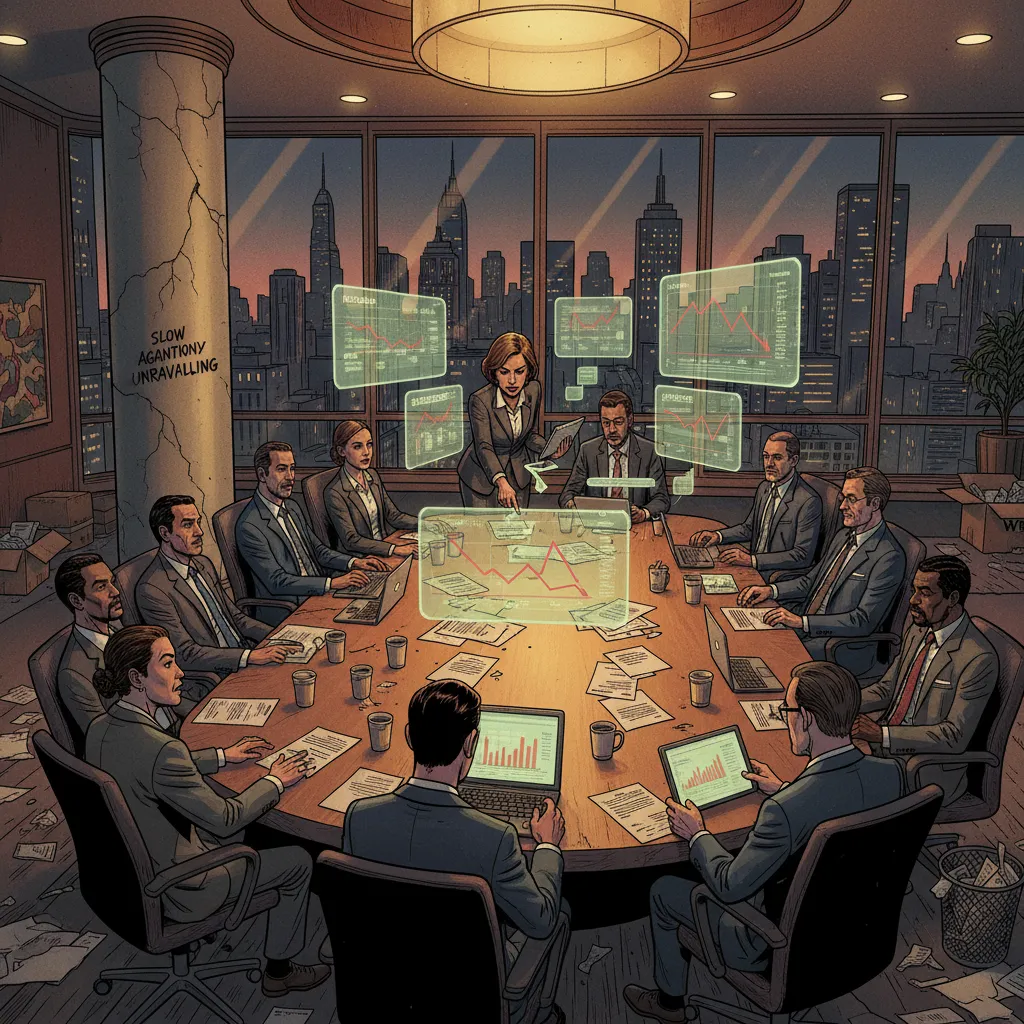
The turning point for the WeWork board wasn’t a sudden epiphany; it was a slow, agonizing unraveling, prompted by external forces rather than internal conviction. For years, the narrative was driven by Adam Neumann and amplified by Masayoshi Son. The board, in many ways, was a captive audience, mesmerized by the show and convinced by the sheer volume of cash flowing in that everything must be alright.
Think of it like this: a frog in slowly boiling water. The temperature kept rising, the red flags kept appearing, but the comfort of the status quo, the fear of confronting a powerful founder, and the intoxicating promise of a $100 billion valuation kept everyone from jumping out.
The early concerns were likely brushed aside as the quirks of a genius. “Adam’s just being Adam,” you can almost hear them say. The private jet? A necessary tool for a global CEO. The self-dealing real estate? A complex arrangement, but perhaps justifiable given his unique insight into the market. The trademark sale? A small price to pay for the “We” brand. Each incident, in isolation, might have been rationalized away. But cumulatively, they painted a picture of a CEO completely unmoored from ethical conduct.
Benchmark, as an early investor, had the chance to instill stronger governance from the outset. Their expertise in guiding high-growth companies should have prompted a more robust framework. Perhaps they believed their influence would grow, or that Neumann would mature. But by granting such extreme super-voting rights, they essentially signed away their ability to truly intervene without a massive fight. Their initial bet on the founder’s vision meant accepting his terms, which later proved to be their undoing.
Masayoshi Son’s entry, as we’ve discussed, didn’t just add money; it added a new layer of complexity to the board dynamic. Son wasn’t just another investor; he was a titan, a force of nature who saw himself as a grand strategist for humanity. His personal relationship with Neumann, built on shared grandiosity, made him an unlikely ally for any director trying to rein Adam in. When the largest shareholder is actively encouraging the CEO’s excesses, who on the board has the courage, or the leverage, to say no? Dissent became synonymous with disloyalty to the “vision.”
The board meetings themselves must have been fascinating, if terrifying. Were there heated debates that were ultimately overridden by Neumann’s voting power? Or was it a more subtle form of acquiescence, where the sheer momentum of growth and the promise of future riches dulled any sharp edges of criticism? It’s likely a mix of both. The pressure to conform, to not be the one to rock the boat, is immense in such high-stakes environments.
The board’s awakening truly began when the external world started to catch up. The initial rumblings from analysts and journalists about WeWork’s financials were dismissed as naysaying. But the closer the IPO got, the louder those voices became. The market, cold and indifferent to charisma, began to dissect the S-1 filing, revealing the emperor’s new clothes to be non-existent.
This external pressure was the catalyst. It wasn’t a proactive governance intervention; it was a reactive scramble for survival. The board didn’t choose to confront Neumann because of a sudden moral imperative; they were forced to confront him because the financial markets had slammed the door shut. The company was hemorrhaging cash, and the only path forward required a complete overhaul of leadership and, by extension, governance.
“The WeWork board’s journey from enablers to executioners of Adam Neumann’s reign was a painful lesson in market reality. They didn’t see the light until they felt the heat, proving that sometimes, the only way to awaken a complacent board is a catastrophic external shock.”
The slow, painful awakening of the board highlights a critical lesson: waiting for external pressure to force a governance correction is a recipe for disaster. Effective boards are proactive, establishing strong controls and accountability before a crisis hits, not just reacting when the entire enterprise is on the brink of collapse. For WeWork, that awakening came far too late, costing billions and leaving a legacy of profound regret.
🔚 Chapter 12: The Phoenix (Maybe?) and The Indelible Mark
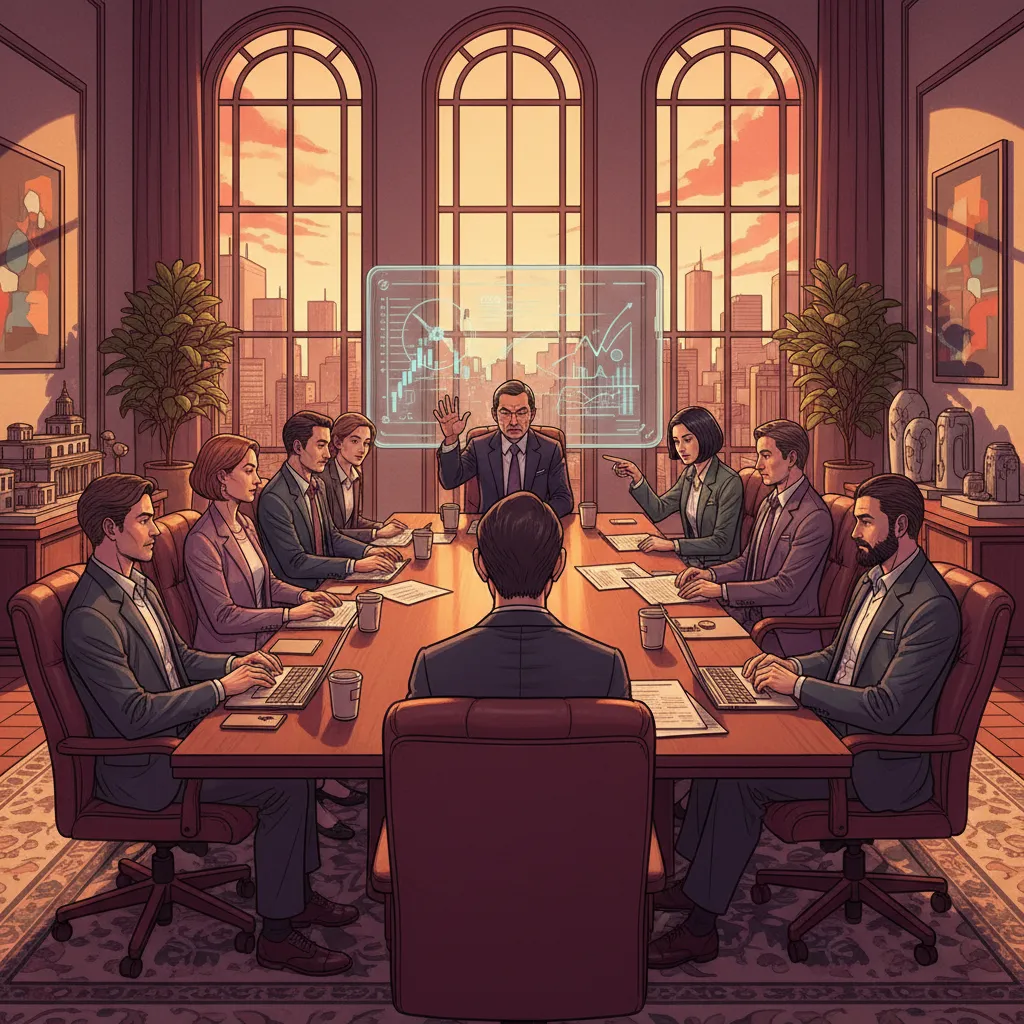
The WeWork saga is a story that refuses to die, much like the company itself, which, against all odds, continues to exist in some form. After the dust settled, the board, under SoftBank’s heavy hand, embarked on a grueling, often thankless, process of damage control and restructuring. The goal was no longer to “elevate the world’s consciousness” or achieve a trillion-dollar valuation, but simply to survive, to become a profitable, albeit much smaller, real estate company.
WeWork did eventually go public in 2021 via a SPAC, a far cry from the glittering IPO it once envisioned. Its valuation was a shadow of its former self, trading at around $9 billion initially, a stark reminder of the $47 billion peak. The new management team, stripped of the grand ambitions, focused on core operations, renegotiating leases, and cutting costs. It was a painful, slow grind, devoid of the charismatic spectacle that once defined the company.
As of recent times, WeWork has continued to struggle, filing for Chapter 11 bankruptcy protection in November 2023. The company cited its “legacy leases” and declining demand for office space as key factors, but the underlying issues of its business model and the weight of past excesses undoubtedly contributed. Even after Adam Neumann’s departure and years of restructuring, the ghost of its past continues to haunt it. The lessons of its catastrophic governance failures were etched into its very foundations.
Masayoshi Son and SoftBank took a colossal hit. The Vision Fund, once hailed as a revolutionary investment vehicle, faced intense scrutiny and recorded massive losses, forcing Son to temper his “think bigger” philosophy and adopt a more cautious approach. His reputation, while still formidable, carries the indelible mark of the WeWork debacle. It was a harsh, expensive lesson in the dangers of unchecked founder worship and the seductive power of hyper-growth narratives.
Benchmark, too, faced its own reckoning. While they eventually played a role in ousting Neumann, their initial concessions on governance and their prolonged silence in the face of his excesses will forever be part of their WeWork legacy. It’s a reminder that even the most celebrated venture capitalists can be blinded by potential returns.
As for Adam Neumann, he resurfaced, as charismatic and ambitious as ever, with a new real estate venture called Flow. The audacity of his return, seemingly unfazed by the destruction he left behind, sparked both fascination and outrage. It’s a testament to the enduring power of his personality, and perhaps, a cynical reflection of a system that often allows certain founders to fail upwards.
The WeWork story, in its entirety, is more than just a business case study; it’s a modern parable. It highlights the delicate balance between vision and reality, ambition and accountability. It underscores the profound responsibility of a board of directors, not just to manage risk, but to safeguard the very integrity of an organization.
“The WeWork saga stands as an indelible mark on the landscape of modern business—a monument to hubris, a testament to unchecked power, and a brutal lesson in the non-negotiable imperative of sound governance. It’s a tale that will echo for generations, reminding us that even the grandest visions crumble without the bedrock of accountability.”
So, the next time you hear a founder talking about “elevating the world’s consciousness” while simultaneously engaging in questionable financial dealings, remember WeWork. Remember Adam Neumann. Remember Masayoshi Son. And most importantly, remember the board – the collective body of experienced individuals who, for far too long, watched the circus unfold, cheered on the ringmaster, and only intervened when the big top was already in flames. It’s a story that screams one truth above all others: good governance isn’t a luxury; it’s the very foundation of sustainable success, and its absence can lead to the most spectacular of falls.
💡 Key Insights
- ▸ The allure of a charismatic founder, especially one demonstrating rapid growth, can blind even sophisticated investors and board members to glaring governance red flags. A strong board must establish clear boundaries and accountability mechanisms from the outset, regardless of the founder's perceived genius, to prevent self-dealing and unchecked power.
- ▸ Founders, while often visionaries, require robust checks and balances, particularly when their personal interests begin to diverge significantly from the company's or its shareholders'. Investors and entrepreneurs must scrutinize founder control structures, such as super-voting shares, and demand independent board oversight to protect long-term company health over short-term growth narratives.
- ▸ The 'growth at all costs' mentality, particularly when fueled by massive capital injections from funds like SoftBank's Vision Fund, can exacerbate governance failures. Boards and investors must prioritize sustainable business models, clear paths to profitability, and ethical leadership over hyper-growth metrics that mask fundamental operational flaws and financial irregularities, thereby avoiding catastrophic value destruction.
Sources
- The New York Times: WeWork’s Downfall Was a Test of Corporate Governance. The Board Failed. ↗
- Bloomberg: The Fall of WeWork: How Adam Neumann Went From Visionary to Villain ↗
- The Wall Street Journal: WeWork’s Adam Neumann Cashed Out More Than $700 Million Before IPO Was Pulled ↗
- Forbes: WeWork’s S-1 Filing: The Most Unbelievable IPO Prospectus Ever? ↗
- CNBC: WeWork was once valued at $47 billion, now it’s reportedly worth less than $3 billion. Here’s what happened ↗
- Wikipedia: WeWork ↗
- The Information: The Real Story of How WeWork’s Board Finally Ousted Adam Neumann ↗
- Reuters: SoftBank records first quarterly loss in 14 years after WeWork, Uber investments sour ↗
- Financial Times: WeWork and the cult of the founder ↗