Karsanbhai Patel: The Door-to-Door Detergent That Built Nirma
Karsanbhai Patel challenged multinational detergent brands by redesigning price, distribution, and aspiration for India's mass market.
View all stories about this mogul
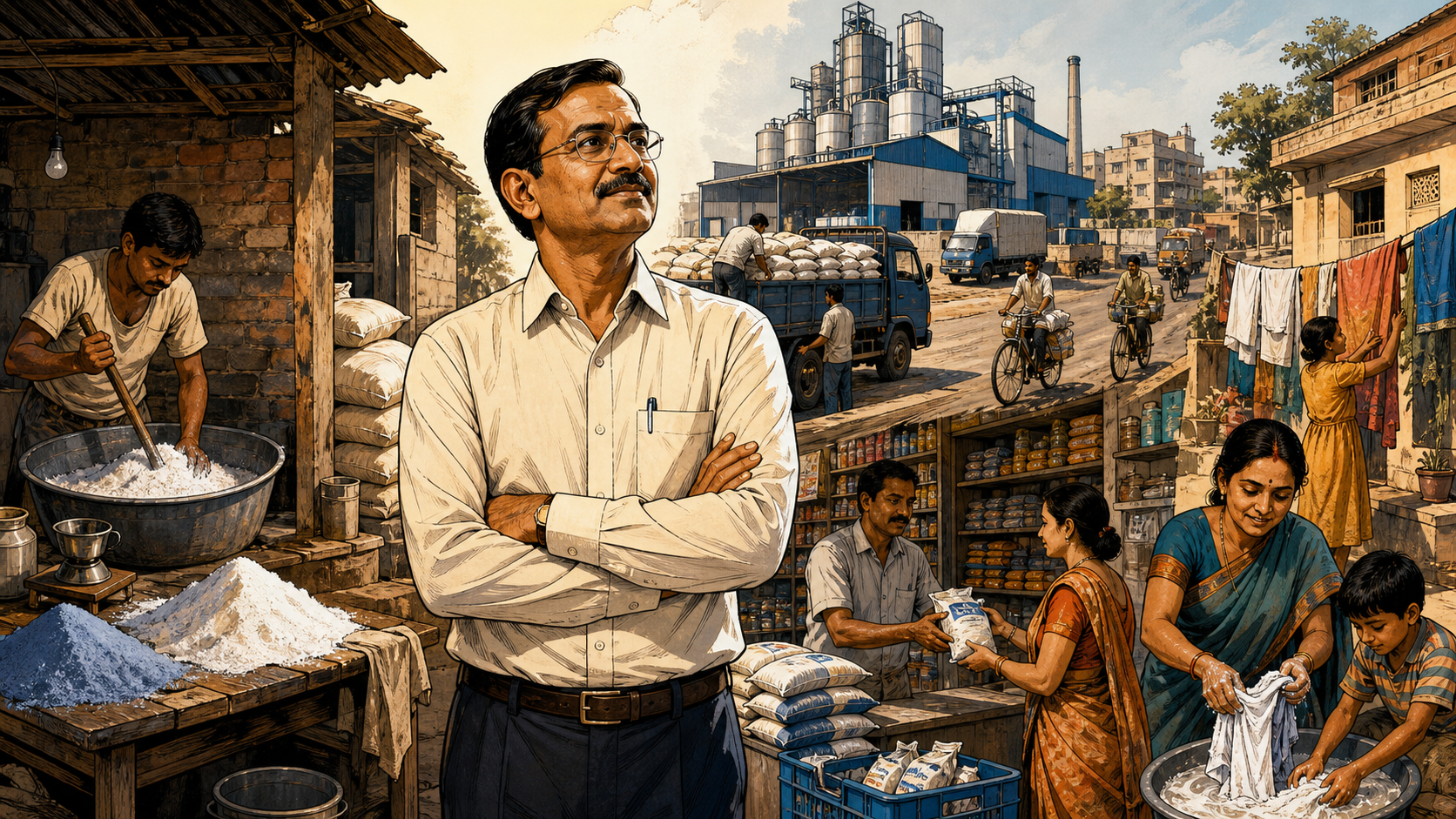
Karsanbhai Patel built Nirma by recognizing that millions of Indian households wanted modern detergent performance but could not comfortably pay the price charged by established brands. His answer was not a minor discount. It was a different cost structure and a different route to the customer.
Beginning on a small scale in Gujarat, Patel produced detergent powder and sold it directly while traveling to work. The humble method did more than save distribution expense. It taught him exactly how buyers judged cleaning power, price, and risk.
Mixing a Mass-Market Product After Work
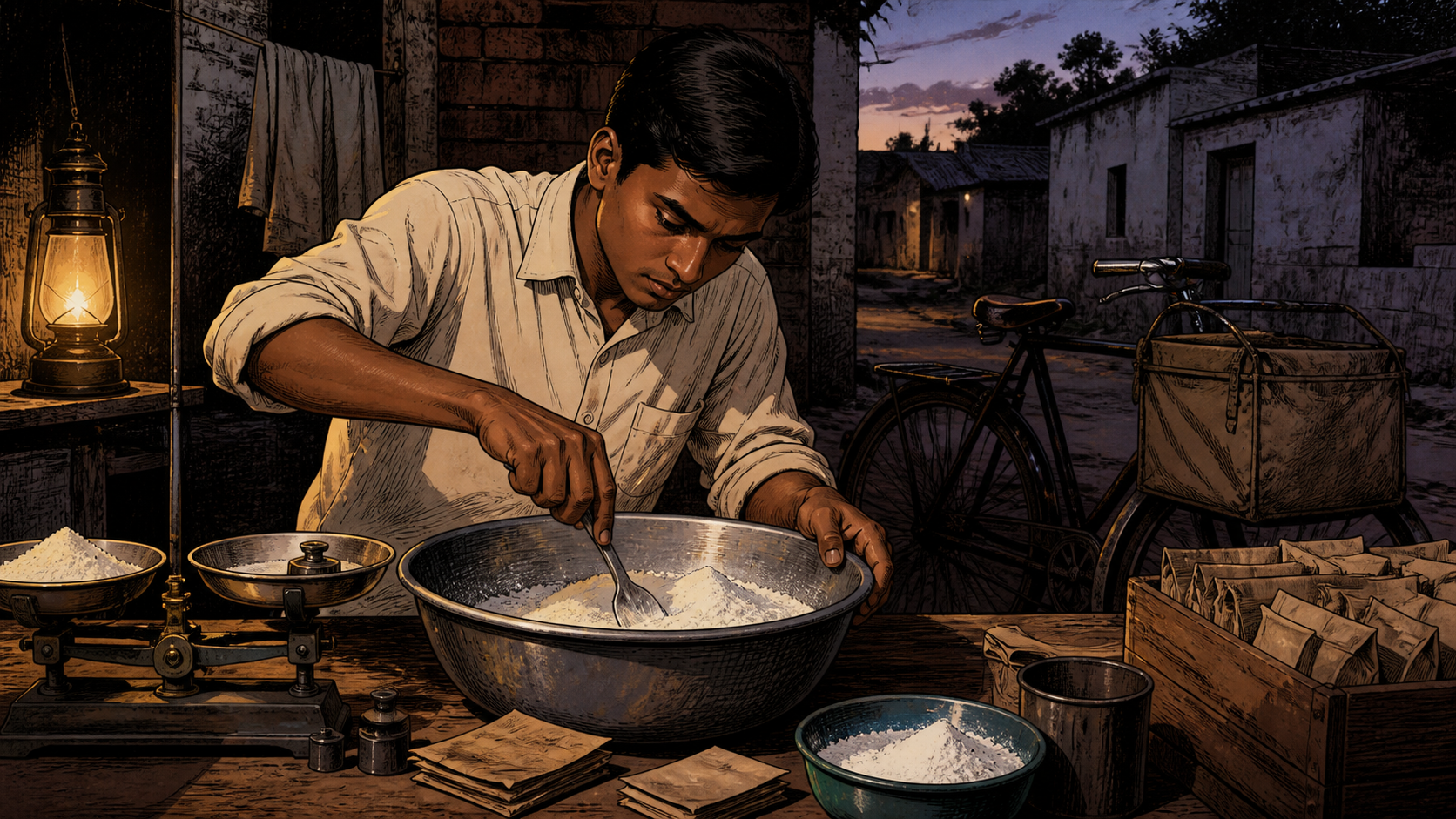
Patel trained in chemistry and worked as a laboratory technician. In 1969, he began making detergent powder on a small scale. The venture did not start with a national advertising budget, modern factory, or powerful distributor.
He reportedly sold packets door to door, including along his commute. Direct selling lowered the amount of capital trapped in a conventional retail launch and created immediate feedback. Customers could try a low-cost alternative without committing to a premium purchase.
The product was named Nirma in memory of Patel’s daughter Nirupama. That personal name later became one of India’s most recognizable household brands.
The market gap was structural. Premium synthetic detergents existed, but their economics excluded many consumers or limited how often they could be used. Traditional washing products were cheaper but offered a different experience. Nirma positioned itself between aspiration and affordability.
Turning Affordability Into a National Brand
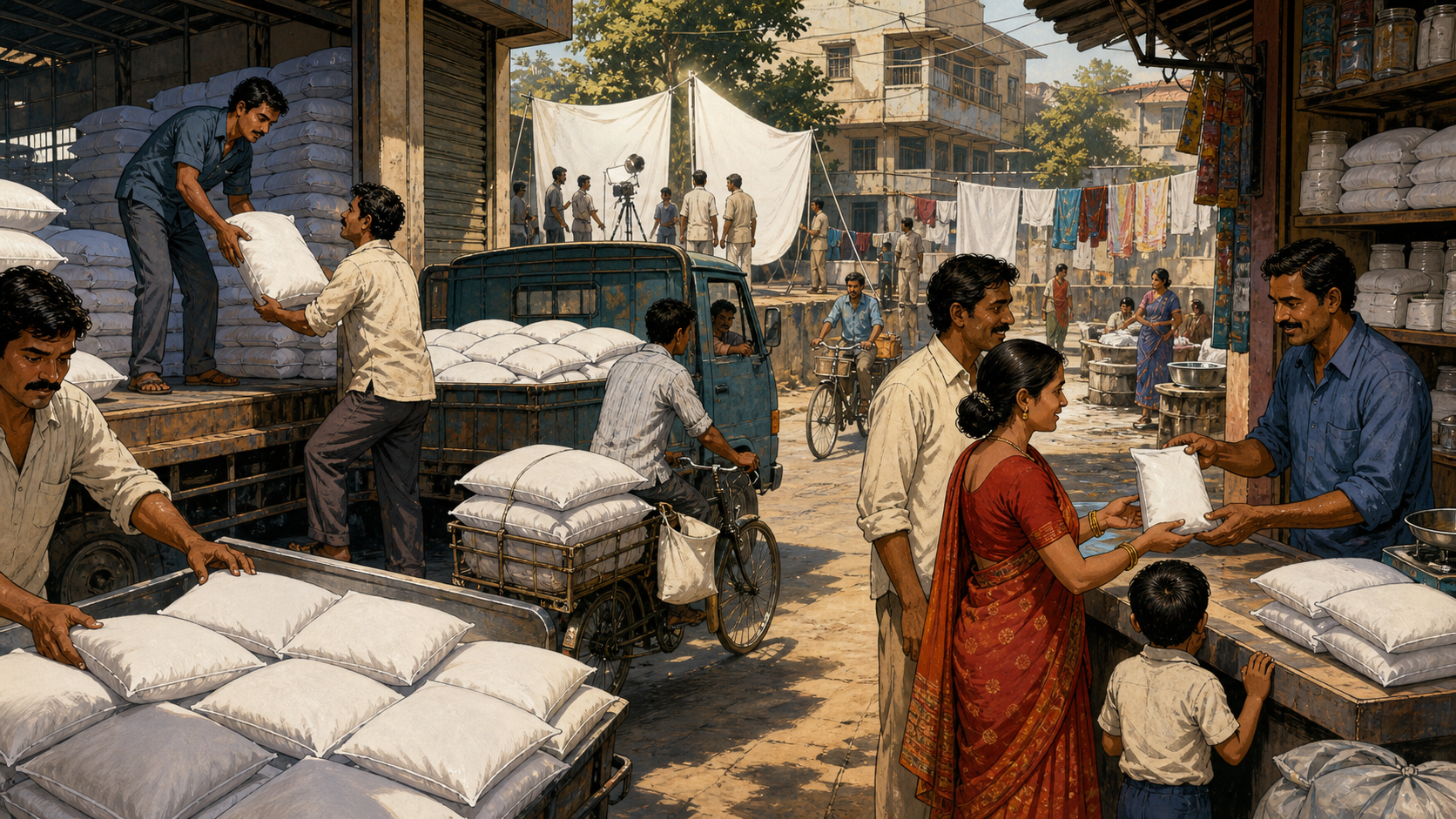
Low price can attract trial, but a mass brand needs recognition and repeat purchase. Nirma’s advertising, including its famous washing-powder jingle and white-dress imagery, made the name memorable across languages and regions.
The communication avoided presenting the product as an apologetic substitute. It linked affordability with cleanliness, energy, and family practicality. The brand promised that a wider group of households could participate in a modern consumer category.
Distribution expanded as demand grew. Local retailers mattered because everyday household purchases depended on availability close to home. Manufacturing scale and tight cost control allowed Nirma to defend its price while investing in reach.
The success forced multinational competitors to reconsider pack sizes, pricing, product tiers, and rural distribution. Nirma did not merely take share within the existing premium market. It helped enlarge the market by serving buyers the prevailing model had treated as uneconomic.
From Founder Advantage to Institutional Challenge
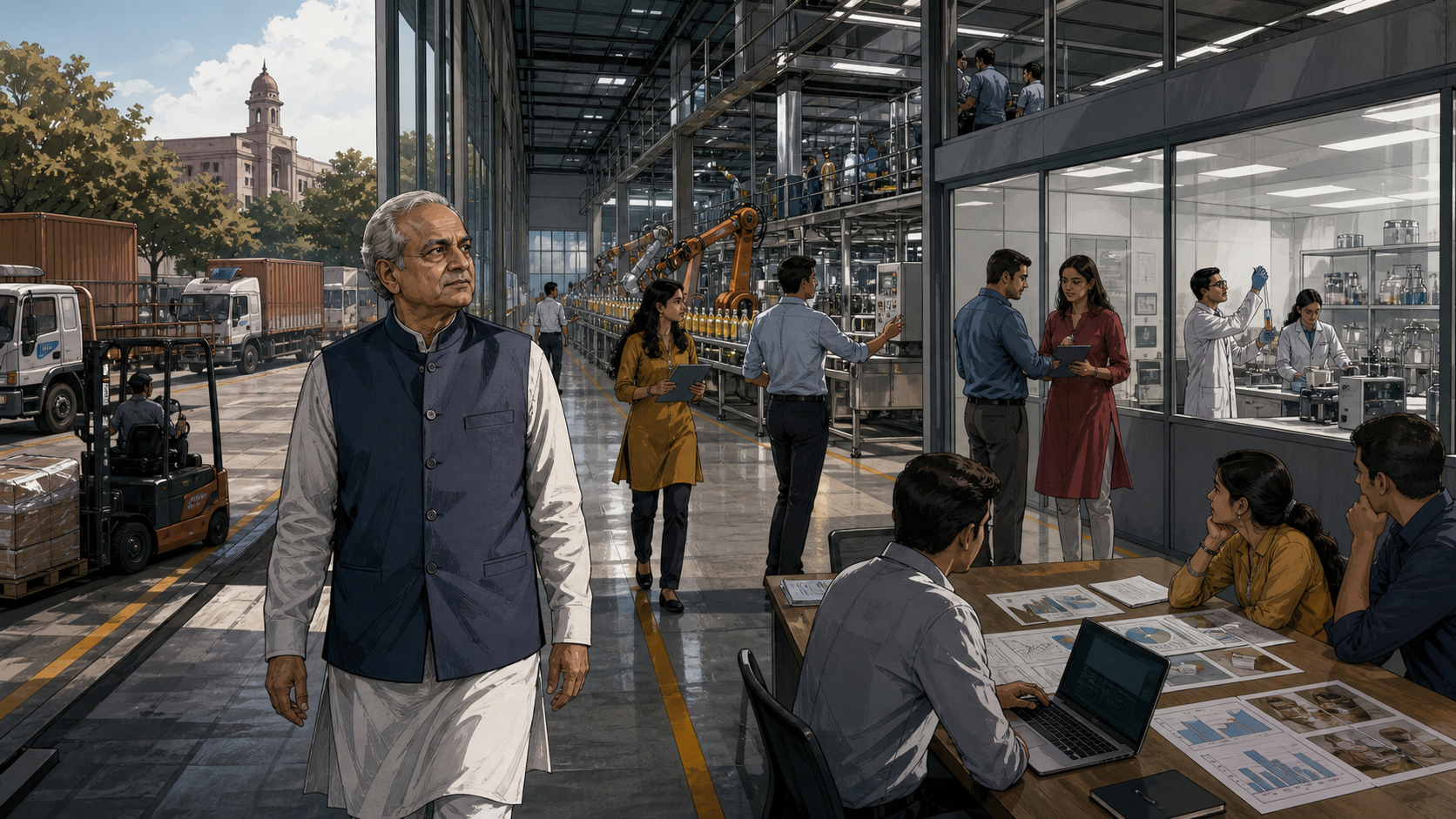
Nirma expanded beyond its original powder into soaps, personal care, chemicals, and other businesses. Patel also invested in education, contributing to institutions that became associated with the Nirma name.
Scale brought a harder competitive environment. Incumbents launched lower-priced offerings, consumer preferences changed, and modern retail raised expectations for packaging, product segmentation, and brand renewal. The capabilities required to disrupt a market are not identical to those required to defend it for decades.
Founder-led cost discipline can become a durable system only when manufacturing, research, marketing, and succession no longer depend on one person’s instinct. A brand born through direct customer contact must keep finding ways to hear customers after layers of management and distribution intervene.
Patel’s broader lesson is not simply “sell cheaper.” Sustainable affordability comes from redesigning the value chain: formulation, packaging, production, distribution, and promotion must all support the promise. Price is the visible outcome of an operating model.
Nirma showed that consumers overlooked by premium categories are not marginal. Serve them on terms that respect both their budgets and aspirations, and they can redefine the center of the market.
💡 Key Insights
- ▸ A low-price product can expand a category when it is designed around the customer's real budget rather than incumbent margins.
- ▸ Door-to-door selling created direct feedback before Nirma could afford national distribution.
- ▸ Mass-market branding works when affordability is paired with a memorable identity rather than presented as compromise.
- ▸ Cost advantage must evolve into institutional capability as competitors copy price and distribution.