Akio Toyoda: The Quiet Operator Steering the World's Toughest Auto Giant
The biography of Akio Toyoda is not a founder myth. It is the story of an heir who inherited the world's most disciplined car company, survived recalls, earthquakes, EV pressure, governance criticism, and still kept Toyota moving through quiet power.
View all stories about this mogul
How did Akio Toyoda build quiet power at Toyota?
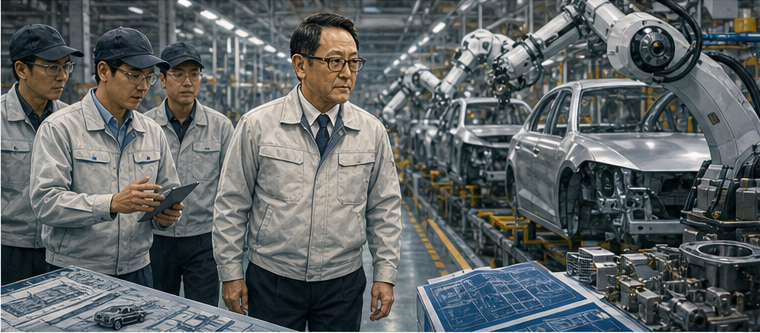
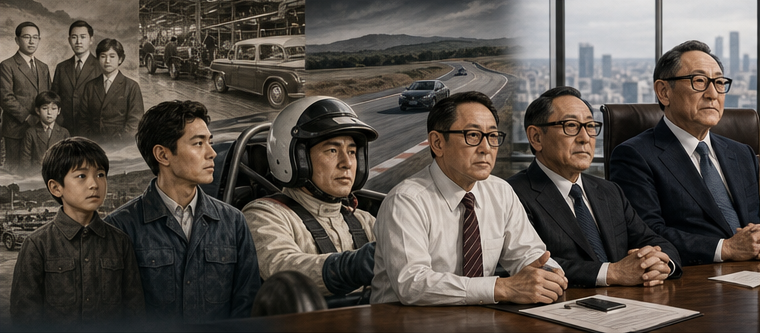
Akio Toyoda did not build Toyota from nothing. He inherited something more difficult: a family name attached to one of the most admired, copied, and scrutinized manufacturing machines in business history. The biography of Akio Toyoda is the story of a grandson of Toyota’s founder who became president during the global financial crisis, bowed through a recall crisis in 2010, defended hybrids when investors wanted a cleaner EV narrative, and stepped into the chairman’s role in 2023 without really leaving the room.
That is the heart of the Akio Toyoda story: not the loud founder who breaks an industry, but the quiet operator who keeps an empire from breaking itself.
As of Toyota’s current executive listing, Akio Toyoda is chairman of the board of directors. Kenta Kon is president, and Koji Sato is vice chairman. But the company still carries Toyoda’s operating shadow: racing, quality, hybrids, “mobility company” ambition, and a stubborn belief that Toyota’s job is not to win headlines but to make vehicles that survive customers, regulators, disasters, currencies, and decades.
Who is Akio Toyoda?
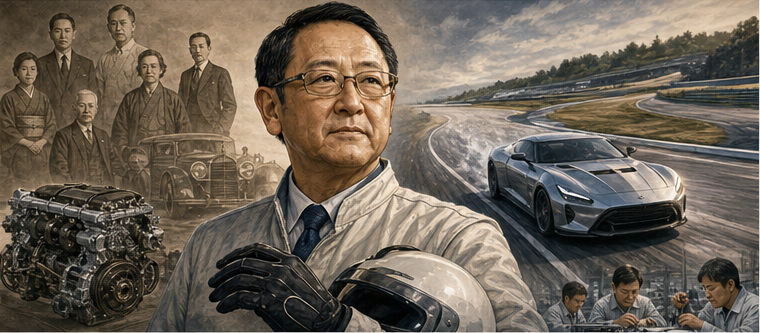
Akio Toyoda was born on May 3, 1956. Toyota says he graduated from Keio University with a law degree in April 1979, earned an MBA from Babson College in the United States in 1982, and joined Toyota Motor Corporation in April 1984.
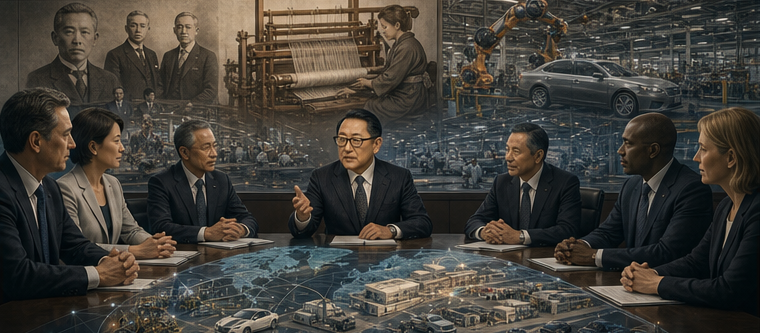
He is the grandson of Kiichiro Toyoda, the founder of Toyota Motor Corporation, and the great-grandson of Sakichi Toyoda, the inventor-industrialist behind the loom business that came before the car company. That bloodline gave Akio access, but it also gave him a test: could a founder’s descendant lead a company whose real religion was not family, but process?
His early Toyota career was not a straight ceremonial climb. He worked across production, marketing, product development, and international operations. In April 1998, he became an executive vice president and board member at NUMMI, Toyota’s joint venture with General Motors in California. In June 2000, he joined Toyota’s board. In June 2005, he became executive vice president and representative director, overseeing areas including quality, purchasing, product management, IT, and overseas operations.
Then came June 2009. Toyota made Akio Toyoda president.
The timing was brutal.
What happened when Akio Toyoda became Toyota president?
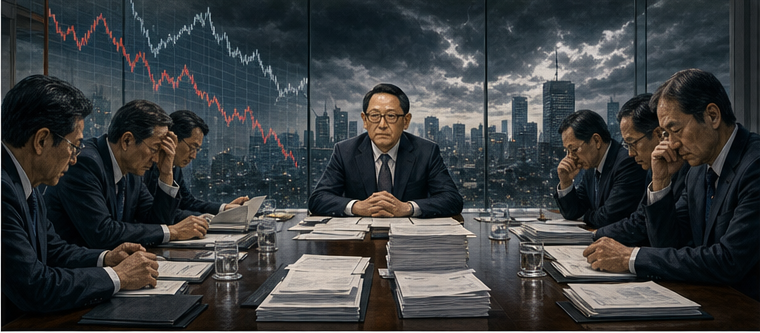
Akio Toyoda took the top job as the auto industry was still reeling from the 2008 financial crisis. Toyota, famous for reliability and steady expansion, was suddenly dealing with collapsing demand, a painful earnings shock, and then a major safety and recall crisis.
In 2010, Toyota faced recalls involving millions of vehicles, including U.S. scrutiny over unintended acceleration. Toyoda testified before the U.S. House Oversight and Government Reform Committee on February 24, 2010. His message was not polished swagger. It was apology, responsibility, and a promise to rebuild trust. His short public line, “deeply sorry,” became one of the defining quotes of his early presidency.
That moment matters because it stripped away the myth that Toyota’s system was automatic. The Toyota Production System had become a management legend: just-in-time flow, kaizen, genchi genbutsu, and obsessive quality control. But systems are still run by people. Under stress, even Toyota could drift.
Toyoda’s response was to re-center the company on what it liked to call “ever-better cars.” That phrase sounds simple, almost bland. Inside Toyota, it was a management reset. It meant fewer abstractions, more product, more regional accountability, and more attention to whether customers actually trusted what Toyota built.
How did Akio Toyoda survive Toyota’s hardest decade?
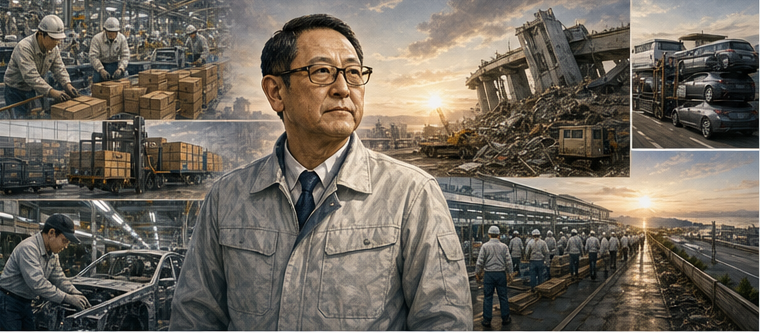
From 2009 onward, Akio Toyoda’s presidency became a sequence of shocks.
First came the financial crisis. Then the recall crisis. Then the March 11, 2011 Tohoku earthquake and tsunami, which disrupted Japan’s industrial base and Toyota’s supplier network. Then came years of currency swings, trade pressure, China growth, U.S. truck and SUV demand, software anxiety, battery-electric hype, and climate pressure.
A louder CEO might have tried to become the face of global disruption. Toyoda did something more Toyota-like. He kept returning to three messages: quality, people, and product.
He also did something unusual for a chairman-class executive: he drove. Under the racing name “Morizo,” Toyoda became associated with Toyota’s motorsport culture and Gazoo Racing. This was not just a vanity hobby. Inside Toyota’s product culture, it gave him credibility as someone who could feel a car, not just approve a capital plan. The GR Yaris, GR Corolla, Supra revival, and Lexus performance halo all fit into this broader idea: Toyota could not be only a spreadsheet company. It had to make cars people wanted.
That emotional edge mattered because Toyota was often accused of being too cautious. Toyoda’s answer was not to turn Toyota into Tesla. His answer was to make Toyota more Toyota: durable, broad, technical, region-specific, and slow to abandon customers who were not ready for a single powertrain future.
What is Akio Toyoda’s net worth?
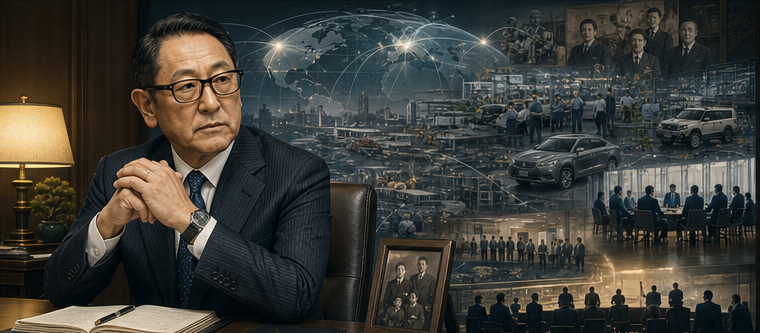
There is no reliable public figure for Akio Toyoda’s personal net worth comparable to the widely tracked fortunes of founders like Elon Musk, Jeff Bezos, or Bernard Arnault. He is best understood as an influential executive and family heir rather than as a publicly ranked mega-billionaire founder.
The more important financial fact is the scale of the company he helped steer. Toyota’s FY2026 financial summary reported sales revenues of ¥50.685 trillion for the year ended March 31, 2026. Operating income was ¥3.766 trillion, down 21.5% from FY2025. Net income attributable to Toyota Motor Corporation was ¥3.848 trillion.
Toyota’s money story is not one man’s net worth. It is institutional compounding: factories, supplier networks, dealers, finance arms, hybrids, trucks, Lexus, and a global manufacturing culture that turns small improvements into enormous cash flow.
Key facts about Akio Toyoda and Toyota
| Category | Detail |
|---|---|
| Full name | Akio Toyoda |
| Born | May 3, 1956 |
| Education | Keio University law degree; Babson College MBA |
| Joined Toyota | April 1984 |
| Became Toyota president | June 2009 |
| Became chairman | April 2023 |
| Current role | Chairman of the Board of Directors, Toyota Motor Corporation |
| Known for | Crisis leadership, hybrid strategy, Gazoo Racing, “Morizo” racing identity, Toyota’s multi-pathway powertrain approach |
| Toyota FY2026 revenue | ¥50.685 trillion |
| Toyota FY2026 operating income | ¥3.766 trillion |
| Toyota FY2026 consolidated vehicle sales | 9.595 million vehicles |
| Toyota and Lexus FY2026 retail sales | 10.477 million vehicles |
| Toyota and Lexus FY2026 electrified sales | 5.040 million vehicles |
What is the rise and fall of Akio Toyoda really about?
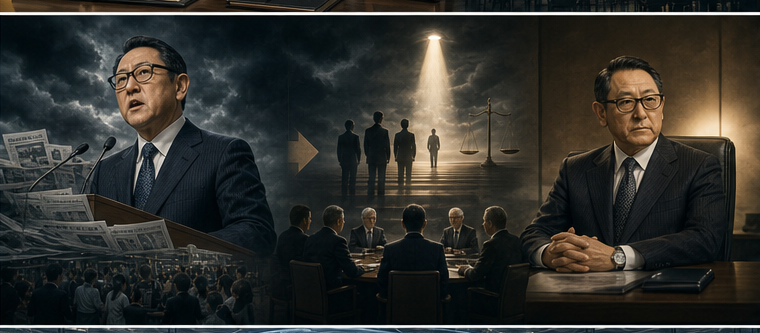
The phrase “rise and fall of Akio Toyoda” is tempting, but it is not quite accurate. There was a rise. There were serious falls in reputation. But there has not been a clean fall from power.
His rise was obvious: founder’s grandson, board member in 2000, executive vice president in 2005, president in 2009, chairman in 2023. His authority came from family history, but it was reinforced by surviving crises that could have permanently damaged Toyota’s standing.
The falls were different. They were moments when Toyota’s aura cracked.
In 2010, the recall crisis challenged Toyota’s quality image. In the 2020s, Toyota was criticized for lagging battery-electric vehicles while competitors promised all-electric futures. In 2024, Toyota and group companies faced certification problems in Japan. Associated Press reported in June 2024 that Toyota apologized for improper certification testing involving seven models and suspended production of three in Japan. The company said the issue did not affect the safety of vehicles already on the road, but the reputational damage was real.
Shareholders noticed. In 2024, Toyoda was re-elected to Toyota’s board with 71.93% support, down from 84.57% in 2023 and 95.58% in 2022, according to a Dow Jones report published by MarketWatch. Proxy advisers had criticized governance and compliance controls. That vote did not remove him, but it exposed a tension: the same founder-family authority that helps Toyota stay coherent can also make investors worry about accountability.
So the Akio Toyoda arc is not rise and fall. It is rise, shock, adaptation, criticism, and survival.
How did Akio Toyoda defend Toyota’s hybrid strategy?
The clearest strategic fight of Toyoda’s later career was electrification.
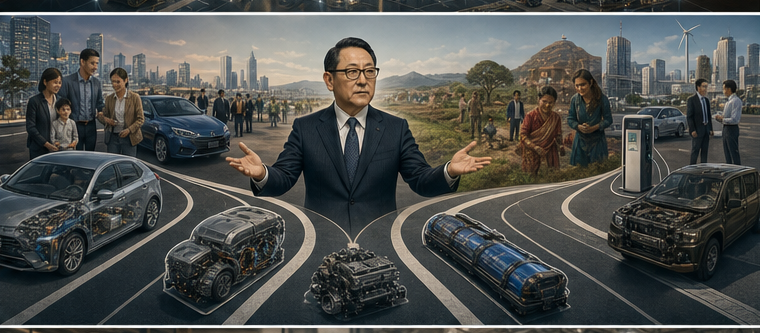
During the EV boom, many automakers presented battery-electric vehicles as the inevitable endpoint of the industry. Toyota took a different path. It invested in BEVs, but it refused to abandon hybrids, plug-in hybrids, hydrogen fuel cells, and combustion technologies for markets where charging infrastructure, affordability, regulation, and customer needs differed.
Critics called that slow. Toyoda called it realistic.
By FY2026, Toyota’s numbers gave his argument weight. Toyota’s financial results presentation showed Toyota and Lexus sold 5.040 million electrified vehicles in FY2026, up 6.5% year over year. Hybrids accounted for 4.620 million of that total. Battery-electric vehicles rose sharply to 243,000, up 68.4%, but they were still a small share of Toyota’s electrified volume.
This is the quiet operator’s logic: Toyota does not need the cleanest story if it has the broadest operating answer. In a world where a customer in California, a taxi operator in Bangkok, a farmer in Australia, and a family in rural Japan all face different fuel, price, and charging realities, Toyota’s multi-pathway approach is less elegant than an all-EV slogan but more flexible as a business system.
That does not mean the strategy is risk-free. If battery costs fall faster than expected, charging expands quickly, and Chinese EV makers continue their global push, Toyota’s caution could become drag. But if the transition remains uneven, Toyota’s hybrid depth gives it a powerful bridge.
Why is Toyota so hard to run?

Toyota is not just a car company. It is a giant coordination problem.
It designs, builds, finances, sells, and services vehicles across nearly every major region. It has Toyota, Lexus, Daihatsu, and historically Hino-linked operations. It manages suppliers across continents. It sells everything from compact cars to Land Cruisers, hybrids to luxury sedans, pickup trucks to commercial vehicles. It must satisfy regulators in Japan, the United States, Europe, China, Southeast Asia, and emerging markets.
That is why Akio Toyoda’s power is quiet. Toyota does not move like a startup. It moves like a city.
In FY2026, Toyota reported consolidated vehicle sales of 9.595 million vehicles. Toyota and Lexus retail vehicle sales were 10.477 million. Total retail vehicle sales were 11.283 million. Sales revenues reached ¥50.685 trillion. Those numbers are enormous, but the operating income decline to ¥3.766 trillion shows the pressure under the scale. Toyota cited factors including increased expenses, tariffs, supplier and material costs, and future-oriented investments.
The bigger Toyota gets, the more every decision becomes a balance between margin and mission. Cut too fast, and quality suffers. Move too slowly, and competitors pass you. Invest too little in the future, and the company ages. Invest too much at the wrong moment, and profits collapse.
Toyoda’s genius, when it worked, was pacing.
What happened when Akio Toyoda stepped down as CEO?
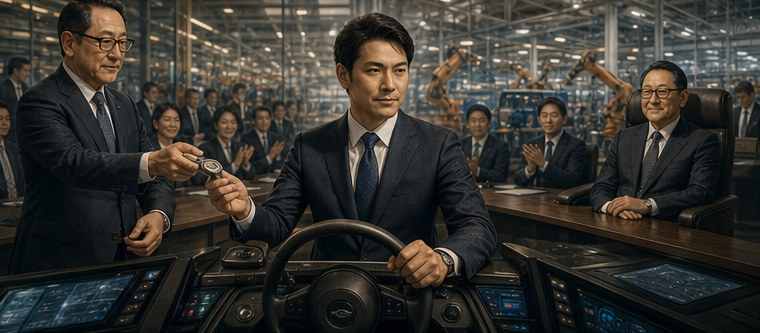
On January 26, 2023, Toyota announced that Akio Toyoda would step aside as president and CEO and become chairman. Koji Sato, then known for Lexus and Gazoo Racing leadership, became president and CEO in April 2023. In 2026, Toyota’s executive listing shows another leadership structure: Akio Toyoda as chairman, Koji Sato as vice chairman, and Kenta Kon as president.
The 2023 transition was not a disappearance. It was a repositioning.
Toyoda said Toyota needed to keep transforming into a mobility company. The phrase can sound corporate, but the stakes were concrete: software-defined vehicles, autonomy, connected services, batteries, hydrogen, urban mobility, and new forms of manufacturing. Toyota’s old advantage was building cars better than almost anyone. Its next challenge is building mobility systems without losing that manufacturing discipline.
A clean succession would have been simple: founder’s grandson exits, professional managers take over. Toyota’s reality is more layered. Toyoda remains chairman. His philosophy still influences product, racing, brand, and strategy. The company has newer operating leaders, but the founder-family signal remains powerful.
Timeline: biography of Akio Toyoda
| Date | Event |
|---|---|
| May 3, 1956 | Akio Toyoda is born. |
| April 1979 | Graduates from Keio University with a law degree. |
| 1982 | Earns an MBA from Babson College in the United States. |
| April 1984 | Joins Toyota Motor Corporation. |
| April 1998 | Becomes executive vice president and board member at NUMMI in California. |
| June 2000 | Joins Toyota Motor Corporation’s board of directors. |
| June 2005 | Becomes executive vice president and representative director. |
| June 2009 | Becomes president of Toyota Motor Corporation. |
| February 24, 2010 | Testifies before the U.S. House Oversight and Government Reform Committee during Toyota’s recall crisis. |
| March 11, 2011 | Tohoku earthquake and tsunami disrupt Japan and Toyota’s supply network. |
| November 2013 | Receives France’s L’ordre national de la Legion d’honneur, Officier. |
| November 2017 | Receives Japan’s Medal with Blue Ribbon. |
| January 26, 2023 | Toyota announces Toyoda will become chairman and Koji Sato will become president and CEO. |
| April 2023 | Akio Toyoda becomes chairman of Toyota Motor Corporation. |
| June 2024 | Toyota faces renewed scrutiny over certification irregularities; Toyoda apologizes publicly. |
| March 31, 2026 | Toyota closes FY2026 with ¥50.685 trillion in sales revenue. |
What is Akio Toyoda’s leadership style?
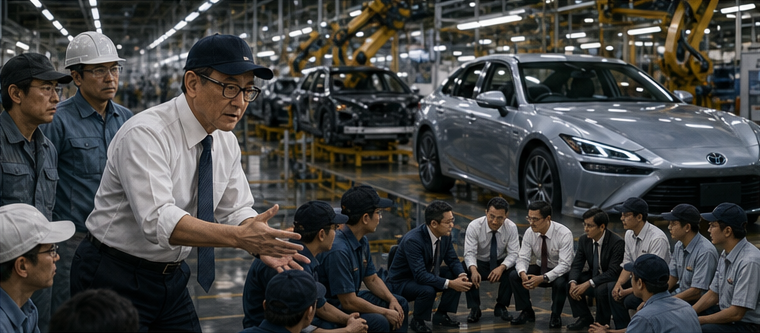
Akio Toyoda’s leadership style is best described as emotional conservatism.
The conservative part is obvious. He defended Toyota’s multi-pathway strategy. He resisted pressure to turn Toyota into a pure EV evangelist. He treated Toyota’s manufacturing system as a living inheritance, not a museum piece. He emphasized quality and long-term customer trust.
The emotional part is just as important. Toyoda cried, bowed, raced, apologized, and spoke often about employees, dealers, and customers. He did not present himself as a cold finance operator, even though Toyota is one of the largest financial machines in global industry. He presented himself as a car person responsible for a human system.
That combination explains why he can seem old-fashioned and radical at the same time. Old-fashioned because he believes in manufacturing discipline, dealer relationships, and customer diversity. Radical because in a market addicted to simple narratives, he keeps arguing that the future will be plural, messy, and regional.
What are the biggest criticisms of Akio Toyoda?
The criticisms are serious.
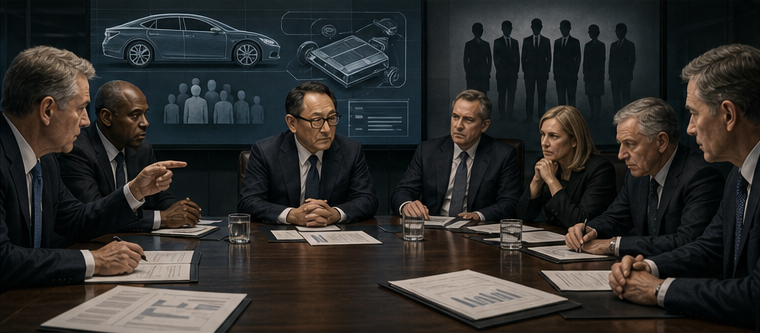
First, governance. Investors have questioned whether Toyota has enough independence from the Toyoda family legacy and whether the chairman’s influence makes it harder for executives to act freely. The 2024 shareholder vote showed real dissatisfaction, even though he remained on the board.
Second, compliance. Certification irregularities at Toyota and group companies damaged the company’s reputation for procedural discipline. For a company whose brand rests on trust, even technical testing misconduct becomes strategically dangerous.
Third, EV speed. Toyota’s hybrid strength may also be a psychological trap. The company has made money by being right about hybrids, but being right in one transition does not guarantee being right in the next. BYD, Tesla, Hyundai, and Chinese EV makers have changed customer expectations around software, price, and battery range.
Fourth, succession. Founder-family influence can stabilize a company, but it can also blur accountability. Toyota’s challenge is to preserve Toyoda’s product discipline without making the company dependent on Toyoda himself.
What is the legacy of Akio Toyoda?
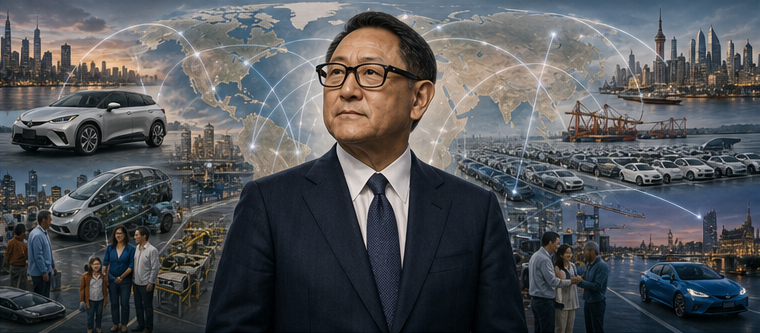
Akio Toyoda’s legacy is not finished, but its shape is visible.
He will be remembered as the executive who took Toyota through one of the most volatile periods in automotive history and kept it at the top of the global industry. He will also be remembered as the leader who bet that hybrids and diversified powertrains would matter longer than the market’s most aggressive EV forecasts suggested.
His record is not clean. The recall crisis, certification issues, governance criticism, and EV skepticism will remain part of the story. But the central fact is hard to ignore: Toyota under Toyoda did not become smaller, weaker, or irrelevant. It remained a giant.
In FY2026, Toyota still sold millions of vehicles, generated more than ¥50 trillion in sales revenue, and moved more than 5 million Toyota and Lexus electrified vehicles. That is not a disruption fairy tale. It is industrial endurance.
The quiet operator did not invent Toyota. He inherited an empire of processes, people, and expectations. His achievement was steering it through an age that wanted every legacy company to either transform overnight or die loudly.
Toyota did neither. It kept moving.
FAQ
What is Akio Toyoda’s net worth?
There is no reliable, widely accepted public estimate for Akio Toyoda’s personal net worth. He is not best understood as a startup-style founder billionaire. His influence comes from his executive role, family legacy, Toyota shareholding links, and decades inside Toyota’s operating system.
How did Akio Toyoda make his money?
Akio Toyoda made his career inside Toyota Motor Corporation, which he joined in 1984. He rose through production, marketing, international operations, board leadership, the presidency, and then the chairmanship. His wealth is tied to executive compensation, family wealth, and Toyota-related holdings rather than a company he personally founded.
How did Akio Toyoda build Toyota’s modern empire?
He did not build Toyota alone, and he did not found it. His role was to protect and redirect an existing empire. He re-centered Toyota after the recall crisis, pushed product emotion through Gazoo Racing, defended hybrids, and promoted a multi-pathway approach to electrification.
What happened to Akio Toyoda?
Akio Toyoda stepped down as Toyota president and CEO in April 2023 and became chairman. As of Toyota’s current executive listing, he remains chairman of the board of directors.
Why is Akio Toyoda controversial?
He is controversial because Toyota’s hybrid-first strategy, governance structure, and certification scandals have drawn criticism from investors, climate advocates, and governance advisers. Supporters argue that his caution helped Toyota stay profitable and flexible during an uneven global energy transition.
💡 Key Insights
- ▸ Akio Toyoda's power comes less from celebrity and more from institutional memory, family legitimacy, racing credibility, and crisis leadership.
- ▸ Toyota's hybrid-first, multi-pathway strategy looked conservative during the EV boom, but it helped the company sell more than 5 million electrified Toyota and Lexus vehicles in FY2026.
- ▸ The Akio Toyoda story is also a governance story: his influence survived shareholder criticism, certification scandals, and a CEO transition.
- ▸ Toyota's FY2026 revenue reached ¥50.685 trillion, but operating income fell 21.5%, showing that scale does not make the automaker immune to tariffs, costs, and compliance pressure.
Sources
- Akio Toyoda Executive Bio ↗
- Toyota FY2026 Financial Summary ↗
- Toyota FY2026 Financial Results Presentation ↗
- Toyota Executives ↗
- Toyota CEO Akio Toyoda to step aside, become chairman ↗
- Toyota apologizes for cheating on vehicle testing and halts production of three models ↗
- Akio Toyoda Wins 71.93% Support for Re-Election to Toyota Motor's Board ↗