Levi Strauss: How Work Pants Became a Global Uniform
Levi Strauss and Jacob Davis transformed reinforced workwear into a durable product system, then Levi's turned provenance and consistency into a worldwide brand.
View all stories about this mogul
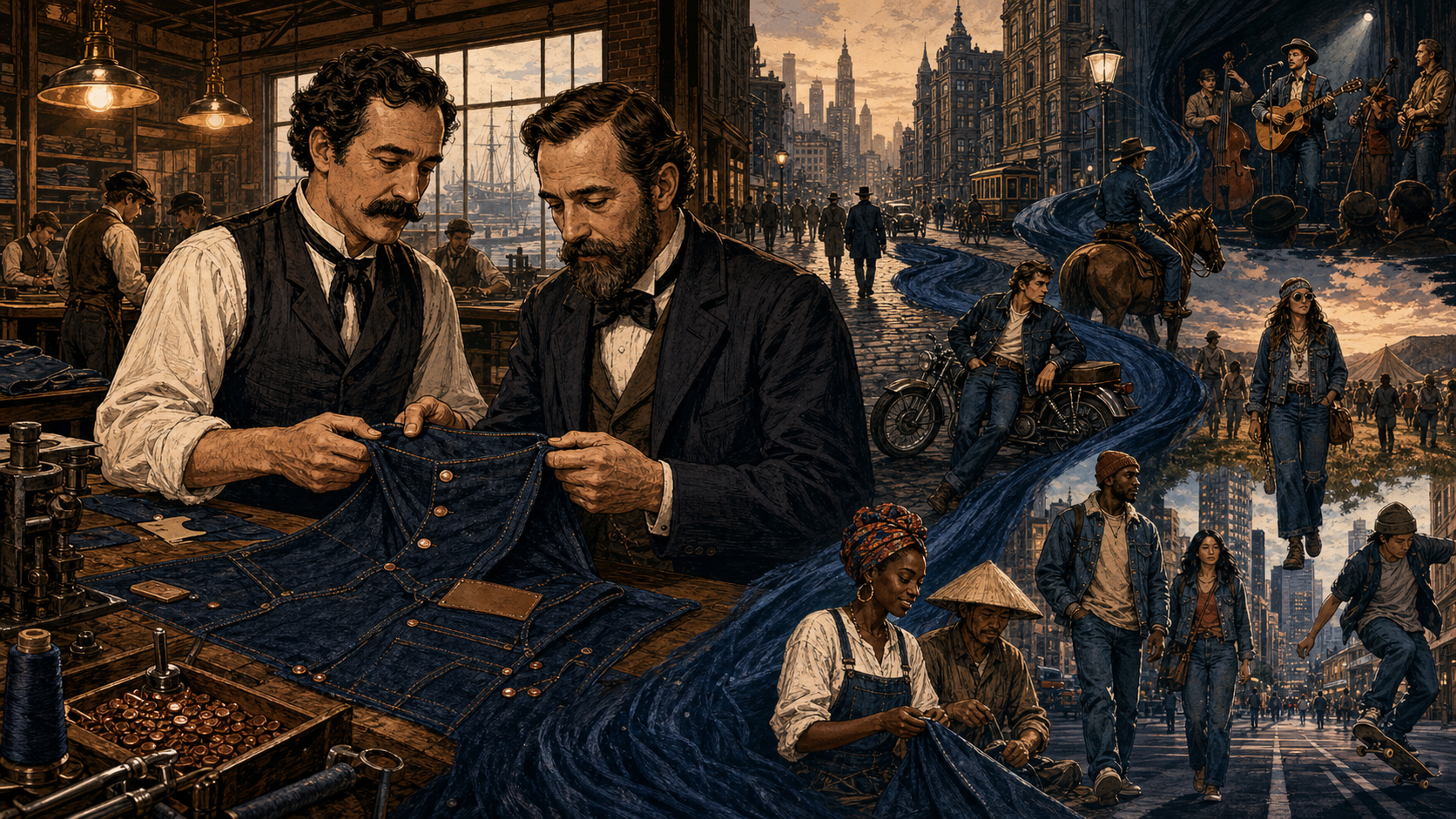
Levi Strauss built the supply house. Jacob Davis brought the reinforcement idea. Together they created a garment whose most practical details became some of the world’s most recognizable brand signals.
Blue jeans moved from mines and workshops to ranches, factories, campuses, concert stages, fashion runways, and nearly every country. That transformation was not the work of one advertising insight. It emerged from durable construction, repeatable design, distribution, and generations of customers assigning the product new meanings.
The story is valuable precisely because it is collaborative. The famous founder did not invent denim or trousers. The business breakthrough came from connecting a tailor’s observation to a merchant’s resources.
How did a customer problem become a patented product?
Strauss was born in Bavaria in 1829 and immigrated to the United States. He joined his brothers’ dry-goods business, then moved to San Francisco during the Gold Rush era and established a wholesale operation serving the growing West.
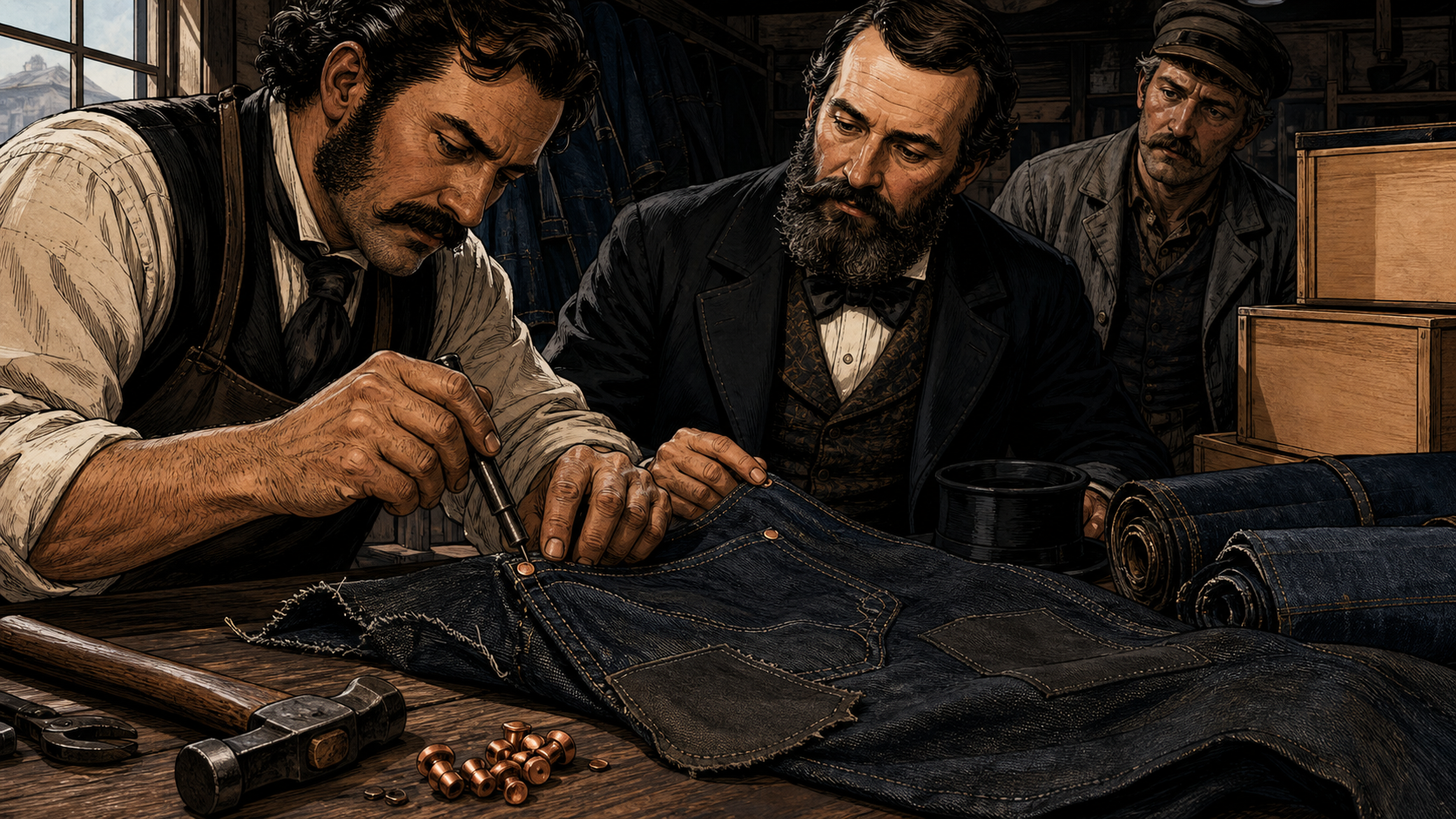
Jacob Davis, a tailor in Reno, used fabric supplied through Strauss’s business. A customer needed work pants that could withstand hard use, and Davis began adding metal rivets at points of strain such as pocket corners. The reinforcement addressed a visible failure: seams and pockets tore before the rest of the garment was exhausted.
Davis lacked the resources to secure and exploit a patent alone. He approached Strauss, and the two received a United States patent in 1873 for improving pocket openings with rivets. The partnership joined product insight with financing, materials, manufacturing, and distribution.
This was not disruption through novelty for its own sake. Buyers already understood trousers. The rivets made the improvement legible and testable. Workers could feel the difference over time, while the visible copper hardware signaled why the product might last longer.
The initial lesson is simple but often missed: the person closest to product failure may see the opportunity first, while the organization capable of scaling it may sit elsewhere in the value chain.
Why did utility become a brand language?
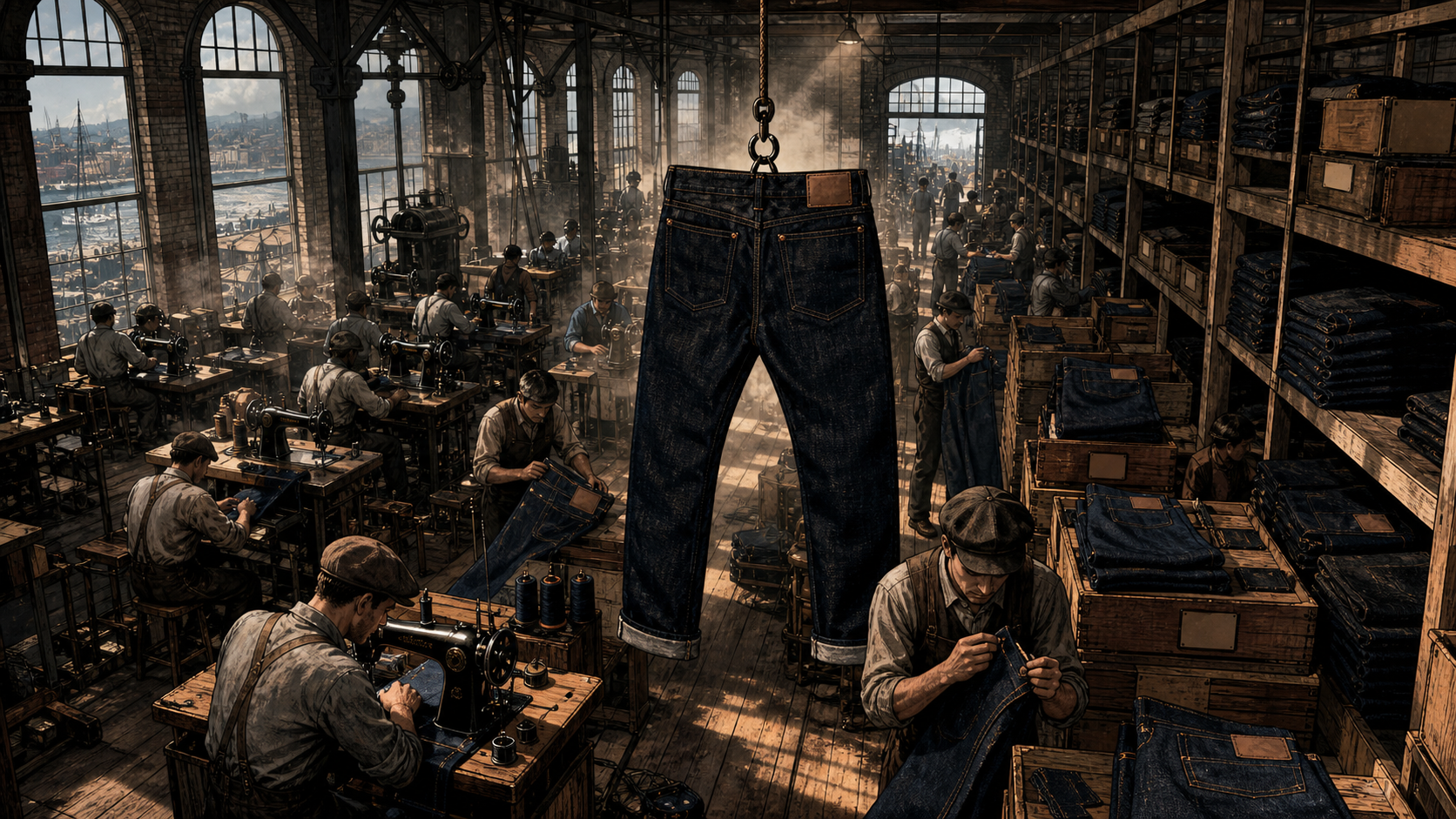
As the company standardized production, functional and identifying details accumulated. Rivets, the leather patch, pocket stitching, lot numbers, labels, and the red tab helped customers distinguish Levi’s products in a market full of similar garments.
The Two Horse trademark dramatized strength by showing horses trying to pull the trousers apart. It translated a material claim into an image that could travel across language and literacy barriers. The company was branding proof of performance, not merely decorating a commodity.
The product also aged visibly. Indigo faded at stress points and repeated wear made each pair personal. That characteristic eventually turned use into aesthetics. A garment originally valued because it survived work gained value because it recorded a life.
Levi Strauss died in 1902, leaving the company to family heirs. The San Francisco earthquake and fire of 1906 destroyed facilities, but the business rebuilt. Its continuity allowed specific design cues to outlive patents and become a form of memory.
Brand heritage can be copied superficially, so provenance alone is not a moat. Levi’s had to keep manufacturing, distributing, and adapting the product while protecting the details that made recognition nearly instantaneous.
How did jeans escape their original market?
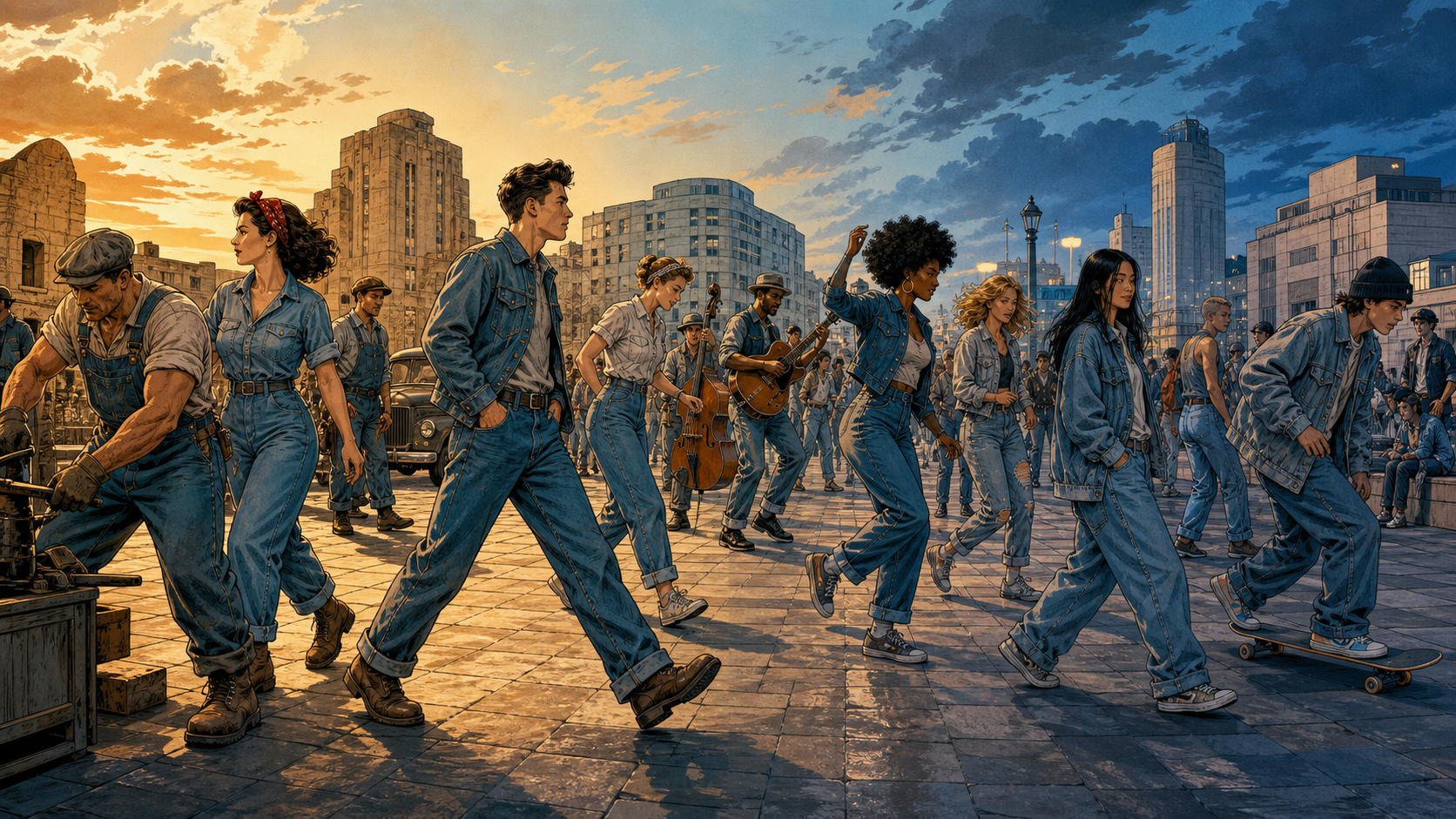
Western films and dude ranches exposed urban customers to denim as a symbol of frontier independence. During and after the Second World War, American culture carried jeans overseas. In the 1950s, actors and musicians helped connect denim to youth and rebellion; later countercultures made it a canvas for personal identity.
Each audience reinterpreted the garment. Workers valued durability, teenagers valued defiance, designers valued shape and fabric, and global customers could read jeans as casual modernity. Levi’s benefited from these meanings without authoring all of them.
That cultural success created business tension. A universal product attracts low-cost competitors, fashion cycles, vintage markets, and premium reinterpretations. The company has repeatedly had to balance accessibility with heritage and experimentation with recognizable fit.
Strauss’s legacy is a system in which function became symbol. The rivet solved a narrow problem. Consistent details made the solution identifiable. Culture then expanded the product far beyond the use case that created it.
Founders cannot manufacture that final step on command. They can build a product sturdy enough, distinctive enough, and available long enough for customers to carry it somewhere unexpected.
💡 Key Insights
- ▸ A breakthrough can come from combining customer observation with a supplier's material and distribution capability.
- ▸ Functional details become brand assets when they remain recognizable across generations.
- ▸ Provenance can protect a commodity product, but only when quality and availability support the story.
- ▸ Cultural adoption is larger than the founder and cannot be controlled like an advertising campaign.