Leonardo Del Vecchio: The Vertical Integration Machine Behind Luxottica
Leonardo Del Vecchio rose from an orphanage and a metal-parts workshop to build Luxottica by controlling design, factories, brands, stores, and distribution.
View all stories about this mogul
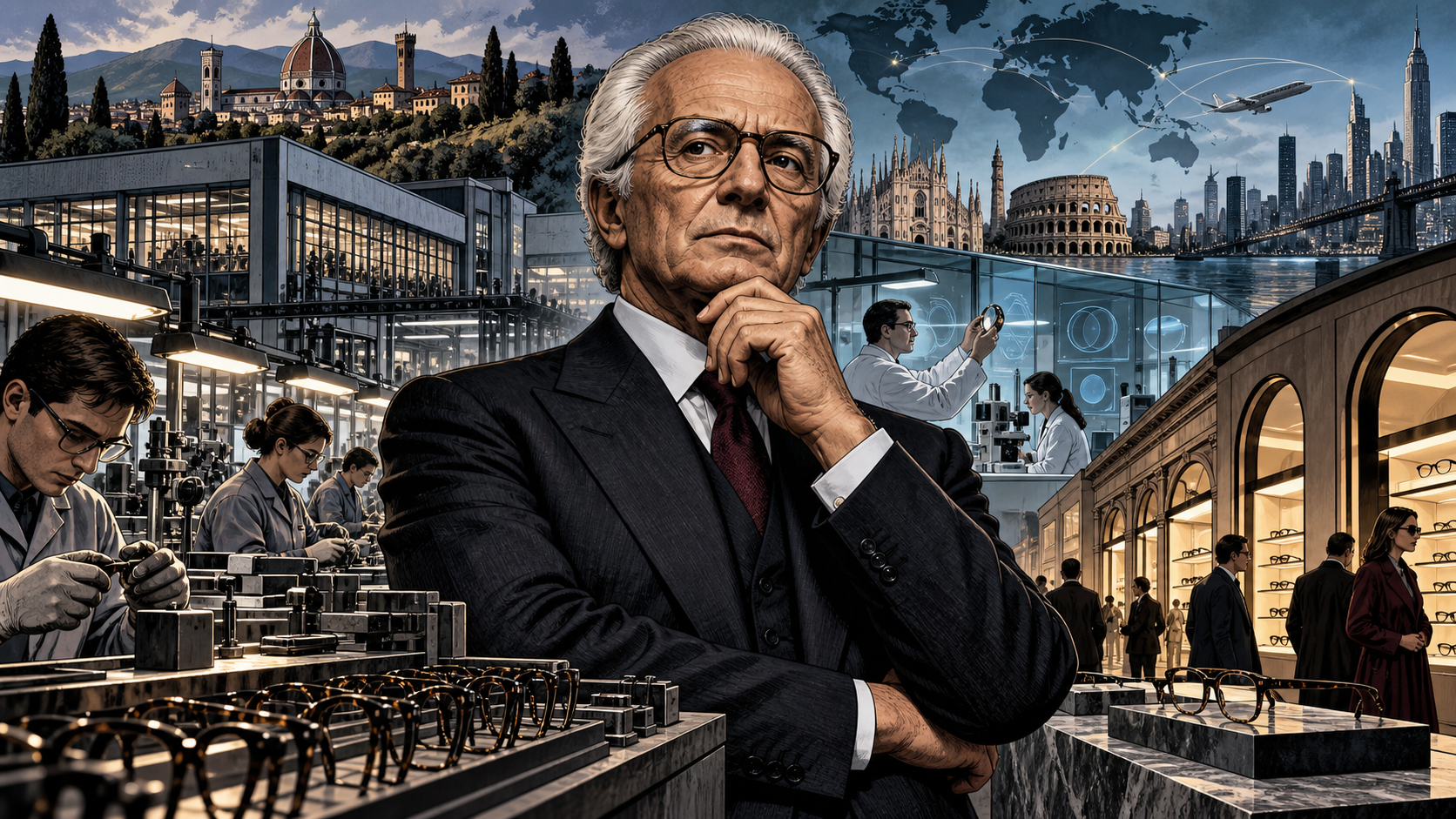
Leonardo Del Vecchio did not begin with a fashion house or a famous surname. He began with metalwork. That distinction explains the company he eventually built: Luxottica was never only a collection of glamorous eyewear brands. It was a manufacturing-and-distribution system designed to capture value at nearly every point between raw component and customer’s face.
By the time of Del Vecchio’s death in 2022, that system had become part of EssilorLuxottica, a global group combining frames, lenses, retail networks, and vision-care technology. Its scale made Del Vecchio one of Italy’s wealthiest industrialists. It also made Luxottica a symbol in debates over concentration, pricing, and the power that comes from owning both products and the shelves on which they are sold.
From an orphanage to a frame workshop
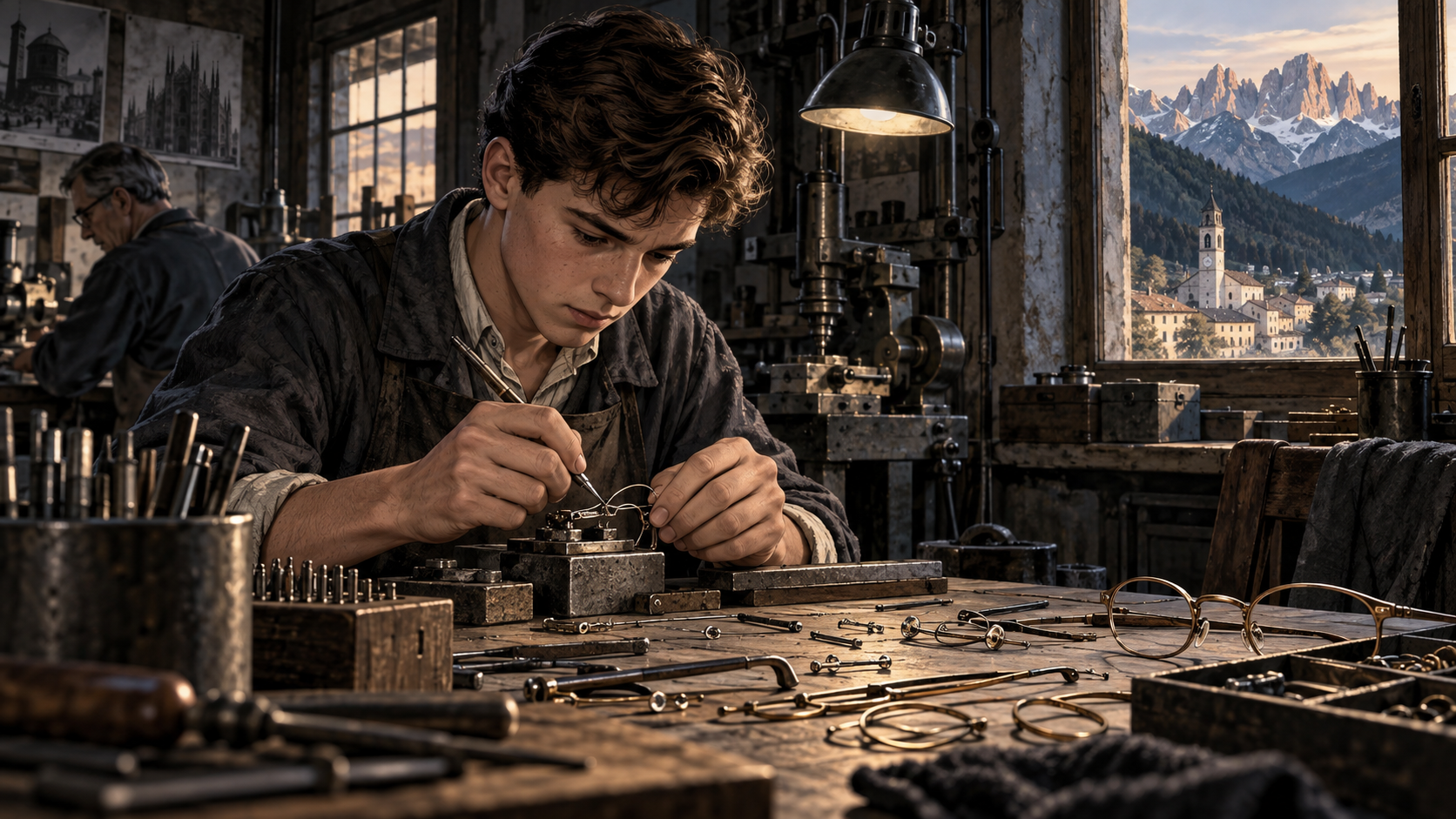
Del Vecchio was born in Milan in 1935. His father died before he was born, and his mother, struggling to support the family, placed him in the Martinitt orphanage. As a teenager he entered factory work and learned engraving and toolmaking—skills closer to industrial production than luxury merchandising.
In 1961 he moved to Agordo in the Dolomites, an area where public policy encouraged industry, and founded Luxottica. The early company supplied components and accessories to other frame makers. That position taught Del Vecchio an uncomfortable lesson: suppliers absorbed the difficulty of precision manufacturing while brand owners and distributors held the customer relationship.
Luxottica began producing complete frames under its own name in the late 1960s. The move was a strategic crossing of the value chain. Instead of earning a narrow component margin, the company could combine design, production, sales, and brand identity. Manufacturing competence remained the base, but it now served a product Luxottica controlled.
The discipline of metal parts mattered. Eyewear sits on the body, must tolerate repeated motion, and is highly visible. Small improvements in hinges, weight, finish, and fit can support a premium perception that advertising alone cannot manufacture.
Building a chain from factory to storefront
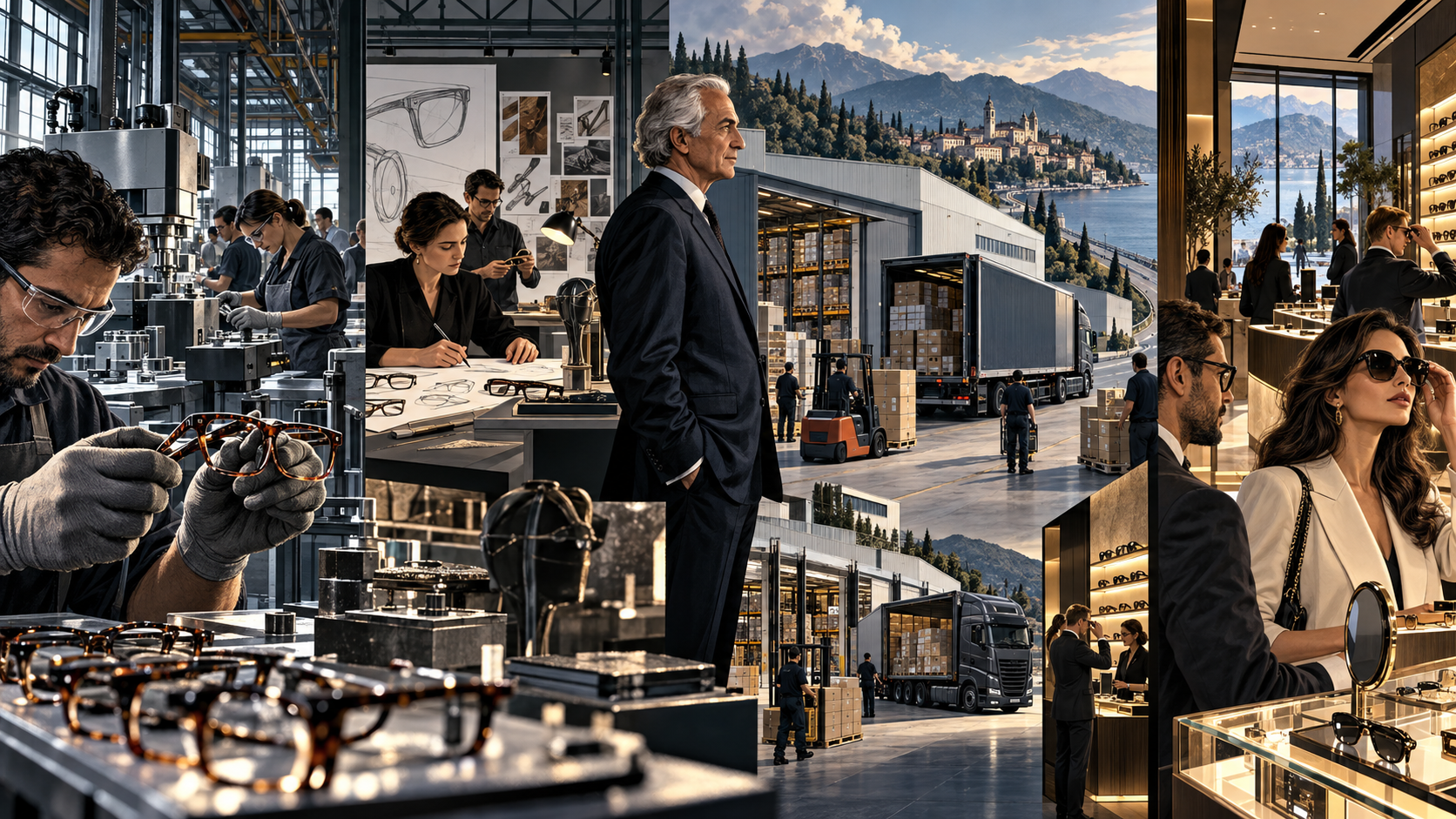
Del Vecchio’s defining move was vertical integration. Luxottica expanded manufacturing, built wholesale distribution, acquired brands, and bought retailers. The 1988 acquisition of LensCrafters’ parent gave the company a major North American storefront network. Sunglass Hut followed in 2001, adding high-traffic mall distribution. Other acquisitions brought names including Ray-Ban and Oakley into the portfolio.
Ray-Ban showed what the machine could do. When Luxottica acquired the brand from Bausch & Lomb in 1999, it withdrew products from many discount channels, improved distribution, and repositioned the label. The frames were not merely manufactured more efficiently; scarcity, store presentation, and pricing were coordinated.
Licensing added another layer. Luxury houses could place their names and design language on eyewear without building specialized factories and sales networks. Luxottica gained premium labels and volume, while the fashion companies received royalties and category expertise. The portfolio reduced dependence on any one brand while filling its own retail shelves.
This system created informational advantages. Retail data revealed which shapes, colors, and price points moved. Wholesale relationships showed regional demand. Factories could adjust production across a broad portfolio. Competitors faced a group that could earn at the brand, manufacturing, wholesale, and retail levels.
The concentration question
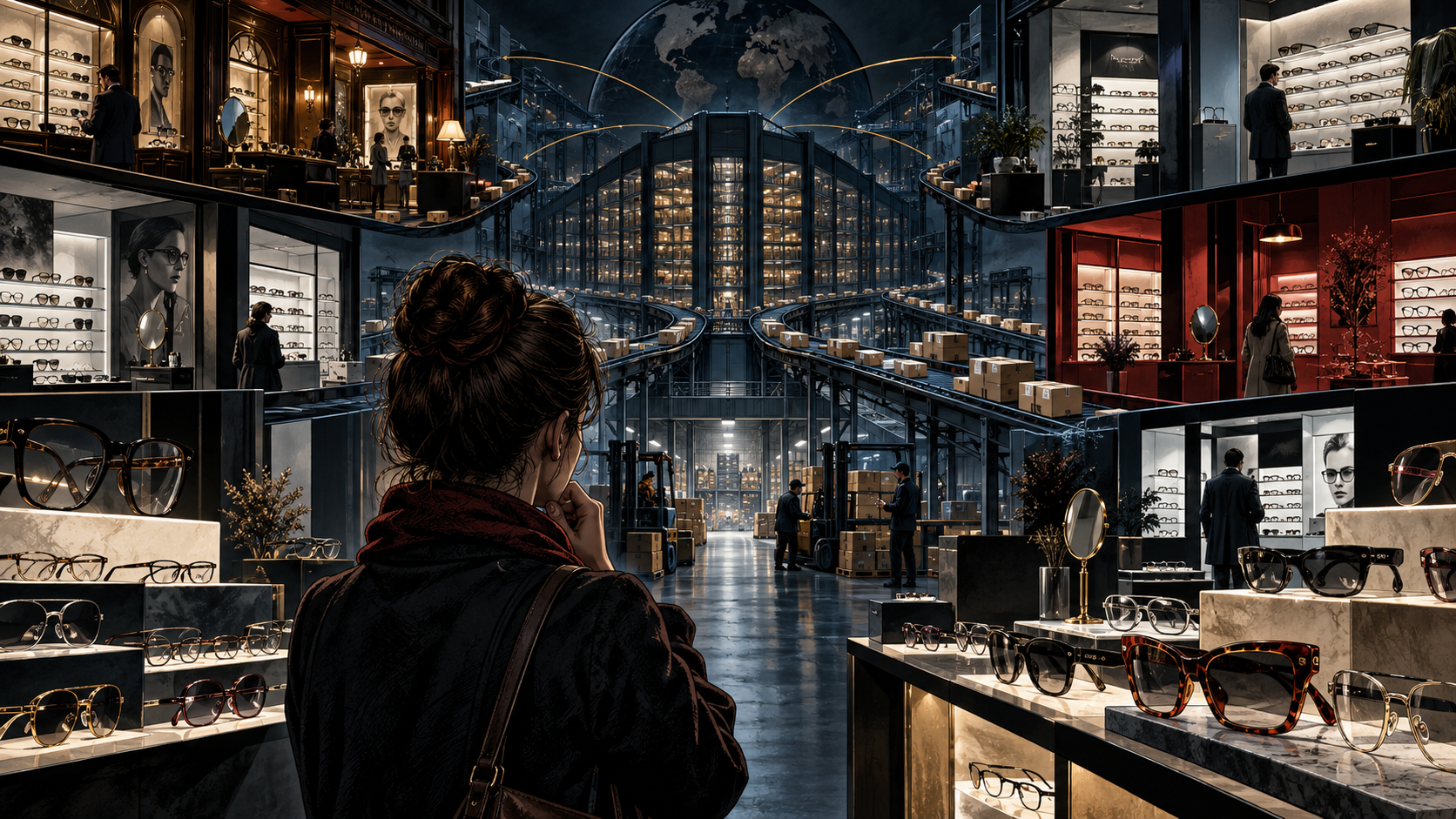
Scale made Luxottica powerful and controversial. Critics argued that consumers encountered the appearance of abundant choice while many brands and retail channels were connected to one group. Eyewear pricing also attracted scrutiny because the material cost of a frame can be small compared with the final retail price.
That criticism can become too simple. Premium prices include design, marketing, licensing, inventory across many styles, prescription fitting, store labor, warranties, and the cost of operating retail locations. Luxottica did not control every frame or every optician. Independent manufacturers, online sellers, and regional chains continued to compete.
Yet vertical control unquestionably changed bargaining power. A group that owns important brands and major retailers can influence placement, promotions, and access. Oakley publicly clashed with Luxottica before Luxottica acquired it in 2007, a sequence often cited as evidence of the distribution leverage the group had accumulated.
The 2018 combination with French lens leader Essilor extended the strategy from frames and stores into lenses and vision technology. The merger promised integration between two complementary leaders, but governance tensions emerged after closing. Combining founder-led organizations with different national and operating cultures proved harder than the industrial logic suggested.
An empire made from interfaces
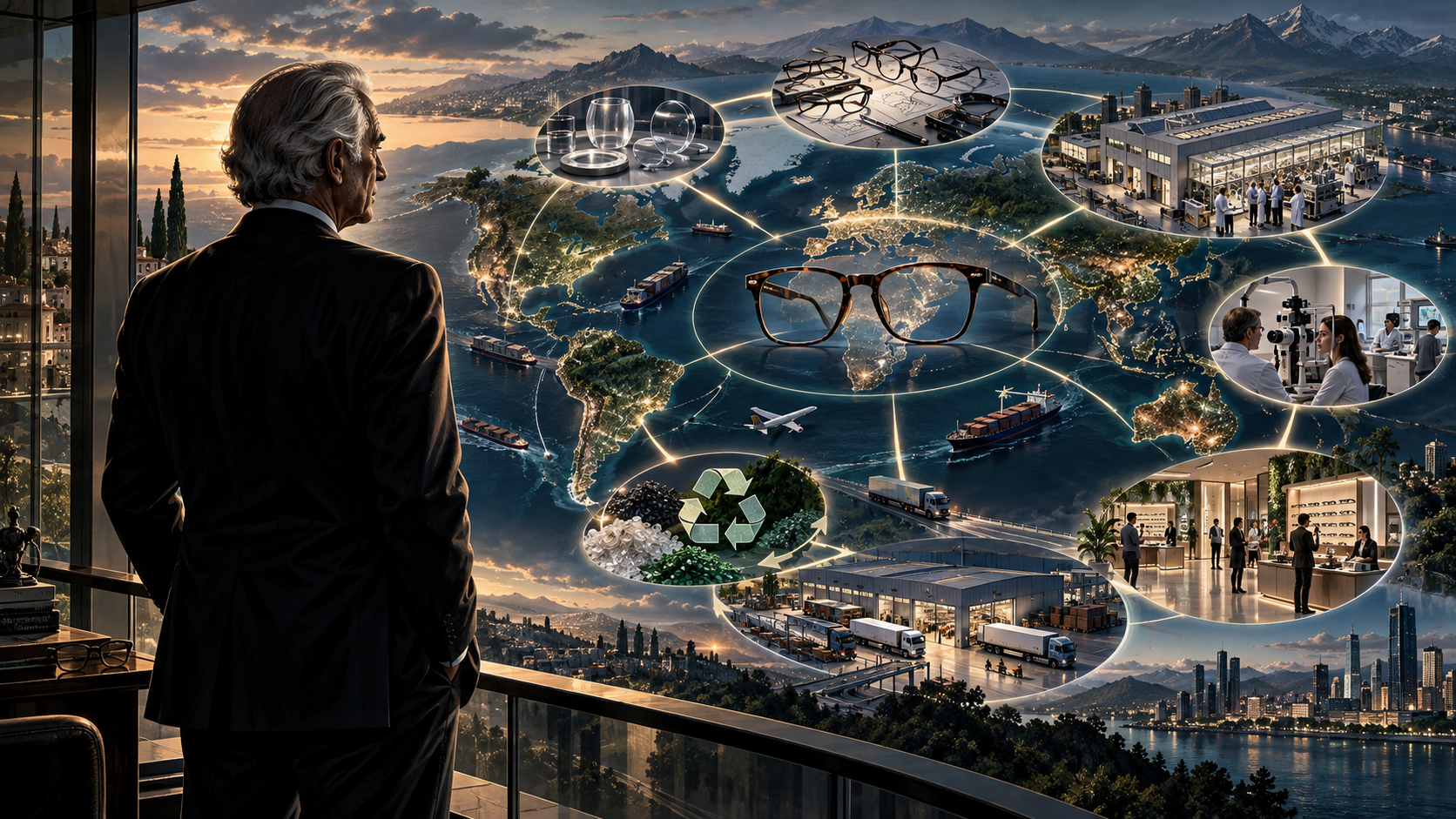
Del Vecchio’s achievement was not discovering that glasses could be fashionable. It was recognizing that every interface in the industry could reinforce the next one. Design made factories valuable. Brands made distribution valuable. Stores made consumer data valuable. Lenses made the group more relevant to clinical vision care.
That integration produced resilience because the company was not limited to one celebrity license or one retail banner. It also created complexity and regulatory attention. Managing capital, succession, family ownership, professional executives, and public shareholders became as important as making frames.
Del Vecchio remained deeply involved for decades and returned to leadership roles when he believed the company needed direction. Founder intensity can preserve a long strategic horizon, but it can also delay the proof that an institution operates independently of its creator.
The balanced verdict is that Luxottica became formidable because it treated eyewear as an industrial system rather than an accessory. Del Vecchio understood the least glamorous parts—tooling, inventory, distribution, and store economics—and used them to support glamour. The same machine that made brands stronger also made the market feel more concentrated. His legacy is therefore both an extraordinary lesson in vertical integration and a warning about how quietly consumer choice can consolidate behind familiar labels.