Marcos Galperin: The Flywheel That Made Mercado Libre Latin America’s Commerce Stack
Marcos Galperin began with an online marketplace, then built payments, logistics, credit, and advertising around the obstacles that kept Latin American commerce offline.

View all stories about this mogul
Marcos Galperin did not build Mercado Libre by assuming Latin America would behave like the United States. He built it by accepting that almost every layer of online commerce would need to be rebuilt locally.
An online marketplace needs buyers and sellers. In Latin America at the end of the 1990s, it also needed payment trust, fraud control, delivery infrastructure, cross-border adaptation, and a way for small merchants to finance growth.
What began as a marketplace became a commerce operating system because the missing pieces were not side problems. They were the business.
The Marketplace Before the Infrastructure

Galperin developed the concept for Mercado Libre while studying at Stanford. The late-1990s internet boom made online marketplaces look inevitable, but inevitability is a dangerous story to tell after a company succeeds.
The regional obstacles were real. Internet access was limited, credit-card penetration was uneven, postal systems varied in reliability, consumer trust in online transactions was low, and each country had different rules, currencies, and competitive dynamics.
The first job was liquidity: attract enough buyers and sellers that the marketplace became useful. That required category breadth, local teams, and the willingness to enter multiple markets before a stronger global rival defined the region.
The dot-com crash tested the model almost immediately. Capital became scarce, internet optimism collapsed, and many competitors disappeared. Mercado Libre survived by focusing on transaction economics rather than page views.
Its early endurance mattered because marketplaces compound. A surviving platform keeps its reputation data, seller relationships, customer habits, and local operating knowledge. A failed competitor loses all four.
But marketplace liquidity alone was not enough. A buyer and seller could find each other and still fail to complete a transaction.
That gap pointed to the next business.
Payments Turned Trust Into a Product
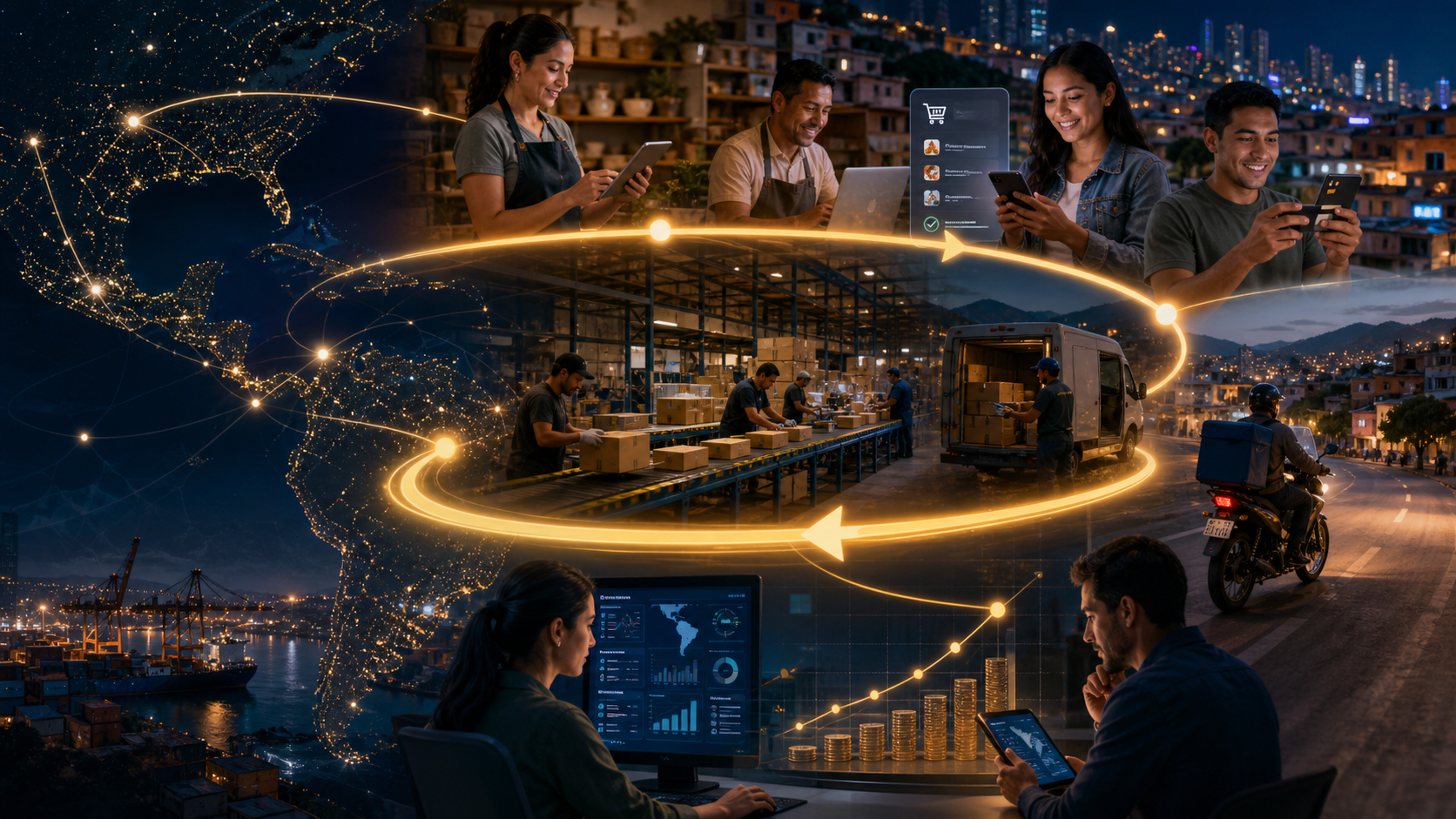
Digital payments began as a solution to marketplace friction. Buyers needed a safer way to pay strangers. Sellers needed confirmation that funds existed. The platform needed a way to reduce fraud and mediate disputes.
Mercado Pago gradually became more than a checkout feature. Once merchants and consumers trusted the payment account, it could move beyond the marketplace into stores, transfers, bills, and other financial services.
This is the power of solving an adjacent constraint. The marketplace supplied users and transaction context to payments. Payments increased conversion and trust on the marketplace. More payment activity generated data that could improve fraud detection and support credit decisions.
The same pattern extended to merchant finance. A small seller may have demand but lack inventory capital. Traditional lenders may have limited information about that business. A commerce platform can observe sales history, seasonality, refunds, and customer satisfaction.
Used carefully, that data can turn platform participation into access to working capital. The merchant can buy more inventory, generate more sales, and deepen the relationship with the platform.
Each layer strengthens the next, but it also increases responsibility. A marketplace can remove a bad listing. A payment and credit provider must manage financial crime, consumer protection, and loan losses.
The flywheel creates power by accumulating obligations as well as advantages.
Logistics Became the Physical Moat
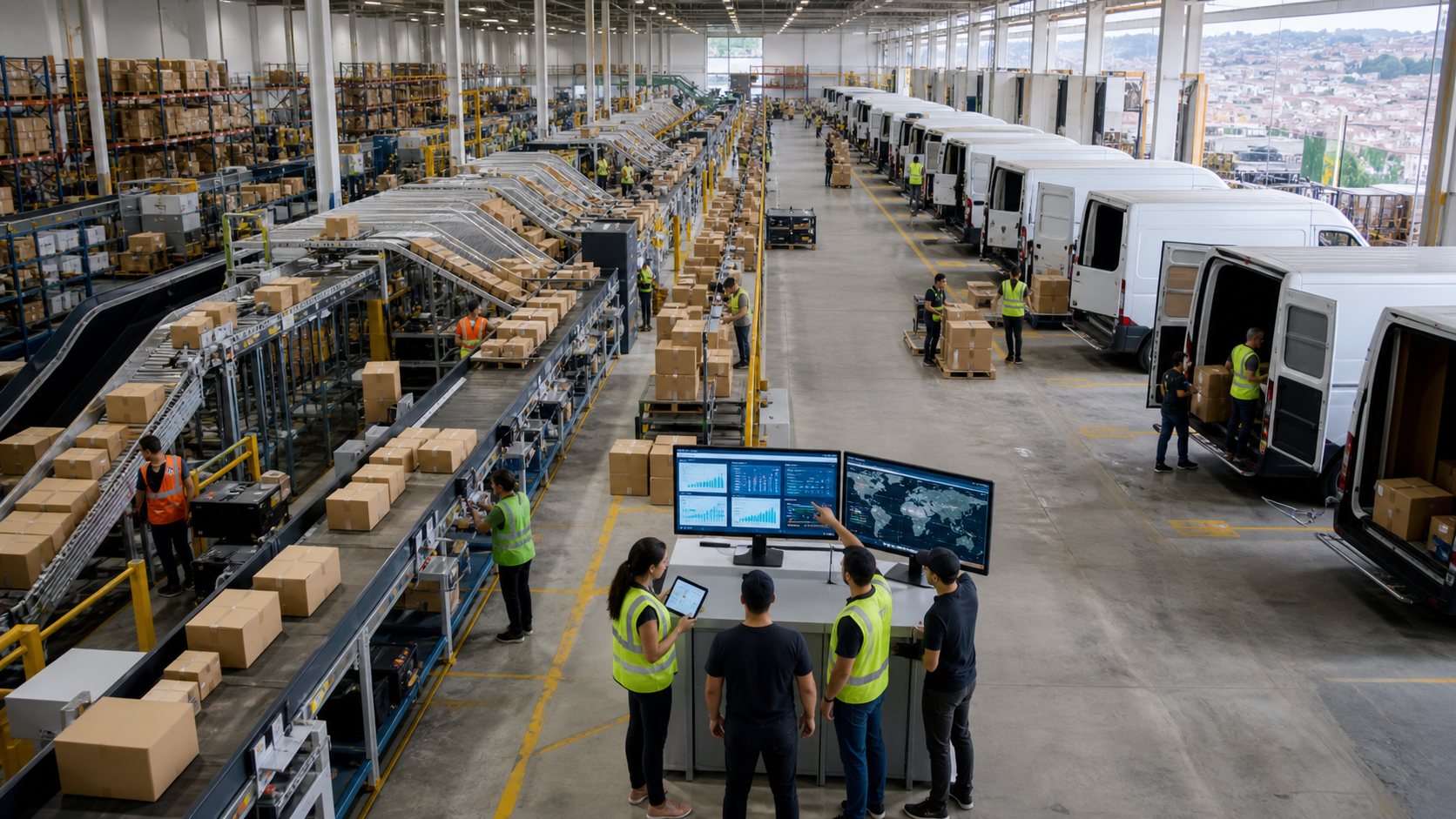
Payments can complete a transaction instantly. A physical product still has to cross a continent.
Latin America’s geography magnifies logistics difficulty. Major cities are separated by enormous distances. Address quality, customs, road infrastructure, security, and delivery density vary. Independent sellers cannot individually negotiate the best warehouse, carrier, and last-mile economics.
Mercado Envíos addressed that problem by coordinating fulfillment and delivery around marketplace demand. Warehouses placed popular inventory closer to customers. Standardized labels and tracking improved predictability. Delivery partnerships and route density shortened time and reduced cost.
Logistics changed customer expectations. Faster and more reliable delivery increased purchase frequency. More purchases created package density. Greater density improved the economics of sorting centers and last-mile routes.
That infrastructure is much harder to copy than a website. A new competitor can reproduce a search page. It cannot instantly reproduce years of shipment data, warehouse locations, carrier relationships, seller adoption, and neighborhood-level delivery density.
The physical network also made the digital marketplace more valuable during periods when consumers and merchants rapidly moved online. The company did not merely benefit from demand. It had built the machine capable of absorbing it.
That distinction separates a traffic spike from a durable step change.
Regional Complexity as a Compounding Advantage

Latin America is not a single market. Inflation, currency controls, taxes, payment habits, regulation, and logistics differ sharply across countries.
At first, that complexity looked like a disadvantage compared with companies operating in one large, uniform market. Over time, it became institutional knowledge. Mercado Libre learned how to localize pricing, payments, risk, seller tools, delivery promises, and compliance while preserving a shared technology platform.
Every successful adaptation raised the cost for a newcomer trying to match the entire system. A global rival could bring capital and technology, but it still had to solve local trust and operations. A local startup could understand one market, but it might lack the scale to build payments and logistics simultaneously.
The company’s challenge is now the mirror image of its strength. A platform that touches commerce, advertising, payments, credit, and delivery attracts regulatory attention. Credit growth must be balanced against losses. Logistics investment must earn an adequate return. Market power must not become complacency.
Galperin’s most important decision was not choosing the right category in 1999. It was refusing to define the company as only a marketplace.
When payments blocked commerce, the company built payments. When delivery blocked commerce, it built logistics. When merchant capital blocked supply, it built credit. When discovery became valuable, it built advertising.
The result is a rare regional empire whose moat is not one product. It is the way the products reinforce one another.
💡 Key Insights
- ▸ The best marketplace strategy is often to build the missing infrastructure around the transaction.
- ▸ Payments solved trust, logistics solved distance, and credit turned platform data into merchant capacity.
- ▸ Regional complexity became a moat because every hard integration made entry more expensive for the next competitor.
- ▸ A flywheel is defensible only when each layer improves the economics of the others.