Masayoshi Son: SoftBank's $100 Billion Gamble That Shook the World
He turned $20 million into $100 billion with a single bet on Yahoo. Then he lost $17 billion in a year. The wild saga of tech's biggest risk-taker.
View all stories about this mogul
Masayoshi Son: SoftBank’s $100 Billion Gamble That Shook the World
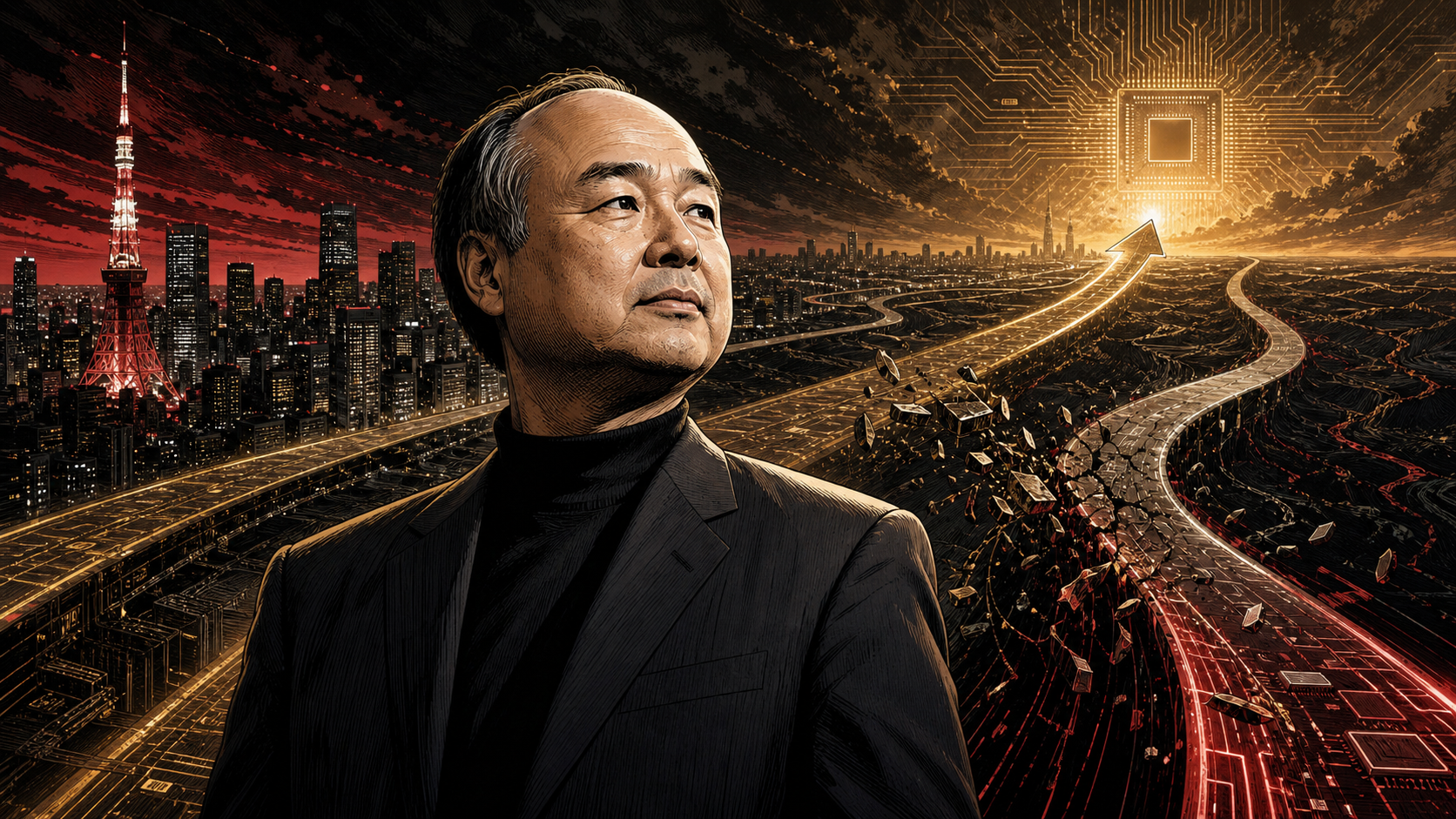
In 2000, Masayoshi Son was briefly the richest person on Earth, with a paper fortune exceeding $76 billion. Then the dot-com bubble burst and he lost $70 billion — the largest personal financial loss in history. Most people would have retreated. Son doubled down. He created the $100 billion Vision Fund, the largest technology investment fund ever assembled, and proceeded to pour money into startups at a pace that made Silicon Valley veterans dizzy. Some of those bets were brilliant. Many were catastrophic. This is the story of the man who gambled bigger than anyone — and the reckoning that followed.
🌊 Chapter 1: The Outsider Who Had Nothing to Lose
Masayoshi Son was born on August 11, 1957, in Tosu, a small city on the southern Japanese island of Kyushu. But the name “Son” reveals a truth that shaped his entire life: he is ethnically Korean.
Son’s grandparents had emigrated from Korea to Japan, where ethnic Koreans — known as Zainichi — faced systematic discrimination. The Son family lived in a shack near railroad tracks in a settlement of Korean immigrants. They had no running water. Young Masayoshi grew up in poverty, surrounded by prejudice in a country that prized ethnic homogeneity above almost all else.
His father, Mitsunori Son, was a hustler and survivor. He raised pigs, ran a pachinko parlor, and scraped together enough money to give his children a chance. But the stigma of being Korean in Japan followed Masayoshi everywhere. Other children called him slurs. Doors that opened for Japanese students remained closed to him.
This outsider status became Son’s superpower. He had nothing to lose and everything to prove. At age 16, he made a decision that would alter the trajectory of his life: he would go to America.
In 1973, Son left Japan for Berkeley, California. He enrolled at Serramonte High School in Daly City, and later transferred to Holy Names University before landing at the University of California, Berkeley. He devoured books on business and technology. He was particularly captivated by a photograph of a microchip on the cover of a magazine — the Intel 8080 processor.
“Looking at that chip,” Son would later recall, “I cried. I could see the future. I could see that this tiny thing was going to change everything.”
At Berkeley, Son began inventing. He created an electronic translator — a pocket device that could translate between languages — and sold the patent to Sharp Corporation for $1 million. He was 21 years old and already a millionaire.
In 1981, Son returned to Japan and founded SoftBank with two part-time employees and $15,000 in capital. The company would distribute software and computer magazines. But in Son’s mind, it was always going to be something much bigger.
🎰 Chapter 2: The Yahoo Bet — $20 Million to $100 Billion
Throughout the 1980s and 1990s, SoftBank grew steadily as a software distribution company and tech publisher. But Son wasn’t interested in steady growth. He was interested in the future.
In 1995, Son met Jerry Yang, the co-founder of a small internet directory company called Yahoo. The internet was still in its infancy — most people accessed it through dial-up modems, and most businesses dismissed it as a fad. Son didn’t see a fad. He saw the most transformative technology since the microchip.
Son invested $20 million in Yahoo in 1995, followed by additional investments totaling approximately $100 million. It was an enormous bet for a company SoftBank’s size.
What happened next became the stuff of investment legend.
Yahoo went public in April 1996 at $13 per share. By January 2000, at the peak of the dot-com bubble, Yahoo’s stock price had soared to over $475 per share (split-adjusted). SoftBank’s stake in Yahoo was worth approximately $100 billion.
Let that sink in. A $100 million investment had become worth $100 billion. A 1,000x return.
On paper, Masayoshi Son was the richest person on the planet in early 2000, surpassing Bill Gates with an estimated net worth of $76 billion. The Korean-Japanese outsider who had grown up in a shack near railroad tracks was now, however briefly, the wealthiest human being alive.
But the dot-com bubble was about to burst.
Between March 2000 and October 2002, the Nasdaq Composite fell 78%. Yahoo’s stock cratered. SoftBank’s shares plummeted from a peak of around $197 to under $2.50. Son’s personal net worth fell from $76 billion to approximately $6 billion — a loss of $70 billion.
It was the largest personal financial loss in the history of capitalism.
Most people would have been destroyed — financially, psychologically, reputationally. Son went quiet for a while. But he didn’t break. And within a few years, he was making bold bets again.
📱 Chapter 3: The Sprint Gamble and Alibaba’s Gold
In the years following the dot-com crash, Son rebuilt SoftBank through a series of strategic moves in Japan and beyond.
In 2006, SoftBank acquired Vodafone Japan for $15 billion — a massive leveraged bet on the Japanese mobile market. Critics called it reckless. Son turned Vodafone Japan into SoftBank Mobile and then pulled off a coup: in 2008, he secured the exclusive rights to sell Apple’s iPhone in Japan. The deal transformed SoftBank from a middling carrier into a mobile powerhouse.
But Son’s greatest post-crash investment was one he had made quietly years earlier. In 2000, just before the bubble burst, Son had invested $20 million in a small Chinese e-commerce company founded by a former English teacher named Jack Ma. The company was called Alibaba.
By the time Alibaba went public in September 2014 — raising $25 billion in the largest IPO in history at that time — SoftBank’s stake was worth over $60 billion. Son had done it again: turned a modest investment into an astronomical fortune.
The Alibaba windfall reinforced Son’s belief in his own instincts. He had backed Yahoo and won. He had backed Alibaba and won even bigger. In his mind, he wasn’t a gambler — he was a visionary who could see the future more clearly than anyone else.
This self-belief would prove to be both his greatest strength and his fatal flaw.
In 2013, Son pushed SoftBank into the American market by acquiring 70% of Sprint, the struggling U.S. wireless carrier, for $21.6 billion. The plan was to merge Sprint with T-Mobile to create a viable competitor to AT&T and Verizon. But U.S. regulators blocked the deal under the Obama administration, and Sprint continued to bleed money and subscribers.
The Sprint acquisition was Son’s first major post-crash stumble. SoftBank would eventually merge Sprint with T-Mobile in 2020, but on terms far less favorable than Son had originally envisioned.
đź’° Chapter 4: The $100 Billion Vision Fund
In October 2016, Masayoshi Son met with Saudi Arabia’s Crown Prince Mohammed bin Salman. The meeting lasted 45 minutes. By the end, MBS had committed $45 billion from Saudi Arabia’s Public Investment Fund to Son’s new creation: the SoftBank Vision Fund.
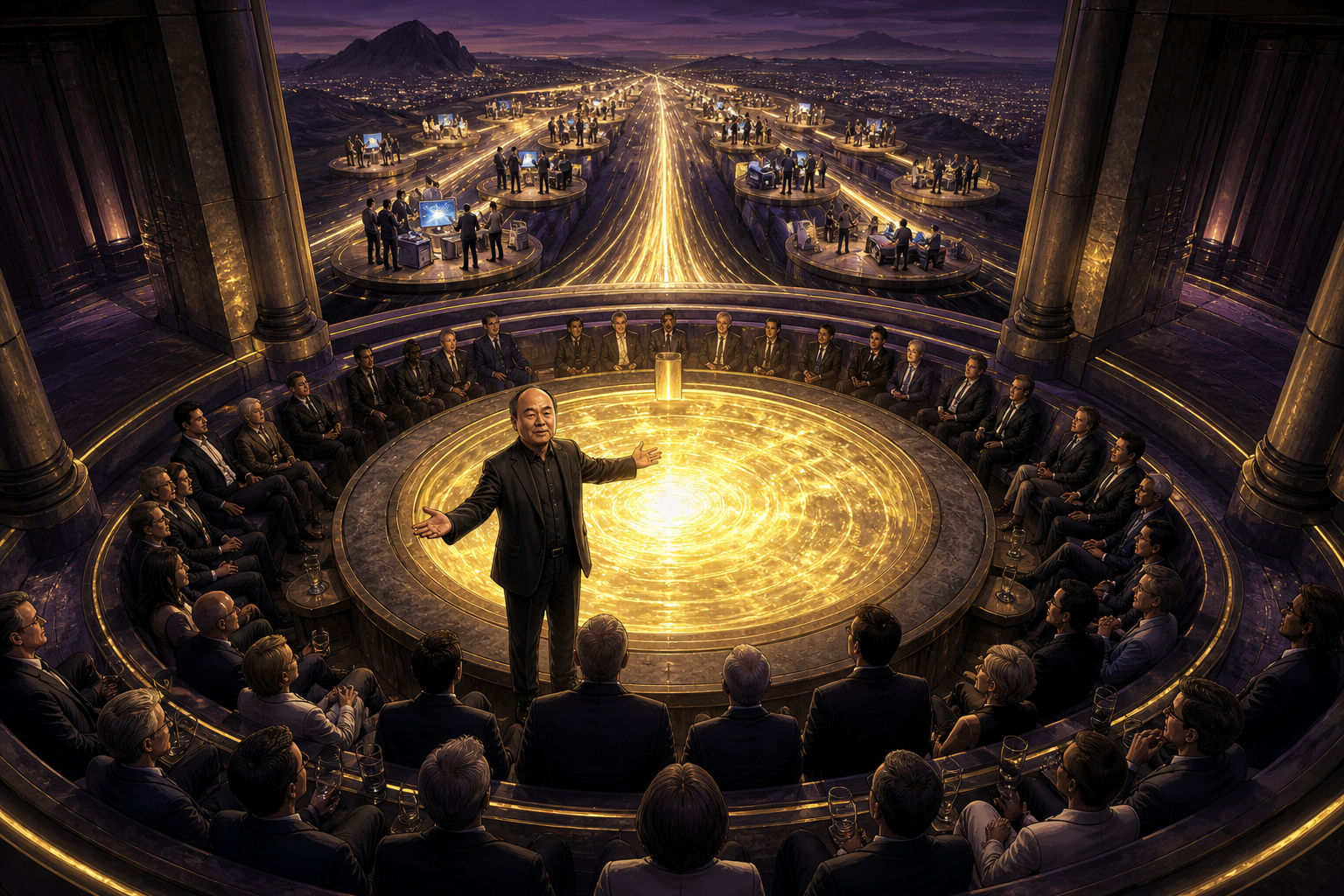
The Vision Fund, launched in May 2017, would be the largest technology investment fund in history — $100 billion in committed capital. Saudi Arabia contributed $45 billion. Abu Dhabi’s Mubadala Investment Company added $15 billion. SoftBank itself put in $28 billion. Apple, Qualcomm, Foxconn, and Sharp kicked in the rest.
The fund’s thesis was simple and grandiose: artificial intelligence would transform every industry on Earth, and the Vision Fund would invest in the companies leading that transformation. Son called it his “300-year plan.”
But the Vision Fund’s structure had a fundamental problem that would become apparent only later. Son had almost unilateral decision-making power over investments. There were investment committees, but Son dominated them. When Masa wanted to invest, the money flowed. When he fell in love with a founder, the check was written — often in a single meeting.
And the check sizes were staggering. The Vision Fund didn’t invest $10 or $20 million in startups. It invested $500 million, $1 billion, $2 billion at a time. The fund was so enormous that it distorted the entire venture capital ecosystem.
Son invested billions in a dizzying array of companies: Uber ($7.7 billion), WeWork ($10.65 billion), DoorDash, Slack, ByteDance, OYO Hotels, Coupang, Arm Holdings, and dozens more. The strategy was to flood promising companies with so much capital that they could out-spend competitors into oblivion.
For a while, it looked like genius.
đź’Ą Chapter 5: WeWork, Uber, and the Reckoning
The cracks began showing in 2019, and they started with WeWork.
SoftBank had invested over $10 billion in WeWork, the co-working space company founded by the charismatic and erratic Adam Neumann. Son had personally valued WeWork at $47 billion — a figure that made traditional real estate investors choke on their coffee.
WeWork was, at its core, a company that leased office space long-term and rented it out short-term. It was a real estate arbitrage play dressed up as a technology company. Neumann had created a cult-like corporate culture, complete with tequila-fueled meetings, private jets, and a $60 million Gulfstream G650 purchased with company funds.
In August 2019, WeWork filed its S-1 prospectus for an IPO. The document revealed staggering losses: $1.9 billion in 2018 on revenue of $1.8 billion. It also revealed Neumann’s self-dealing: he had leased buildings he personally owned back to WeWork, trademarked the word “We” and charged the company $5.9 million for the rights, and created a corporate governance structure that gave him near-dictatorial control.
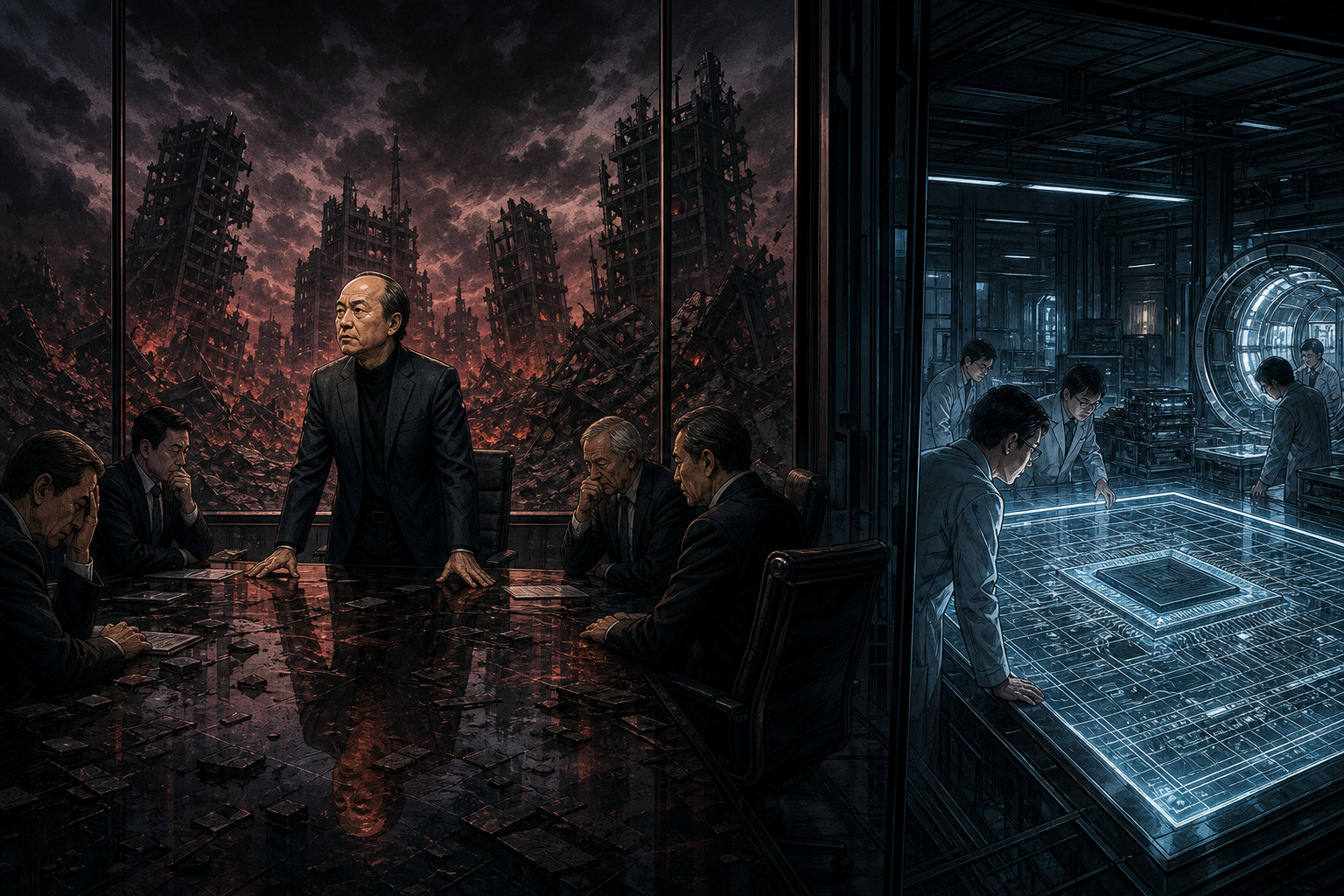
The market’s reaction was swift and brutal. The planned IPO was pulled. Neumann was forced out. WeWork’s valuation plummeted from $47 billion to approximately $8 billion. SoftBank had to inject an additional $5 billion to keep WeWork alive and took a total loss on the investment exceeding $14 billion.
And WeWork wasn’t the only problem.
Uber went public in May 2019 at a valuation of $82 billion — well below the $120 billion that Son and others had hoped for. The stock immediately dropped 7.6% on its first day of trading, marking one of the worst major IPO debuts in history. SoftBank’s investment of $7.7 billion initially lost billions in value.
OYO Hotels, the Indian budget hotel chain in which SoftBank had invested $1.5 billion, was beset by accusations of inflated bookings and unhappy hotel owners. Brandless, a direct-to-consumer goods company, shut down entirely after SoftBank invested $240 million. Zume Pizza, a robotic pizza delivery startup that received $375 million from the Vision Fund, also failed.
In the fiscal year ending March 2020, SoftBank reported a loss of $17.7 billion from its Vision Fund — the largest annual loss in the fund’s history at that time. The following years brought more losses as rising interest rates in 2022-2023 crushed tech valuations globally.
The man who had turned $20 million into $100 billion with Yahoo had now overseen losses of a similar magnitude through the Vision Fund.
🤔 Chapter 6: The Psychology of the Mega-Bet
What went wrong with the Vision Fund? The answer lies in the psychology of Masayoshi Son himself.
Son’s investment style was intensely personal. He made decisions based on gut instinct, often after brief meetings with founders. He was famously swayed by charismatic personalities — he invested $4.4 billion in WeWork after just a 12-minute meeting with Adam Neumann in the back of a car.
“In the first meeting, I decided,” Son told colleagues about his WeWork investment. “Masa felt the energy,” one SoftBank executive explained to the Wall Street Journal.
This approach — investing based on the founder’s “energy” — had worked with Jack Ma and Alibaba. Ma was charismatic, visionary, and, crucially, building a real business in a massive market. But Son seemed to have learned the wrong lesson from Alibaba. He concluded that his instinct for people was infallible, that his ability to “see the future” was unique.
The Vision Fund’s structure amplified this hubris. With $100 billion to deploy, Son was under pressure to write enormous checks quickly. You can’t invest $100 billion at $10 million per deal — you need to write checks of $500 million to $2 billion. And when you’re writing checks that large, you’re not investing in scrappy startups. You’re investing in later-stage companies at already-inflated valuations.
The result was a classic case of what investors call “capital deployment pressure.” The fund was so big that it needed to find places to put money, which meant standards dropped and valuations inflated.
Son also had a tendency to double down on losing bets. When WeWork started struggling, his instinct wasn’t to cut losses — it was to invest more. When Uber’s valuation dropped, he considered buying more shares. This is the gambler’s fallacy applied to venture capital: the belief that the next investment will redeem the last one.
🔄 Chapter 7: The Pivot to AI and the Road Ahead
By 2023, Masayoshi Son had gone quiet. SoftBank’s Vision Fund 2, which launched in 2019 with $56 billion in capital, had suffered even worse losses than the original fund. Son announced he was shifting SoftBank into “defensive mode.”
But Masa Son doesn’t stay quiet for long.
In late 2023 and into 2024, Son reemerged with a new obsession: artificial intelligence. He began telling investors and reporters that AI would be the most transformative technology in human history — bigger than the internet, bigger than mobile, bigger than everything combined. He said he wanted SoftBank to be at the center of this revolution.
SoftBank’s ownership of Arm Holdings — the British chip design company whose architecture powers virtually every smartphone on Earth — suddenly became enormously valuable in the AI era. Arm went public in September 2023 at a valuation of $54 billion, and by early 2025, its market cap had surged past $150 billion as demand for AI chips exploded.
Son also announced plans to invest $100 billion in the United States over the next four years, primarily in AI-related infrastructure including data centers and semiconductor manufacturing. He appeared alongside President Trump at a January 2025 press conference to announce the initiative.
In February 2025, SoftBank, Oracle, and OpenAI announced “Stargate,” a joint venture to invest up to $500 billion in AI infrastructure in the United States over four years. Son was named chairman of the venture. It was, in vintage Masa fashion, the biggest bet of its kind.
As of March 2026, the Stargate project has broken ground on multiple data center campuses across Texas and other states. Whether the investment will pay off remains to be seen. The AI industry is growing rapidly, but the capital requirements are staggering, and questions about the sustainability of AI spending have intensified.
📊 Chapter 8: The Ledger — Where Does Masa Stand?
As of early 2026, Masayoshi Son’s net worth stands at approximately $25-30 billion — a far cry from the $76 billion peak of 2000, but still enough to make him one of the 50 richest people on Earth.
SoftBank’s investment record is genuinely mixed:
The Wins:
- Yahoo: ~$100 million became ~$100 billion (partially realized over decades)
- Alibaba: ~$20 million became ~$60 billion at peak (most sold by 2023)
- Arm Holdings: IPO at $54 billion, now valued at $150B+
- Coupang: SoftBank invested ~$2.7 billion, valued at ~$8 billion at IPO
- DoorDash: Strong public market performance after IPO
The Losses:
- WeWork: ~$14 billion in total losses
- Multiple Vision Fund failures: Brandless, Zume Pizza, Katerra, Greensill Capital
- Sprint: Years of losses before T-Mobile merger
- Overall Vision Fund 1 returns: Disappointing relative to the S&P 500
- Vision Fund 2: Significant losses in the 2022-2023 tech downturn
The aggregate returns of the Vision Funds have been mediocre at best. A simple index fund tracking the Nasdaq would have outperformed the Vision Fund over the same period with zero management fees. For the sovereign wealth funds and institutional investors who committed billions to Son’s vision, the returns have been deeply disappointing.
But Son doesn’t think in terms of aggregate returns. He thinks in terms of the one bet that will change everything. He has always believed that one massive win — like Yahoo, like Alibaba — can redeem a hundred losses.
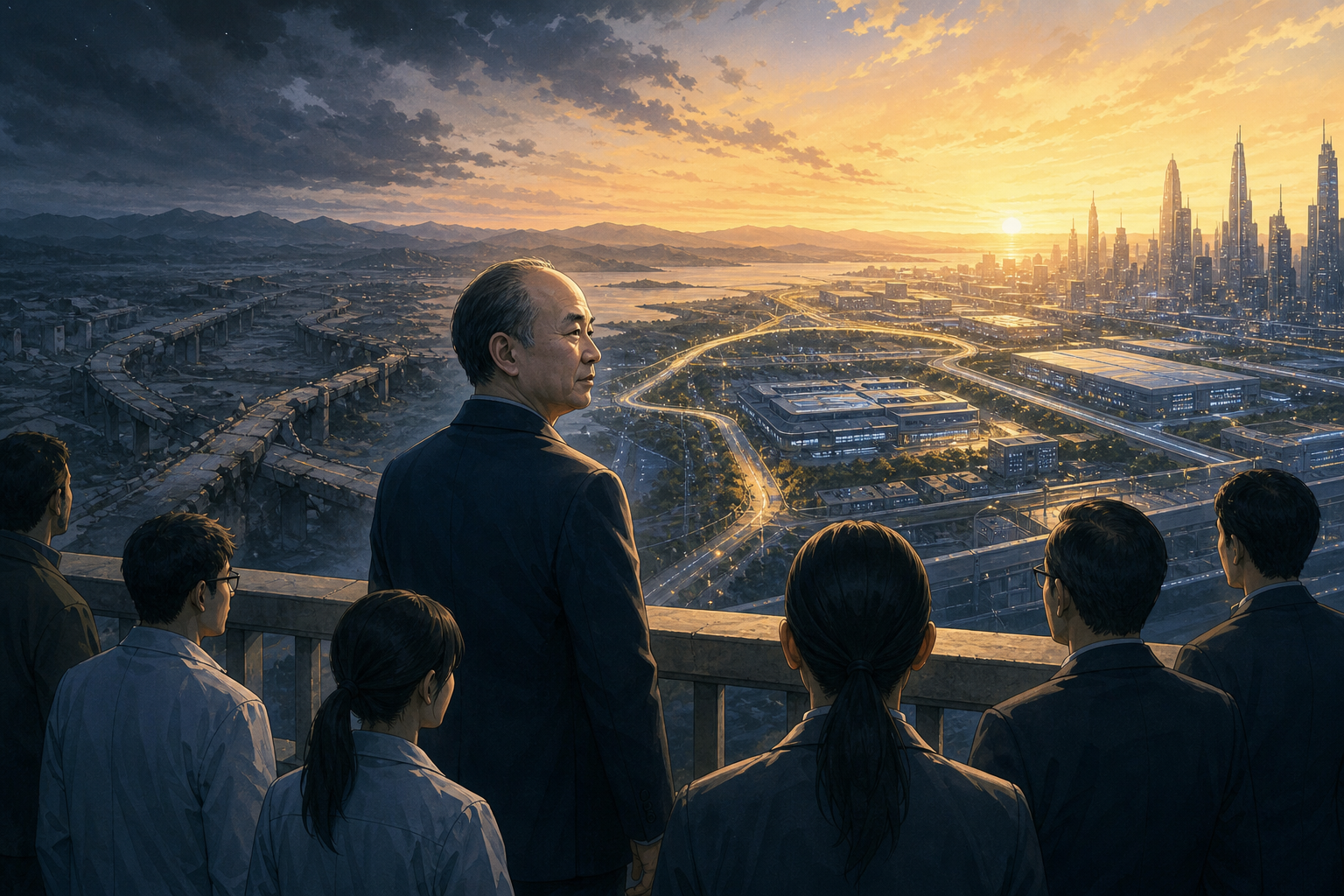
Whether that bet will be AI remains to be seen. But if history is any guide, no one should count Masayoshi Son out. He has been counted out before — after the dot-com crash, after Sprint, after WeWork — and each time he has found a way back.
As Son himself has said: “I’m not a genius. I’m just a guy who’s willing to take a bigger risk than anyone else.”
The question that hangs over his career, his fund, and his legacy is simple: Is there a limit to how big the risk can be?
Masayoshi Son’s story is the ultimate test of a single question: Can vision overcome reality? He turned $20 million into $100 billion, lost $70 billion in a year, and kept betting. The Vision Fund may go down as the greatest misallocation of capital in tech history — or Son may pull off another miracle with AI. Either way, no one has ever gambled bigger.
đź’ˇ Key Insights
- â–¸ One legendary investment win (Yahoo) can create a dangerous illusion of infallibility.
- ▸ When the check sizes get too big, due diligence tends to shrink — a fatal flaw of the Vision Fund model.
- â–¸ Being an outsider can fuel extraordinary ambition, but that same chip on your shoulder can blind you to risk.
- â–¸ The line between visionary and reckless often only becomes clear after the market turns.
- ▸ Concentration of capital in one decision-maker — without checks — creates systemic risk for an entire ecosystem.
Sources
- Aiming High: Masayoshi Son, SoftBank, and Disrupting Silicon Valley by Atsuo Inoue ↗
- Forbes Billionaires Profile: Masayoshi Son ↗
- The Wall Street Journal - SoftBank Vision Fund Coverage ↗
- Financial Times - SoftBank's $17 Billion Loss ↗
- Bloomberg - WeWork and SoftBank ↗
- The New York Times - Vision Fund's Troubled Investments ↗
- Reuters - SoftBank Financial Results ↗