Michael Bloomberg: The Terminal That Built a $100 Billion Fortune
Fired from Salomon Brothers with a $10 million severance check, Michael Bloomberg did the most revenge-genius thing possible: he built a machine that made Wall Street completely dependent on him. This is the story of how a middle-class kid from Medford became one of the richest humans alive.

View all stories about this mogul
🏗️ Chapter 1: The Kid from Medford
Michael Rubens Bloomberg was not born rich. Not even close.
He grew up in Medford, Massachusetts — a working-class town just north of Boston where the biggest excitement was the annual Thanksgiving football game. His father, William, was a bookkeeper at a dairy company. His mother, Charlotte, was a secretary. Combined household income: modest. Ambitions for their kid: enormous.
“My father never earned more than $6,000 a year. But he gave me something money can’t buy — the belief that I could do anything if I worked harder than everyone else.”
And work harder he did. Bloomberg wasn’t the smartest kid in the room. He wasn’t the most charming. He wasn’t the most connected. But he had something that proved far more valuable than any of those things: an almost pathological inability to stop working.
At Medford High School, Bloomberg was the kid who joined every club, ran for every office, and volunteered for every committee. Not because he was a joiner — because he was a calculator. Every activity was a data point. Every interaction was a network node. Even as a teenager, Bloomberg was building a machine.
He got into Johns Hopkins University — not Harvard, not Yale, but Johns Hopkins. A great school, but not the Ivy League pedigree that typically minted Wall Street titans. Bloomberg didn’t care. He studied engineering, which meant he learned to think in systems. While the English majors were debating Hemingway, Bloomberg was learning how to optimize processes. This would matter more than anyone could have predicted.
After Johns Hopkins, he went to Harvard Business School. Now that was an upgrade. But here’s the thing about Bloomberg at HBS: he wasn’t the star. He wasn’t the guy everyone predicted would become a billionaire. He was the guy who showed up early, stayed late, and outworked every single person in his section.
“I wasn’t the smartest guy in the class,” Bloomberg would later admit. “But I was willing to work harder than the smartest guy.”
He graduated in 1966 and walked straight into the arms of Salomon Brothers, one of Wall Street’s most aggressive trading firms. And for the next fifteen years, he would climb the ladder with the determination of a man who had something to prove.
📈 Chapter 2: The Salomon Brothers Years
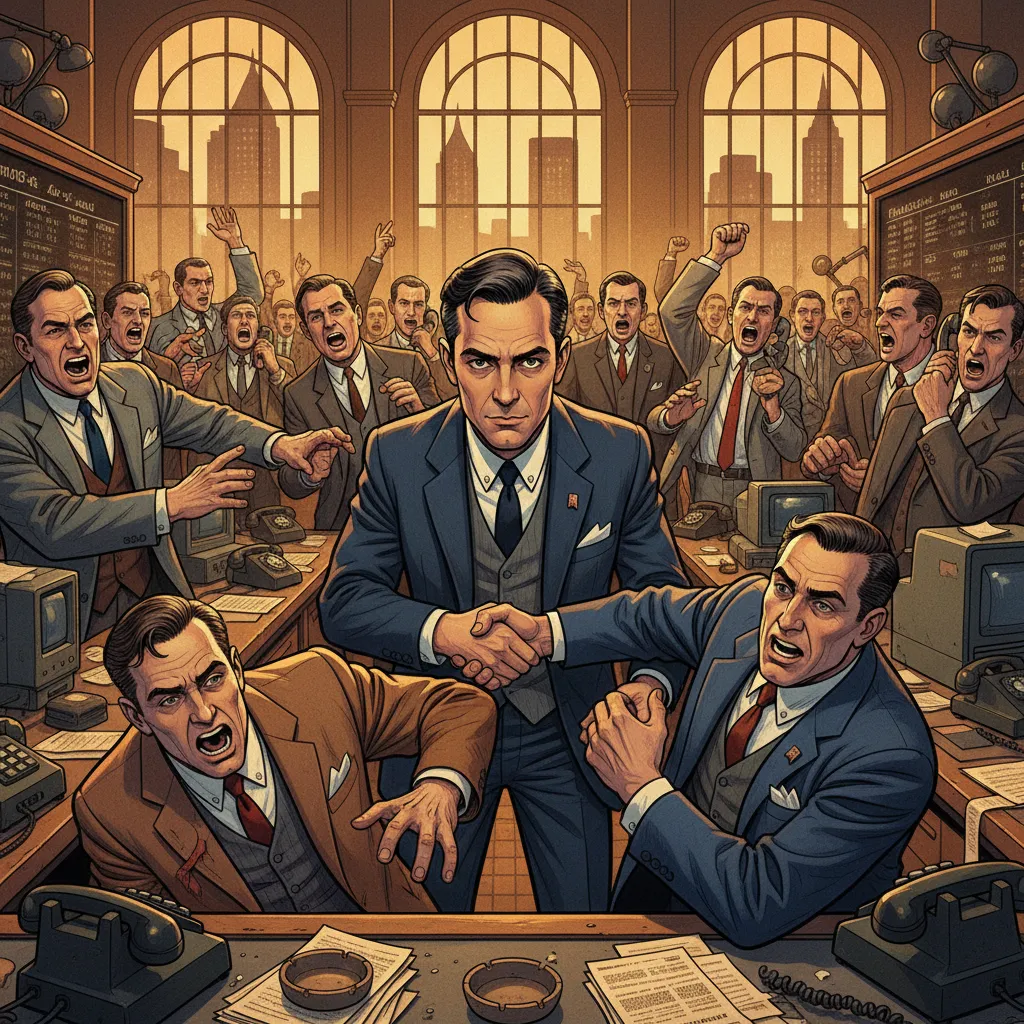
Salomon Brothers in the 1960s and ’70s was not a place for the faint of heart. It was a gladiatorial arena where traders screamed, deals were made on handshakes, and the weak were devoured before lunch.
Bloomberg thrived.
He started in the back office — the least glamorous job on Wall Street. While the traders upstairs were making millions and smoking cigars, Bloomberg was in the basement counting bonds. Literally counting them. Physical bond certificates that needed to be sorted, verified, and delivered.
Most people would have seen this as a dead end. Bloomberg saw it as a masterclass.
“In the back office, I learned how Wall Street actually worked. Not the theory. Not the glamour. The plumbing. And understanding the plumbing is what made everything else possible.”
He learned every system, every process, every bottleneck. He understood how trades were settled, how information flowed, and — critically — where information got stuck. These weren’t sexy insights. They were foundational ones.
Bloomberg climbed. From back office to trading desk. From trading desk to equities. From equities to systems. At every level, he brought the same obsessive attention to process and data. He wasn’t the best trader, but he was the best at understanding how trading worked as a system.
By the late 1970s, Bloomberg had risen to become a general partner at Salomon Brothers. He was running the firm’s information systems — a role that most traders viewed as a backwater. The real power, they believed, was on the trading floor.
They were wrong. Bloomberg was sitting on a goldmine, and he was the only one who knew it.
But then something happened that would change everything. In 1981, Salomon Brothers was acquired by the commodities trading firm Phibro Corporation. The merger was messy, political, and brutal. Partners were shuffled. Power was redistributed. And Michael Bloomberg — the guy who had given fifteen years of his life to the firm — was shown the door.
They fired him.
Well, technically, they made him a partner in the merged entity and then immediately marginalized him to the point where leaving was the only rational option. It was a Wall Street knife job, executed with the precision of a bond trade.
Bloomberg walked out with a severance check for $10 million.
Most people would have been devastated. Bloomberg was furious. And fury, it turns out, is the best venture capital in the world.
💡 Chapter 3: The Idea That Changed Everything
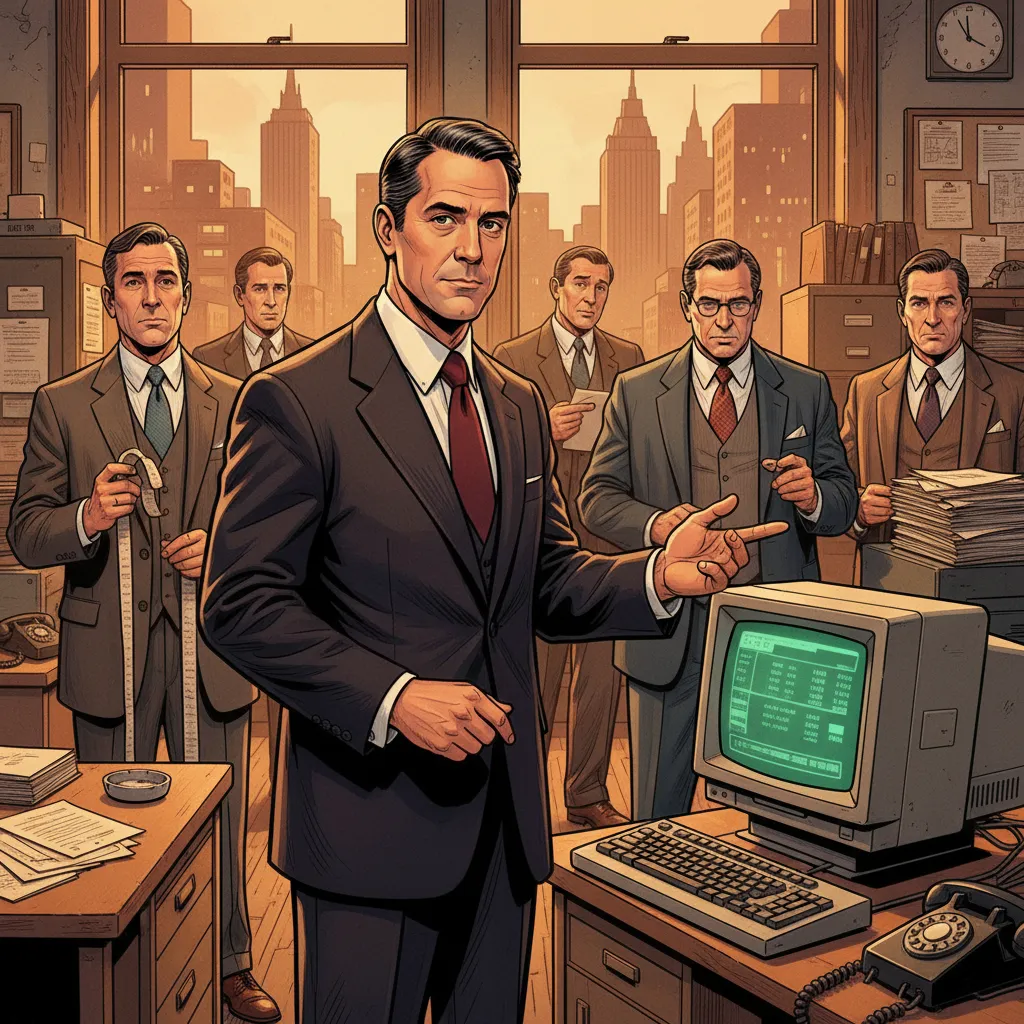
Here’s what Bloomberg understood that almost nobody else did in 1981:
Wall Street was drowning in data and starving for information.
Traders had numbers coming at them from every direction — bond prices, stock quotes, interest rates, currency movements, economic indicators. But the data was scattered across different systems, different vendors, different formats. Getting a simple answer to a simple question — “What’s the yield curve doing right now?” — required calling three different people, checking two different screens, and doing math on a calculator.
Bloomberg’s insight was surgical: What if you built one machine that did everything?
Not a computer. Not a database. A terminal — a dedicated piece of hardware that sat on every trader’s desk and gave them everything they needed in real time. Bond analytics. Stock quotes. News. Messaging. Charts. Portfolio analysis. All in one box. All updated in real time. All designed by someone who actually understood what traders needed because he’d been one.
“I didn’t invent any technology. I took existing technology and applied it to a specific problem that I understood better than anyone else.”
With his $10 million severance and a small amount of additional capital from a few partners, Bloomberg founded Innovative Market Systems — later renamed Bloomberg LP — in 1981. He rented a small office on Madison Avenue, hired four engineers, and started building.
The first Bloomberg Terminal was ugly. It was a beige box with a chunky keyboard and a screen that displayed green text on a black background. It looked like something from a Cold War bunker. The interface was deliberately cryptic — full of keyboard shortcuts and codes that required training to use.
And that was entirely by design.
Bloomberg understood something profound about product design: if your product requires training, your customers can’t easily switch to a competitor. The learning curve wasn’t a bug. It was a moat.
The first customer was Merrill Lynch. Bloomberg personally walked into Merrill’s offices and demonstrated the terminal. He showed traders how they could analyze bond portfolios in seconds instead of hours. He showed them how they could compare yields across different securities instantly. He showed them the future.
Merrill Lynch ordered 22 terminals. They also invested $30 million in Bloomberg’s company — a stake they would later sell back for a fraction of its eventual value. That investment was both a validation and a lifeline. It gave Bloomberg the capital to keep building and the credibility to sell to other firms.
🌊 Chapter 4: The Addiction Machine
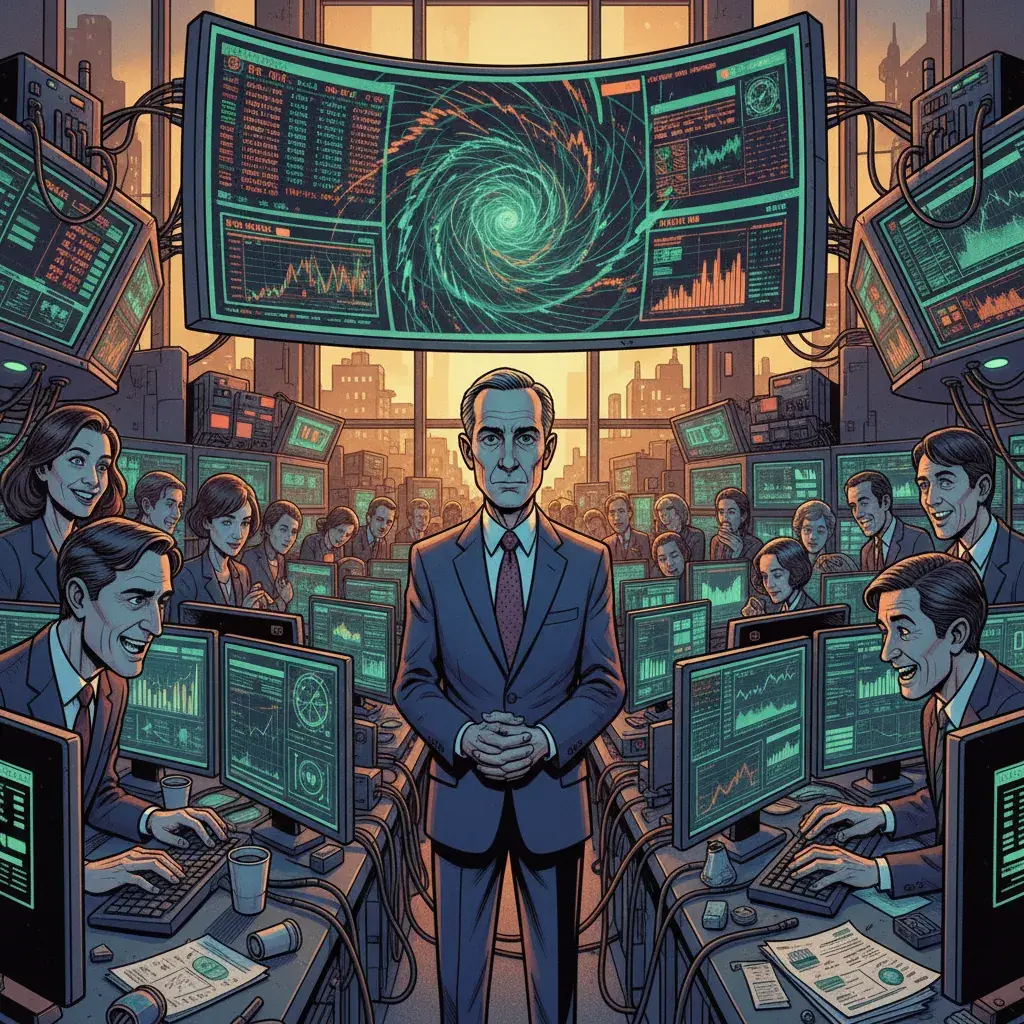
The Bloomberg Terminal wasn’t just a product. It was a drug.
Once a trader started using it, they couldn’t stop. The terminal became so embedded in their daily workflow that removing it was like removing a limb. Need to check a bond price? Bloomberg Terminal. Need to send a message to another trader? Bloomberg Terminal. Need to read breaking news? Bloomberg Terminal. Need to analyze a portfolio? Bloomberg Terminal.
By the mid-1980s, Bloomberg terminals were spreading across Wall Street like a financial virus. Each new installation created demand for more installations, because the terminal’s messaging system — Bloomberg’s internal chat — only worked between terminal users. If your counterparty was on Bloomberg, you needed to be on Bloomberg too.
This was the network effect before anyone called it the network effect.
“Every terminal we sold made every other terminal more valuable. It was the most beautiful business model I’d ever seen — and I built it by accident.”
The pricing was audacious. Bloomberg charged $1,500 per month per terminal. In 1985 dollars. For a beige box with a weird keyboard. Wall Street paid it without blinking, because the alternative — not having the information — was far more expensive.
Let’s do the math on this business model, because it’s genuinely staggering:
Each terminal: $1,500/month = $18,000/year.
If you had 10,000 terminals (which Bloomberg achieved by the late 1980s): $180 million per year in recurring revenue.
No advertising. No retail customers. No seasonality. No fads. Just a steady, relentless river of subscription revenue from the richest companies on Earth.
And the churn was effectively zero. Nobody cancelled their Bloomberg Terminal. Ever. It was like cancelling oxygen.
By 1990, Bloomberg LP had over 30,000 terminal subscribers. Revenue was approaching $1 billion. And Michael Bloomberg, the fired Salomon Brothers partner, was becoming one of the richest people in America.
But he wasn’t done. Not even close.
📰 Chapter 5: Building the Media Machine
In 1990, Bloomberg did something that confused almost everyone: he launched a news service.
Bloomberg News started with a small team of journalists who wrote stories about financial markets. The idea seemed redundant — Reuters and Dow Jones already dominated financial news. Why would a terminal company need its own newsroom?
Bloomberg’s logic was, as usual, ruthlessly practical. News was content. Content made the terminal more valuable. More valuable terminals meant higher prices and more subscribers. The news service wasn’t a separate business — it was a feature.
But something unexpected happened. Bloomberg News got really, really good.
Bloomberg hired top journalists from the Wall Street Journal, Reuters, and the Associated Press. He paid them well and gave them resources. He invested in bureaus around the world. Within a few years, Bloomberg News was breaking major financial stories and competing head-to-head with the established giants.
Then came Bloomberg Television in 1994. Then Bloomberg Radio. Then Bloomberg.com. Then Bloomberg Businessweek (acquired in 2009 for a reported $5 million — one of the great media bargains of all time).
Each new media property fed the terminal. Each terminal subscriber funded the media. It was a flywheel of information and money, spinning faster and faster.
“People asked me why I was building a media company. I told them I wasn’t building a media company. I was building a better terminal. The media was just the bait.”
By the early 2000s, Bloomberg LP was generating over $5 billion in annual revenue. The terminal subscriber base had grown to over 300,000. And the terminal price had risen to $20,000 per year — a price that Wall Street continued to pay without complaint.
Michael Bloomberg was now worth tens of billions of dollars. He owned 88% of Bloomberg LP. There was no outside investors demanding quarterly growth. No board of directors second-guessing his decisions. No shareholders to appease.
It was, quite possibly, the most perfect private company ever built.
🏛️ Chapter 6: The Mayor Detour
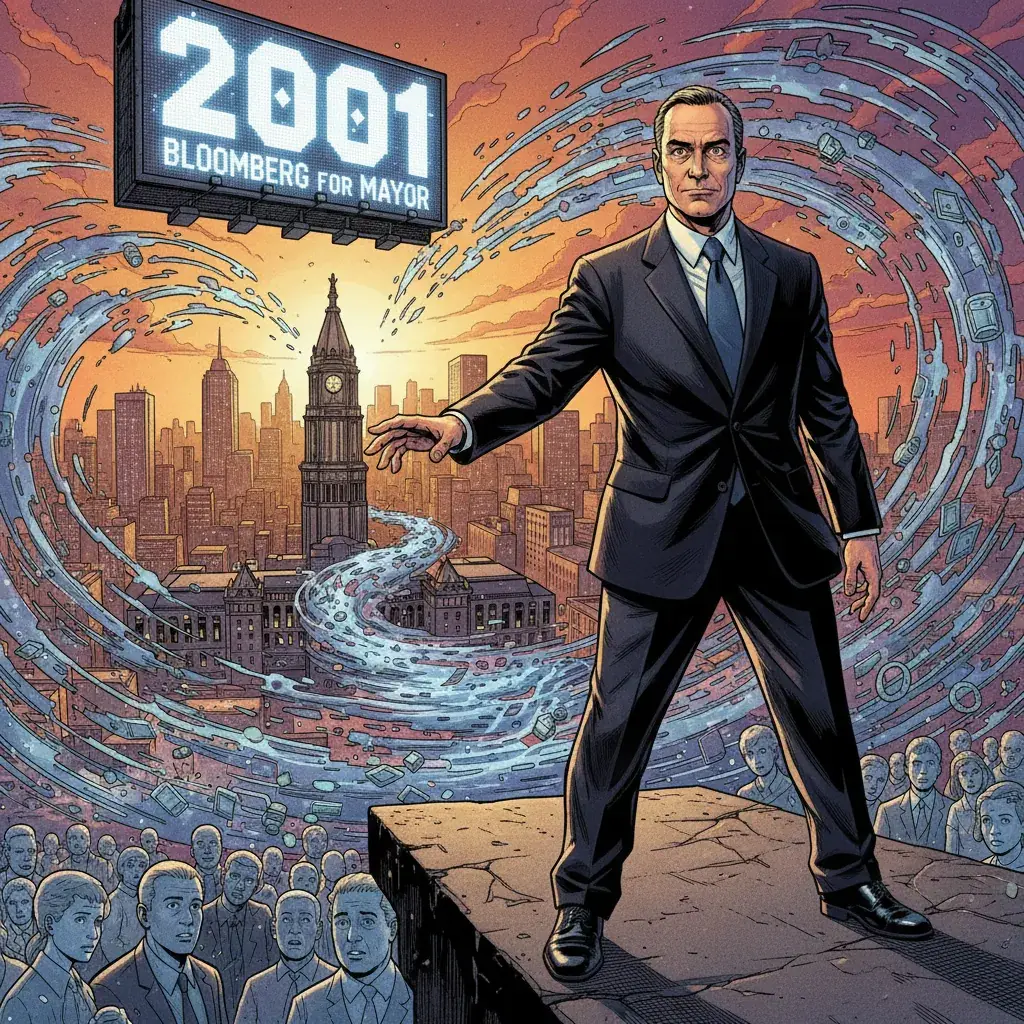
And then, in 2001, Michael Bloomberg decided to do something truly insane.
He ran for mayor of New York City.
A billionaire businessman with zero political experience, running as a Republican in the most Democratic city in America, two months after 9/11. The political establishment laughed. The media scoffed. The polls showed him losing badly.
Bloomberg spent $73 million of his own money on the campaign. He knocked on doors. He shook hands. He made promises. And on November 6, 2001, he won by a margin of less than 3 percentage points.
The political world was stunned. Bloomberg was unfazed. He’d been underestimated his entire life. This was just Tuesday.
“People said a businessman couldn’t run a city. I said a city is just a business with worse management.”
Bloomberg’s mayoralty was controversial, transformative, and — depending on who you ask — either the best or worst thing to happen to New York City in decades.
He banned smoking in restaurants and bars, enraging the hospitality industry and delighting public health advocates. He launched a massive rezoning initiative that transformed entire neighborhoods. He fought for gun control, climate action, and immigration reform. He created a 311 hotline that let citizens report problems directly to the city.
He also presided over the controversial “stop and frisk” policing policy, which disproportionately affected Black and Latino New Yorkers. This would haunt his political legacy for decades and become a central issue when he later ran for president.
Bloomberg served three terms as mayor — winning re-election in 2005 and then successfully lobbying the City Council to change term limits so he could run again in 2009. He won all three times, spending a combined total of over $250 million of his own money on his campaigns.
During his twelve years as mayor, Bloomberg stepped away from the day-to-day management of Bloomberg LP. But he didn’t sell his stake. The company continued to grow, and when he left City Hall in 2013, his net worth had roughly tripled.
Being mayor of New York City had been a $250 million hobby that made him $30 billion richer.
🌍 Chapter 7: The Philanthropy Pivot
After leaving City Hall, Bloomberg could have retired. He was 71 years old and worth over $30 billion. He’d built a company, run a city, and accumulated more wealth than most humans could spend in a thousand lifetimes.
Instead, he decided to give it away.
Bloomberg Philanthropies had been active since the 1990s, but after 2013, Bloomberg supercharged his giving. He focused on five areas: public health, the environment, education, government innovation, and the arts.
The numbers are staggering. Bloomberg has donated over $17 billion to charitable causes — making him one of the most generous philanthropists in history. He gave $1.8 billion to Johns Hopkins University (his alma mater), the largest gift to any educational institution in American history at the time. He funded anti-smoking campaigns in developing countries. He bankrolled the Sierra Club’s “Beyond Coal” campaign, which helped shut down over 350 coal plants in the United States.
“I’ve always said I want the last check I write to bounce. I’m going to give it all away.”
But Bloomberg’s philanthropy wasn’t just about writing checks. It was about applying the same data-driven, results-oriented approach that had made him successful in business. Every grant had metrics. Every program had targets. Every initiative was evaluated on outcomes, not intentions.
His approach to philanthropy was, in many ways, an extension of his approach to business: find a problem, gather data, build a system to solve it, measure the results, and iterate.
Not everyone loved this approach. Critics argued that Bloomberg’s philanthropy was paternalistic — that a billionaire shouldn’t get to decide public health policy by writing checks. The nanny-state accusations that had followed him through his mayoral years continued to dog his charitable work.
Bloomberg didn’t care. He never had.
🗳️ Chapter 8: The Presidential Misfire
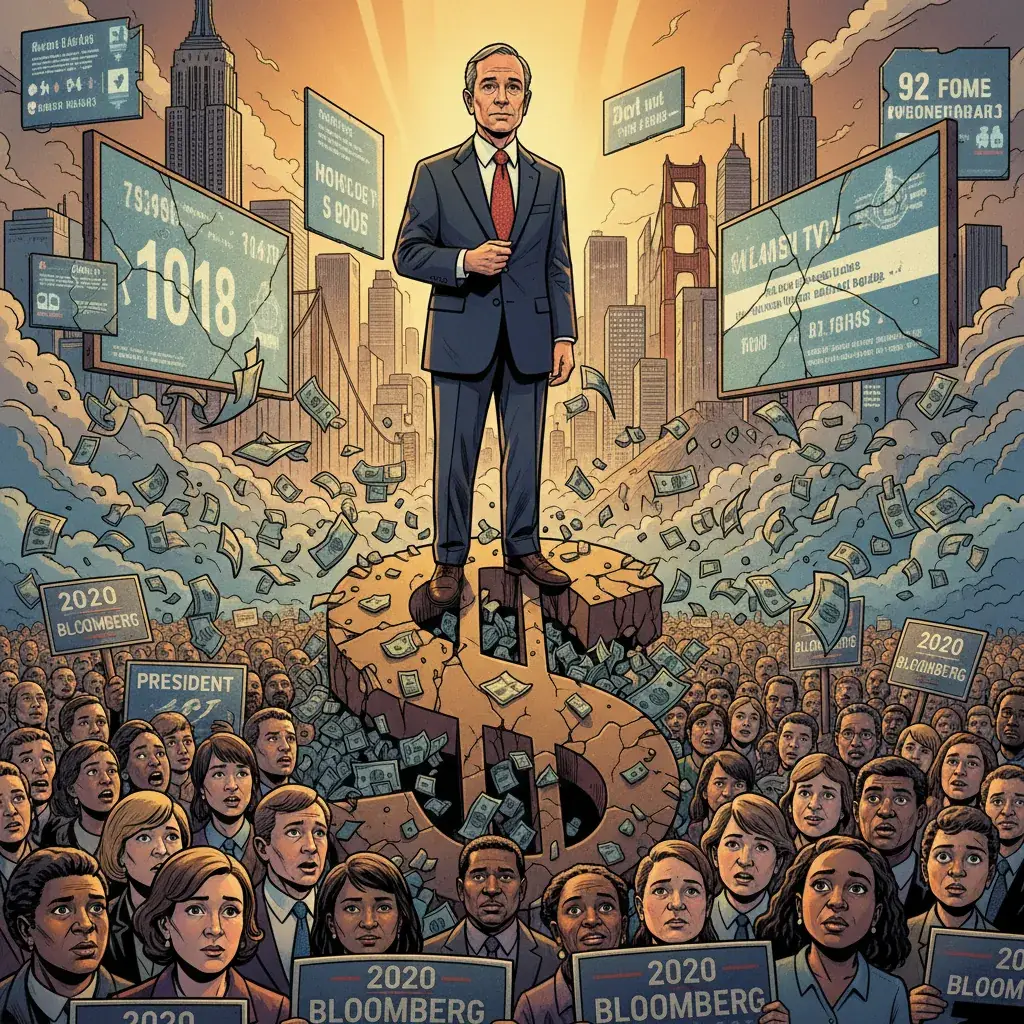
In 2020, Michael Bloomberg made his most expensive mistake: he ran for president.
He entered the Democratic primary late — in November 2019, months after other candidates had been campaigning. His strategy was unprecedented: skip the early states entirely, spend hundreds of millions on advertising, and sweep Super Tuesday.
It was a plan that only a billionaire could conceive. And only a billionaire could afford.
Bloomberg spent over $1 billion on his presidential campaign. One. Billion. Dollars. He bought so much television advertising that he single-handedly drove up ad prices across the country. He hired thousands of staffers. He opened hundreds of offices.
And then he got on the debate stage in Las Vegas.
Senator Elizabeth Warren eviscerated him. She brought up his history of sexist comments, his company’s non-disclosure agreements with former employees, and his support for stop-and-frisk. Bloomberg looked unprepared, uncomfortable, and entirely out of his element.
“I think what America needs is a president who is a manager, who gets things done.”
America disagreed. Bloomberg won only one primary — American Samoa. He dropped out on March 4, 2020, endorsed Joe Biden, and transferred his campaign infrastructure to the Democratic National Committee.
The total cost of the campaign: roughly $1 billion. The total delegates won: 59. The cost per delegate: approximately $17 million.
It was the most expensive political failure in American history. But for Bloomberg, $1 billion was roughly 1.5% of his net worth. He’d spent more than that on philanthropy in a single year.
The presidential run revealed Bloomberg’s one consistent blind spot: he genuinely believed that competence and money could overcome any obstacle. In business, that had been true. In politics, it wasn’t even close.
💻 Chapter 9: The Terminal’s Enduring Monopoly
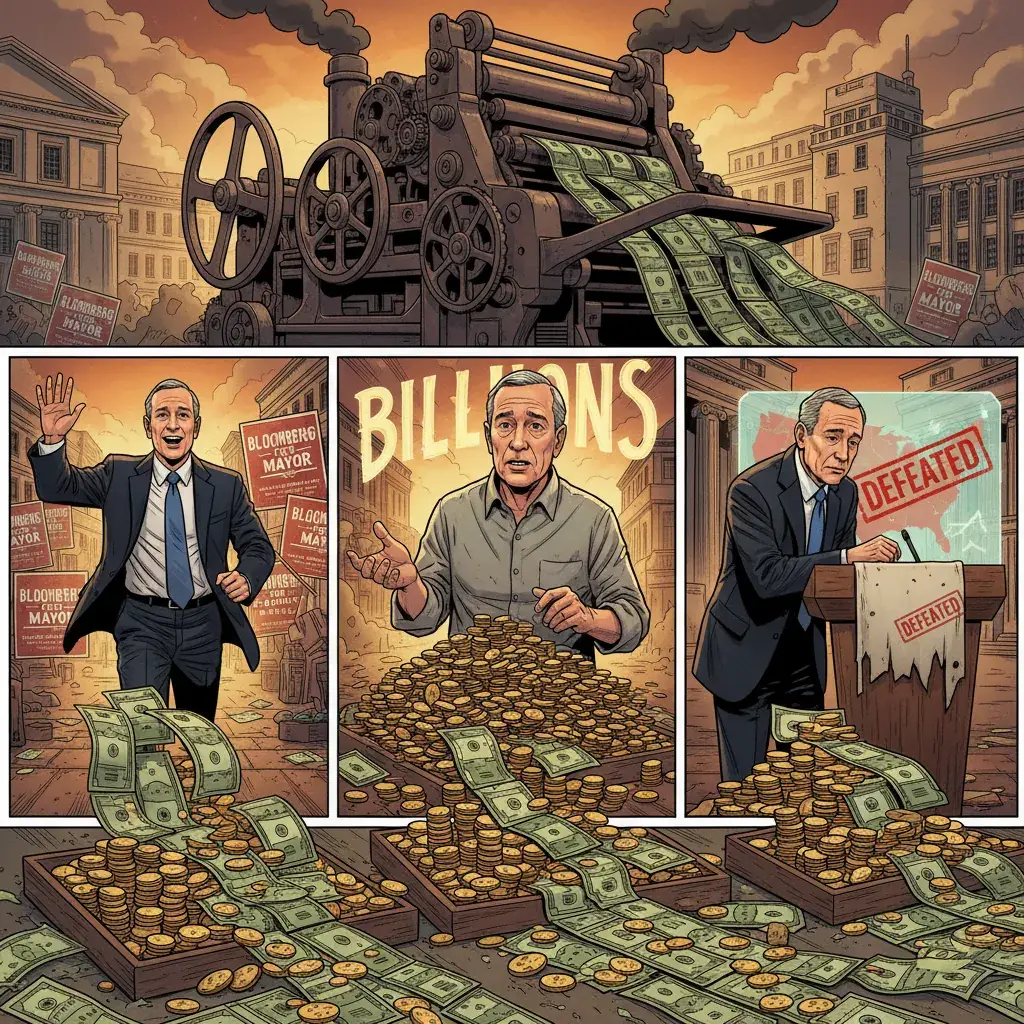
While Bloomberg was busy running for mayor, giving away billions, and losing a presidential campaign, his company kept doing what it had always done: printing money.
By 2025, the Bloomberg Terminal had become even more entrenched in global finance. There were over 350,000 terminal subscribers worldwide, each paying approximately $24,000 per year. That’s roughly $8.4 billion in terminal revenue alone.
No competitor had managed to dislodge Bloomberg. Not Reuters (now Refinitiv, owned by the London Stock Exchange Group). Not FactSet. Not S&P Capital IQ. Not the dozens of fintech startups that had tried to build “Bloomberg killers.”
Why? Because the Bloomberg Terminal had become infrastructure. It wasn’t a tool that traders used — it was the environment in which they worked. Bloomberg’s messaging system alone — a proprietary instant messaging platform used by hundreds of thousands of financial professionals — was worth billions. You couldn’t communicate with the financial world without it.
The terminal had also evolved far beyond its original bond-analytics roots. It now covered every asset class, every market, every geography. It had an AI-powered research assistant. It had integrated trading execution. It had compliance tools, risk management systems, and portfolio analytics that would take a competitor years to replicate.
“The terminal isn’t a product anymore. It’s a utility. And you don’t compete with utilities — you depend on them.”
Bloomberg LP was generating estimated revenues of over $12 billion per year by the mid-2020s. It employed over 20,000 people in offices around the world. And Michael Bloomberg still owned approximately 88% of it.
That 88% stake was worth, by most estimates, over $100 billion. Making the terminal that Bloomberg had built from a $10 million severance check one of the most valuable private assets in human history.
🎯 Chapter 10: The Bloomberg Method
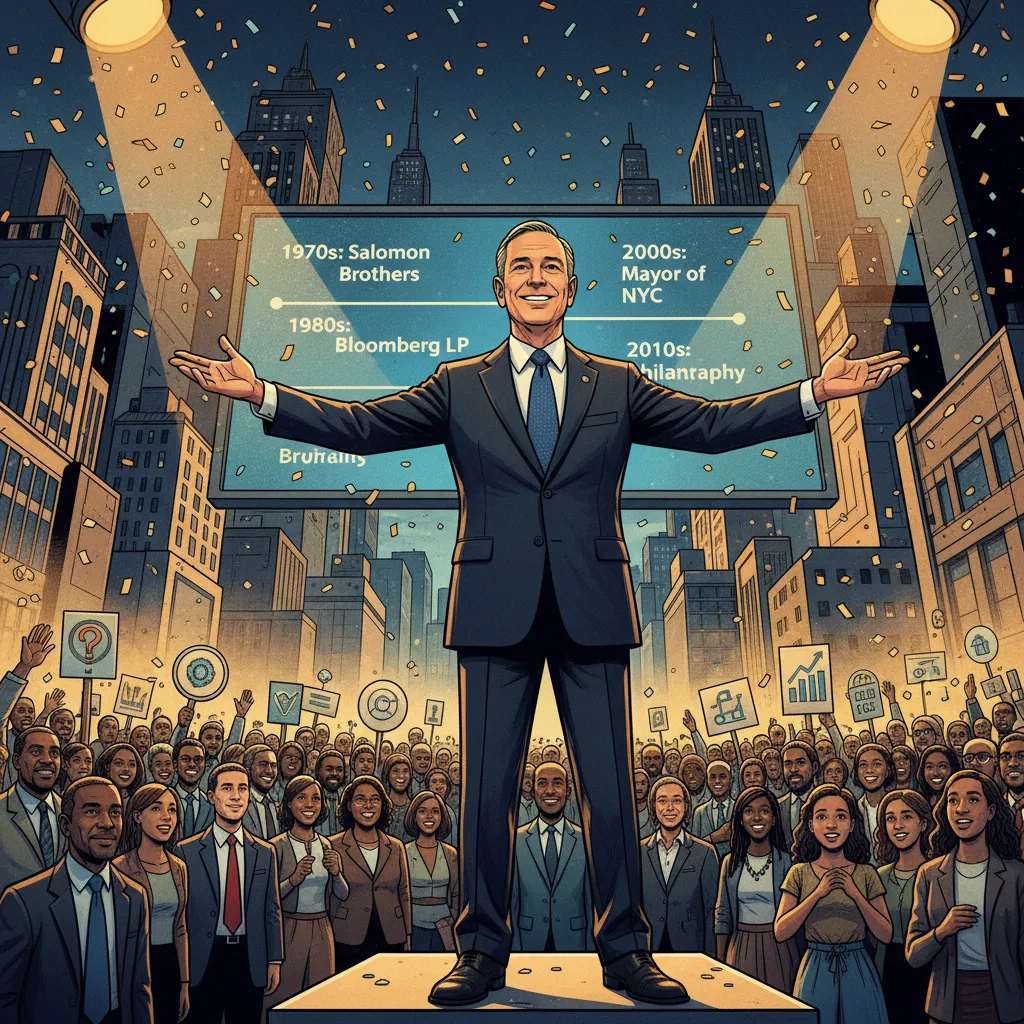
So what can we learn from Michael Bloomberg’s extraordinary journey?
Lesson 1: Understand the plumbing.
Bloomberg’s competitive advantage didn’t come from being the smartest or the most creative. It came from understanding how systems actually worked — not in theory, but in practice. His years in Salomon Brothers’ back office, counting physical bond certificates, gave him insights that no business school could teach.
Lesson 2: Build toll booths, not products.
The Bloomberg Terminal wasn’t a product that customers chose to buy. It was a toll booth they had to pass through to participate in global finance. The difference between a product and a toll booth is the difference between a million-dollar company and a hundred-billion-dollar one.
Lesson 3: Make switching painful.
Bloomberg’s cryptic interface, proprietary messaging system, and deep workflow integration weren’t design flaws — they were strategic weapons. Every hour a trader spent learning the terminal was an hour invested in not switching to a competitor.
Lesson 4: Getting fired can be the best thing that ever happens to you.
Bloomberg’s $10 million severance from Salomon Brothers wasn’t just seed money. It was liberation. Without being pushed out, he would have spent his career as a senior partner at a Wall Street firm, making millions but never billions. Sometimes the universe does you a favor by closing a door.
Lesson 5: Own your company.
Bloomberg maintained 88% ownership of Bloomberg LP throughout its entire history. No IPO. No outside investors dictating strategy. No quarterly earnings calls. This allowed him to make long-term bets — like launching a news service, or spending twelve years as mayor — without worrying about shareholder revolt.
“I built the company so that I would never have to answer to anyone. That’s not arrogance. That’s freedom.”
🏆 Chapter 11: The Final Ledger
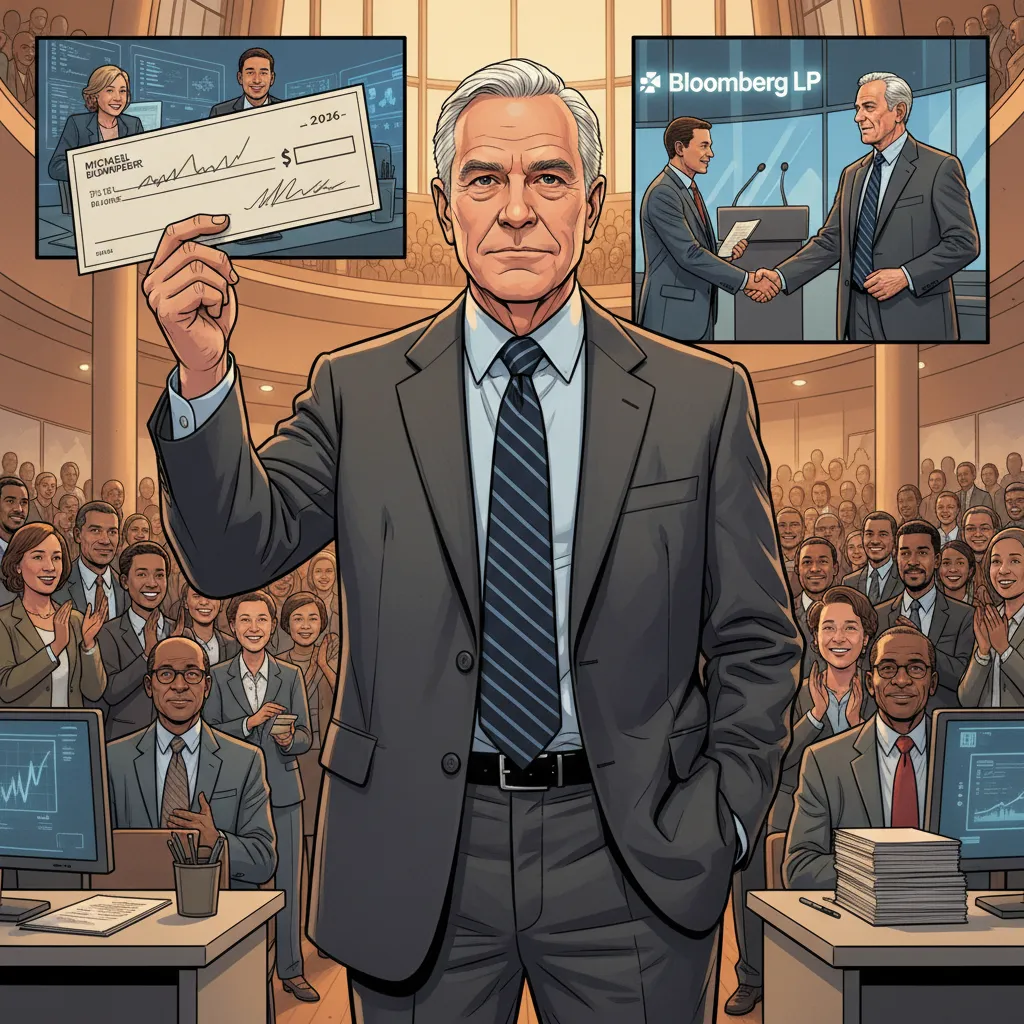
Michael Bloomberg turned 84 in 2026. He’s still active, still giving away money, still showing up at Bloomberg LP’s offices, still wearing the same kind of off-the-rack suits he’s worn for decades.
His net worth fluctuates with estimates of Bloomberg LP’s value, but it consistently places him among the top 15 richest people on Earth. He’s donated over $17 billion and signed the Giving Pledge, committing to give away the majority of his fortune.
The company he built from a severance check now employs over 20,000 people, generates over $12 billion in annual revenue, and is arguably the most important private company in global finance.
Bloomberg’s story doesn’t have the drama of a Steve Jobs comeback or the chaos of an Elon Musk Twitter acquisition. It’s not a story of genius invention or wild risk-taking. It’s a story of something rarer and, in many ways, more impressive: relentless, systematic, disciplined execution over four decades.
He saw a problem. He built a solution. He made it indispensable. He kept ownership. He got rich. He gave it away.
That’s not a sexy narrative. But it’s a $100 billion one.
“I am not self-made. Nobody is. I had good parents, good teachers, good partners, and one very good idea. The rest was just showing up every day and working harder than the person next to me.”
Michael Bloomberg didn’t change the world with a flash of brilliance. He changed it with a terminal. A beige, ugly, expensive, indispensable terminal that Wall Street couldn’t live without.
And that, in the end, is the most Bloomberg thing imaginable.
Michael Bloomberg’s net worth is estimated at over $100 billion as of 2026. Bloomberg LP remains a private company and does not publicly report its financial results. Bloomberg has donated over $17 billion to philanthropic causes through Bloomberg Philanthropies.
😠 Chapter 12: The Unvarnished Truth: Controversies and Culture (1990s-Present)
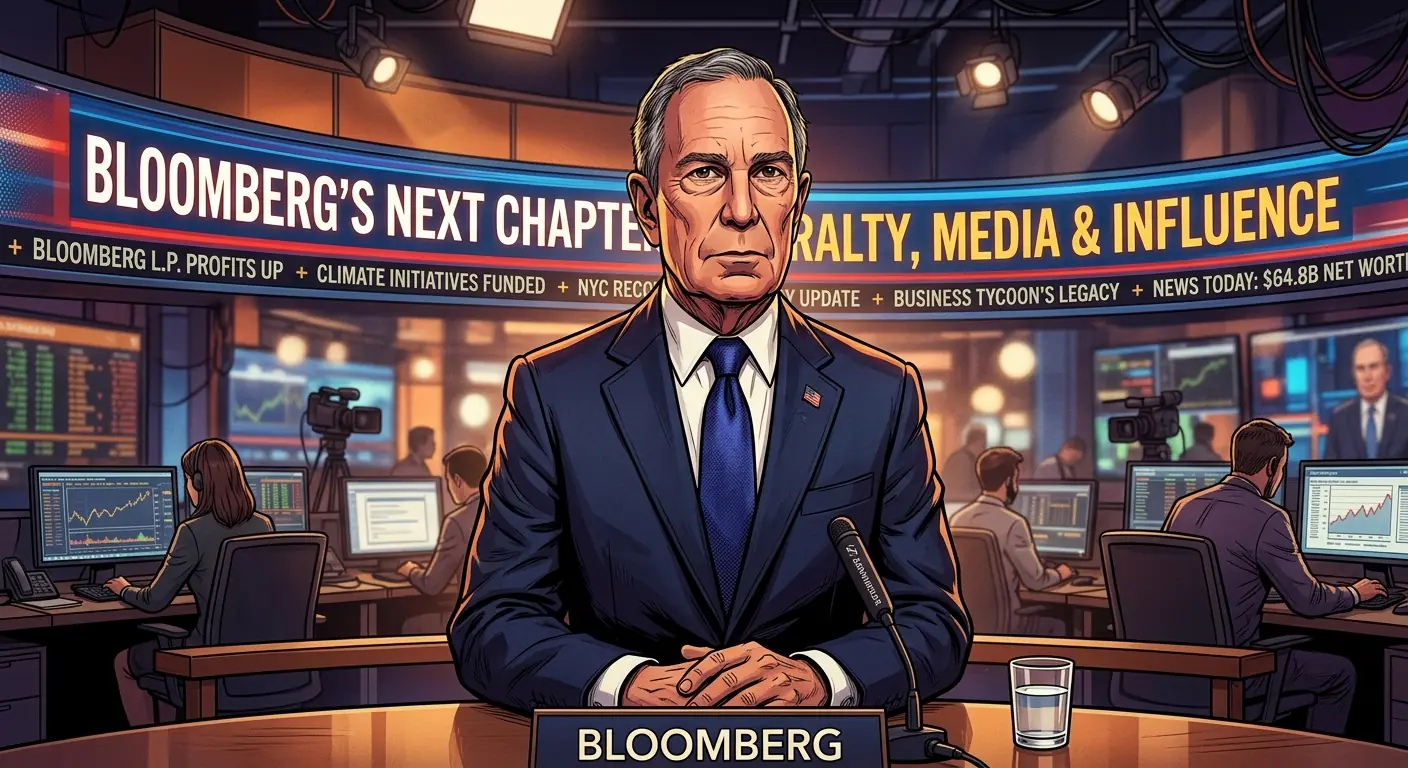
While Michael Bloomberg built an undeniable empire, the gleaming facade of innovation and efficiency sometimes hid a less flattering reality. Success, it turns out, isn’t always pretty, and the “Bloomberg Way” often came with its own set of rough edges, attracting criticism, lawsuits, and a fair bit of head-shaking. Let’s just say not everyone found the corporate culture as revolutionary as the terminal itself.
The “Bloomberg Way” and Its Darker Side
For all the talk of data-driven decisions and meritocracy, Bloomberg LP under its founder sometimes fostered a notoriously aggressive, some might say toxic, workplace environment, particularly for women. Allegations of sexism, crude remarks, and a “bro-culture” persisted for years, leading to multiple high-profile lawsuits. One particularly infamous incident involved a 1996 lawsuit where a former employee alleged Bloomberg told her to “kill it!” upon learning she was pregnant. Another suit in 2007 by the Equal Employment Opportunity Commission (EEOC) accused the company of widespread discrimination against pregnant employees. Bloomberg himself was no stranger to controversy, with a 1990 book, Bloomberg by Bloomberg, containing a reported anthology of his own off-color jokes and comments about women, which he later disavowed as not reflecting his current views.
“The reality is, when you have a lot of aggressive, smart, driven people, you’re always going to have some friction. But we tried to create a place where people could thrive.” — Michael Bloomberg, attempting to explain away years of allegations.
These weren’t isolated incidents. For many, they painted a picture of a company whose cutting-edge technology was built on a foundation of rather outdated social norms. While the company settled many of these claims (without admitting wrongdoing, naturally), the stain on Bloomberg’s otherwise pristine corporate image lingered, a stark reminder that even the most brilliant minds can have blind spots when it comes to human resources. It’s a classic Wall Street tale, really: make billions, deal with the occasional legal headache.
”Stop-and-Frisk” and the Mayoral Legacy
Bloomberg’s foray into politics as Mayor of New York City (2002-2013) brought a different kind of controversy. His signature policing strategy, “stop-and-frisk,” became a national flashpoint. While proponents (including Bloomberg himself) credited it with reducing crime rates, critics — rightfully so — lambasted it as a discriminatory practice that disproportionately targeted Black and Hispanic men. In 2011, at its peak, NYPD officers conducted nearly 700,000 stops, a staggering number, with 87% of those stopped being Black or Hispanic, despite making up a much smaller percentage of the city’s population.
A federal judge eventually ruled the practice unconstitutional in 2013, deeming it racial profiling. Bloomberg initially defended the policy staunchly, but years later, during his ill-fated presidential bid, he offered a belated apology, admitting he was “wrong.” The damage, however, was done. For many, “stop-and-frisk” remains a defining, and deeply problematic, part of his mayoral legacy, a testament to how even well-intentioned policies can have devastating societal consequences when unchecked by civil liberties concerns.
Data, Power, and Privacy Concerns
Even the terminal itself wasn’t immune from controversy. In 2013, a minor scandal erupted when it was revealed that Bloomberg News journalists had access to certain client login data, including when users last logged in and which functions they used. This was, understandably, met with outrage from financial institutions who suddenly realized their data provider was also, perhaps, peeking over their shoulder. The company quickly apologized, tightened restrictions, and fired an employee, but the incident highlighted the immense power and responsibility that comes with controlling the world’s most comprehensive financial data network. In a world increasingly concerned with data privacy, it was a stark reminder that even the most trusted platforms can have unforeseen vulnerabilities.
🌐 Chapter 13: Beyond the Terminal: Diversification and Global Reach (1990s-Present)
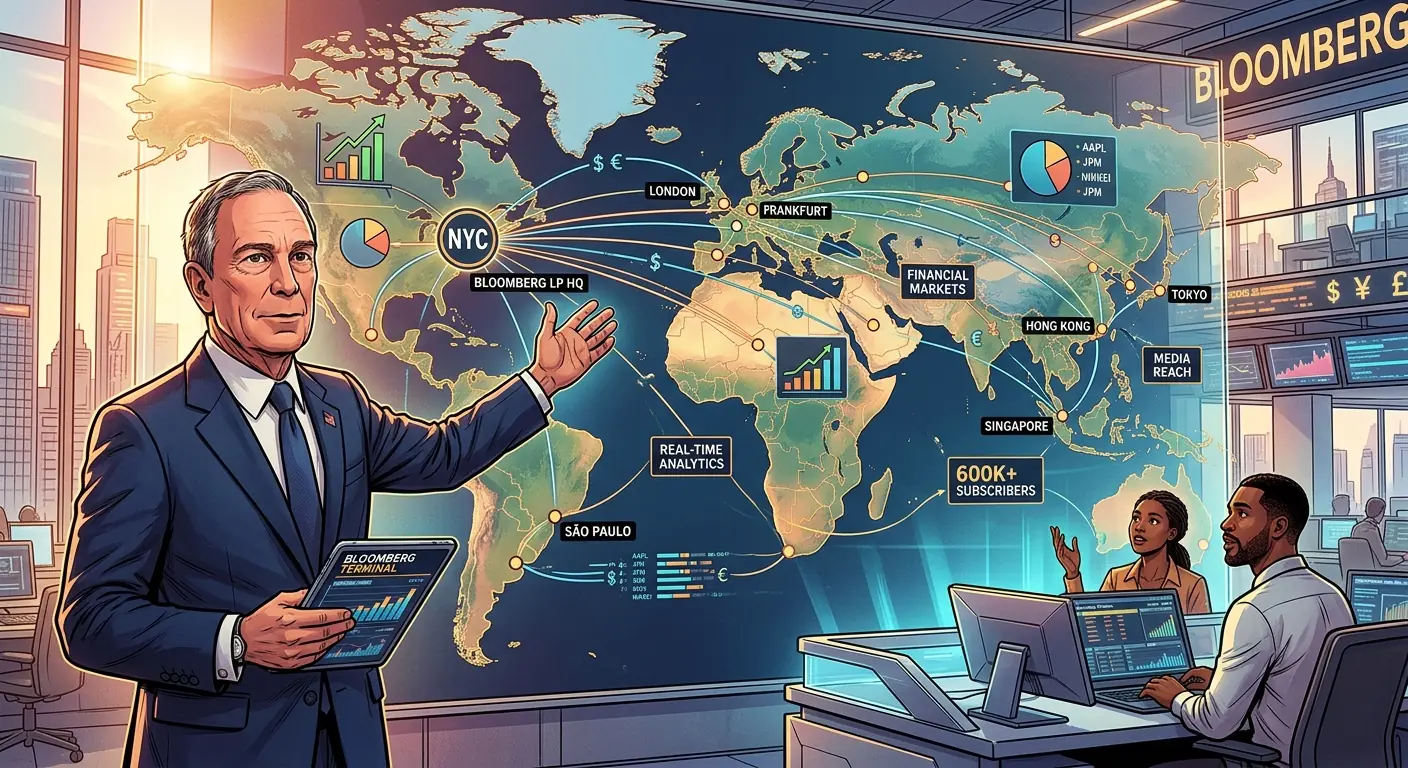
While the Bloomberg Terminal remained the cash cow, Michael Bloomberg was never one to rest on his laurels or put all his eggs in one incredibly expensive basket. The true genius of Bloomberg LP’s enduring success lies not just in its foundational product, but in its relentless diversification and aggressive global expansion, transforming it from a data provider into a full-spectrum information and influence machine. It was less about just selling data, and more about selling the entire ecosystem of financial intelligence.
The Global Chessboard: Outmaneuvering the Competition
From the outset, Bloomberg understood that finance was a global game. While rivals like Reuters (the incumbent, often seen as stodgy) were trying to catch up, Bloomberg was already planting flags. They didn’t just translate the terminal into different languages; they established news bureaus, sales offices, and customer support centers across every major financial hub: London, Tokyo, Hong Kong, Singapore, São Paulo. By the mid-1990s, Bloomberg was a truly global presence, offering localized content and support that its competitors struggled to match. This global footprint wasn’t just about sales; it fueled the terminal itself, providing real-time data from every corner of the market, making it indispensable to international traders.
They didn’t just wait for customers to come to them; they went to the customers. And they didn’t just sell data; they sold workflow solutions. Bloomberg Tradebook, launched in 1996, was a prime example: an electronic trading system that allowed institutional investors to execute trades directly through their terminals, bypassing traditional brokers and adding another sticky layer to the Bloomberg ecosystem. This move alone disrupted the brokerage industry and demonstrated Bloomberg’s willingness to compete with its own clients if it meant enhancing the terminal’s value proposition. It was a bold, some might say audacious, expansion beyond just “information.”
Beyond the Screen: Data, Analytics, and AI
The terminal was just the beginning. Bloomberg LP consistently invested in expanding its offerings, recognizing that the future of finance wasn’t just about raw data, but about what you could do with it. This led to the creation of specialized data analytics products and the acquisition of companies that filled strategic gaps. Take Bloomberg New Energy Finance (BNEF), acquired in 2009. This wasn’t just another financial dataset; it was a prescient move into the then-nascent world of clean energy and climate finance, positioning Bloomberg as a leader in a critical emerging market. Similarly, Bloomberg Government (BGov), launched in 2010, provided detailed data and analysis for government affairs professionals, proving that the “Bloomberg Method” could be applied far beyond Wall Street.
More recently, the company has been a quiet leader in integrating artificial intelligence and machine learning into its offerings. From natural language processing for parsing earnings reports to sophisticated predictive analytics for market trends, Bloomberg is constantly evolving the “brain” behind the terminal. They haven’t just kept up with technological advancements; they’ve often defined them for the financial sector, ensuring that the terminal remains not just relevant, but indispensable, even in an age of open-source data and cloud computing. The annual subscription fee, rumored to be around $24,000 per user per year, reflects this continuous innovation and the immense value it delivers.
The Unseen Hand: Bloomberg’s Enduring Influence
Even after his mayoral years and presidential ambitions, Michael Bloomberg remains the undisputed titan of Bloomberg LP. While he’s stepped back from daily operations, his vision and methodology continue to guide the company. His personal fortune, estimated to be well over $100 billion, is inextricably linked to the continued success of the terminal and its sprawling empire.
“I still come in every day, I still ask questions, and I still try to make sure we’re doing the right thing for our customers.” — Michael Bloomberg on his continued involvement, even as he delegates more.
The company’s impact extends far beyond its financial success. It has standardized how information is consumed in finance, influenced journalistic practices globally, and even shaped political discourse through its data-driven insights. From the smallest hedge fund to the largest sovereign wealth fund, from a journalist in Mumbai to a policymaker in Washington D.C., the Bloomberg name, and its ubiquitous terminal, are the unseen hands guiding decisions, shaping narratives, and quietly, powerfully, running the world of money and information. And for a kid from Medford, Massachusetts, that’s not just a fortune; it’s a legacy that truly changed everything.
💡 Key Insights
- ▸ Bloomberg's genius was recognizing that financial professionals would pay extraordinary premiums for information that saved them time and reduced risk. The Bloomberg Terminal wasn't just a product — it was a toll booth on Wall Street's highway. By making the terminal indispensable to daily workflows, Bloomberg created one of the stickiest subscription businesses in history with virtually zero churn.
- ▸ Getting fired from Salomon Brothers with a generous severance became Bloomberg's unfair advantage. Most people would have joined another bank. Bloomberg used the capital and the chip on his shoulder to build something that made his former employer a customer. The lesson: severance isn't an ending — it's seed funding with emotional rocket fuel.