Michael Jordan: How a Sneaker Deal Became a Billion-Dollar Empire
Michael Jordan did not just dominate basketball. He turned competitive mythology into one of the most durable licensing machines in modern business, with Jordan Brand becoming a global profit engine long after his final shot.
View all stories about this mogul
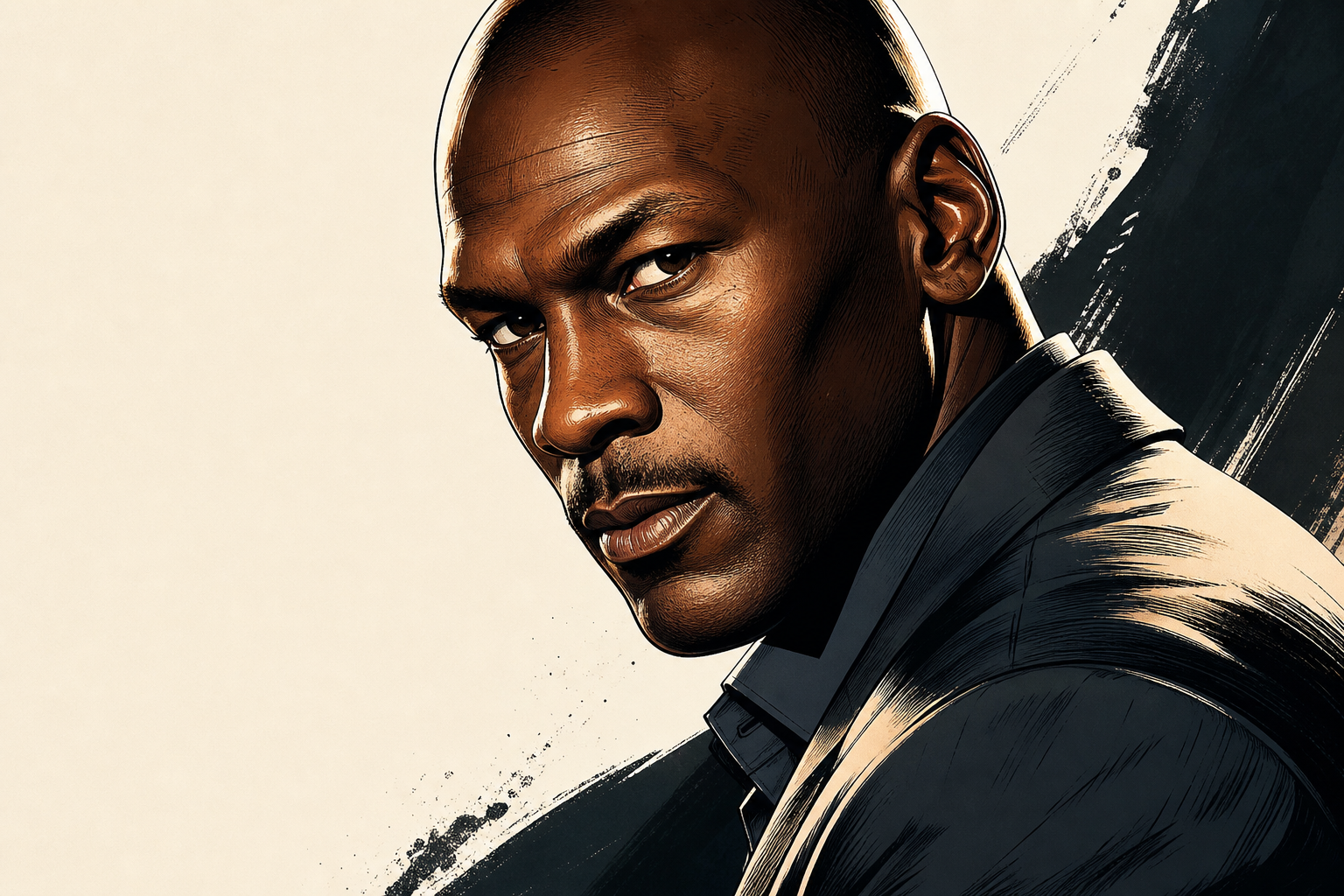
Michael Jordan did not become a mogul by chasing every deal in sight. He became one by turning a single myth into a forever machine. The dunks, the rings, the snarl, the airborne silhouette — all of it became raw material for one of the most profitable licensing empires in modern business. Plenty of athletes sold shoes. Jordan became the shoe, the symbol, and eventually the system.
This is the version of his story that matters now.
Not just the championship montages. Not just the last shot in Utah. The real mogul arc is how Jordan turned competitive violence into premium consumer desire, then watched that desire compound across decades, generations, and continents. He retired from basketball. The character called Jordan never did.
Chapter 1: Wilmington, Where the Obsession Started

Michael Jeffrey Jordan was born in Brooklyn in 1963, but the real origin story lives in Wilmington, North Carolina. That was where the chip got installed. His family was disciplined, working-class, and structured. His father, James Jordan, loved competition and style. His mother, Deloris, believed in order, standards, and polish. Together they built the atmosphere that would later define the brand: confidence without apology, but never by accident.
Jordan’s most famous teenage wound — getting cut from varsity as a sophomore — has been polished into American folklore, but it matters because it reveals the engine early. He did not need comfort. He needed insult. Rejection gave him a rival to fight, even when the rival was only memory.
That competitive wiring mattered later in business. Jordan was not merely charismatic. He was relentlessly comparative. He wanted to beat other players, other teams, other stars, and eventually other brands. The future empire would inherit that same posture. Air Jordan was never sold as a pleasant shoe. It was sold as the product version of domination.
Chapter 2: Chapel Hill and the First National Flash
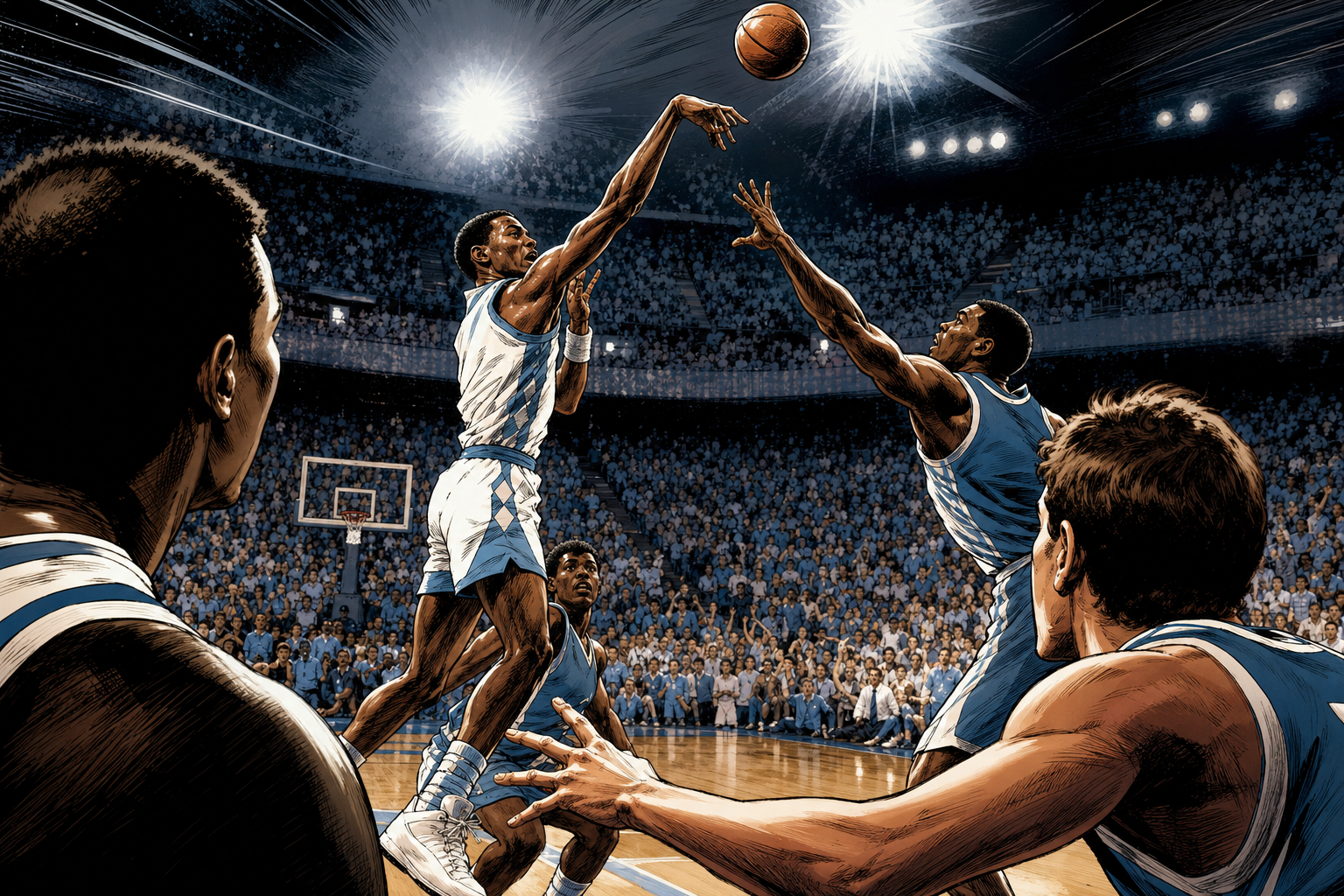
At the University of North Carolina, Jordan became visible to the nation. Dean Smith gave him structure. The 1982 NCAA championship game gave him a signature moment. Jordan hit the winning shot against Georgetown, and in one clean release he crossed into a new category: not just talented, but cinematic.
That distinction matters in the mogul story. Markets do not reward talent alone. They reward moments that can be replayed. Jordan’s career arrived just as television was learning how to weaponize replay into mythology. His highlights were not simple evidence of greatness. They were commercial assets before anyone fully called them that.
By the time he entered the 1984 NBA Draft, Jordan already looked unusually exportable. He had the smile, the hang time, the clean visual silhouette, and the competitive voltage. Brands were not just evaluating a rookie guard. They were sensing the outline of a character big enough to escape sports.
Chapter 3: The Nike Pitch That Changed Everything
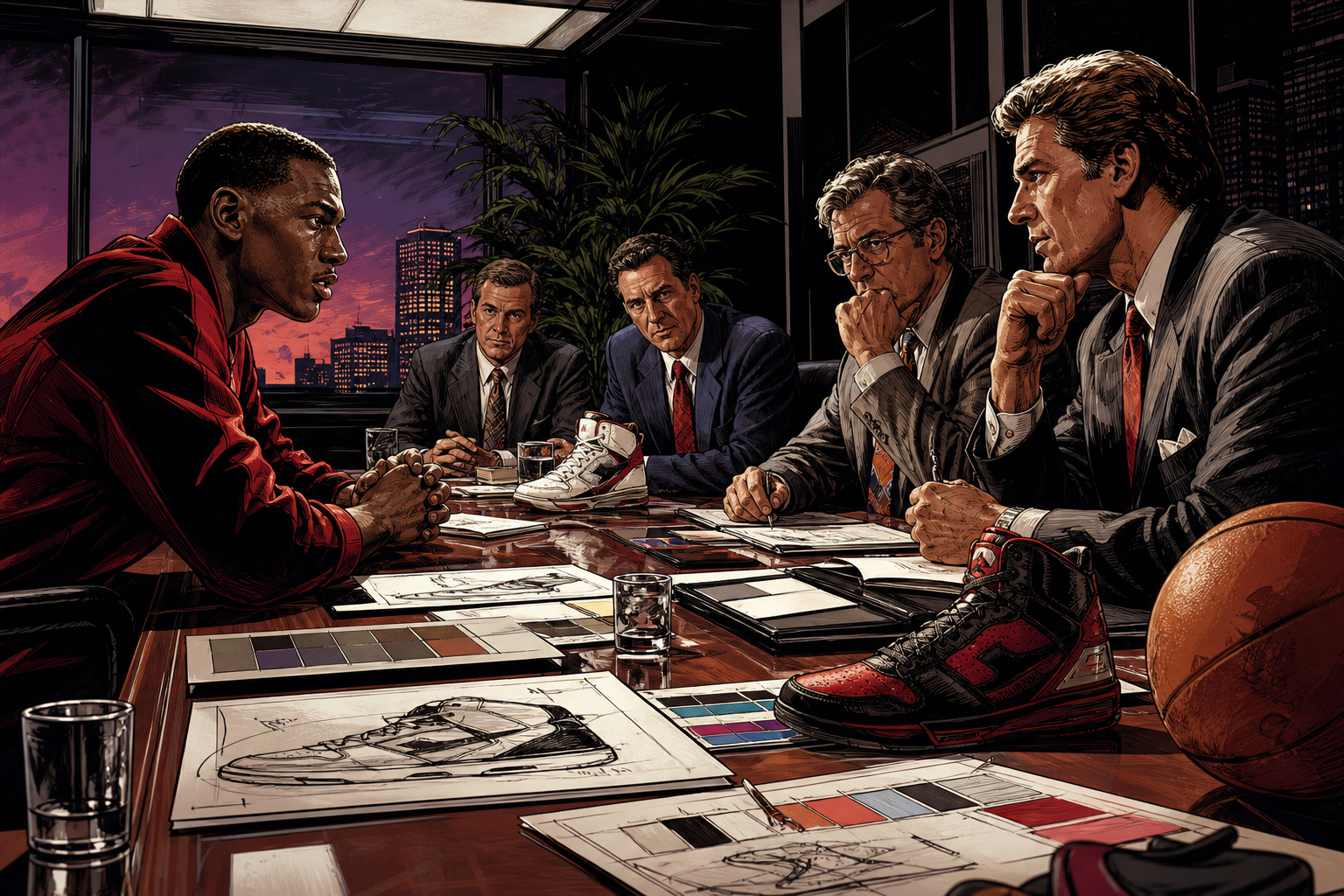
In 1984, Michael Jordan preferred Adidas. Nike was still better known for running shoes and did not yet own basketball culture. On paper, this should have ended there. Instead, Nike and Jordan’s parents — especially Deloris — forced the meeting that changed sneaker history.
What Nike understood was not merely that Jordan could endorse a shoe. They understood he might deserve a universe. Sonny Vaccaro helped push the vision. Nike committed real money, real attention, and most importantly, real imagination. Rather than folding Jordan into a generic athlete roster, they built Air Jordan around him as a self-contained mythology.
That was the breakthrough. Endorsements are rented attention. Air Jordan became branded authorship. The product line had its own mood, its own language, its own gravity. Jordan was not decoration for the shoe. The shoe was a machine for extending Jordan into everyday life.
Chapter 4: Banned, Televised, Immortal
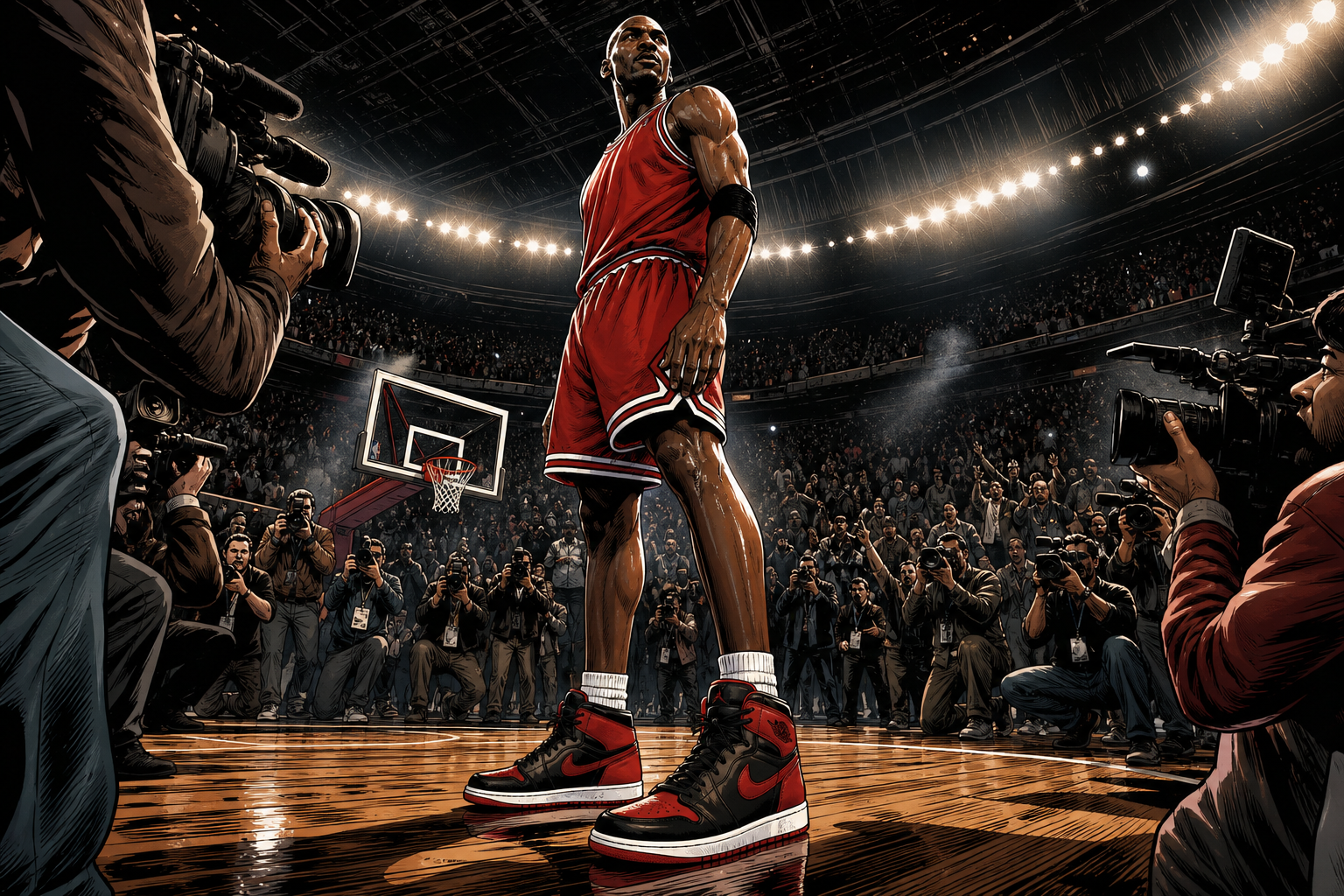
The first Air Jordan launched in 1985 and instantly felt more dangerous than a basketball product had any right to feel. Black and red. Loud. Defiant. Whether the famous “banned” story was simplified in the retelling matters less than what it achieved. Consumers believed they were buying a piece of rebellion.
This is where Jordan Brand separated from normal sports marketing. Performance was only the front door. The real sale was identity. To wear Jordans was to borrow some of the audacity of the man himself — the willingness to rise, punish, and refuse permission.
Nike turned league resistance into legend. Advertising amplified attitude. Young customers did the rest. They were not buying leather and rubber. They were buying a role in the story. Once that happened, the business no longer depended on statistics alone. It depended on narrative, and narrative ages beautifully when the hero keeps winning.
Chapter 5: The Bulls Dynasty Becomes a Global Sales Engine
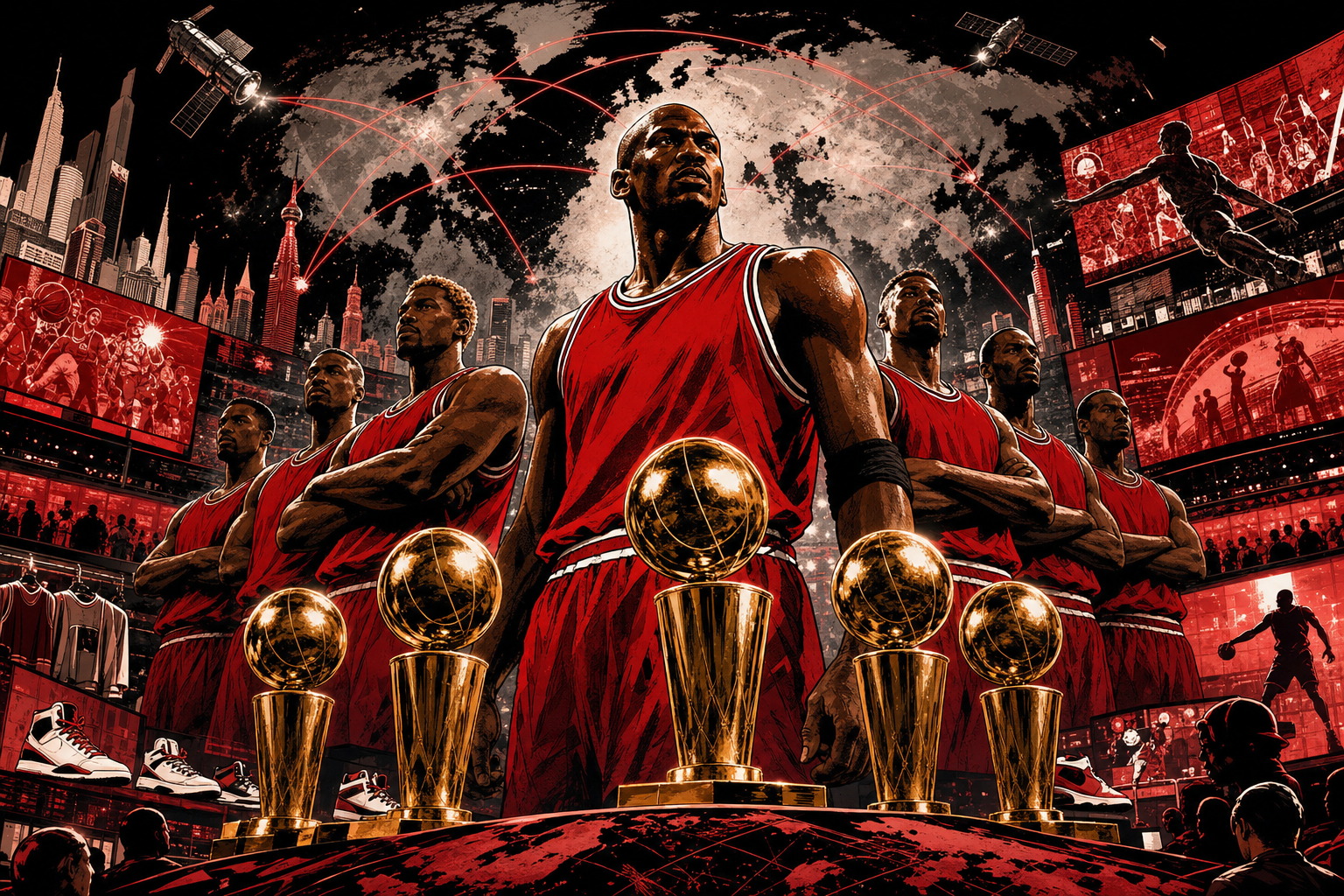
The 1990s turned Michael Jordan from superstar into operating system. Six championships. Two three-peats. MVPs. Scoring titles. Finals moments so sharp they still feel storyboarded. Every win poured fuel into the brand.
The genius of Jordan’s commercial rise was timing. The NBA was exploding globally. Cable television was spreading. Sneaker culture was becoming a language. Jordan arrived as the perfect visual for all of it: elegant, ruthless, instantly recognizable.
Each championship made the shoes more than merchandise. They became proof. If you were a kid in Chicago, Manila, Paris, or Seoul, Jordans signaled participation in the highest version of the game. The man on the screen and the product on the shelf were strengthening each other in real time. That feedback loop is how brands become empires.
Chapter 6: Tinker Hatfield and the Architecture of Desire
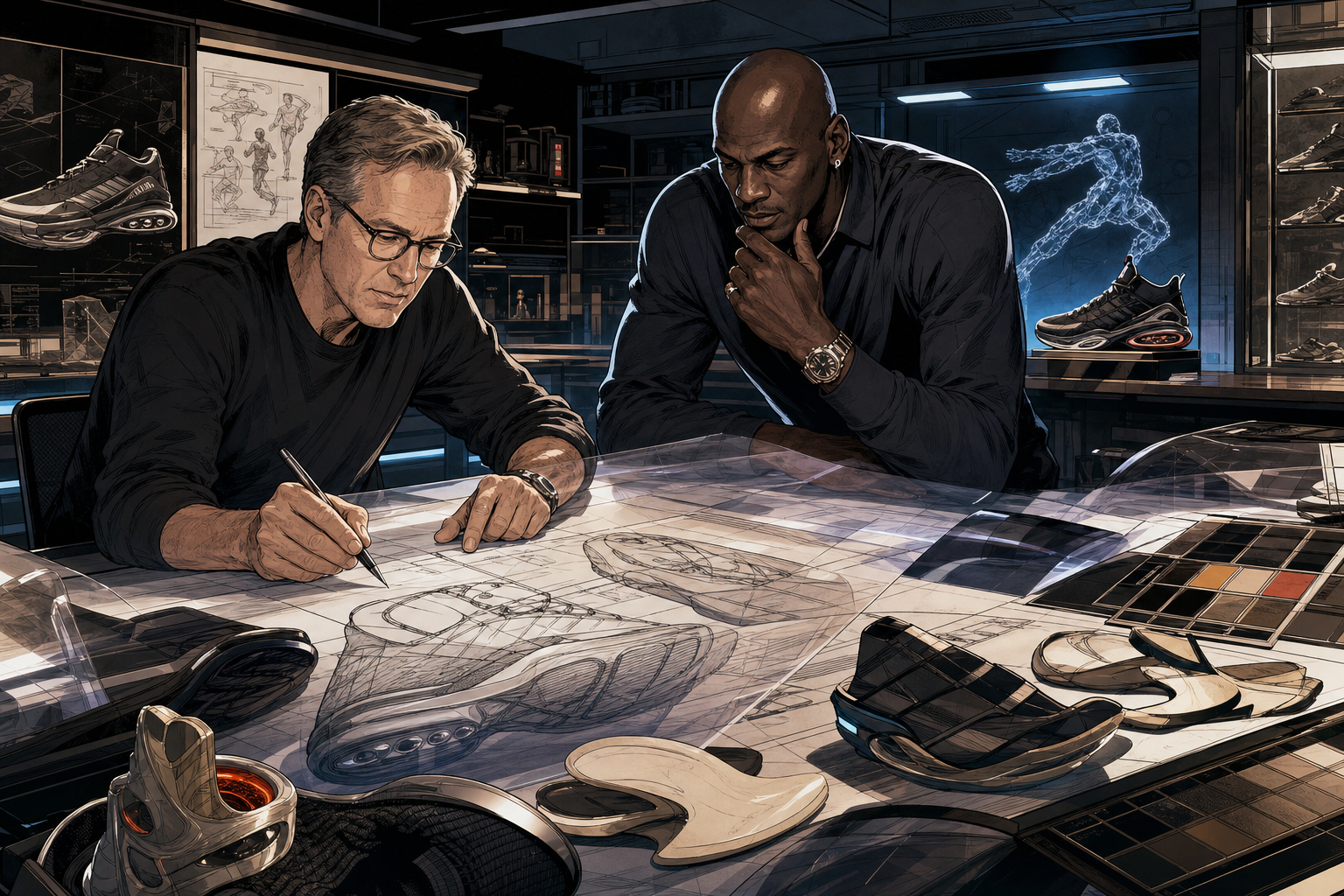
No mogul builds alone, and one of the key architects behind Jordan’s empire was designer Tinker Hatfield. Hatfield helped make the line feel progressive, cinematic, and collectible. The shoes were not just annual updates. They were chapters in an ongoing legend.
This design continuity was critical. Air Jordan releases became events with memory attached to them: the III, the IV, the XI, the black-red colorways, the patent leather, the moments fans tied to specific playoff runs and heroic performances. The products were engineered not only for the court, but for recall.
That is a subtle business superpower. When consumers remember exactly where they were when they first saw a shoe, price sensitivity starts to weaken. Nostalgia becomes margin. Design becomes archive. And archive, if protected carefully, becomes recurring revenue.
Chapter 7: The Jumpman Escapes Basketball
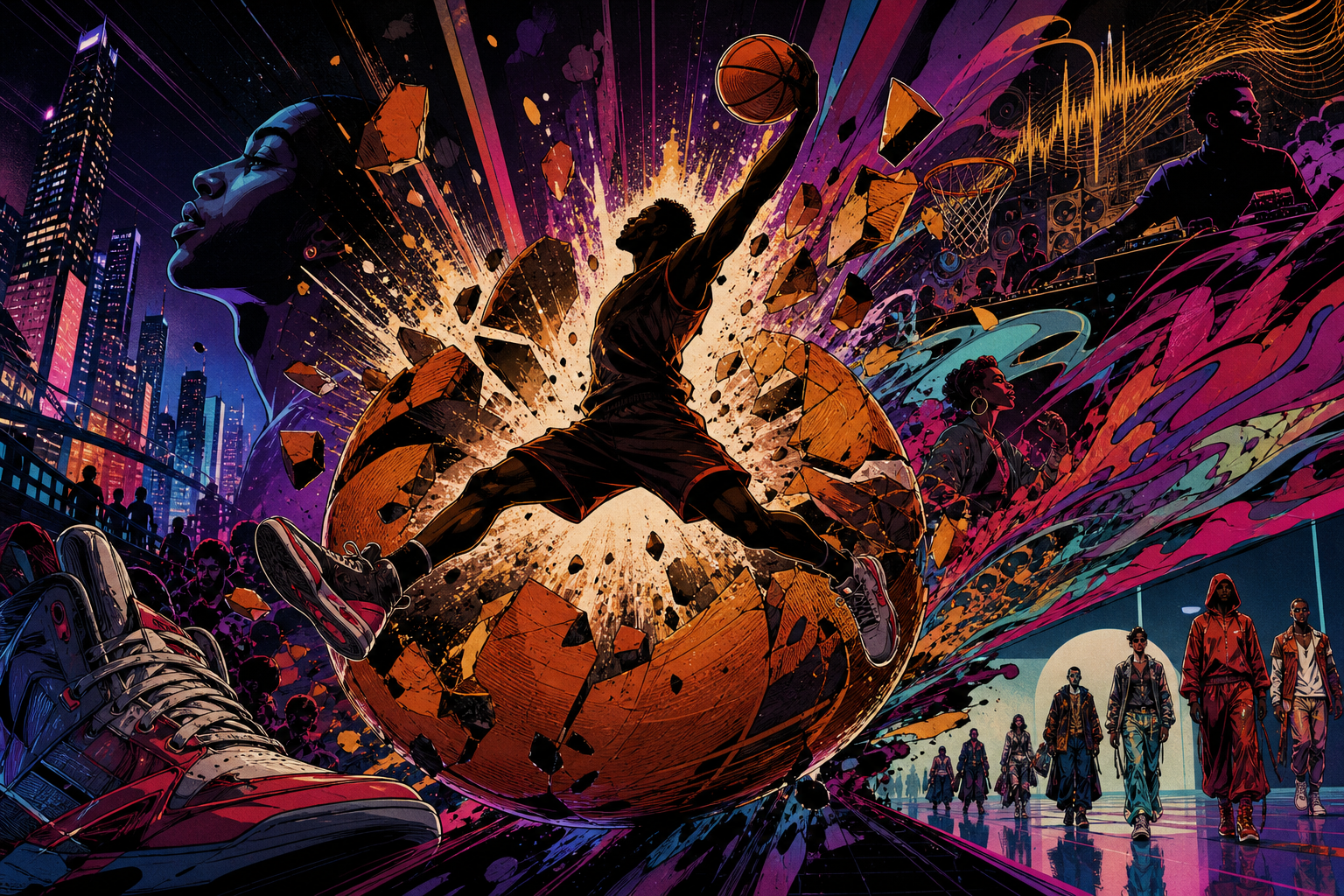
At some point, Jordan stopped being only an athlete and became shorthand for excellence itself. That is when the Jumpman logo achieved escape velocity. It moved from the hardwood into rap videos, school hallways, streetwear rotations, collector circles, and global fashion culture.
This migration mattered more than any single sales quarter. Basketball stars usually peak with the season. Style symbols travel differently. Once Jordans became culturally legible outside sports, the business gained a second life. You no longer had to care about box scores to want the product.
That broadened the customer base dramatically. Sneakerheads wanted rarity. Kids wanted status. Adults wanted nostalgia. Fashion buyers wanted silhouette. The brand could now monetize performance, memory, and identity at the same time. Very few celebrity products ever reach that density.
Chapter 8: Retirement Did Not Kill the Machine
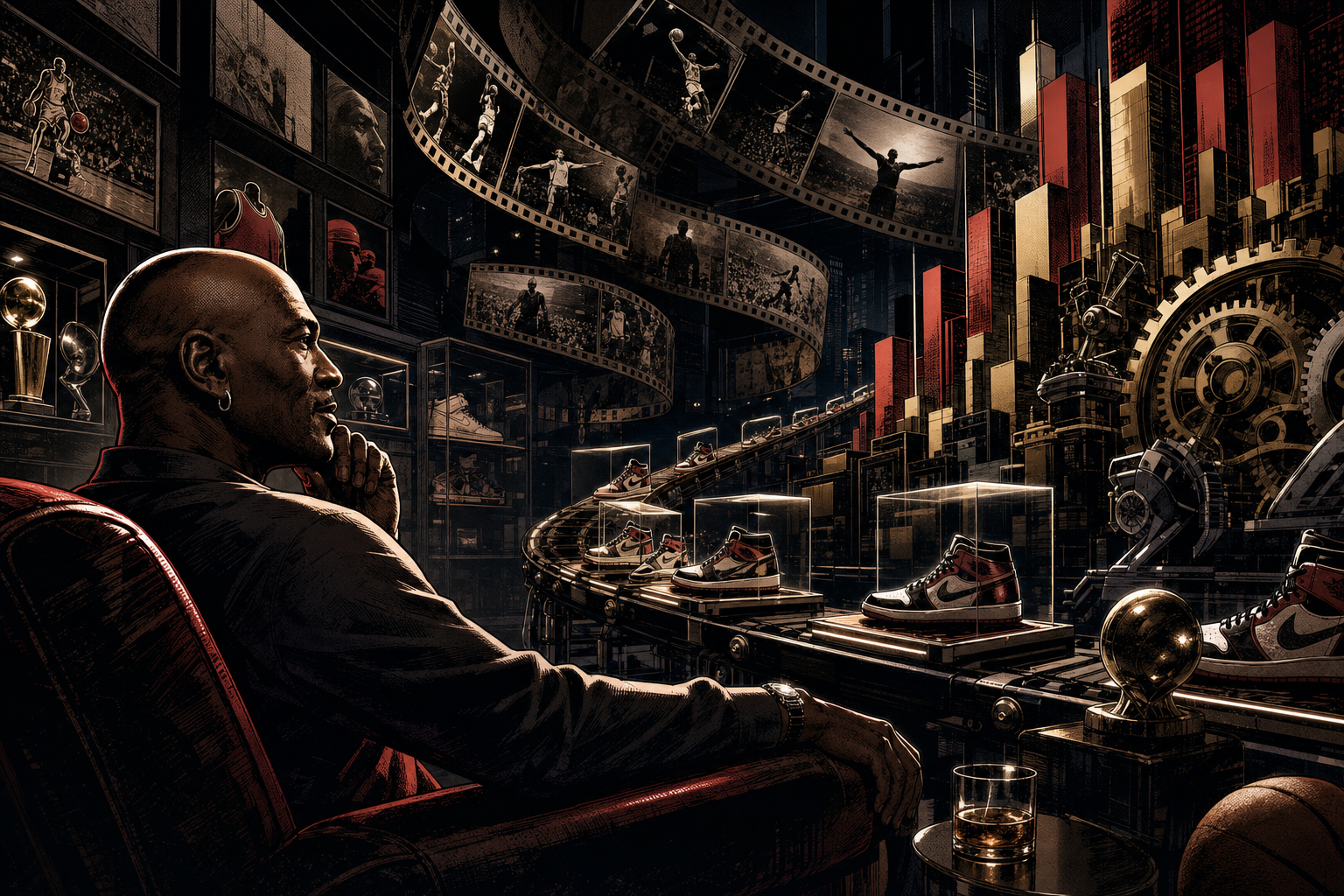
Most athlete brands fade when the athlete slows down. Jordan Brand did the opposite. Even after his retirements — and even after the imperfect Washington Wizards comeback — the core mythology held.
Why? Because Jordan’s prime had already been converted into portable media. Highlights replayed forever. Signature moments remained pristine. The story was easy to retell: relentless worker, impossible competitor, airborne assassin, championship closer. It was myth with excellent broadcast quality.
Nike recognized this early. The company did not treat retirement as the end of the line. It treated Jordan’s archive as renewable intellectual property. Retro releases turned the past into fresh inventory. New generations were invited to buy into an era they had never actually watched live. That is not ordinary merchandising. That is time travel as business strategy.
Chapter 9: Jordan Brand Becomes a Corporate Powerhouse
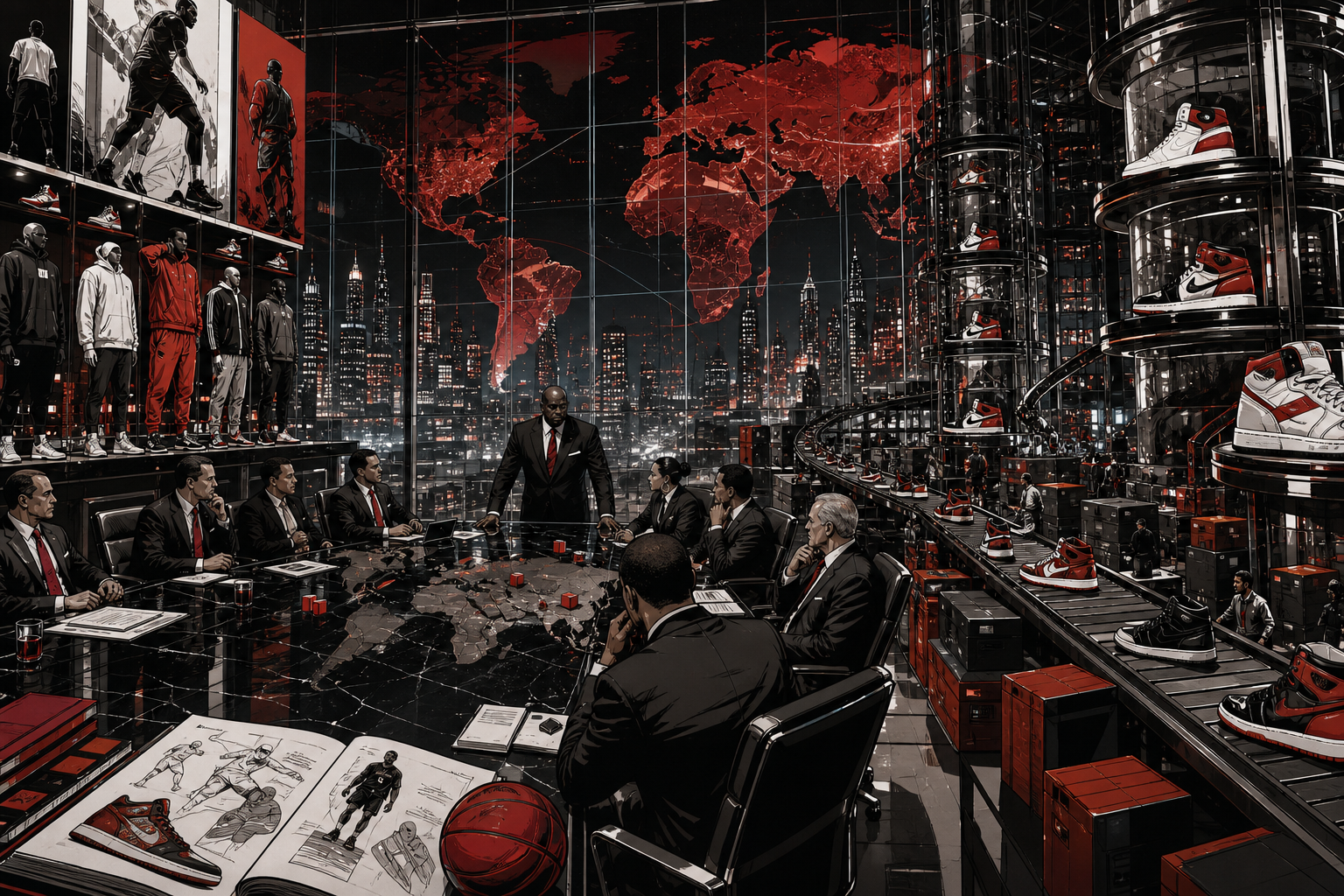
What began as a signature line evolved into something much bigger: Jordan Brand as an empire within Nike. Apparel, retros, team gear, collaborations, athlete extensions — the business was no longer one man selling one shoe. It was a branded ecosystem with its own internal gravity.
By the mid-2020s, public reporting described Jordan Brand as reaching roughly $7 billion in annual revenue. That number changes the frame completely. We are no longer talking about a famous retired player with a lucrative endorsement. We are talking about one of the most important franchises inside one of the most powerful sportswear companies on Earth.
The economic logic was beautiful. Jordan supplied the mythology. Nike supplied manufacturing, distribution, retail relationships, and global scale. Together they built a machine that could keep printing demand long after the original on-court drama had ended.
Chapter 10: Scarcity, Royalties, and the Luxury Logic of Sneakers
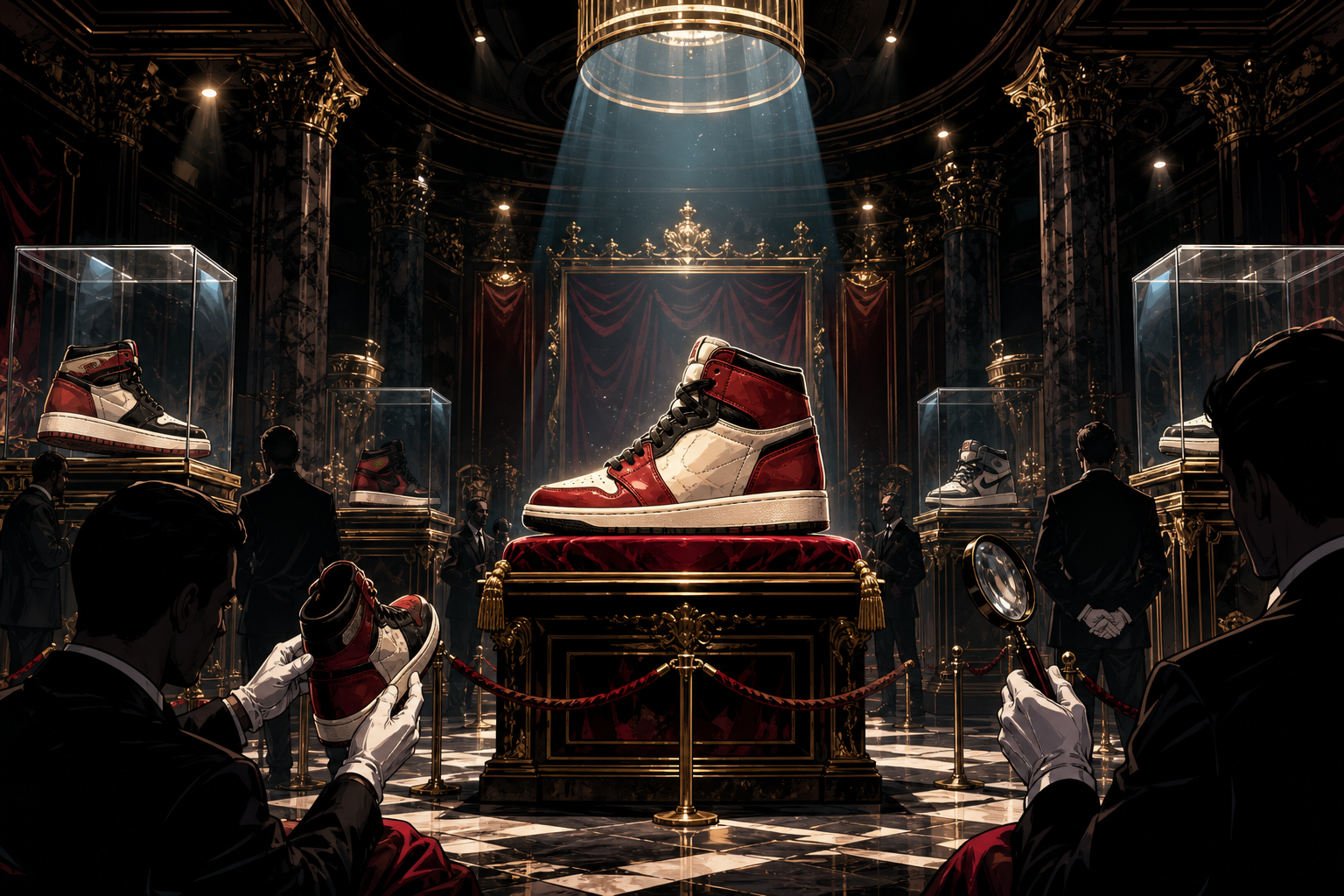
The deepest genius in the Jordan empire was not volume alone. It was restraint. Jordans were never meant to feel ordinary. Limited drops, timed releases, coveted retros, and uneven availability turned retail into ritual.
Scarcity did two things at once. First, it protected the aura. Second, it trained customers to accept emotional pricing. People were not comparing Jordans to generic footwear on practical grounds. They were comparing access to exclusion, belonging to missing out.
That is luxury logic, even when the product sits inside sportswear. Jordan Brand effectively taught mass consumers to behave like collectors. The reward for Jordan himself was extraordinary royalty income. Forbes has repeatedly estimated that Nike royalties make up the largest share of his fortune. He built wealth not by exchanging hours for money, but by owning the symbolic tollbooth.
Chapter 11: From Endorser to Owner
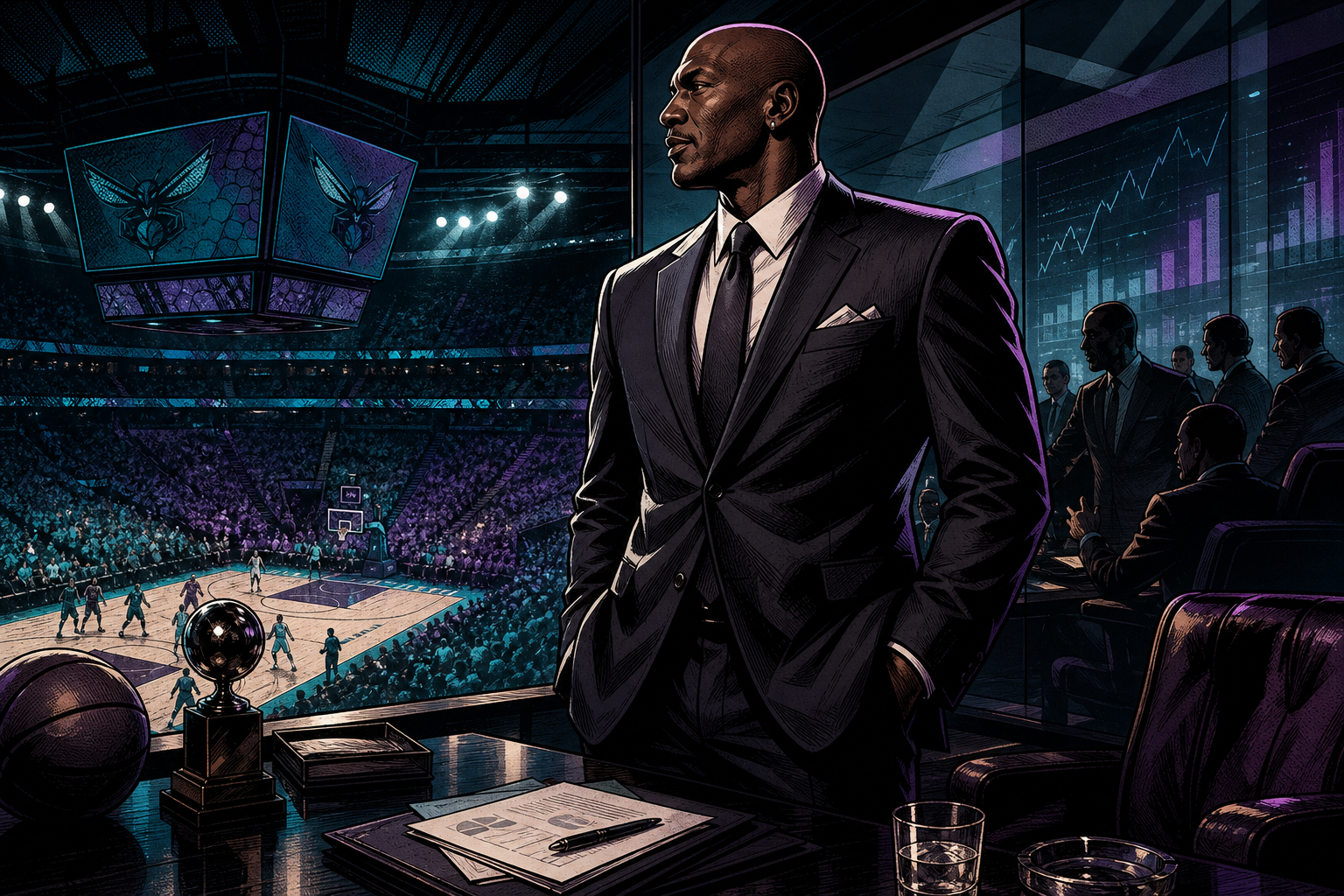
Jordan’s Charlotte Hornets chapter was messier than his sneaker mythology, but it still mattered. In 2010, he became the NBA’s first former player to acquire a majority stake in a franchise. The team did not become a dynasty. The ownership run was frequently criticized. On the court, this was not the clean perfection of the Bulls years.
But in wealth terms, the move was significant. Jordan stepped beyond endorsement economics and into asset ownership. That is the mogul transition most stars talk about and few complete. When he sold his majority stake in 2023, the transaction reportedly valued the Hornets at around $3 billion.
The lesson is bigger than the team record. Jordan understood that fame is powerful, but ownership compounds differently. Labor income can make you rich. Royalties can make you richer. Equity can move you into a different league entirely.
Chapter 12: The Billion-Dollar Afterlife
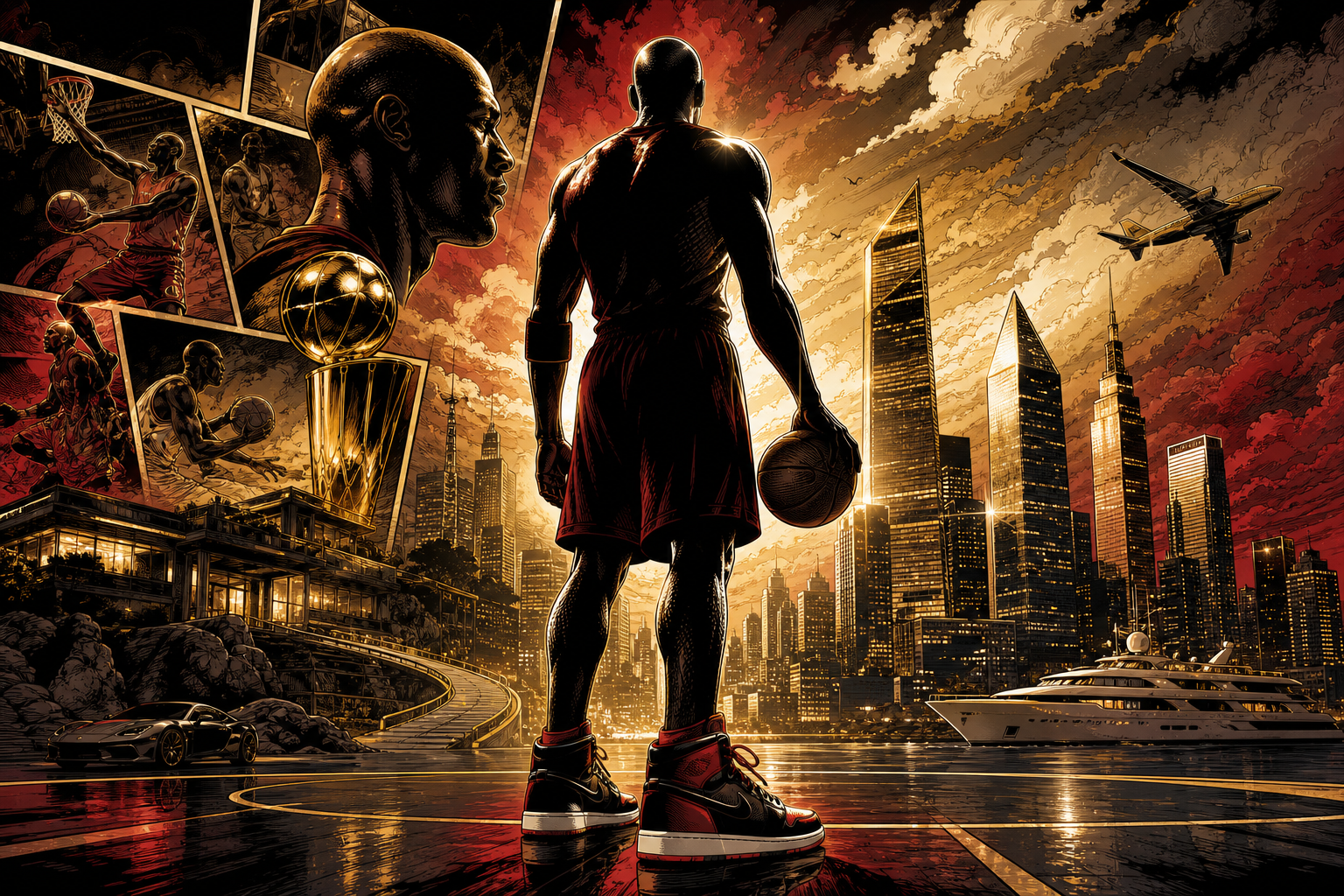
By 2023, Michael Jordan had joined the Forbes 400 with an estimated net worth of about $3 billion, becoming the first professional athlete to do it. That milestone was not really about basketball anymore. It was about the durability of myth when paired with smart corporate structure.
Jordan’s true creation was not just a shoe line or even a logo. It was a commercial afterlife. He found a way to convert competitive greatness into a product people keep paying to touch, wear, collect, and remember. The man stopped playing. The symbol kept scaling.
That is why Michael Jordan belongs in mogul history, not only sports history. He built a machine that monetizes aspiration itself. Every retro drop, every Jumpman hoodie, every kid lacing up a pair and imagining lift-off is another reminder that the most powerful brands do not simply sell goods. They sell a role in the legend.
💡 Key Insights
- ▸ Jordan's empire was not built by diversifying randomly. It was built by taking one mythic asset — his image — and extending it through licensing, scarcity, storytelling, and control.
- ▸ The Nike partnership worked because Jordan was never treated like a normal endorsement client. He became the center of a branded universe that could outlive his playing career.
- ▸ Owning the Charlotte Hornets did not define Jordan's wealth, but it proved he understood the move from talent income to asset ownership.