Min Kao: How Garmin Turned Satellite Signals Into a Durable Empire
Min Kao helped move GPS from specialized equipment into cockpits, boats, cars, wrists, and everyday decisions.

View all stories about this mogul
Min Kao helped build Garmin by turning signals from orbit into products people could trust on the ground, at sea, and in the air. The technology was sophisticated, but the commercial proposition was concrete: tell users where they are, where they are going, and whether they can depend on the answer.
Garmin’s first era was defined by the spread of satellite navigation. Its second was defined by a threat: smartphones made basic directions nearly free. The company survived by moving deeper into categories where reliability, sensors, battery life, and purpose-built design still mattered.
From Navigation Engineer to Hardware Founder
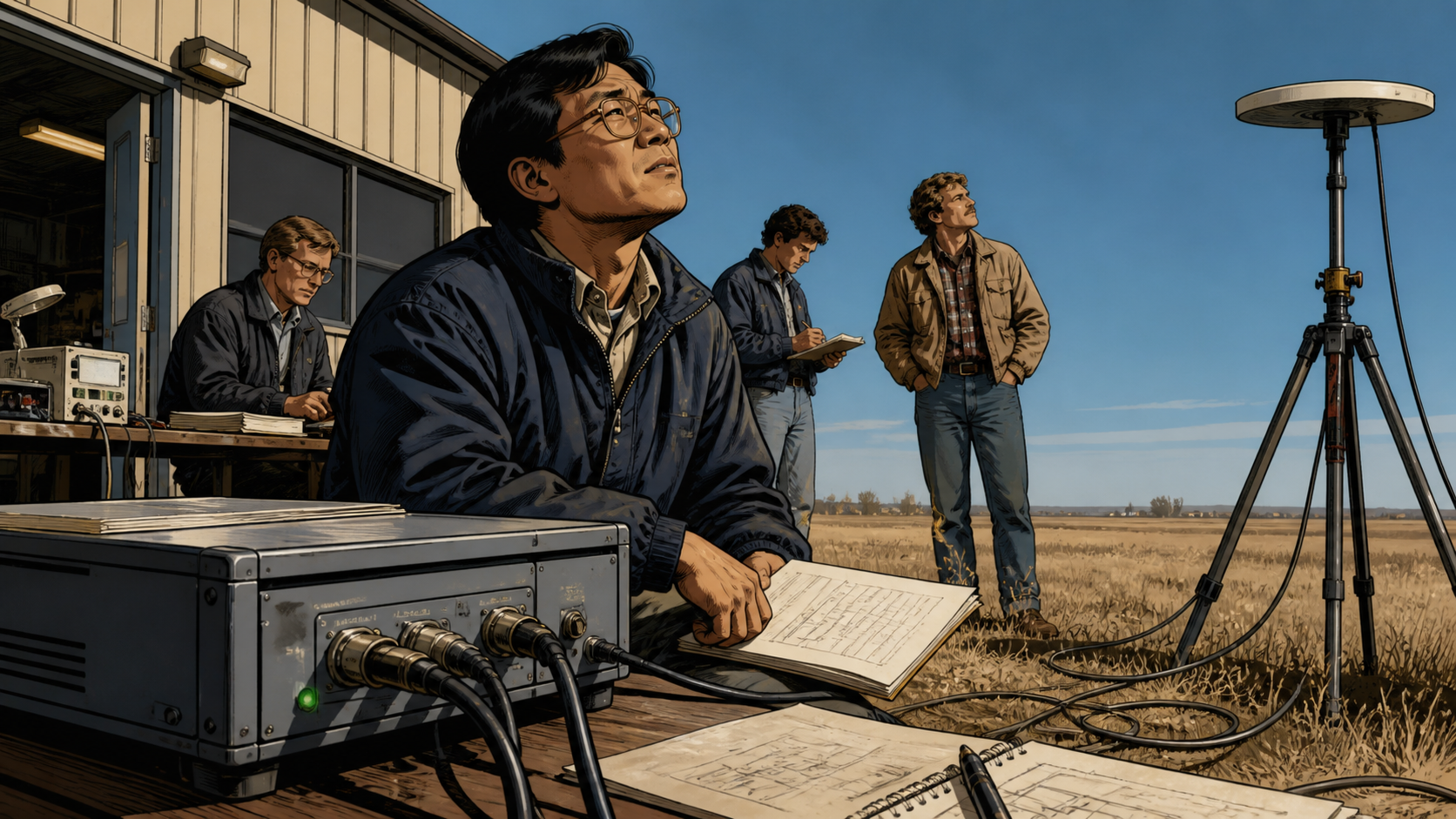
Kao was born in Taiwan, studied engineering, and developed expertise in navigation technology in the United States. In 1989 he co-founded the company that became Garmin with Gary Burrell. The name combined parts of their first names, but the business was built around a more demanding combination: radio engineering, software, maps, rugged hardware, and manufacturing discipline.
Early GPS receivers were expensive and specialized. Aviation and marine users were logical customers because location errors carried real costs. Pilots and boat operators valued instruments designed for glare, vibration, weather, limited cockpit space, and long operating sessions.
Serving those users forced Garmin to focus on dependability. A navigation product could not be impressive only during a demonstration. It needed readable displays, intuitive controls, accurate data, and support after purchase.
The founders kept engineering close to product decisions. That technical orientation helped Garmin convert improvements in satellites, chips, and displays into practical devices rather than treating GPS as a feature to be licensed from someone else.
Scaling GPS From Cockpits to Cars
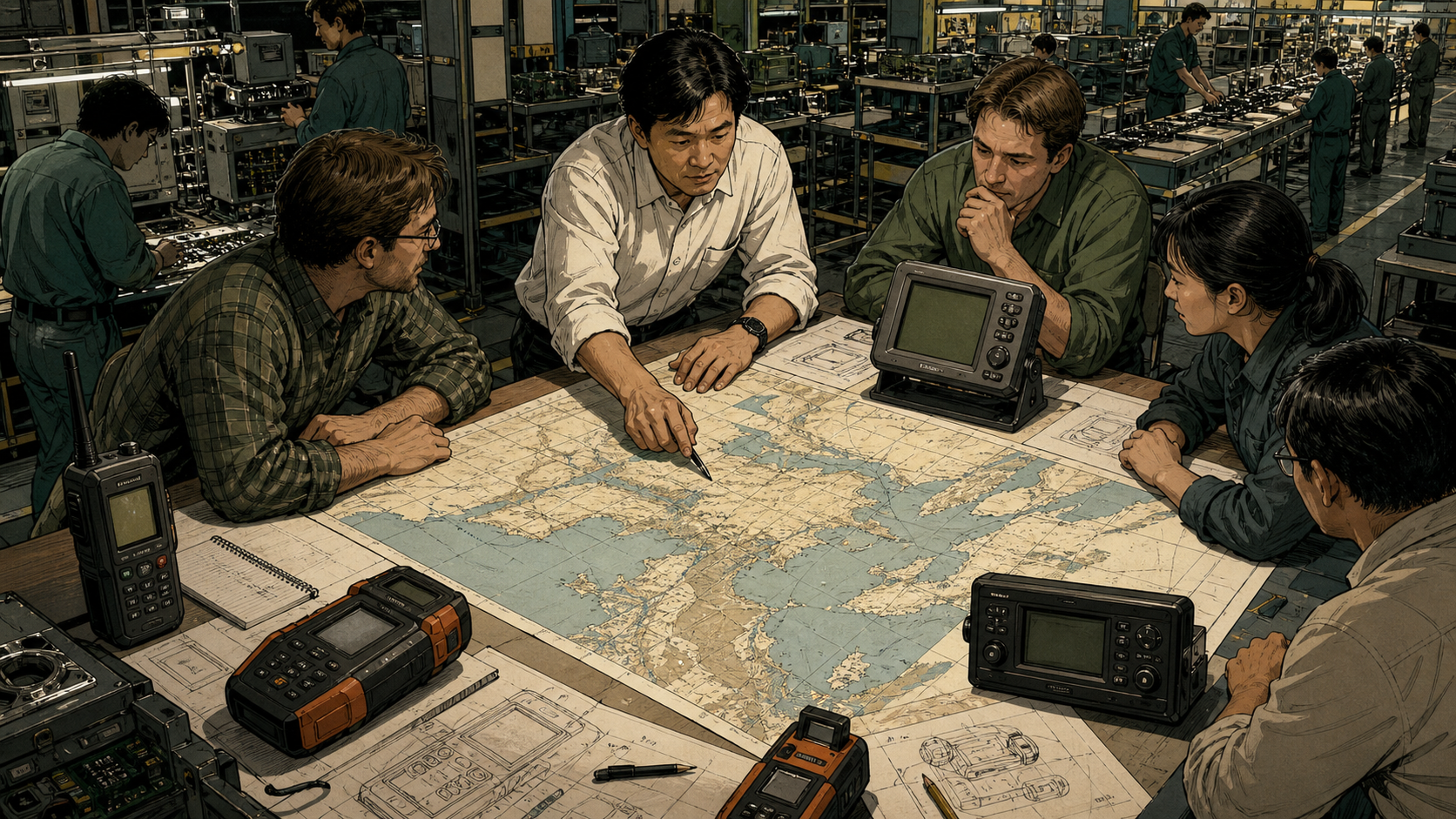
As GPS components became smaller and cheaper, Garmin expanded into handheld outdoor units and automotive navigation. Dashboard devices brought satellite guidance to mass-market consumers before phones could provide dependable turn-by-turn directions.
The expansion worked because much of the core capability was reusable. Satellite reception, positioning algorithms, mapping interfaces, and hardware design could be adapted across markets. Yet each category still required different distribution, certification, data, and user experience.
Garmin also maintained a degree of vertical integration. Designing products and controlling important parts of manufacturing made the organization more complex, but it allowed engineering changes to travel quickly from lab to production. It also reduced dependence on a single outside device maker whose priorities could shift.
The danger was obvious: automotive navigation looked enormous enough to define the company. When smartphones absorbed mapping and directions, a business concentrated only on dashboard units could have collapsed.
Surviving the Smartphone by Going Specialized
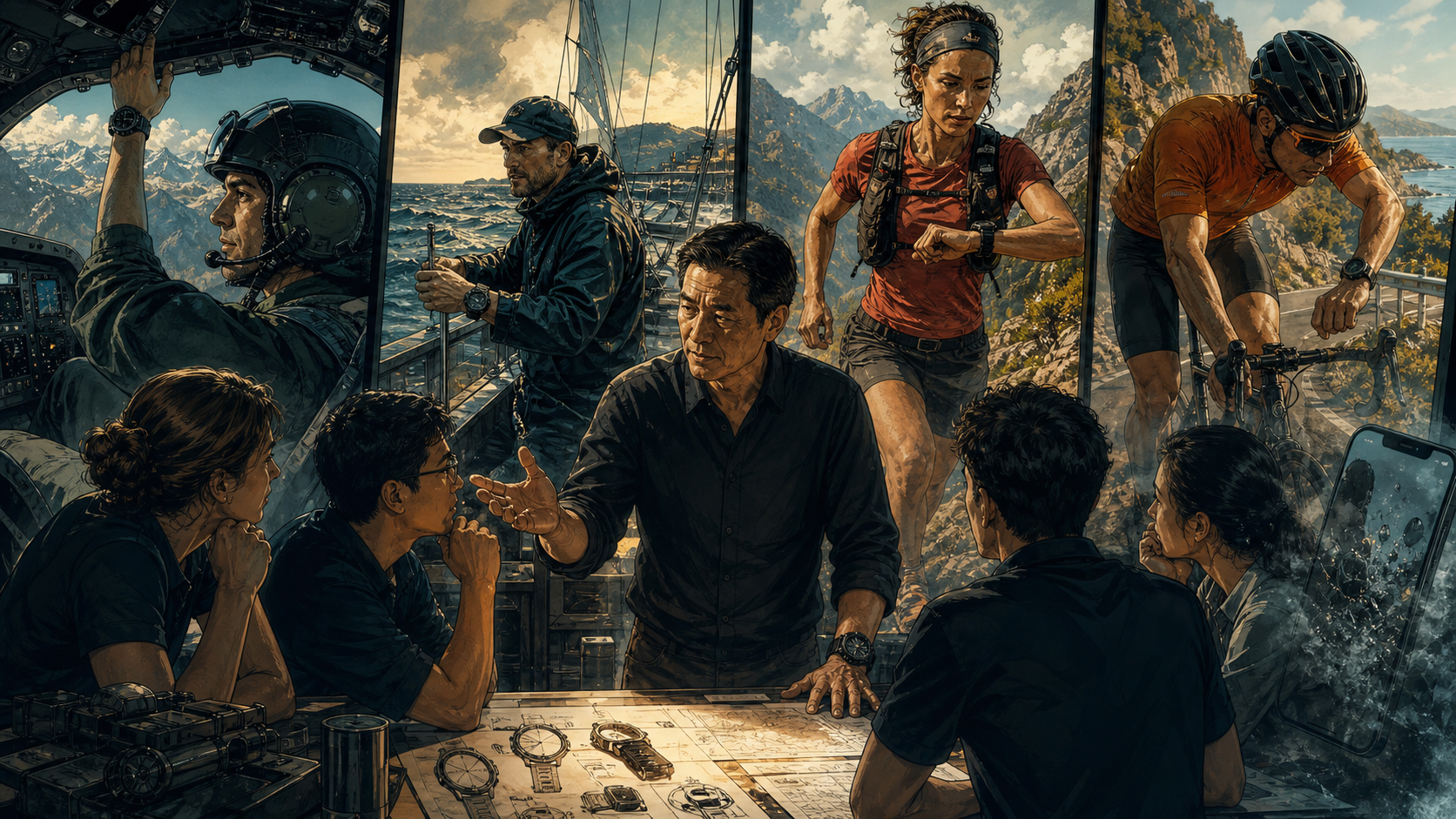
Garmin’s response was not to beat the smartphone at being a smartphone. It leaned into users who needed more specialized performance: pilots requiring certified avionics, sailors using marine electronics, runners tracking training, cyclists navigating long routes, and adventurers operating beyond reliable cellular coverage.
Wearables became a new platform for the company’s sensor and battery expertise. Competition was intense, but sports users often cared about metrics, ruggedness, buttons, battery life, and ecosystem depth more than a generic notification screen.
The portfolio created resilience. Aviation follows different cycles from consumer fitness. Marine customers have different replacement patterns from runners. No category is immune to competition, but the collection reduces dependence on a single technological wave.
Kao eventually stepped back from day-to-day leadership, leaving a company shaped by an engineer’s preference for products that work in demanding contexts. Garmin’s story shows how a technical business can survive commoditization: move from the feature everyone has toward the complete system a specific user cannot easily replace.
The satellite signal became universal. Garmin endured by making the receiver—and the decision built around it—specialized again.
💡 Key Insights
- ▸ Deep technical capability becomes commercial advantage when it is translated into reliable products for specific users.
- ▸ Vertical integration can protect quality and speed when hardware, software, mapping, and radio performance must work together.
- ▸ A threatened product category can survive by moving toward customers who value specialized reliability.
- ▸ Durability often comes from a portfolio of focused niches rather than dependence on one mass-market device.