Ole Kirk Christiansen: How LEGO Became a System for Endless Play
Ole Kirk Christiansen survived fire, depression, and wartime scarcity before plastic bricks turned his workshop into a global system of creative play.
View all stories about this mogul
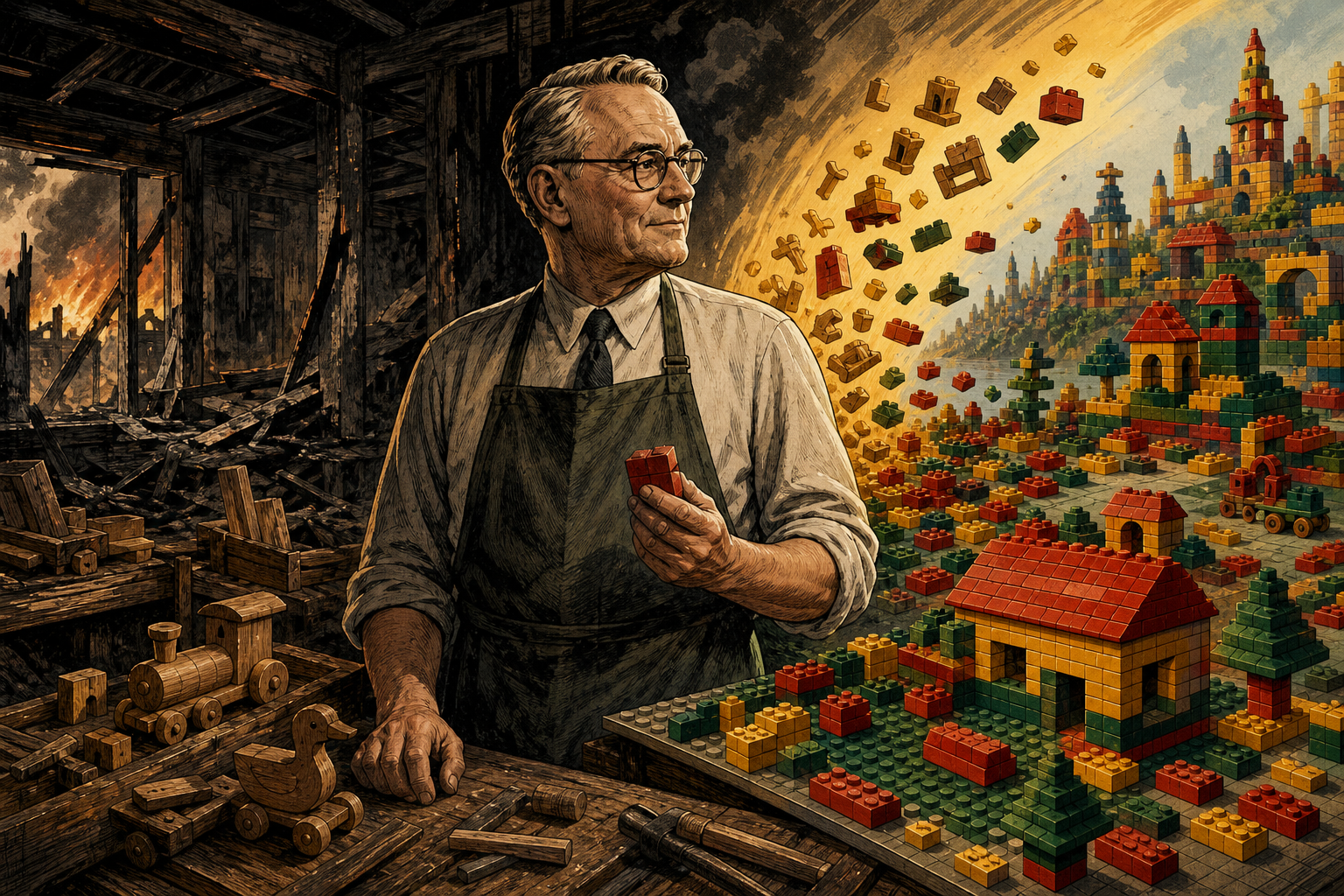
Ole Kirk Christiansen began with a woodworking shop in a small Danish town. His great breakthrough was not one toy but the belief that play could be organized as a durable, expandable system.
LEGO would become one of the world’s most recognizable companies through the precision of a plastic brick. Yet the business was forged through repeated disruption: economic depression, destructive fires, wartime scarcity, and a risky move from respected woodcraft into an unfamiliar material.
How did a carpenter’s crisis create a toy company?
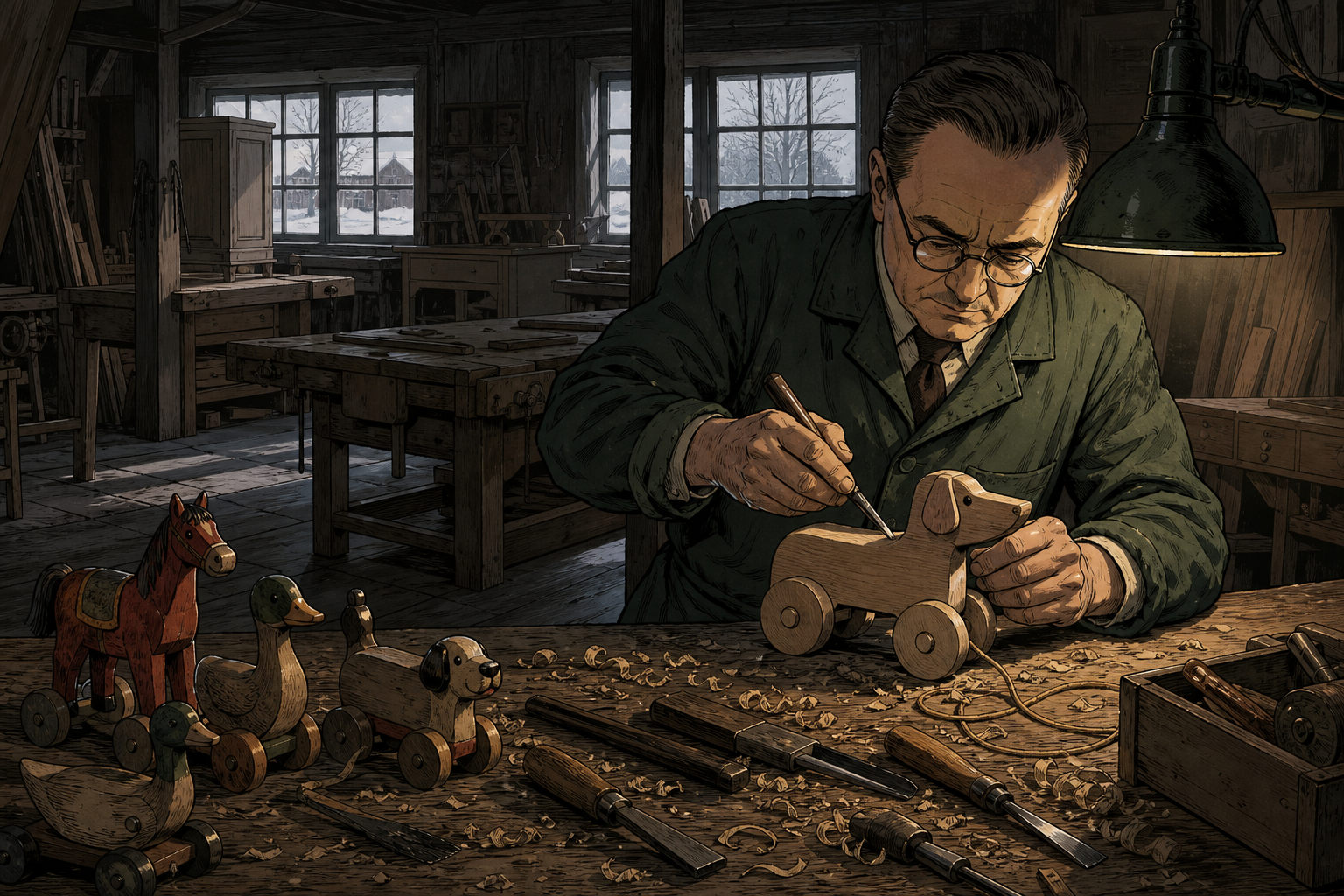
Christiansen was born in 1891 and established a carpentry business in Billund, Denmark. The shop produced practical items and worked on buildings, but the Great Depression reduced demand. To keep his craftsmen employed and use available wood, he increasingly made smaller household objects and toys.
Wooden animals, vehicles, and pull toys demanded accuracy and finish even when money was tight. Christiansen emphasized quality, a principle later captured by the family saying that only the best was good enough. The standard had economic value: a small workshop could not afford returns or a reputation for careless work.
In the 1930s the business adopted the name LEGO, derived from the Danish expression leg godt, meaning “play well.” The name described an activity rather than a particular product, leaving room for the company to evolve.
Fire repeatedly tested the enterprise. Workshops and inventory were destroyed, but Christiansen rebuilt. Each restart forced decisions about what the company should carry forward—craft discipline, play value, and the willingness to invest after loss.
Why did Ole Kirk Christiansen bet on plastic bricks?
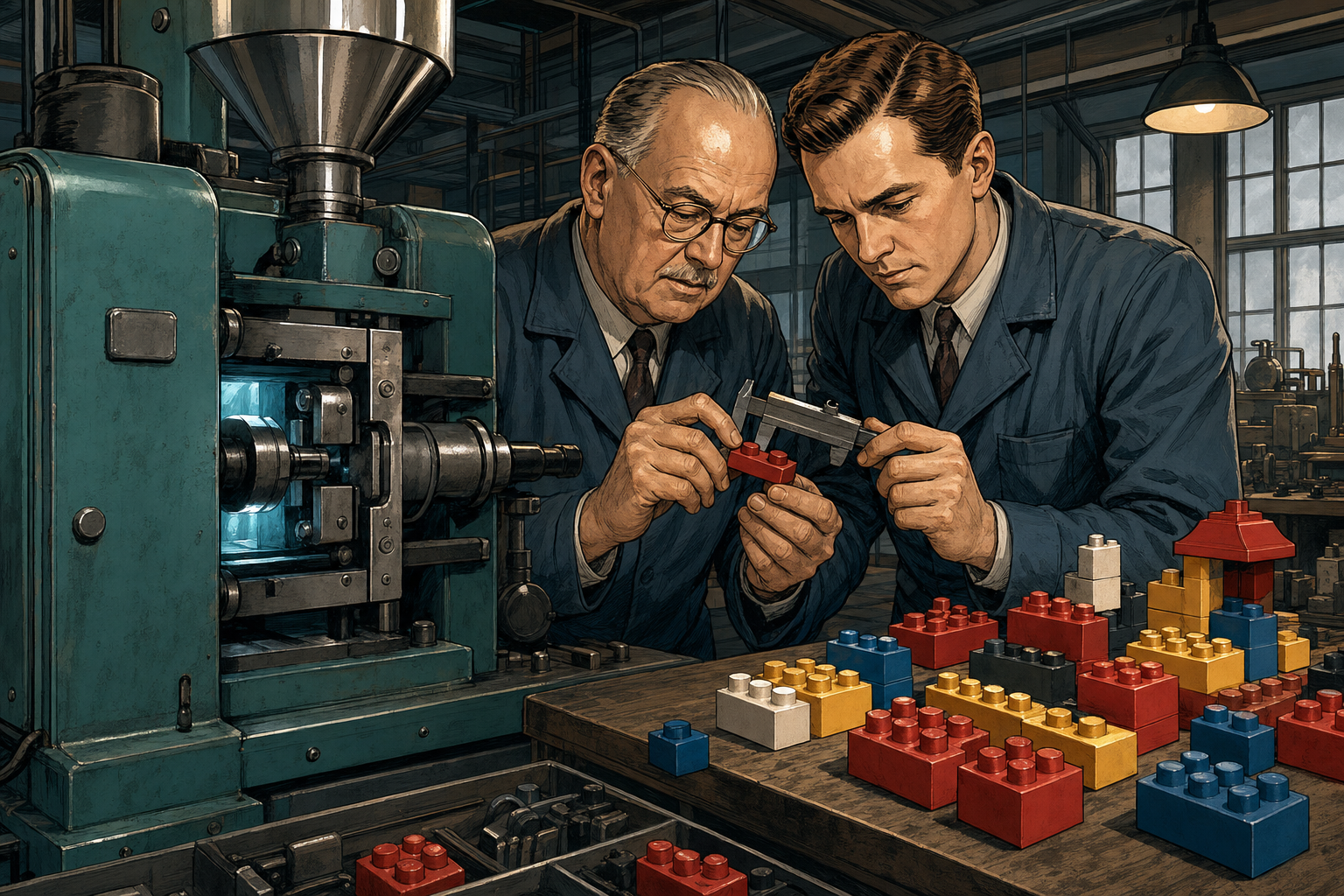
After World War II, plastic was a controversial choice for a company rooted in wood. Consumers and retailers associated quality toys with traditional materials, while molding equipment required significant capital. Christiansen nevertheless acquired a plastic injection-molding machine in the late 1940s.
The company experimented with products including early binding bricks, influenced by existing studded-brick concepts. Initial bricks could stack, but they lacked the firm, repeatable connection that later defined LEGO play. Improving clutch power required precise geometry, material consistency, and manufacturing tolerances.
Plastic offered something wood could not: identical components produced at scale. That mattered only if the components worked together. A brick was less valuable as a standalone object than as one unit in a growing vocabulary of structures.
The transition was gradual. Wooden toys remained important, and the plastic system needed years of refinement. Christiansen’s willingness to fund the unfamiliar material gave the next generation a platform rather than a finished answer.
How did the LEGO brick become more valuable with every set?
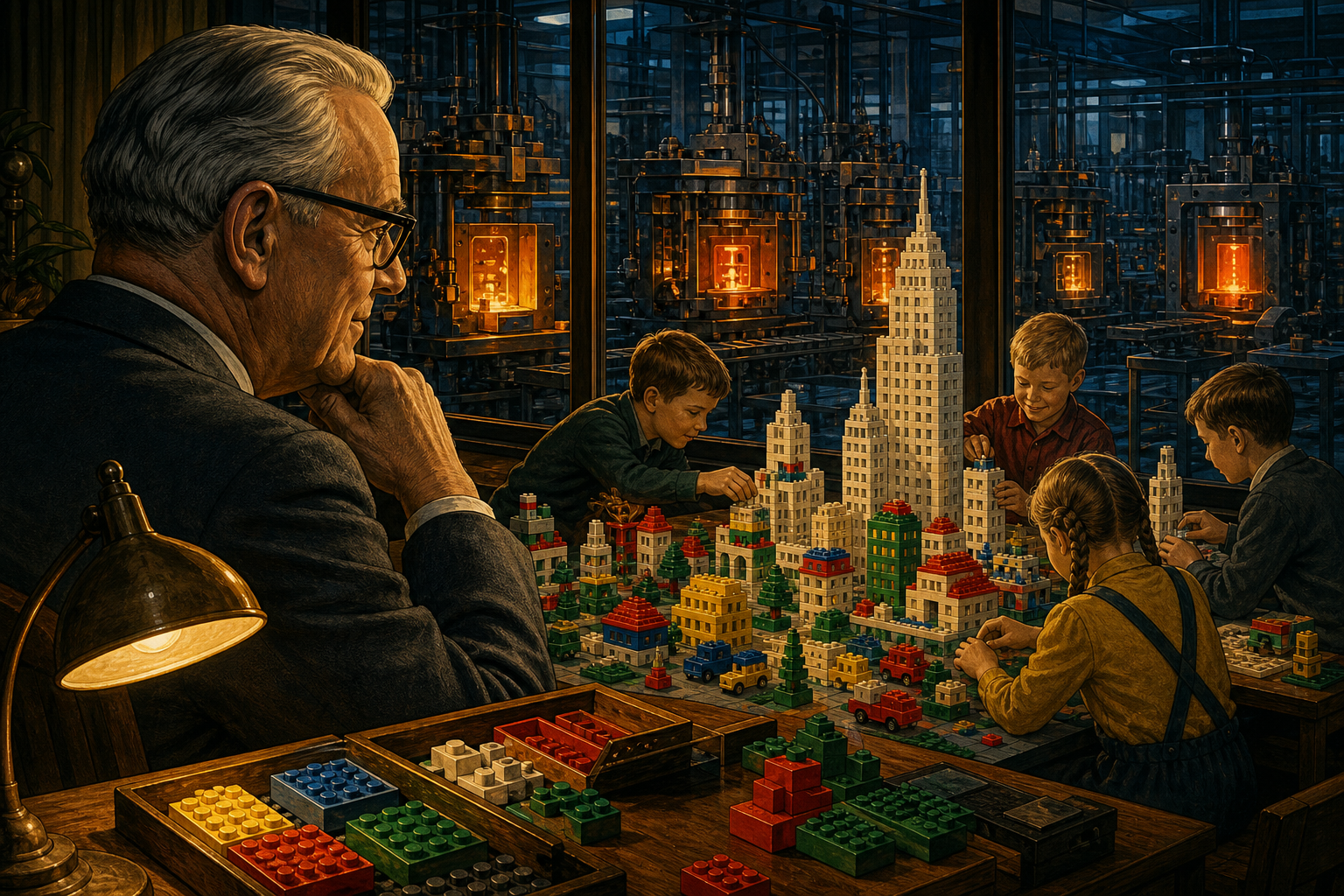
Godtfred Kirk Christiansen, Ole’s son, increasingly shaped the system idea. Products should fit together, encourage many uses, serve different ages, and maintain compatibility. In 1958 the company patented the modern stud-and-tube brick design, which produced a stronger, more versatile connection.
Ole died that same year. He did not see the full global expansion, but the foundations were in place: a memorable purpose, uncompromising manufacturing, a modular product, and a family leadership transition centered on the same idea of play.
Compatibility created compounding value. A new set did not replace the old one; it increased what existing bricks could become. That encouraged collecting without making yesterday’s purchase obsolete. Tight tolerances protected the promise across factories, colors, shapes, and decades.
LEGO later faced severe strategic challenges, expanded beyond its operational strengths, and then recovered by returning attention to the core system. The company’s films, games, parks, and licensed themes matter, but the brick remains the grammar connecting them.
Christiansen’s story is often presented as perseverance through fire and poverty. The deeper business lesson is architectural. He moved from making complete wooden objects to enabling customers to make their own objects from standardized parts. That shift turned a toy into a platform—and made imagination, rather than any one finished model, the product that could scale without end.
💡 Key Insights
- ▸ A modular system can create more value than a catalog of disconnected products.
- ▸ Quality becomes strategic when every component must remain compatible with every other one.
- ▸ New materials win when they preserve the customer's core behavior while expanding possibilities.
- ▸ Family businesses endure when the next generation turns founder values into product architecture.