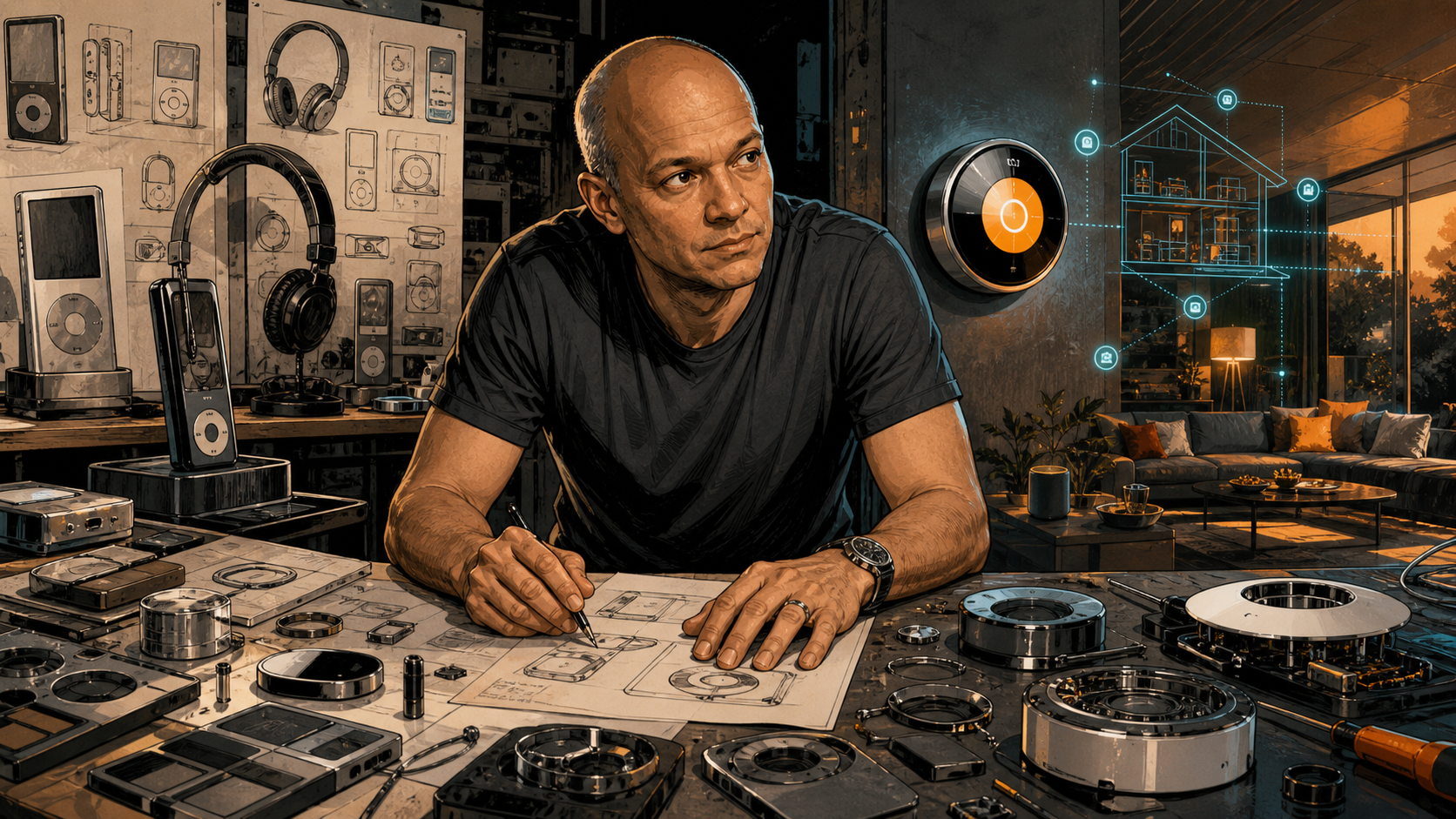
Tony Fadell: The Product Builder Behind the iPod, Nest, and a New Hardware Playbook
Tony Fadell helped turn digital music into a pocket habit, reinvented the thermostat at Nest, and built a career around the unforgiving mechanics of physical products.
View all stories about this mogul
Tony Fadell’s career is a reminder that hardware does not care about a persuasive demo. The battery must last, the parts must arrive, the device must survive a drop, and millions of people must understand it without instructions.
Fadell helped lead the team that created Apple’s iPod, then cofounded Nest and turned the thermostat into a symbol of the connected home. The products look inevitable in retrospect. They were not. Each required technology, manufacturing, software, distribution, and timing to converge.
His story is less about a lone inventor than about a product integrator: someone willing to force dozens of imperfect systems into one experience coherent enough to feel simple.
How Did the iPod Turn Constraints Into a Product?
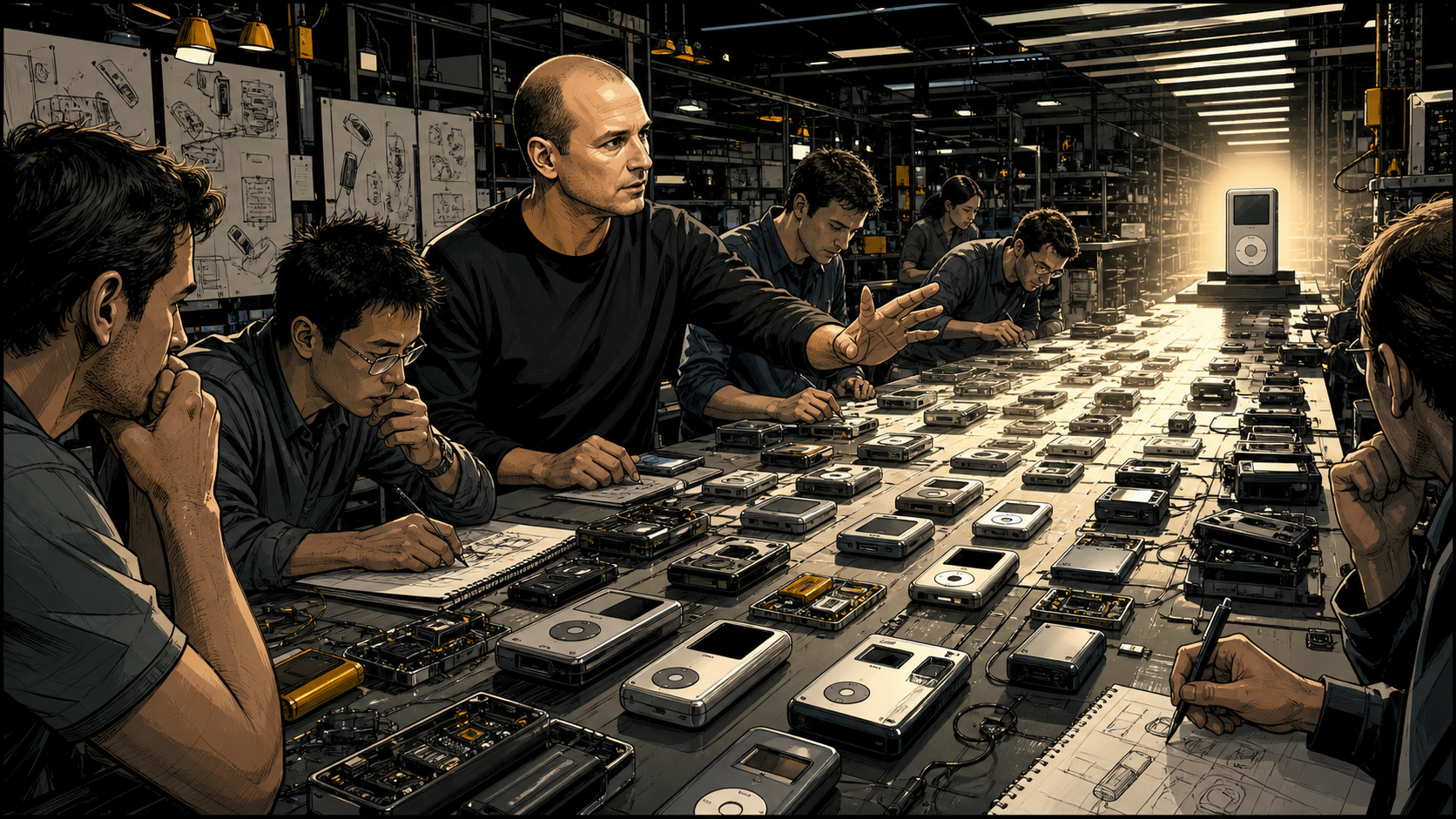
Before Apple, Fadell worked on mobile computing and tried to build a digital-music company of his own. The market already contained portable MP3 players, but many were slow, awkward, low-capacity, or burdened by terrible software. The opportunity was not to prove digital music could be portable. It was to make the entire system pleasant.
Apple brought Fadell in around 2001 to lead a small, urgent project. The team had to choose storage, battery, display, controls, software synchronization, industrial design, and suppliers on an extraordinary schedule.
The first iPod’s promise was systemic. A fast connection moved music from computer to device. A hard drive held a large library. The scroll wheel made navigation physical and immediate. Apple’s desktop software organized the collection. The product was not just a player; it was a chain with fewer weak links.
This is the core of Fadell’s product method. Consumers experience the slowest or most confusing part of a system, not the average quality of its components. A beautiful device with unreliable synchronization is unreliable. Excellent software with bad battery life is bad.
Apple’s organization supplied leverage: industrial design, engineering talent, supplier relationships, retail presence, and the authority to make hard tradeoffs. Fadell’s role was to turn urgency into decisions. Hardware teams cannot keep every option open. Tooling and component orders make indecision expensive.
The iPod grew into a broader platform and helped pull Apple toward the mobile future. Fadell worked through multiple generations, learning the operational rhythm that separates a prototype from a product line: yearly releases, cost reductions, supplier negotiation, quality control, and millions of support cases.
Why Did Nest Start With a Thermostat?
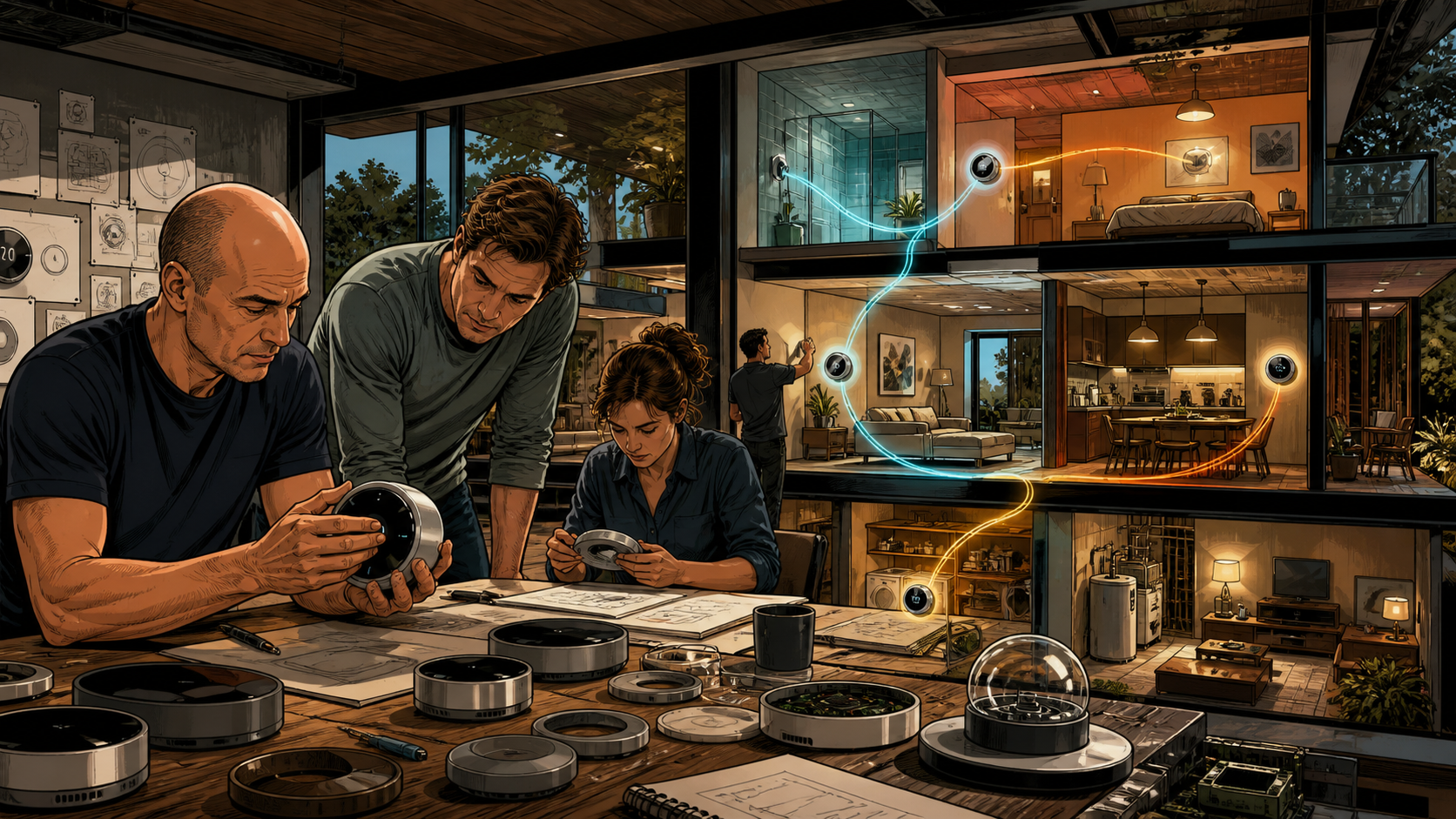
After leaving Apple, Fadell confronted an object most technology companies ignored. Thermostats controlled a meaningful share of household energy use, yet many were confusing, unattractive, and programmed poorly or not at all.
That made the category ideal and dangerous. The incumbent products were unloved, which created room for design. But thermostats interact with varied wiring, heating systems, installation practices, utility economics, and safety expectations. A startup could not simply attach Wi-Fi to a dial and declare victory.
Nest’s learning thermostat combined a desirable physical object with sensors, software, remote control, and automation. The circular form made the product familiar. The interface reduced setup friction. The promise was both emotional and economic: a device people would notice that could help reduce wasted energy.
The company expanded into smoke alarms and cameras, testing whether one admired device could become a smart-home platform. That move exposed the difficulty of hardware portfolios. Each category has different replacement cycles, regulations, reliability expectations, and competitors.
Google agreed to acquire Nest in 2014 for $3.2 billion. The deal offered capital, cloud infrastructure, distribution, and a path into the connected home. It also brought cultural friction. A tightly integrated hardware startup and a vast software company do not naturally share the same decision speed, incentives, or tolerance for centralized control.
Fadell left Nest in 2016. As with many founder acquisitions, the transaction delivered scale while making operating differences impossible to avoid. The product survived, but the vision became part of a much larger corporate system.
Nest’s deeper contribution was to show that ordinary infrastructure could become a consumer-technology category. The thermostat was no longer a beige utility on the wall. It was a designed interface to the home.
What Is Fadell’s Hardware Playbook After Nest?

Through Build Collective and other work, Fadell shifted from operating one product company to advising and backing many. His focus has included climate, health, materials, and other categories where physical systems matter.
The playbook begins with pain, not technology. What repeated frustration is strong enough to change behavior? Then comes the system map: user, installer, supplier, regulator, retailer, software service, and eventual repair or disposal.
Hardware founders must validate risk in the right order. A polished enclosure cannot rescue an impossible bill of materials. A cheap prototype cannot prove mass-production yield. A clever sensor cannot overcome an installation process customers refuse to complete.
Fadell’s career also argues for visible failure. Prototypes exist to expose what is wrong before factories multiply it. Teams need a cadence that makes bad assumptions cheap to discover and psychologically safe to discard.
Climate hardware raises the stakes. Batteries, heat pumps, grid devices, and new materials must work inside regulated, capital-intensive systems. The consumer-product instinct for simplicity remains useful, but it must coexist with infrastructure economics and long service lives.
There is a tension in the Fadell mythology. Celebrating one decisive product leader can obscure the teams, suppliers, and institutional advantages behind every device. Yet integration itself is a real skill. Someone must hold the complete experience in mind while specialists optimize their pieces.
The real lesson is that simplicity is manufactured. It comes from confronting complexity early, assigning tradeoffs clearly, and refusing to let the customer inherit the organization’s confusion.
💡 Key Insights
- ▸ Great hardware products coordinate technology, manufacturing, software, distribution, and timing—not industrial design alone.
- ▸ An overlooked object can become a platform when the redesign improves both daily experience and system economics.
- ▸ Acquisition provides scale but can expose incompatible operating cultures.
- ▸ Prototype velocity matters because physical products make mistakes expensive after launch.