Tony Fernandes: The One-Ringgit Bet That Built AirAsia’s Low-Cost Machine
Tony Fernandes bought a struggling Malaysian airline for a symbolic price, then used fast turns, direct sales, and regional density to make flying accessible across Southeast Asia.
View all stories about this mogul
Tony Fernandes bought an airline when the industry looked hostile, the company carried debt, and flying remained unaffordable for much of Southeast Asia.
The symbolic purchase price made the story memorable. The liabilities made it real.
Fernandes’s bet was that low fares could create passengers who did not yet exist. Southeast Asia had dense populations, growing incomes, fragmented geography, and millions of trips still made slowly by road, rail, and ferry.
Demand was waiting. The challenge was building an airline cheap enough to unlock it.
Buying the Problem for One Ringgit
Fernandes had worked in music and media before entering aviation. That background looked unconventional, but it shaped his instincts about branding, pricing, and mass-market demand.
In 2001, he and his partners took control of AirAsia from a Malaysian government-linked conglomerate for a token sum while assuming substantial debt. The airline had a small fleet and a weak position.
The timing could hardly look worse. The aviation industry was dealing with the shock that followed the September 11 attacks. Traffic confidence had fallen, aircraft capacity was available, and established carriers viewed the environment defensively.
Fernandes saw lower asset and leasing costs, talent availability, and an opening to reset the company around a single promise: ordinary people should be able to fly.
That promise required more than cheap tickets. Selling below a full-service carrier while operating like one would only accelerate losses. AirAsia needed a different cost structure.
The team stripped the model to essentials: simple fares, direct distribution, high aircraft utilization, quick turnarounds, dense seating, and limited included service. Optional extras could be sold separately to passengers who valued them.
The brand made the model feel democratic rather than deprived. Low cost was presented as access.
The Turnaround Machine
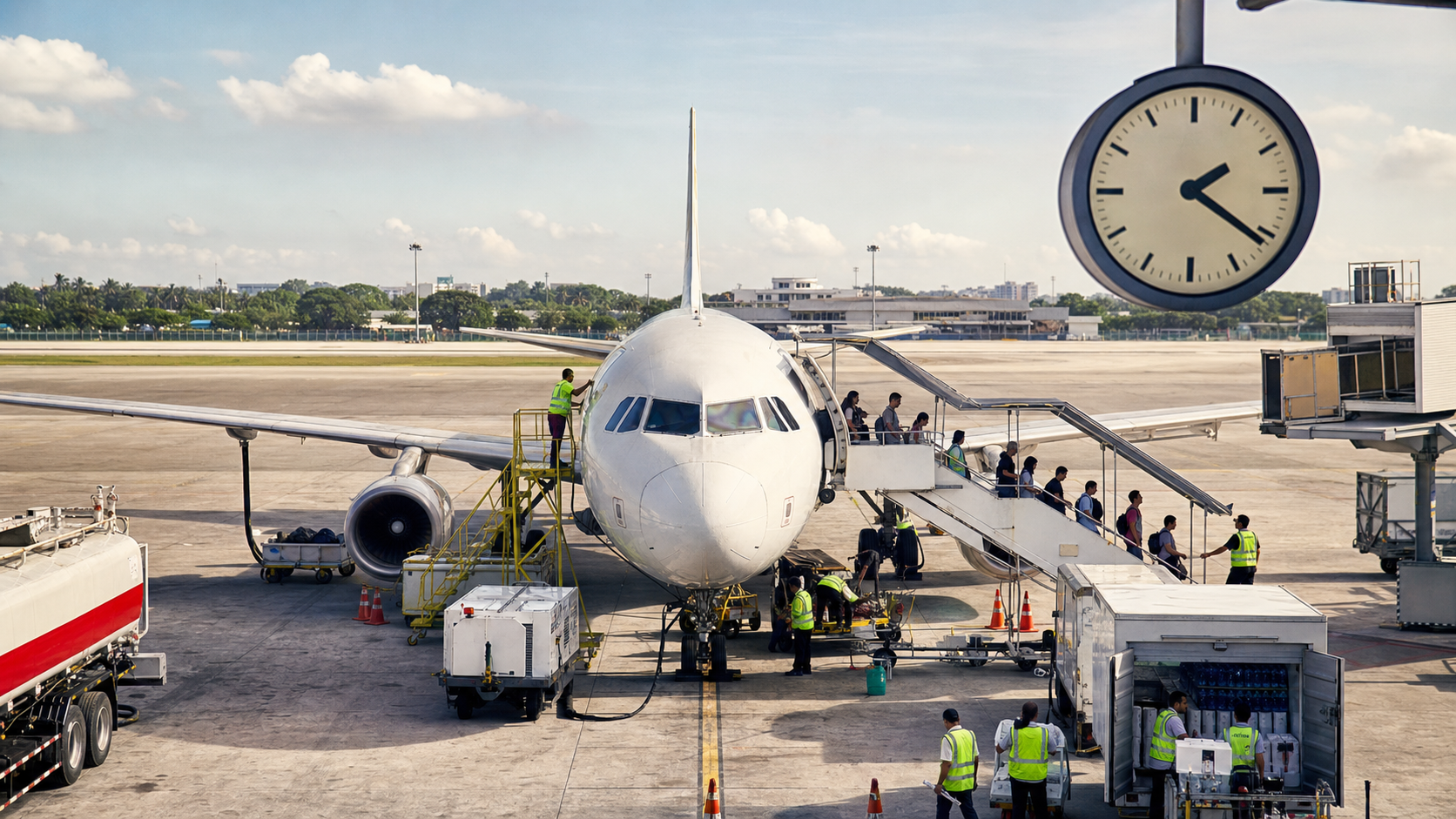
An aircraft earns revenue in the air and consumes capital on the ground. That fact shaped the operating system.
Fast turns increased daily flying hours. A standardized narrow-body fleet simplified pilot training, maintenance, spare parts, and scheduling. Direct internet sales reduced reliance on travel agents. Point-to-point routes avoided the complexity and missed-connection risk of a traditional hub-and-spoke network.
These choices reinforced one another:
- A simpler fleet made schedules and maintenance more predictable.
- Predictability made fast turns easier.
- Fast turns increased utilization.
- Higher utilization spread ownership and staffing costs across more seats.
- Lower unit cost supported lower fares.
- Lower fares stimulated demand and improved load factors.
Ancillary revenue added another lever. Food, baggage, seat selection, and other optional services allowed the headline fare to stay low while passengers paid for what they used.
The system worked only with discipline. A delay can cascade through a tightly utilized fleet. Aggressive schedules require excellent maintenance and ground coordination. A low fare leaves little room for operational waste.
The public saw price. The real product was repeatable execution.
Turning Geography Into a Network
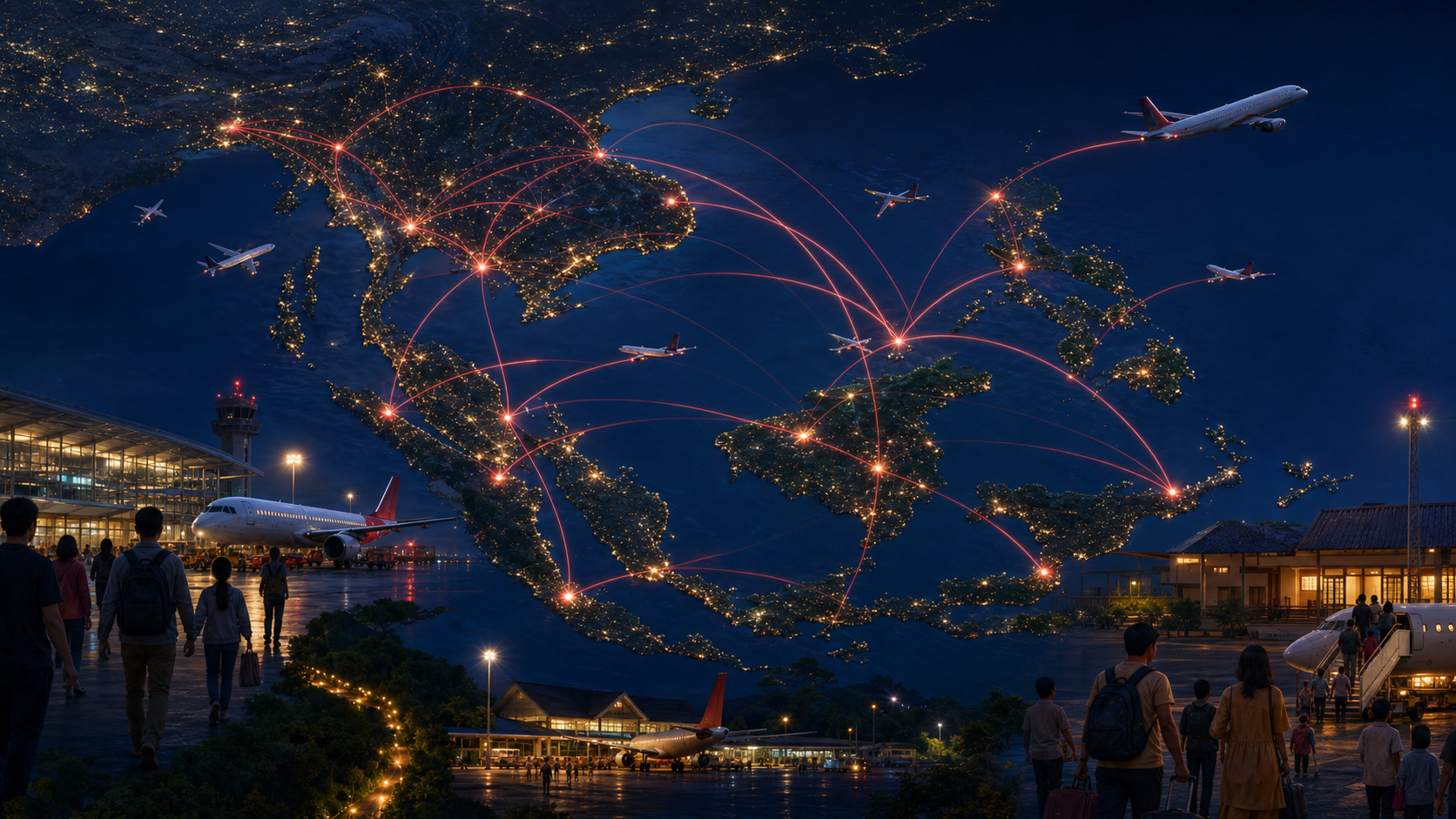
Southeast Asia is unusually suited to short-haul aviation. Large cities, islands, borders, and long surface journeys create routes where flying saves enormous time.
Traditional airlines often concentrated on premium travelers and major capitals. A low-cost carrier could connect secondary cities, stimulate tourism, and make family or business trips possible for customers who had never considered air travel.
As AirAsia added destinations, the network became more useful. More routes increased brand familiarity and fed demand across the system. Expansion through affiliates allowed the model to enter countries with their own ownership rules and operating realities.
The approach also supported regional tourism. A low fare does not merely take share from another airline. It can create a weekend trip, bring visitors to a smaller destination, or let a migrant worker return home more frequently.
That demand stimulation is the core of the model. An airline cannot cut its way to growth forever. It must uncover trips that were previously too expensive.
Fernandes was also an unusually visible operator. He used publicity, informal communication, and a challenger identity to make the airline feel close to its customers and staff. The personality helped distribution, but it sometimes blurred the line between founder, brand, and corporation.
A strong founder can make a company memorable. A durable airline still needs systems that work when the founder is not in the room.
Grounding, Debt, and the Cost of Survival
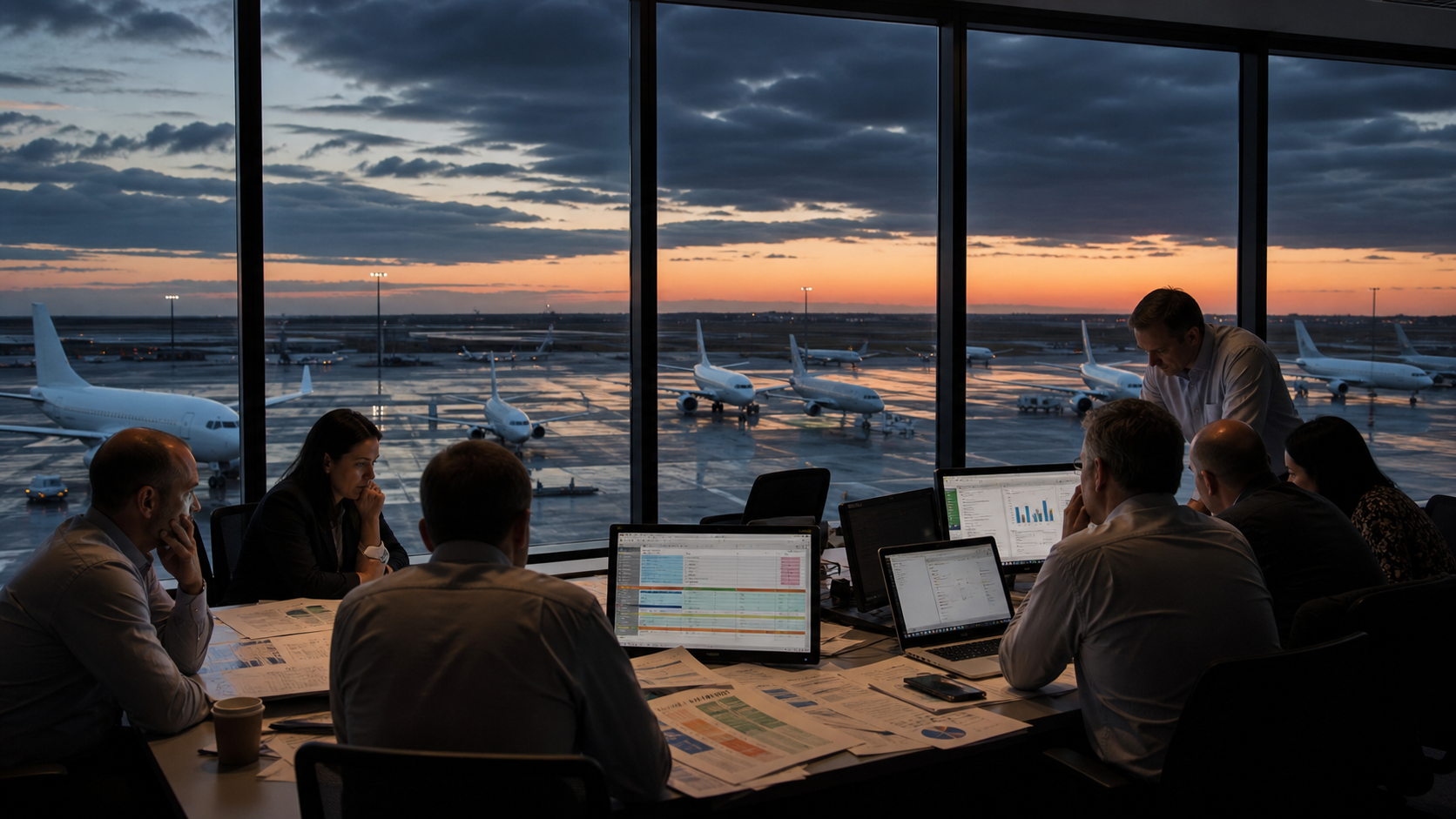
The pandemic attacked aviation at its weakest point: fixed costs continued while passenger revenue disappeared.
Aircraft were grounded, borders closed, refunds accumulated, and employees faced painful uncertainty. A machine optimized for high utilization could not operate its way out of a world where flying stopped.
The crisis exposed the difference between operating efficiency and balance-sheet resilience. Low unit cost is powerful when aircraft fly. Liquidity, debt structure, lease obligations, and stakeholder trust determine survival when they do not.
AirAsia and its wider corporate group pursued restructuring, fundraising, liability management, and a broader digital narrative. The recovery required rebuilding schedules and traveler confidence while dealing with the financial damage left by the shutdown.
That period complicates the simple founder legend. Fernandes had proved that disciplined low-cost operations could transform regional travel. The same ambition also produced a sprawling organization whose recovery was harder to explain than its rise.
The lasting business lesson is not that cheap always wins. It is that price must be engineered.
Every low fare rested on a chain of decisions about aircraft, time, distribution, service, airports, and demand. Break enough links and the advantage disappears. Keep them aligned and a company can expand a market instead of merely competing inside it.
Tony Fernandes’s one-ringgit deal worked because the purchase price was never the real bet. The real bet was that millions of people wanted to fly, and that a different operating system could finally make the economics fit.
💡 Key Insights
- ▸ Low fares are the output of an operating system, not a marketing discount.
- ▸ Standardized fleets, fast turns, direct sales, and high utilization reinforce one another.
- ▸ Southeast Asia's fragmented geography became an advantage when route density stimulated new demand.
- ▸ The pandemic showed that an efficient growth machine can still be vulnerable to balance-sheet shocks.