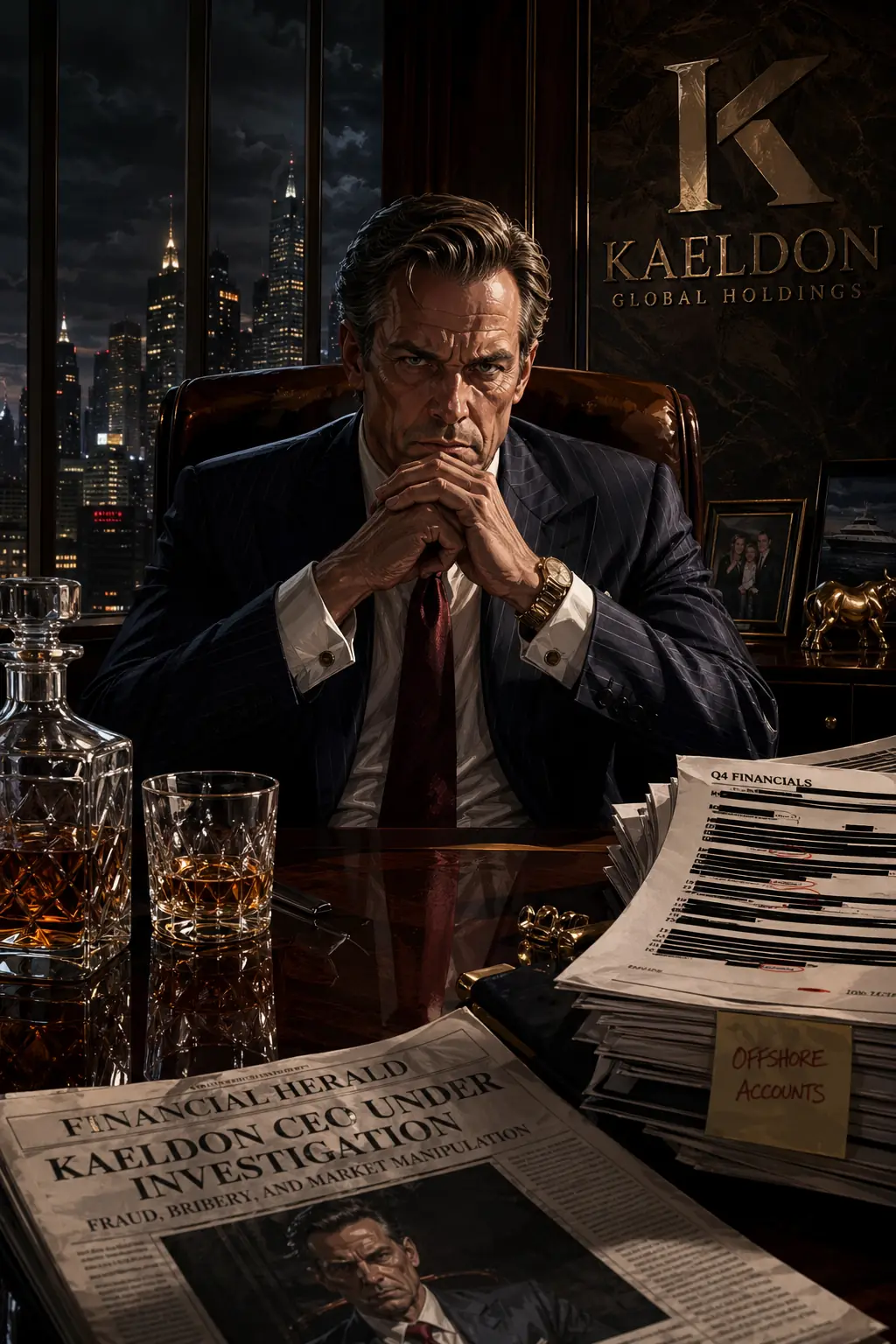
Walt Disney: The Man Who Built a $200 Billion Kingdom from a Mouse He Drew on a Train
Bankrupt at 21, betrayed at 26, told Snow White would destroy him — Walt Disney turned every catastrophic failure into the blueprint for a global empire.
View all stories about this mogul
On December 15, 1966, ten days after his sixty-fifth birthday, Walt Disney died of lung cancer in a hospital room at St. Joseph’s across the street from his studio in Burbank. He left behind a media company valued at roughly $80 million. Today, The Walt Disney Company is worth over $200 billion. It owns Marvel, Pixar, Lucasfilm, ABC, ESPN, a cruise line, and theme parks on three continents that host more than 150 million visitors a year.
But the man who built all of this went bankrupt before he turned 22. He was betrayed by his distributor and lost his first successful character. Hollywood told him his masterpiece would be a career-ending disaster. Bankers laughed him out of their offices when he pitched a theme park.
Walt Disney didn’t just get knocked down. He got annihilated — repeatedly — and every single time, he came back with something bigger, bolder, and more audacious than what he’d lost.
This is the story of the most relentless dreamer in American business history. It’s also a story about what happens when a man’s imagination is bigger than his bank account — and he bets everything anyway.
🎨 Chapter 1: The Kid from Marceline — Origins and Early Ambitions (1901–1919)

Walter Elias Disney was born on December 5, 1901, in the Hermosa neighborhood of Chicago to Elias and Flora Disney. His father was a carpenter, farmer, and — critically — a serial business failure. Elias Disney bounced from venture to venture, dragging the family from Chicago to a farm in Marceline, Missouri, then to Kansas City, then back to Chicago. The man couldn’t catch a break.
But Marceline — that brief, idyllic stretch of small-town rural America — lodged itself permanently in Walt’s brain. The farm, the animals, the main street, the sense of community. Decades later, when Disney designed Main Street U.S.A. at Disneyland, he was building Marceline from memory. The most visited tourist destination on Earth started as a kid’s nostalgia for a Missouri farming town.
The First Hustle
Walt started drawing young. Really young. At seven, he was sketching the animals on the Marceline farm. By the time the family moved to Kansas City, young Walt was taking Saturday classes at the Kansas City Art Institute. His father thought art was a waste of time. His father was wrong about a lot of things.
When World War I broke out, Walt was sixteen — too young to enlist. So he dropped out of high school and joined the Red Cross Ambulance Corps by lying about his age on his passport application. He spent a year in France, driving ambulances decorated with his own cartoons. While other ambulance drivers came home with trauma, Walt came home with a plan: he was going to be an artist. A commercial artist. An artist who got paid.
In 1919, at eighteen years old, Walt Disney returned to Kansas City with exactly zero dollars, zero connections, and an absolute conviction that he was going to make cartoons for a living.
Nobody — and I mean nobody — thought this was a good idea.
💸 Chapter 2: Laugh-O-Gram and the First Bankruptcy (1920–1923)

Back in Kansas City, Walt landed a job at the Pesmen-Rubin Commercial Art Studio, where he met a fellow artist named Ub Iwerks. This is one of those partnerships that changes history. Iwerks was a technical genius — arguably the best animator who ever lived — but he had zero business sense and crippling shyness. Disney was the opposite: mediocre at the actual drawing but absolutely electric as a salesman, showman, and idea generator.
They needed each other. They’d need each other for the next two decades.
The Kansas City Dream
Walt bounced from job to job, eventually landing at the Kansas City Film Ad Company, where he learned the basics of animation. He was immediately obsessed. Animation was a brand-new medium — barely fifteen years old — and Walt saw infinite potential where everyone else saw novelty.
In 1921, at the age of twenty, Walt founded his first company: Laugh-O-Gram Studio. He hired a small team of animators — including Iwerks — and started producing modernized fairy tales as short animated films. Cinderella. Puss in Boots. Jack and the Beanstalk. The animations were crude by later standards, but they were charming, inventive, and — this is key — they told stories. Walt was never interested in animation as a technical exercise. He cared about story. Always story.
He secured a distribution deal with a New York company called Pictorial Clubs. They agreed to pay $11,100 for six completed fairy tale shorts. Walt poured everything into production. He hired more animators. He expanded the studio. He was twenty years old and running a real business.
Then Pictorial Clubs went bankrupt.
The Crash
They never paid. Not a cent of the $11,100. And Walt had already spent money he didn’t have. The studio’s debts piled up. Walt couldn’t pay his animators. He couldn’t pay rent. He couldn’t afford to eat — at one point, he was surviving on canned beans and scraps from a restaurant owner who took pity on him.
On May 5, 1923, Laugh-O-Gram Studio officially filed for bankruptcy. Walt Disney was twenty-one years old, flat broke, and wearing the only pair of shoes he owned, which had holes in the soles.
Most people would have quit. Gone and gotten a real job. Become a commercial illustrator or a sign painter or literally anything stable.
Walt bought a one-way train ticket to Hollywood.
“I think it’s important to have a good hard failure when you’re young,” Disney said years later. “I learned a lot out of that. Because it makes you kind of aware of what can happen to you. Because of it, I’ve never had any fear in my whole life when we’ve been near collapse and all of that. I’ve never been afraid.”
That’s not bravado. That’s a man who already lost everything once and discovered he could survive it. That knowledge is worth more than any investment.
🐰 Chapter 3: Hollywood, Oswald, and the Betrayal That Changed Everything (1923–1928)

Walt arrived in Hollywood in July 1923 with $40 in his pocket and a suitcase containing one unfinished film reel. His older brother Roy was already in Los Angeles, recovering from tuberculosis. Roy was the cautious one, the financial mind, the guy who actually understood balance sheets. Together they pooled $500 — including $200 from their uncle — and set up a tiny studio in their uncle’s garage.
The Disney Brothers Cartoon Studio was born. It was literally two guys in a garage. Sound familiar?
Alice in Cartoonland
Their first break came from an unlikely place: that unfinished film reel Walt had brought from Kansas City. It was called Alice’s Wonderland — a series that combined live-action footage of a real little girl with animated cartoon characters. Walt pitched it to Margaret Winkler, one of the few female distributors in the film industry, and she bit. She ordered a series of “Alice Comedies.”
For the next four years, the Disney studio churned out Alice Comedies. They weren’t masterpieces, but they paid the bills. Walt brought Ub Iwerks out from Kansas City. He hired more animators. The studio grew from a garage to an actual building on Hyperion Avenue in Los Angeles. Things were looking up.
By 1927, the Alice series had run its course, and Walt needed a new character. He created Oswald the Lucky Rabbit — a floppy-eared, mischievous cartoon rabbit that became a genuine hit. Universal Pictures distributed the Oswald shorts, and Walt finally had something resembling success.
Then came the meeting that would define his entire career.
The Knife in the Back
In February 1928, Walt traveled to New York to negotiate a better deal with Charles Mintz, the distributor who handled the Oswald series on behalf of Universal. Walt expected a raise. What he got was an ambush.
Mintz didn’t offer more money. He offered less. And then he dropped the real bomb: he’d been secretly hiring away Walt’s animators behind his back. If Walt didn’t accept the pay cut, Mintz would simply take the entire production team and make Oswald cartoons without him. Oh, and one more thing — Mintz pointed out that under the terms of their contract, Universal owned the rights to Oswald, not Disney.
Walt was stunned. He’d created Oswald. He’d developed the character, supervised every cartoon, built the entire operation. And none of it was his.
He walked out. He refused the deal. And on the train ride back to Los Angeles — according to Disney legend, though historians debate the exact details — Walt Disney started sketching a new character. A mouse.
“All the adversity I’ve had in my life, all my troubles and obstacles, have strengthened me,” Disney said. “You may not realize it when it happens, but a kick in the teeth may be the best thing in the world for you.”
The Oswald betrayal taught Walt Disney a lesson he never forgot: own everything. Own the characters. Own the stories. Own the distribution. Own the merchandise. Own it all, or someone will take it from you. This single principle — total ownership — would become the philosophical foundation of the entire Disney empire.
🐭 Chapter 4: Mickey Mouse and the Sound Revolution (1928–1934)

The mouse’s name was originally Mortimer. Walt’s wife, Lillian, told him that was a terrible name. She suggested Mickey instead. It’s one of the most consequential pieces of creative feedback in history.
Ub Iwerks did the heavy lifting on Mickey’s design and animation. The character was essentially Oswald with round ears instead of floppy ones — a deliberate pivot that allowed Iwerks to animate quickly using circles, which were easier to draw from any angle. But Walt gave Mickey something Oswald never had: personality. Mickey was plucky, optimistic, sometimes mischievous, always likable. He was Walt’s alter ego in cartoon form.
Steamboat Willie
The first two Mickey Mouse cartoons — Plane Crazy and The Gallopin’ Gaucho — were produced as silent films in mid-1928. They were fine. Nothing special. No distributor showed much interest.
But Walt had been watching a revolution unfold. On October 6, 1927, Warner Bros. had released The Jazz Singer — the first feature-length “talkie.” Sound was coming to movies, and most of the animation industry was ignoring it. Walt was not most of the animation industry.
He produced a third Mickey short called Steamboat Willie — and this time, the entire cartoon was built around synchronized sound. Music, sound effects, and Mickey whistling at the wheel of a steamboat, all perfectly timed to the animation. Nobody had ever done this in a cartoon before. Not at this level.
Steamboat Willie premiered at the Colony Theatre in New York on November 18, 1928. The audience went absolutely berserk. They’d never seen — or heard — anything like it. The cartoon was a sensation. Mickey Mouse was an overnight star.
Within a year, Mickey Mouse was one of the most recognizable characters in America. Walt retained full ownership of the character — lesson learned from Oswald — and immediately began licensing Mickey for merchandise. Mickey Mouse watches, Mickey Mouse dolls, Mickey Mouse lunchboxes. By 1930, Mickey merchandise was generating more revenue than the cartoons themselves.
The Silly Symphonies and Technicolor
Walt never rested on a success. While Mickey shorts kept the studio profitable, he launched a new series called Silly Symphonies — one-off musical cartoons that served as a laboratory for new techniques. In 1932, Flowers and Trees became the first commercially released film in full Technicolor. It won the first Academy Award for Best Animated Short Film.
Walt then cut an exclusive deal with Technicolor: Disney cartoons would be the only animated shorts allowed to use the three-color Technicolor process for three years. While his competitors were stuck in black and white, Disney cartoons exploded with color. It was a ruthless competitive move — and it worked perfectly.
By 1934, Walt Disney was successful, famous, and — for the first time in his life — financially stable. Any reasonable person would have played it safe.
Walt Disney was not a reasonable person.
👸 Chapter 5: Disney’s Folly — The Snow White Gamble (1934–1937)

One evening in 1934, Walt gathered his key animators on the soundstage after hours. For three hours straight, he performed — not just described, but acted out — the entire story of Snow White and the Seven Dwarfs, playing every character, doing every voice, mining every emotional beat. By the end, some animators were in tears.
Then he told them the plan: they were going to make the first full-length animated feature film in American history. Hand-drawn. Full color. With emotional depth that would make audiences laugh and cry. A cartoon movie that would be taken seriously.
Hollywood’s response was immediate and brutal. They called it “Disney’s Folly.” Industry executives, journalists, even some of Walt’s own employees were certain the project would destroy the studio. The logic seemed airtight: nobody would sit through 83 minutes of animation. Audiences would get restless. Children would get bored. Adults would refuse to buy tickets for a “cartoon.” The whole thing was financial suicide.
All In
The initial budget was $250,000 — already enormous for a cartoon studio. The final cost ballooned to $1.5 million, which in 1937 was enough to produce multiple live-action feature films. Walt burned through the studio’s reserves. He took out loans. He mortgaged his own house. Roy Disney nearly had a heart attack on a weekly basis trying to keep the books balanced.
Walt demanded perfection at every stage. He sent his animators to art classes at the Chouinard Art Institute. He brought in live actors to model movements that the animators would study and recreate. He invented the multiplane camera — a device that layered multiple sheets of animation at different distances from the camera to create an illusion of depth. It cost $70,000 to build (over $1.5 million today) and was used in only a handful of shots. Walt didn’t care. He wanted those shots to be perfect.
Production took three years. Three years of Walt Disney spending money he didn’t have to make a movie that everyone in Hollywood said would fail.
The Premiere
Snow White and the Seven Dwarfs premiered at the Carthay Circle Theatre in Hollywood on December 21, 1937. The audience included Hollywood royalty — Clark Gable, Marlene Dietrich, Shirley Temple, Charles Laughton.
When the final scene played — Snow White awakened by the prince’s kiss, the dwarfs rejoicing — the audience stood and gave a thundering ovation. Some were openly weeping. These were the most jaded people in the entertainment industry, and they were crying at a cartoon.
The film earned $8 million during its initial theatrical run — roughly $170 million in today’s dollars. It was the highest-grossing sound film of all time until Gone with the Wind surpassed it in 1939. It won a special Academy Award — one full-sized Oscar and seven miniature ones, presented by Shirley Temple.
Disney’s Folly turned out to be the most important animated film ever made. It proved that animation wasn’t a novelty. It was an art form. And it made Walt Disney the most powerful name in Hollywood.
“All our dreams can come true, if we have the courage to pursue them,” Disney said. It’s become a greeting-card cliché, but in context — a man who went bankrupt at twenty-one, got backstabbed at twenty-six, and mortgaged his house to make a movie everyone said would fail — it’s not a platitude. It’s a battle report.
🏰 Chapter 6: The War, The Strike, and the Television Gambit (1938–1954)

You’d think after Snow White, it was smooth sailing. It absolutely was not.
Walt plowed the Snow White profits into an ambitious new studio in Burbank and launched a rapid-fire series of feature films: Pinocchio (1940), Fantasia (1940), Dumbo (1941), Bambi (1942). Artistically, they were masterpieces. Financially, they were disasters. World War II had closed off European markets — which had accounted for nearly half of Disney’s revenue — and Fantasia in particular was a commercial catastrophe. The studio was bleeding cash again.
Then came the animators’ strike of 1941. Walt took it personally — devastatingly personally. He saw the studio as a family, and when his animators unionized and walked out, he felt betrayed in a way that echoed the Oswald disaster. The strike was eventually settled, but it changed Walt. He became more controlling, more suspicious, and significantly less sentimental about the business side of things.
During World War II, the U.S. government essentially commandeered the Disney studio, using it to produce military training films, propaganda shorts, and morale-boosting content. Walt made over 400,000 feet of educational film for the military. It kept the studio alive but generated almost no profit.
The Television Revolution
By the early 1950s, the studio was stable but not thriving. Walt was restless. He’d been visiting amusement parks with his daughters and hating every one of them — dirty, poorly run, staffed by bored teenagers. An idea was forming.
But he needed money. A lot of money. And banks thought the idea was insane (more on that in a moment). So Walt made a deal that Hollywood considered borderline treasonous: he went to television.
In 1954, the major film studios viewed television as the enemy — a cheap, vulgar medium that was stealing their audiences. Walt saw it differently. He saw a marketing platform with 50 million eyeballs. He struck a deal with the fledgling ABC network: Disney would produce a weekly television show called Disneyland (later renamed Walt Disney’s Wonderful World of Color). In exchange, ABC would invest $500,000 and guarantee $4.5 million in loans for a project Walt had been planning for years.
The TV show was basically a weekly infomercial for Disney products — upcoming films, behind-the-scenes content, and endless promotion for a theme park that didn’t exist yet. And Americans ate it up. The show debuted on October 27, 1954, and was an immediate hit. The Davy Crockett episodes alone triggered a national mania — coonskin cap sales generated $300 million in merchandise revenue.
Walt Disney had invented content marketing about sixty years before anyone called it that.
🎢 Chapter 7: Disneyland — The Impossible Park (1954–1955)

Walt Disney’s concept for Disneyland was so far outside the norm that it’s hard to overstate how crazy it sounded in 1953. At the time, “amusement park” meant a seedy collection of rickety rides, rigged carnival games, and questionable hot dogs. That was the entire industry.
Walt’s pitch was the opposite of everything that existed. A themed park with distinct “lands” — Adventureland, Frontierland, Fantasyland, Tomorrowland. Immaculate landscaping. Employees who were “cast members” playing roles, not just bored workers. No chewing gum sold anywhere (because gum on the ground would ruin the immersion). Continuous live entertainment. Rides that told stories instead of just spinning you around until you vomited.
Every banker and amusement industry expert he approached told him the same thing: it would never work.
“Disneyland will never be completed,” Walt said. “It will continue to grow as long as there is imagination left in the world.”
Building the Kingdom
Walt bought 160 acres of orange groves in Anaheim, California, for $1.5 million. Construction began on July 16, 1954. The budget was $17 million — a staggering sum that Walt funded through the ABC deal, personal loans, his studio’s line of credit, and his own life insurance policy. He literally cashed in his life insurance to build a theme park. Roy Disney, the eternal financial guardian, was beside himself.
The construction timeline was impossibly tight: just over one year to build an entire theme park from scratch. Workers planted thousands of trees overnight. When the landscaping budget ran out, Walt ordered his team to put botanical Latin name tags on the weeds and leave them.
Opening Day Chaos
Disneyland’s opening day on July 17, 1955, was broadcast live on ABC to 90 million viewers. Behind the cameras, it was an absolute catastrophe. The asphalt on Main Street hadn’t fully cured — women’s high heels sank into the soft pavement. A gas leak forced the closure of Fantasyland. Rides broke down. The Mark Twain Riverboat was so overloaded it nearly capsized. The drinking fountains didn’t work because a plumber had given Walt a choice: drinking fountains or working toilets. Walt chose toilets. The temperature hit 101 degrees.
The press called it “Black Sunday.” Critics savaged the park.
Walt Disney could not have cared less.
Within seven weeks, one million guests had visited Disneyland. Within a year, the park had welcomed 3.6 million visitors and generated $10 million in revenue. By the end of the 1950s, Disneyland was the single most popular tourist destination in the United States.
The key insight was one that every entrepreneur should tattoo on their brain: you can fix operational problems. You can’t fix a bad concept. Disneyland’s concept — an immersive, story-driven, impeccably maintained family destination — was bulletproof. The opening day disasters were fixable bugs. The vision was right, and the vision was everything.
🌍 Chapter 8: The EPCOT Dream and the Final Act (1960–1966)

By the early 1960s, Walt Disney was the most famous entertainer-businessman in the world. Disneyland was a goldmine. The studio was producing hit after hit — One Hundred and One Dalmatians (1961), The Absent-Minded Professor (1961), Mary Poppins (1964). The television show was a cultural institution. Mickey Mouse was recognized by more people worldwide than most heads of state.
But Walt was already onto his next obsession. And this one made everything else look modest.
The Florida Project
Walt had one major regret about Disneyland: he hadn’t bought enough land. The park was surrounded by cheap motels, fast food restaurants, and tourist traps that he didn’t control. The experience ended at Disneyland’s gates, and outside those gates was visual chaos. Walt hated it.
So when he began planning a second park, he did it in total secrecy. Beginning in 1964, dummy corporations with names like “Reedy Creek Ranch” and “Latin-American Development and Management Corporation” quietly bought 27,443 acres of swampland in central Florida — an area twice the size of Manhattan. By the time the Orlando Sentinel figured out who was behind the purchases in October 1965, Disney had already locked up the land at an average price of $200 per acre. After the announcement, adjacent land prices shot up to $80,000 per acre overnight.
It was one of the greatest real estate maneuvers in American history.
EPCOT: The City of Tomorrow
But Walt Disney World — as the Florida project would be called — was not the real dream. The real dream was EPCOT: the Experimental Prototype Community of Tomorrow. And this is where Walt’s ambition went from “visionary businessman” to “legitimately wants to redesign human civilization.”
EPCOT was not supposed to be a theme park. It was supposed to be a functioning city. A real city where 20,000 people would live and work, built from scratch using the latest technology. No slums, no urban blight, no automobiles in the residential areas (people would use monorails and PeopleMovers). Industries would be invited to test new technologies in a living laboratory. The city would be enclosed under a climate-controlled dome. Nothing would ever be finished — it would be in a perpetual state of improvement.
“EPCOT will always be a showcase to the world of the ingenuity and imagination of American free enterprise,” Walt said in a filmed presentation in late 1966. He was gaunt, visibly thinner, and — though nobody knew it yet — riddled with cancer.
On November 2, 1966, Walt was diagnosed with lung cancer. Surgeons removed his left lung and found the cancer had spread. Five weeks later, on December 15, 1966, Walter Elias Disney died at Providence St. Joseph Medical Center. He was sixty-five years old.
His final creative act, according to studio legend, was lying in his hospital bed, staring at the ceiling tiles, and mapping out the Florida property — pointing to each tile and assigning it a function in his planned city. He died with EPCOT still on his lips.
📈 Chapter 9: The Empire After Walt — From $80 Million to $200 Billion (1966–Present)

Walt’s death nearly killed the company. For two decades, Disney executives operated under an unofficial governing question: “What would Walt do?” It was both a tribute and a creative straitjacket. The studio produced safe, uninspired content throughout the 1970s and early 1980s. Revenue stagnated. Corporate raiders circled.
The Eisner Renaissance
In 1984, Michael Eisner became CEO, and the company roared back to life. Under Eisner, Disney experienced what historians call the “Disney Renaissance” — a golden age of animated films including The Little Mermaid (1989), Beauty and the Beast (1991), Aladdin (1992), and The Lion King (1994). The Lion King alone grossed $968 million worldwide and spawned a Broadway musical that has generated over $10 billion in ticket sales — making it the highest-grossing entertainment product of all time.
Eisner also aggressively expanded the parks, launched the Disney Store retail chain, and built Walt Disney World into a sprawling resort complex. When he was hired in 1984, the company was worth $1.8 billion. When he left in 2005, it was worth $57 billion.
The Iger Acquisitions
But it was Bob Iger, CEO from 2005 to 2020 (and briefly again from 2022), who turned Disney from a major entertainment company into a global entertainment superpower through a series of acquisitions that would make Walt’s head spin:
- Pixar (2006) — $7.4 billion. Brought Steve Jobs’s animation studio into the fold.
- Marvel Entertainment (2009) — $4 billion. The Marvel Cinematic Universe alone has since grossed over $30 billion at the box office.
- Lucasfilm (2012) — $4.05 billion. Star Wars. Need I say more.
- 21st Century Fox (2019) — $71.3 billion. The largest media acquisition in history.
Each of these purchases was initially criticized as overpaying. Each turned out to be a bargain. Iger spent roughly $87 billion on acquisitions that now generate hundreds of billions in value across film, television, streaming, theme parks, and merchandise.
The Numbers
As of 2026, The Walt Disney Company:
- Has a market capitalization exceeding $200 billion
- Employs approximately 220,000 people worldwide
- Operates 12 theme parks across three continents
- Attracts over 150 million theme park visitors annually
- Generates roughly $90 billion in annual revenue
- Owns the most valuable media library in entertainment history
Walt Disney’s original $500 garage studio investment in 1923 has compounded into one of the most valuable entertainment enterprises in human history. That’s a return of roughly 400,000,000% over a century. Even Warren Buffett would tip his hat.
🔑 The Disney Playbook: What Builders Should Learn
Walt Disney’s life offers a masterclass in what it actually takes to build something that outlasts you. Not the sanitized, theme-park version of his story — the real one, full of bankruptcies, betrayals, and bets that should have destroyed him.
Failure is tuition, not a death sentence. Laugh-O-Gram went bankrupt. He lost Oswald. Snow White could have buried him. Every catastrophic failure taught him something that made the next venture stronger. The Oswald disaster taught him to own his intellectual property. The bankruptcy taught him to never fear collapse. These weren’t setbacks — they were prerequisites.
Bet on technology before the market validates it. Sound in animation. Technicolor. Television. Audio-Animatronics. Walt was never the inventor, but he was always the first to see how new technology could serve storytelling. He didn’t adopt sound because it was trendy. He adopted it because Steamboat Willie with sound was a fundamentally different product than a silent cartoon.
Own the ecosystem. Walt didn’t just make movies. He made movies that promoted TV shows that promoted theme parks that sold merchandise that promoted movies. It was a self-reinforcing loop decades before platform economics became a business school concept. He built a flywheel before Jeff Bezos was born.
Quality is a competitive moat. Walt spent fortunes on details that 99% of the audience would never consciously notice. The multiplane camera. The landscaping at Disneyland. The way cast members were trained to point with two fingers instead of one (because pointing with one finger is considered rude in many cultures). Obsessive quality creates an experience that people can feel even if they can’t articulate why. That feeling is the brand.
The ultimate legacy is a self-perpetuating organization. Walt Disney died in 1966. The company stumbled for two decades, then came roaring back — and has been growing ever since. Walt didn’t just build products. He built a culture, a philosophy, and a set of creative principles strong enough to survive without him. That’s the difference between a business and an empire.
🎬 Epilogue: The Man Behind the Mouse
There’s a famous story about Walt Disney, probably apocryphal but emotionally true. Sometime in the early 1960s, a reporter asked him which of his creations — Mickey, Donald, Goofy, Disneyland, the films — he was most proud of. Walt supposedly thought about it for a moment and said:
“I only hope that we don’t lose sight of one thing — that it was all started by a mouse.”
It wasn’t started by a mouse. It was started by a twenty-one-year-old kid who went bankrupt, a twenty-six-year-old who got backstabbed, a thirty-six-year-old who mortgaged his house, and a fifty-three-year-old who cashed in his life insurance policy. It was started by a man who heard “no” a thousand times and kept going. Not because he was naive, but because he’d already survived the worst thing that could happen — and discovered it wasn’t fatal.
Walt Disney didn’t build a kingdom from a mouse. He built it from the ruins of every failure that came before. The mouse was just the character who got the credit.
And that mouse — that simple, circular, whistling little mouse — is now worth more than the GDP of most countries.
Walt would have loved that. He always did appreciate a good story.
🌟 Chapter 10: The Golden Age, Perfectionism, and the Cracks in the Castle (1937–1941)
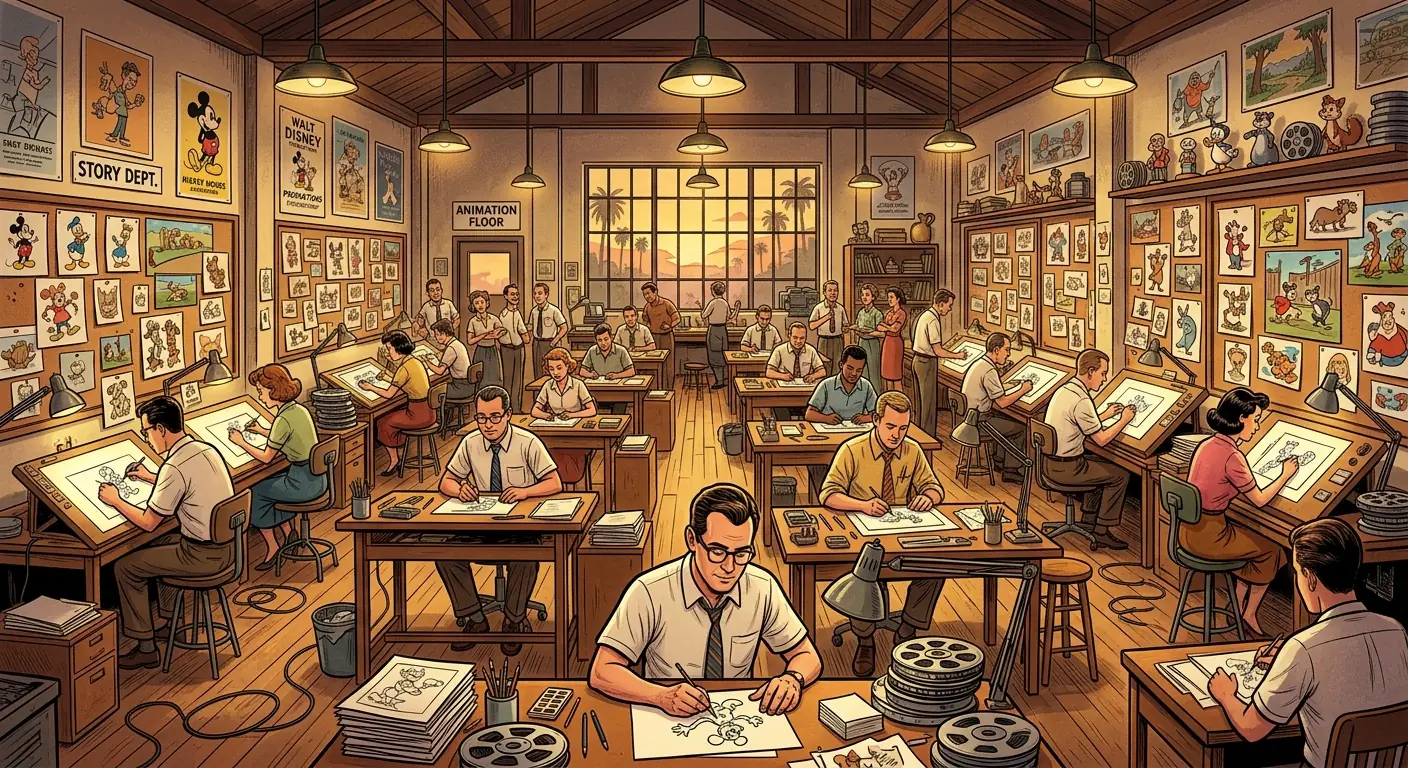
After the stunning, against-all-odds triumph of Snow White and the Seven Dwarfs in 1937, Walt Disney was on top of the world. The film grossed an incredible $8 million on a $1.5 million budget, instantly making him a Hollywood legend. Suddenly, the man who’d been laughed at for his “folly” was the undisputed king of animation. But Walt wasn’t one to rest on his laurels. Oh no. For Walt, success was just a launching pad for the next, even bigger, even more ambitious gamble. And that’s where things got… complicated.
The Creative Avalanche
Flush with cash and creative confidence, Walt embarked on a period of unprecedented artistic ambition. He envisioned a slate of animated features that would push the boundaries of the medium like never before. Think Pinocchio, Fantasia, and Bambi. Each of these films was a masterpiece in its own right, a testament to the sheer talent and dedication of the artists Walt had assembled. Pinocchio (released 1940) was a technical marvel, with breathtaking animation and emotional depth. Fantasia (also 1940) was a wild, experimental fever dream, attempting to visualize classical music, costing an eye-watering $2.28 million – an insane sum for an animated film at the time. It was a commercial flop initially, but a critical darling decades later. Bambi (released 1942 after some delays) was a masterclass in naturalistic animation, requiring animators to study real deer for months. This wasn’t just filmmaking; it was an artistic crusade, a relentless pursuit of perfection that only Walt could demand. He was building an empire of dreams, one meticulously drawn frame at a time.
The Price of Perfection
But this relentless pursuit came at a steep price, both financially and emotionally. The studio, which had grown to nearly 1,200 employees by 1940, was a pressure cooker. Walt was a visionary, no doubt, but he was also a notoriously demanding boss. He’d pace the animation floors, scrutinizing every drawing, often tearing up weeks of work with a simple, “It’s not good enough.” Animators worked grueling hours, often six days a week, for wages that, while competitive, didn’t always feel commensurate with the intense creative output and the studio’s burgeoning success. There was a palpable sense that they were working for Walt’s dream, not always for their own advancement. As animator Art Babbitt, a key figure in the later strike, once put it:
“Walt had a way of making you feel like you were part of something grand, but he also had a way of making you feel completely expendable.”
The creative genius was undeniable, but the human cost was mounting.
The Gathering Storm
The financial strain of these ambitious projects, particularly Fantasia’s poor box office performance and the looming shadow of World War II cutting off European markets, exacerbated the internal tensions. While Walt continued to push for artistic excellence, many animators felt undervalued and overworked. They looked at the success of Snow White and wondered why they weren’t seeing more of the profits. The studio’s paternalistic culture, where Walt was the benevolent but absolute ruler, began to chafe. This simmering discontent, fueled by economic uncertainty and Walt’s exacting standards, eventually boiled over. The cracks in the castle walls were becoming visible, setting the stage for one of the most tumultuous periods in the studio’s history. The dream factory was about to face a harsh reality check, and Walt, the ultimate showman, was about to learn that not all battles could be won with a smile and a good story. The magic was real, but so were the labor disputes.
🕵️ Chapter 11: Walt’s Shadow: Accusations, Politics, and a Complicated Legacy (1940s–1960s)
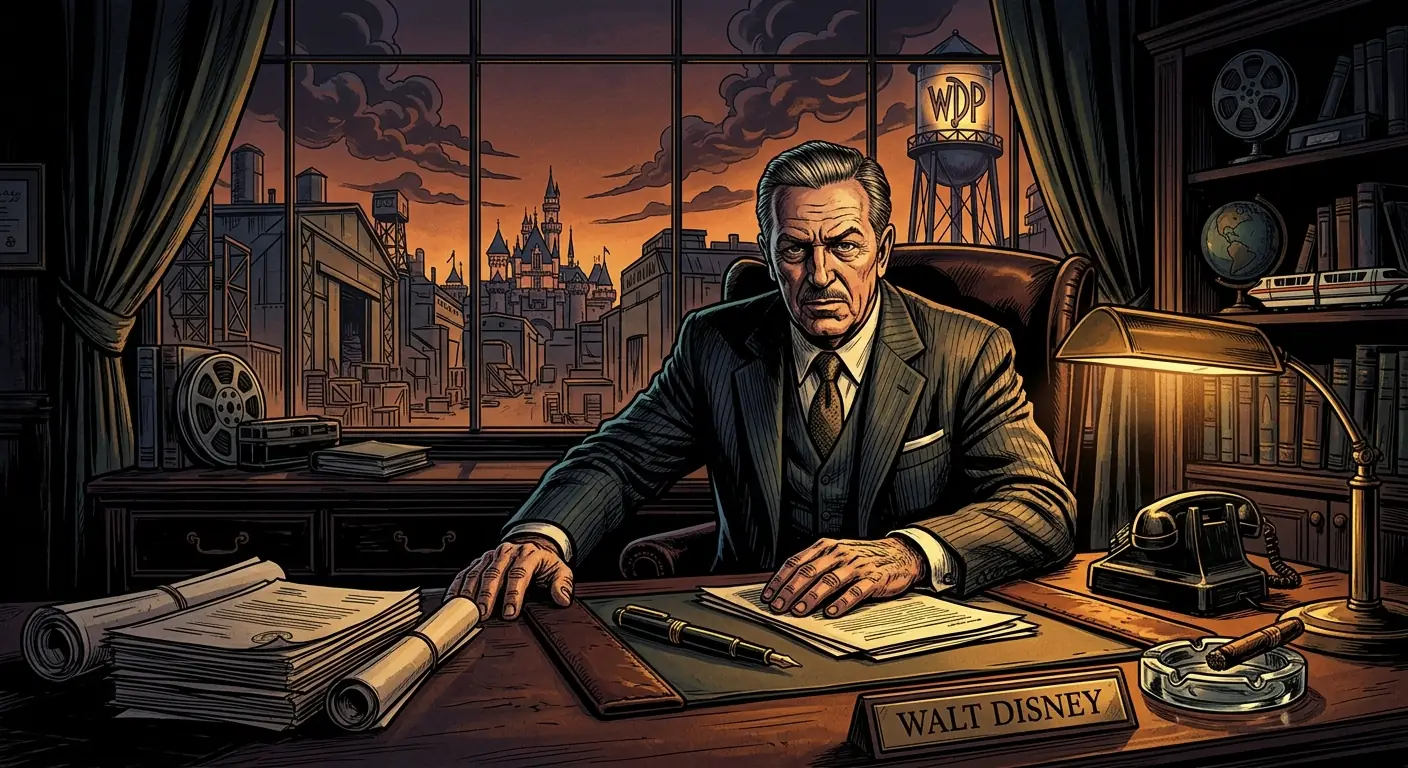
For a man who built a kingdom on wholesome family entertainment, Walt Disney had a surprisingly complex and, at times, controversial public persona. Beyond the twinkling eyes and charming smile, there was a shrewd businessman, a demanding visionary, and a product of his time whose views sometimes clashed with modern sensibilities. While the myth often portrays him as an unblemished hero, the reality of Walt’s life, especially in the turbulent mid-20th century, reveals a more nuanced, and at times, darker picture. Let’s peel back a layer or two, shall we?
The House Un-American Activities Committee
Perhaps one of the most glaring stains on Walt’s public image stems from his testimony before the House Un-American Activities Committee (HUAC) on October 24, 1947. In the throes of the Red Scare, Hollywood was under intense scrutiny for alleged communist infiltration. Walt, a staunch anti-communist and anti-unionist (especially after the devastating 1941 animators’ strike), was a willing and eager witness. He not only described the strike as a communist-led effort but also named former employees, like Art Babbitt, as suspected communist agitators. His testimony, a blend of personal grievances and genuine political conviction, played directly into the committee’s narrative, contributing to the chilling atmosphere of blacklisting that swept through the industry. For many, this act solidified his image as a powerful, conservative figure who wasn’t afraid to wield his influence, even if it meant potentially ruining careers.
Whispers of Intolerance
Beyond the political theater, Walt has long faced persistent accusations of anti-Semitism and racism. While direct, verifiable evidence of Walt himself uttering anti-Semitic slurs is scarce and highly debated, the perception was strong among some former employees. More concretely, the studio’s past output, particularly films like Song of the South (1946), has undeniably drawn criticism for its romanticized portrayal of post-Civil War Southern plantations and its use of racial stereotypes. The film, which features the live-action segments interspersed with animated tales of Br’er Rabbit, has been largely unavailable in its original form in the U.S. for decades, acknowledged by the company as “problematic.” Whether these instances reflected Walt’s personal bigotry or merely the pervasive societal attitudes of the era is a constant, uncomfortable discussion that complicates his otherwise celebratory legacy. It reminds us that even heroes are products of their imperfect times.
The Man Behind the Myth
Away from the controversies, Walt was a notoriously private and often introverted man. Despite his public persona as a jovial showman, those closest to him often described him as emotionally distant and intensely focused on his work. His relationship with his wife, Lillian, and his two daughters, Diane and Sharon, while loving, was often overshadowed by his relentless dedication to the studio. He was a creature of habit, a workaholic who found solace and purpose in the creative process. He rarely vacationed, and his personal life was carefully guarded. He was, in essence, the ultimate manifestation of his own “imagineer” philosophy – constantly building, constantly dreaming, often at the expense of deeper personal connections. The pressure of being “Walt Disney,” the public face of an ever-growing magical empire, was immense, and it shaped a man who was both brilliant and flawed, a visionary who often struggled with the mundane realities of human relationships. He built a world of fantasy, perhaps because the real one, even for him, was far too complicated.
💡 Key Insights
- ▸ Walt Disney went bankrupt at 21 and lost his biggest character to a distributor at 26 — but each catastrophic loss forced him to create something better. Mickey Mouse, the most iconic character in entertainment history, only exists because Disney got screwed out of Oswald the Lucky Rabbit. Sometimes your worst betrayal is your greatest gift.
- ▸ When the entire film industry told Disney that Snow White would be 'Disney's Folly' and bankrupt his studio, he mortgaged his house and went all in. The movie made $8 million in 1937 dollars — equivalent to over $170 million today. The consensus of experts is wrong more often than most people realize.
- ▸ Disney didn't just make animated films — he invented the modern theme park, pioneered television as a marketing platform, and built an integrated entertainment ecosystem decades before anyone used that word. Vertical integration isn't a strategy. It's a survival instinct.
- ▸ Walt Disney died at 65 with EPCOT — his most ambitious vision — still on a drawing board. But he'd built something more powerful than any single project: an organization that could execute his philosophy without him. The ultimate legacy isn't what you build. It's whether it survives you.
Sources
- Walt Disney: The Triumph of the American Imagination by Neal Gabler (2006) ↗
- The Walt Disney Company — Investor Relations & Annual Reports ↗
- Walt Disney: An American Original by Bob Thomas (1976) ↗
- Smithsonian National Museum of American History — Walt Disney Archives ↗
- Library of Congress — Walt Disney Collection ↗
- Forbes — The Walt Disney Company Valuation ↗
- PBS American Experience — Walt Disney Documentary (2015) ↗