Zhang Ruimin: The Management Revolution That Turned Haier Into a Global Giant
Zhang Ruimin began with a failing refrigerator factory and a sledgehammer. He ended up challenging the hierarchy of the corporation itself.
View all stories about this mogul
Zhang Ruimin’s most famous management act involved a sledgehammer and a row of defective refrigerators.
The story became corporate legend: workers at a struggling Qingdao refrigerator factory identified flawed products, and Zhang ordered the appliances destroyed rather than sold. In an era when shortages could make almost anything marketable, smashing inventory delivered a brutal message. Quality was no longer negotiable.
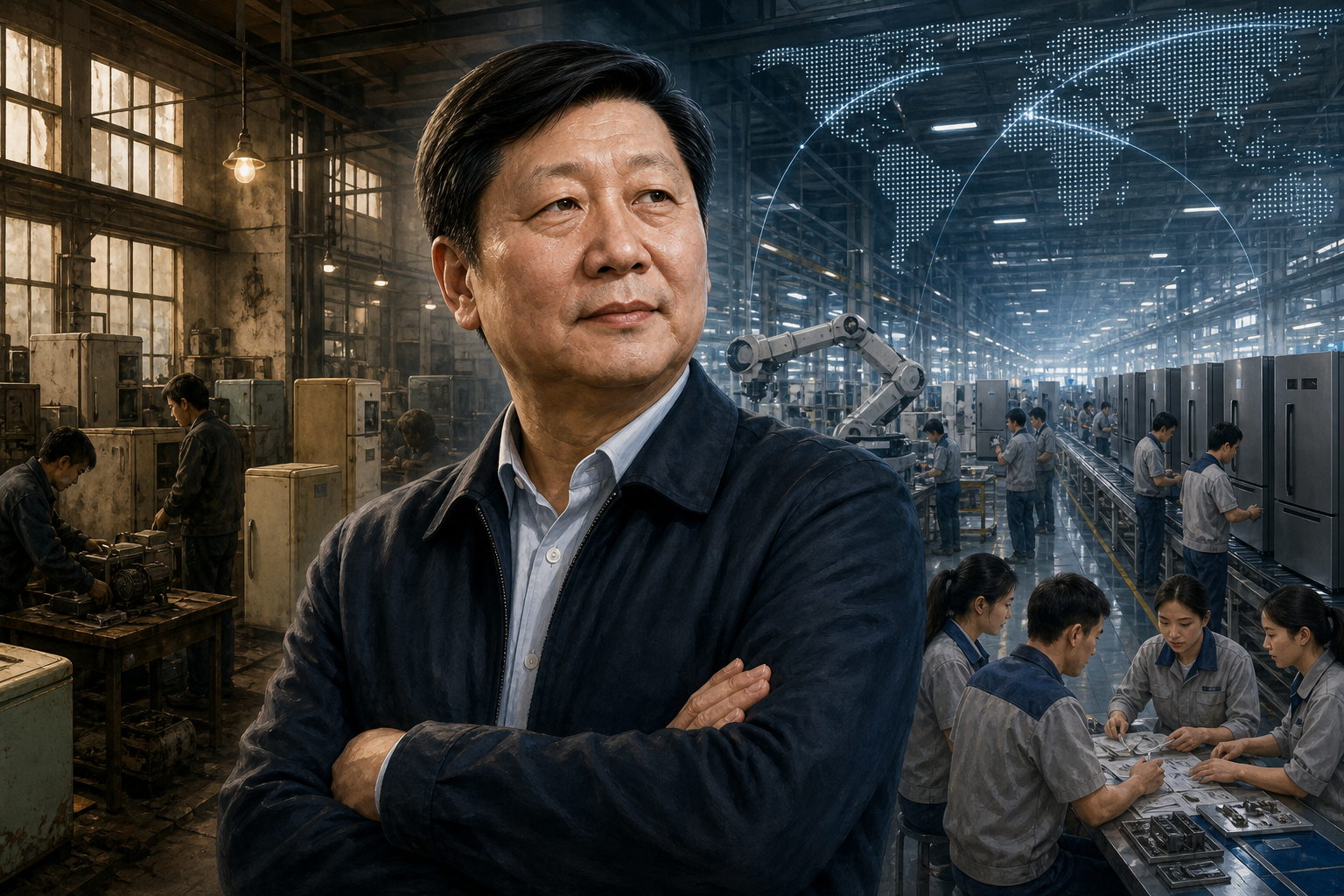
The symbolism endured because the transformation was real. The failing factory became Haier, a global appliance company. Yet refrigerators were only the first project. Zhang spent decades attacking another defective product: the traditional corporation.
His management model, known as RenDanHeYi, tried to replace layers of bureaucracy with small entrepreneurial units connected directly to users. The ambition was radical. Employees would stop serving bosses and start creating customer value. Teams would gain autonomy, compete for resources, and share in the results.
Haier’s journey shows how a manufacturing turnaround can become a philosophy of organization. It also shows why management revolutions are much harder to export than appliances.
Chapter 1: How Did a Sledgehammer Turn Quality Into Strategy?
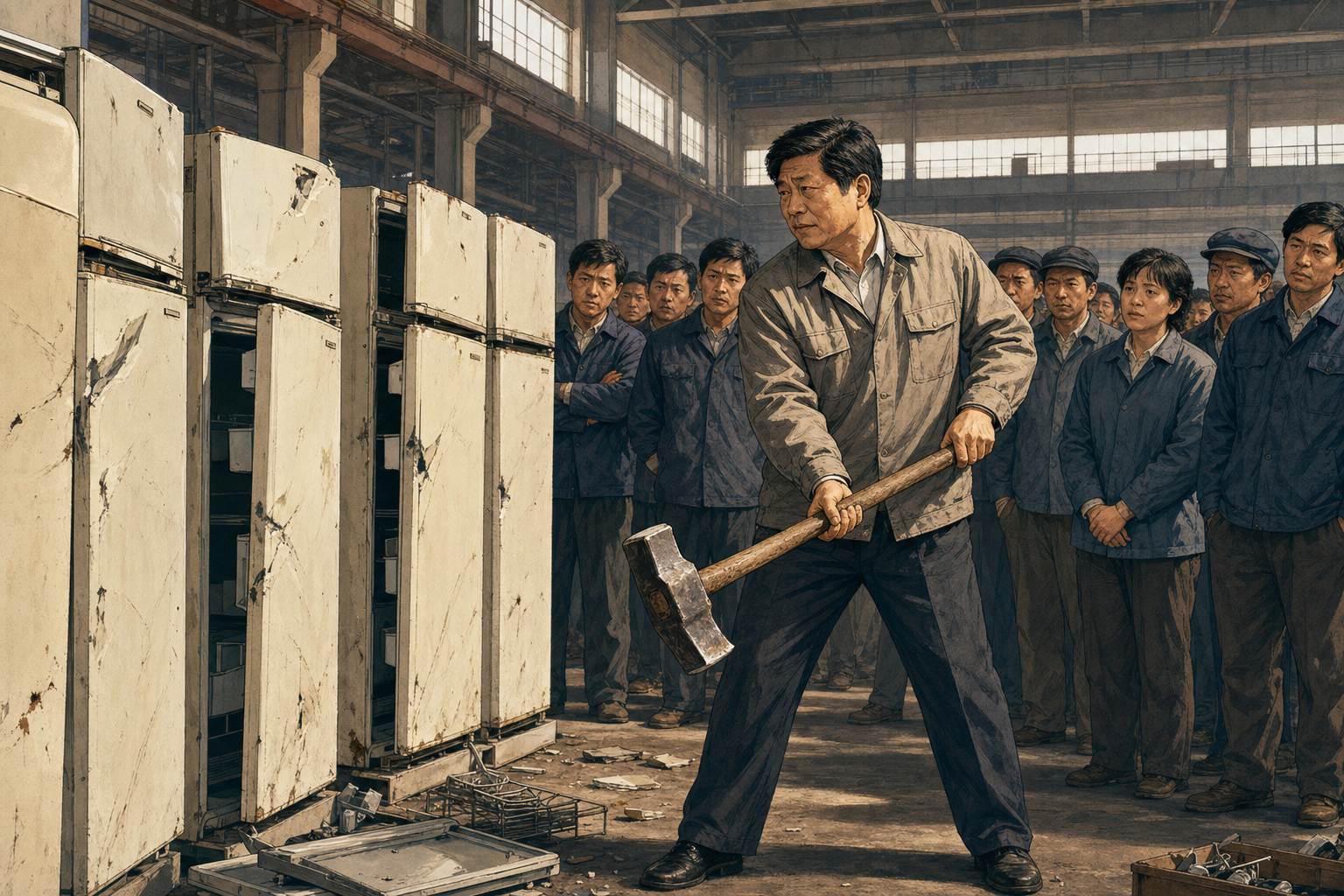
When Zhang took charge of the Qingdao Refrigerator General Factory in 1984, the operation reportedly carried debt, weak discipline, and poor product quality. This was not a hidden-software problem. Customers could see the defects.
Destroying bad refrigerators created a memorable break with the past, but theater alone would not have saved the factory. Zhang paired the gesture with systems: clearer standards, accountability for errors, training, and attention to what users considered reliable.
Quality became the entry ticket to growth. As China’s consumer economy expanded, households wanted appliances they could trust. A domestic producer that consistently improved could build a brand instead of competing only on availability.
Haier also learned from foreign technology and management practices. Its early cooperation with German refrigerator maker Liebherr influenced production and supplied part of the brand name’s history. Zhang did not treat outside knowledge as a threat to national pride. He used it as a benchmark.
Quality Was a Market Position, Not a Factory Program
Many turnarounds fail because management treats quality as an internal campaign. Posters go up, inspections increase, and the company keeps rewarding volume over reliability.
Zhang linked quality to the market. A better refrigerator justified trust, and trust supported brand power. The factory was not merely reducing defects; it was changing what customers expected from a Chinese appliance manufacturer.
This created a reinforcing loop:
| Change | Immediate result | Compounding effect |
|---|---|---|
| Visible rejection of defects | Workers understand the new standard | Quality becomes part of identity |
| Process discipline | Fewer failures and returns | Customer trust improves |
| Stronger brand | Greater demand and pricing power | More resources for expansion |
| Product expansion | Broader household relationship | Distribution and recognition deepen |
Haier moved beyond refrigerators into washing machines, air conditioners, and other appliances. Each category tested whether the quality culture could scale.
The Market Forced the Organization to Learn
China’s reforms exposed firms to stronger competition. Haier could not depend forever on local protection or scarcity. Zhang pushed the company to observe users closely and tailor products to specific conditions.
Stories of niche products—such as washing machines adapted to unusual rural needs—became part of Haier’s mythology. The broader principle was sound: product decisions should begin with a real customer problem, not with the preferences of headquarters.
That idea would later become the center of RenDanHeYi. Before Zhang reorganized the company around users, he trained it to notice them.
Chapter 2: How Did Haier Go Global Without Becoming a Conventional Conglomerate?
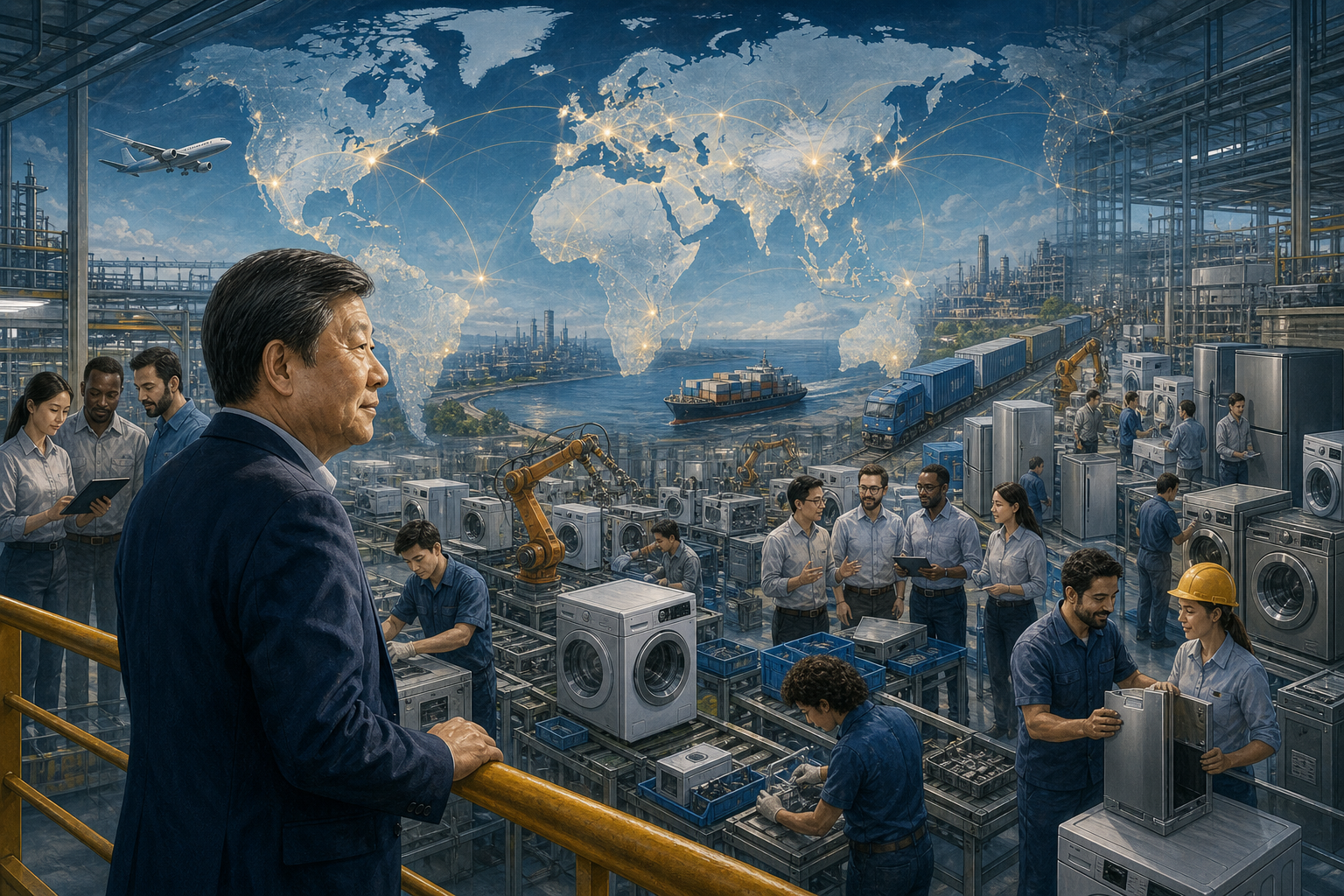
Haier’s international expansion did not follow one simple route. It exported products, built operations abroad, entered mature markets, and acquired established businesses.
The company opened manufacturing capacity in the United States and worked to become a credible local operator rather than a distant low-cost exporter. It later purchased businesses that significantly expanded its reach, including GE Appliances in 2016.
Buying a known brand can accelerate scale. It also creates integration risk. The acquirer can destroy local initiative by forcing every decision through headquarters, or leave the businesses so independent that expected synergies never appear.
Zhang’s management philosophy offered a different integration story. Instead of making every unit conform to a single hierarchy, Haier tried to connect teams to users and outcomes.
RenDanHeYi Rewired the Chain of Command
The term RenDanHeYi is commonly explained as linking employees, user needs, and the value created for those users. In practice, Haier broke parts of the organization into small units or microenterprises.
These teams could pursue opportunities, contract with internal service providers, and be judged by the value they produced. The goal was to replace managerial distance with market pressure.
In a conventional hierarchy, an employee serves a supervisor, who serves another supervisor, who eventually serves a strategy document. Information moves up, decisions move down, and the customer waits outside.
Zhang wanted the chain to run in the opposite direction. A team close to the user should sense demand and act. Support functions should earn their role by helping that team succeed.
This approach resembles internal entrepreneurship, but it is more demanding than telling employees to “think like owners.” Ownership requires authority over decisions, access to resources, exposure to consequences, and a meaningful share of upside.
Decentralization Has a Hidden Price
Breaking a company into entrepreneurial units can increase speed. It can also duplicate work, create internal competition, and make coordination harder.
Appliance manufacturing still needs safety, procurement, engineering standards, brand coherence, factories, and long-term capital allocation. Not every decision should become a local experiment.
The difficult design problem is deciding what belongs in the platform and what belongs in the microenterprise. Shared infrastructure must be strong enough to create leverage but not so controlling that autonomy becomes fiction.
Haier’s global acquisitions made this challenge visible. A management model born in Qingdao could not simply be translated into slides and imposed on employees in another country. Local leaders needed room to adapt the principles.
Chapter 3: Is Zhang Ruimin’s Management Revolution a Model or a Myth?
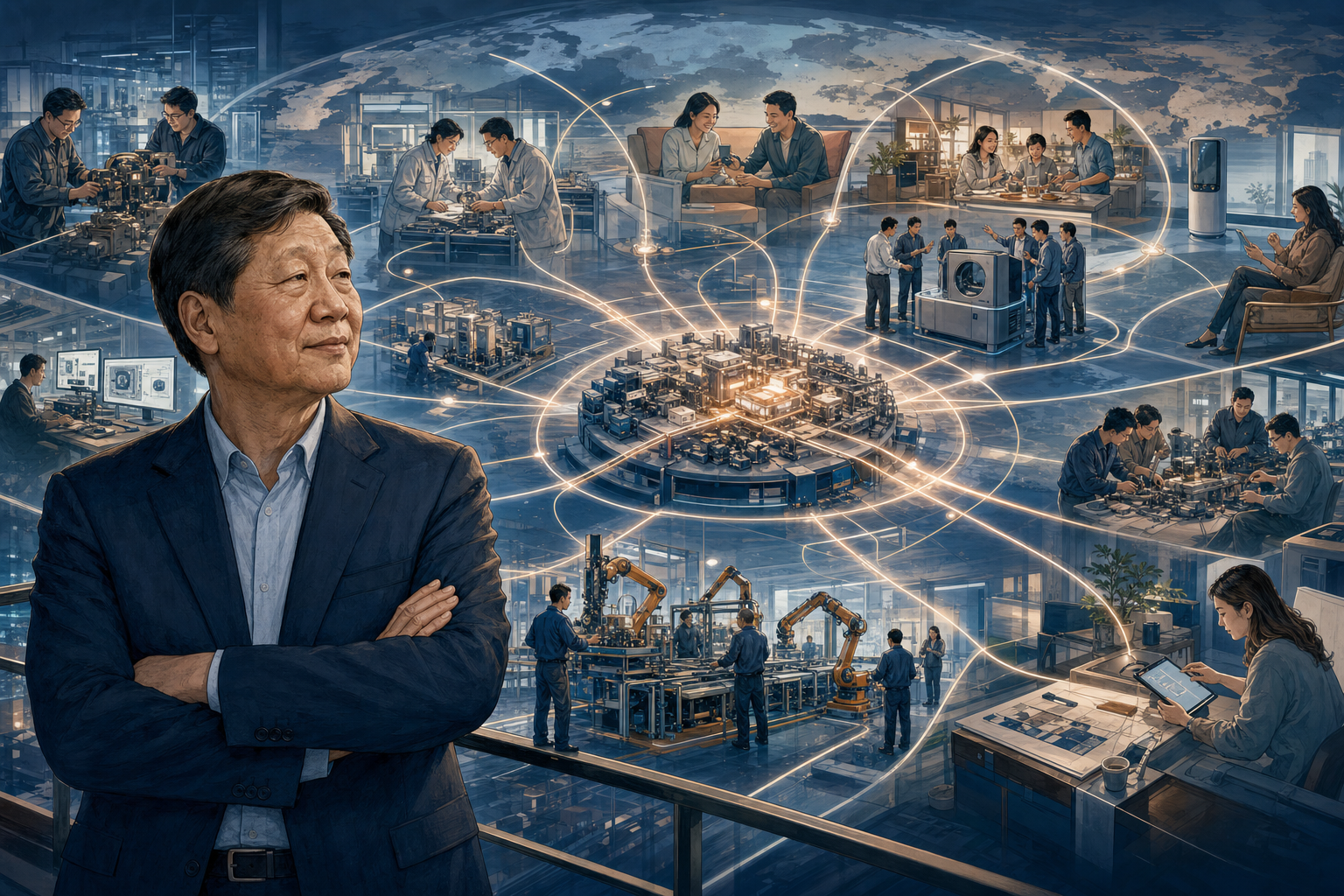
Zhang stepped down from Haier’s top leadership roles in 2021, leaving behind a company and an idea.
The company can be measured through products, revenue, brands, factories, and market positions. The idea is harder to score. RenDanHeYi has attracted researchers and executives precisely because bureaucracy is a universal frustration. Every large organization wants the responsiveness of a startup without surrendering the scale of an institution.
Haier offers evidence that radical decentralization can survive inside a very large company. It does not prove that every company can copy the model.
What Other Leaders Usually Copy Wrong
Executives are tempted to copy the visible structure: create squads, rename departments as microenterprises, and announce empowerment.
But a team is not autonomous if headquarters controls its budget, priorities, staffing, tools, and rewards. Nor is it accountable if failure is absorbed by the wider organization while success produces private status.
The deeper requirements include:
- clear user outcomes
- transparent internal contracts
- authority close to the work
- access to shared capabilities
- consequences tied to results
- leaders willing to surrender approval power
The last requirement is the rarest. Bureaucracy persists not only because coordination is hard, but because hierarchy creates careers and control.
A Timeline of Haier’s Reinvention
| Year | Turning point | Strategic meaning |
|---|---|---|
| 1984 | Zhang takes charge of the Qingdao refrigerator factory | Quality becomes the first transformation |
| 1980s | Defective refrigerators are publicly destroyed | A new standard is made visible |
| 1990s | Haier expands across appliance categories | Brand and distribution compound |
| 2000s | International manufacturing and sales grow | Haier learns to operate in mature markets |
| 2005 onward | RenDanHeYi develops through repeated restructuring | User-facing microenterprises challenge hierarchy |
| 2016 | Haier acquires GE Appliances | The model faces a major global integration test |
| 2021 | Zhang steps down from top roles | The system must endure beyond its architect |
The Real Lesson
Zhang Ruimin understood that a turnaround cannot stop at fixing the product. Over time, the organization that produced yesterday’s success becomes the source of tomorrow’s delay.
The sledgehammer story mattered because it made standards irreversible. RenDanHeYi applied the same instinct to bureaucracy: identify the defect, make it visible, and redesign incentives around the user.
His legacy is not a management recipe. It is a willingness to keep dismantling structures after they become comfortable.
Haier’s continuing test is whether thousands of small teams can remain entrepreneurial without losing the coordination, investment, and trust that make a global manufacturer possible. If it succeeds, Zhang will have built more than an appliance empire. He will have shown that scale and bureaucracy are related—but not identical.
Frequently Asked Questions
Who is Zhang Ruimin?
Zhang Ruimin is the longtime Haier leader who transformed a troubled Qingdao refrigerator factory into a global appliance company and developed the RenDanHeYi management model.
What is the Haier refrigerator sledgehammer story?
Zhang ordered defective refrigerators destroyed in the 1980s to demonstrate that poor quality would no longer be accepted. The event became a symbol of Haier’s turnaround.
What does RenDanHeYi mean?
It links employees and entrepreneurial teams directly to user needs and the value created for users. Haier uses small units and platform services to reduce traditional hierarchy.
Can other companies copy Haier’s model?
They can learn from its principles, but copying the labels is insufficient. Real decentralization requires authority, accountability, shared infrastructure, and leaders willing to give up control.
💡 Key Insights
- ▸ Quality reform becomes credible when leaders make failure visible and attach consequences to the system producing it.
- ▸ Haier's global growth combined acquisitions with an unusual effort to decentralize authority close to customers.
- ▸ RenDanHeYi treats internal teams like entrepreneurs, but decentralization works only when accountability is equally distributed.
- ▸ Zhang Ruimin's legacy is a continuing management experiment rather than a finished doctrine.