The Renegade Saint: Anita Roddick, The Body Shop, and the Billion-Dollar Betrayal That Shook the Soul of Business
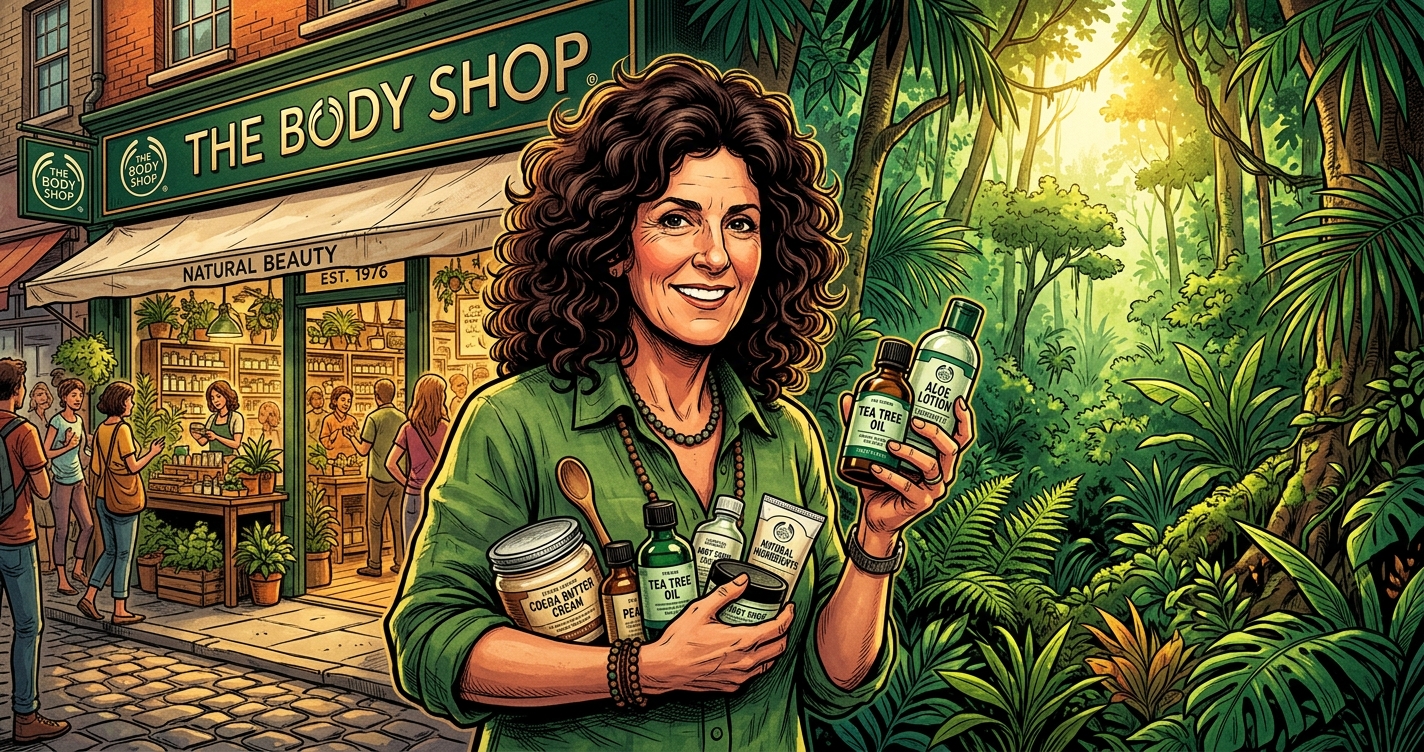
She built an empire on ethics, a beauty brand that championed rainforests over profits and challenged the very core of corporate greed. **Anita Roddick** was a force of nature, a punk-rock entrepreneur who proved you could do good and make a fortune. But then came **L'Oréal**, a deal that shattered the faith of millions and left a gaping question mark over the soul of ethical capitalism.
View all stories about this mogul
🔥 Chapter 1: The Cosmic Kick-Off: A Punk-Rock Entrepreneur is Born
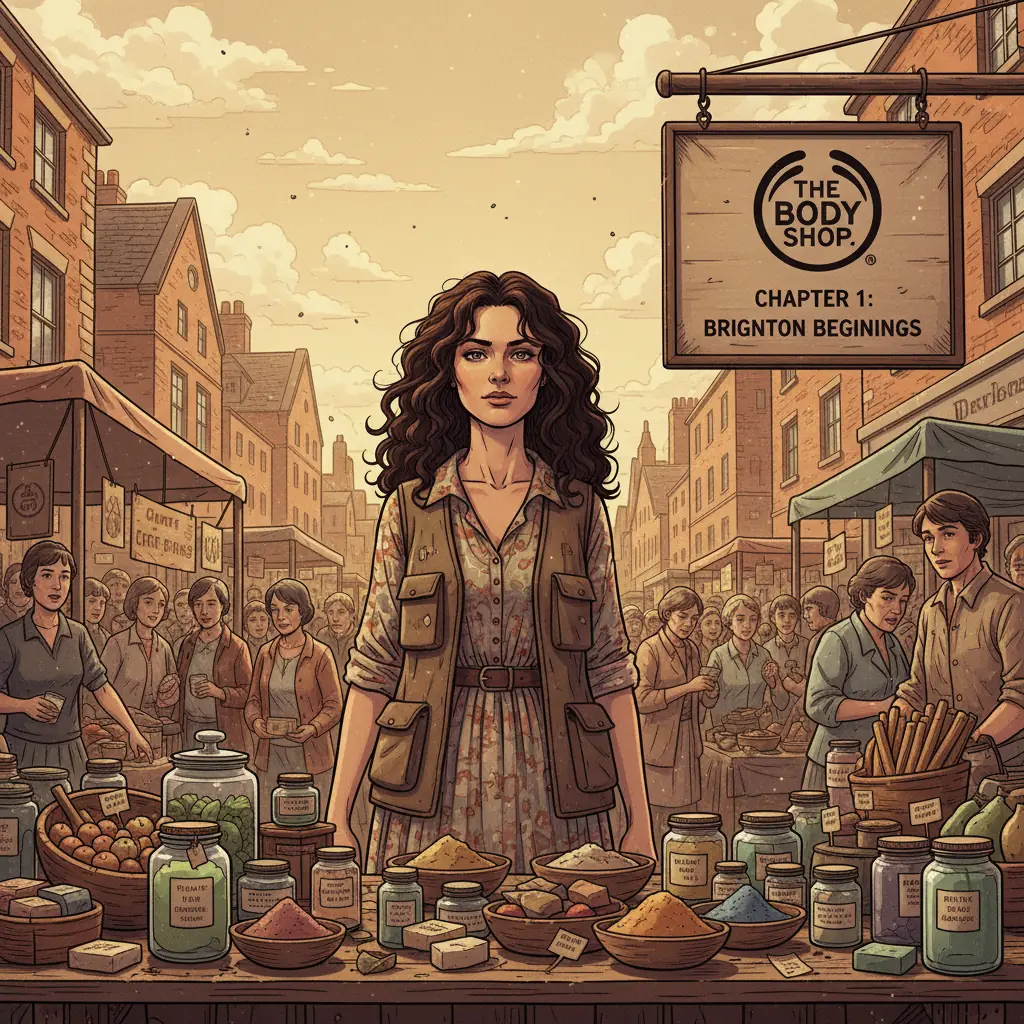
Alright, settle in, because we’re about to talk about a woman who didn’t just break the mold; she smashed it into a thousand glittering, eco-friendly pieces and then built an empire out of the dust. This isn’t just a business story; it’s a saga, a rebellion, a high-wire act performed without a net. We’re talking about Anita Roddick, the force of nature who birthed The Body Shop, and the seismic shockwave that followed when she made a deal with the devil – or at least, the corporate behemoth that many of her fans saw as such.
Imagine a world, not so long ago, where beauty was a sterile, aspirational fantasy. Think airbrushed models, chemical concoctions promising eternal youth, and a complete, utter silence on where any of that stuff actually came from. Animal testing? Standard. Ethical sourcing? What’s that, some kind of yoga pose? Environmental impact? Don’t ask, don’t tell, just buy. That was the landscape. A bland, beige, morally ambiguous terrain where big cosmetics companies reigned supreme, dripping in perfume and pretending their laboratories were temples of science, not torture chambers for bunnies.
Then, from the bohemian fringes of 1970s Britain, a woman exploded onto the scene. Not a CEO in a power suit, but a fiery, outspoken, no-nonsense earth mother with a wild mane of dark hair, a penchant for colorful clothes, and a mouth like a sailor who’d just discovered a cause. Her name was Anita Perella, later Roddick, and she was about to drop a glitter bomb on the entire industry.
Born in Littlehampton, England, in 1942, Anita wasn’t your typical boardroom baroness-in-the-making. Her background was as unconventional as her future business. The daughter of Italian immigrants, she grew up in a chaotic, loving, and distinctly un-corporate environment. Her father died young, leaving her mother to run a café with a fierce independence that clearly rubbed off. Anita was a free spirit, a wanderer, a seeker. She hitchhiked through Europe, lived in a kibbutz in Israel, worked for the UN, and spent time in Tahiti. These travels weren’t just vacations; they were an education. She saw how indigenous communities used natural ingredients, how they lived sustainably, how they valued community over ruthless competition. She saw a different way of being, a stark contrast to the burgeoning consumerism back home.
Crucially, she also saw injustice. Poverty, exploitation, environmental destruction. These experiences didn’t just inform her worldview; they ignited a righteous fury that would become the fuel for her entrepreneurial engine. This wasn’t about making a quick buck; it was about making a statement. It was about changing the world, one ethically sourced, cruelty-free face cream at a time. The seeds of The Body Shop were planted not in a business school lecture hall, but under the blazing sun of far-flung lands, watered by a deep sense of global citizenship and a healthy dose of anti-establishmentarianism. She was a rebel with a cause, and soon, she’d have a product line to match. The stage was set for a revolution.
🌻 Chapter 2: The Spark of Rebellion: From Necessity to Niche
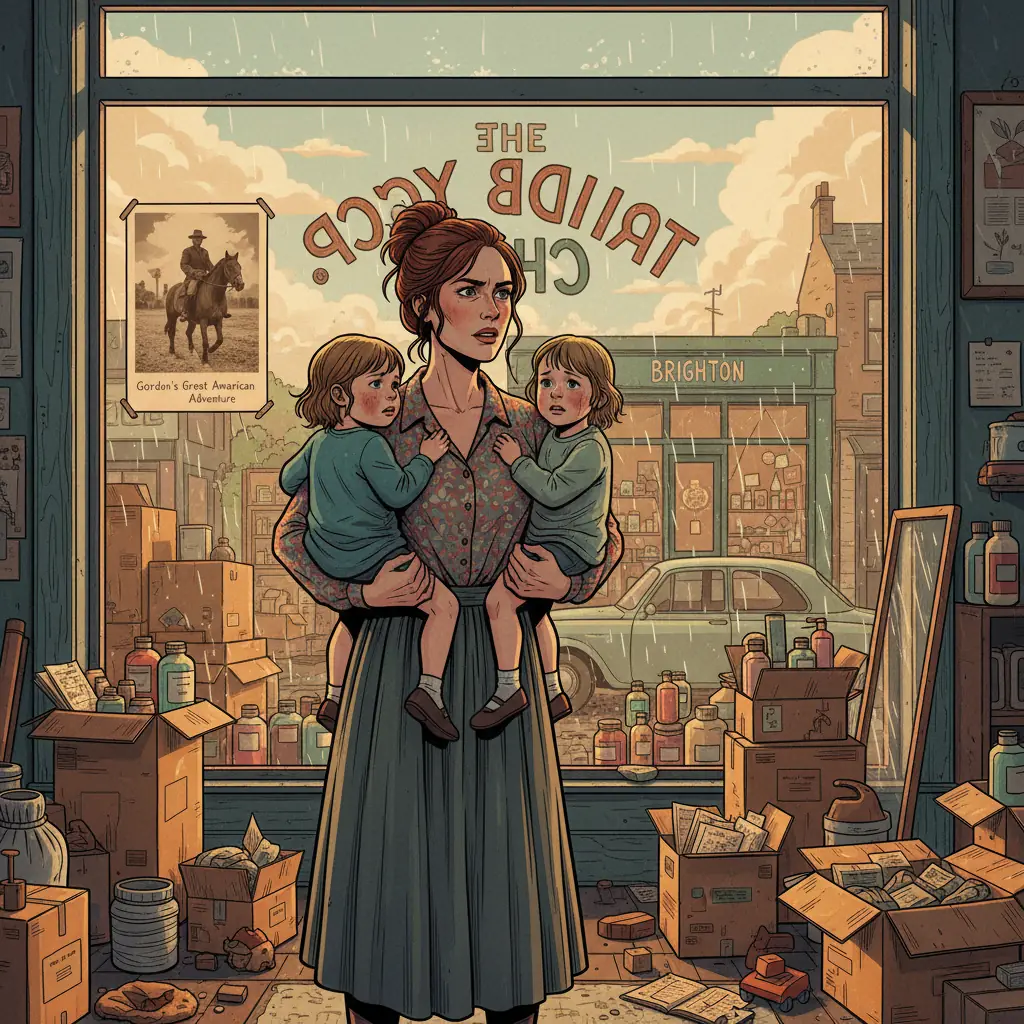
The year is 1976. The place: Brighton, England. Anita Roddick is 33, a mother of two young daughters, and her husband, Gordon Roddick, has gone off to ride horses across the Americas, chasing some grand, romantic adventure. Which, you know, is great for him. But it leaves Anita in a bit of a pickle. Two kids, no regular income, and a very practical problem to solve: how to put food on the table.
This wasn’t some grand vision birthed in a venture capital incubator. This was pure, unadulterated necessity. But here’s the kicker: even under pressure, Anita couldn’t just do “any” business. She had principles, memories of her travels, and a keen eye for what was missing. The beauty industry was a wasteland of synthetic fragrances and wasteful packaging. She remembered the simple, natural remedies she’d seen used around the world – cocoa butter, tea tree oil, jojoba. Why couldn’t beauty be natural? Why couldn’t it be simple? Why couldn’t it be ethical?
So, with a loan of £4,000 (about £25,000 today, still not a king’s ransom), she opened a tiny shop. It was literally wedged between a funeral parlor and a sex shop – a wonderfully Anita Roddick metaphor for life and desires. The first Body Shop was born. It was small, green (to hide damp stains, not initially for eco-branding, though it worked out), and filled with jars of lotions and potions made from natural ingredients.
But it wasn’t just what she sold; it was how. This was the radical part, the DNA of the brand that would make it legendary.
- Refillable bottles: Customers were encouraged to bring back their empty containers to be refilled. This wasn’t a marketing gimmick; it was a practical solution to save money and reduce waste, long before “sustainability” was a buzzword.
- No animal testing: This was a bombshell. In an era where animal testing was the industry standard, Anita declared it barbaric and unnecessary. Her products would be tested on humans, period.
- Simple, informative labels: No flowery language or deceptive marketing. Just clear descriptions of ingredients and what they did. “Macadamia Nut Oil” didn’t need a fancy name; it was just Macadamia Nut Oil.
- Community over glamour: The focus was on wholesome, good-for-you products, not on making you look like a supermodel. It was about feeling good, inside and out. It was about self-care, before that term became ubiquitous.
The big cosmetics companies were selling fantasy. Anita Roddick was selling reality, but a better, kinder, more conscious reality. She understood that consumers, beneath the layers of advertising, craved authenticity. They wanted to feel good about what they were putting on their bodies, and good about where it came from.
“I started The Body Shop to make a living for myself and my two daughters, but it very quickly became something much more than that. It became a vehicle for my beliefs, for my activism, for my outrage.”
The first store was an immediate hit. People were captivated by this quirky, honest approach. They loved the scents, the textures, and most importantly, the story. Word spread like wildfire. This wasn’t just a shop; it was a statement. It was a place where buying a moisturizer felt like a small act of rebellion, a vote for a better world. The Body Shop wasn’t just selling products; it was selling a philosophy, a lifestyle, a quiet revolution wrapped in a brown paper package. And the world was ready to buy in.
🚀 Chapter 3: The Rocket Takes Off: Franchising, Activism, and the Birth of a Brand God
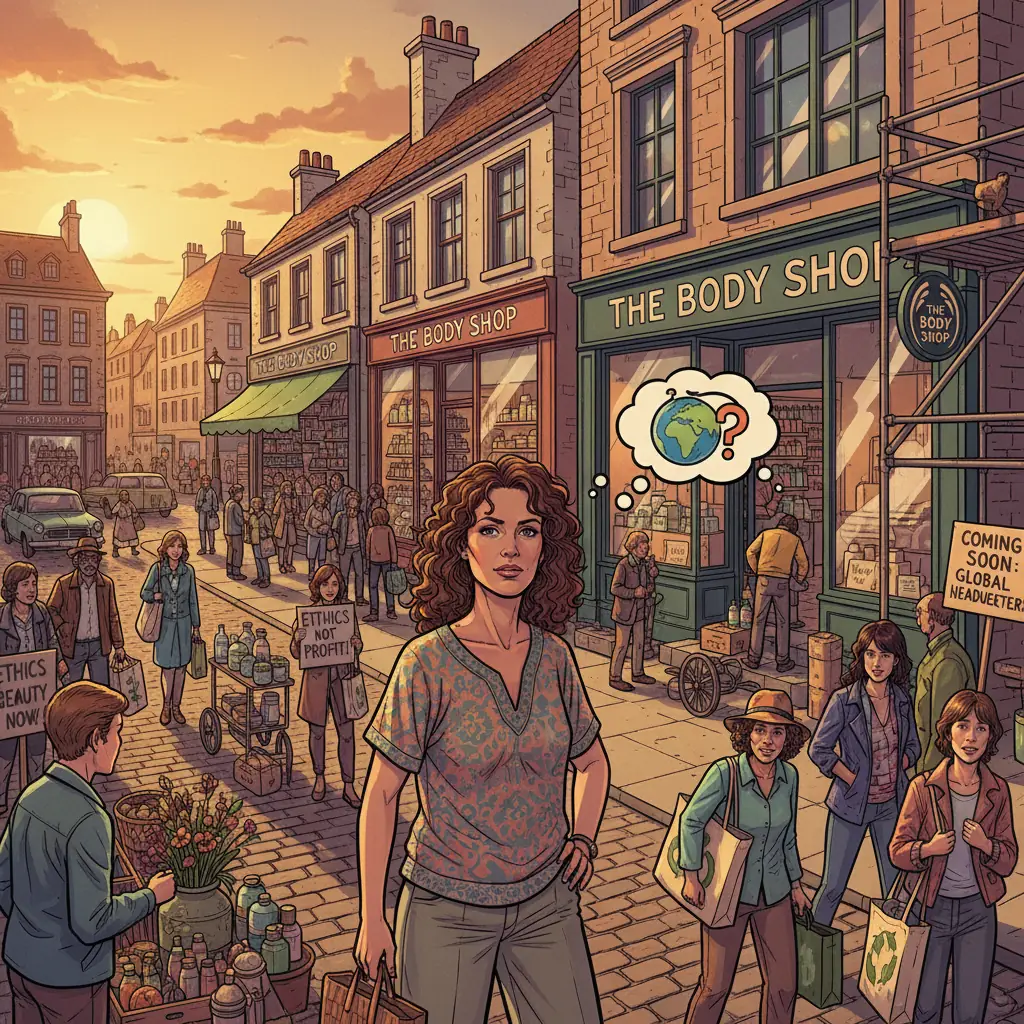
So, The Body Shop was a hit. One store quickly became two, then four. But how do you scale a revolution? How do you take a small, ethically-driven boutique and turn it into a global phenomenon without losing its soul? For Anita Roddick, the answer was franchising. And it was brilliant.
Think about it: who better to run a Body Shop than someone who believed in its mission as fiercely as Anita herself? She wasn’t looking for seasoned retail executives; she was looking for kindred spirits. Often, these were women, many of whom had been stay-at-home mothers or were looking for a different kind of business opportunity – one that aligned with their values. They were passionate, dedicated, and ready to preach the gospel of natural beauty and ethical commerce.
This wasn’t just a financial model; it was a community-building strategy. Each franchisee became an evangelist, imbued with Anita’s spirit and empowered to run their own local outpost of the global revolution. This decentralized growth allowed The Body Shop to expand rapidly, first across the UK, then into Europe, and eventually, across the Atlantic to the United States. Each store, while uniform in its green branding and product line, retained a local, personal touch.
But the real secret sauce, the thing that elevated The Body Shop from a successful business to a cultural icon, was activism. Anita Roddick didn’t just talk about values; she lived them, and she plastered them all over her stores. This wasn’t corporate social responsibility as an afterthought; it was the core business strategy.
Imagine walking into a store and seeing giant posters not just for face cream, but for saving whales. For stopping animal testing. For promoting fair trade with indigenous communities. The Body Shop stores became mini-campaign headquarters. Shopping there wasn’t just a transaction; it was participation. It made customers feel like they were part of something bigger, something important.
Here are some of the groundbreaking campaigns that defined The Body Shop’s early years:
- Against Animal Testing: This was perhaps their most famous and enduring campaign. They were pioneers in calling out the cruelty of cosmetic animal testing and actively campaigned for its ban. Their iconic “Against Animal Testing” bunny logo became a symbol of ethical consumerism.
- Save the Whales: In partnership with Greenpeace, The Body Shop launched a campaign to protect whales from commercial hunting. This wasn’t directly related to their products, but it showed their commitment to broader environmental causes, demonstrating that their ethical stance wasn’t just about their own supply chain.
- Trade Not Aid: This initiative focused on sourcing ingredients from developing countries, not through exploitative practices, but through fair trade agreements that empowered local communities. This was revolutionary, ensuring that the economic benefits reached the producers directly.
- Self-Esteem Campaigns: Challenging the conventional beauty industry’s obsession with unattainable perfection, The Body Shop promoted self-love and body positivity. They featured real people in their ads, not supermodels, and encouraged customers to celebrate their unique beauty.
These campaigns weren’t just good marketing; they were the marketing. The Body Shop didn’t spend millions on traditional advertising agencies or glossy magazine spreads. Their activism generated headlines, conversation, and an army of loyal, passionate customers who became brand advocates themselves. They were buying into a movement, not just a product.
By the early 1980s, The Body Shop was a sensation. It had gone public in 1984, making Anita Roddick and her family incredibly wealthy, but crucially, she never let the financial success overshadow the mission. She was a rockstar CEO, a media darling, and the embodiment of a new kind of capitalism – one that could be both profitable and principled. The world watched, captivated, as Anita Roddick proved that business could indeed be a force for good. She was building a moral empire, brick by ethical brick, and it seemed unstoppable.
⚡ Chapter 4: The Empress and Her Empire: Navigating Growth, Scrutiny, and the Cult of Personality
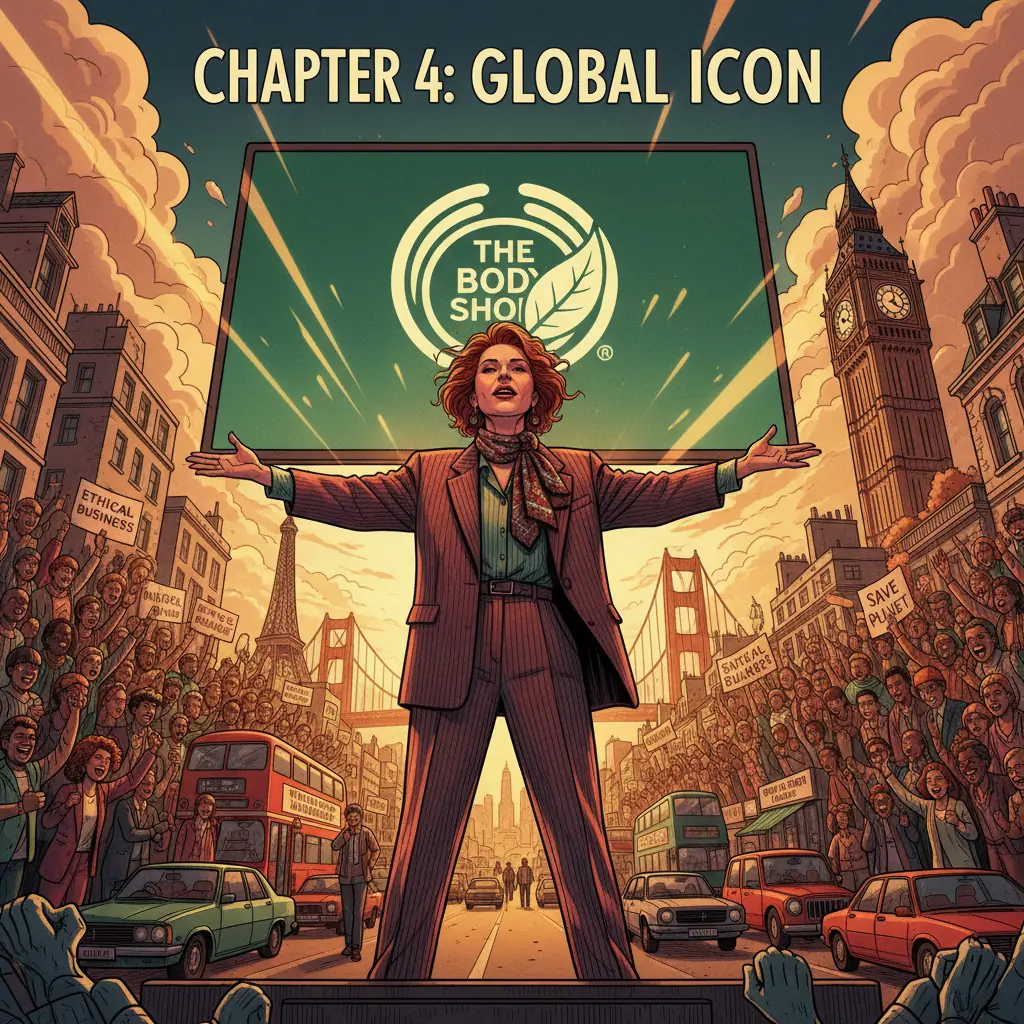
By the late 1980s and early 1990s, Anita Roddick wasn’t just an entrepreneur; she was a global icon. She was the face of ethical business, a fiery, articulate champion of the underdog and the environment. Her image was everywhere – speaking at conferences, meeting world leaders, leading protests. She was a celebrity CEO long before that became commonplace, but her celebrity was built on substance, on a genuine, palpable passion for social justice.
The Body Shop empire continued to expand at a dizzying pace. Stores popped up in every major city, from New York to Tokyo. The green and white logo became synonymous with conscious consumerism. The concept of “ethical sourcing” and “cruelty-free” went from niche concerns to mainstream talking points, largely thanks to Anita’s relentless advocacy. She was a force of nature, and her company reflected that untamed energy.
But with great success comes great scrutiny. As The Body Shop grew from a plucky underdog to a multinational corporation, the spotlight on Anita and her practices intensified. Critics began to emerge, questioning whether the reality could truly live up to the lofty ideals.
Here were some of the challenges and criticisms:
- Maintaining Authenticity at Scale: How do you keep the “small, ethical shop” vibe when you have hundreds of stores and thousands of employees across dozens of countries? The sheer logistics of ensuring every ingredient was ethically sourced, every worker fairly treated, and every store adhering to the brand’s core values became a monumental task. The risk of diluting the message or compromising on principles increased exponentially with size.
- The “Greenwashing” Accusation: As environmental awareness grew, so did skepticism. Some critics accused The Body Shop of “greenwashing” – using eco-friendly rhetoric to sell products, even if their impact wasn’t entirely perfect. While Anita was genuinely committed, the scale of operations inevitably meant some compromises or complexities that weren’t always black and white.
- Product Claims vs. Reality: In the fiercely competitive beauty market, some questioned whether The Body Shop’s natural ingredients were truly superior or revolutionary. Were they selling a story more than a uniquely effective product? Anita always maintained that transparency and naturalness were the product’s strength, but the scientific claims of other brands often dwarfed theirs.
- The Cult of Personality: While Anita’s personal brand was an enormous asset, it also created a vulnerability. The Body Shop was so intrinsically linked to her persona that questions arose about its future without her at the helm. Could the brand survive if its driving force, its moral compass, were to step back?
One of the most notable attacks came in 1994, when an article in Business Ethics magazine, titled “Shattered Image,” accused The Body Shop of exaggerating its ethical claims, particularly regarding its “Trade Not Aid” program and its animal testing policies. The article sent shockwaves through the company and its loyal customer base. Anita and Gordon Roddick vehemently denied the claims, fighting back with their characteristic ferocity. They commissioned an independent audit, which largely vindicated them, but the incident highlighted the immense pressure on ethical brands to be beyond reproach.
“You can’t do business in the world today without being involved in the world. You have to take a stand. If you don’t, you’re just another corporation, faceless and soulless.”
Despite the occasional storms, Anita Roddick remained an indomitable figure. She was a business leader who dared to be human, to be flawed, to be angry, to be passionate. She didn’t fit the corporate mold, and that was precisely her power. She proved that you could build a multi-million-pound enterprise not despite your values, but because of them. She had built a brand that was more than just products; it was a movement, a lifestyle, a statement of intent. But as the new millennium approached, the world of business was changing, and even the most unshakeable empires would face uncomfortable questions about their ultimate destiny. The empire was vast, but its very success was beginning to create cracks in its foundation, cracks that would later be exploited by forces she once stood so fiercely against.
🌪️ Chapter 5: The Shifting Sands: Market Evolution and the Weight of a Reputation

As the 21st century dawned, the business landscape that Anita Roddick had so dramatically reshaped was undergoing another metamorphosis. The very concepts that The Body Shop had pioneered – natural ingredients, ethical sourcing, cruelty-free products – were no longer radical outliers. They were becoming mainstream.
This was, in many ways, Anita’s greatest triumph. She had forced the hand of an entire industry. But paradoxically, it also became one of The Body Shop’s greatest challenges. When everyone else starts doing what you invented, how do you stay special? How do you maintain your edge when your unique selling proposition is no longer unique?
- The Rise of “Ethical” Competitors: Suddenly, shelves were crowded with brands, both big and small, touting their own natural ingredients, organic certifications, and commitments to sustainability. Some were genuinely purpose-driven, inspired by The Body Shop’s success. Others were legacy brands, seeing the writing on the wall and scrambling to adapt, adding “eco-friendly” lines or acquiring smaller ethical brands. This made it harder for The Body Shop to stand out in a newly crowded, green-tinged market.
- The Demand for Innovation: While The Body Shop’s core philosophy remained steadfast, the beauty industry is relentlessly driven by innovation – new ingredients, new formulations, new technologies. The Body Shop, with its emphasis on simple, traditional ingredients, sometimes struggled to keep pace with the rapid-fire product launches of its competitors. Customers who were initially drawn to the ethical stance also wanted effective, exciting products.
- The Weight of Expectation: The Body Shop wasn’t just a company; it was a symbol. Every decision, every product launch, every campaign was viewed through the lens of its ethical reputation. This created immense pressure. Any misstep, any perceived compromise, was magnified. It was like being a saint in a world of sinners; your halo had to be perfectly polished at all times.
- Internal Fatigue and Succession: Running a global empire is exhausting, especially one built on such intense personal passion. Anita Roddick had poured her heart and soul into The Body Shop for decades. The energy required to constantly innovate, campaign, and defend the brand’s integrity was immense. Questions about succession, about who could possibly fill Anita’s shoes, began to loom large. The company had grown beyond a family business, but its soul remained inextricably linked to its founder.
- Financial Pressures: Despite its strong brand identity, The Body Shop faced increasing financial pressures. Competition squeezed margins, and the complexity of its global supply chain and activist operations added costs. While profit was never Anita’s sole driver, a business still needs to be profitable to survive and fund its mission. The share price, while respectable, wasn’t always climbing with the same vigor it once had.
The world had caught up. Or, perhaps, The Body Shop had simply achieved its mission of educating the world about conscious consumerism, and now it was a victim of its own success. The irony was palpable. The very principles Anita Roddick fought for had become so pervasive that The Body Shop was no longer the sole torchbearer. It was just one flame among many, and some of those new flames were burning brighter, faster, and with more aggressive marketing budgets.
The company was at a crossroads. It had to evolve, to find its next act, to redefine its unique selling proposition in a world that now largely agreed with its original message. But how do you redefine a revolution once it’s already won? This question hung heavy in the air, setting the stage for one of the most controversial decisions in the history of ethical business. The quiet rumblings of internal debate and external market forces were beginning to drown out the roar of the activist campaigns. The empire was strong, but its defenses were weakening, and the wolves were circling.
💔 Chapter 6: The Unthinkable Alliance: Enter L’Oréal, The Wolf in Sheep’s Clothing?

Imagine the scene. It’s 2006. The Body Shop, the bastion of ethical beauty, the company that stood firmly against animal testing and corporate greed, is a global powerhouse. Its founder, Anita Roddick, is a living legend, a moral compass for millions. And then, the news breaks, a bombshell that reverberates through the worlds of business, activism, and conscious consumerism: The Body Shop is being sold. Not to a like-minded ethical investor, not to a cooperative, but to L’Oréal.
Let that sink in. L’Oréal. The very embodiment of everything Anita Roddick had railed against. A multinational cosmetics giant, notorious at the time for its reliance on animal testing (which it claimed was legally mandated in some markets, but still, a stark contrast to The Body Shop’s unwavering stance). A company that represented the very glossy, aspirational, often superficial world of beauty that Anita had spent her life trying to disrupt. It was like Gandhi selling his peace movement to a weapons manufacturer. Or Captain Planet joining ExxonMobil. It was, for many, an unholy alliance. A betrayal of epic proportions.
The price tag? A staggering £652 million (approximately $1.14 billion USD at the time). A colossal sum that solidified the Roddick family’s already considerable fortune. For the business world, it was a smart strategic move. For Anita’s loyal customers, her employees, and the legions of activists who had cheered her on, it was a punch to the gut. The internet, then still relatively young but already a force, exploded with outrage. Petitions were launched, boycotts threatened, and forums buzzed with accusations of “sellout.”
“When we sold to L’Oréal, the world went mad. They called us sellouts, hypocrites. And it hurt, because I knew their anger was born of a genuine love for what we had built.”
The irony was brutal. The Body Shop had been built on a foundation of anti-establishment principles, on challenging the behemoths of the beauty world. And now, it was willingly entering the belly of the beast. The narrative of the rebel queen had just taken a dark, confusing turn.
Anita Roddick’s justification, delivered with her characteristic fire, was that this was a “Trojan horse” strategy. She argued that by integrating The Body Shop’s ethical DNA into L’Oréal, she could influence the giant from within. She spoke of leveraging L’Oréal’s immense global reach, its research and development capabilities, and its distribution networks to spread The Body Shop’s message of ethical beauty to even more corners of the world. It was an ambitious, some would say incredibly naive, vision. She believed she could change the system by joining it, rather than fighting it from the outside.
Gordon Roddick, her husband and co-founder, echoed this sentiment, suggesting it was a way to ensure The Body Shop’s legacy and give its values a bigger platform. He framed it as a “marriage of convenience,” a pragmatic decision to secure the future of the brand.
But the explanations rang hollow for many. How could a company founded on the explicit rejection of animal testing align itself with a company that still engaged in it, even if under duress from certain market regulations? How could a brand built on challenging corporate power suddenly become a subsidiary of one of the largest corporate powers in the world? The cognitive dissonance was immense, almost unbearable.
The sale was not just a business transaction; it was a philosophical earthquake. It forced a fundamental question: Can an ethical company truly remain ethical if it’s owned by a company that isn’t? Can you be a “Trojan horse” without becoming assimilated yourself? For many, the answer was a resounding no. The beloved green and white logo, once a symbol of hope and defiance, now felt tainted, a shadow of its former self. The dream of Anita Roddick seemed, in that moment, to have been sold for a billion dollars. The world waited to see if the soul of The Body Shop would survive the transfer.
⚖️ Chapter 7: The Aftershocks: A Legacy Under Fire and a Soul on the Line
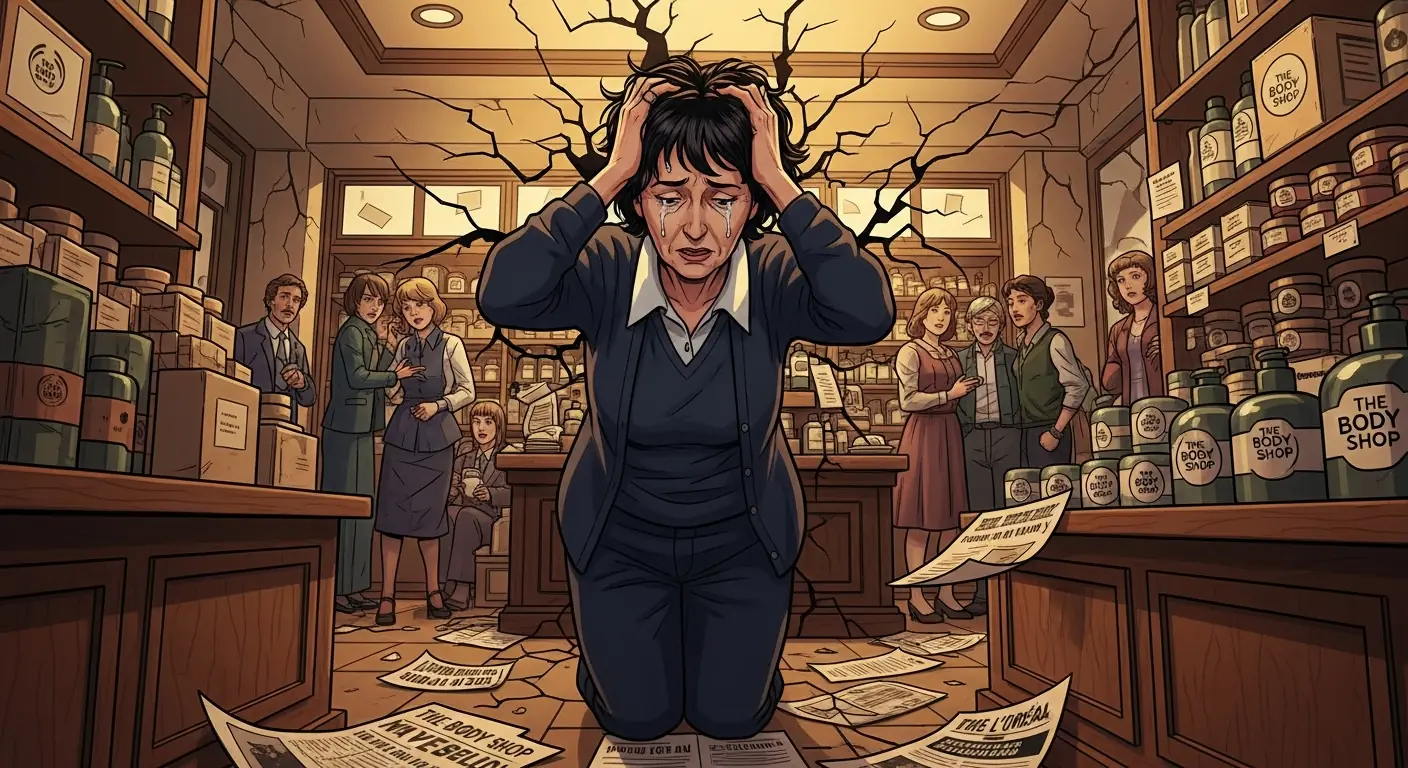
The ink was barely dry on the L’Oréal deal, and the tremors were already shaking the foundations of The Body Shop’s carefully constructed ethical image. The immediate aftermath was a maelstrom of disappointment, anger, and a profound sense of loss among its most loyal customers and advocates.
Anita Roddick, ever the fighter, continued to defend the decision. She was quoted saying things like, “It’s the only way we’re going to change the industry.” She even joked about “subverting the system from the inside.” She passionately believed in her “Trojan horse” theory, viewing the sale not as an end, but as a strategic maneuver to amplify her life’s work. She truly saw it as a way to get L’Oréal’s vast resources and global reach to work for, rather than against, the values she held dear.
However, the public perception was brutal. The narrative quickly coalesced around “sellout.” The woman who had embodied ethical entrepreneurship, who had railed against the very forces she now aligned with, was seen by many as having compromised her principles for profit. This wasn’t just about business; it was about trust. And that trust, painstakingly built over decades, was shattered in an instant.
- The Animal Testing Dilemma: This was the most glaring and visceral point of contention. L’Oréal, while stating a commitment to ending animal testing and investing in alternative methods, still sold products in markets like mainland China where animal testing was, and for a long time remained, legally mandated for imported cosmetics. The Body Shop, under L’Oréal’s ownership, had to navigate this complex reality. While The Body Shop itself continued its explicit “no animal testing” policy, the parent company’s practices cast a long, uncomfortable shadow. How could a brand be “cruelty-free” if its profits ultimately benefited a corporation that wasn’t? This was the core ethical paradox that many couldn’t reconcile.
- Brand Dilution and Loss of Edge: Under L’Oréal, The Body Shop was still “The Body Shop,” but was it really? The fierce independence, the punk-rock spirit, the raw activism – could that survive under the rigid structures of a massive corporate conglomerate? Critics argued that the brand would inevitably lose its rebellious edge, its ability to truly challenge the status quo, if it was now part of the establishment. The messaging, while still ethical, often felt less urgent, less authentic.
- Employee Morale and Culture Shift: For employees who had joined The Body Shop specifically because of its unique culture and mission, the acquisition was a jarring experience. While L’Oréal promised to maintain The Body Shop’s distinct identity, the integration into a different corporate culture, with different priorities and processes, was bound to create friction and disillusionment for some.
- Anita’s Health and Retreat: Tragically, Anita Roddick’s health was declining around this time. She had been diagnosed with Hepatitis C in 1197 and later revealed it publicly, knowing she had a limited time. This undoubtedly played a role in her decision-making process. Perhaps it was a desire to secure the future of her legacy, to ensure The Body Shop’s survival beyond her own life, that pushed her towards the pragmatic, if controversial, choice. She became less visible in the public eye in the years following the sale, focusing on her health and other activist projects.
The sale of The Body Shop to L’Oréal became a case study in the complex interplay of ethics, business pragmatism, and brand loyalty. It exposed the difficult truth that even the most principled entrepreneurs might face a moment where the pursuit of mission requires a compromise that feels like a betrayal. For Anita Roddick, it was a calculated risk, a gamble on her ability to influence from within. For her adoring public, it was the moment the high priestess of ethical commerce seemed to fall from grace. The legacy she had so carefully built was suddenly under fierce interrogation, and the soul of her company hung precariously in the balance. The question was no longer if things would change, but how profoundly.
🕯️ Chapter 8: The Fading Flame: Post-Roddick Era and the Search for Identity
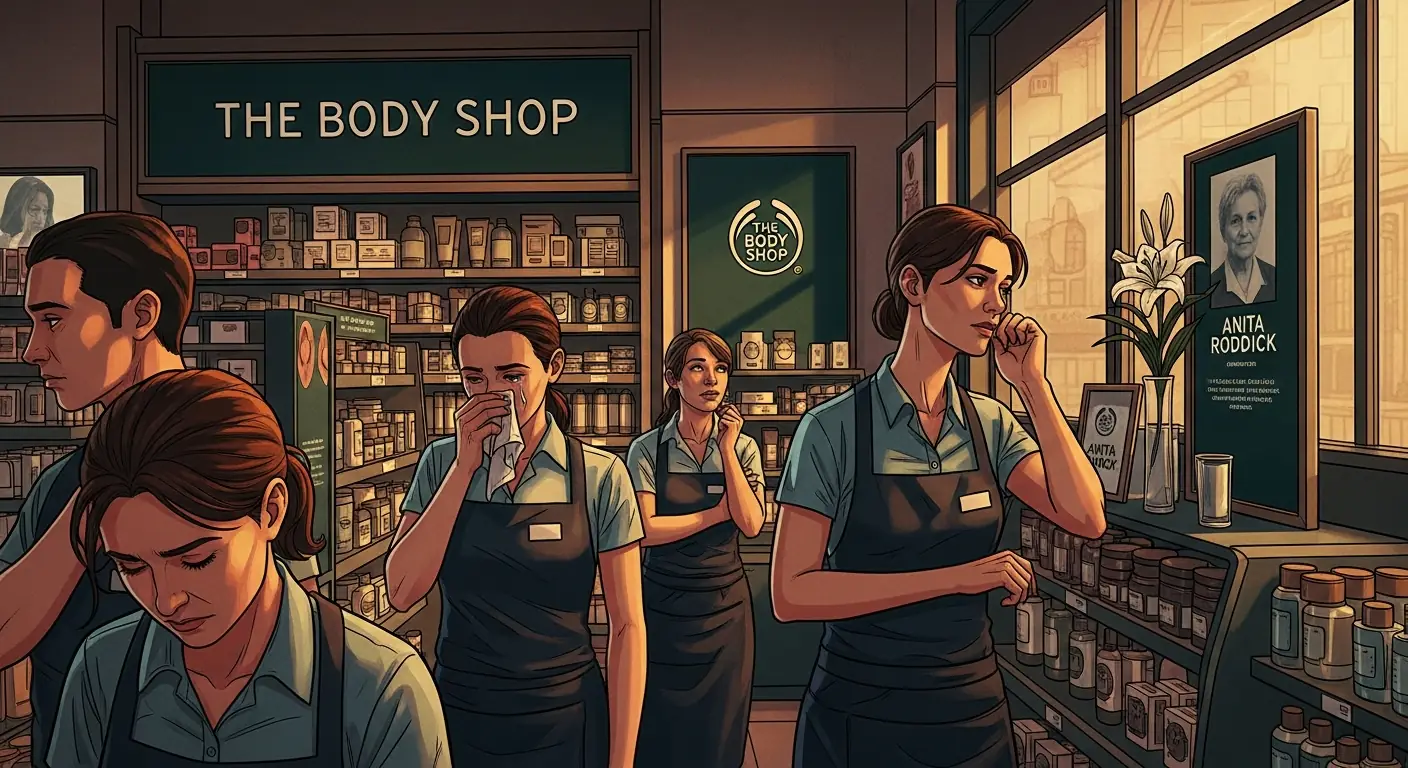
Just a year after the controversial sale to L’Oréal, Anita Roddick passed away in September 2007 at the age of 64. Her death, while mourned globally, also marked a profound shift for The Body Shop. The driving force, the very heart and soul of the brand, was gone. The “Trojan horse” was now fully inside the city walls, but its most ardent warrior was no longer there to steer it.
Under L’Oréal’s stewardship, The Body Shop entered a period of strategic re-evaluation and, for many, a slow but perceptible dilution of its radical spirit. L’Oréal attempted to integrate The Body Shop into its vast portfolio, aiming to leverage its global reach and operational efficiencies. They kept the ethical messaging, they maintained the no-animal-testing policy for The Body Shop’s own products (while still navigating the parent company’s broader issues), and they continued some of its social campaigns.
However, the spark was different. The raw, authentic, almost confrontational activism that Anita embodied was hard to replicate within a corporate structure.
- Marketing Shift: The marketing became more polished, more conventional. While still emphasizing natural ingredients and ethics, it lost some of the grassroots, word-of-mouth energy that defined its early years. It felt less like a movement and more like a well-managed brand.
- Product Development: There was an effort to modernize product lines and appeal to a broader demographic, sometimes at the expense of the simple, functional aesthetic that original fans loved. The market had moved on, and The Body Shop tried to move with it, but struggled to find its unique voice amidst the cacophony of new “natural” and “ethical” brands.
- Financial Performance: Despite L’Oréal’s resources, The Body Shop’s financial performance became increasingly challenging. Sales growth slowed, and profitability became an issue. It seemed that while L’Oréal brought scale, it couldn’t quite recapture the magic or the fierce loyalty that Anita had inspired. The brand struggled to find its niche in a market it had essentially created. Its value to L’Oréal as a “green” subsidiary diminished as other, more nimble brands emerged, and as L’Oréal itself developed more sustainable initiatives within its core brands.
The “Trojan horse” strategy, in hindsight, proved to be far more complex than Anita might have hoped. While The Body Shop’s presence within L’Oréal undoubtedly raised internal awareness about ethical sourcing and sustainability, it didn’t fundamentally transform the behemoth in the way its founder envisioned. Instead, The Body Shop itself seemed to become more assimilated, its distinct identity slowly blurring.
“You can’t be an activist from within the system if the system eventually absorbs you. The Body Shop was a punch in the face to the industry. Under L’Oréal, it became a polite handshake.”
The ultimate irony came in 2017. A mere 11 years after acquiring it, L’Oréal sold The Body Shop. The buyer? Natura & Co, a Brazilian cosmetics group known for its strong ethical and sustainability credentials. The sale price was €1 billion (approximately $1.1 billion USD), a figure remarkably similar to what L’Oréal had paid, suggesting little growth or significant value creation during their tenure. For many, this second sale was a quiet validation of the initial outrage. The Body Shop simply hadn’t fit. Its independent, activist spirit was too potent, too unmanageable, for the corporate confines of L’Oréal.
Natura & Co seemed like a more natural home, a company whose values aligned more closely with The Body Shop’s original ethos. There was a renewed hope that the brand could rediscover its soul under new, more sympathetic ownership. However, the years of corporate ownership had taken their toll. The market was even more competitive, and the brand’s identity, once so clear, was now muddied. The flame that Anita Roddick had lit so brightly had dimmed, and even with a seemingly ideal new owner, rekindling its original intensity would be an uphill battle. The journey of The Body Shop after Anita became a poignant testament to the challenge of maintaining an authentic, purpose-driven brand in the relentless pursuit of scale and profit.
💔 Chapter 9: The Final Chapter for the Body Shop: Another Sale, Another Struggle
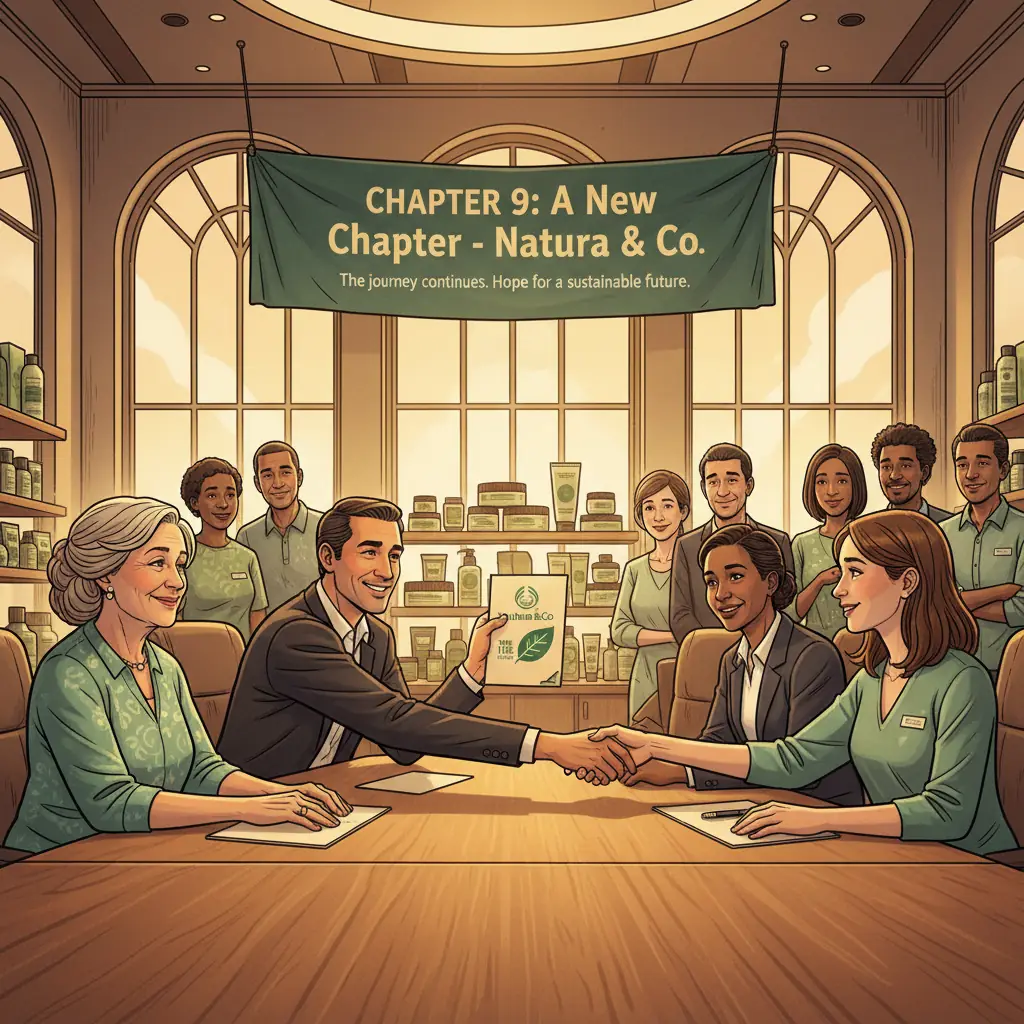
The journey for The Body Shop after Anita Roddick’s passing and the L’Oréal acquisition was far from over. The sale to Natura & Co in 2017 was met with cautious optimism. Here, finally, was a parent company that understood ethical business, a company that shared a similar DNA of sustainability and social responsibility. It felt like a homecoming, a potential redemption for the brand that had lost its way.
Natura & Co, a Certified B Corporation, had built its own success on principles mirroring The Body Shop’s original vision: Amazon rainforest conservation, fair trade, and natural ingredients. The hope was that under Natura’s wing, The Body Shop could finally shed the corporate baggage of the L’Oréal years and truly flourish, rediscovering its activist roots and innovating within a supportive ethical framework.
Natura & Co certainly tried. They invested in new marketing campaigns, brought back some of The Body Shop’s classic product lines, and attempted to reinvigorate its activist messaging. They pushed for even higher sustainability standards and focused on community fair trade initiatives, which were a cornerstone of Anita’s original vision.
However, the market had evolved relentlessly. The competition was fiercer than ever. Small, agile, digitally native ethical beauty brands were popping up everywhere, often with lower overheads and a more direct connection to their customer base. Legacy brands had also significantly upped their game, incorporating “natural” and “sustainable” elements into their offerings. The Body Shop, still operating with a large physical retail footprint and a relatively complex global operation, struggled to keep pace.
- Retail Challenges: The global shift towards online shopping and the decline of traditional high street retail hit The Body Shop hard. Its extensive network of physical stores, once an asset, became a liability in many markets, incurring high operational costs.
- Brand Fatigue and Identity Crisis: Despite Natura’s efforts, The Body Shop still struggled with brand fatigue. Its core identity, once so clear and revolutionary, had been diluted by years of corporate ownership and a rapidly changing consumer landscape. Younger generations, while interested in ethical beauty, didn’t necessarily connect with The Body Shop’s history in the same way its original customers did. They had a plethora of new, seemingly more innovative options.
- Profitability Pressures: Ultimately, even under Natura, The Body Shop continued to face significant profitability challenges. In late 2023, Natura & Co announced its decision to sell The Body Shop to Aurelius Group, a private equity firm, for a significantly reduced price of £207 million (approximately $260 million USD). This was a stark contrast to the billion-dollar valuation just 17 years prior.
This third sale was a sober reminder of the immense difficulty in sustaining a brand’s original ethos and market relevance over decades, especially after periods of misalignment. The brand that had once been valued at over a billion dollars was now being sold for a fraction of that. It underscored the fact that even with ideal ownership and a commitment to values, market forces, operational complexities, and a loss of historical momentum can be incredibly difficult to overcome.
The Aurelius Group, a turnaround specialist, will now embark on yet another attempt to revive The Body Shop. This move signals a primary focus on financial restructuring and operational efficiency, rather than a deep ideological alignment. The brand that was born out of a fierce rebellion against conventional business practices has now, in many ways, become a conventional business problem – a turnaround project for private equity.
The journey of The Body Shop since Anita Roddick’s initial, defiant act of creation is a saga of ambition, idealism, compromise, and the relentless churn of the market. It’s a testament to the power of a founder’s vision, but also a cautionary tale about the fragility of authenticity and the compromises that even the most principled ventures might face when chasing scale and navigating the treacherous waters of global commerce. The flame Anita lit still flickers, but it’s a far cry from the roaring inferno it once was.
🎭 Chapter 10: The Uncomfortable Truth: Can a Saint Truly Thrive in the Marketplace?
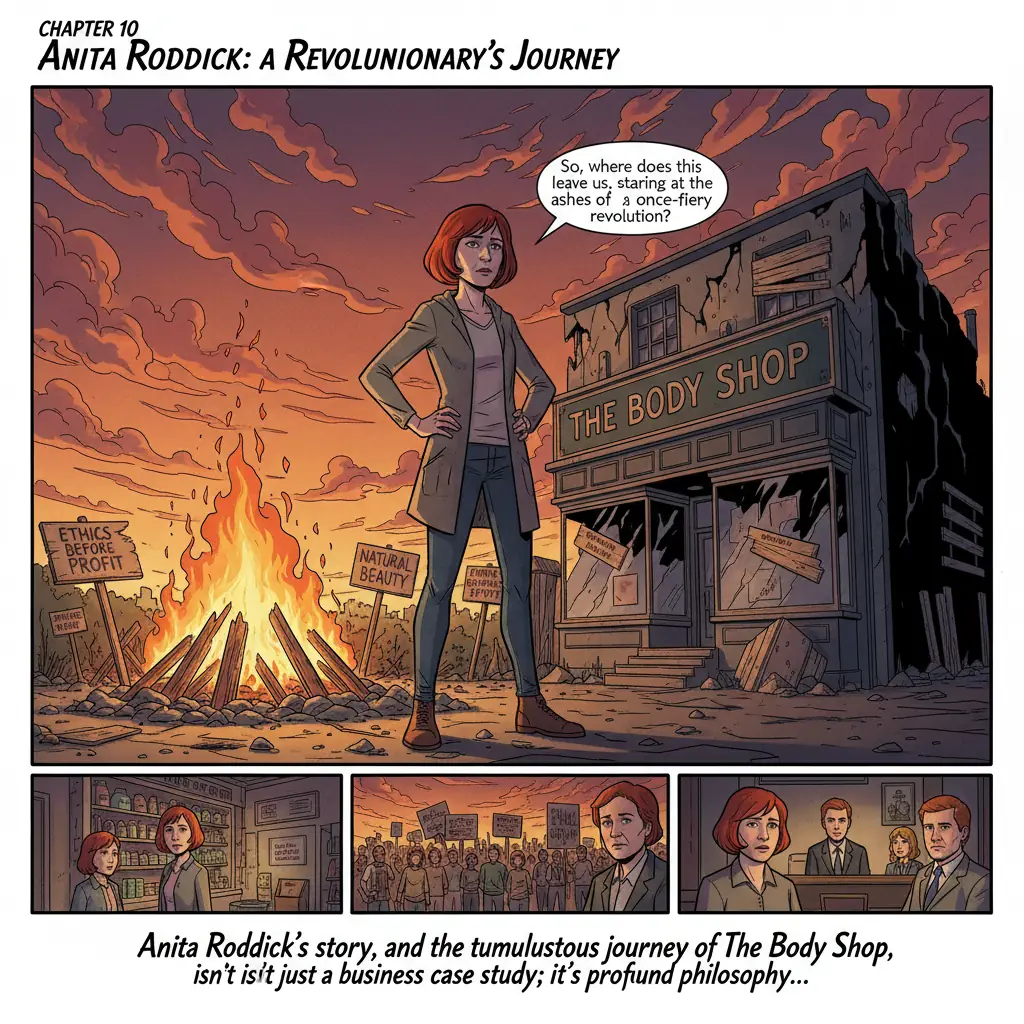
So, where does this leave us, staring at the ashes of a once-fiery revolution? Anita Roddick’s story, and the tumultuous journey of The Body Shop, isn’t just a business case study; it’s a profound philosophical inquiry into the very nature of ethical capitalism. It forces us to confront an uncomfortable truth: can a truly activist, purpose-driven brand survive and thrive indefinitely within the confines of the global marketplace without eventually compromising its soul?
Anita Roddick proved, unequivocally, that you can build a massive, profitable business on ethics. She wasn’t just a dreamer; she was a shrewd businesswoman, a master marketer, and an uncompromising advocate. She created a blueprint for an entire generation of entrepreneurs who sought to do good and do well. Her legacy isn’t diminished by the later struggles of The Body Shop; it’s arguably amplified by the sheer audacity of her initial success. She showed it was possible, and that changed everything.
But the story of The Body Shop’s eventual sales – first to L’Oréal, then to Natura, and now to Aurelius – paints a more nuanced, perhaps even tragic, picture. It suggests that while the initial spark of a founder’s vision can ignite a revolution, maintaining that fire requires constant vigilance, adaptation, and an almost superhuman resilience against the relentless pressures of scale, competition, and profit expectations.
Here are some key takeaways from this epic saga:
- The Founder’s Shadow: The Body Shop was, for decades, synonymous with Anita Roddick. Her personality, her passion, her unyielding moral compass was the brand. When she was gone, the brand struggled to articulate its identity with the same conviction. This highlights the double-edged sword of a strong founder brand: incredibly powerful in its prime, but potentially vulnerable to succession challenges.
- The Price of Purity: As The Body Shop scaled, it became increasingly difficult to maintain absolute purity in every aspect of its operations. The complexities of global supply chains, the demands of shareholders (after going public), and the fierce competition all chipped away at the ideal. The L’Oréal sale was the ultimate, dramatic expression of this tension: a pragmatic decision made under pressure, but one that came at an immense cost to brand integrity.
- The “Trojan Horse” Dilemma: Anita’s belief that she could change L’Oréal from within was a noble, if perhaps naive, aspiration. The reality is that large corporate cultures are incredibly resilient and slow to change. More often than not, the smaller, acquired entity is assimilated into the larger culture rather than transforming it. The Body Shop’s subsequent struggles under L’Oréal and then Natura suggest that a true “Trojan horse” strategy is exceptionally difficult to execute successfully.
- The Shifting sands of “Ethical”: The Body Shop was a pioneer, but the world caught up. What was once radical became standard. This meant the brand constantly had to innovate, not just in products, but in its purpose. When everyone is “ethical,” how do you define your unique ethical proposition? This is a challenge for all purpose-driven brands: how to stay ahead, how to keep pushing boundaries, and how to maintain relevance when your initial mission has been, in part, achieved by the wider industry.
- The Business Reality: At the end of the day, a business, even an ethical one, must generate profit to survive. When profits wane, even the most noble missions come under threat. The sales of The Body Shop reflect a desperate search for a sustainable business model, a way to fund its mission in an increasingly challenging market.
Anita Roddick was a disruptor, a visionary who challenged the very foundations of corporate responsibility. She showed that business could be a powerful tool for social change, not just a vehicle for wealth accumulation. Her life and work remain an enduring inspiration, a testament to the power of conviction and the audacity of hope.
But the story of The Body Shop after her departure, and after the pivotal L’Oréal sale, serves as a poignant reminder that even the strongest moral compass can get lost in the labyrinth of commerce. It leaves us with a lingering question: Was the sale to L’Oréal a tragic betrayal, or a desperate, perhaps even necessary, act to ensure the survival of a legacy that was too big for one woman to carry alone? The answer, like most things in the complex world of business and morality, is likely somewhere in the messy, uncomfortable middle.
💥 Chapter 11: The Ripple Effect: Anita’s Undeniable Legacy, Beyond the Sales
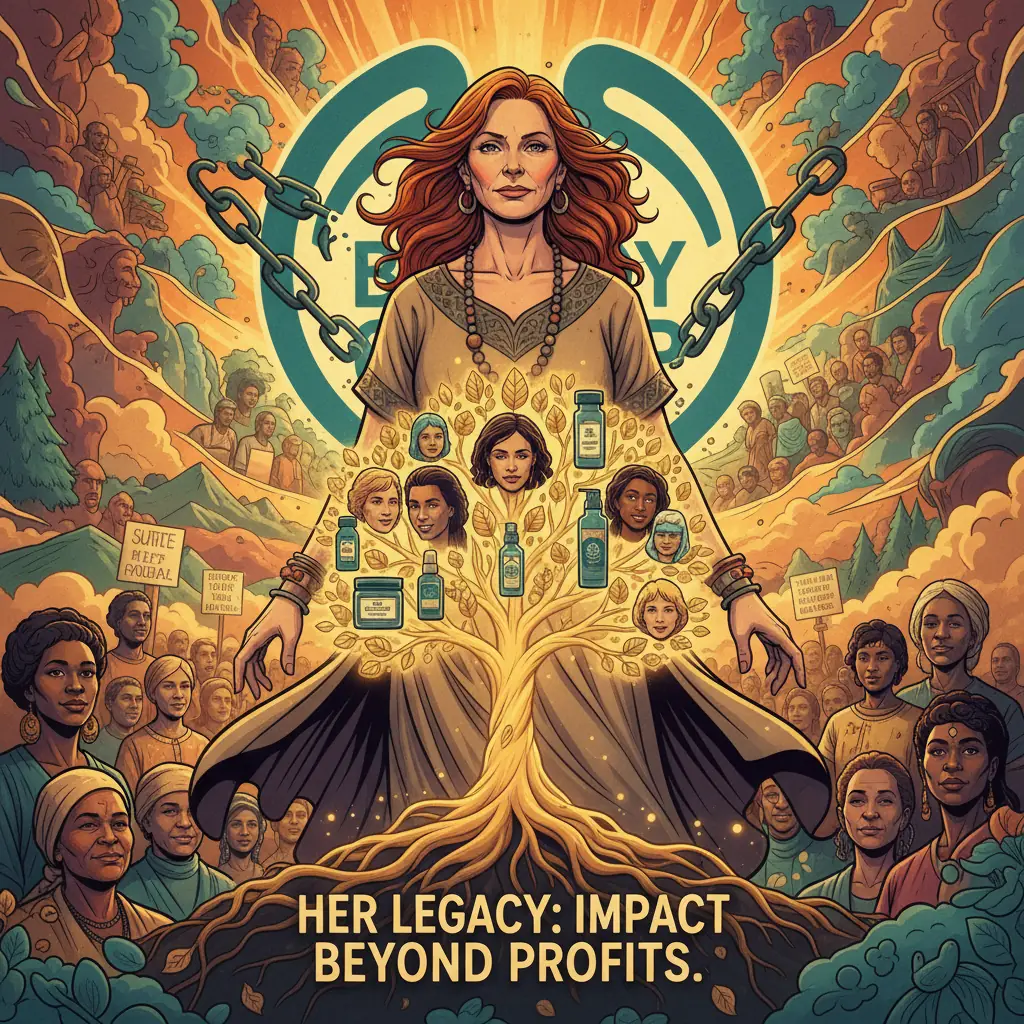
Let’s be crystal clear: the post-sale struggles of The Body Shop do not erase the monumental impact of Anita Roddick. Far from it. Her legacy isn’t just about the financial success or the controversies; it’s about the seismic shift she created in the way we think about business itself. She was a MogulFeed mogul before MogulFeed even existed, a punk-rock CEO who took on giants with nothing but passion, principles, and a damn good pot of Body Butter.
Think about it: before Anita, “ethical business” was a fringe concept, often relegated to co-ops or small, idealistic ventures that rarely scaled. She blew that perception out of the water. She showed that you could be fiercely profitable while being fiercely principled. She didn’t just advocate for change; she embodied it, making millions of dollars while simultaneously fighting for human rights, animal welfare, and environmental protection. That’s not just business; that’s a revolution in a bottle.
Here’s why her ripple effect is still being felt today:
- Pioneering Conscious Consumerism: She didn’t invent the idea of caring about where your products came from, but she made it mainstream. She educated generations of consumers about animal testing, fair trade, and environmental impact. Every time you see a “cruelty-free” label, or a brand talking about “sustainable sourcing,” you’re witnessing the long shadow of Anita Roddick. She shifted consumer expectations, forcing entire industries to respond.
- Inspiring a Generation of Entrepreneurs: How many founders of purpose-driven brands today cite Anita Roddick as an inspiration? Countless. She proved that you don’t have to be a suit-wearing, MBA-wielding corporate drone to build an empire. You could be a bohemian, a traveler, an activist, and still kick corporate ass. She opened the door for a whole new archetype of business leader.
- Shifting Corporate Responsibility: While The Body Shop’s eventual sale to L’Oréal was controversial, it’s undeniable that The Body Shop’s existence pushed big corporations to re-evaluate their own practices. They saw the market demand for ethical products and the power of a values-driven brand. It contributed to the broader movement of Corporate Social Responsibility (CSR) and Environmental, Social, and Governance (ESG) criteria becoming integral, rather than peripheral, to business strategy.
- A Masterclass in Brand Building: Without huge advertising budgets, Anita Roddick built a global brand through storytelling, activism, and authentic connection. Her campaigns weren’t just about selling products; they were about selling a vision. This grassroots, mission-led brand building is now a gold standard for many startups.
- The Power of Outrage: Anita was never afraid to be angry, to be outraged by injustice, and to channel that emotion into action. She taught us that passion, when directed strategically, can be an incredibly powerful business tool. Her indignation wasn’t just performative; it was authentic, and it resonated deeply with customers tired of corporate doublespeak.
Yes, the story of The Body Shop’s sales can feel like a cautionary tale about compromise. But look closer. The very fact that The Body Shop was worth a billion dollars to L’Oréal, and then later sold to Natura & Co, a company built on similar ethical foundations, speaks volumes. It shows that the values Anita championed had become valuable assets, even if managing them within traditional corporate structures proved challenging.
“If you think you’re too small to make a difference, try sleeping with a mosquito.”
Anita Roddick didn’t just build a business; she built a movement. She didn’t just sell products; she sold a better way of living, a more conscious approach to consumption. She might not have completely changed the system from within L’Oréal, but she certainly rattled its cage, opened its eyes, and inspired an army of future entrepreneurs to keep fighting the good fight. Her legacy isn’t tied to the ultimate fate of The Body Shop’s ownership; it’s etched into the very fabric of ethical commerce, a permanent reminder that business can, and should, be a force for good. The high priestess may have sold her crown, but she left behind an indelible blueprint for rebellion.
💡 Chapter 12: MogulFeed Takeaways: What Anita Taught Us About Soul and Scale
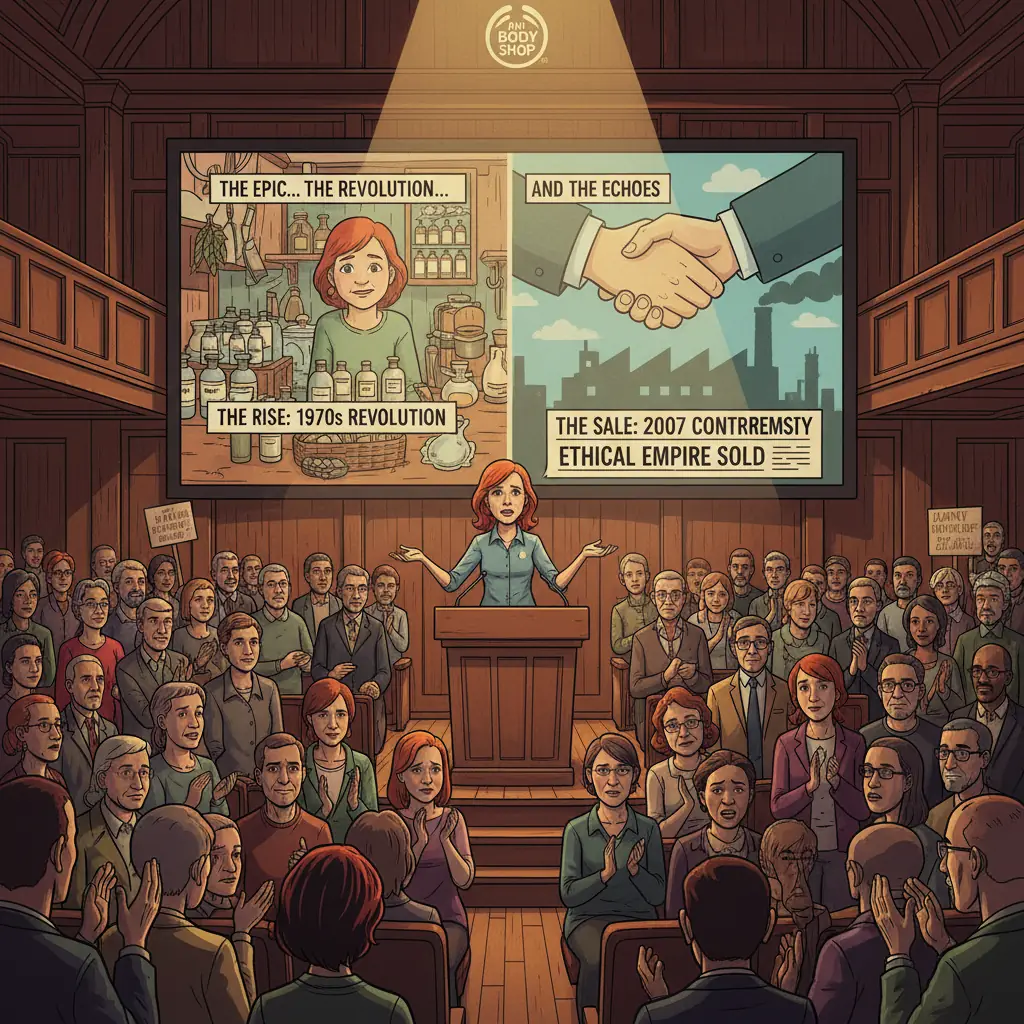
Alright, you’ve heard the epic. The rise, the revolution, the radical vision, and the controversial sale that still echoes in the halls of ethical capitalism. Anita Roddick’s journey with The Body Shop is a masterclass in entrepreneurship, activism, and the brutal realities of scaling a mission-driven enterprise. So, what can you, the aspiring mogul, the rebel with a spreadsheet, take away from this saga?
-
Authenticity is Your North Star (But Guard It Fiercely): Anita Roddick proved that a brand built on genuine values can achieve explosive growth and fierce loyalty. People aren’t just buying your product; they’re buying your story, your mission, your soul. But here’s the kicker: that authenticity is incredibly fragile. It’s easy to build, but even easier to compromise or dilute as you scale. Your challenge isn’t just to find your authentic voice, but to protect it with every fiber of your being, especially when the big money comes calling. Define your non-negotiables early, and etch them in stone.
-
Activism Isn’t a Side Hustle; It’s Your Brand Strategy: The Body Shop didn’t do activism and business; activism was its business. It generated PR, built community, and created a competitive moat that traditional marketing couldn’t touch. Don’t relegate your purpose to a CSR report. Integrate it into your product, your operations, your customer experience. Make your values so central that they become synonymous with your brand. In a noisy world, a clear, passionate stand is the loudest megaphone you’ll ever own.
-
Scaling a Revolution Requires Radical Pragmatism (and Tough Choices): Anita was a radical, but she was also a pragmatist. Franchising, going public, and yes, even selling to L’Oréal – these were all pragmatic business decisions aimed at scaling her impact or securing the future of her venture. The line between pragmatism and compromise is razor-thin. You’ll face moments where your ideals clash with market realities. The question isn’t if you’ll compromise, but where you draw the line, and why. Understanding your deepest motivations for growth (impact vs. pure profit) will guide these agonizing decisions.
-
The Peril of the Founder’s Shadow: While a strong founder personality can be an incredible asset, it can also become a vulnerability. The Body Shop struggled to maintain its unique identity after Anita’s direct leadership faded. As you build, think about how to embed your values and your mission into the organizational DNA, not just your personal brand. How do you create a culture that can carry the torch long after you’ve moved on? This means empowering leaders, codifying your principles, and building systems that reflect your ethos, rather than relying solely on your charisma.
-
The Market Always Evolves; So Must Your Purpose: The Body Shop pioneered “ethical beauty,” but then the market caught up. What was revolutionary became standard. You can’t rest on your laurels, even if your laurels are made of sustainably harvested bamboo. Your purpose-driven brand needs to continually innovate, not just in products, but in how it defines and expresses its mission. What’s the next fight? What’s the new way to make a difference? Staying relevant means staying restless.
Anita Roddick was a disruptor, a visionary, and a complex figure who dared to dream of a better way to do business. Her story isn’t a neat, tidy narrative of unbroken triumph. It’s a messy, glorious, heart-wrenching epic of what happens when unyielding principles collide with the relentless machinery of global commerce. She showed us that business can indeed have a soul, but that soul is precious, fragile, and constantly under siege. Go forth, build your empires, but remember the lessons of the Renegade Saint – and guard your soul with everything you’ve got. The world is waiting for your revolution.
💡 Key Insights
- ▸ Purpose-driven brands can command fierce loyalty and achieve explosive growth, but maintaining that purpose through scaling and market pressures is a continuous, existential battle. Founders must embed their values deeply into every operational layer and prepare for the inevitable compromises that come with extraordinary success.
- ▸ The dilemma of 'selling out' isn't just about money; it's often a complex calculation of resources, reach, and the perceived ability to amplify impact. Entrepreneurs building mission-led ventures must define their non-negotiables early and anticipate the moment when staying independent becomes a greater threat to their mission than strategic alignment, even with an ideological opponent.
- ▸ Brand authenticity is a fragile, potent currency. While consumers crave it, they are also acutely sensitive to perceived hypocrisy. Any strategic move, especially an acquisition, must be communicated with radical transparency and a clear, credible rationale, or risk alienating the very community that fueled the brand's rise and made it valuable in the first place.
Sources
- The Guardian: The day the Body Shop died: how Anita Roddick's anti-establishment legacy was sold for profit ↗
- New York Times: Anita Roddick, Founder of The Body Shop, Dies at 64 ↗
- BBC News: The Body Shop founder Dame Anita Roddick dies ↗
- Forbes: Why L'Oreal Is Selling The Body Shop For A Steep Discount ↗
- The Body Shop Official Website: Our History ↗