The Commodore's Cutthroat Empire: How Vanderbilt Sliced His Way to America's Richest Man
Forget polite society and gilded age niceties. Cornelius Vanderbilt didn't just build an empire; he wrestled it from the jaws of chaos, leaving a trail of sunken rivals and shattered monopolies in his wake. This is the raw, untamed saga of how a Staten Island ferry boy became America's wealthiest and most feared capitalist, a relentless force who redefined power itself.
View all stories about this mogul
⚓ Chapter 1: The Raw Tide of Staten Island – Birth of a Bare-Knuckle Brawler
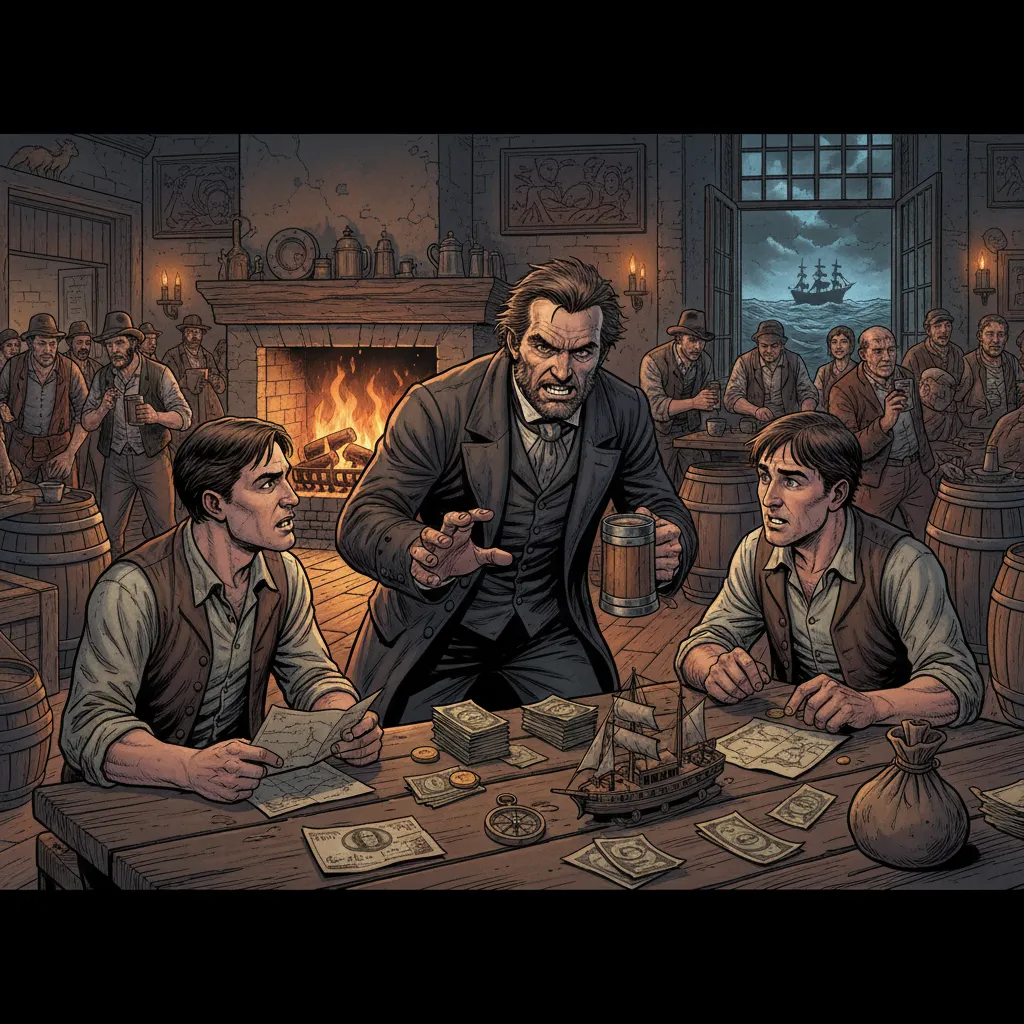
Alright, lean in. Forget the polished portraits, the gilded mansions, and the respectable history books. We’re not here for a tea party. We’re here to talk about a man who chewed up and spit out the 19th century, a living, breathing force of nature named Cornelius Vanderbilt. Before he was the Commodore, before he commanded fleets of steamships and armies of iron horses, he was just a kid, a raw-boned, scrawny son of a farmer and ferryman, born on Staten Island in 1794.
Picture it: The year is 1800. New York City is a bustling but still relatively small port. Staten Island, then, wasn’t the suburban sprawl we know today; it was a rough-and-tumble outpost, a place where the salt air bit at your skin and the currents of the Kill Van Kull could drown a man without a second thought. Young Cornelius wasn’t born with a silver spoon; he was born with calloused hands and a fire in his belly that would eventually incinerate every rival in his path.
His father, Cornelius van Derbilt Sr., was a hard man who worked the waters, ferrying goods and people between Staten Island and Manhattan. It was a tough, thankless grind, and the elder Vanderbilt wasn’t exactly raking in the dough. Young Cornelius – let’s call him Corny for a minute, though nobody dared back then – watched, he learned, and he burned. He saw the endless grind, the meager profits, the sheer physical toll, and something clicked. He wouldn’t just work the water; he would master it. He wouldn’t just participate in the game; he would own the scoreboard.
From an early age, it was clear Corny wasn’t built for classrooms or polite society. He was a brawler, a schemer, a boy whose mind was always calculating angles, opportunities, and weaknesses. School was a distraction. The sea, the currents, the bustling docks of New York—that was his real university. He learned to read the tides, to trim a sail, to haggle with merchants, and, most importantly, to fight for every inch.
His mother, Phebe Hand Vanderbilt, was the one who famously loaned him $100 to buy his first boat, a two-masted periauger (a kind of shallow-draft sailboat). But this wasn’t some Hallmark movie moment. This was a deal, pure and simple. Corny, just 16 years old, had to clear some farmland for her in exchange. Even his own family transactions were a brutal lesson in capitalism. He got the boat, and he immediately put it to work. He didn’t just ferry people; he became a one-man logistics operation. He hauled produce, lumber, passengers, anything that needed moving across the churning waters of New York Harbor. He worked sun-up to sundown, often through the night, developing a reputation for reliability, speed, and an almost superhuman stamina.
This wasn’t just about making a living; it was about laying the groundwork for an empire. He wasn’t just steering a boat; he was steering his destiny, with the kind of single-minded focus that would make a modern-day startup founder look like a slacker. He saw the inefficiencies, the unmet demands, the endless potential of a rapidly growing city and its surrounding islands. He was a shark in training, and the waters of New York Harbor were his feeding ground. This wasn’t some grand vision born in a boardroom; it was forged in the relentless, gritty reality of the docks, where every penny was earned with sweat, cunning, and a willingness to do whatever it took.
⚔️ Chapter 2: The Staten Island Scraps – Learning to Fight Dirty
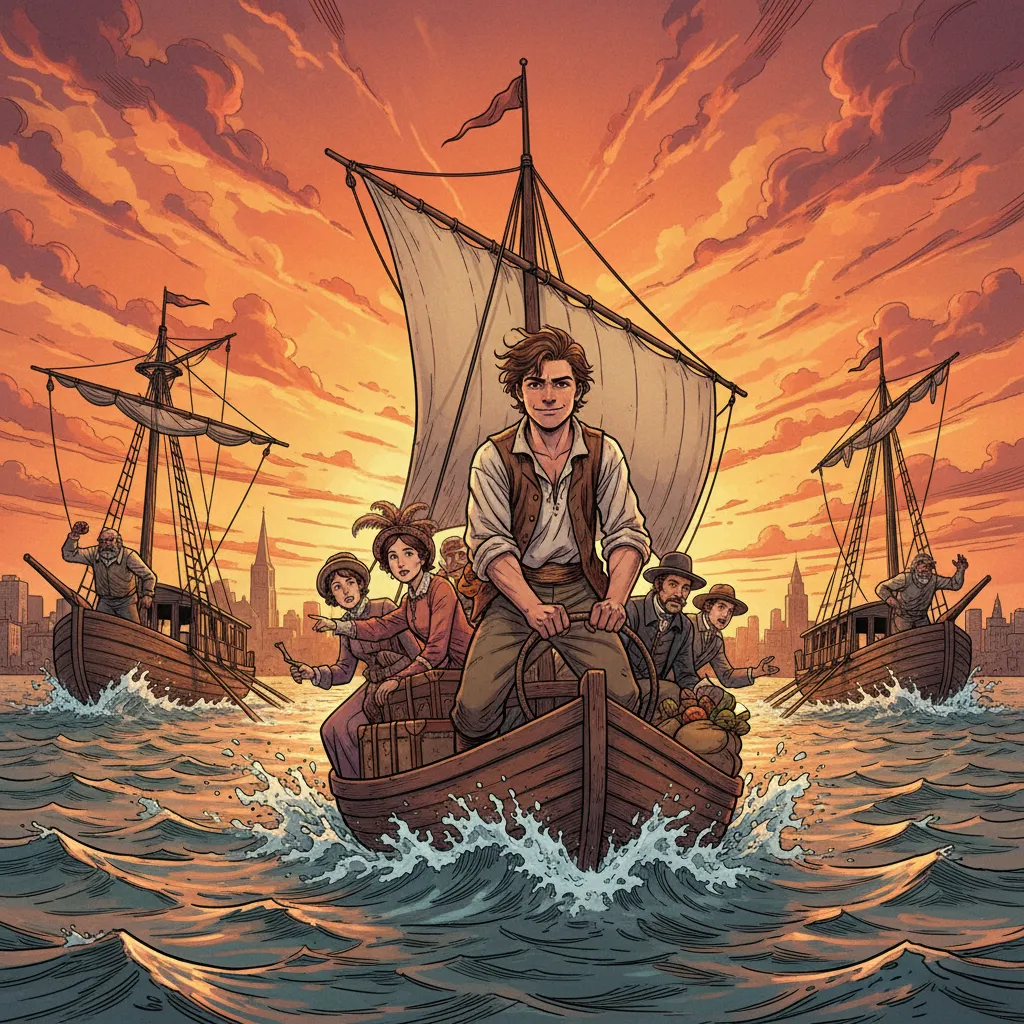
Now, imagine that 16-year-old kid, Cornelius Vanderbilt, with his little periauger. He wasn’t just ferrying people; he was disrupting the existing ferry services. And let me tell you, the incumbents didn’t like it one bit. This wasn’t a gentleman’s game. This was a bare-knuckle brawl for every passenger, every bushel of produce, every dollar.
The established ferry operators had been doing things “their way” for decades. They had set prices, established routes, and probably had a cozy little cartel going. Then along comes Corny, with his battered boat and his relentless work ethic. He offered lower fares. He ran more frequently. He ran at odd hours, when others had packed up for the night. He was faster, more reliable, and frankly, hungrier.
This was his first taste of what would become his signature move: undercutting and outworking the competition. He wasn’t afraid to lose a little money upfront if it meant driving rivals out of business. He understood that market share was power, and he was willing to bleed for it. Other ferrymen would try to intimidate him, perhaps even sabotage his boat. But Corny wasn’t one to back down. He’d stare them down, match their aggression, and then beat them where it hurt most: their wallets.
“I have been in a position where I was obliged to do a good deal of fighting, but I never did a bad thing.”
Yeah, right. “Never did a bad thing.” That’s the kind of line you say after you’ve already won. What he really meant was, “I never did a bad thing that didn’t help me win.” His definition of “good” was probably synonymous with “profitable.”
He quickly expanded. The $100 loan from his mother turned into enough profit to buy more boats. He started a small fleet. He didn’t just operate; he managed. He hired other ferrymen, giving them a share of the profits, motivating them to work as hard as he did. This was an early, crude form of incentive-based compensation, decades before it became a boardroom buzzword. He understood that a motivated crew was a productive crew, and a productive crew meant more money.
He wasn’t just a captain; he was a CEO of a nascent, cutthroat transportation startup. He learned about maintenance, scheduling, customer service (of a sort – his “customer service” was mainly about speed and reliability, not charm), and, crucially, about finance. He saved every penny, reinvested every dollar. He was building capital, not just for a rainy day, but for the next big acquisition, the next strategic move.
This Staten Island period was his crucible. It’s where he developed the iron will, the strategic cunning, and the utter lack of sentimentality that would define his entire career. He saw the world as a zero-sum game: for him to win, someone else had to lose. And he was always, always playing to win. He learned that alliances were temporary, competition was eternal, and the only person you could truly trust was yourself. He watched the established players, saw their complacency, their inefficiencies, their belief that the rules they had made would protect them. And he laughed. Because Corny Vanderbilt didn’t play by anyone’s rules but his own. He was the economic equivalent of a street fighter, and he was just getting started. The waters of New York Harbor were about to get a whole lot rougher.
💨 Chapter 3: Steam’s Fury, Vanderbilt’s Vision – The Age of Iron & Fire
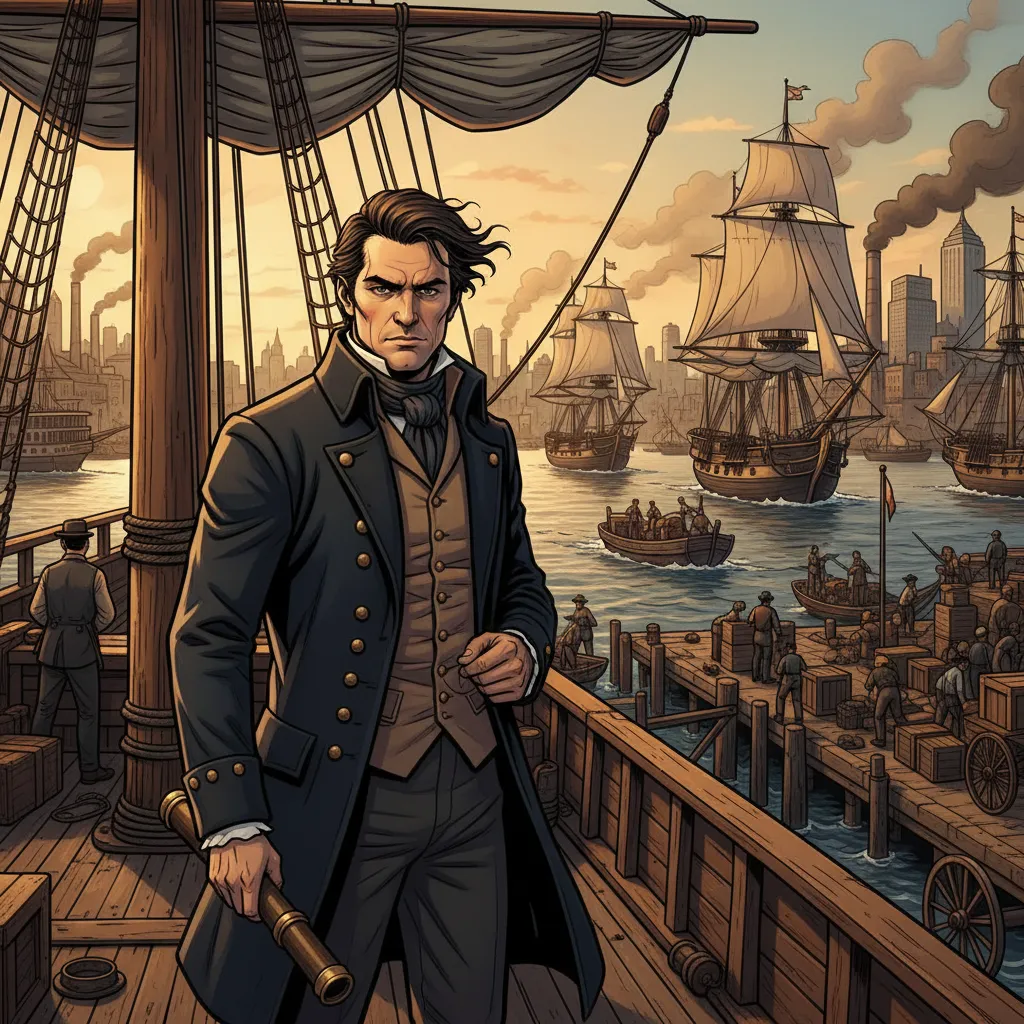
The year is 1817. Cornelius Vanderbilt is 23 years old, and he’s already a force to be reckoned with in New York Harbor. He’s got a small fleet, a reputation for being ruthless and reliable, and a growing pile of cash. But something new is brewing, something that’s about to change the world, and Vanderbilt, with his uncanny ability to spot a game-changer, saw it coming like a storm on the horizon.
That something? The steamboat.
Robert Fulton had successfully launched his steamboat, the Clermont, in 1807, proving that steam power could revolutionize water travel. But early steamboats were expensive, prone to breakdowns, and, critically, monopolized. Fulton and his partner, Robert Livingston, had secured exclusive rights from the New York state legislature to operate steamboats on New York waters. This meant anyone else trying to run a steam-powered vessel faced legal challenges, fines, or worse.
Most people would see a monopoly and back off. Vanderbilt saw a challenge. He saw the future. And he saw an opportunity to break a stranglehold on innovation.
He sold his sailing fleet, a bold move that showed his willingness to completely abandon a successful venture for a superior technology. He then went to work for Thomas Gibbons, another steamboat operator who was openly defying the Fulton-Livingston monopoly. Gibbons was a maverick, and Vanderbilt was his perfect lieutenant. This wasn’t just a job; it was an apprenticeship in high-stakes legal and commercial warfare.
Vanderbilt took command of Gibbons’ steamboat, the Bellona, and later the Swiftsure. His job was to run the boats, maintain them, and, most importantly, outrun and outmaneuver the monopoly’s enforcers. The Fulton-Livingston monopoly boats would try to ram Gibbons’ vessels, block their access, or report them to the authorities. Vanderbilt, ever the brawler, met aggression with aggression. He’d push his boats to their limits, develop daring new routes, and often engage in literal cat-and-mouse chases on the water.
This period was a masterclass in guerrilla warfare against an established monopoly. Vanderbilt learned the intricate dance of legal loopholes, the power of public opinion (as passengers flocked to the cheaper, faster non-monopoly boats), and the sheer audacity required to break an entrenched system. He wasn’t just a captain; he was a strategic operative, gathering intelligence, testing boundaries, and pushing envelopes.
The legal battle ultimately went all the way to the U.S. Supreme Court in the landmark case Gibbons v. Ogden (1824). The court, led by Chief Justice John Marshall, ruled against the New York state-granted monopoly, declaring that the federal government, not individual states, had the power to regulate interstate commerce. It was a monumental decision, a win for free markets, and a direct result of the relentless pressure applied by mavericks like Gibbons and his fearless captain, Vanderbilt.
When the dust settled, the steamboat industry exploded. The barriers to entry were gone. And who was perfectly positioned to capitalize on this new, wide-open market? Cornelius Vanderbilt. He had spent years learning the technology, understanding its economics, and mastering the cutthroat competition. He had navigated the legal minefield and emerged victorious.
He immediately launched his own independent steamboat lines. He didn’t just buy a boat; he built his own. This was a crucial insight: control the means of production. By owning his shipyards, he could build faster, cheaper, and more efficiently than competitors who had to rely on others. He named his boats things like North America, Victory, Citizen – names that radiated power and patriotism, but mostly power. The waters of New York were his to conquer, and he now had the ultimate weapon: steam. The age of sail was over. The age of Vanderbilt was just beginning.
🌊 Chapter 4: The Hudson River Hustle – Slicing Up the Competition
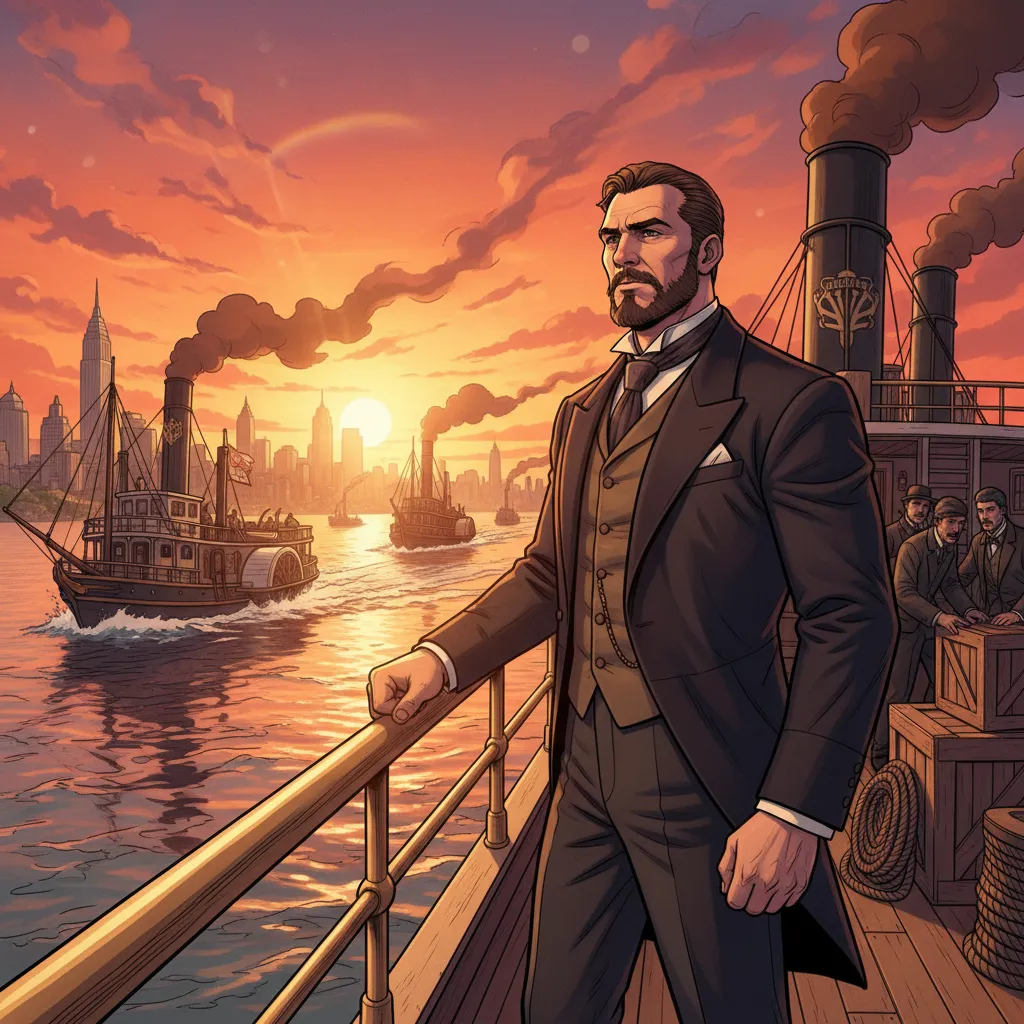
With the steamboat monopoly shattered and his own fleet growing, Cornelius Vanderbilt turned his gaze toward the most lucrative prize in New York: the Hudson River. This wasn’t just a river; it was the superhighway of its day, connecting New York City to Albany and the rapidly expanding Erie Canal system. It was a lifeline for commerce, a bustling artery of trade and passenger traffic. And, naturally, it was dominated by powerful, established steamboat lines.
These weren’t small-time operators. These were well-capitalized companies, often backed by influential politicians and wealthy investors. They had luxurious boats, established schedules, and a comfortable grip on the market. They charged high prices because, well, they could.
Enter Vanderbilt. He didn’t ask for a piece of the pie; he brought a chainsaw and started carving out his own. His strategy was audacious, simple, and utterly brutal: price wars to the death.
He’d launch his sleek, efficient, newly built steamboats on the same routes as the established lines. Then, he’d slash fares. If the going rate was $3, Vanderbilt would charge $1. If they matched him, he’d drop it to 50 cents. He’d even offer free passage, sometimes throwing in a meal, just to steal away every single passenger.
“I have no doubt that they will try to ruin me, but I tell you, I will ruin them!”
This wasn’t just about being cheaper; it was about market destruction and consolidation. Vanderbilt understood that he had superior boats (because he built them himself, remember?) and a leaner, meaner operation. He could absorb losses for longer than his competitors. He had a deeper war chest and an unwavering resolve. He was playing a game of chicken, and he never blinked.
The established companies, used to their cozy profits, were stunned. They couldn’t believe this upstart would sacrifice so much. They tried to buy him out, offering him enormous sums to stop competing. And sometimes, he’d take the money. He’d sign an agreement to stay off a certain route for a certain period, pocket a massive payout (often hundreds of thousands of dollars), and then use that capital to build more boats or launch a new war on a different route. He was essentially getting paid by his rivals to fund his next assault. It was brilliant, cynical, and devastatingly effective.
When the agreement ran out, or when a new opportunity arose, he’d be back, fiercer than ever. He wasn’t loyal to deals; he was loyal to profit and power. This became known as his “fare war” strategy, and it cemented his reputation as the “Commodore” – a title he earned not from military service, but from his undisputed command of his own merchant fleet.
The impact was twofold:
- Consumer Benefit: Passengers and merchants benefited immensely from lower fares and increased competition. This fueled trade and travel, accelerating economic growth.
- Competitor Annihilation: Vanderbilt systematically drove weaker companies into bankruptcy or forced them to sell out to him at fire-sale prices. He consolidated the steamboat industry on the Hudson and other key routes, becoming the dominant player.
He wasn’t just about price, though. He was also about efficiency and speed. His boats were known for being well-maintained and fast, ensuring a reliable and quick journey. He understood that in business, time was money, and he delivered both.
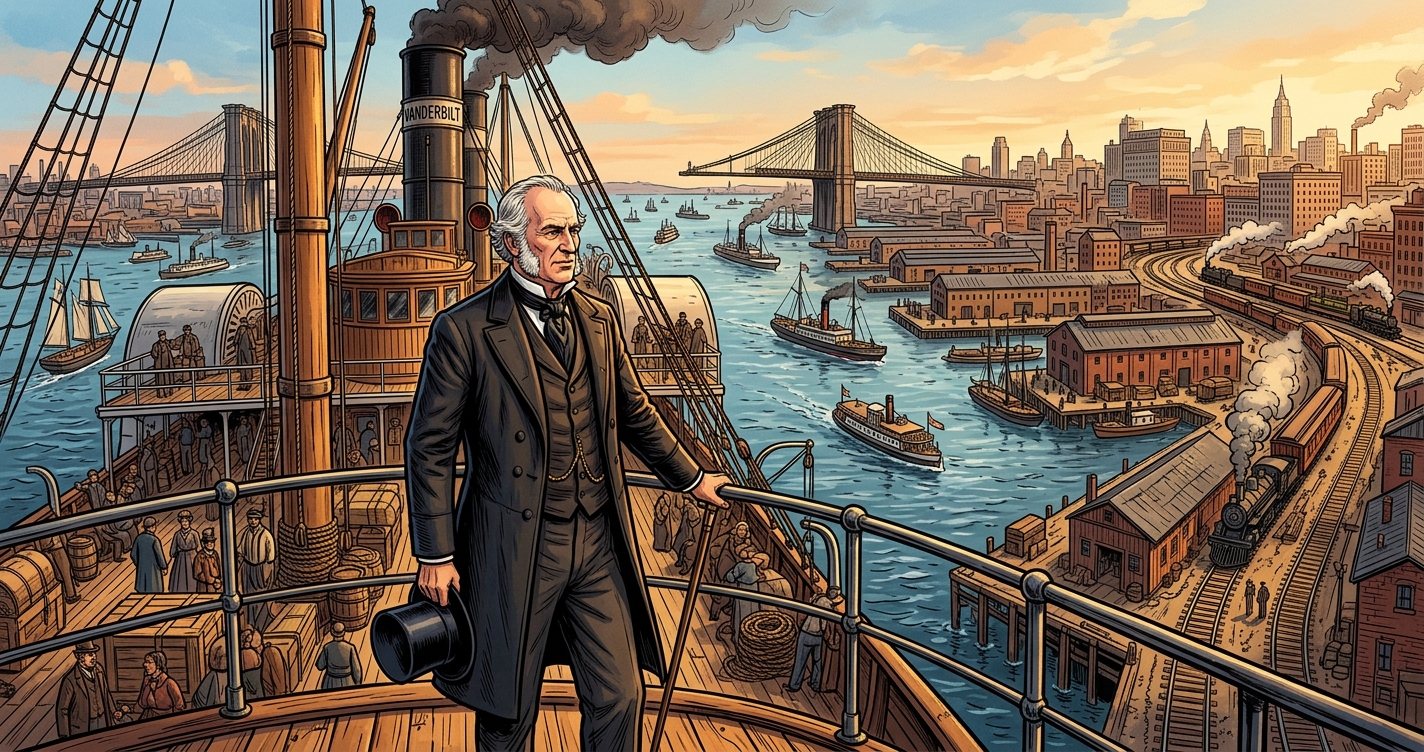
By the 1840s, Cornelius Vanderbilt was no longer just a wealthy man; he was a titan of industry. He had conquered the rivers and sounds of New York, transforming them from a patchwork of competing lines into a streamlined, Vanderbilt-dominated network. He had mastered the art of creative destruction, using innovation and ruthless pricing to dismantle old structures and build his own empire atop their ruins. But the waters he commanded were about to get a lot bigger, and the stakes, astronomical.
💰 Chapter 5: Gold Rush Galleons & Nicaragua Gambit – The World Stage Beckons
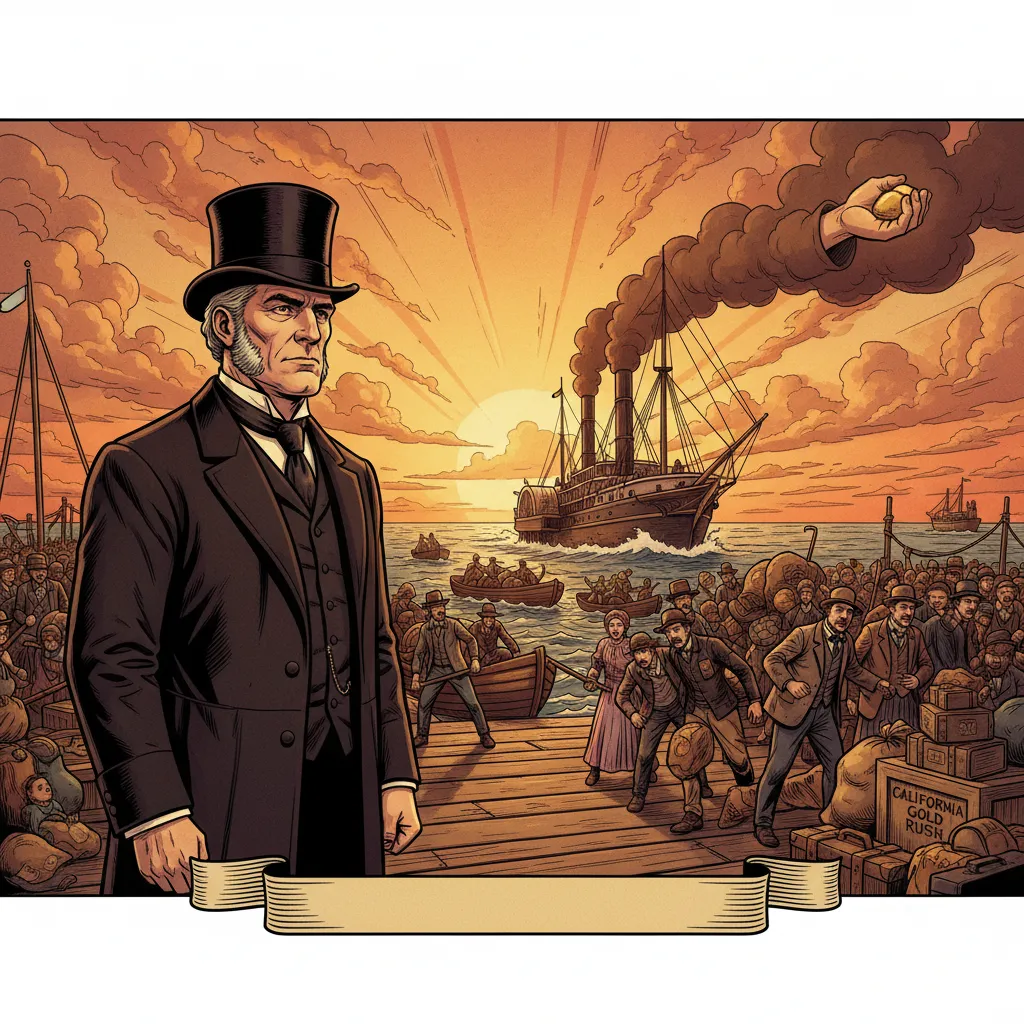
The mid-19th century was a time of epic transformations, and Cornelius Vanderbilt, with his nose for opportunity, was perfectly positioned for the next seismic shift: The California Gold Rush.
Suddenly, hundreds of thousands of people were stampeding west, desperate to strike it rich. Getting there was the problem. The overland journey was brutal, dangerous, and months long. The sea route around Cape Horn was even longer, a treacherous voyage that could take six to eight months. There was a desperate need for a faster, safer way to get from the East Coast to the goldfields of California.
Vanderbilt saw it. Not just a demand, but a chasm of unmet demand. And he saw how to fill it. His vision: an interoceanic transit route through Nicaragua.
Picture this: Passengers would sail from New York to Greytown (modern-day San Juan de Nicaragua) on Nicaragua’s Caribbean coast. Then, they’d travel up the San Juan River, across Lake Nicaragua, and finally, by stagecoach or mule, a short distance to the Pacific coast, where another Vanderbilt steamship would be waiting to take them north to California. It cut weeks, even months, off the journey around the Horn.
In 1851, Vanderbilt formed the Accessory Transit Company. This wasn’t just another steamboat line; this was a logistical masterpiece, a marvel of mid-19th-century global supply chain management. He secured a concession from the Nicaraguan government, which involved navigating tricky local politics and securing rights to build infrastructure. He invested heavily in dredging rivers, building docks, and creating a reliable transportation network across a foreign, often unstable, country.
He launched new, larger, more luxurious (for the time) ocean-going steamships to ply the routes between New York and Nicaragua, and Nicaragua and San Francisco. These were grand vessels, capable of carrying hundreds of passengers and tons of cargo. He didn’t just build them; he designed them for speed and efficiency.
His rates were competitive, and his service was, by all accounts, far superior to the existing options. The crowds flocked to his route. The Accessory Transit Company became an instant, massive success. Vanderbilt was raking in millions. He was no longer just a regional power; he was a global player, connecting continents, fueling the greatest migration in American history, and making an absolute fortune doing it.
“I don’t care a snap for the public, you understand. I only care for myself and my family.”
This quote, often attributed to him, perfectly encapsulates his philosophy. He provided a valuable service, yes, but his motivation was pure, unadulterated self-interest. He saw a need, exploited it brilliantly, and lined his pockets.
But even a genius like Vanderbilt wasn’t immune to external forces. Nicaragua was politically volatile. A filibusterer named William Walker seized control of the country in 1856, aiming to establish an American-backed, pro-slavery regime. Walker, seeing Vanderbilt’s Accessory Transit Company as a powerful asset, revoked Vanderbilt’s charter and seized his assets in Nicaragua.
Most men would have crumbled. Vanderbilt? He went to war. Not with an army, but with his unique brand of financial and political warfare. He leveraged his vast network, his immense wealth, and his influence to fund and arm Central American forces opposed to Walker. He effectively bankrolled a counter-revolution. He cut off Walker’s supply lines, disrupting his ability to receive new recruits and supplies via the transit route.
Walker, isolated and under siege, was eventually defeated and executed. Vanderbilt, through sheer force of will and strategic manipulation, reclaimed his route. This episode perfectly illustrated his indomitable spirit and his willingness to use any means necessary – economic, political, even quasi-military – to protect his interests.
By the late 1850s, Vanderbilt had accumulated a fortune that was almost unimaginable. He was arguably the wealthiest man in America. He had conquered the seas, built a global transportation network, and emerged victorious from international intrigue. But even as his steamships dominated the oceans, a new leviathan was beginning to stir on land, one that would redefine American power and commerce. And Vanderbilt, ever the opportunist, was already watching it with a glint in his eye.
🚂 Chapter 6: The Iron Horse Ascendant – A Radical Pivot
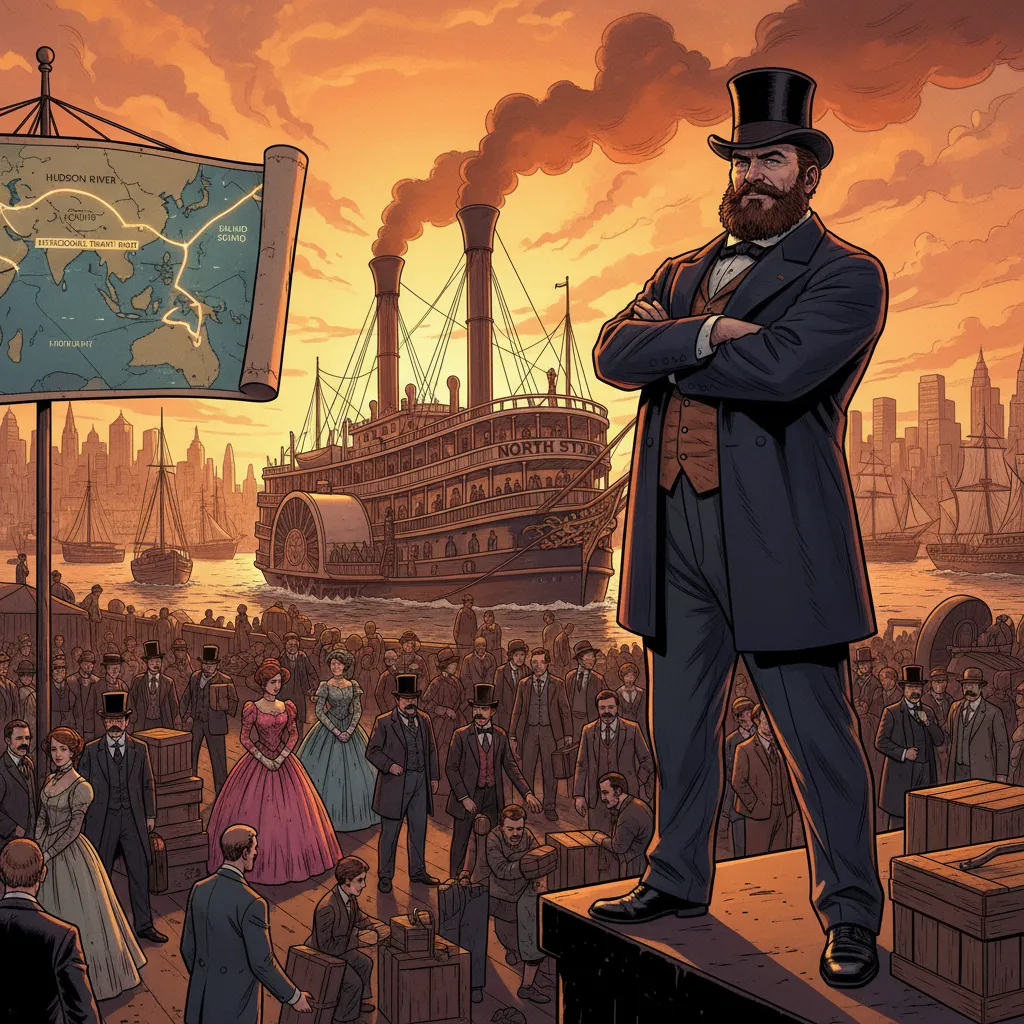
By the late 1850s, Cornelius Vanderbilt was at the apex of his steamboat empire. He had conquered the Hudson, dominated the Long Island Sound, and built a lucrative interoceanic transit route. His fortune was immense, his power undeniable. Yet, with the same prescience that allowed him to foresee the steamboat revolution, he began to see the writing on the wall for his beloved steamships.
The railroad was emerging as the true leviathan of land transportation. It was faster, could carry more cargo, and was less susceptible to weather delays than river and coastal shipping. While steamboats were still vital, especially for bulk goods and international trade, the future of domestic travel and freight belonged to the iron horse.
Most men of his age and success would have clung to their established empire, perhaps diversifying cautiously. Not Vanderbilt. He had a radical, almost terrifying ability to pivot completely, to abandon a hugely successful venture for an even bigger, riskier opportunity. He began to sell off his steamboat lines, systematically dismantling the empire he had spent decades building. His lieutenants, his family, everyone thought he was mad. Why sell off perfectly profitable assets for a new, complex, and highly competitive industry?
Because Vanderbilt saw something they didn’t. He saw consolidation. He saw network effects. He saw the potential for a single, powerful entity to control the flow of goods and people across the vast American landscape. The railroad industry of the time was a fragmented mess – hundreds of small, independent lines, often with different gauges, incompatible equipment, and endless transfer points. It was inefficient, expensive, and ripe for a master consolidator.
His first foray into railroads was relatively modest, but strategic: the New York & Harlem Railroad in 1862. This was a small, struggling line that ran along 4th Avenue in Manhattan, primarily serving local commuters and freight. It wasn’t a glamorous prize, but it was a crucial entry point into the city, a vital artery into the heart of the nation’s financial capital.
He didn’t just buy shares; he bought control. He then applied the same brutal efficiency and ruthless management that had made him a steamboat king. He fired deadwood, invested in new equipment, improved tracks, and streamlined operations. He turned a neglected backwater railroad into a profitable, well-run enterprise. But he wasn’t doing it for the Harlem itself. He was doing it because he saw its strategic value as a gateway.
“You have undertaken to cheat me. I won’t sue you, for the law is too slow. I’ll ruin you.”
This legendary quote, whether entirely accurate or apocryphal, perfectly captures Vanderbilt’s approach to business. He didn’t waste time with polite negotiations or endless litigation (unless it was absolutely necessary, like Gibbons v. Ogden). He went straight for the jugular.
Next, he set his sights on the Hudson River Railroad. This line ran along the east bank of the Hudson, connecting New York City to Albany. It was more significant than the Harlem, a key link in the chain. Again, he acquired control, often through shrewd stock market maneuvers, buying up shares quietly until he could spring his takeover. He then merged it with the Harlem, creating a more powerful, integrated system.
His ultimate prize, though, was the New York Central Railroad. This was the crown jewel, the main trunk line that stretched from Albany all the way to Buffalo, connecting the Great Lakes to the East Coast. It was a massive, sprawling network, and it was controlled by a powerful board of directors who thought they could outsmart the old Commodore.
They were wrong.
Vanderbilt used a combination of financial muscle, strategic blockades, and sheer intimidation. In the dead of winter in 1867, he famously closed his Harlem and Hudson River bridges into New York City to all traffic originating from the New York Central. Suddenly, all freight and passenger traffic from the lucrative Midwest was stranded outside the city, unable to reach its ultimate destination. The New York Central’s stock plummeted. Its directors, facing financial ruin and public outcry, had no choice but to surrender. Vanderbilt bought them out at a massive discount.
He now controlled the entire rail link from New York City to Buffalo. This wasn’t just acquiring a company; it was acquiring a monopoly on a critical trade route. He had transitioned from a maritime mogul to a railroad baron, leveraging his steamboat fortune to build an even grander empire of steel. This pivot, executed with such breathtaking speed and ruthlessness, remains one of the greatest strategic shifts in business history. The Commodore was no longer just a king of the waves; he was rapidly becoming the emperor of the rails.
💥 Chapter 7: The Erie War – A Battle for the Ages
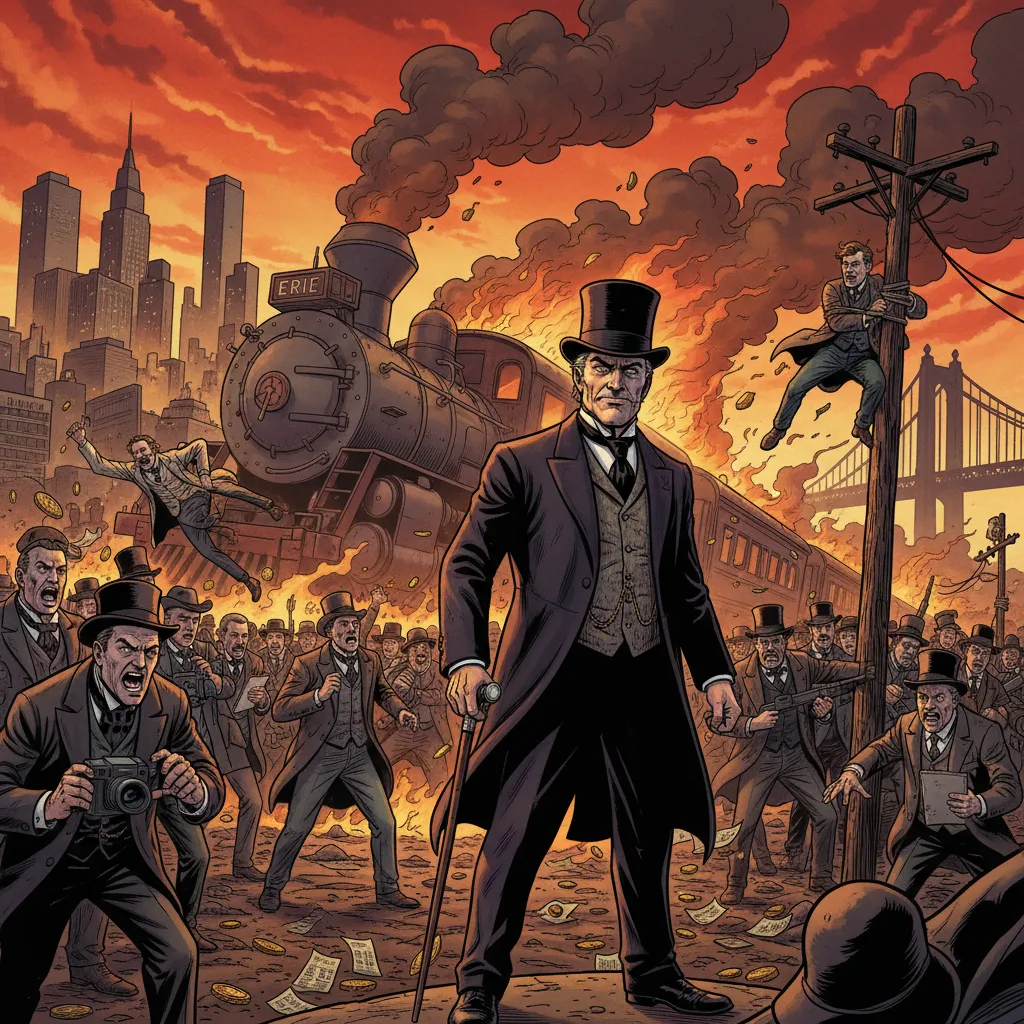
If you want to understand Cornelius Vanderbilt’s sheer, unadulterated ruthlessness, you need to dive into the epic, scandalous, and utterly insane saga known as the Erie War. This wasn’t just a business dispute; it was a no-holds-barred financial and legal street fight that involved bribery, stock manipulation, legal injunctions, and even literal bags of cash being smuggled across state lines.
Vanderbilt, having consolidated the New York Central, now controlled the vital rail link between New York City and Buffalo. But there was another major player, a rival artery stretching across New York State: the Erie Railroad. And Vanderbilt, in his relentless quest for total dominance, wanted it.
The Erie was a sprawling, somewhat mismanaged line, but it was a key competitor. Its board was controlled by a trio of notorious financial pirates, the “Erie Ring”:
- Daniel Drew: A shrewd stock speculator, perhaps the most cunning of the bunch.
- Jay Gould: The quiet, brilliant, and utterly amoral financier, who would later become one of the most feared robber barons.
- James Fisk Jr.: The flamboyant, theatrical “Barnum of Wall Street,” who loved a good show and a good scam.
Vanderbilt began buying up Erie stock in 1868, aiming for a hostile takeover. He thought he could simply outmuscle them, as he had so many others. But Drew, Gould, and Fisk were a different breed of animal. They weren’t just executives; they were financial alchemists, willing to bend – or break – every rule in the book.
As Vanderbilt bought shares, the Erie Ring simply started printing more. They authorized the issuance of 100,000 new shares of Erie stock, effectively diluting Vanderbilt’s holdings and making it impossible for him to gain a majority. This was known as “watering the stock” – creating shares out of thin air to thwart a takeover. It was legally dubious, but in the wild west of 19th-century finance, anything went if you could get away with it.
Vanderbilt was furious. He had a judge issue an injunction, making the new shares illegal. But the Erie Ring had their own judges in their pockets. They got a counter-injunction. It became a ludicrous legal merry-go-round, with judges on both sides issuing conflicting orders, each trying to outmaneuver the other.
Then came the climax. With arrest warrants out for them in New York, Drew, Gould, and Fisk loaded up two large safes with $6 million in cash and bonds – money they had skimmed from the Erie or raised through their schemes – and fled across the Hudson River to Jersey City, New Jersey. They barricaded themselves in a hotel, literally beyond the reach of New York law enforcement, and continued to operate the Erie from exile. This wasn’t just daring; it was cartoonish in its audacity. They became known as the “Erie Gang,” and their escapades captivated the nation.
Vanderbilt, meanwhile, was dumping millions into legal battles and trying to buy up the fraudulent “new” stock, only to find the Erie Ring issuing even more. He was bleeding money, and for the first time in his career, he was being outmaneuvered by a younger, even more unscrupulous generation of financiers.
“If I had known that the law was so slow in New York, I would have gone to the legislature and bought it up.”
This legendary quote, attributed to Vanderbilt during the Erie War, perfectly illustrates his contempt for legal niceties and his belief in raw power. He saw legislation as just another commodity to be bought, another obstacle to be overcome.
The Erie War eventually ended not with a knockout, but with a weary truce. Vanderbilt, recognizing he couldn’t beat the Erie Ring at their own game of legal chicanery and stock manipulation, finally agreed to a settlement. He sold back his Erie shares (at a loss, some say, though he recovered much of it), and the Erie Ring paid him a significant sum to drop his lawsuits. It was a rare, perhaps the only, major strategic defeat for Vanderbilt.
But even in defeat, there was a lesson. The Erie War taught Vanderbilt that the financial markets were becoming a new kind of battlefield, one where manipulation and political influence were as important as operational efficiency. He might not have won the Erie, but he certainly learned from the experience, sharpening his understanding of corporate finance and the darker arts of Wall Street. And though he lost this particular battle, the war for railroad dominance was far from over. He still controlled the superior line, the New York Central, and he would use it to build an even grander empire.
🏛️ Chapter 8: Consolidating Power – The Grand Central Empire
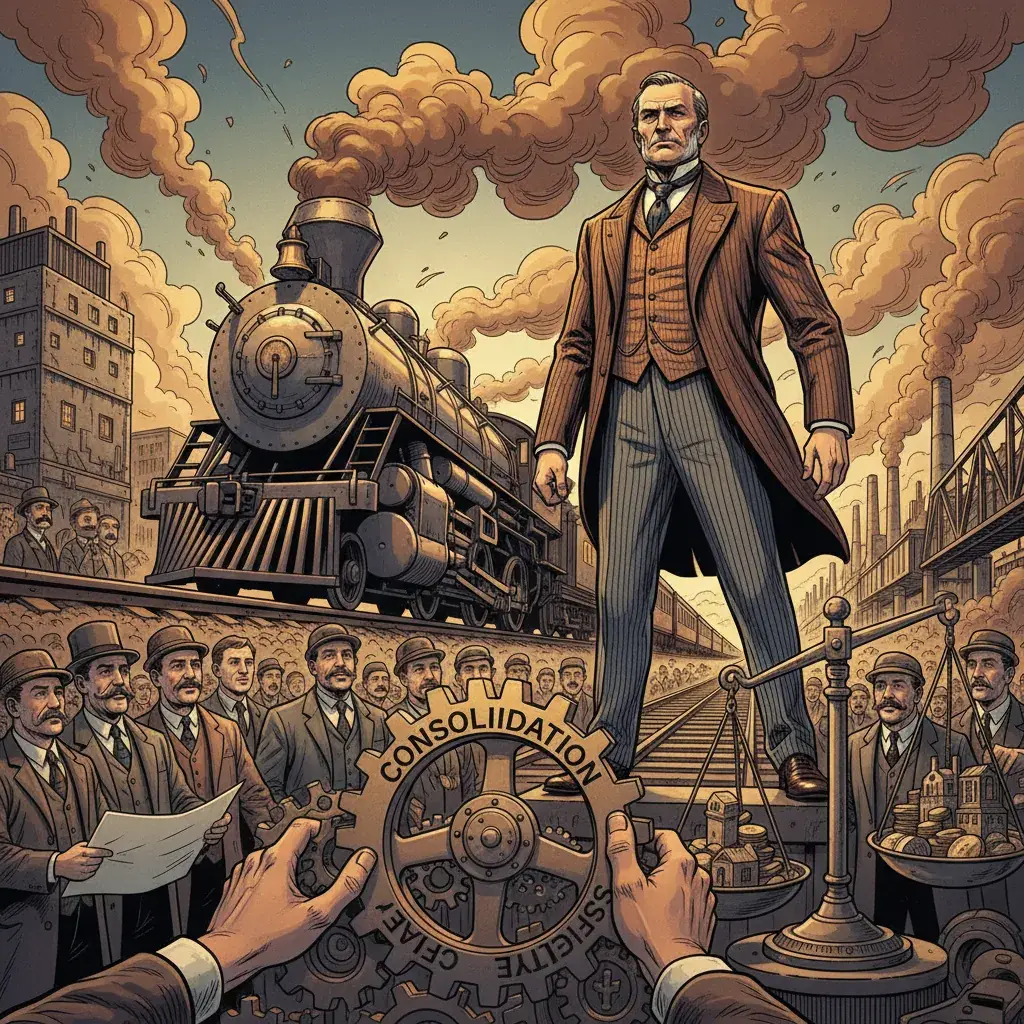
Having learned his lessons from the Erie War, Cornelius Vanderbilt didn’t wallow in defeat. He doubled down on his strengths, focusing on what he did best: consolidation, efficiency, and scale. His goal was clear: to create the most powerful, efficient, and profitable railroad network in the United States, centered squarely on New York City.
He had already merged the New York & Harlem and the Hudson River Railroads, giving him control of the vital lines into Manhattan. His next move was to fully integrate the New York Central Railroad into this network. This wasn’t just about owning the lines; it was about creating a seamless, unified system. He standardized operations, upgraded tracks, invested in new rolling stock, and ruthlessly cut costs wherever possible.
His genius wasn’t just in acquiring railroads; it was in making them work better. He understood that a railroad was only as good as its weakest link. By consolidating fragmented lines, he eliminated wasteful transfer points, reduced delays, and created massive economies of scale. He could negotiate better prices for coal, steel, and labor because of his sheer volume. He was building a modern, vertically integrated transportation behemoth.
But the physical infrastructure was only part of the equation. The arrival point for all this power was crucial. New York City, the nation’s financial and commercial hub, was the bottleneck. Multiple, disparate railway lines terminated at different, often chaotic, stations across the city. It was inefficient, inconvenient for passengers, and a logistical nightmare.
Vanderbilt envisioned something grander, something that screamed “Vanderbilt Power.” He envisioned a single, magnificent, centralized terminal that would serve as the gateway to his empire. And so, he commissioned the construction of the Grand Central Depot.
Completed in 1871, the Grand Central Depot was a marvel of its time. It was a massive, elegant structure, designed to handle the immense traffic of his consolidated lines. It wasn’t just a train station; it was a symbol of his dominion, a monument to his vision. It streamlined the flow of passengers and freight, cementing his control over the entry and exit points of the nation’s most important city.
“What do I care about the law? Hain’t I got the power?”
Another apocryphal, but perfectly characteristic quote. Vanderbilt understood that true power often superseded formal legal structures. He had the capital, the network, and the sheer will to make his own rules.
He wasn’t finished. Vanderbilt continued to expand his rail empire, acquiring other strategic lines and extending his reach further west. He eventually gained control of the Lake Shore & Michigan Southern Railway, which connected his New York Central system to Chicago, the burgeoning hub of the American Midwest. This move was monumental. It meant Vanderbilt now controlled a continuous rail line from New York City all the way to Chicago, effectively a monopoly on the most important East-West trade route in the nation.
This kind of horizontal integration (controlling multiple lines in the same industry) and vertical integration (controlling everything from the tracks to the rolling stock to the terminals) created an almost insurmountable competitive advantage. He could dictate freight rates, control shipping schedules, and squeeze out any remaining independent operators.
Vanderbilt’s wealth soared to unprecedented levels. He became the richest man in America, perhaps the richest man in the world at that time. His fortune was estimated at over $100 million in 1877 (equivalent to hundreds of billions today), a staggering sum that made him a one-man economy. He was no longer just a “Commodore”; he was an emperor, his empire built of steel rails and steam, stretching from the Atlantic to the heartland. He had transformed the very landscape of American commerce, laying the groundwork for the modern industrial age, all through a combination of relentless ambition, strategic genius, and a brutal disregard for anyone who stood in his way.
📉 Chapter 9: The Panic of 1873 & Vanderbilt’s Last Stands
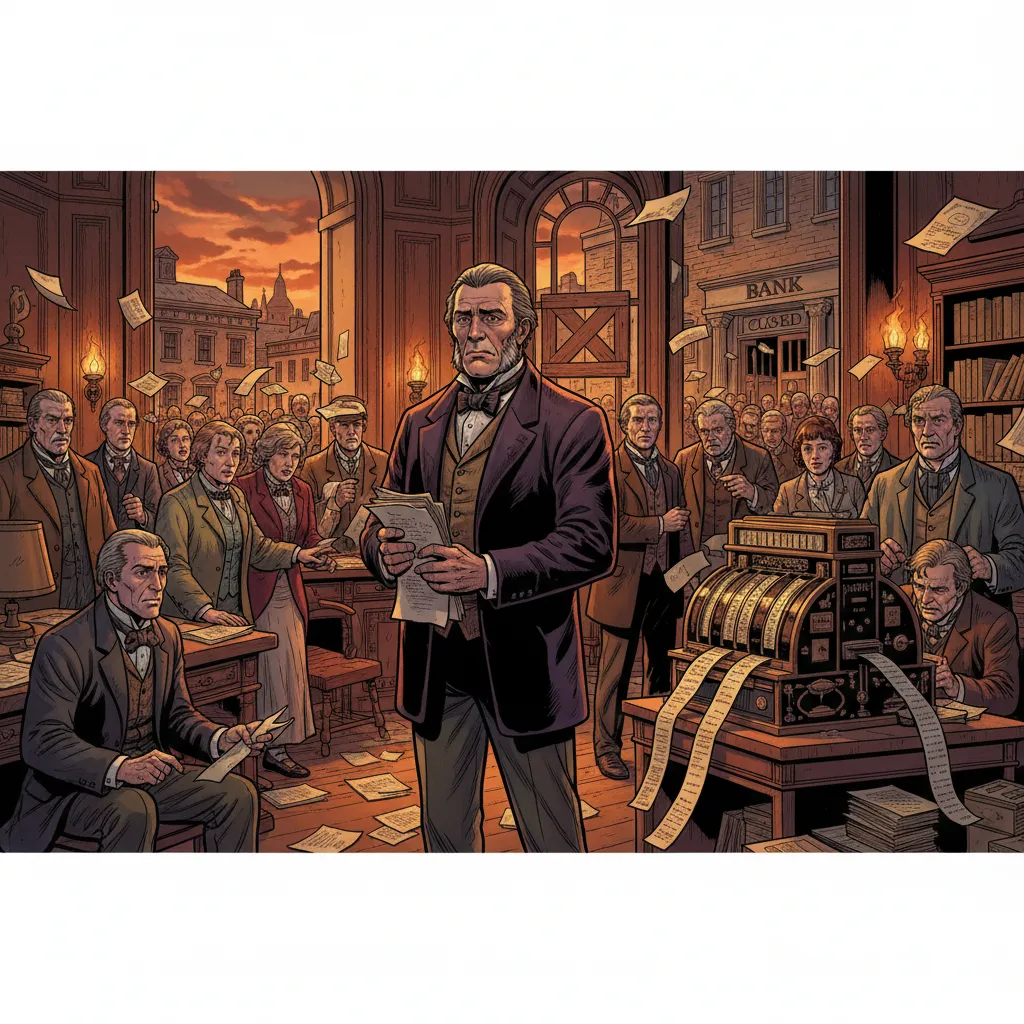
Even a titan like Cornelius Vanderbilt couldn’t escape the broader economic forces at play. The 1870s brought a period of immense economic turmoil, culminating in the Panic of 1873, one of the most severe economic depressions in American history. Railroad overexpansion, speculative bubbles, and banking failures triggered a nationwide collapse.
But Vanderbilt, ever the shrewd operator, had positioned his empire to weather the storm. His railroads were financially robust, efficiently managed, and crucially, essential infrastructure. While other, more speculative lines went bankrupt, the New York Central continued to operate, generating revenue, albeit at reduced levels. His focus on real assets, consolidation, and operational efficiency, rather than pure speculation, proved to be his bulwark against the financial hurricane.
During this period, Vanderbilt continued to solidify his control and look for opportunities. He famously engaged in a ruthless struggle with Jay Gould (yes, the same Gould from the Erie War) over control of the New York, Chicago & St. Louis Railroad, nicknamed the “Nickel Plate Road.” Gould, still smarting from previous defeats and hungry for more power, tried to build a competing line that would run parallel to Vanderbilt’s system, threatening his dominance.
Vanderbilt, now in his late 70s, was still sharp as a tack. He recognized the threat and, rather than engaging in another protracted fare war, he simply bought the Nickel Plate Road from Gould. He didn’t just buy it; he bought it at a steep discount, turning a potential rival into an asset that further strengthened his monopoly. It was a classic Vanderbilt move: eliminate the competition by absorbing it, often on his own terms. He disarmed Gould not with a fight, but with a checkbook, demonstrating his continued financial muscle and strategic cunning.
The Commodore, despite his advancing age, remained deeply involved in the day-to-day operations of his empire. He was a micro-manager, personally inspecting locomotives, tracks, and terminals. He knew his business inside and out, from the boardroom to the engine room. He understood that true wealth wasn’t just about owning assets; it was about optimizing them, squeezing every ounce of efficiency and profit from every rail car and every mile of track.
His health, however, was beginning to fail. The relentless pace, the endless battles, the sheer stress of building and maintaining such a colossal empire had taken their toll. He was a man of immense physical and mental fortitude, but even iron eventually rusts.
In his final years, he turned his attention to his legacy, though not in the way many might expect from a man of his vast wealth. While later philanthropists like Rockefeller and Carnegie would give away enormous sums, Vanderbilt’s public giving was relatively modest, especially compared to his fortune. His most significant public donation was $1 million to establish Vanderbilt University in Nashville, Tennessee. It was a substantial sum, but still a fraction of his total wealth. He was, first and foremost, a businessman, not a philanthropist. His primary concern was the continuation of his empire and the prosperity of his family.
He spent his last days at his Fifth Avenue mansion, surrounded by his family. The old man, who had started with a single periauger, was now the undisputed king of American transportation, his name synonymous with power, wealth, and ruthless ambition. He had lived through a period of unprecedented change, and he had not merely adapted to it; he had driven it, shaping the economic landscape of a nascent industrial nation. His mind, though perhaps weary, was still counting, still calculating, still commanding. The Commodore was nearing the end of his voyage, but the wake he left behind would forever alter the course of American history.
💀 Chapter 10: The Unsinkable Legend – Death and Succession
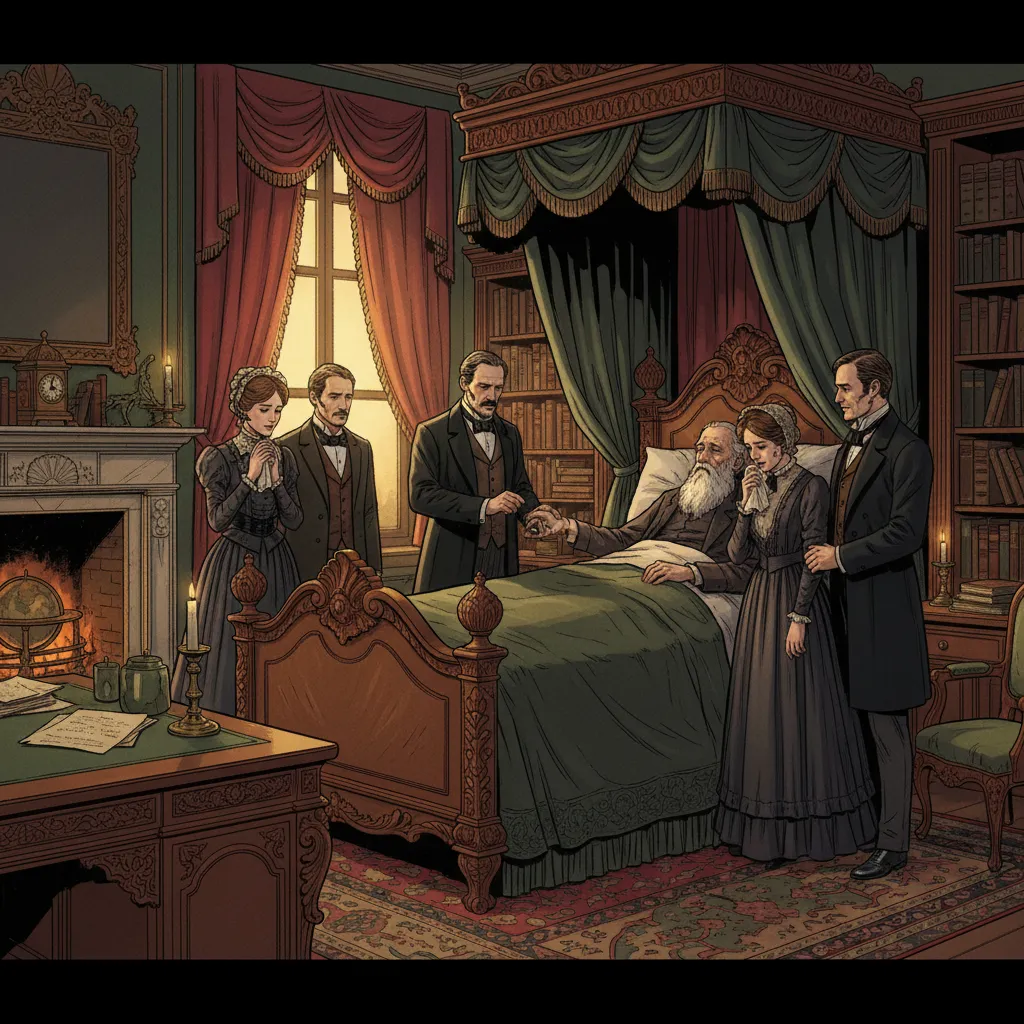
On January 4, 1877, at the age of 82, Cornelius Vanderbilt finally took his last breath. The man who had navigated the tempestuous waters of 19th-century capitalism with unparalleled skill and brutality was gone. His death marked the end of an era, but the empire he had forged, built of steel and steam, would continue to reshape America for decades to come.
His funeral was, fittingly, a grand affair. Thousands lined the streets of New York to pay their respects, or perhaps just to gawk at the passing of such a monumental figure. He was interred in the Vanderbilt family mausoleum on Staten Island, not far from where his incredible journey had begun with a humble periauger.
The question that immediately loomed large was: who would inherit this colossal fortune and, more importantly, this intricate empire? Vanderbilt, notoriously controlling, had given little power to his children during his lifetime. He believed that responsibility should be earned, not given. He famously disinherited most of his children, leaving the vast majority of his fortune – an estimated $100 million (the equivalent of over $250 billion in today’s money, making him one of the wealthiest individuals in history) – to his eldest son, William Henry Vanderbilt.
This decision sparked a bitter and public legal battle, as his other children challenged the will, claiming their father was of unsound mind. The trial captivated the nation, revealing the inner workings and dysfunctions of one of America’s wealthiest families. In the end, the will largely stood, solidifying William Henry’s position.
William Henry was not the brawler his father was, but he was a capable businessman in his own right, having learned from the master. He understood the nuances of the railroad business and, crucially, understood the importance of maintaining and expanding the network. He consolidated further, streamlining operations, and even famously uttered the quote, “The public be damned!” (though the full context suggests it was more about efficiency than outright disdain for customers). He significantly increased the Vanderbilt fortune during his own tenure.
The legacy of Cornelius Vanderbilt is complex and often contradictory.
- The Robber Baron: To his critics, he was the quintessential “robber baron,” a ruthless capitalist who crushed competition, manipulated markets, and amassed a fortune through exploitation. His disregard for legal niceties and his infamous quotes (“What do I care about the law? Hain’t I got the power?”) certainly paint a picture of a man who put profit above all else.
- The Visionary Capitalist: To his admirers, he was a visionary, a driving force behind America’s industrialization. He built essential infrastructure, created jobs, lowered transportation costs for consumers and businesses, and brought efficiency to fragmented industries. He was a master of capital allocation, identifying emerging technologies and investing heavily to dominate them. He saw opportunities where others saw obstacles, and he had the courage and will to execute his grand designs.
His impact was undeniable. He didn’t just build a fortune; he built the framework for modern American commerce. He demonstrated the power of scale, the importance of controlling vital infrastructure, and the immense disruptive potential of new technologies. He showed that in a rapidly industrializing nation, the true power lay not just in innovation, but in the ability to consolidate and control the means of production and distribution.
The Commodore’s spirit, that relentless drive, that willingness to fight to the bitter end, became etched into the American capitalist psyche. He was a force, an archetype, a legend. And though the steamships and early railroads have given way to jets and fiber optics, the lessons from his ruthless rise remain as sharp and relevant today as they were in the roaring 19th century. He built an empire, not with politeness, but with sheer, unadulterated power. And in the annals of business history, that makes him truly unsinkable.
🧠 Chapter 11: The Commodore’s Code – Lessons from the Leviathan
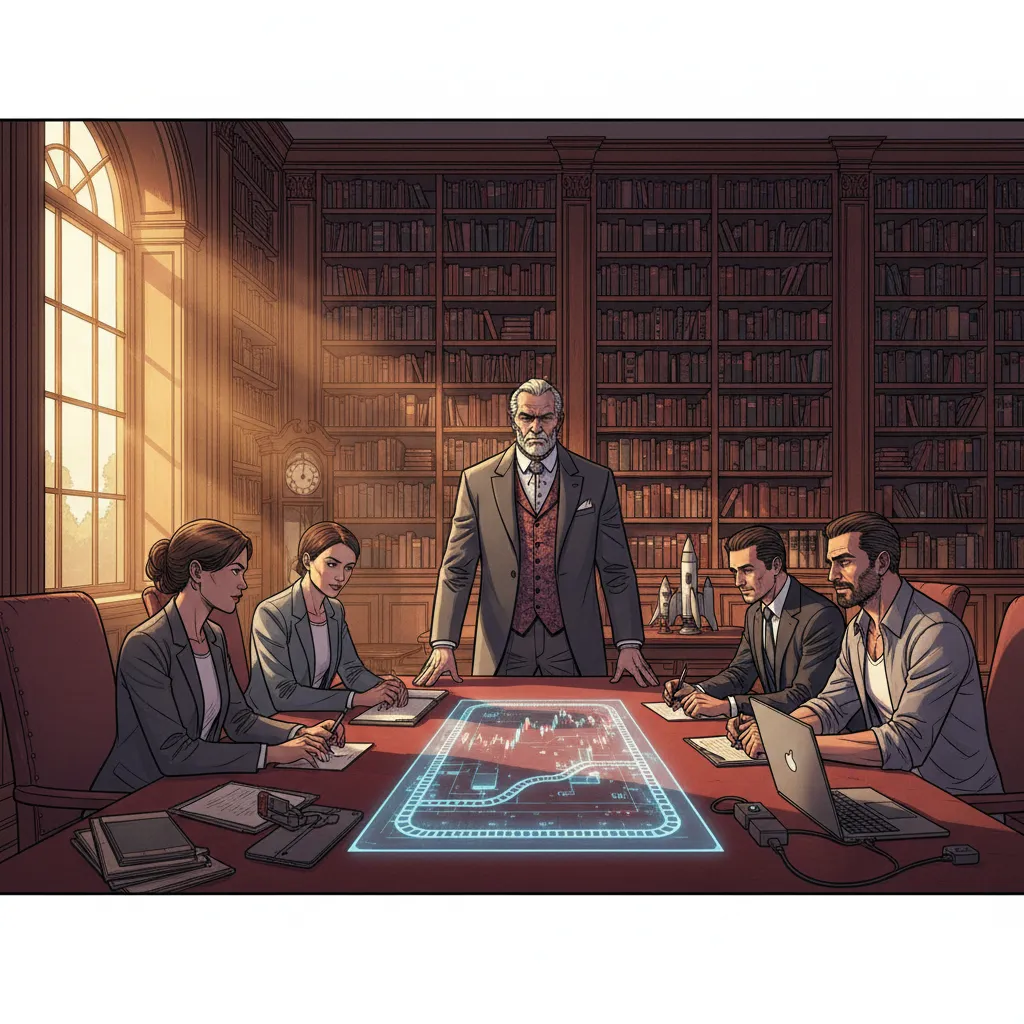
Alright, let’s strip away the top hats and the dramatic pronouncements and get down to brass tacks. What can we, the modern-day entrepreneurs, investors, and disruptors, actually learn from Cornelius Vanderbilt’s bare-knuckle brawl to the top? Because make no mistake, his story isn’t just history; it’s a playbook, albeit one written in blood and ambition.
1. Disrupt or Be Disrupted (The Periauger Principle):
Vanderbilt’s very first move, with that small periauger, was a disruption. He didn’t ask permission; he just offered a better, cheaper, more reliable service. He saw the inefficiencies and complacency of the existing ferry operators and exploited them. Later, he saw the limited future of sail and pivoted hard to steam, then from steam to rail.
- Lesson: Don’t get comfortable. The moment you think your market is secure, someone like Vanderbilt is sharpening their knife. Always be looking for the next technological shift, the next unmet need, the next inefficient incumbent. Be willing to cannibalize your own successful ventures if a superior alternative emerges. Don’t be afraid to be the disruptor, even if it means short-term pain.
2. Master the Supply Chain (From Boats to Rails):
He didn’t just operate boats; he built them. He didn’t just run railroads; he owned the tracks, the terminals, the locomotives. He understood that control over the means of production and distribution was paramount. This allowed him to cut costs, maintain quality, and achieve unparalleled efficiency.
- Lesson: Identify critical bottlenecks or dependencies in your industry. Can you vertically integrate to gain control over key suppliers or distribution channels? Can you horizontally integrate to consolidate a fragmented market? The more you control, the less vulnerable you are to external forces and the more power you wield over pricing and delivery.
3. The Power of Strategic Ruthlessness (The Fare War Playbook):
Vanderbilt wasn’t afraid to wage brutal price wars. He understood that in a competitive market, sometimes you have to bleed money to gain market share and drive out weaker rivals. He also knew when to take a buyout and when to keep fighting.
- Lesson: Competition is not always friendly. Be prepared to fight for your market share. This doesn’t mean being unethical, but it does mean being strategically aggressive. Understand your cost structure better than your competitors so you know how low you can go. Know when to out-compete, when to acquire, and when to pivot. Sometimes, the most efficient way to win is to simply outlast the other guy.
4. Capital is King, But Cash Flow is God (The Reinvestment Engine):
From that initial $100 loan, Vanderbilt was a master of capital accumulation and reinvestment. He saved diligently, deployed capital strategically, and used profits from one venture to fund the next, bigger one. He understood that wealth wasn’t just about making money; it was about compounding it.
- Lesson: Cash flow is the lifeblood of any growing enterprise. Reinvest profits wisely into growth, efficiency improvements, or strategic acquisitions. Build a strong balance sheet so you can withstand downturns and capitalize on opportunities when others are weak. Don’t just spend; strategically deploy.
5. Identify and Own the “Gateway” (The Grand Central Strategy):
His move to acquire the Harlem Railroad, then the Hudson River, and finally build Grand Central Depot, was all about controlling the vital entry point into the nation’s most important city. He understood that controlling the choke points gave him immense leverage.
- Lesson: In any industry, there are critical “gateways” or “bottlenecks.” These could be distribution channels, key technologies, proprietary data, or crucial talent pools. Identify them, and then figure out how to own or control them. Control the access, and you control the market.
6. Adapt or Die (The Railroad Pivot):
His willingness to sell off a massively profitable steamboat empire to pivot into the nascent, uncertain railroad industry was a move of breathtaking courage and foresight. He didn’t cling to past successes; he looked to the future.
- Lesson: Market dynamics shift. Technologies evolve. What’s profitable today might be obsolete tomorrow. Develop an organizational culture that embraces change, not just tolerates it. Be willing to make bold, even unpopular, strategic pivots if the long-term trends demand it. Your greatest asset might be your ability to let go of what made you successful yesterday.
7. Political Acumen is a Force Multiplier (The Nicaragua Gambit):
Vanderbilt’s ability to navigate and even manipulate political systems, from state legislatures to international governments, was as crucial as his business acumen. He understood that power didn’t just come from the market; it came from the halls of power.
- Lesson: Understand the regulatory and political landscape of your industry. Engage with policymakers, understand their motivations, and advocate for your interests. Don’t ignore the political dimension; it can make or break your business, especially if you’re building an empire that impacts public infrastructure or services.
The Commodore’s legacy is a stark reminder that in the wild, untamed world of capitalism, success often goes not to the most polite, but to the most persistent, the most cunning, and the most utterly relentless. He built an empire with an iron will, and his methods, though often brutal, provide a chillingly effective blueprint for anyone daring to conquer their own market.
👑 Chapter 12: The Empire Builder – A Legacy Cast in Iron and Gold
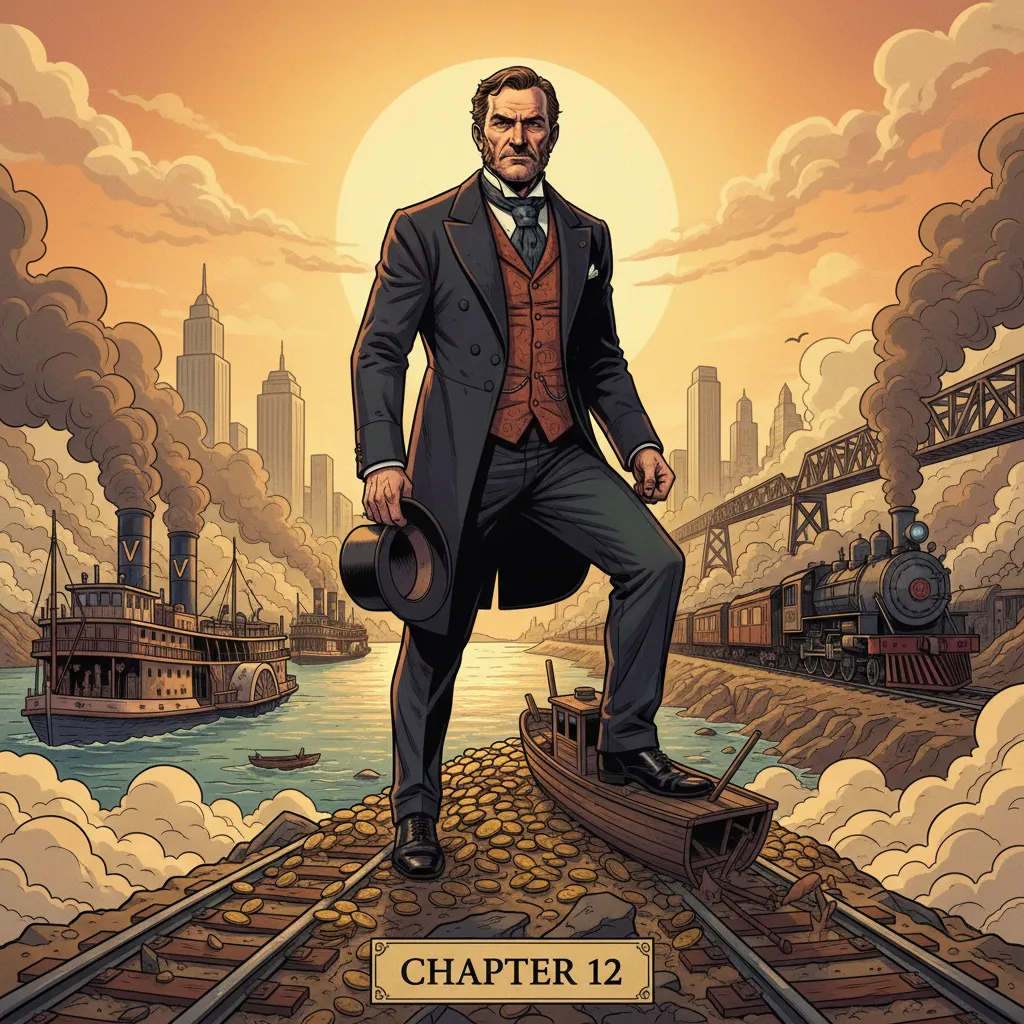
So, there you have it. The raw, unvarnished saga of Cornelius Vanderbilt, the Staten Island ferry boy who didn’t just climb to the top, but clawed his way there, leaving a seismic impact on the American landscape. He wasn’t a gentle giant; he was a force of nature, a capitalist leviathan who saw an inefficient world and set about remaking it in his own image, one ruthless deal, one acquired railroad, one crushed competitor at a time.
His story isn’t one of polite innovation or incremental growth. It’s a tale of creative destruction writ large. He didn’t just invent new things; he relentlessly optimized, consolidated, and dominated existing industries. He saw monopolies as challenges to be shattered, and fragmented markets as opportunities to build his own, even bigger monopolies.
Think about it:
- He started with a single boat, facing down entrenched ferry operators.
- He risked everything to embrace steam power, battling against established monopolies and winning a landmark Supreme Court case that reshaped American commerce.
- He built a global transit empire through the jungles of Nicaragua, only to reclaim it through a cunning geopolitical maneuver.
- And finally, he transitioned from the king of the seas to the emperor of the rails, orchestrating a strategic pivot that would make modern venture capitalists weep with envy, culminating in the creation of the New York Central, the most powerful railroad system of its era.
Vanderbilt was driven by a relentless, almost pathological desire for control and wealth. He cared little for public opinion, even less for sentimentality. His focus was singular: identify opportunity, acquire assets, consolidate power, and maximize profit. His methods were often brutal, his disposition famously gruff, and his legacy forever intertwined with the term “robber baron.”
Yet, we cannot deny his impact. He laid the foundation for modern corporate America. He built the infrastructure that fueled industrialization, connecting vast regions of the country and dramatically lowering the cost of transportation. His pursuit of efficiency and scale pushed the boundaries of what was possible in business. He taught generations of entrepreneurs that to win big, you often have to play hard, think strategically, and never, ever back down.
His story is a vivid reminder that the American dream, in its rawest form, often isn’t about gentle aspiration, but about fierce, unyielding ambition. It’s about seeing the world not as it is, but as it could be – and then having the sheer audacity and brute force to make that vision a reality, no matter who stands in your way.
So, the next time you see a picture of Grand Central Terminal, or hear the rumble of a train, remember the Commodore. Remember the kid from Staten Island who dared to challenge the established order, who built an empire with his bare hands and an iron will. He wasn’t just a rich man; he was a force of nature, a legend carved in the very bedrock of American capitalism. And his unsinkable spirit, for better or worse, still echoes through the boardrooms and financial markets of today. He didn’t just play the game; he changed the rules. And for that, Cornelius Vanderbilt remains, unequivocally, a MogulFeed legend.
💡 Key Insights
- ▸ Disruption is a weapon: Vanderbilt repeatedly entered established markets, undercut prices, and outmaneuvered incumbents, demonstrating that a willingness to challenge the status quo – even if it means short-term losses – can yield long-term dominance. Entrepreneurs should identify vulnerable monopolies and be prepared to wage a price war to gain market share.
- ▸ Strategic ruthlessness and adaptability pay dividends: Vanderbilt was famous for his brutal business tactics, but also for his ability to pivot from steamboats to railroads when market dynamics shifted. This teaches us that success often requires a cold, calculated approach to competition, combined with the foresight and courage to abandon a successful venture for an even bigger opportunity.
- ▸ The power of vertical and horizontal integration: Vanderbilt didn't just run ferries; he built his own boats. He didn't just own railroads; he consolidated entire lines, creating network effects and economies of scale that crushed smaller competitors. Modern businesses can learn from this by seeking to control key aspects of their supply chain or consolidate fragmented industries to create insurmountable competitive advantages.