Daniel Ek: The Swedish Teenager Who Killed Music Piracy and Built a $70 Billion Streaming Empire
At 23, Daniel Ek was burned out, rich from internet ads, and bored. Then he decided to try something insane — convince every major record label on Earth to let him give away their music for free.

View all stories about this mogul
In 2006, a 23-year-old Swedish millionaire named Daniel Ek bought himself a red Ferrari, a loft apartment in central Stockholm, and a lifetime supply of the feeling he had been chasing since he was fifteen: being rich. He threw parties. He slept late. He ordered expensive food he didn’t eat. And within six months, he was so depressed he couldn’t get out of bed.
The money had come from selling a series of small internet companies — most notably an online ad network called Advertigo — to the Swedish media conglomerate Tradedoubler. On paper, he had everything a young entrepreneur was supposed to want. But when he tried to write down what he actually cared about, the list was embarrassingly short. He loved music. He hated piracy. He hated the music industry. And he had a faint idea that someone, somewhere, should finally fix the fact that the best way to listen to music in 2006 was to steal it.
He sold the Ferrari. He moved into a cabin outside Stockholm. He sat down with a friend named Martin Lorentzon, a slightly older Swedish entrepreneur who had just cashed out of Tradedoubler. Over several weeks of whiteboarding, they settled on an idea that everyone else in the music industry considered impossible: a legal, free-to-use streaming service that would pay the labels and the artists and still somehow make money.
The name they picked was nonsense. It wasn’t a real word. It was a mashup of two syllables that they thought sounded clean and Scandinavian. Spotify.
🎮 Chapter 1: The Gamer Who Learned to Code
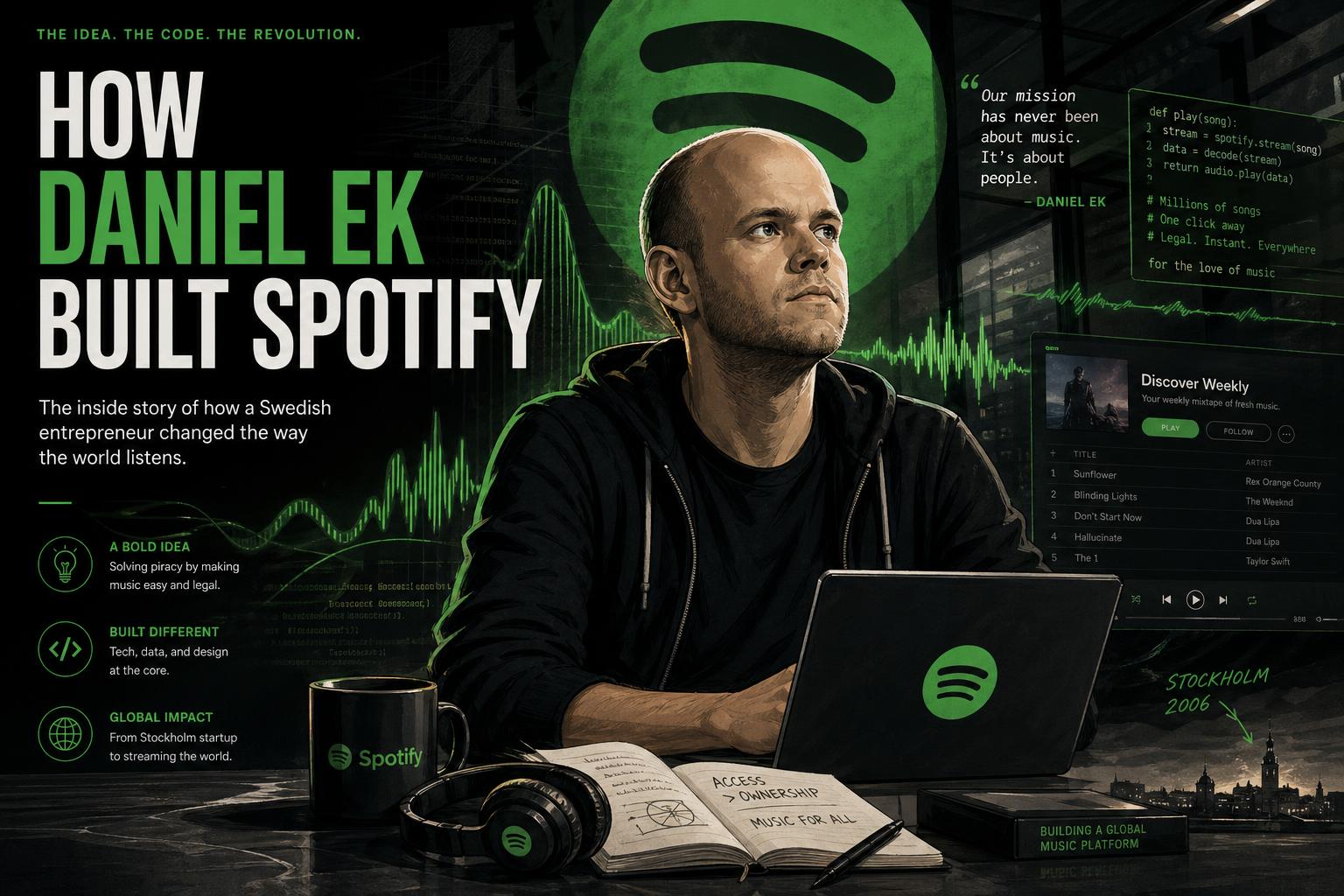
Daniel Georg Ek was born on February 21, 1983, in Stockholm, Sweden. His parents separated when he was young, and he grew up in the working-class suburb of Rågsved, raised mostly by his mother and stepfather. Money was always tight. When Daniel was four years old, his stepfather brought home a Commodore VIC-20 — a primitive 8-bit computer — and the young boy became obsessed.
By age five, Daniel was writing simple programs. By nine, he was building websites for local businesses, charging 5,000 Swedish kronor per site — more than his mother’s monthly salary. By thirteen, he was running a small web development agency from his bedroom. By sixteen, he had quietly become one of the most sought-after freelance coders in Stockholm, charging hundreds of dollars an hour to multinational clients who had no idea they were paying a high school student.
At eighteen, he enrolled at Sweden’s Royal Institute of Technology (KTH) to study engineering. He dropped out after eight weeks. He later said the lectures felt like a waste of his time — everything they taught, he had already learned by doing.
He drifted through a series of internet startups, some moderately successful, others failures. His breakthrough came with Advertigo, the ad network he sold to Tradedoubler in 2006 for a reported 10 million kronor. At 23, he was rich. At 23, he was miserable. At 23, he was ready to try something crazy.
💀 Chapter 2: The Pirate Bay Problem
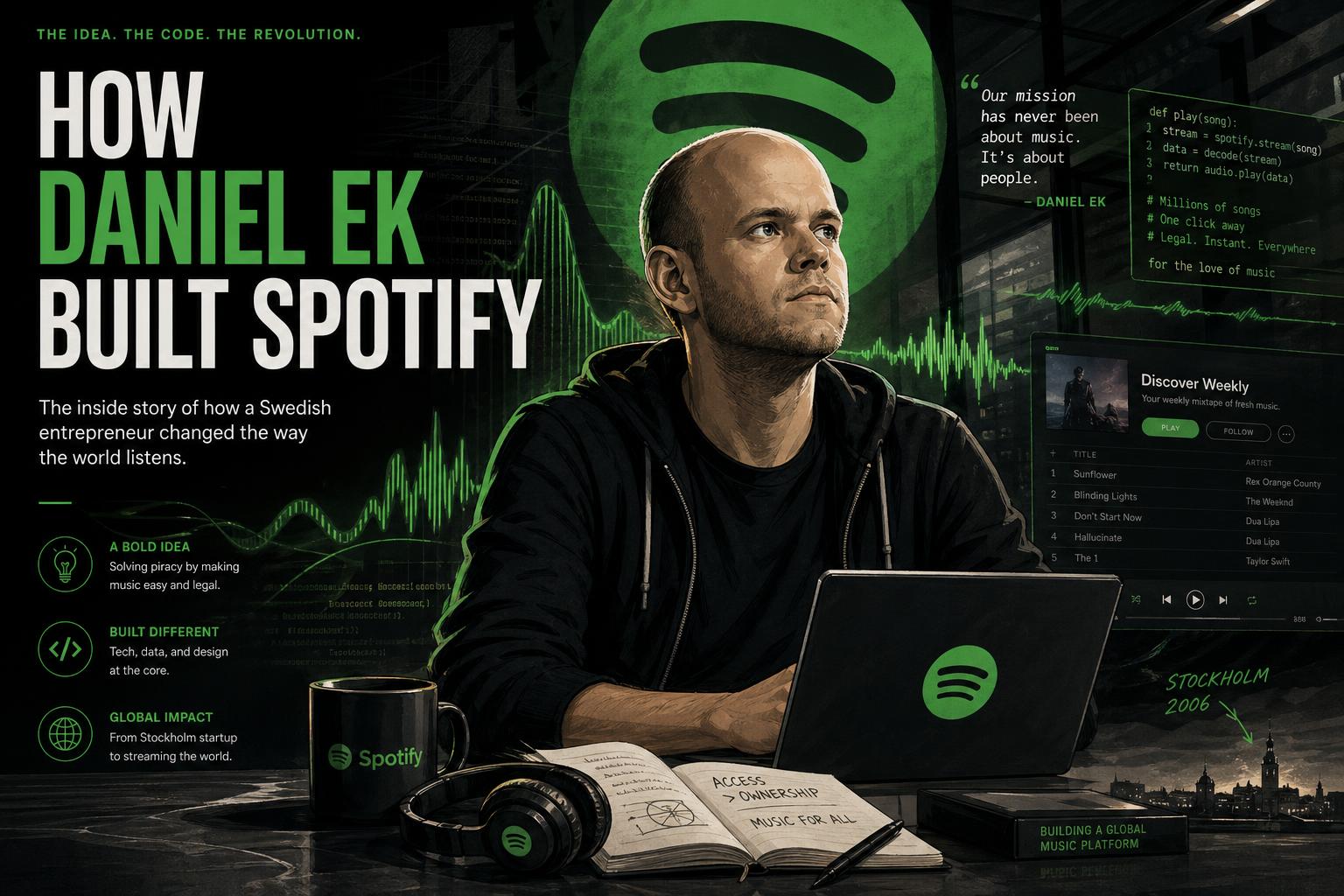
To understand why Spotify had to exist, you have to understand what Sweden was like in 2006.
Sweden, improbably, had become the global capital of music piracy. The Pirate Bay — a Stockholm-based BitTorrent tracker — was the most popular source of illegal music downloads in the world, serving tens of millions of users. Swedish politicians had formed a Pirate Party that ran for parliament on a platform of legalizing file sharing. A generation of young Swedes had grown up believing that paying for music was something boomers did.
The global music industry was in freefall. Recorded music revenue had collapsed from $23 billion in 1999 to roughly $10 billion by 2008 — a drop of more than 50% in less than a decade. Major labels like Universal, Sony, EMI, and Warner were laying off staff, consolidating offices, and suing their own customers. Some record executives genuinely believed that music itself — as a paid product — might simply cease to exist within a generation.
Ek saw something different. He saw that the Pirate Bay had solved a user experience problem that the labels refused to solve. On the Pirate Bay, you could get any song you wanted, instantly, in any format, on any device, for free. On iTunes — Apple’s legal store — you had to pay per song, manage downloads, synchronize devices, and live within Apple’s walled garden. The pirates were simply offering a better product.
Ek’s insight was that he didn’t have to out-morality the pirates. He had to out-experience them. Give people a legal service that was easier, faster, and more convenient than piracy — and they would abandon the torrent sites voluntarily.
🤝 Chapter 3: The Impossible Licensing Marathon
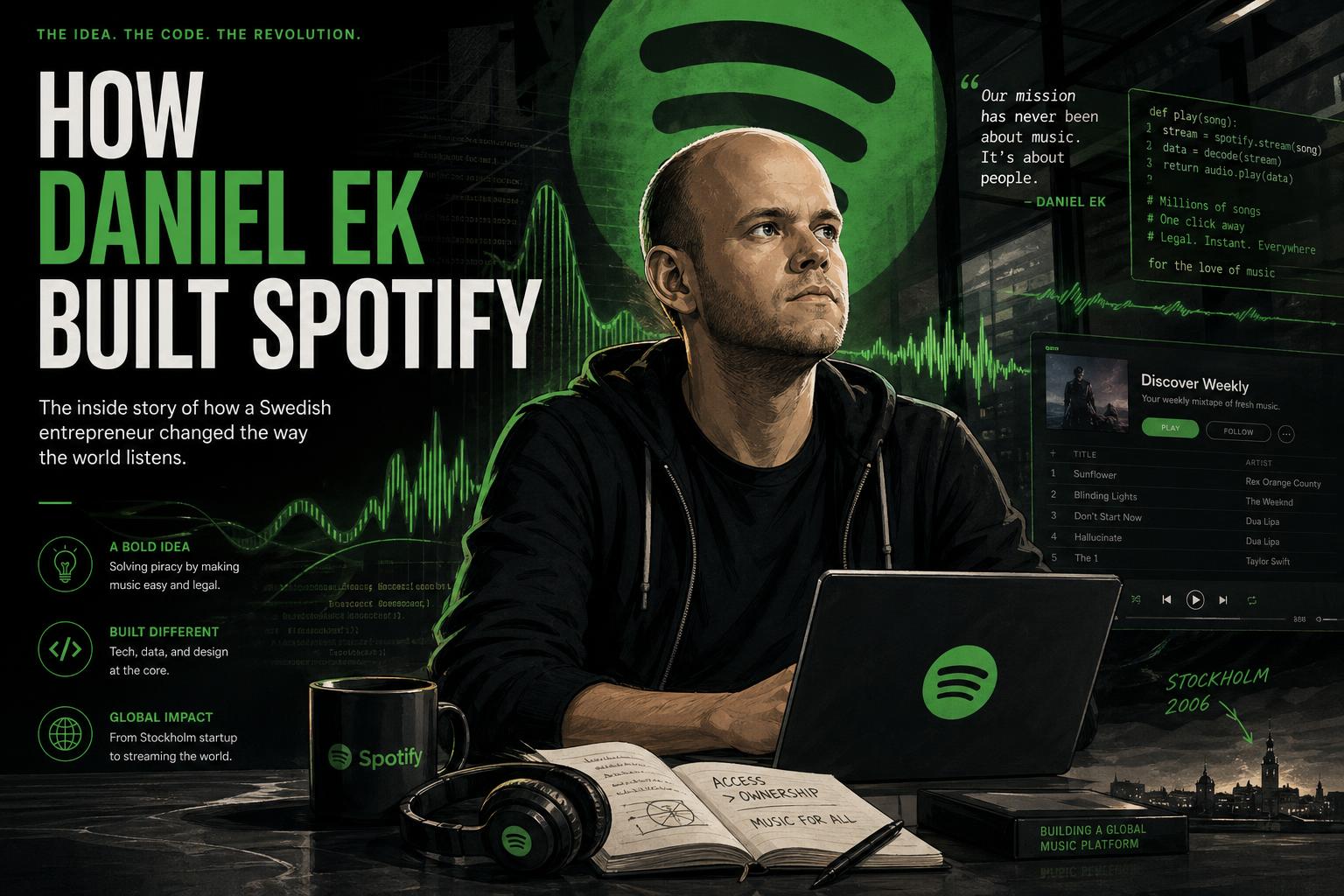
Ek and Lorentzon founded Spotify AB in April 2006 in Stockholm. The technical challenge — building a streaming service that felt instant, with no lag between clicking a song and hearing it — was enormous but solvable. Ek’s engineers pulled it off using a hybrid peer-to-peer and server architecture that made songs start playing in under 200 milliseconds.
The real challenge was licensing. To legally stream music, Spotify needed contracts with all four major record labels: Universal, Sony, EMI, and Warner. These were the most powerful and most paranoid gatekeepers in the entertainment industry. They had been burned by Napster, Kazaa, Limewire, and a dozen other startups that had tried to disrupt them. They weren’t going to let another Swedish kid walk in and do it again.
Ek spent nearly two years flying between Stockholm, London, New York, and Los Angeles, meeting with label executives. He wore them down. He offered them something no prior startup had offered: equity in Spotify itself. If the labels licensed their music, they would receive small ownership stakes in the company. If Spotify succeeded, the labels would profit directly — not just from streaming royalties, but from the growth of the platform that was allegedly killing them.
It worked. By late 2008, all four majors had signed licensing deals with Spotify. The labels collectively owned roughly 18% of the company — a concession that would later prove enormously valuable when Spotify went public.
Spotify launched in Sweden, Norway, Finland, France, Spain, and the United Kingdom on October 7, 2008. Within weeks, it was the most talked-about app in Europe. Within six months, it had over a million users.
🇺🇸 Chapter 4: Cracking America
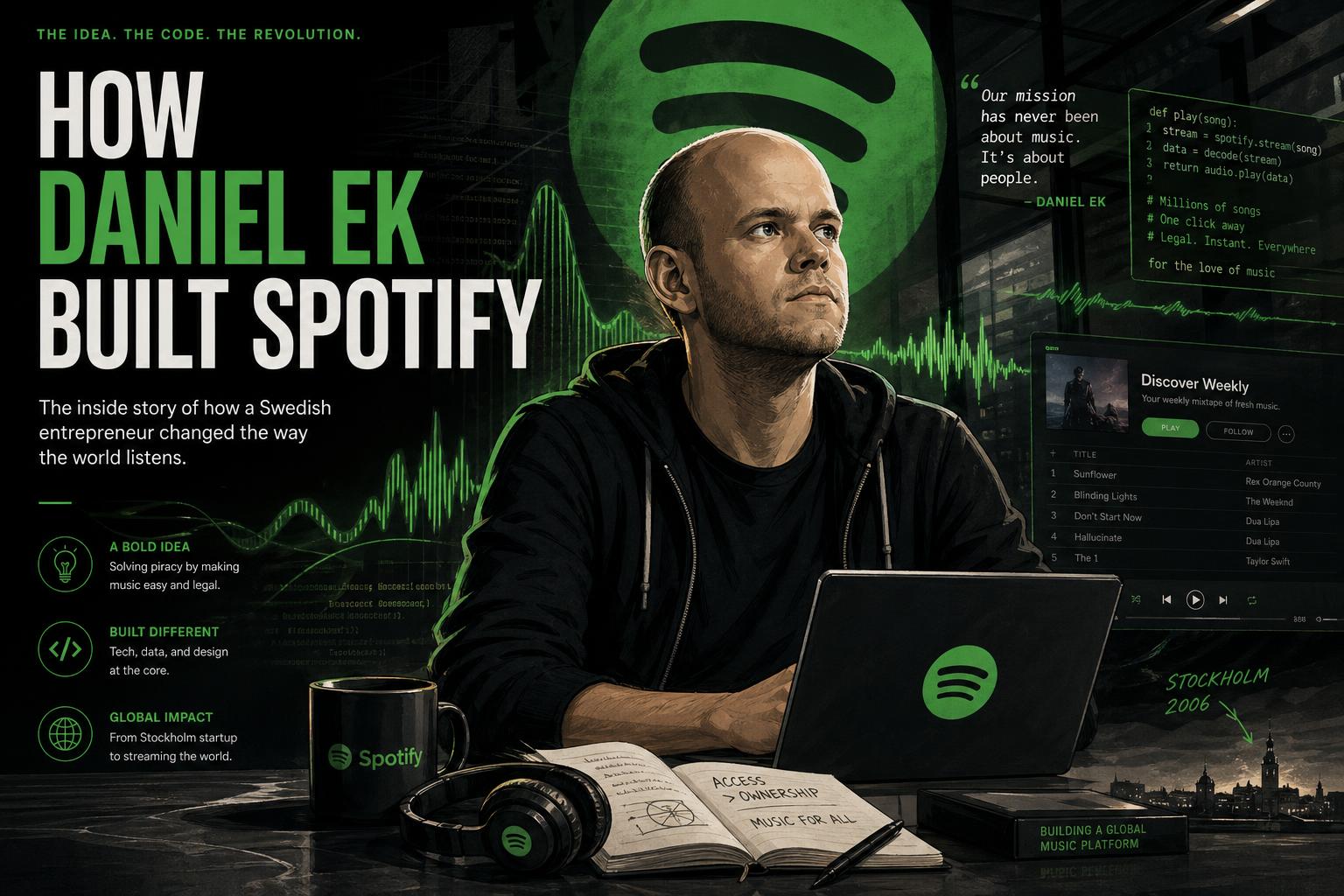
Europe was easy compared to the United States.
The U.S. music industry was terrified of a free streaming service. The big American labels insisted that Spotify could only operate in the U.S. if it charged subscribers directly — no free tier, no ad-supported users. Ek refused. The free tier was the core of his strategy. It was how you converted pirates into users, then converted users into paying subscribers.
The negotiations dragged on for three years. American lawyers picked apart every clause. Executives demanded higher minimum guarantees. Taylor Swift’s people had opinions. Sean Parker — the former Napster founder turned Facebook president — became an informal advocate inside Spotify, using his Silicon Valley connections to lobby Mark Zuckerberg and others for support.
Spotify finally launched in the United States on July 14, 2011. The free tier was allowed, but with limits: five hours per month, later tightened further. The paid Premium tier was $9.99 per month — the price point that had been established by iTunes years earlier.
The launch was massive. Spotify gained a million U.S. users in its first week. The tech press loved it. The music press grudgingly admitted it worked. The labels, having been given equity, were finally on the same side as their supposed disruptor.
By the end of 2012, Spotify was the largest paid music streaming service in the world. By 2015, it had 20 million paying subscribers. By 2018, it had 75 million paying subscribers. The pirate problem that nobody could solve had been solved — not with lawsuits, but with a better product.
📉 Chapter 5: The Taylor Swift War
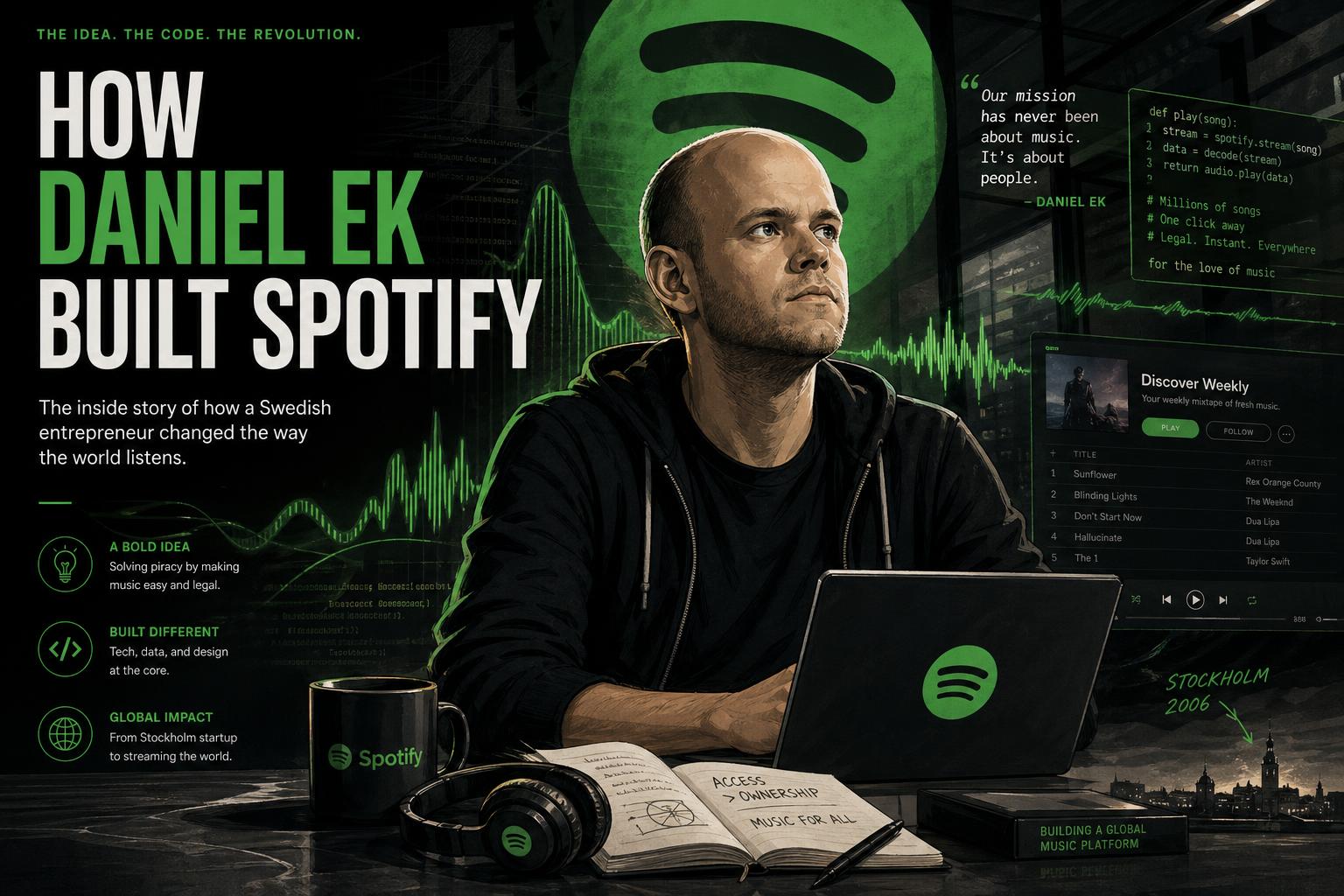
In November 2014, Taylor Swift pulled her entire catalog off Spotify, publishing an op-ed in the Wall Street Journal that accused the service of undervaluing music and impoverishing artists. It was the most public attack any musician had ever launched on a streaming platform, and it exposed the fundamental tension at the heart of Spotify’s business model.
Spotify paid roughly $0.003 to $0.005 per stream — meaning a song would need to be streamed hundreds of thousands of times to generate a single month’s rent for its creator. For global superstars with billions of streams, this was lucrative. For mid-tier independent artists, it was devastating. A song that would have earned thousands of dollars on iTunes earned pennies on Spotify.
Ek published a response defending Spotify’s economics. He pointed out that Spotify paid out over 70% of its revenue to rights holders. He argued that piracy — the alternative — paid 0%. He insisted that the total pool of money going to artists was larger under streaming than it had been under the pre-streaming industry.
The arguments were factually correct but emotionally unsatisfying. Artists didn’t see a “total pool.” They saw their individual checks, and their individual checks looked small. The Taylor Swift war would repeat itself, in different forms, with different artists, for the next decade — culminating in the Neil Young and Joni Mitchell protests of 2022 over the Joe Rogan podcast.
Spotify never solved the artist-pay problem. It couldn’t, because the problem was structural — built into the math of streaming itself. But Ek learned to manage it. He published royalty data. He launched artist equity tools. He created “Spotify for Artists” to give musicians direct control over their pages. He absorbed the criticism and kept moving.
🎙️ Chapter 6: The Podcast Pivot
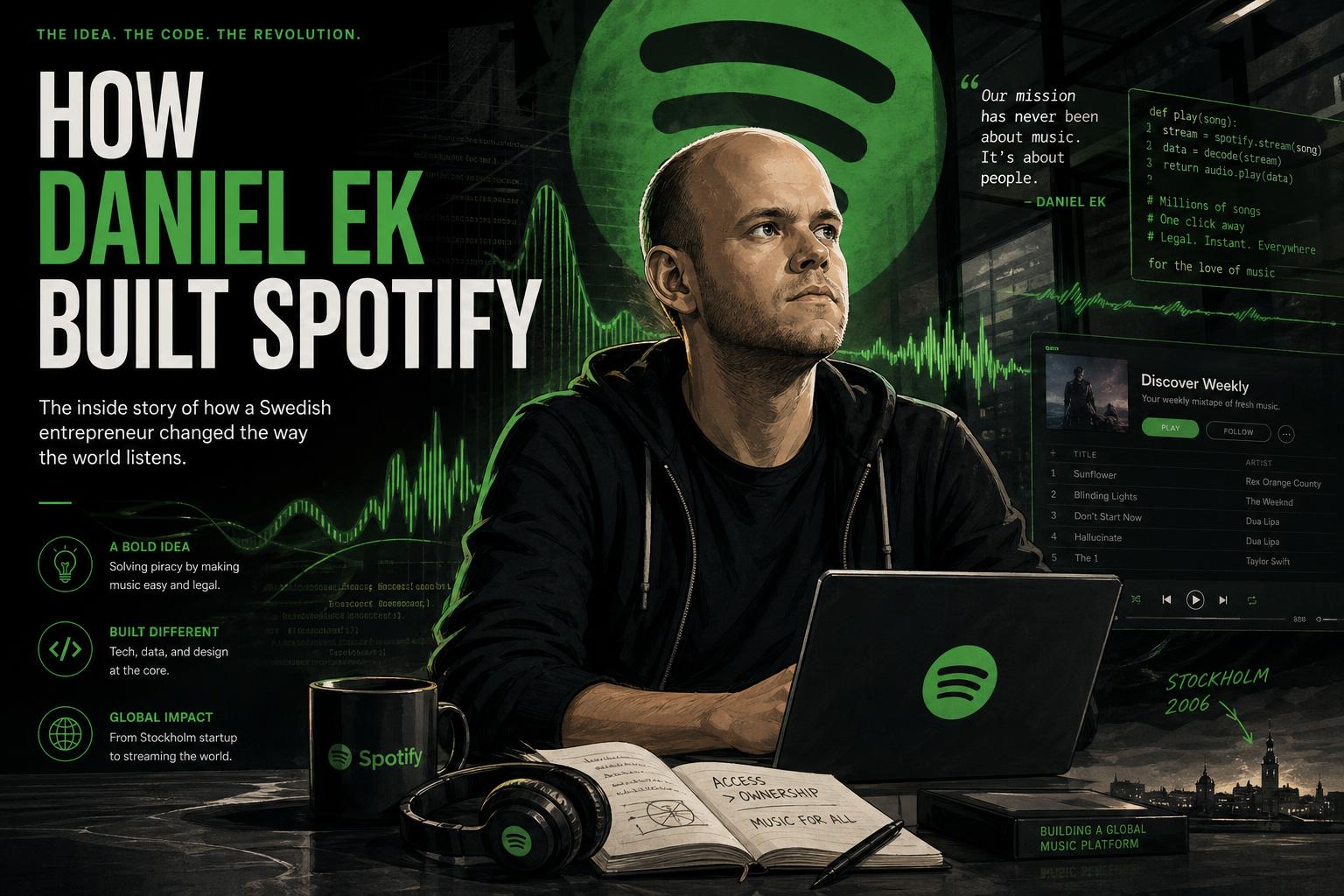
By 2019, Ek had started worrying about a ceiling. Spotify’s music business was enormous, but its gross margins were terrible. Every dollar of music streamed sent roughly 70 cents back to the record labels. Unlike Netflix, which could produce original content and own the rights, Spotify was a middleman forever.
His answer was podcasts. Podcasts were not owned by major rights holders. They were owned by creators, many of whom were small and unsophisticated. If Spotify could acquire the biggest podcasts, it could finally own content outright — and earn margins closer to those of a real media company.
Ek went on a buying spree. Spotify acquired Gimlet Media, Anchor, Parcast, The Ringer, Megaphone, and eventually signed exclusive deals with Michelle Obama, Kim Kardashian, and the Duke and Duchess of Sussex. The most consequential deal came in May 2020, when Spotify signed an exclusive contract with Joe Rogan — the host of the most popular podcast in the world — for a reported $100 million, later expanded to $250 million.
The Rogan deal was a political earthquake. Progressive artists like Neil Young and Joni Mitchell demanded that Spotify drop Rogan over his controversial guests and comments. Spotify employees staged internal protests. Ek held firm, defended Rogan’s creative independence, and absorbed the public relations beating.
It paid off. Rogan stayed. Spotify’s podcast business grew rapidly. By 2024, Spotify was the most-listened-to podcast platform in the United States, surpassing Apple Podcasts for the first time in history.
📈 Chapter 7: The IPO and the Direct Listing
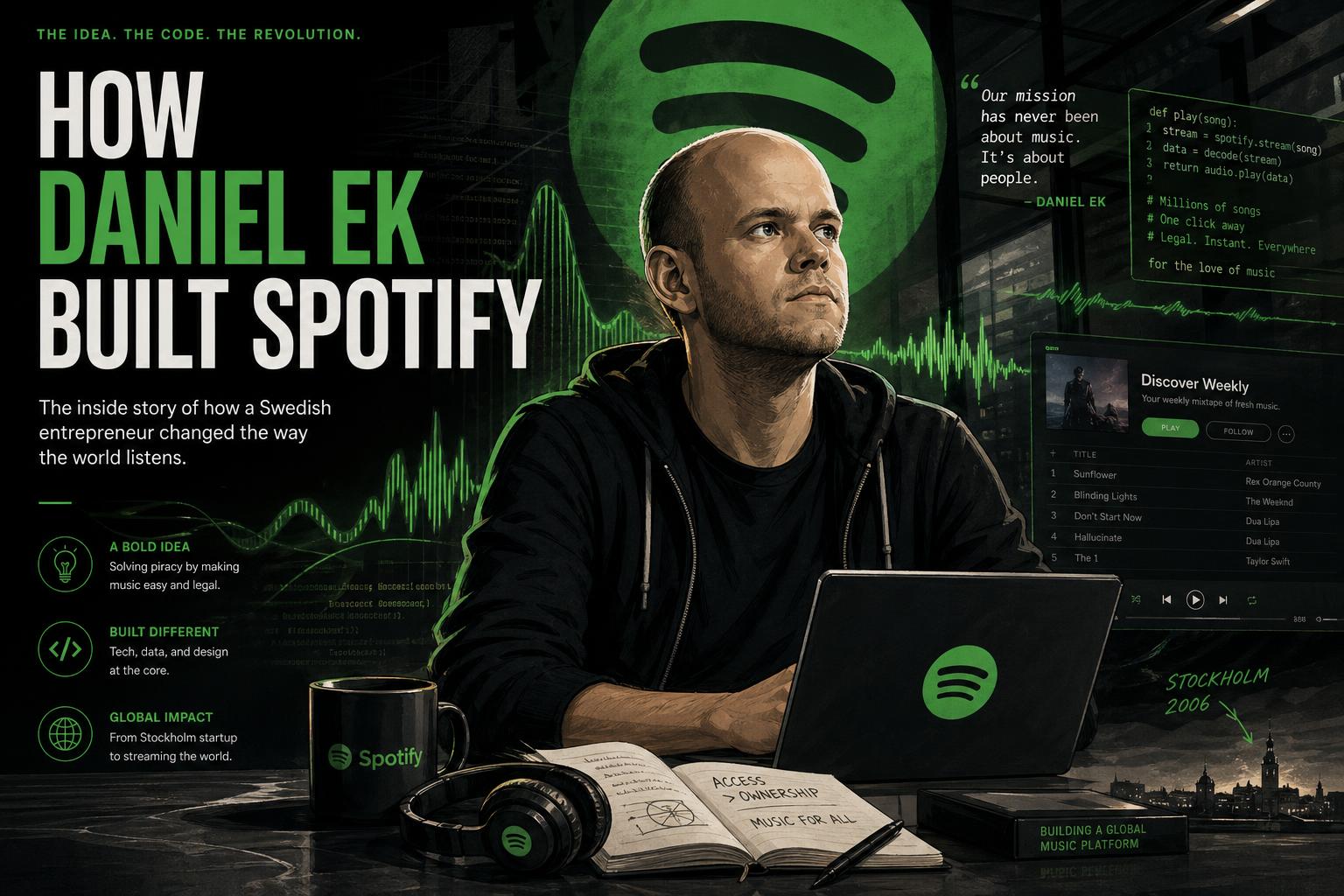
On April 3, 2018, Spotify went public on the New York Stock Exchange in one of the most unusual IPOs in Wall Street history: a direct listing. Instead of working with underwriters to set a price and sell new shares, Spotify simply allowed existing shareholders to begin trading their stock freely on the open market. No new money was raised. No investment banks made underwriting fees. Ek essentially told Wall Street that he didn’t need their help.
The direct listing was a statement. Ek was signaling that Spotify was a mature company that didn’t need investment banker theater to go public. It also gave the major record labels — which collectively held billions of dollars worth of Spotify stock — immediate liquidity.
The first trade was at $165.90. By the end of the day, Spotify was worth over $29 billion. Daniel Ek, who still owned roughly 25% of the company, was now a billionaire on paper several times over.
The stock was volatile in its first years. Investors questioned whether Spotify could ever achieve attractive margins. But by 2024, after a decade of podcast investment, audiobook expansion, and subscription price increases, Spotify’s gross margins finally crossed 30%, and the stock began climbing steadily.
⚔️ Chapter 8: The Apple Music Fight
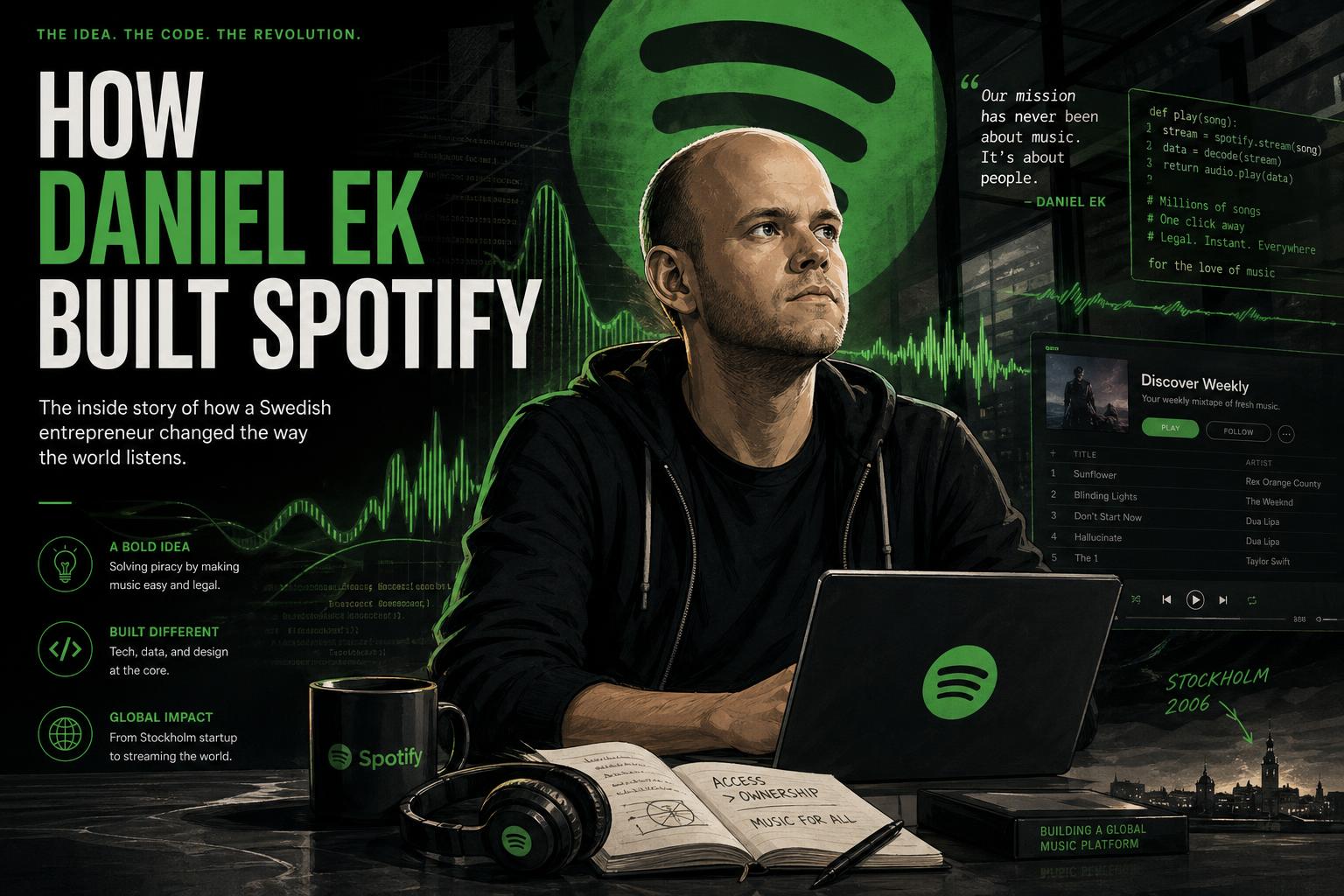
If Spotify had one permanent enemy, it was Apple. Apple Music launched in June 2015, backed by the full power of the iPhone platform. Apple could bundle its music service into every device it sold. Apple could pre-install the app. Apple could advertise Apple Music on Apple’s billboards, Apple’s App Store, and Apple’s marketing channels. And most painfully, Apple took a 30% cut of every Spotify Premium subscription sold through the iOS App Store.
Ek became the loudest corporate critic of Apple’s App Store policies in the world. In 2019, Spotify filed a formal antitrust complaint against Apple with the European Commission, accusing Apple of anti-competitive behavior in the music streaming market. The complaint alleged that Apple’s 30% App Store tax and its App Store rules unfairly advantaged Apple Music over third-party competitors.
The complaint took five years to resolve. In March 2024, the European Commission fined Apple 1.8 billion euros — at the time, one of the largest antitrust fines in European tech history — and ordered Apple to allow streaming services to inform users about cheaper payment options outside the App Store.
It was one of the first major regulatory victories against Apple’s App Store dominance. Ek had done something no other tech CEO had successfully done: he had used regulators to force Apple to change its rules.
📚 Chapter 9: Audiobooks, Advertising, and Adjacent Markets
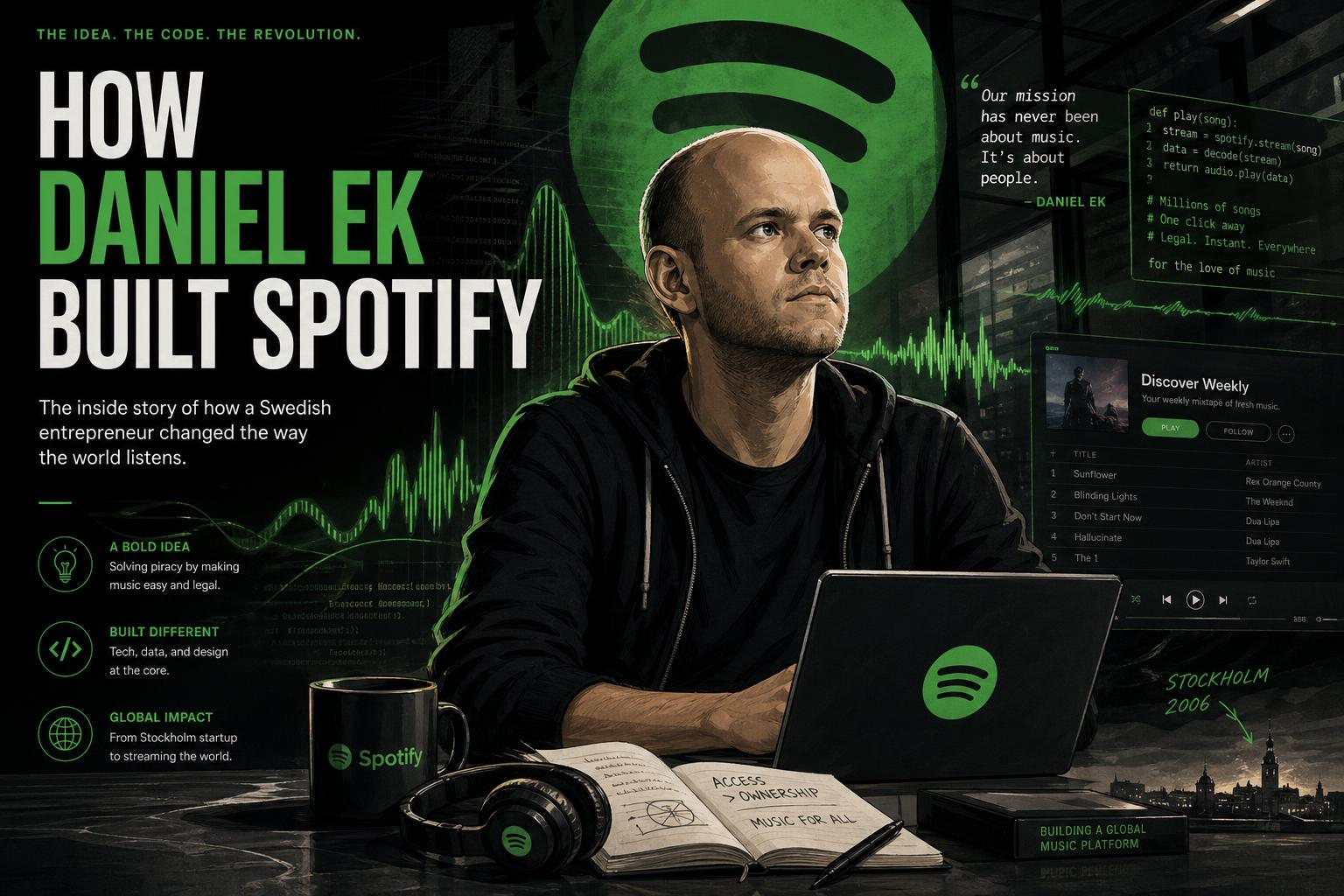
By 2022, Ek was looking for the next adjacent market. He found two: audiobooks and advertising.
Spotify acquired the audiobook platform Findaway in 2022 and integrated audiobooks into the Spotify app in 2023. Within a year, Spotify became one of the largest audiobook distributors in the world, competing directly with Amazon’s Audible for the first time.
Meanwhile, Ek pushed aggressively into advertising technology. Spotify bought Megaphone, an enterprise podcast ad platform, and used it to sell targeted audio advertising across its entire content library. By 2024, Spotify’s advertising business was generating over $1.5 billion in annual revenue.
The strategy was consistent with everything Ek had done before: find adjacent markets where music’s flywheel gave him free distribution, then layer on new business lines with better margins. Music had been the Trojan horse. Everything else was where the real profits would live.
🪖 Chapter 10: Prima Materia and the European Tech Agenda
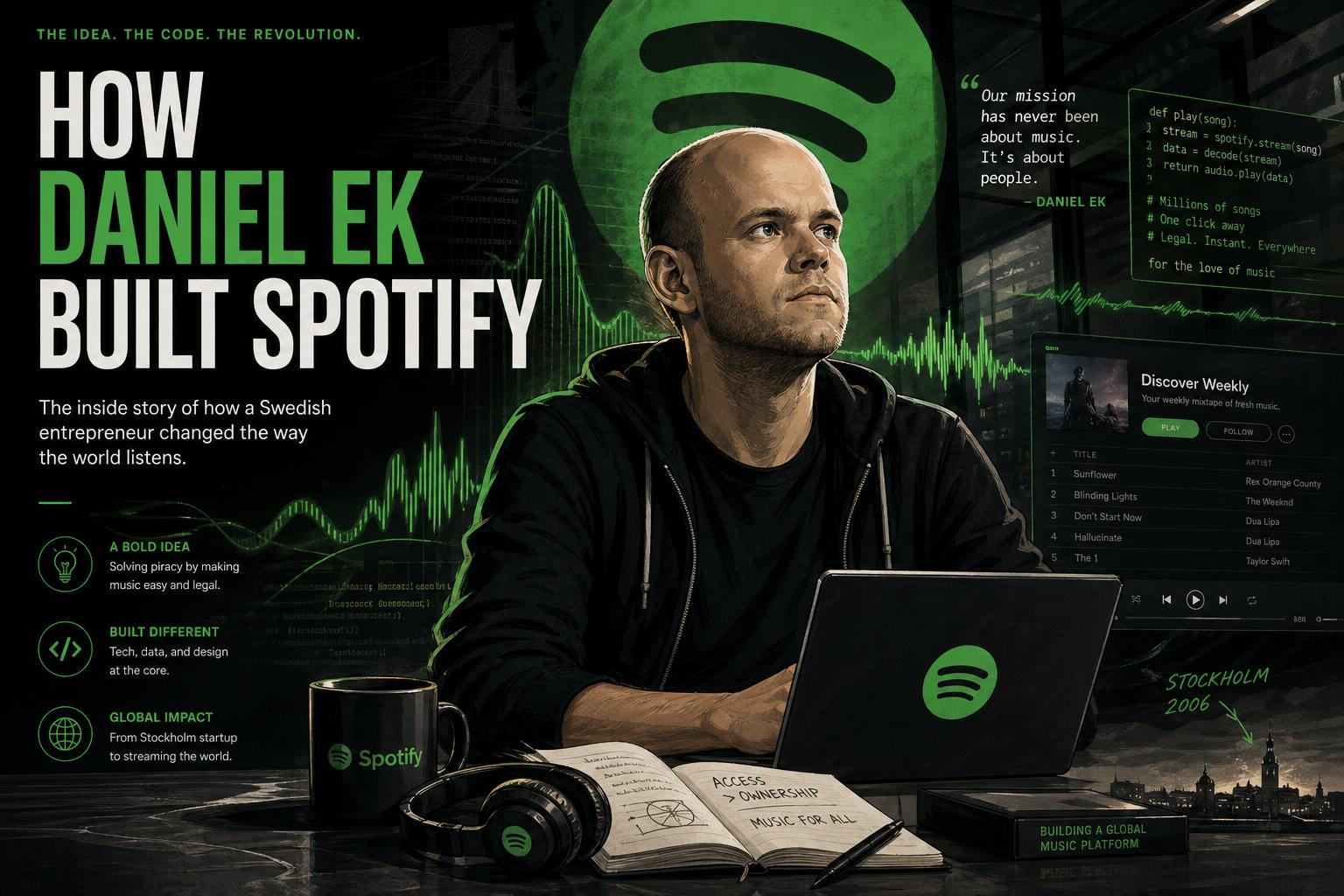
In 2021, Ek launched a personal investment vehicle called Prima Materia, committing €1 billion to European deep-tech startups — particularly in AI, biotech, and defense. It was a remarkable commitment. European founders had long complained about a lack of patient, large-scale capital willing to back ambitious technological bets. Ek was trying to change that.
He became especially outspoken about European defense technology. He invested in Helsing, a German AI defense startup, and publicly argued that European tech founders had a moral obligation to build the next generation of defense systems rather than ceding the field to American and Chinese competitors. His stance drew criticism from artists who objected to Spotify’s founder funding military AI, but Ek was unmoved.
Ek’s political interventions — pushing for Stockholm to remain a startup hub, lobbying the Swedish government on tax policy for tech employees, funding European sovereignty debates — showed a founder thinking about time horizons far longer than quarterly earnings. He wanted to shape the environment in which future European founders would operate.
👨💼 Chapter 11: The CEO and the Co-Presidents
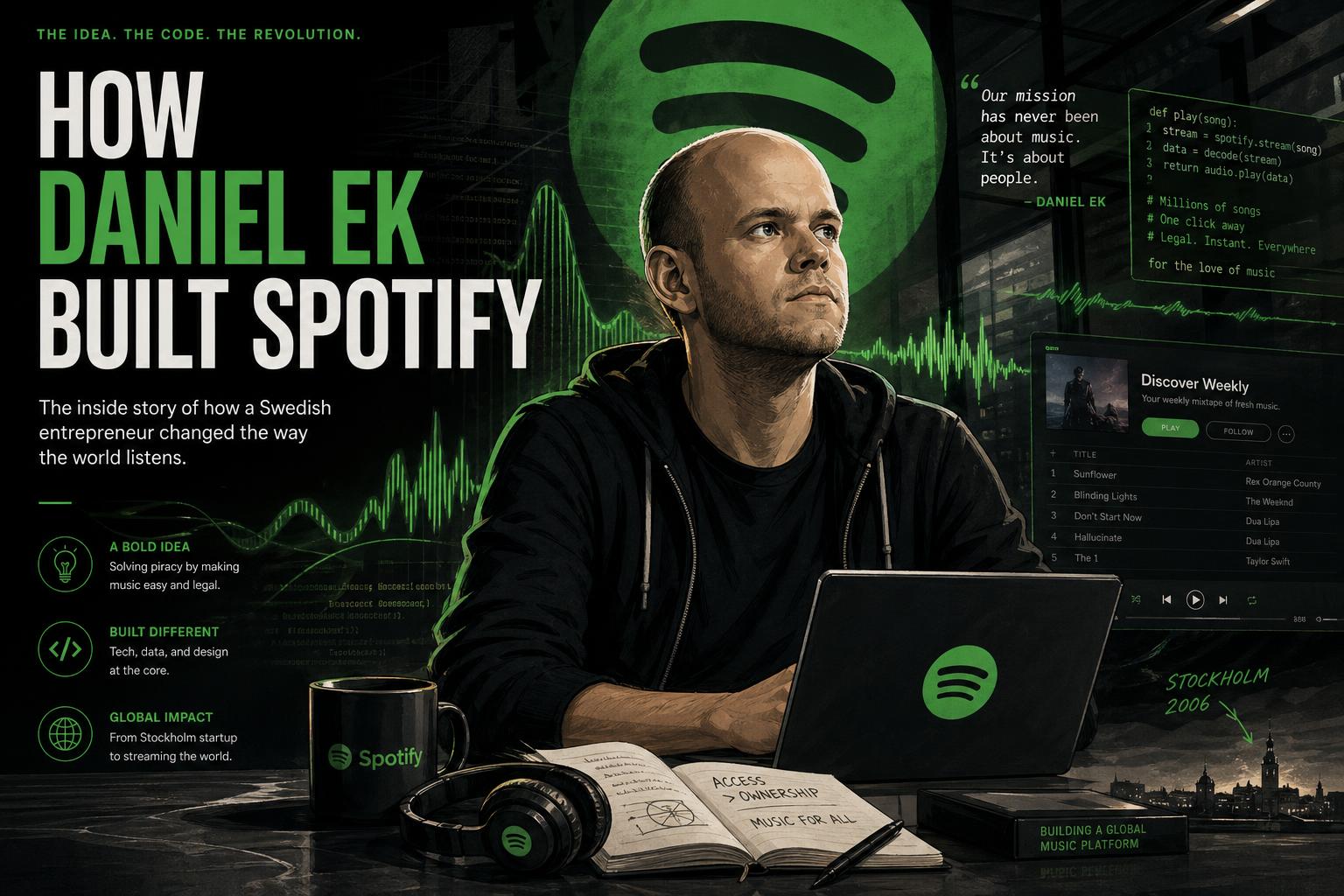
In early 2025, Ek announced a major restructuring of Spotify’s leadership. He elevated Alex Norström and Gustav Söderström — two of his longest-serving executives — to co-presidents of the company, while he remained CEO with a focus on strategy, long-term bets, and Prima Materia.
The restructuring was controversial inside the company. Some employees worried that Ek was slowly distancing himself from day-to-day operations. Others argued that the move was exactly what Spotify needed — two strong operators running the core business while the founder focused on what he was best at: seeing around corners.
The move mirrored structural shifts at other large tech companies — Alphabet under Pichai, Microsoft under Nadella — in which founders or long-time CEOs began delegating execution to professional operating teams. Ek insisted that he was not going anywhere. But the signal was clear: Spotify was growing up, and its founder was building the management architecture to survive without his daily presence.
🌅 Chapter 12: The Ledger of a Reluctant Villain
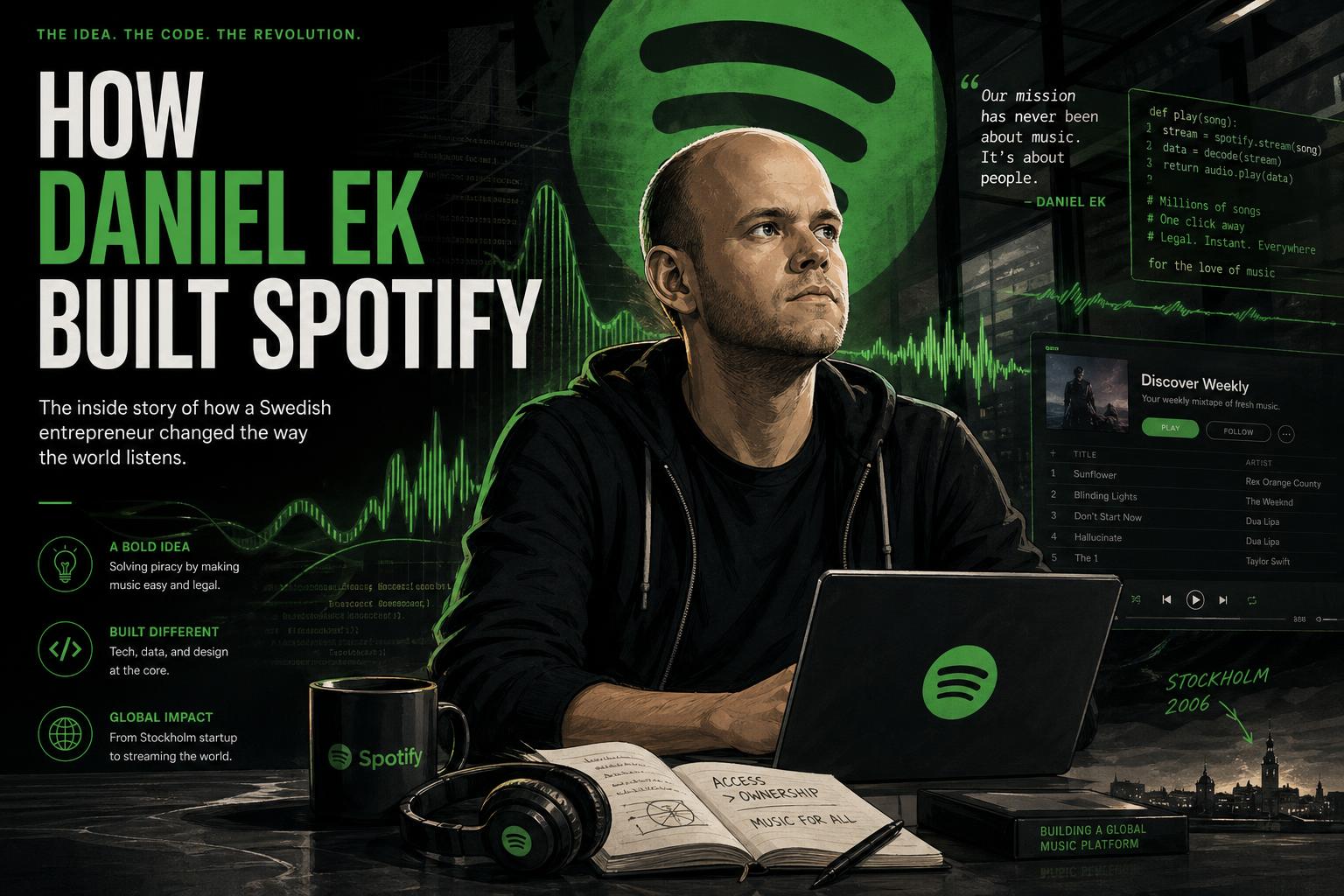
As of early 2026, Spotify has over 680 million active monthly users and more than 275 million paying subscribers. Annual revenue exceeds $17 billion. The company is profitable on a full-year basis for the first time in its history. Its market capitalization is approximately $70 billion. Daniel Ek’s personal net worth is estimated at around $8 billion.
He has been cast, at different points, as a hero and a villain. To the music industry, he is the man who saved paid music from extinction. To independent musicians, he is the man whose platform pays them pennies and whose algorithm dictates who becomes famous. To Apple, he is the nuisance who forced Brussels to impose a historic antitrust fine. To European founders, he is the billionaire who finally committed billions to backing their ambitions. To regulators, he is a case study in how much power a streaming platform can accumulate.
Ek himself shrugs at most of these framings. In interviews, he returns again and again to the same simple idea: he built Spotify because he hated piracy and loved music, and because he thought a better user experience could change the world. The economics turned out to be harder than he expected. The politics turned out to be harder still. But the core mission — legal, convenient, instant access to music for anyone with an internet connection — has been accomplished on a scale that nobody else in the industry came close to achieving.
He is 42 years old. He still lives in Stockholm. He still codes on weekends. He still listens to more music per week than nearly any of his employees. The cabin where he wrote the first Spotify business plan is still there. And somewhere in the dusty corners of his career, there is a red Ferrari that he sold almost twenty years ago — the last sign of the empty victory that almost broke him before he started building the empire that nobody thought was possible.
💡 Key Insights
- ▸ Daniel Ek understood before anyone else that music piracy was not a moral problem — it was a user experience problem. Customers didn't want free music. They wanted convenient music. Solve the convenience problem and the piracy problem dissolves.
- ▸ Spotify's entire existence hinges on a single insight: give the labels a tiny piece of ownership in your company and they stop trying to kill you. Ek essentially bribed his most dangerous adversaries into becoming minority investors.
- ▸ Spotify's $100M Joe Rogan deal was not just a podcast investment. It was the moment Ek declared that the music industry was no longer his ceiling. The lesson: when you've saturated your original market, buy distribution in the adjacent one.
- ▸ Ek's relationship with artists is uncomfortable, tense, and often adversarial — because the economics of streaming genuinely punish mid-tier musicians while rewarding superstars. Understanding this contradiction is key to understanding every Spotify controversy.
- ▸ His willingness to fund European defense tech startups through his fund Prima Materia, and his quiet political advocacy for Stockholm's startup ecosystem, show a founder playing a longer civilizational game than most observers realize.