Do Kwon: The $40 Billion Crypto King Who Crashed to Earth
He taunted critics, dismissed risk, and built an algorithmic stablecoin that collapsed in 72 hours — wiping out $40 billion and countless lives.
View all stories about this mogul
Do Kwon: The $40 Billion Crypto King Who Crashed to Earth
In May 2022, the Terra-Luna cryptocurrency ecosystem collapsed in less than 72 hours, erasing approximately $40 billion in value and devastating hundreds of thousands of investors worldwide. At the center of the wreckage stood Do Kwon — a 30-year-old Stanford-educated Korean programmer who had built the third-largest stablecoin in the world, taunted his critics with withering contempt, and dismissed every warning about his algorithmic creation. His fall is one of the most dramatic in financial history: from crypto visionary to Interpol fugitive to convicted fraudster, all in the span of three years.
🎓 Chapter 1: The Stanford Kid from Seoul

Kwon Do-hyung — known to the world as Do Kwon — was born in 1991 in Seoul, South Korea. He grew up in a country that was rapidly becoming one of the world’s most wired societies, where high-speed internet and mobile technology were ubiquitous.
Kwon was brilliant academically. He attended the prestigious Daewon Foreign Language High School in Seoul, one of South Korea’s most competitive schools. In 2009, he left Korea for Stanford University, where he studied computer science.
At Stanford, Kwon developed a reputation as confident, sometimes abrasive, and unflinchingly ambitious. He graduated in 2015 and took a job at Microsoft, then briefly worked at Apple. But Kwon wasn’t interested in working for someone else. He was interested in building something of his own.
In 2016, Kwon co-founded Anyfi, a peer-to-peer communications startup. The company received some attention but never gained significant traction. Kwon was already thinking bigger — much bigger.
By 2017, the cryptocurrency boom was in full swing. Bitcoin had surged past $10,000. Ethereum had birthed an ecosystem of decentralized applications. And a specific problem had captured the attention of crypto developers worldwide: how do you create a stable currency on an inherently volatile blockchain?
This problem — the stablecoin problem — would become Do Kwon’s obsession, his claim to fame, and ultimately his downfall.
🪙 Chapter 2: Building Terra — An Algorithmic Dream
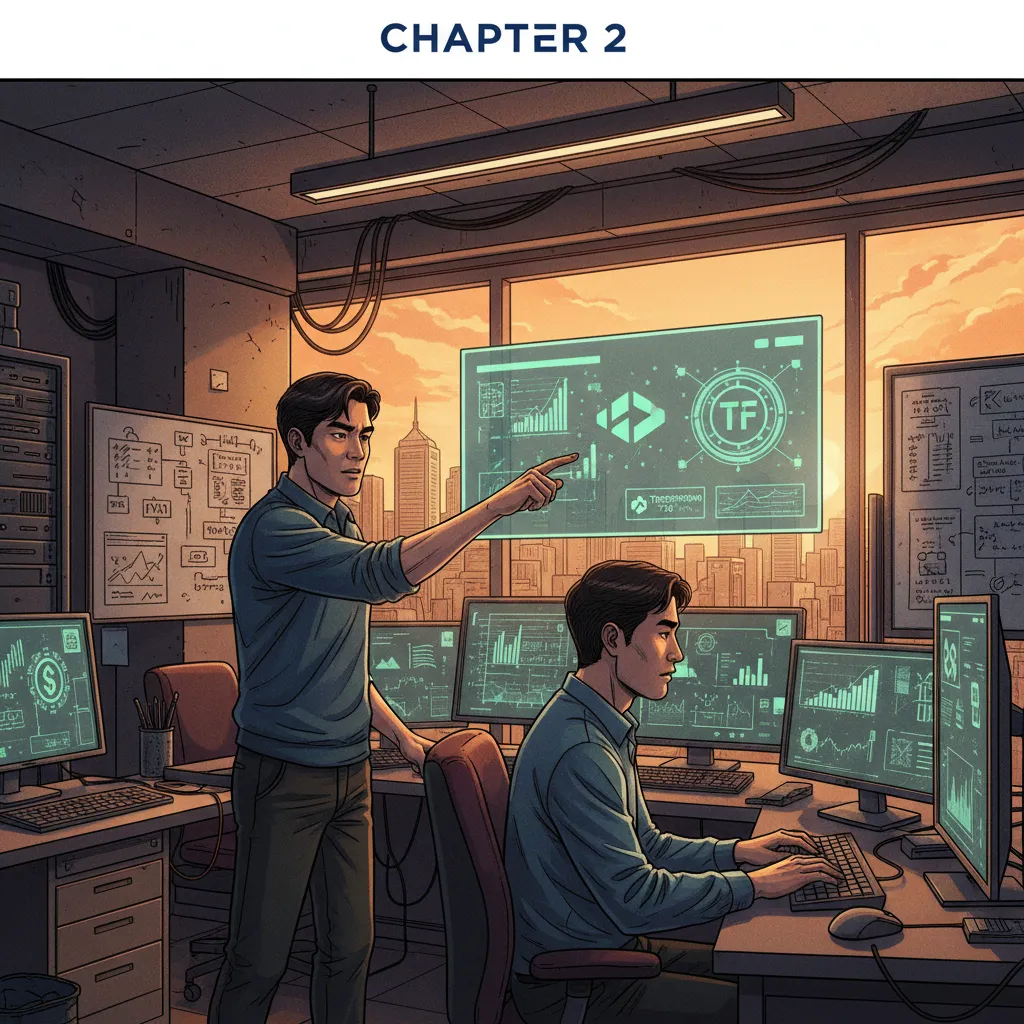
In January 2018, Do Kwon and Daniel Shin, a Korean entrepreneur, co-founded Terraform Labs in Seoul. Their mission was to create a decentralized payment system powered by a new type of stablecoin.
To understand what happened next, you need to understand the stablecoin landscape.
Stablecoins are cryptocurrencies designed to maintain a stable value, typically pegged to the U.S. dollar ($1 = 1 stablecoin). They solve the problem of crypto volatility — you can’t use Bitcoin to buy coffee if its value might drop 20% before your next cup.
There are two main approaches to stablecoins:
Collateralized stablecoins (like USDT/Tether or USDC) hold reserves of real assets — cash, Treasury bills, commercial paper — that back each token. If you hold $1 of USDC, there is (in theory) $1 of real assets sitting in a bank account somewhere.
Algorithmic stablecoins don’t hold reserves. Instead, they use mathematical algorithms and market incentives to maintain their peg. This is what Do Kwon built.
Terra’s system worked through two tokens:
- UST (TerraUSD): The stablecoin, pegged at $1
- LUNA: The governance and collateral token
The mechanism was elegantly simple — and, as it turned out, fatally fragile. To create $1 of UST, you burned $1 worth of LUNA. To redeem $1 of UST, you burned it and received $1 worth of LUNA. This arbitrage mechanism was supposed to keep UST pegged to $1:
- If UST dropped below $1, arbitragers could buy cheap UST and burn it for $1 of LUNA, profiting from the difference. This would reduce UST supply and push the price back up.
- If UST rose above $1, arbitragers could mint new UST by burning LUNA, selling the UST for more than $1. This would increase supply and push the price back down.
On paper, it was a perpetual motion machine of price stability. In practice, it was a ticking time bomb.
The critical vulnerability was this: the entire system depended on LUNA having value. If people lost confidence in LUNA, the mechanism would break down. And if UST lost its peg, the process of burning UST and minting LUNA would flood the market with LUNA tokens, driving LUNA’s price down, which would require even more LUNA to be minted, driving the price down further — a classic death spiral.
Multiple experts, economists, and crypto researchers warned about this vulnerability. Do Kwon’s response was consistently dismissive.
🔥 Chapter 3: The Rise of the Lunatic King
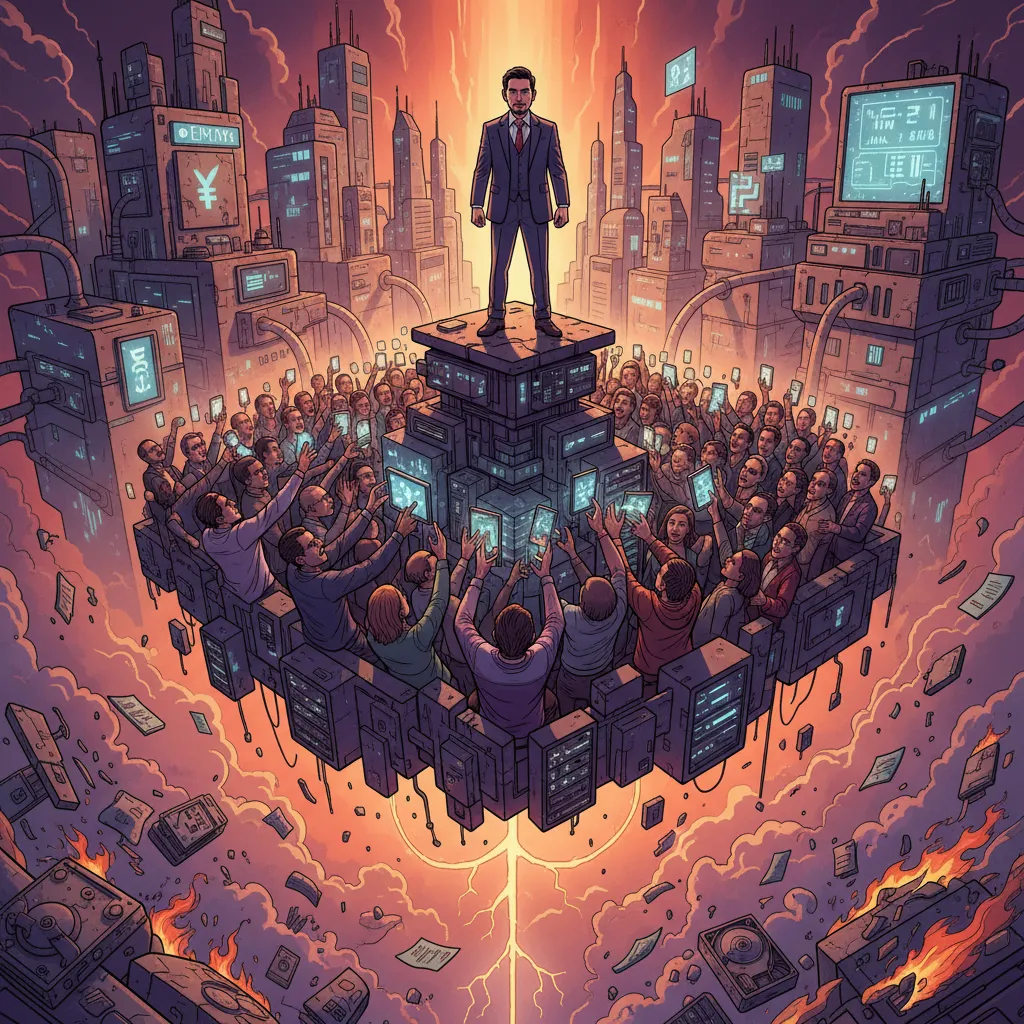
Despite (or perhaps because of) its structural risks, Terra grew at an extraordinary pace.
Do Kwon was a masterful promoter. He cultivated a devoted community of Terra believers who called themselves “Lunatics” — a self-aware nod to the LUNA token and their passionate commitment to the project. Kwon encouraged the tribal mentality, frequently taking to Twitter to mock critics, challenge skeptics, and declare Terra’s inevitable dominance.
His tweets became legendary in crypto circles for their arrogance:
- When a critic warned that UST could lose its peg, Kwon replied: “I don’t debate the poor.”
- When economist Frances Coppola raised concerns about the algorithmic mechanism, Kwon tweeted: “I don’t engage with poor people.”
- When asked about the risks of a death spiral, he responded: “By definition, a stable asset doesn’t have a death spiral.”
This bravado attracted a cult-like following. LUNA’s price surged from under $1 in early 2021 to an all-time high of $119.18 in April 2022. At its peak, LUNA had a market capitalization of approximately $41 billion. UST had approximately $18 billion in circulation, making it the third-largest stablecoin behind Tether and USDC.
A key driver of Terra’s growth was the Anchor Protocol, a DeFi (decentralized finance) lending platform built on the Terra blockchain. Anchor offered depositors a guaranteed 19.5% annual yield on UST deposits. In a world of near-zero interest rates, 19.5% was extraordinary — and for many economists, immediately suspicious.
Where was the yield coming from? The answer was: it wasn’t sustainable. Anchor was paying out more in yield than it was earning from borrowers. The difference was being subsidized by Terraform Labs. In effect, the 19.5% yield was a marketing expense — a subsidy designed to attract deposits and grow UST’s market cap.
By early 2022, approximately 75% of all UST in circulation was deposited in Anchor Protocol. The entire Terra ecosystem depended on a single platform offering an unsustainable yield.
The Lunatics didn’t seem concerned. Neither did Do Kwon.
💀 Chapter 4: 72 Hours of Destruction
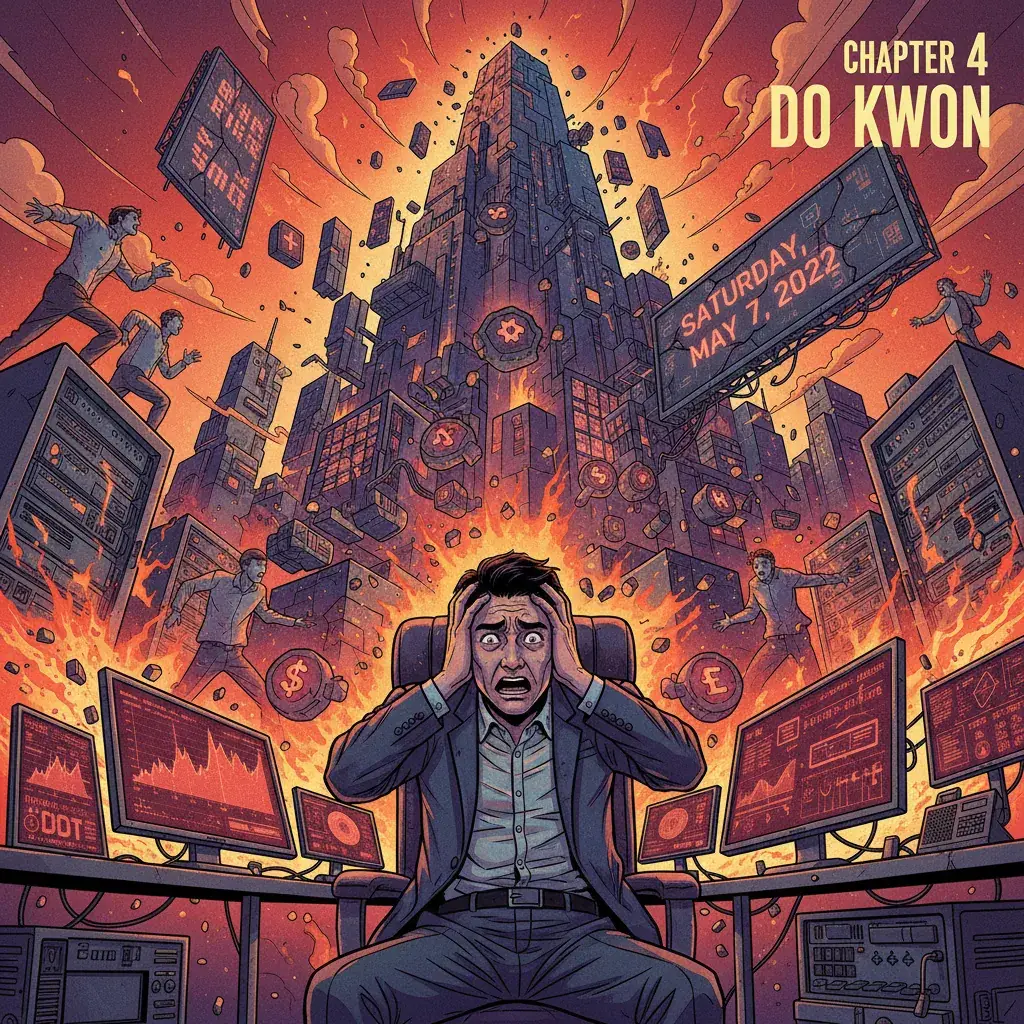
The collapse began on Saturday, May 7, 2022.
A large holder (or holders) began selling significant amounts of UST. Approximately $2 billion of UST was withdrawn from Anchor Protocol and sold on exchanges. The selling pressure pushed UST’s price slightly below its $1 peg — to approximately $0.98.
Under normal circumstances, the arbitrage mechanism should have restored the peg. But these were not normal circumstances. The sheer volume of selling overwhelmed the mechanism.
On May 8, UST fell further — to $0.95. The Luna Foundation Guard (LFG), a nonprofit created by Kwon to defend the peg, began deploying its reserves of Bitcoin and other assets. LFG had accumulated approximately $3.5 billion in Bitcoin specifically for situations like this. It began selling Bitcoin to buy UST and restore the peg.
It wasn’t enough.
On May 9, UST crashed to $0.67. Panic set in. Holders rushed to sell their UST before it fell further. The arbitrage mechanism kicked into overdrive: massive amounts of UST were burned and converted into LUNA, flooding the market with billions of new LUNA tokens.
This was the death spiral that experts had warned about.
As LUNA supply exploded, LUNA’s price collapsed:
- May 7: LUNA was at approximately $80
- May 9: LUNA fell to $30
- May 10: LUNA fell to $1
- May 11: LUNA fell to $0.10
- May 12: LUNA fell to $0.0001
- May 13: LUNA was essentially worthless
UST, the “stablecoin,” followed:
- May 7: $0.98
- May 9: $0.67
- May 11: $0.30
- May 13: $0.15
- By late May: $0.01
In less than a week, approximately $40 billion in combined UST and LUNA market capitalization was destroyed. It was one of the fastest and most complete financial collapses in history.
The human toll was devastating. Thousands of people had invested their life savings in LUNA or deposited their money in Anchor Protocol, lured by the 19.5% yield. Forums and social media filled with stories of financial ruin. Multiple suicides were reported in South Korea and other countries. The Terra subreddit had to pin a suicide prevention hotline at the top of its page.
Do Kwon’s Twitter, which had been so active during the good times, went quiet during the collapse. His first substantive post after the crash was a half-hearted proposal to “fork” the Terra blockchain and start over — essentially asking the community to pretend the collapse hadn’t happened.
🏃 Chapter 5: The Fugitive
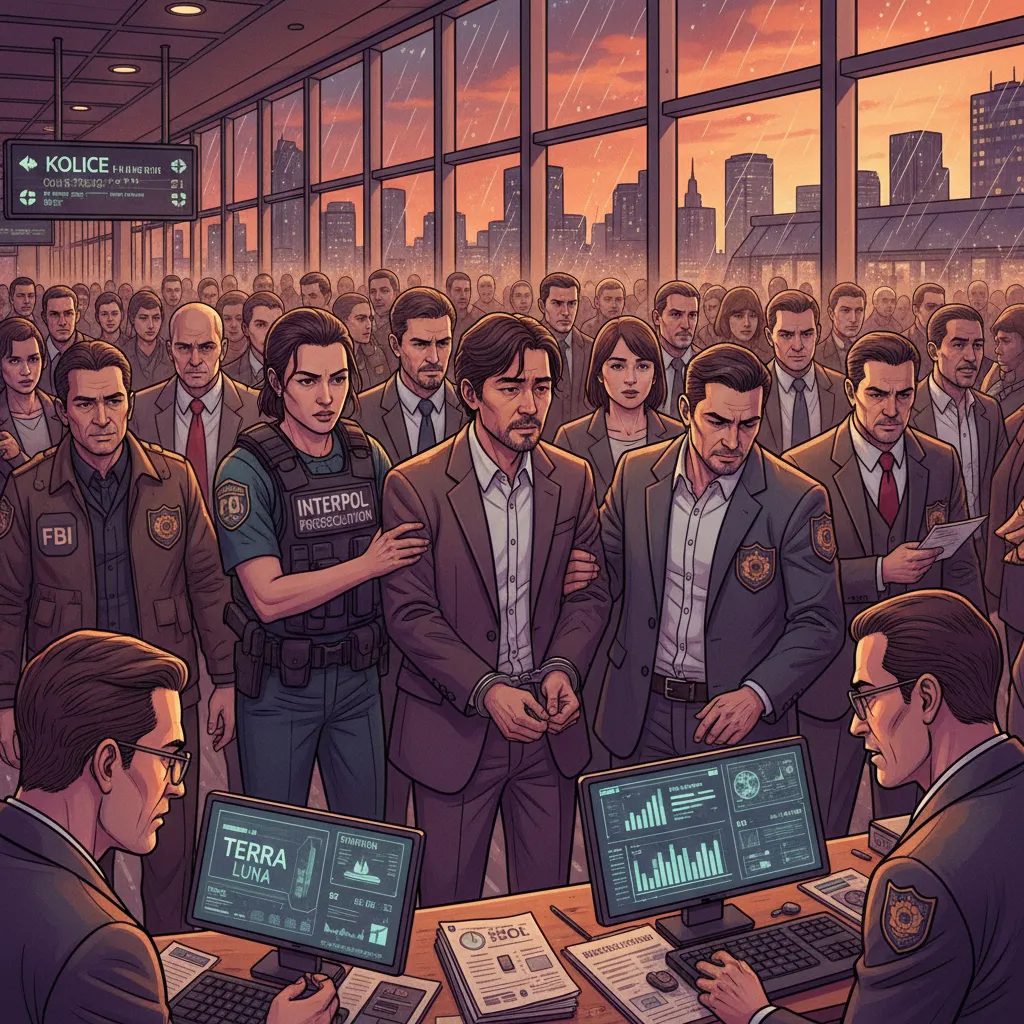
In the aftermath of the collapse, law enforcement agencies worldwide began investigating Do Kwon and Terraform Labs.
On September 14, 2022, a South Korean court issued an arrest warrant for Do Kwon on charges of violating the country’s capital markets laws. Kwon was not in South Korea. He had left for Singapore earlier in the year. When questioned about his location on Twitter, Kwon responded: “I am not ‘on the run’ or anything similar. I am making no effort to hide.”
On September 26, 2022, Interpol issued a Red Notice for Do Kwon — an international alert requesting law enforcement worldwide to locate and provisionally arrest him.
Kwon was clearly on the run. He left Singapore (which confirmed he was no longer in the country) and his whereabouts became unknown. Reports surfaced that he had been seen in Dubai, then Serbia, then various European locations.
On February 16, 2023, the U.S. Securities and Exchange Commission charged Terraform Labs and Do Kwon with fraud. The SEC alleged that the Terra ecosystem was “a fraud,” that Kwon had misled investors about the stability of UST, and that he had secretly paid a third-party market maker to restore UST’s peg during a smaller de-pegging event in May 2021 — all while publicly claiming the algorithm had restored the peg on its own.
Then, on March 23, 2023, Montenegrin police arrested Do Kwon at Podgorica airport as he attempted to board a flight using a forged Costa Rican passport. He was traveling with Terraform Labs’ former CFO, Han Chang-joon, who was also carrying a forged passport.
The arrest was a humiliating fall for a man who, just a year earlier, had been one of the most prominent figures in the cryptocurrency world. The forged passports added a layer of criminality that went beyond financial fraud — this was a man running from justice with fake documents.
⚖️ Chapter 6: Justice, Extradition, and the Trial
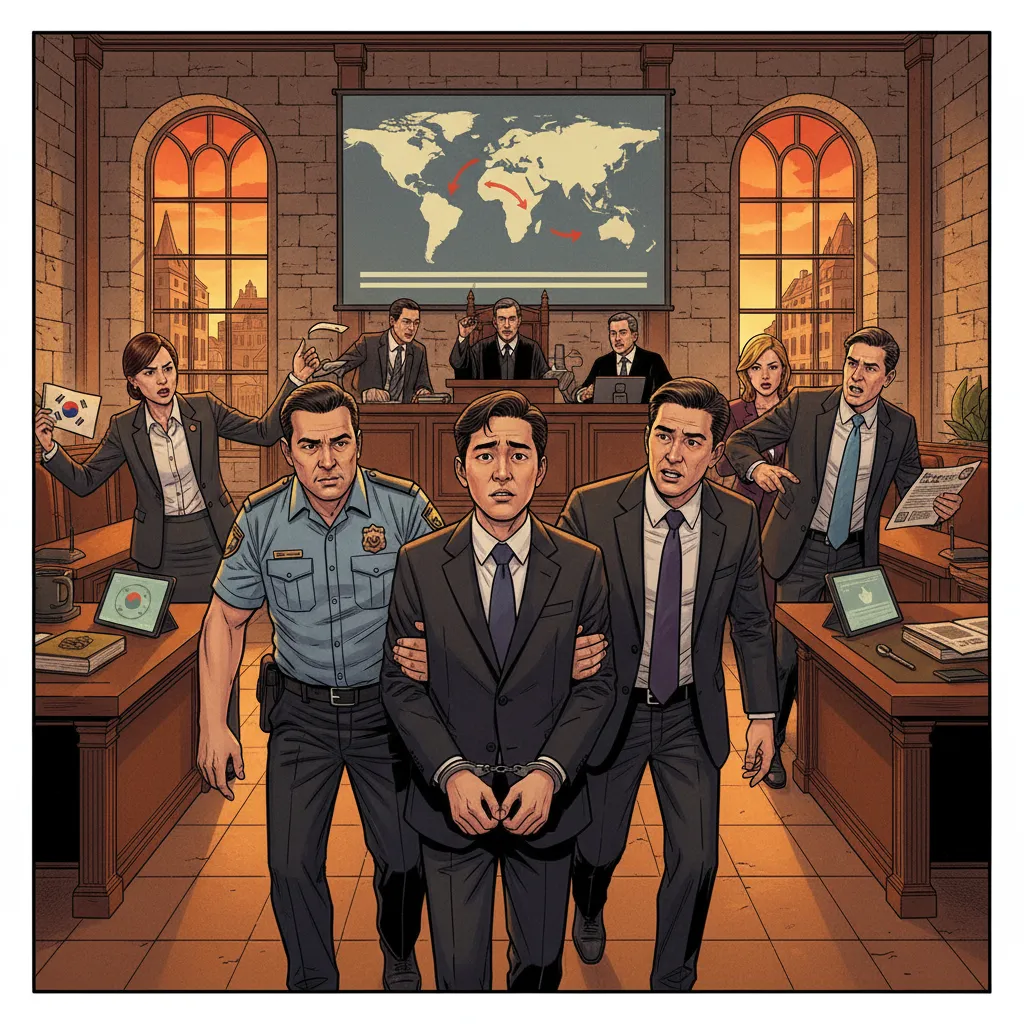
Do Kwon’s arrest in Montenegro triggered a complex international legal battle. Both South Korea and the United States sought his extradition, creating a diplomatic tug-of-war over who would try him first.
In June 2023, a Montenegrin court convicted Kwon of using forged travel documents and sentenced him to four months in prison. He served his sentence while the extradition proceedings played out.
The U.S. case moved forward separately. In April 2024, a federal jury in New York found Terraform Labs and Do Kwon liable for civil fraud in the SEC’s case. The jury deliberated for less than a day before reaching its verdict. Terraform Labs agreed to pay $4.47 billion in penalties and disgorgement — though the defunct company had nowhere near that amount in assets.
Meanwhile, the extradition process in Montenegro dragged on through multiple court hearings and appeals. Both South Korea and the U.S. pressed their claims. In late 2024, Montenegro’s courts approved extradition to the United States. Kwon was transferred to U.S. custody in early 2025 to face criminal charges including securities fraud, wire fraud, and conspiracy.
As of March 2026, Do Kwon’s criminal trial in the United States is ongoing. He faces decades in federal prison if convicted on all counts. He has pleaded not guilty.
The legal proceedings have revealed additional details about Kwon’s behavior during and after the collapse. Prosecutors allege that Kwon moved millions of dollars in cryptocurrency to personal wallets as Terra was collapsing, that he had been warned repeatedly by his own engineers about the death spiral risk, and that he continued to promote Terra publicly even after internal data showed the system was failing.
💔 Chapter 7: The Human Wreckage
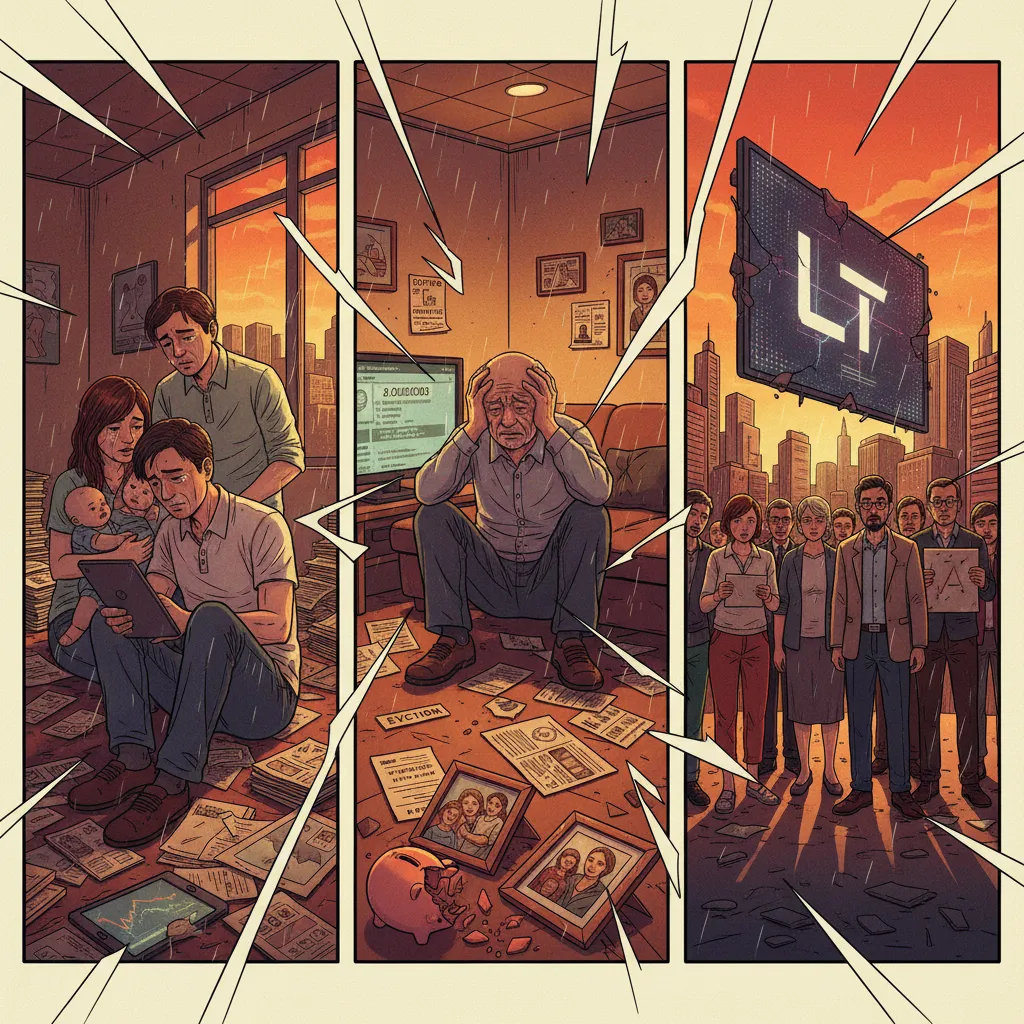
The Terra-Luna collapse was not just a financial event. It was a human catastrophe.
In South Korea, where crypto investment is exceptionally popular among young people, the Terra crash triggered a wave of grief, anger, and despair. Multiple suicides were reported in the weeks following the collapse. Korean media reported stories of retirees who had invested their pensions, students who had invested their tuition money, and young professionals who had taken out loans to buy LUNA at its peak.
One widely shared story involved a Korean man in his early 30s who had invested his entire savings — approximately $2.4 million accumulated over a decade of work — into LUNA and UST through Anchor Protocol. When the collapse came, his $2.4 million became less than $1,000 in a matter of days. He posted his story anonymously on a Korean internet forum. The post received thousands of replies from others sharing similar stories.
The global impact was similarly devastating. In India, the Philippines, Turkey, and other countries where crypto had become a popular savings vehicle, thousands of small investors lost money they could not afford to lose.
The Anchor Protocol’s 19.5% yield had been particularly attractive to people in countries with unstable currencies or limited banking access. These were not sophisticated investors who understood the risks of algorithmic stablecoins. They were ordinary people who saw what looked like a savings account offering a great interest rate.
Do Kwon’s dismissive attitude toward risk — his mocking of critics, his refusal to acknowledge the death spiral vulnerability — made the human cost feel even more egregious. He had encouraged people to put their money into a system he knew (or should have known) was fragile, while publicly insisting it was invincible.
🔮 Chapter 8: Lessons from the Ashes
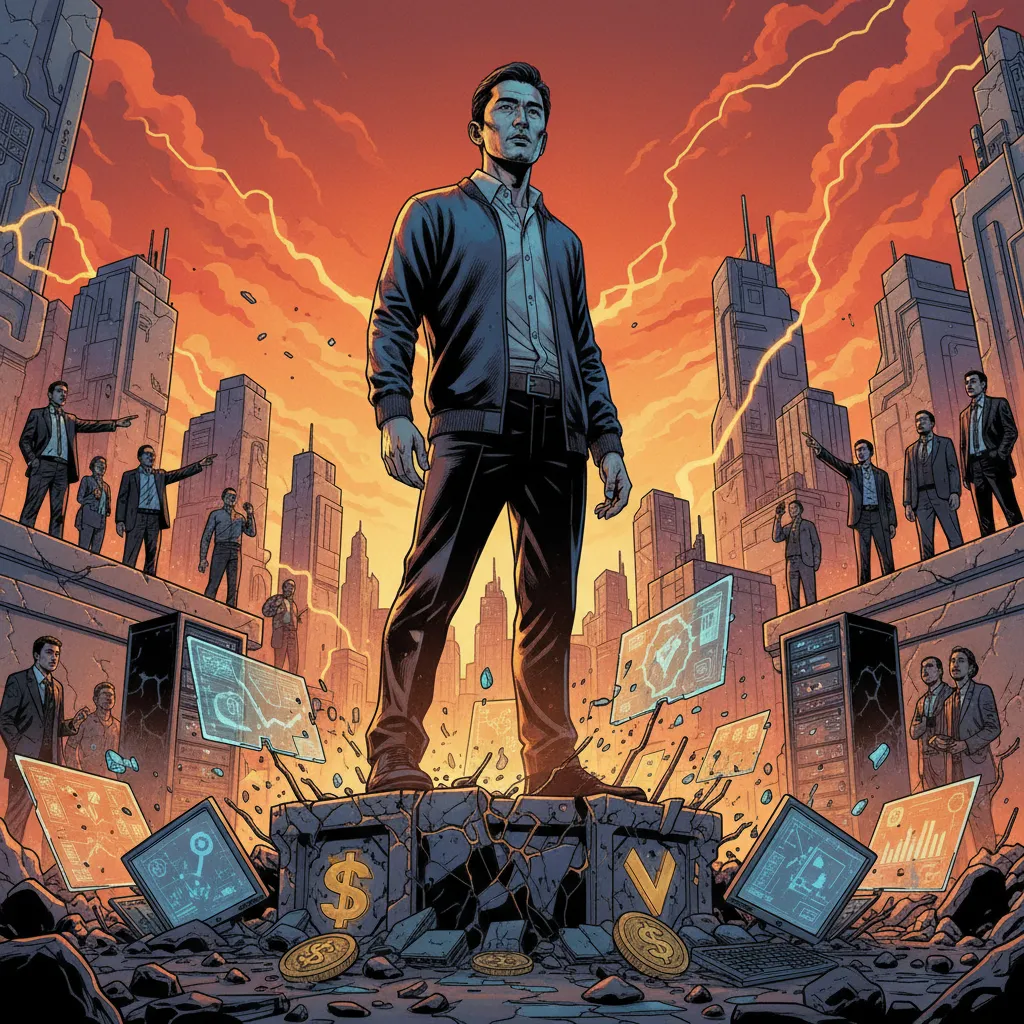
The Terra-Luna collapse sent shockwaves through the cryptocurrency industry that are still being felt in 2026.
Regulatory acceleration: The crash became a catalyst for cryptocurrency regulation worldwide. The European Union fast-tracked its Markets in Crypto-Assets (MiCA) regulation. South Korea passed comprehensive crypto laws. The U.S. SEC used the Terra case to justify its aggressive enforcement approach against crypto companies. The era of unregulated crypto experimentation was effectively over.
The end of algorithmic stablecoins: While other algorithmic stablecoin projects existed before Terra, the crash effectively killed the concept. No major algorithmic stablecoin has gained significant traction since May 2022. The market has decisively moved toward collateralized stablecoins backed by real assets.
Due diligence awakening: The Terra crash forced investors — from retail to institutional — to ask harder questions about yield sources. “Where does the yield come from?” became the most important question in DeFi. If the answer was unclear, the smart money walked away.
Founder worship recalibrated: Do Kwon was one of the most prominent examples of the crypto industry’s tendency to elevate charismatic founders to guru status. His arrogant dismissal of critics was celebrated by his community as confidence. In retrospect, it was a massive red flag. The Terra crash reminded investors that arrogance is not a substitute for sound engineering.
The broader lesson of Terra-Luna is as old as financial markets themselves: if something offers returns that seem too good to be true, it is. A 19.5% guaranteed yield in a zero-interest-rate world was always unsustainable. The only question was when the music would stop.
For Do Kwon — the Stanford kid who wanted to reinvent money and instead destroyed $40 billion in wealth — the music stopped on a warm May weekend in 2022. He is now fighting to avoid spending the rest of his prime years in a federal prison, while the communities he claimed to serve are still picking up the pieces.
Do Kwon’s story is the cautionary tale the crypto industry needed but didn’t want. A brilliant technologist who mistook arrogance for genius, a community that mistook faith for due diligence, and a financial mechanism that worked perfectly — until the moment it didn’t. The $40 billion that vanished in 72 hours won’t be coming back.
⚓ Chapter 9: The Anchor Protocol – The Siren Song of 20% APY (2020-2022)
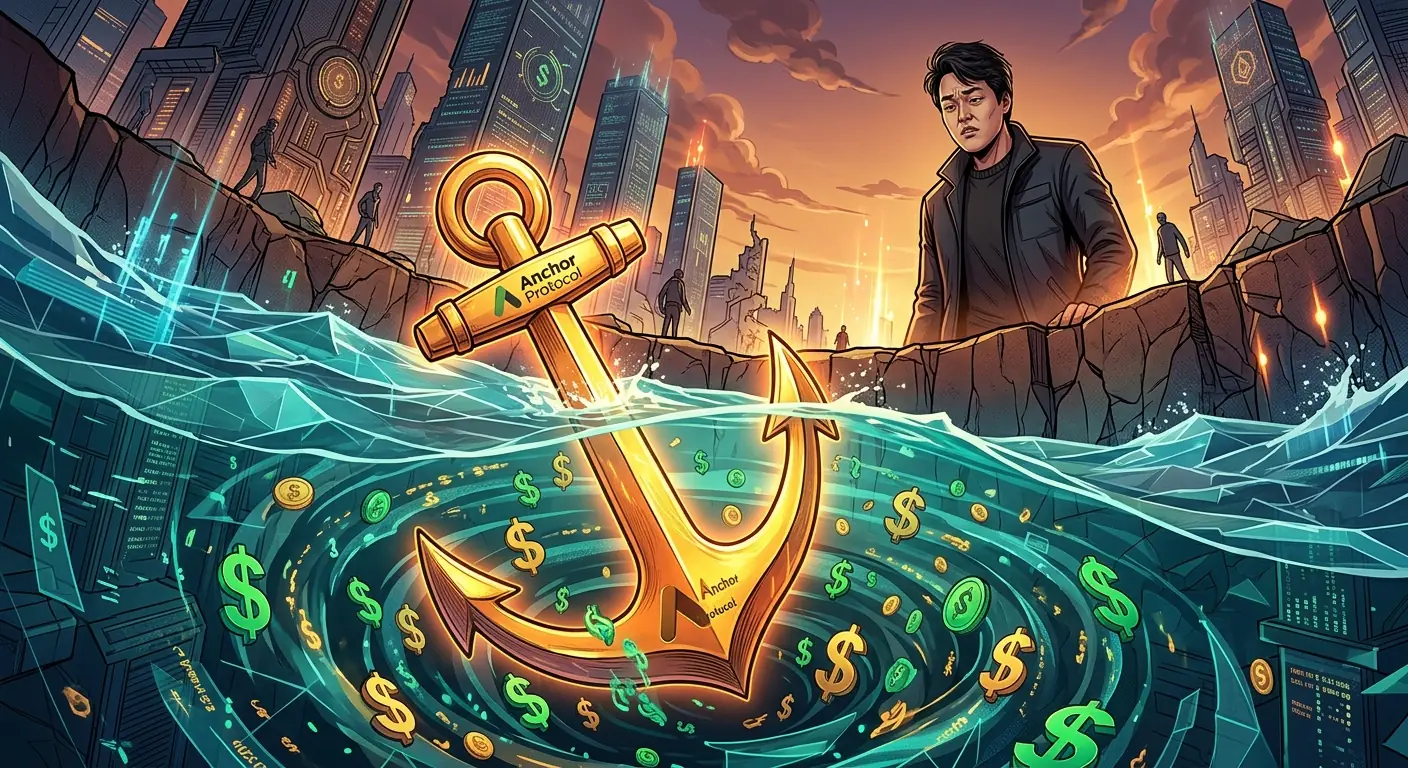
If Terra’s algorithmic design was its engine, then Anchor Protocol was the turbocharger that drove its meteoric rise and, ultimately, its catastrophic demise. Launched in March 2020, Anchor was a decentralized savings protocol built on the Terra blockchain, promising jaw-dropping yields on UST deposits. We’re talking 20% annual percentage yield (APY) – a return that would make traditional banks weep into their spreadsheets. And for a while, it worked, drawing in billions of dollars and propelling UST into the top tier of stablecoins. It was the ultimate “too good to be true” offer, and yet, enough people believed it, or at least hoped it was true, to fuel an empire.
The Allure of Easy Money
Imagine this: a world where your savings account pays you 20% interest. No catch, no hidden fees, just pure, unadulterated yield. That’s what Anchor Protocol dangled in front of crypto investors, a beacon of stability and prosperity in the volatile seas of decentralized finance (DeFi). The idea was simple: deposit your UST, earn a fixed, high yield. This wasn’t just a marketing gimmick; it was the core strategy for scaling UST adoption. Kwon and his team understood that if they could create a compelling reason for people to hold UST, its demand would skyrocket. And boy, did it work. Investors, both seasoned and novice, poured their life savings, retirement funds, and even borrowed money into Anchor, chasing that sweet, sweet 20%. It felt like a guaranteed win, a financial cheat code in a world of uncertainty.
The Yield Machine’s Fuel
But where did this magical 20% come from? It wasn’t pixie dust. The yield was primarily generated by borrowers on Anchor, who would deposit other cryptocurrencies (like bonded LUNA or Ethereum) as collateral to borrow UST. The interest they paid was supposed to fund the depositors’ yield. However, the demand for borrowing UST at a rate higher than 20% simply wasn’t there. For a long time, Anchor was paying out far more than it was taking in. To bridge this gap, Terraform Labs, and later the Luna Foundation Guard (LFG), had to constantly inject massive subsidies into the protocol’s yield reserve. We’re talking hundreds of millions of dollars, eventually totaling well over $1 billion, just to keep the 20% promise alive. It was a Ponzi scheme by another name, relying on ever-increasing inflows of new capital to pay off earlier investors, rather than sustainable economic activity. Do Kwon famously dismissed concerns, often with a smirk, assuring everyone it was “sustainable.” Spoiler alert: it wasn’t.
Early Warnings Ignored
The cracks in the façade began to show long before the final collapse. Economists, crypto analysts, and even some within the DeFi community raised alarm bells, pointing out the mathematical impossibility of sustaining such high yields without external funding. Critics argued that Anchor was a centralizing force, making UST highly dependent on a single application, creating a single point of failure. In February 2022, just months before the crash, the yield reserve was critically low, requiring a $450 million injection from Terraform Labs. These warnings were met with characteristic disdain from Kwon, who often labeled his critics “poor” or “idiots.” He believed his vision was infallible, that the market would eventually “catch up” and validate his unsustainable model. He saw doubt as weakness, and in doing so, led hundreds of thousands of “Lunatics” (his loyal followers) straight off a financial cliff.
🗣️ Chapter 10: The Crypto Echo Chamber and Kwon’s Online Persona (2021-2022)
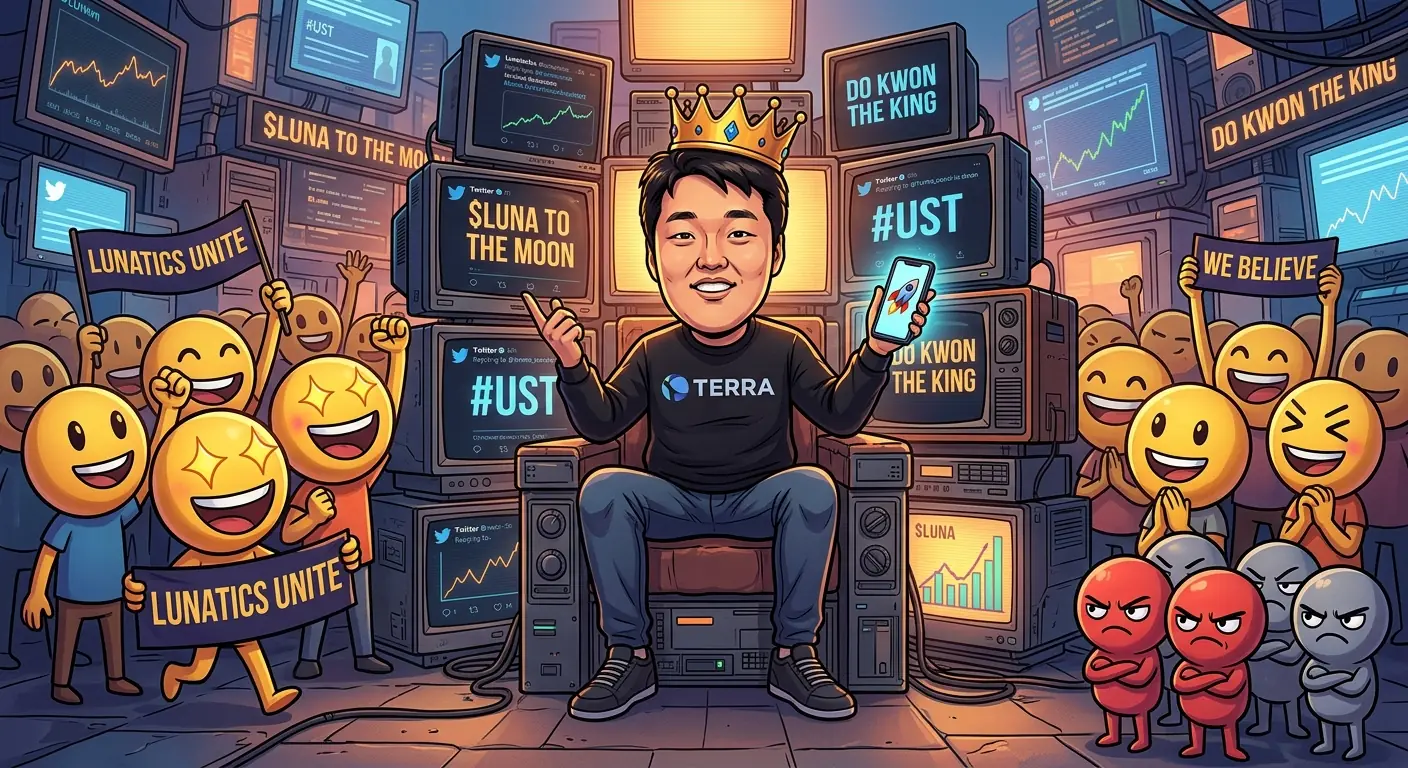
Do Kwon wasn’t just a founder; he was a brand. And a highly aggressive, often condescending, brand at that. In the wild west of crypto, where anonymity often reigned, Kwon stood out with his unapologetic, in-your-face online persona. He cultivated a fervent following known as “Lunatics,” who hung on his every tweet, defending Terra against any perceived slight. His Twitter feed became a battleground, a public forum where he’d taunt rivals, dismiss critics, and revel in the ever-increasing valuation of LUNA and UST. This wasn’t just casual banter; it was a deliberate strategy to build hype, silence dissent, and project an image of unshakeable confidence, even as the foundations of his empire began to crumble.
The “Lunatic” Army
Kwon understood the power of community in crypto. He fostered an almost cult-like devotion among Terra supporters, coining the term “Lunatics” for his loyal followers. He’d frequently engage with them, retweet their enthusiastic posts, and even use their memes. This created a powerful feedback loop: the more aggressive Kwon was, the more his supporters rallied, and the more confident they became in their investment. This wasn’t just about token price; it was about identity. Being a “Lunatic” meant being part of an exclusive club, privy to the wisdom of the “King of Crypto” himself. This digital camaraderie was a double-edged sword, providing immense psychological comfort during good times, but leading to devastating emotional and financial pain when the fantasy shattered.
Trolling the Skeptics
Kwon’s online antics weren’t limited to rallying his troops; he actively engaged in what can only be described as professional trolling. Any criticism, no matter how well-founded, was met with ridicule, sarcasm, or outright dismissal. When economist Frances Coppola expressed concerns about UST’s stability in a March 2022 article, Kwon simply tweeted:
“I don’t debate with the poor.”
This wasn’t an isolated incident. He famously bet a crypto personality, Algod, $1 million that UST would not de-peg within a year, then another $10 million with another user, Gigantic-Cassocked-Sith. He seemed to relish these public displays of bravado, seeing them as proof of his conviction, rather than reckless gambling with the future of his users’ funds. He called critics “no-coiners” and “fudsters” (fear, uncertainty, doubt spreaders), creating an environment where legitimate concerns were drowned out by a chorus of hype and personal attacks. This hubris, fueled by an almost pathological belief in his own genius, blinded him to the escalating risks.
The Dissenting Voices
Despite Kwon’s efforts to silence dissent, a few brave souls continued to voice their concerns. These weren’t just random Twitter eggs; they were often seasoned financial analysts, developers, and academics. They pointed out the unsustainability of Anchor’s yield, the fragility of the algorithmic peg, and the lack of transparency from Terraform Labs. But in the echo chamber of Kwon’s community, these voices were easily marginalized, dismissed as jealous competitors or misinformed naysayers. Their warnings, unfortunately, proved to be prescient. The culture of aggressive dismissal fostered by Kwon meant that when the system truly began to fail, many loyalists were unprepared, unable to process the reality, having been conditioned to ignore any “fud” for so long. The online persona that built his kingdom ultimately contributed to its spectacular fall, leaving a trail of shattered dreams and empty wallets.
₿ Chapter 11: The Luna Foundation Guard and the Bitcoin Bet (2022)
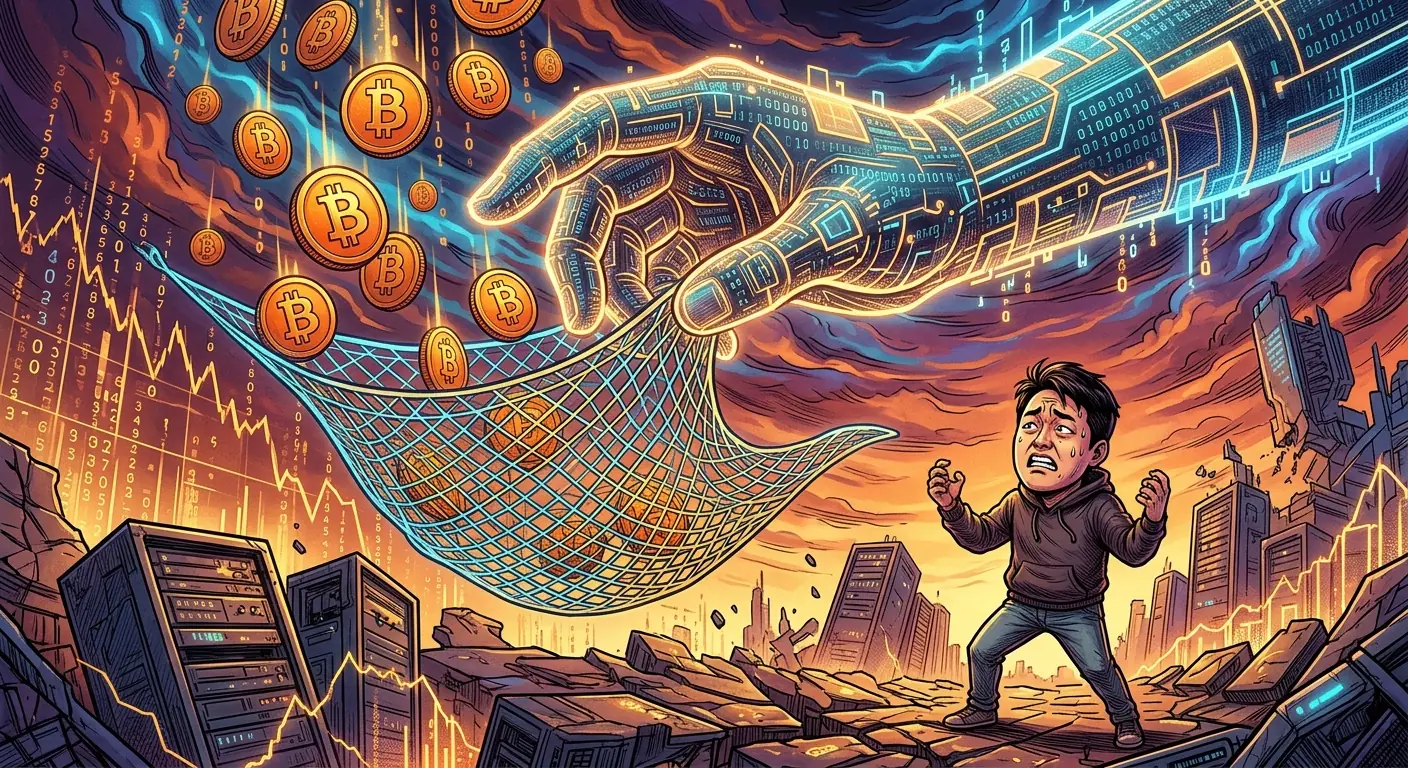
As Terra’s ecosystem grew, so did the whispers of its inherent fragility. The algorithmic stablecoin, UST, relied entirely on the LUNA token for its peg, a mechanism that worked beautifully in bull markets but was untested under severe stress. Enter the Luna Foundation Guard (LFG), a non-profit organization established in January 2022. Its stated mission was to “foster a truly decentralized economy” by supporting the Terra ecosystem. In reality, it was Do Kwon’s last, desperate attempt to create an additional layer of security for UST, a “Plan B” in case the algorithm alone wasn’t enough. And its key strategy? To accumulate a massive reserve of Bitcoin.
Billions in Bitcoin
The LFG began an ambitious campaign to build a reserve of “non-correlated assets” – primarily Bitcoin (BTC) – that could be deployed to defend UST’s peg during times of extreme market volatility. This was a significant shift from the pure algorithmic model and, in hindsight, an implicit admission of the original design’s vulnerability. Kwon announced in February 2022 that the LFG aimed to accumulate $10 billion worth of Bitcoin. The move sent shockwaves through the crypto world. This wasn’t just a few million; this was a colossal bet, making the LFG one of the largest single holders of Bitcoin on the planet. Kwon even went on record stating,
“We’re not looking to stop at $10 billion, we’re going to grow it to the size of the GDP of some countries.”
He saw Bitcoin as the ultimate decentralized, permissionless money, and by backing UST with it, he hoped to imbue his stablecoin with Bitcoin’s legendary resilience. It was a bold, unprecedented move, and for a brief shining moment, it seemed to work, injecting a fresh wave of confidence into the Terra ecosystem.
The Battle for the Peg
The reserves quickly grew. By early May 2022, the LFG held approximately 80,394 Bitcoin, worth over $2.4 billion at the time, alongside substantial amounts of AVAX, LUNA, and UST itself. Then came the fateful week of May 9, 2022. UST began to de-peg. The LFG immediately sprang into action, deploying its massive reserves in a desperate attempt to stabilize UST’s value. They sold billions of dollars worth of Bitcoin onto the open market, trying to buy up UST and restore its $1 peg. It was a frantic, public battle, playing out in real-time for the entire crypto world to witness. The LFG’s wallet addresses became a public spectacle, with millions watching as Bitcoin flowed out, seemingly endlessly.
The Last Stand
But it wasn’t enough. The selling pressure on UST was immense, fueled by panic and a coordinated attack (or at least, highly effective arbitrage) against the struggling stablecoin. As the LFG dumped its Bitcoin, the price of BTC itself began to plummet, further eroding the value of the remaining reserves. It was a death spiral. The very asset meant to be UST’s ultimate defense instead became another casualty of its collapse. By May 12, 2022, the LFG announced that it had “loaned” nearly all its Bitcoin to market makers, a last-ditch effort that ultimately failed. The $2.4 billion Bitcoin reserve, meant to be the unbreakable shield, was vaporized in a matter of days, unable to withstand the overwhelming force of the de-peg. The LFG’s grand Bitcoin bet, a testament to Kwon’s audacious vision, became a monument to its tragic failure.
🌪️ Chapter 12: The Aftershocks: Regulatory Scrutiny and Industry Reckoning (2022-Present)
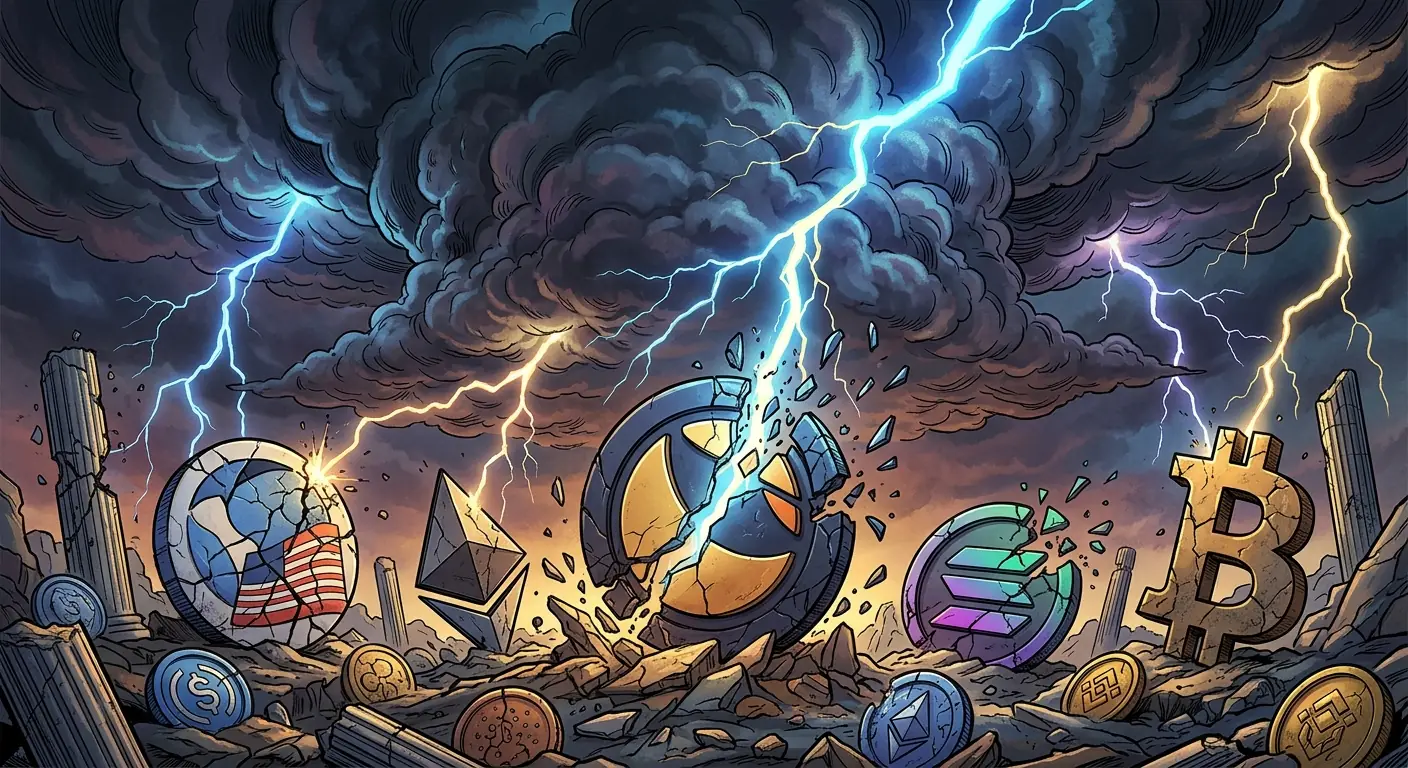
The implosion of Terra-Luna wasn’t just a catastrophic event for its investors; it was a seismic shockwave that reverberated throughout the entire cryptocurrency industry, triggering what became known as “crypto winter.” The $40 billion collapse didn’t just wipe out wealth; it shattered trust, exposed systemic vulnerabilities, and provided regulators worldwide with the clearest, most compelling case yet for aggressive intervention. Suddenly, the once-unassailable narrative of decentralized finance (DeFi) as an untouchable, self-regulating utopia lay in ruins, replaced by urgent calls for oversight and accountability. Do Kwon didn’t just crash his own project; he unwittingly handed a golden ticket to every politician and financial watchdog eager to rein in the wild west of digital assets.
The Regulatory Hammer
Before Terra, regulators often struggled to define and categorize cryptocurrencies, let alone regulate them effectively. The Terra-Luna crash changed everything. It provided a stark, undeniable example of the potential for systemic risk and investor harm in the unregulated crypto market. Governments from the U.S. to South Korea, and international bodies like the Financial Stability Board, immediately accelerated efforts to create comprehensive regulatory frameworks for stablecoins and the broader DeFi ecosystem. The U.S. Treasury Secretary Janet Yellen, for instance, swiftly highlighted the need for stablecoin regulation, stating,
“The Terra-USD stablecoin de-pegging shows the risks of digital assets.”
This wasn’t just talk. The SEC, CFTC, and other bodies began to scrutinize algorithmic stablecoins and crypto lending platforms with unprecedented intensity. New legislation, once slow-moving, gained urgent momentum, aiming to prevent similar catastrophes and protect consumers from the risks of experimental financial products.
Contagion and Crypto Winter
The Terra-Luna collapse wasn’t an isolated incident; it was a catalyst for a cascade of failures across the crypto landscape. The sheer scale of the UST and LUNA holdings meant that many major crypto firms, hedge funds, and lending platforms had significant exposure. When Terra imploded, these entities faced massive losses, triggering a liquidity crisis that led to bankruptcies and insolvencies throughout the summer of 2022.
- Three Arrows Capital (3AC), a prominent crypto hedge fund, collapsed in July 2022, citing significant exposure to LUNA as a key factor.
- Celsius Network, a major crypto lending platform, filed for bankruptcy in July 2022, freezing billions in customer assets, partly due to losses incurred from Anchor Protocol and other risky investments.
- Voyager Digital, another crypto broker, also filed for bankruptcy, again with direct links to 3AC’s insolvency. This contagion effect wiped out hundreds of billions of dollars in market value, leading to mass layoffs, plummeting token prices, and a prolonged “crypto winter” that saw Bitcoin drop from over $69,000 in November 2021 to below $16,000 by November 2022. The trust deficit created by Terra’s fall was immense, making investors wary of even seemingly legitimate projects.
A New Era of Scrutiny
The Terra-Luna debacle fundamentally altered the conversation around crypto. It moved from abstract discussions about decentralization and innovation to concrete concerns about investor protection, financial stability, and market integrity. The industry, once dismissive of traditional finance’s “legacy” systems, was forced to confront the very real risks of its own experimental models. Projects that once boasted about being “uncollateralized” or “purely algorithmic” suddenly found themselves on the defensive. The crash proved that even in the decentralized world, a single, charismatic founder and a flawed design could wreak havoc on a global scale. It ushered in an era where transparency, robust collateralization, and regulatory compliance became paramount, forever changing the trajectory of stablecoin development and the broader crypto ecosystem.
⚖️ Chapter 13: The Unraveling: Legal Battles and Financial Reckoning (2023-Present)
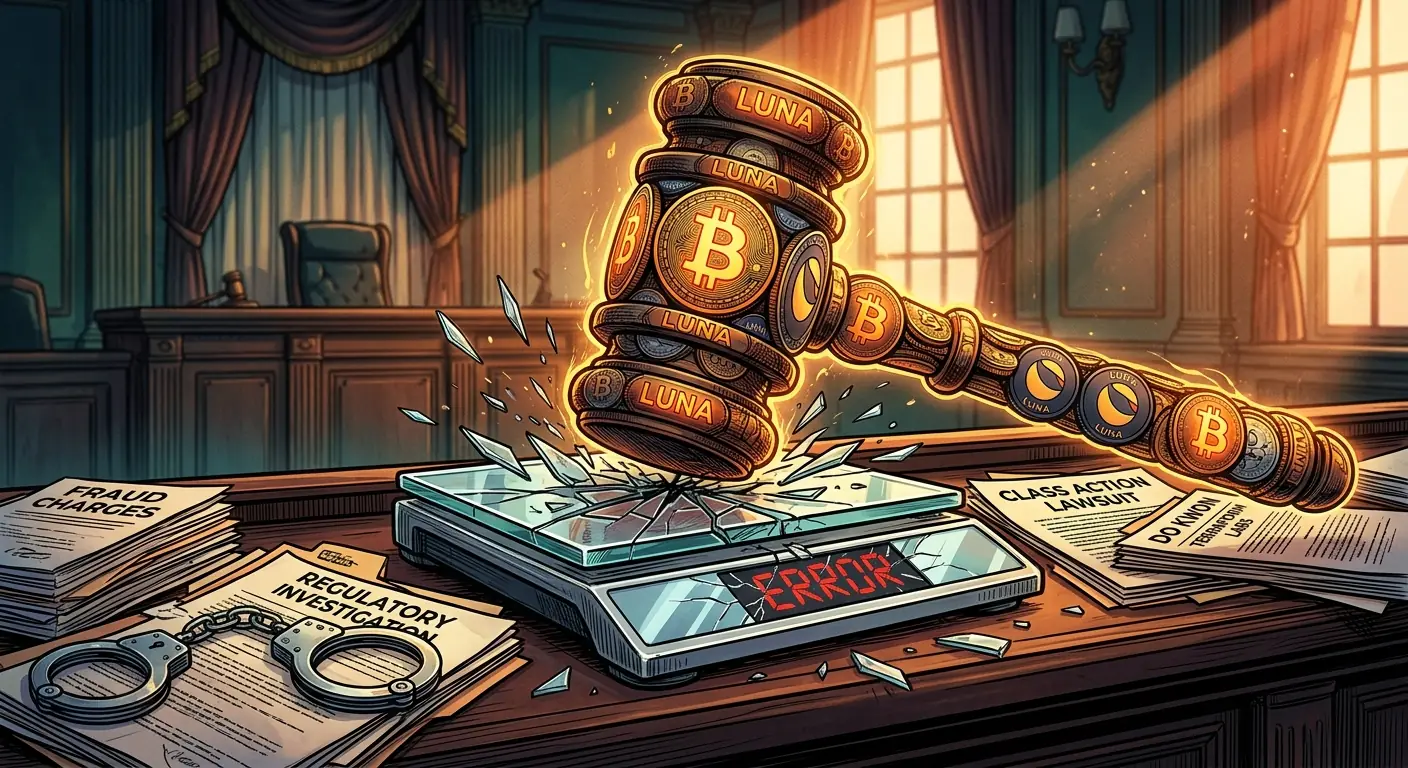
After months on the run, Do Kwon’s capture in Montenegro in March 2023 marked the beginning of his unavoidable reckoning. No longer the “King of Crypto” taunting critics from behind a keyboard, he was now a man facing a litany of charges from multiple sovereign nations. The legal battles that have since unfolded are complex, protracted, and indicative of the global scale of the Terra-Luna fraud. While his physical location has been a matter of international contention, the legal walls are closing in, demanding accountability for the $40 billion devastation he left in his wake. This isn’t just about one man; it’s about setting a precedent for how the crypto world, and its founders, will be held responsible for their actions.
The SEC’s Long Arm
The U.S. Securities and Exchange Commission (SEC) wasted no time. In February 2023, even before Kwon’s arrest, the SEC filed a comprehensive lawsuit against Terraform Labs and Do Kwon, alleging that they “orchestrated a multi-billion dollar crypto asset securities fraud.” The charges are extensive, including selling unregistered securities (UST and LUNA), operating an unregistered securities exchange, and engaging in fraudulent misrepresentations about the stability of UST and the growth of the Anchor Protocol. The SEC’s filing detailed how Kwon and Terraform Labs misled investors about the “stability” of UST, even claiming that a major South Korean mobile payment app was using Terra for settlements, a claim the SEC alleges was false. This case is crucial because it directly challenges the classification of many crypto assets, potentially setting a precedent for how future projects are regulated in the U.S. The SEC seeks civil penalties, disgorgement of ill-gotten gains, and a permanent ban for Kwon from the securities industry.
South Korea’s Pursuit
Kwon’s home country, South Korea, also wants its pound of flesh – or rather, billions of won. South Korean prosecutors issued an arrest warrant for Kwon in September 2022, accusing him of violating capital markets law. Their investigation examines allegations of fraud, market manipulation, and illegal fundraising. The Korean legal system, known for its strict approach to financial crimes, has made it clear they intend to prosecute Kwon to the fullest extent of the law. The ongoing extradition battle in Montenegro, where Kwon was arrested for using forged travel documents, has seen both the U.S. and South Korea vying for his custody. As of early 2024, the Montenegrin courts have repeatedly ruled on his extradition, with appeals and counter-appeals creating a legal quagmire. The outcome will determine where Kwon faces justice first, but it’s clear he faces significant jail time regardless of the jurisdiction.
The Future of Terraform Labs and Kwon’s Assets
While Do Kwon remains entangled in legal battles, Terraform Labs itself continues to navigate troubled waters. In January 2024, Terraform Labs filed for Chapter 11 bankruptcy protection in the U.S., citing liabilities between $100 million and $500 million. This move, according to the company, was to allow it to continue its operations while addressing legal challenges, including the SEC lawsuit. It’s a stark contrast to the multi-billion dollar valuation it once commanded. As for Kwon’s personal financial reckoning, authorities worldwide are likely pursuing his assets. Reports have indicated that Kwon may have attempted to move significant amounts of Bitcoin, though the exact figures and the extent of his remaining wealth are subject to ongoing investigations. The saga of Do Kwon is far from over. It’s a sobering reminder that even in the decentralized world, the long arm of the law eventually catches up, and the financial consequences for catastrophic failures are immense, leading to years of legal battles and a shattered legacy.
💡 Key Insights
- ▸ Algorithmic stablecoins that rely on arbitrage incentives rather than actual reserves contain an inherent 'death spiral' risk.
- ▸ A founder's arrogance and dismissal of critics is a red flag, not a sign of confidence.
- ▸ When the loudest voice in the room says 'this can't fail,' it's time to examine why it can.
- ▸ Regulatory gaps in crypto allowed Terra to grow to systemic size without the oversight that would have exposed its fragility.
- ▸ The human cost of financial collapses is measured in suicides, lost savings, and destroyed lives — not just market cap.
Sources
- The Wall Street Journal - Terra Luna Collapse Investigation ↗
- Reuters - Do Kwon Arrest in Montenegro ↗
- Bloomberg - The Fall of Terra ↗
- CoinDesk - Terra Luna Timeline of Events ↗
- SEC Complaint Against Terraform Labs and Do Kwon ↗
- The New York Times - Crypto Crash Victims ↗
- Interpol Red Notice - Do Kwon ↗