Howard Hughes: Aviation, Hollywood, and Years of Severe Isolation
He made blockbuster films, broke aviation records, built a defense empire, and owned Las Vegas. Then he disappeared into a penthouse and let OCD consume him. The most extraordinary unraveling in American history.
View all stories about this mogul
Howard Hughes was the richest man in America, and he spent the last twenty years of his life living in sealed hotel penthouses, watching the same movies on repeat, urinating in jars, and letting his fingernails grow into corkscrews. Before that, he was arguably the most dynamic American of the twentieth century — a filmmaker who produced the most expensive movie ever made, a pilot who broke world speed records, an engineer who designed revolutionary aircraft, a playboy who dated Katharine Hepburn, Ava Gardner, and half of Hollywood, and a businessman who built a defense and technology empire worth billions. His arc from dazzling prodigy to haunted recluse is the most dramatic rise and fall in American business history.
Chapter 1: The Texas Oil Heir (1905–1924)

Howard Robard Hughes Jr. was born on December 24, 1905, in Humble, Texas. His father, Howard Hughes Sr., had invented a revolutionary drill bit — the Hughes two-cone roller bit — that could bore through rock formations that had defeated every previous design. The bit made Hughes Sr. spectacularly wealthy. The Hughes Tool Company, which manufactured and leased the drill bits, generated millions in royalties and became the foundation of the Hughes family fortune.
Young Howard grew up surrounded by wealth, machinery, and ambition. His father was a larger-than-life figure — gregarious, hard-drinking, and endlessly entrepreneurial. His mother, Allene, was the opposite — anxious, germophobic, and obsessively concerned about disease and contamination. She kept Howard in an almost clinical environment, bathing him compulsively and instilling in him a terror of germs that would metastasize into full-blown obsessive-compulsive disorder decades later.
Hughes was mechanically gifted from childhood. He built a radio transmitter at eleven, motorized his bicycle at twelve, and had a pilot’s license as a teenager. He was also intensely private, emotionally guarded, and uncomfortable in social situations — traits that were already visible in adolescence and would intensify dramatically throughout his life.
Chapter 2: Hollywood Mogul at Twenty (1925–1932)

Hughes’ mother died in 1922 when he was sixteen. His father died in 1924 when he was eighteen. At nineteen, Howard Hughes Jr. inherited the Hughes Tool Company and its enormous cash flow. Most teenagers would have been overwhelmed. Hughes was liberated. He had virtually unlimited money, no parental supervision, and a burning desire to do something spectacular.
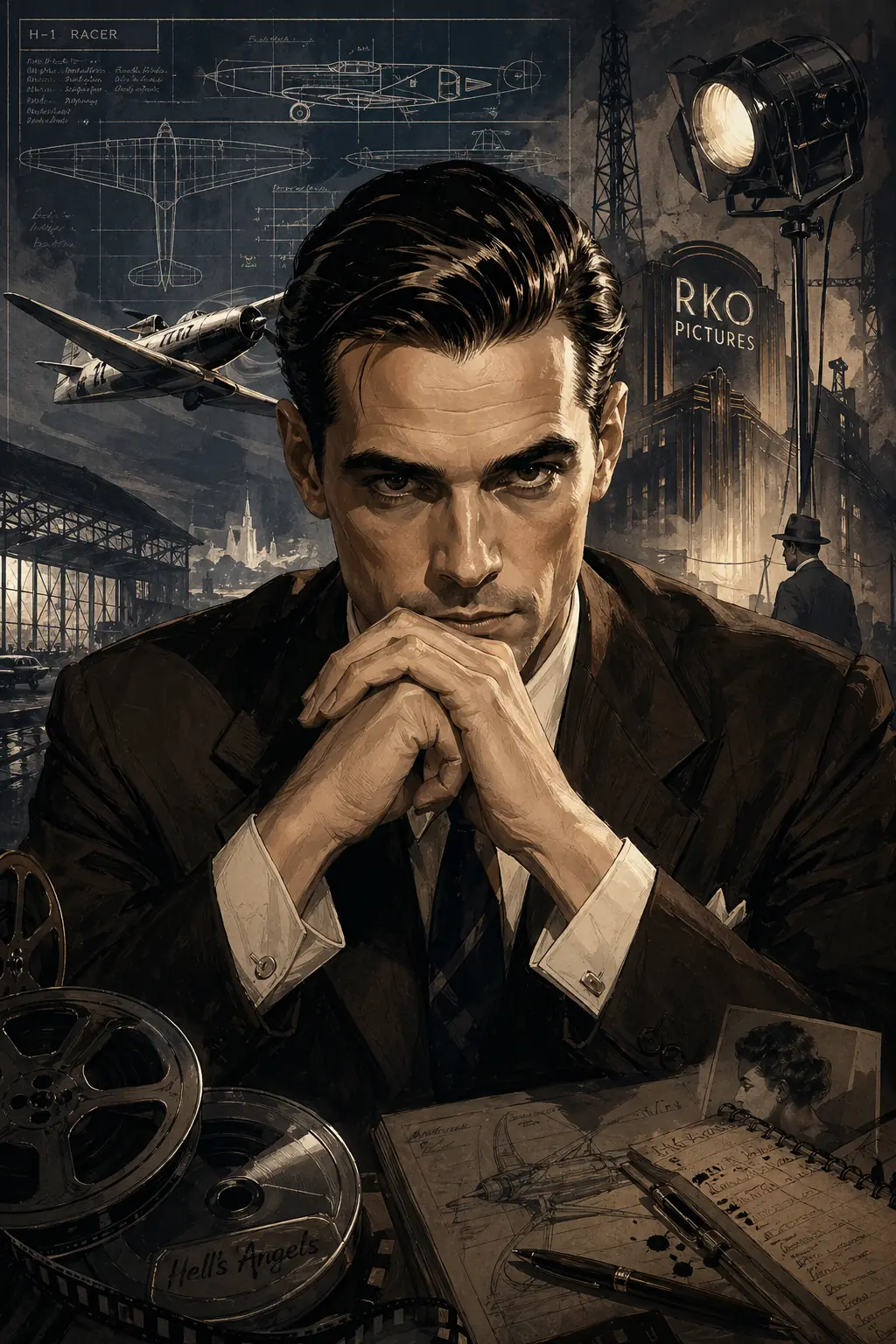
He moved to Los Angeles and decided to make movies. Not small, sensible movies — the biggest, most expensive movies anyone had ever attempted. His first major production, Hell’s Angels (1930), was a World War I aviation epic that cost $3.8 million — the most expensive film ever made at that time. Hughes personally directed many of the aerial sequences, which were genuinely dangerous and resulted in several pilot deaths. The film was a commercial success and made Hughes a Hollywood celebrity.
He followed it with Scarface (1932), a gangster film that was so violent the censors tried to ban it. Hughes fought them publicly, generating enormous publicity and eventually releasing the film to commercial success. He was establishing a pattern that would define his career: pursue the most ambitious, most controversial project possible, fight anyone who tries to stop you, and use the controversy itself as marketing.
Chapter 3: The Speed King — Aviation Records (1935–1938)

Hughes’ real passion wasn’t Hollywood — it was flight. He founded Hughes Aircraft Company in 1932 and began designing and building racing planes with obsessive attention to detail. In 1935, he set the world airspeed record, flying the Hughes H-1 Racer at 352 miles per hour. The H-1 was a masterpiece of engineering — its clean, streamlined design influenced aircraft construction for decades, and some aviation historians believe it influenced the design of the Japanese Zero fighter.
In 1937, Hughes flew from Los Angeles to Newark in 7 hours, 28 minutes, and 25 seconds, breaking the transcontinental speed record. In 1938, he circled the globe in 91 hours, setting a round-the-world record that made him an international hero. New York gave him a ticker-tape parade. He was on the cover of every major magazine. At thirty-two, Hughes was the most famous pilot in the world, a Hollywood mogul, and a billionaire industrialist.
The aviation achievements were real and remarkable. Hughes was not a dilettante playing at being a pilot — he was a genuinely skilled aviator and a gifted engineer who understood aerodynamics at a level that impressed professionals. His willingness to risk his life in experimental aircraft reflected either extraordinary courage or a fundamental indifference to personal safety. Possibly both.
Chapter 4: The War Machine — Hughes Aircraft and Defense (1939–1948)
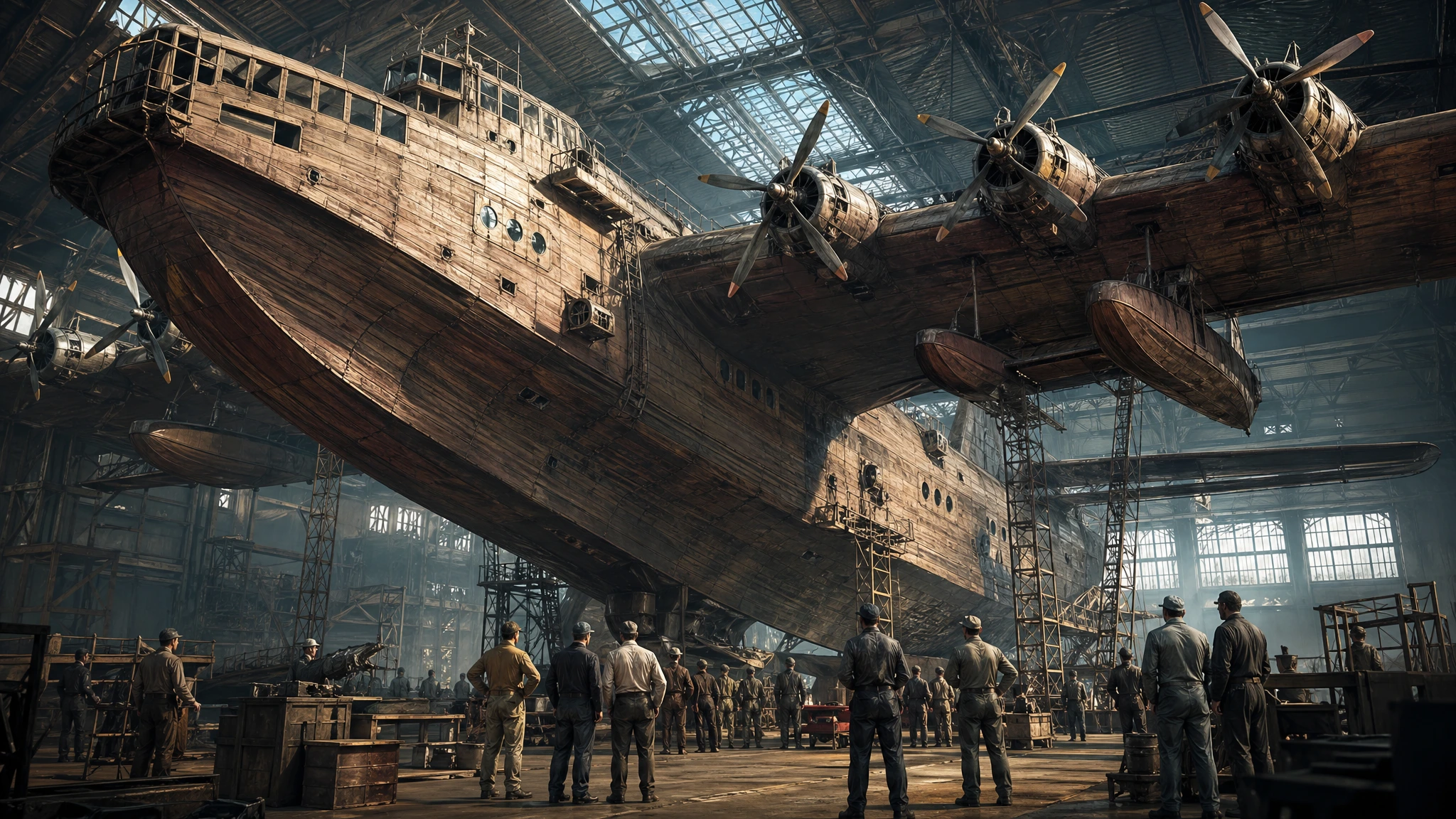
World War II transformed Hughes from an aviation enthusiast into a defense contractor. Hughes Aircraft Company received enormous government contracts to build military aircraft. The most famous — and infamous — project was the H-4 Hercules, a massive flying boat made of wood (due to wartime metal restrictions) that Hughes designed to transport troops and equipment across the Atlantic.
Critics called it the “Spruce Goose” and derided it as a boondoggle. The plane cost $23 million, took years to build, and was completed after the war ended, rendering its original purpose moot. In 1947, a Senate committee investigated Hughes for waste and fraud in his government contracts. The hearings were televised and turned into a national spectacle, with Hughes defiantly defending his work and attacking the senators who questioned him.
On November 2, 1947, Hughes climbed into the cockpit of the H-4 Hercules and flew it himself — a single flight, roughly a mile at 70 feet above the water, that proved the aircraft could actually fly. It was a triumph of ego more than engineering, but it silenced the worst of his critics. The Spruce Goose never flew again and eventually became a museum exhibit. But it cemented Hughes’ reputation as someone who would build the impossible just to prove he could.
Chapter 5: The TWA Empire and the RKO Disaster (1939–1957)
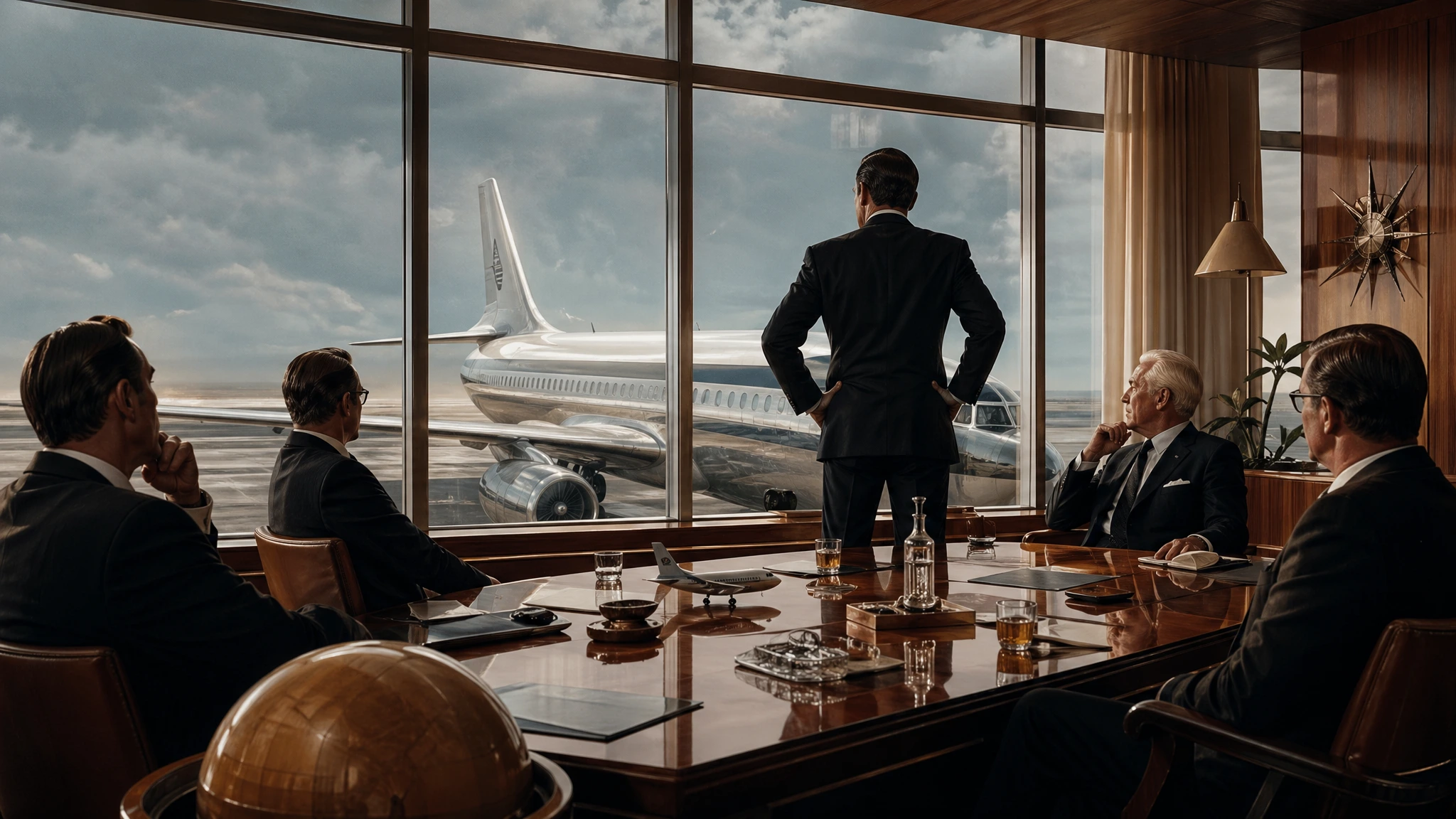
Hughes acquired a controlling stake in Trans World Airlines (TWA) in 1939, and over the next two decades transformed it into one of the premier international carriers. Under Hughes’ direction, TWA was the first airline to order jet aircraft, positioning it to dominate the jet age. But Hughes’ micromanagement — he insisted on personally approving even routine operational decisions — created organizational chaos.
Simultaneously, Hughes acquired RKO Pictures, one of Hollywood’s major studios. His management of RKO was catastrophic. He would hold up productions for months while he obsessed over minor details. He fired and rehired executives on whims. He shelved completed films because they didn’t meet his standards and demanded expensive reshoots. By the time he sold RKO in 1955, the studio had lost over $22 million and was effectively destroyed as a creative enterprise.
TWA fared better but still suffered from Hughes’ erratic control. The airline’s board eventually sued Hughes, and a protracted legal battle resulted in Hughes selling his TWA stake in 1966 for $546 million — the largest personal check in history at that time. It was a massive financial windfall, but it represented a failure of governance: Hughes had been forced out of the airline he loved because he couldn’t manage it rationally.
Chapter 6: The Playboy Years (1936–1957)
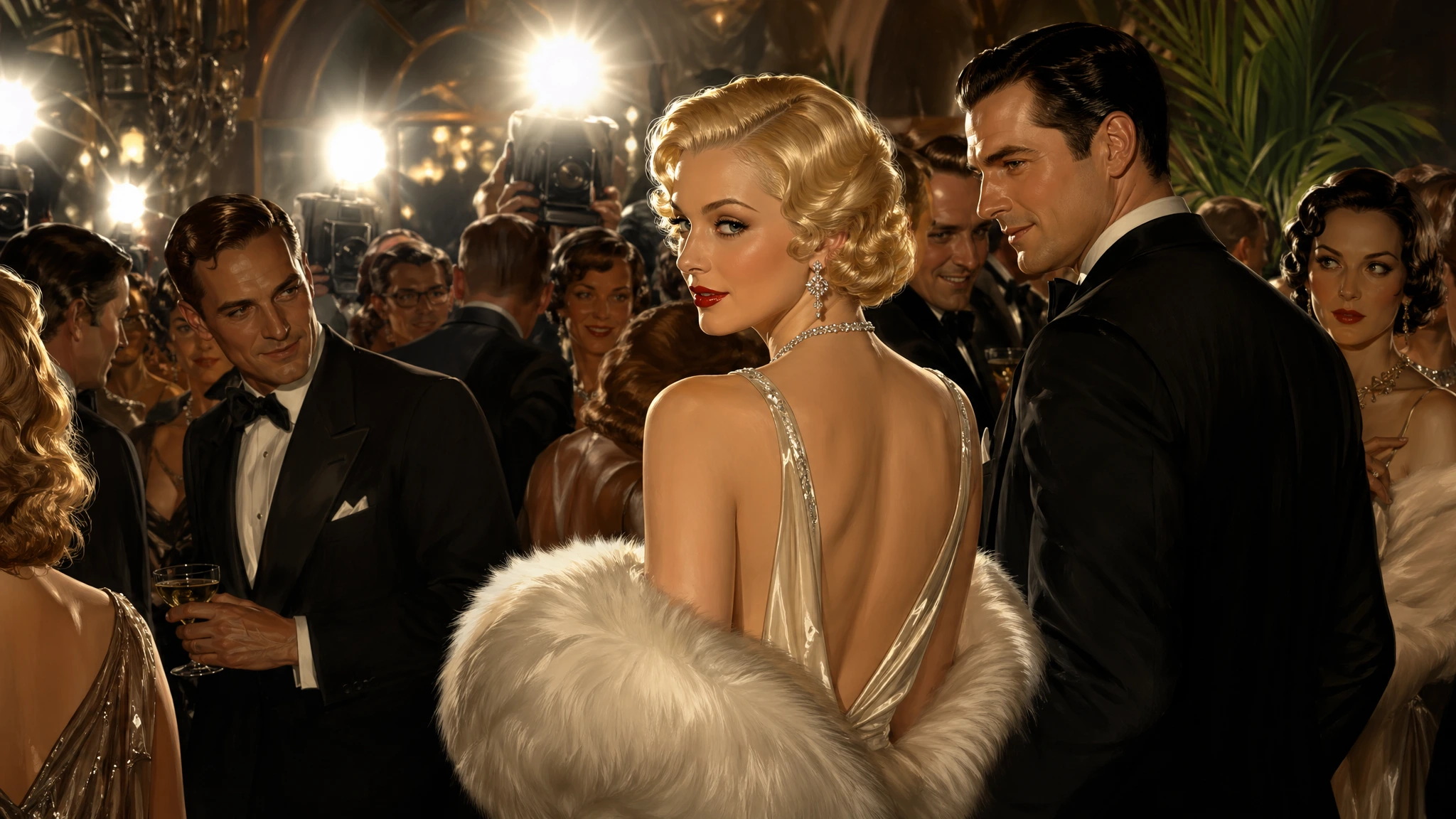
Hughes’ personal life was as dramatic as his business career. He dated — and in many cases had serious relationships with — some of the most famous women of his era: Katharine Hepburn, Ava Gardner, Bette Davis, Olivia de Havilland, Gene Tierney, Ginger Rogers, and many others. He was tall, handsome, wealthy, and dangerously charismatic. He was also emotionally unavailable, controlling, and incapable of sustaining genuine intimacy.
His relationship with Katharine Hepburn was perhaps the most significant. The two were together for several years in the late 1930s and shared a genuine intellectual and emotional connection. Hepburn later described Hughes as the most fascinating man she’d ever known — but also the most impossible to live with. His need for control extended to personal relationships: he would have romantic partners surveilled, their phones tapped, their movements tracked.
Hughes married twice — to Ella Botts Rice (1925–1929) and Jean Peters (1957–1971) — but both marriages were marked by his emotional absence and increasing eccentricity. By the time he married Peters, the obsessive-compulsive disorder that had been building for decades was becoming impossible to hide. He would spend hours washing his hands. He developed elaborate rituals around food preparation. The man who had seduced the most glamorous women in Hollywood was disappearing into his own compulsions.
Chapter 7: Hughes Aircraft — The Accidental Defense Giant (1948–1972)

While Hughes’ attention wandered across airlines, movie studios, and romantic conquests, Hughes Aircraft Company quietly became one of the most important defense contractors in America. The company’s engineers — working largely without Hughes’ direct involvement, which was ironically the key to their success — developed groundbreaking radar systems, missiles, and satellites.
Hughes Aircraft built the radar systems for the F-14 Tomcat and other military aircraft. It developed early satellite communications technology. It built the surveyor spacecraft that NASA sent to the moon. The company employed 80,000 people at its peak and generated billions in revenue. It was, by many measures, the most important thing Hughes ever built — and he had almost nothing to do with its greatest achievements.
The irony was profound. Hughes’ micromanagement had destroyed RKO and nearly destroyed TWA. But at Hughes Aircraft, his growing reclusiveness meant he left the engineers alone, and they thrived. The lesson was clear, though Hughes was in no condition to learn it: sometimes the best thing a leader can do is get out of the way.
Chapter 8: The Las Vegas Kingdom (1966–1970)
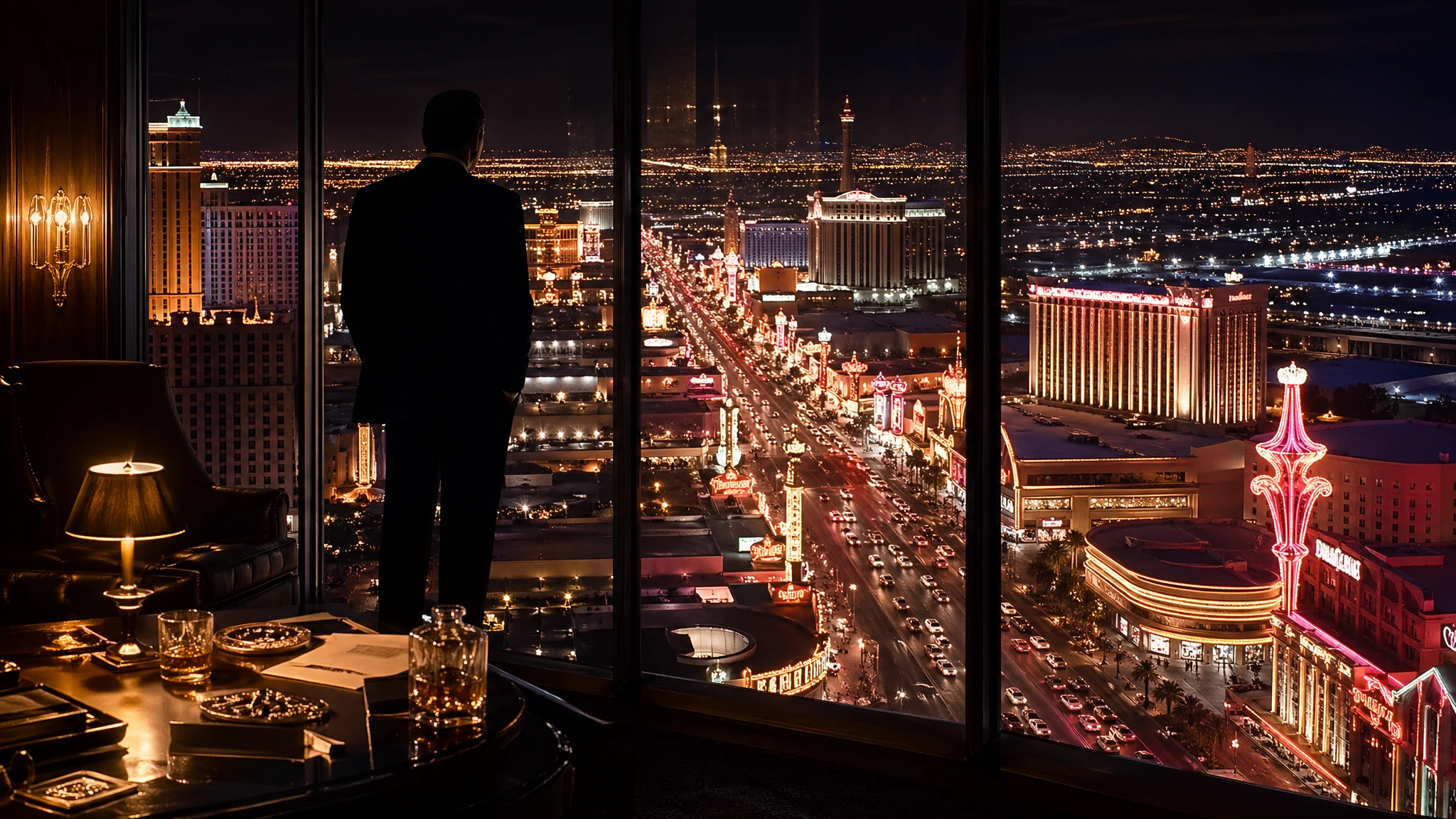
In November 1966, Howard Hughes arrived in Las Vegas by train, was carried on a stretcher into the Desert Inn, and took over the entire top floor. When the hotel’s management asked him to leave after a few weeks (they needed the rooms for high-rolling gamblers), Hughes bought the hotel. Then he bought the Sands. Then the Castaways, the Frontier, the Silver Slipper, and the Landmark. Within four years, Hughes owned six casinos and was the largest private landowner in Nevada.
His stated motivation was to clean up Las Vegas — to push out the Mob influence that had dominated the city’s casinos for decades. And to some degree, he accomplished this. Hughes’ ownership brought corporate legitimacy to Las Vegas gaming at a time when the industry was desperately trying to distance itself from its organized crime roots. The Nevada legislature actually changed its corporate gaming laws to accommodate Hughes’ acquisitions.
But Hughes never left his penthouse. He ran his Las Vegas empire — and all his other businesses — entirely through memos written on yellow legal pads and relayed by a small group of Mormon aides. He never visited the casinos he owned. He never met the managers who ran them. He governed a business empire from a sealed room in a hotel he couldn’t bring himself to leave.
Chapter 9: The Sealed Room — OCD Takes Over (1958–1970)
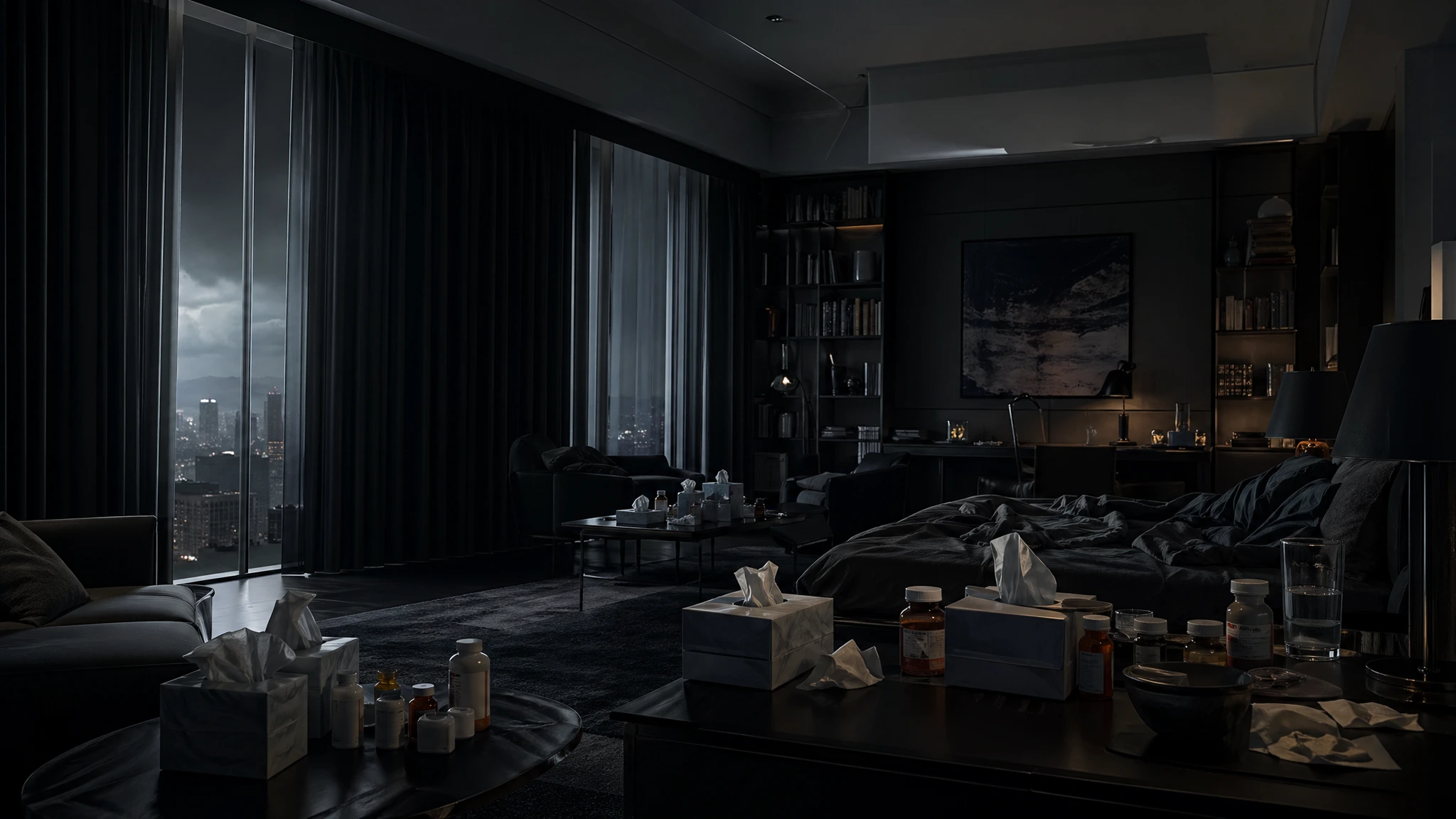
Howard Hughes’ obsessive-compulsive disorder, which had been building throughout his adult life, became completely debilitating by the late 1950s. The symptoms were severe and escalating. He developed an elaborate system of rituals around hygiene, food, and physical contact. He would use tissues — which he called “insulation” — to touch anything, spending hours arranging and rearranging tissue boxes according to precise, internally logical rules.
He became terrified of contamination and sealed himself in environments he could control. The windows of his rooms were blacked out. Air was filtered. Food was prepared according to detailed instructions — specific brands, specific quantities, specific temperatures. His aides were given written protocols for how to handle objects, how to approach him, and how to perform even the simplest tasks.
Hughes stopped cutting his hair and nails. He lost weight dramatically, becoming emaciated. He developed a dependency on codeine and Valium, which his doctors prescribed freely and which his aides administered without question. The man who had once been the most dynamic figure in American public life was now a prisoner of his own mind, living in conditions that would have horrified anyone who saw them.
Chapter 10: The Mormon Mafia and the Lost Years (1970–1976)
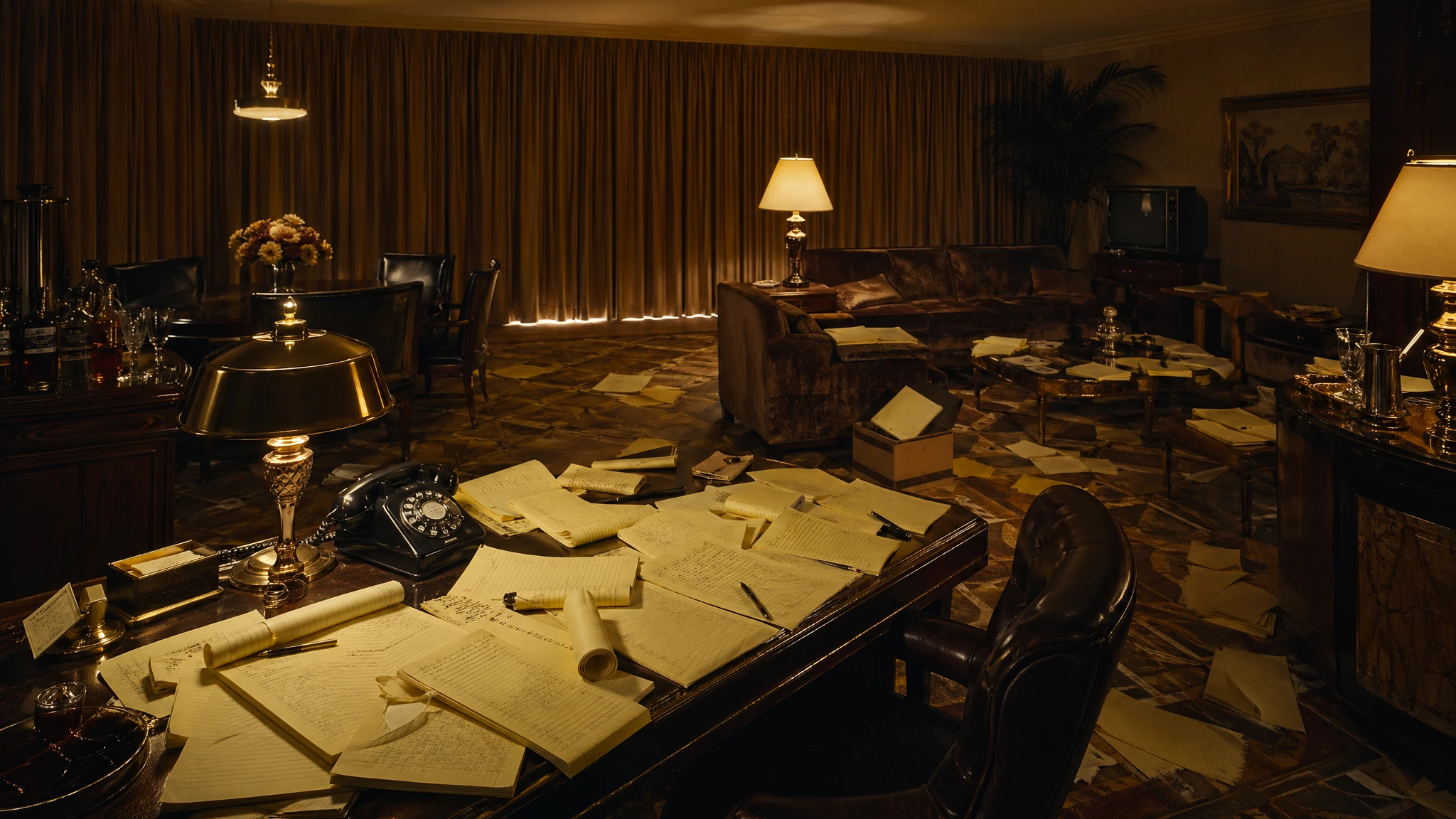
Hughes’ inner circle consisted primarily of a group of Mormon men who served as his personal aides, business intermediaries, and caretakers. They managed his daily life, relayed his business instructions, and controlled access to him. Whether they were loyal servants protecting a sick man or enablers who isolated him for their own benefit — or some combination of both — has been debated ever since.
In 1970, Hughes left Las Vegas as abruptly as he had arrived, relocating to the Bahamas, then Nicaragua, then Canada, then London, then Acapulco — always staying in sealed hotel penthouses, always surrounded by the same aides, never appearing in public. His business empire — worth billions — was managed by intermediaries who claimed to be acting on his instructions. But how competent were those instructions? Hughes was medicated, malnourished, and increasingly delusional. The degree to which his business decisions in the final years reflected rational judgment versus the whims of a deteriorating mind is unknowable.
During these years, the “Autobiography of Howard Hughes” scandal erupted. A writer named Clifford Irving fabricated an entire autobiography, claiming Hughes had personally collaborated with him. The hoax was eventually exposed when Hughes himself called a press conference — via telephone, of course — to deny the book. It was one of the last times his voice was heard publicly, and reporters noted that he sounded lucid but exhausted.
Chapter 11: Death and the Missing Will (1976)

Howard Hughes died on April 5, 1976, aboard an airplane flying from Acapulco to Houston for medical treatment. He was seventy years old. The autopsy revealed a man who had been destroying himself for years: he weighed 90 pounds, was severely dehydrated, had kidney failure, and had broken hypodermic needles embedded in his arms from years of codeine injections. His fingernails were inches long. His hair reached his shoulders. He was virtually unrecognizable.
No valid will was ever found. A handwritten document surfaced — the “Mormon Will” — that left a portion of the estate to Melvin Dummar, a gas station attendant who claimed to have once given Hughes a ride in the desert. The document was ruled a forgery. Without a valid will, Hughes’ estimated $2.5 billion estate was divided among his distant relatives after years of litigation.
The absence of a will was the final, defining act of a man who had spent his life trying to control everything and ended up controlling nothing. Hughes had teams of lawyers and aides who could have ensured his wishes were followed. Instead, his fortune — one of the largest ever accumulated — was distributed according to default inheritance laws, with no regard for what Hughes might have wanted.
Chapter 12: Legacy — The Man Who Had Everything
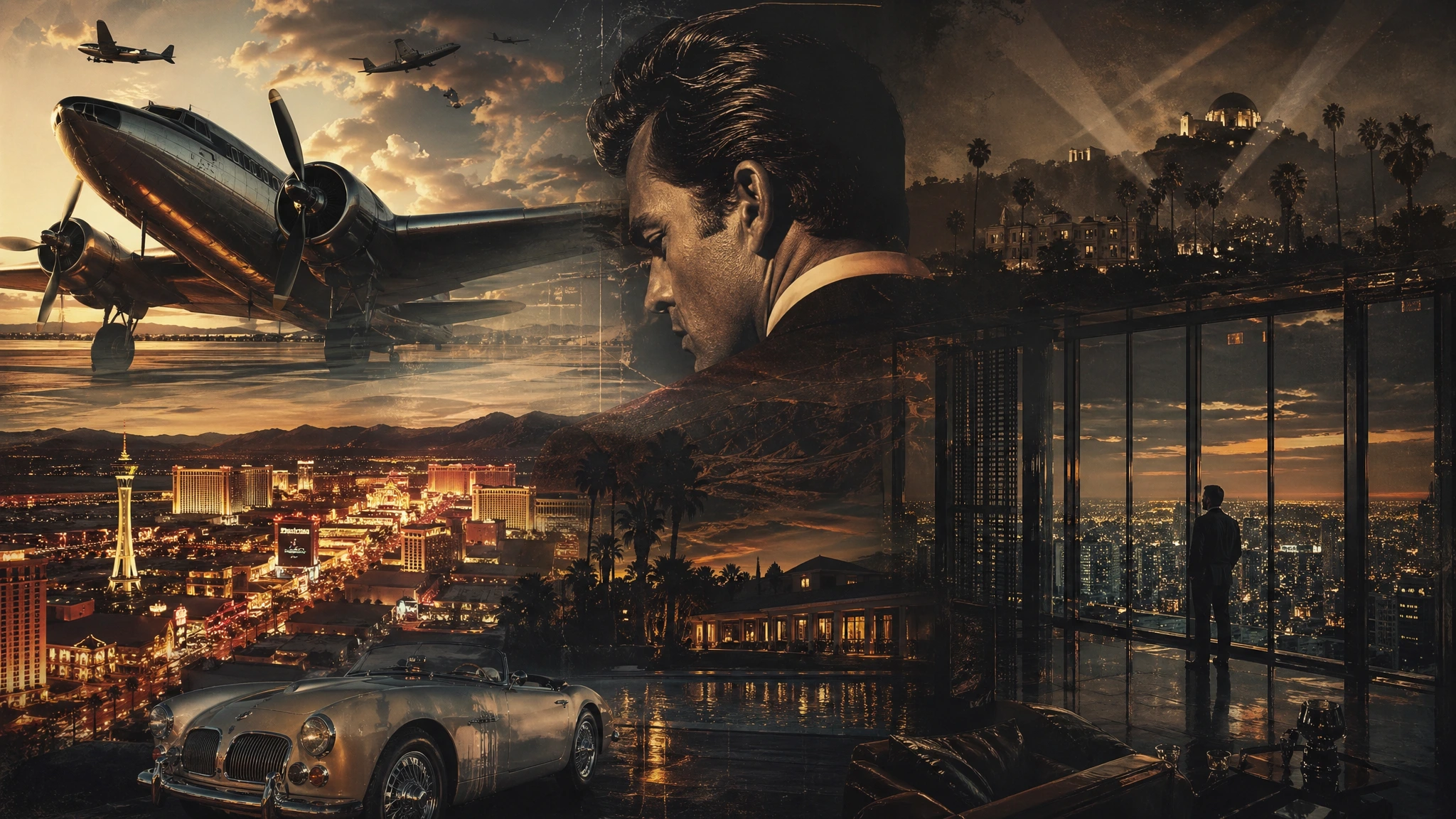
Howard Hughes had everything — money, talent, fame, power, beauty, adventure — and it wasn’t enough. The easy explanation is mental illness, and that’s certainly true. OCD is a real and devastating condition, and Hughes suffered from it severely, apparently without effective treatment. In a different era, with modern psychiatric medicine, his story might have ended differently.
But the deeper lesson is about the relationship between genius and structure. Hughes had no one who could tell him no. His wealth insulated him from consequences. His control over his business empire meant that no board of directors could intervene when his judgment deteriorated. The aides who surrounded him were employees, not equals. By the time his OCD became debilitating, there was no one in his life with the authority, the courage, or the incentive to force him to get help.
The Hughes legacy lives on in unexpected ways. Hughes Aircraft’s innovations contributed to technologies we use every day — satellite communications, radar systems, laser technology. The Howard Hughes Medical Institute, which he established as a tax shelter but which became one of the largest private funders of biomedical research in the world, has contributed to breakthroughs in genetics, neuroscience, and immunology. The man who spent his final years hiding from the world left behind institutions that are still changing it.
💡 Key Insights
- ▸ Hughes' story is the ultimate cautionary tale about unchecked genius. His brilliance was genuine — the aviation records, the films, the engineering innovations were all real. But without the structure that most people get from normal human relationships, his mind turned against itself.
- ▸ Hughes pioneered the billionaire-as-recluse archetype that would later become almost fashionable in tech. But there was nothing fashionable about his final years — living in a darkened room, emaciated, delusional, and surrounded by aides who enabled his decline.
- ▸ The fight over Hughes' estate after his death — with no valid will and dozens of claimants — shows what happens when a fortune is accumulated without any plan for succession. Wealth without structure eventually devours itself.