Howard Schultz: The Brooklyn Kid Who Turned Coffee into a $100 Billion Religion
He grew up in the projects. His father was a broken man. And Howard Schultz took a small Seattle coffee roaster with 11 stores and turned it into the most ubiquitous brand on Earth — one $5 latte at a time. This is the story of Starbucks, class anxiety, and what happens when you sell feelings instead of coffee.
View all stories about this mogul
🏢 Chapter 1: The Projects
Howard Schultz grew up poor. Not “we couldn’t afford vacations” poor. Poor poor. Projects poor. Canarsie, Brooklyn, public housing poor.
The Bayview Houses were a cluster of low-income housing towers in the Canarsie section of Brooklyn — the kind of place where the elevators smelled like things you didn’t want to think about and the hallways echoed with the sounds of families living too close together with too little money.
Howard’s father, Fred Schultz, was a blue-collar worker who cycled through a series of low-paying jobs: truck driver, factory worker, diaper service deliveryman. He was not a lazy man. He was an unlucky man — perpetually employed in jobs that offered no benefits, no security, and no dignity.
In January 1961, when Howard was seven years old, Fred slipped on ice while delivering diapers and broke his hip. He had no health insurance. No workers’ compensation. No disability coverage. No safety net of any kind.
The family — Fred, his wife Elaine, and their three children — were plunged from poverty into crisis. There was no income. The bills piled up. The phone was disconnected because they couldn’t pay the bill.
“That image — my father lying on the couch with a broken hip, no insurance, no money, no hope — is burned into my memory. It’s the reason I built Starbucks the way I built it. I never wanted anyone who worked for me to feel the way my father felt.”
This childhood trauma is the origin story of Starbucks as much as any bean or espresso machine. When Howard Schultz later made the controversial decision to offer health insurance and stock options to part-time Starbucks employees — at enormous cost to the company — he was not making a business decision. He was making a personal one. He was building the company his father never got to work for.
Fred Schultz died in January 1988, just months before Starbucks began its explosive growth. He never saw what his son built. He never received a Starbucks stock option. He never had health insurance from his son’s company.
Howard Schultz has said that this is the single greatest regret of his life.
🏈 Chapter 2: The Escape Velocity

Sports was Howard Schultz’s ticket out.
He was a good athlete — strong, fast, competitive, and possessing the kind of furious determination that comes from having something to prove. He played football, baseball, and basketball at Canarsie High School, and he was good enough at football to earn an athletic scholarship to Northern Michigan University.
Northern Michigan was not an elite school. It was a state university in Marquette, Michigan — a town of 20,000 people in the Upper Peninsula, about as far from Brooklyn as you could get while staying in the same country. But for Howard Schultz, it was everything: a college degree, an escape from the projects, and proof that he could compete with kids who hadn’t grown up watching their fathers suffer.
He graduated in 1975 with a degree in communications — the first person in his family to earn a college degree. He moved back to New York and got a job at Xerox, selling word processors door to door.
“Selling word processors for Xerox taught me two things. First, I could sell anything if I believed in it. Second, I needed something to believe in. Word processors were not it.”
He was good at sales. Very good. Within three years, he’d been promoted to management. He moved to a Swedish housewares company called Hammarplast, where he rose to become vice president and general manager of their U.S. operations.
And then, in 1981, something caught his eye. Hammarplast was selling an unusual number of a particular type of drip coffee maker to a small coffee roasting company in Seattle called Starbucks. A lot of coffee makers. More than anyone else in the country.
Howard Schultz flew to Seattle to find out why.
☕ Chapter 3: The Epiphany
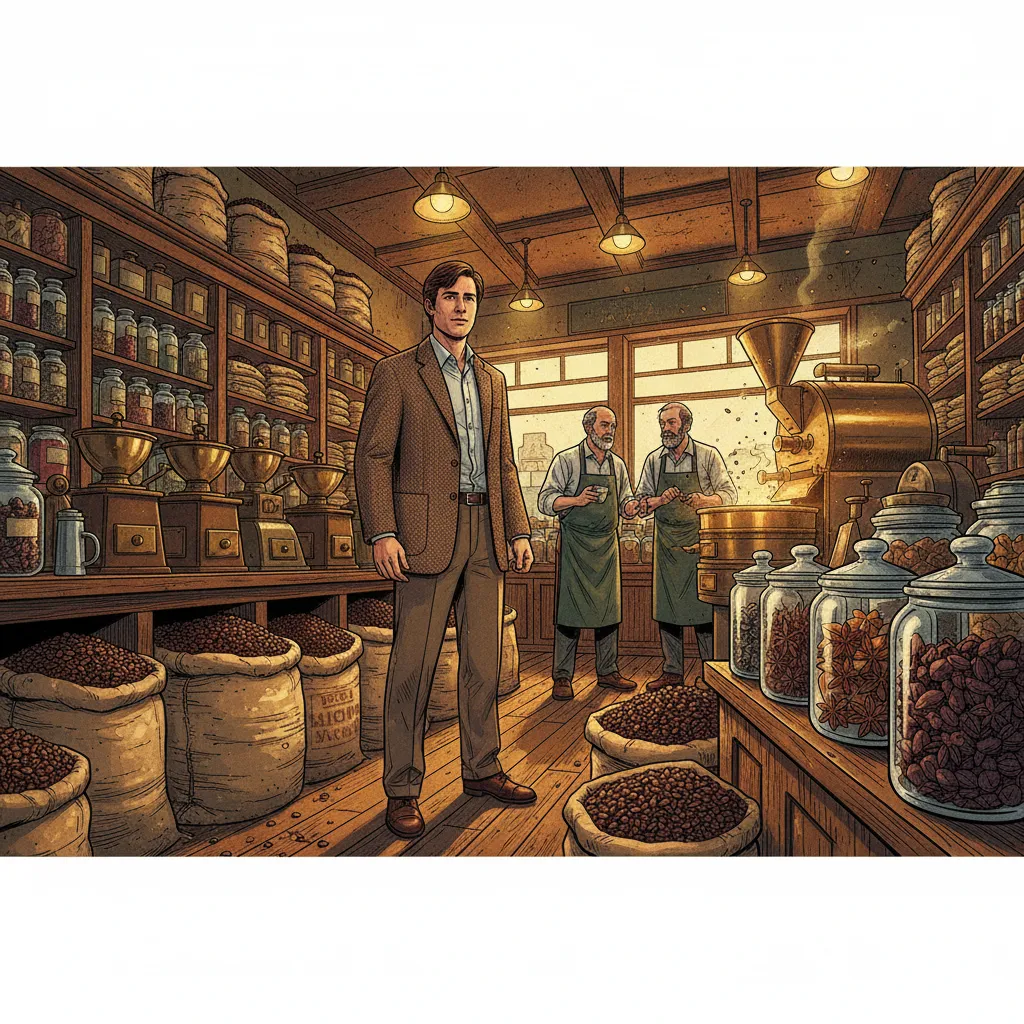
The original Starbucks was nothing like the Starbucks you know.
Founded in 1971 by Jerry Baldwin, Zev Siegl, and Gordon Bowker, the original Starbucks was a coffee roasting and retail operation. They sold whole bean coffee and coffee-making equipment. They did not sell brewed coffee. There were no lattes. No frappuccinos. No green aprons. No wi-fi.
What they did have was extraordinary coffee. At a time when most Americans drank weak, canned, pre-ground swill from brands like Folgers and Maxwell House, Starbucks was selling fresh-roasted, whole bean, specialty coffee. The quality was revelatory. The founders were passionate. The store on Pike Place Market was a temple to the bean.
Schultz visited the store in 1981 and fell in love. Not with the business — with the coffee. He had never tasted anything like it. He had never seen people care about a commodity product with such intensity. He wanted in.
He spent a year convincing the founders to hire him. They were skeptical — Schultz was a New York salesman with no coffee experience. But his persistence wore them down, and in September 1982, he joined Starbucks as director of retail operations and marketing.
Then, in 1983, Schultz went to Milan.
The trip was for an international housewares show, but what Schultz saw in Milan’s coffee bars changed his life. Italian espresso bars were everywhere — on every corner, in every neighborhood. They were communal gathering places where people stood at the counter, sipped espresso, talked to the barista, and connected with their neighbors. The coffee was exceptional. The experience was transcendent.
“In Milan, I understood what coffee could be. It wasn’t a product. It was a ritual. It was a community. It was the connective tissue of Italian culture. And I thought: why can’t we create this in America?”
Schultz returned to Seattle and pitched the founders on a radical idea: Starbucks should stop just selling beans and start selling brewed coffee. They should create Italian-style espresso bars in the United States.
Baldwin and Bowker said no. They were coffee roasters, not restaurant operators. They didn’t want to get into the beverage business.
Schultz was devastated. But not deterred. In 1985, he left Starbucks and founded his own company: Il Giornale (named after an Italian newspaper). Il Giornale was his vision — Italian-style espresso bars serving lattes, cappuccinos, and espresso in a warm, comfortable environment.
Il Giornale opened three stores. They were successful. And then, in 1987, Baldwin and Bowker decided to sell Starbucks.
Schultz raised $3.8 million from local investors and bought the company. He merged Il Giornale and Starbucks, keeping the Starbucks name. He was 34 years old, and he was the owner of a coffee company with 11 stores, 100 employees, and a vision for world domination.
🌊 Chapter 4: The Third Place
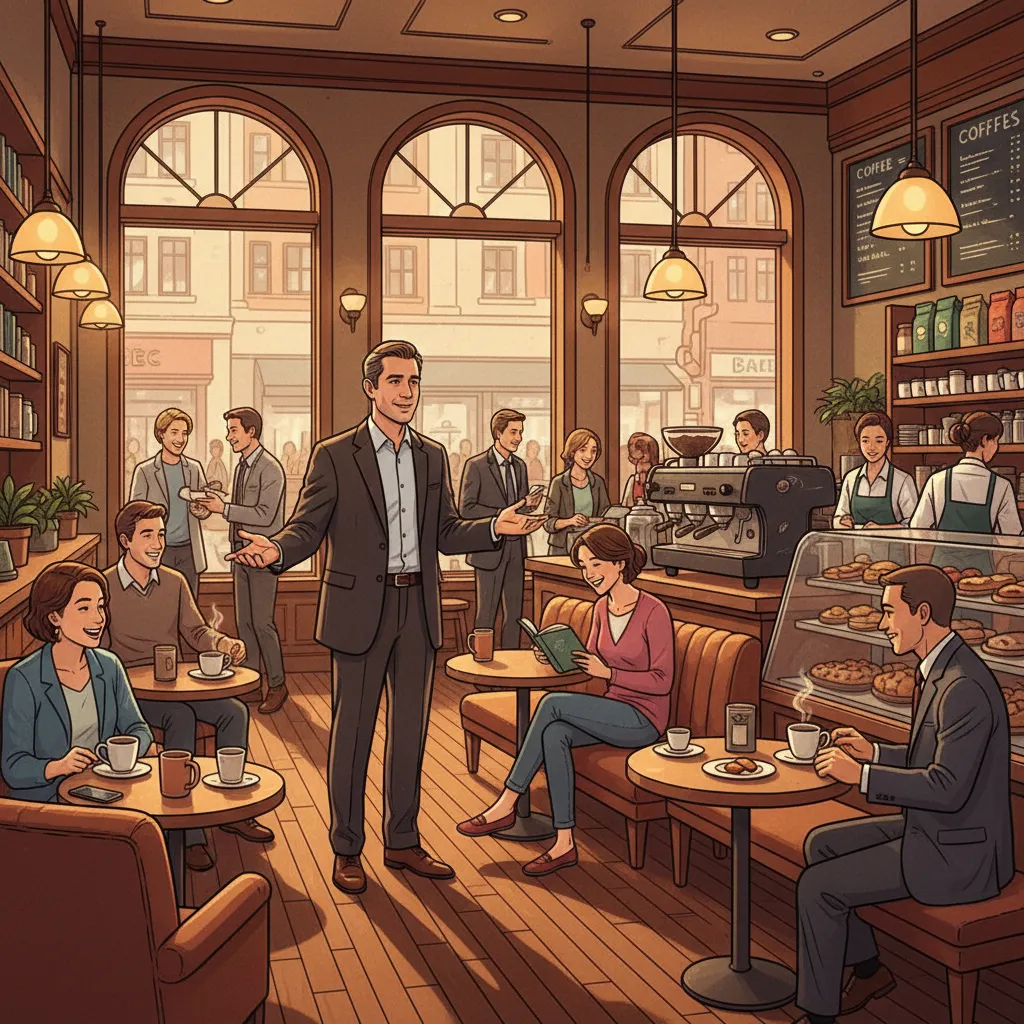
Schultz’s vision for Starbucks was deceptively simple: create a “third place” between home and work where people could relax, connect, and enjoy great coffee.
The concept of the “third place” came from sociologist Ray Oldenburg, who argued that communities needed informal gathering places — neither home (the first place) nor work (the second place) — where people could socialize, build relationships, and feel a sense of belonging.
Starbucks would be that third place. Not a coffee shop. Not a restaurant. A destination. A place where you felt welcome, where the barista knew your name, where the ambiance was warm and inviting, where you could sit for hours with a book or a laptop and nobody would ask you to leave.
“We weren’t selling coffee. We were selling a feeling. The feeling of being welcomed. The feeling of being treated well. The feeling of a warm, comfortable space in a cold, impersonal world. The coffee was just the price of admission.”
This was a radical concept in the American restaurant industry, where the business model was built on turning tables — getting customers in, fed, and out as quickly as possible. Schultz was proposing the opposite: encourage customers to stay. Give them comfortable chairs. Give them free Wi-Fi (eventually). Let them use the space.
The math seemed wrong. If customers lingered for hours over a single $3 latte, how could you make money?
The answer was volume and frequency. Starbucks didn’t need each customer to spend a lot per visit. It needed each customer to come back. Every day. The third place strategy created habitual customers — people who stopped at Starbucks every morning, not because they couldn’t make coffee at home, but because the Starbucks experience was part of their daily ritual.
And the prices — which seemed exorbitant for coffee — were actually quite reasonable for what customers were really buying: 15 minutes of comfort, community, and ritual in an otherwise hectic day. A $5 latte was not $5 for coffee. It was $5 for a feeling. And feelings have infinite margins.
🚀 Chapter 5: The Rocket Ship
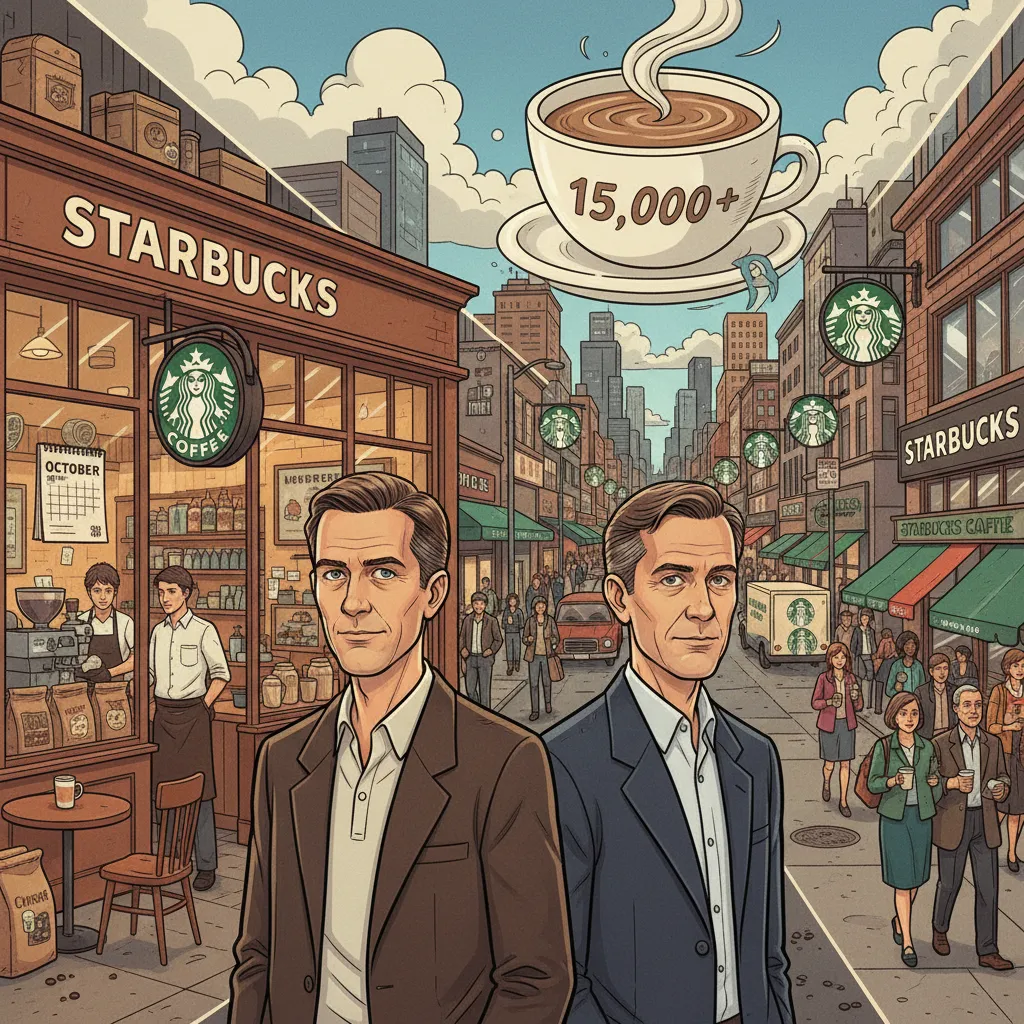
Between 1987 and 2007, Starbucks grew from 11 stores to over 15,000 stores. That’s an average of approximately two new stores opening every single day for twenty years.
The expansion was relentless. First Seattle. Then Portland. Then Chicago. Then the entire West Coast. Then the East Coast. Then Japan. Then the UK. Then China. Then everywhere.
Schultz’s expansion strategy was aggressive and disciplined. New stores were placed in high-traffic locations — downtown business districts, suburban shopping centers, airport terminals, university campuses. Multiple stores were often placed within blocks of each other — a strategy called “clustering” that seemed cannibalistic but actually worked by increasing Starbucks’ visibility and convenience.
The company went public in 1992, raising $25 million at a valuation of approximately $250 million. Schultz, who had used the IPO proceeds to fund further expansion, was now worth tens of millions of dollars. The kid from the projects was rich.
But the money wasn’t the point. The mission was the point.
“Every day, I woke up thinking about the next store. The next city. The next country. Not because I wanted Starbucks to be big. Because I believed that every community deserved a third place. And we were building them.”
Starbucks’ expansion was fueled by a model that was part company-owned stores and part licensed stores (in airports, grocery stores, and other venues). The company-owned stores provided higher margins and greater control. The licensed stores provided faster expansion with lower capital requirements.
By 2000, Starbucks was opening a new store somewhere in the world every 8 hours. Annual revenue exceeded $2 billion. The brand had become so ubiquitous that “Starbucks” had become a synonym for both premium coffee and corporate homogeneity, depending on who you asked.
The Starbucks Effect became a real economic phenomenon: property values near Starbucks locations increased measurably. The company was not just selling coffee. It was reshaping neighborhoods.
💰 Chapter 6: The Benefits Revolution
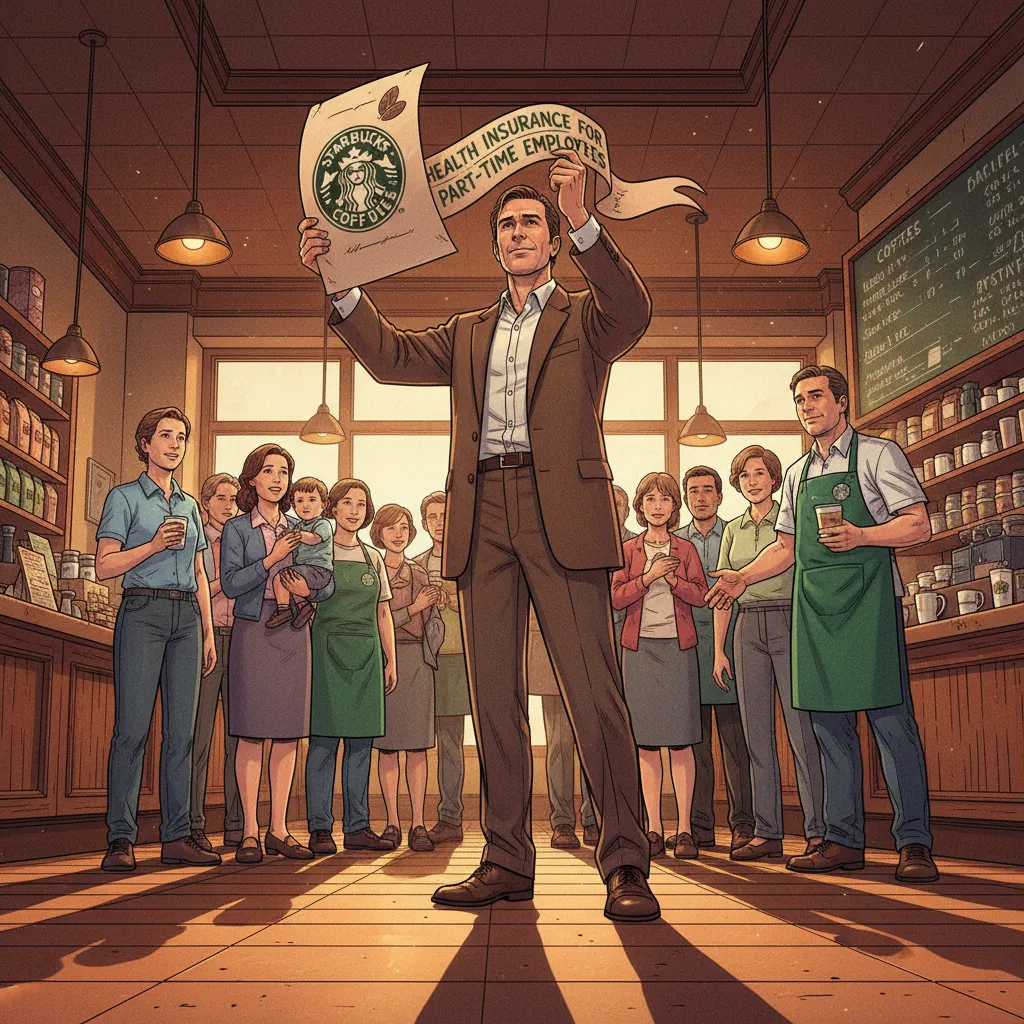
In 1988, Starbucks became one of the first companies in America to offer health insurance to part-time employees working 20 or more hours per week.
In 1991, it became one of the first companies to offer stock options — called “Bean Stock” — to all employees, including part-timers. In Starbucks terminology, employees were called “partners,” not staff or workers.
These decisions were financially reckless by the standards of the restaurant industry, where labor was a cost to be minimized and part-time workers were disposable. The cost of providing health insurance to part-timers alone ran into hundreds of millions of dollars per year.
Schultz didn’t care about the cost. He cared about his father.
“My father worked hard his entire life and had nothing to show for it. No insurance. No stock. No dignity. I swore that no one who worked for me would ever feel that way. That wasn’t a business strategy. It was a promise.”
But the promise turned out to be an excellent business strategy. Starbucks’ employee turnover was dramatically lower than the restaurant industry average — roughly 65% versus 150-200% at comparable chains. Lower turnover meant better-trained baristas, more consistent customer experience, and significantly lower hiring and training costs.
The stock options created a sense of ownership. Baristas who were also shareholders cared more about the company’s success. They were nicer to customers. They cleaned the stores more carefully. They showed up on time. The Bean Stock program aligned the interests of the company and its employees in a way that was almost unheard of in retail.
And the health insurance benefit — the one inspired by Fred Schultz’s broken hip — became one of Starbucks’ most powerful recruiting and retention tools. In an industry where good employees had dozens of options, Starbucks’ benefits package made it the employer of choice.
Schultz had discovered something that most corporate executives refused to believe: treating employees well wasn’t just the right thing to do. It was the profitable thing to do.
⚡ Chapter 7: The Crisis
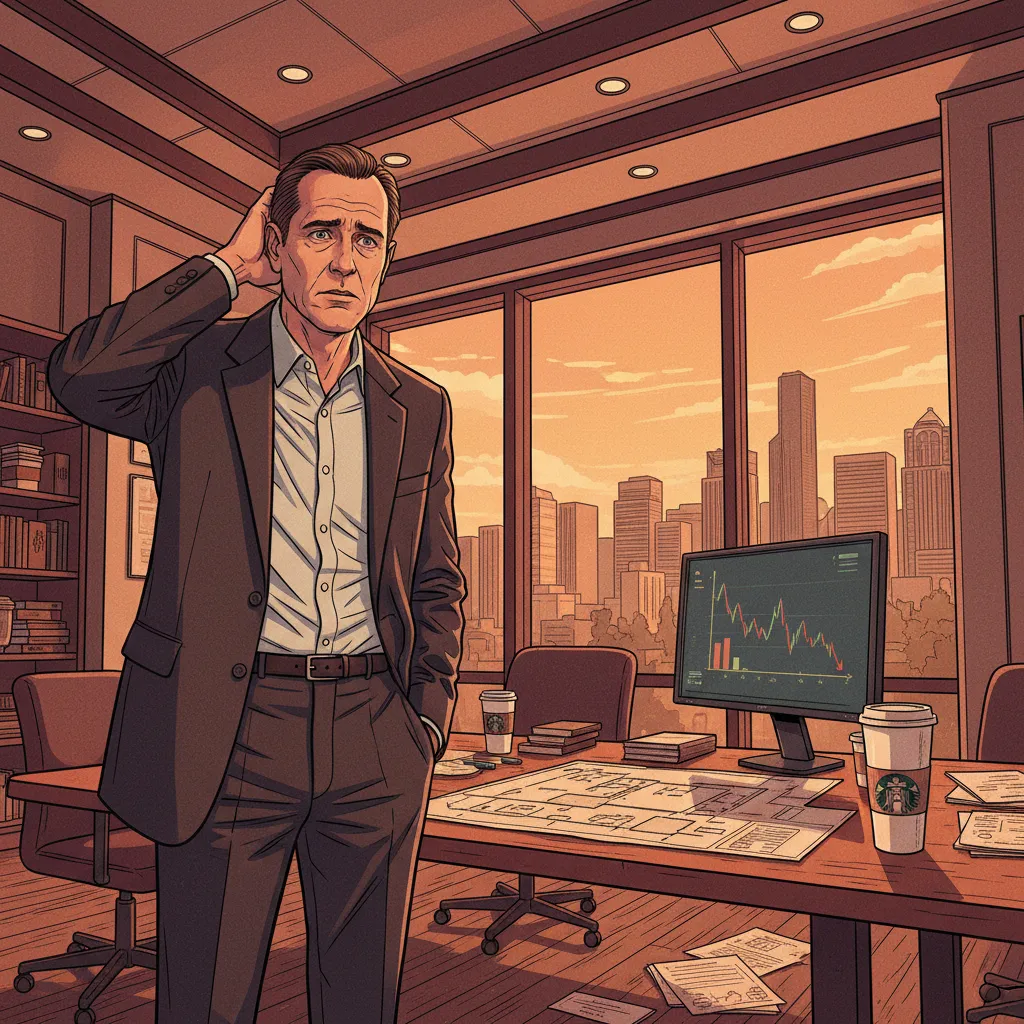
By 2007, Howard Schultz was worried.
He had stepped down as CEO in 2000, handing the reins to Orin Smith and later Jim Donald. The company continued to grow — passing 15,000 stores — but something had changed. The magic was fading.
Stores felt generic. The romance was gone. Automatic espresso machines had replaced the manual ones — faster, more efficient, but they eliminated the theater of the barista pulling shots by hand. Breakfast sandwiches were being sold — convenient, but the smell of eggs overwhelmed the aroma of coffee. Drive-through windows were being added — practical, but they turned Starbucks into just another fast-food chain.
In February 2007, Schultz wrote a memo to senior leadership that was leaked to the media. It was titled “The Commoditization of the Starbucks Experience,” and it was a cri de coeur — a warning that Starbucks was losing its soul.
“We have made decisions that have led to the watering down of the Starbucks experience. The stores don’t feel special anymore. They feel like chains. And if Starbucks is just another chain, then we’ve failed.”
In January 2008, with the company’s stock price declining and same-store sales falling for the first time in its history, Schultz returned as CEO. The timing was terrible — the global financial crisis was about to hit, and consumer spending was collapsing.
Schultz’s return was dramatic. He closed all 7,100 U.S. stores for one afternoon to retrain baristas on making espresso properly. He killed the breakfast sandwich program (temporarily). He flew 10,000 store managers to New Orleans for a conference that was part pep rally and part therapy session.
And he closed 600 underperforming stores. This was painful — each closure meant lost jobs — but it was necessary. Starbucks had overexpanded, and some locations simply couldn’t sustain the model.
The turnaround took two years. By 2010, Starbucks was growing again, and the stock price had more than doubled from its 2008 low.
🌏 Chapter 8: China — The Next Frontier
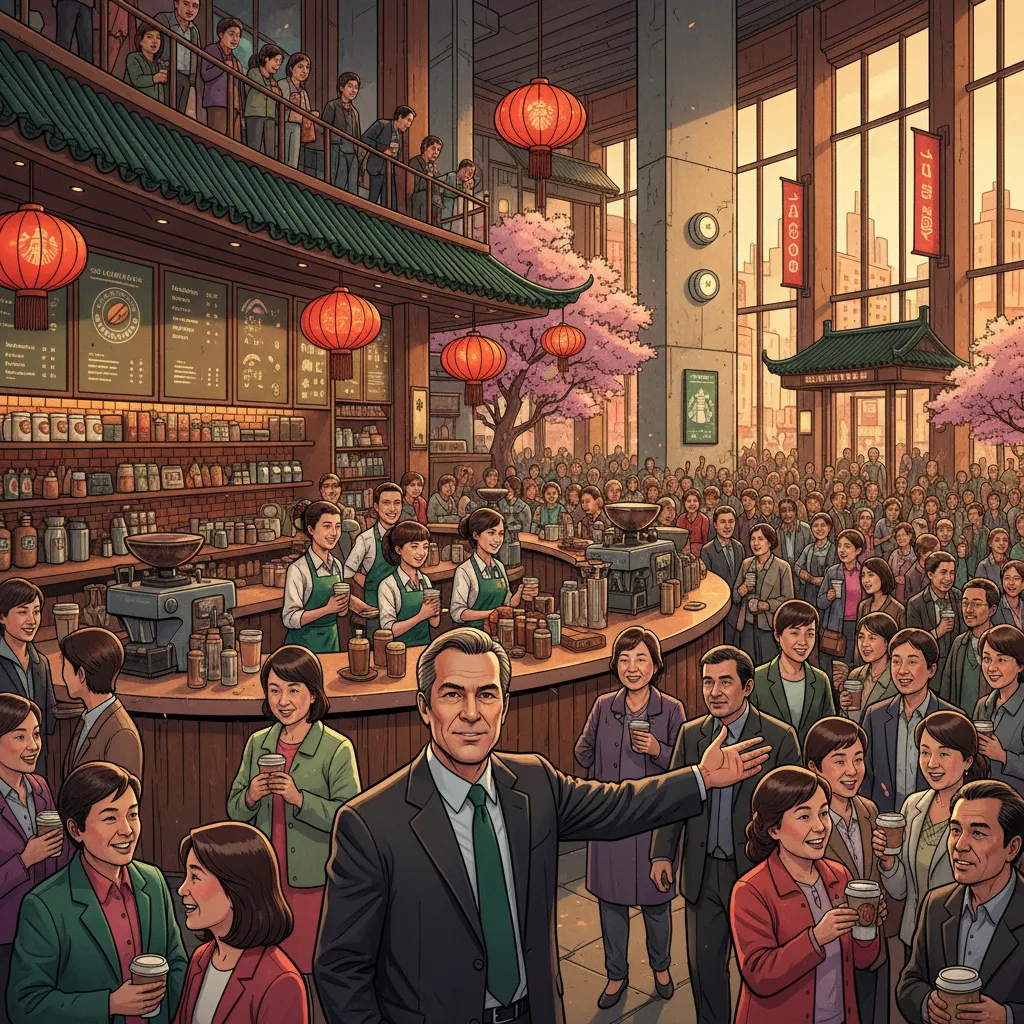
If Starbucks’ American expansion was impressive, its Chinese expansion was staggering.
Starbucks opened its first Chinese store in Beijing in 1999. For years, growth was slow — China was a tea culture, and the idea of paying $5 for coffee seemed absurd. But Schultz saw what others missed: Chinese consumers didn’t want coffee. They wanted the experience. They wanted the third place. They wanted to sit in a beautifully designed store, drink something premium, and post photos on WeChat.
By the mid-2010s, Starbucks was opening a new store in China every 15 hours. By 2025, there were over 7,000 Starbucks locations in China — more than in any country outside the United States.
“China is not a coffee market. It’s an aspiration market. Chinese consumers don’t buy Starbucks because they love espresso. They buy it because Starbucks represents a certain lifestyle — cosmopolitan, modern, premium. We’re not selling coffee in China. We’re selling the feeling of being global.”
The China strategy required significant adaptation. Chinese Starbucks stores were typically larger than American ones — designed for group socializing rather than individual work. The menu included teas, matcha drinks, and flavors adapted for Chinese palates. The loyalty program was integrated with Alipay and WeChat Pay.
Competition intensified in the 2020s. Luckin Coffee, the Chinese chain that had survived its accounting scandal, rebounded to become a formidable competitor with over 20,000 locations by 2025. Other local chains — Manner, M Stand, Cotti Coffee — challenged Starbucks on price and convenience.
But Starbucks maintained its premium positioning. In China, as in America, Starbucks wasn’t competing on coffee. It was competing on identity. And that proved to be a durable advantage.
🗳️ Chapter 9: The Political Detour
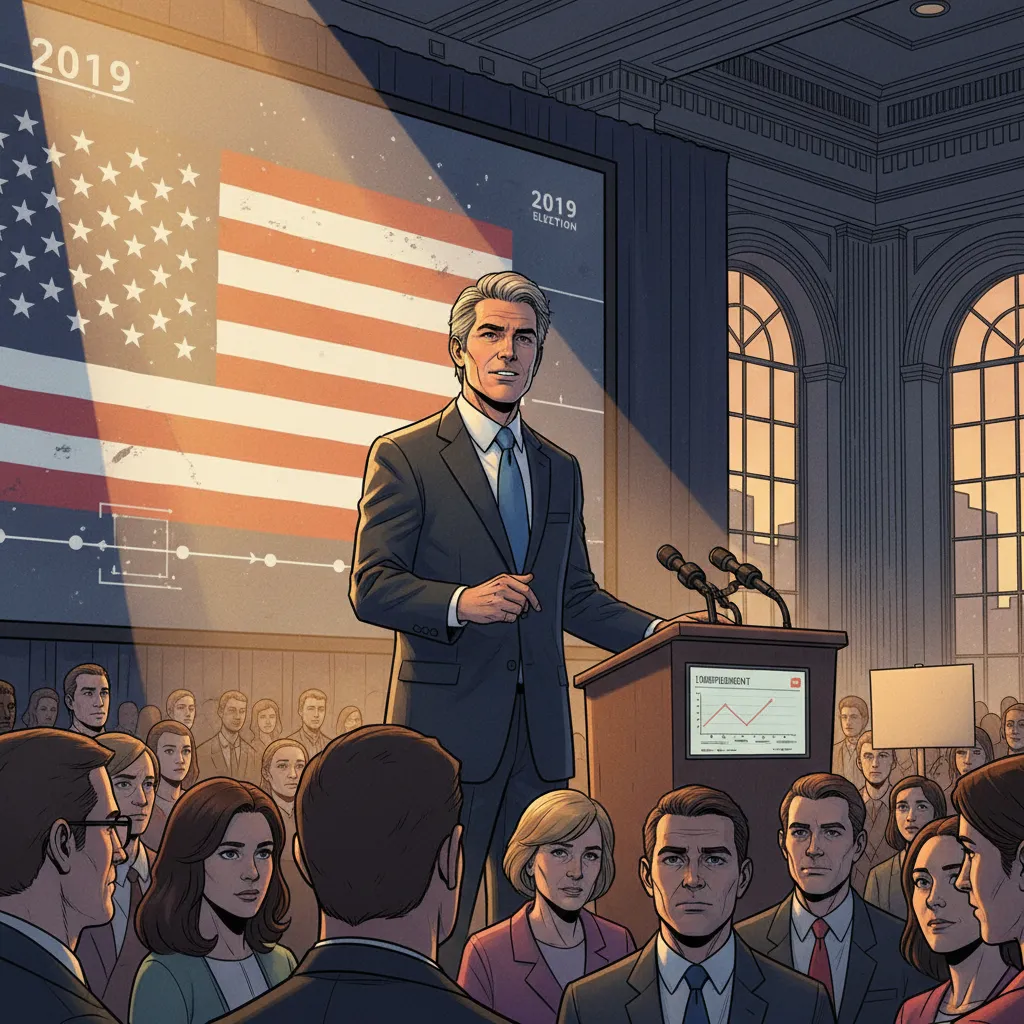
In 2019, Howard Schultz briefly considered running for president of the United States as an independent candidate.
The announcement was met with a reaction that ranged from bemusement to hostility. Democrats feared that an independent Schultz would split the anti-Trump vote and hand the 2020 election to Donald Trump. Republicans dismissed him as another liberal billionaire with a savior complex. The general public shrugged.
Schultz tested the waters for several months before withdrawing in September 2019, citing health concerns (he had undergone back surgery) and the realization that an independent candidacy would be counterproductive.
“The presidential exploration taught me something I should have known: business skills don’t translate to political viability. In business, you solve problems. In politics, you perform. I’m a problem-solver, not a performer.”
The political detour was a footnote, but it revealed something important about Schultz’s self-image. Like Michael Bloomberg before him, Schultz genuinely believed that his business experience — building a company, creating jobs, solving operational problems — qualified him for the presidency. And like Bloomberg, he discovered that the skills that make a great CEO are almost entirely irrelevant to winning an election.
Schultz’s third and final stint as Starbucks CEO came in 2022, when he returned (again) as interim CEO to stabilize the company during a turbulent period of labor organizing and operational challenges. He served for approximately a year before handing the role to Laxman Narasimhan.
By 2025, Schultz had fully stepped away from Starbucks’ day-to-day management, though he remained a significant shareholder and the company’s most prominent public figure.
☕ Chapter 10: The $5 Feeling
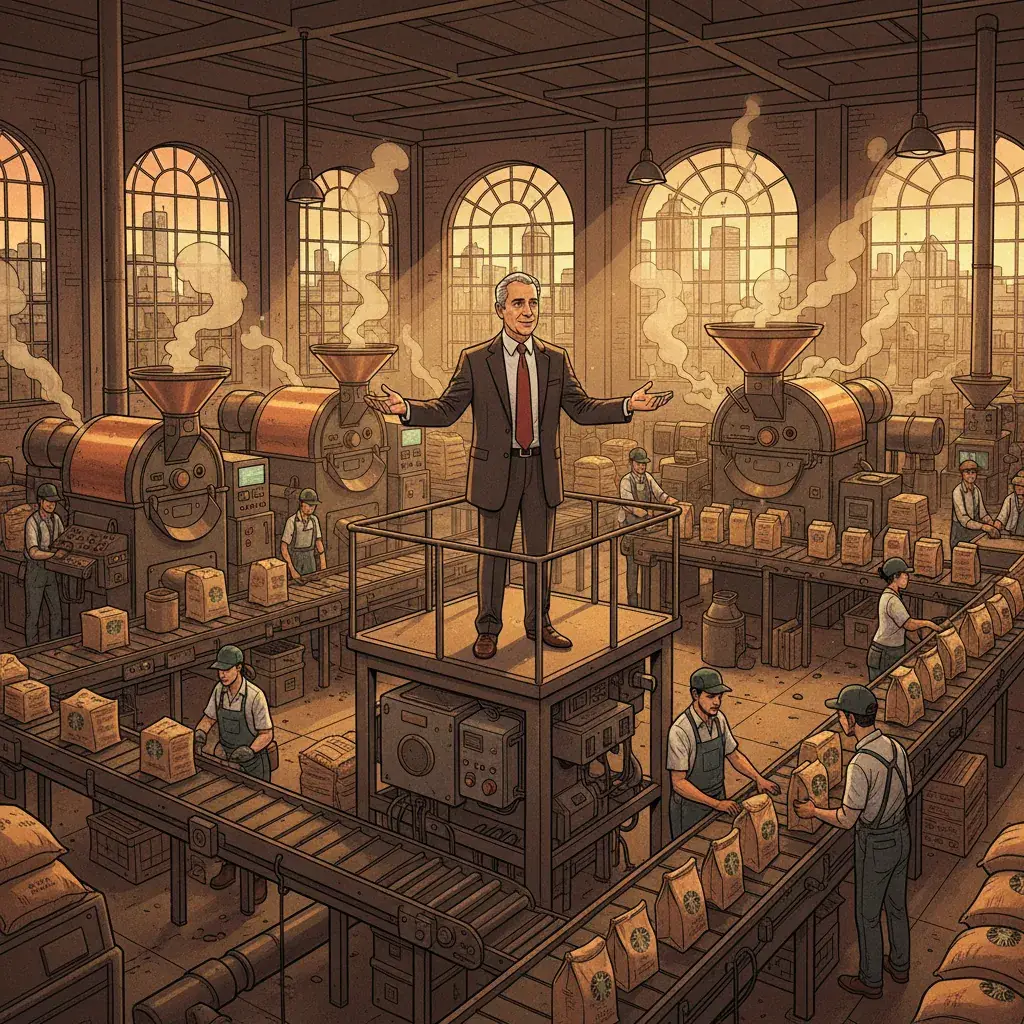
So what did Howard Schultz actually build?
On the surface, Starbucks is a coffee company. It sells espresso drinks, drip coffee, teas, and food in over 38,000 stores in more than 80 countries. It generates over $35 billion in annual revenue. It employs over 400,000 people.
But Starbucks was never really about coffee. Schultz understood this from the beginning, even if the business school case studies took decades to catch up.
Starbucks was about the feeling. The feeling of walking into a warm, well-lit space that smells like freshly roasted coffee. The feeling of a barista writing your name on a cup. The feeling of belonging — of having a place that was neither home nor work but somehow both.
That feeling — that intangible, unmeasurable, infinitely scalable feeling — is worth $100 billion.
“Every day, millions of people choose to pay $5 for something they could make at home for 50 cents. They’re not buying coffee. They’re buying a moment. A pause. A small luxury in an affordable package. That’s what Starbucks is. That’s all it ever was.”
The Schultz Playbook:
-
Sell the experience, not the product. Coffee is a commodity. The Starbucks experience is not. By wrapping a commodity in an experience, Schultz created margins that commodity businesses can only dream of.
-
Take care of your people and they’ll take care of your customers. Starbucks’ employee benefits — health insurance, stock options, tuition assistance — were expensive. They were also the foundation of the company’s service quality and brand loyalty.
-
Build habits, not transactions. Starbucks doesn’t need you to buy an expensive drink. It needs you to come back tomorrow. And the day after. And the day after that. The daily habit is worth more than any single purchase.
-
Use your origin story. Schultz’s childhood in the projects, his father’s broken hip, the promise to do better — this narrative gave Starbucks an emotional foundation that no competitor could replicate.
-
Know when to come back. Schultz left Starbucks twice and came back twice. Each time, he recognized that the company had drifted from its core values and needed course correction. Knowing when to return is as important as knowing when to leave.
The kid from the Bayview Houses in Canarsie, Brooklyn, built a global empire by selling a feeling. His father never saw it. But everything Schultz built — every store, every benefit, every Bean Stock option — was built in his father’s honor.
And somehow, that makes the $5 latte worth every penny.
Starbucks operates over 38,000 stores globally and generates over $35 billion in annual revenue as of 2025. Howard Schultz’s net worth is estimated at approximately $3.5 billion. The company provides health insurance and stock options to eligible part-time employees.
😠 Chapter 11: The Dark Roast (2016-2018)
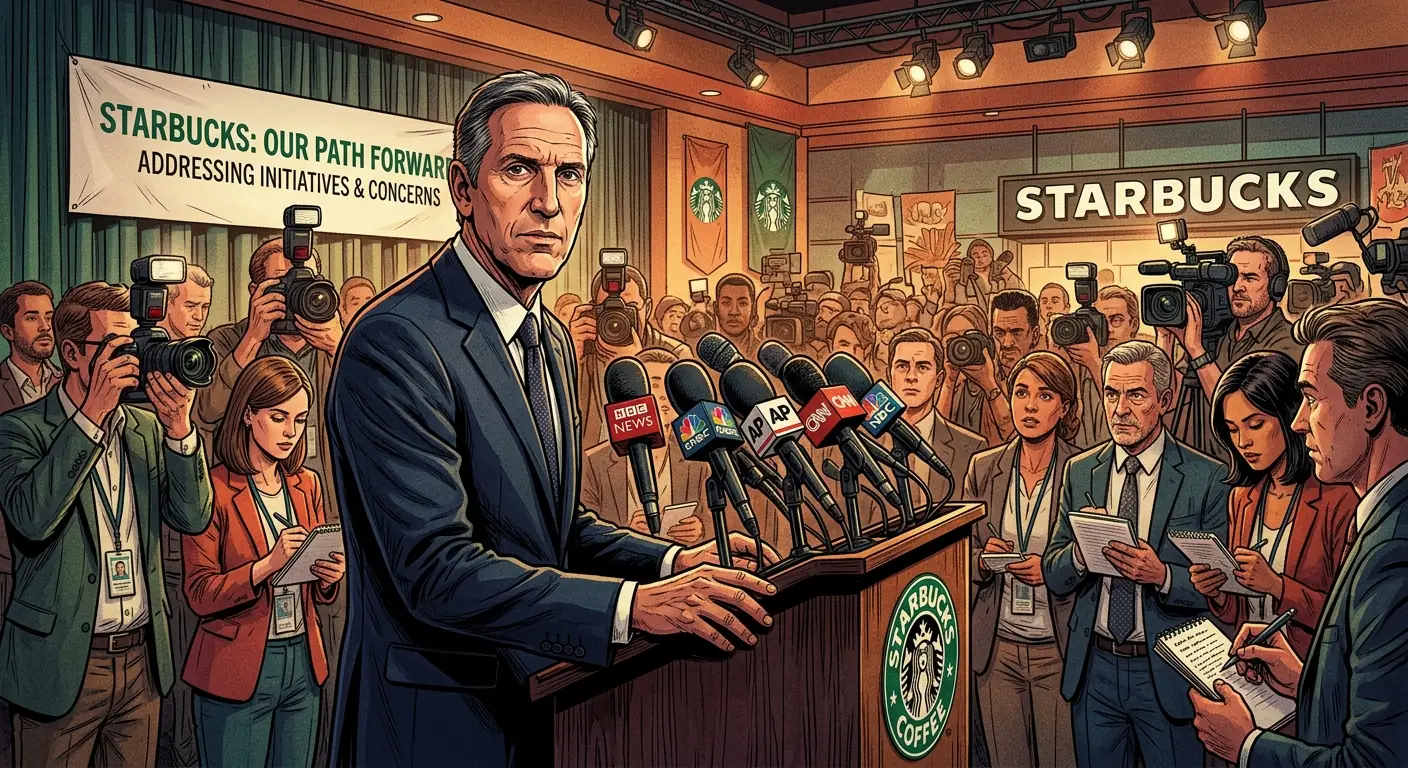
So, we’ve talked about Howard Schultz as the visionary, the empathetic leader, the guy who gave everyone health insurance. But even the most celebrated moguls have their shadows, and Schultz, for all his good intentions, wasn’t immune to controversy. Sometimes, his fiercely held beliefs, which built Starbucks into a global powerhouse, also became a source of significant public criticism.
### Brewing Discontent: The Union Question
For decades, Schultz had cultivated a “we’re all partners” ethos at Starbucks. He believed that by offering unparalleled benefits like health insurance and stock options (Bean Stock) to even part-time employees, he was creating a company where unions were simply unnecessary. He famously said, “If they had a union, I’d have to fire myself.” Cute, but also a hard line. This unwavering stance positioned Starbucks squarely against unionization efforts, which ramped up significantly in the late 2010s and early 2020s. Critics accused Starbucks, under Schultz’s influence, of union-busting tactics, including intimidating organizers, closing stores involved in union drives, and even firing pro-union employees. The National Labor Relations Board (NLRB) has, at various times, filed complaints against Starbucks, alleging violations of labor law. For a company built on a foundation of employee care, this became a rather bitter pill for many consumers and employees to swallow, challenging the very narrative Schultz had meticulously crafted about Starbucks as a benevolent employer. It turns out, even great benefits don’t always fully address every worker’s desire for a collective voice.
### A Bitter Taste: “Race Together” and the Philly Incident
Schultz, ever the idealist, often felt Starbucks had a role to play in tackling societal issues. In 2015, the company launched “Race Together,” an initiative that encouraged baristas to engage customers in conversations about race by writing “Race Together” on coffee cups. The idea, born from Schultz’s genuine distress over racial injustice in America, was quickly met with widespread ridicule and backlash. Critics called it tone-deaf, performative, and an unfair burden on employees. The internet, predictably, had a field day. It was a well-intentioned but spectacularly mishandled effort, demonstrating that not every social problem can be solved with a latte and a conversation.
Then came the April 2018 incident in a Philadelphia Starbucks. Two Black men, Rashon Nelson and Donte Robinson, were waiting for a business associate and hadn’t ordered anything. A manager called the police, and they were arrested for trespassing. The video went viral, sparking national outrage and protests. This wasn’t just a PR nightmare; it was a fundamental challenge to Starbucks’s “third place” identity – a safe, welcoming space for everyone. Schultz, who had stepped down as CEO but was still heavily involved as chairman, returned to the forefront. He called the incident “reprehensible” and took swift, decisive action. On May 29, 2018, Starbucks closed 8,000 U.S. stores for an afternoon to conduct company-wide racial bias training for 175,000 employees, a move that cost the company an estimated $16.7 million in lost sales. It was a bold, unprecedented step, but it also underscored that even Starbucks, with its carefully curated image, wasn’t immune to the systemic issues plaguing society.
💚 Chapter 12: Brewing Good (1998-Present)
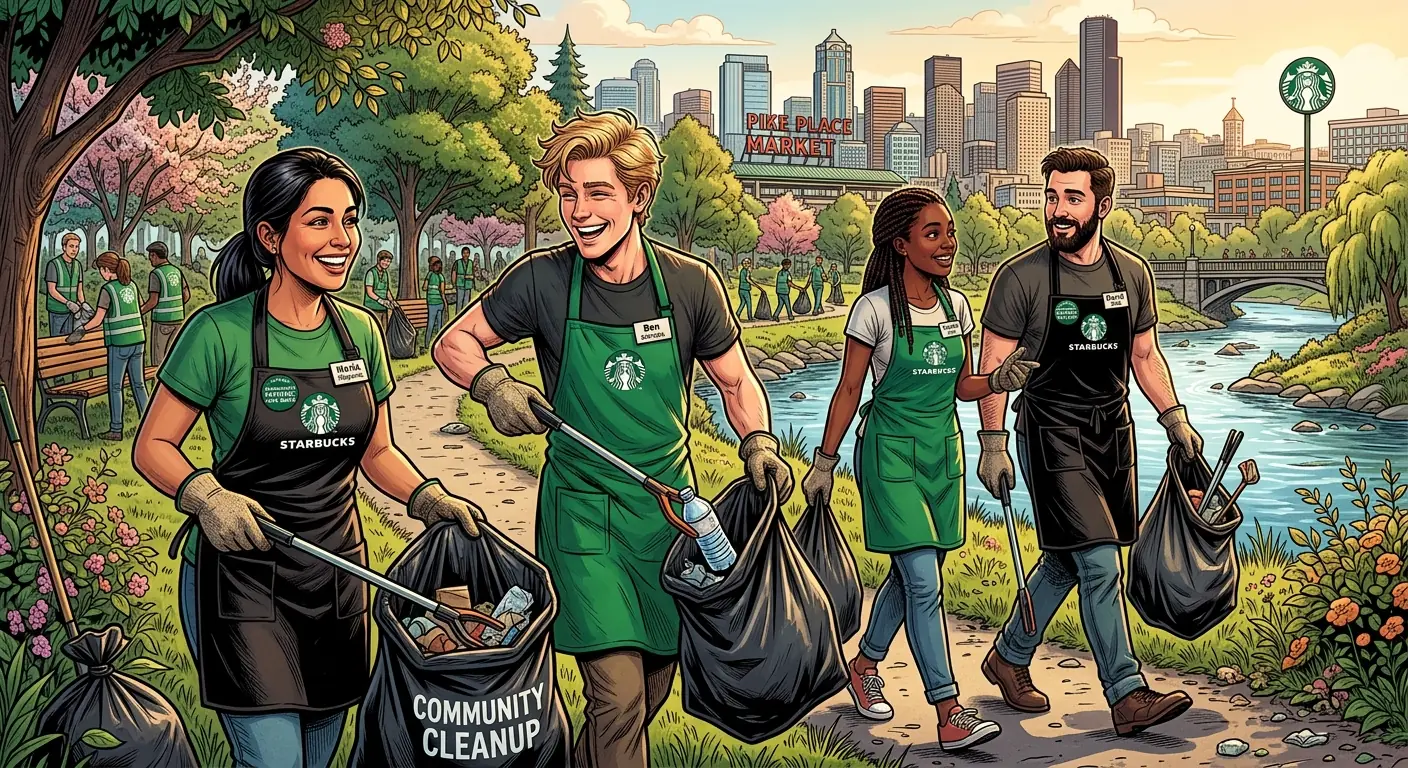
While the controversies might leave a bitter aftertaste, it’s crucial to remember that Schultz also steered Starbucks towards significant social and environmental impact, often pushing boundaries for corporate responsibility. He understood that a brand built on connection couldn’t just sell coffee; it had to stand for something more. This wasn’t just about good PR; it was baked into the company’s DNA, evolving from his childhood experiences.
### Beyond Beans: Ethical Sourcing and Environmental Stewardship
Long before “sustainability” became a corporate buzzword, Starbucks was grappling with the ethics of coffee sourcing. In 1998, they partnered with Conservation International to develop Coffee and Farmer Equity (C.A.F.E.) Practices. This wasn’t just a feel-good label; it was a comprehensive set of guidelines for ethically sourcing coffee, covering economic transparency, social responsibility (fair labor practices, safe working conditions), and environmental leadership (biodiversity conservation, reduced water usage). By 2015, 99% of Starbucks’s coffee was ethically sourced under C.A.F.E. Practices, impacting hundreds of thousands of farmers globally. This commitment helped elevate standards across the industry and gave consumers a reason to feel good about their daily brew.
Beyond sourcing, Starbucks has also focused on its environmental footprint. From ambitious goals to reduce waste and water usage to experimenting with reusable cups and plant-based milks, the company has often been at the forefront of corporate environmentalism, albeit with its own set of challenges (looking at you, single-use cups!). Schultz understood that genuine brand loyalty comes from aligning with customers’ values, and for many, that meant a commitment to a healthier planet.
### Investing in Humanity: Employee and Community Programs
Schultz’s initial push for health insurance and stock options was just the beginning. Under his leadership, Starbucks continually expanded its commitment to its “partners.” A standout example is the Starbucks College Achievement Plan, launched in 2014 in partnership with Arizona State University. This groundbreaking program offered full tuition reimbursement for eligible employees to earn a bachelor’s degree online. Imagine that: a part-time barista, working their way through college, completely debt-free. It was a game-changer, addressing a massive pain point for young workers and reinforcing the idea that Starbucks was a place to build a future, not just make a paycheck.
Beyond education, Starbucks has also been a leader in hiring initiatives, committing to hiring 25,000 veterans and military spouses by 2025 and 10,000 refugees globally. The company also launched initiatives like “FoodShare” in 2016 to donate unsold food to local food banks, aiming to provide 50 million meals by 2021. These programs weren’t just about charity; they were about building a more resilient, equitable community, reflecting Schultz’s deeply ingrained belief in the dignity of work and the power of opportunity. It’s a stark contrast to his union stance, showing the complex, sometimes contradictory, nature of his vision: fiercely independent, yet deeply communal.
☕ Chapter 13: The Unfinished Cup (2018-Present)
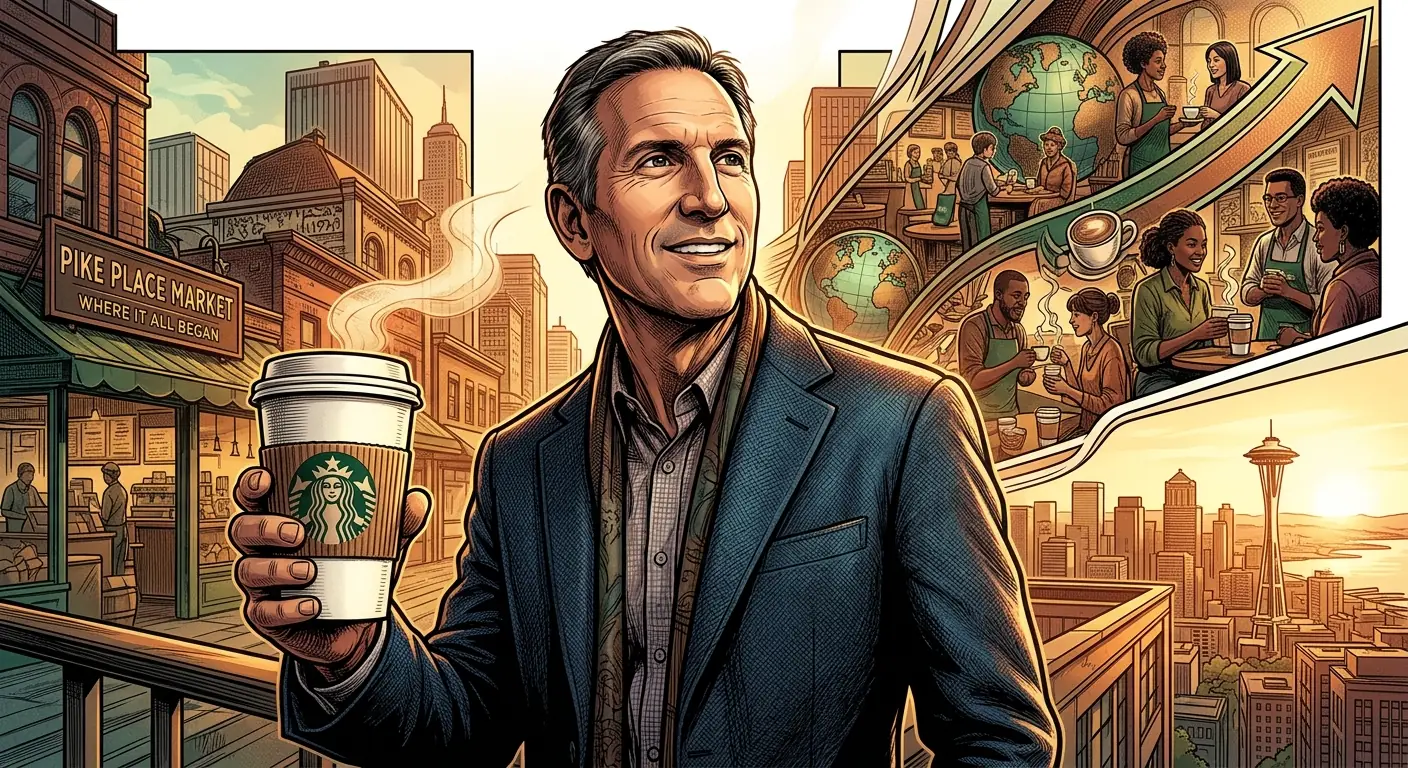
Howard Schultz has famously “retired” from Starbucks on multiple occasions, each time seeming to be pulled back by the siren song of the brand he built. His journey has been less a steady climb and more a series of dramatic entrances and exits, each one underscoring his deep, almost paternal, connection to the company. His final, and most recent, return and departure solidified his legacy, but also highlighted the evolving challenges of a global titan.
### Back for One Last Brew: The 2022 Interim CEO Stint
After his second “retirement” as CEO in 2017 (and stepping down as chairman in 2018 to explore political ambitions), Schultz found himself back in the hot seat in April 2022. The company was facing a perfect storm: a resurgent unionization movement, a post-pandemic shift in work habits impacting urban store traffic, supply chain woes, and growing internal dissent. The board, struggling to find a permanent solution, turned to the one person who embodied Starbucks’s soul. Schultz returned as interim CEO, taking a symbolic $1 annual salary, a move that screamed “I’m here to fix things, not get rich… again.”
His 2022 return was marked by a renewed focus on the “partner experience,” a sort of charm offensive aimed at quashing union efforts by demonstrating genuine care. He halted stock buybacks to invest $1 billion into employee wages and store improvements, and personally traveled to stores, listening to baristas. He also spearheaded the search for his successor, a process that culminated in the appointment of former Reckitt Benckiser CEO Laxman Narasimhan in September 2022. Schultz remained a mentor and board member, ensuring a smooth transition. This final stint wasn’t about growth, but about steadying the ship and reaffirming the company’s core values amidst turbulent waters. It was a pragmatic, almost defensive, return, a far cry from the expansive vision of his earlier tenures.
### The Final Pour: Legacy and Lessons
Schultz officially stepped down from the board in March 2023, seemingly for good this time. His departure marked the end of an era, leaving behind a company that fundamentally transformed how the world drinks coffee. His legacy isn’t just about the tens of thousands of Starbucks stores worldwide or the company’s staggering $100 billion+ market capitalization. It’s about the “third place” concept, the idea that a coffee shop could be an extension of home and work, a communal hub. It’s about proving that a company could offer industry-leading benefits to part-time workers and still be wildly profitable. He redefined “premium” coffee, turning a simple bean into a global cultural phenomenon, an affordable luxury.
However, his legacy is also complex. The relentless expansion, while creating wealth, also contributed to the homogenization of main streets and the occasional loss of local character. His anti-union stance, while consistent with his “partner” philosophy, has drawn significant criticism. Yet, the lessons he leaves are profound: the power of vision, the importance of culture, the courage to take risks (like buying the original Starbucks or offering those benefits), and the relentless pursuit of a dream born in a Brooklyn housing project. Howard Schultz, the kid who saw coffee as a vehicle for dignity, built an empire that transcended mere beverages, leaving an indelible mark on business, culture, and countless individual lives – one thoughtfully crafted cup at a time.
💡 Key Insights
- ▸ Schultz's fundamental insight was that coffee shops could be a 'third place' — not home, not work, but a comfortable space where people could linger, connect, and feel a sense of belonging. He wasn't selling coffee; he was selling an experience. This 'third place' concept transformed a commodity product (coffee) into a premium experience with margins that would be impossible if Starbucks were just selling beans and water.
- ▸ Starbucks' decision to offer health insurance and stock options to part-time employees (unheard of in the restaurant industry) was motivated by Schultz's childhood trauma of watching his uninsured father struggle after a workplace injury. But it was also brilliant business strategy: lower turnover, better-trained baristas, and a brand that could credibly claim to care about its people. Schultz proved that employee benefits aren't just costs — they're investments with measurable returns.