John Mackey: How Whole Foods Turned Natural Groceries Into Big Business
John Mackey built Whole Foods from an Austin counterculture experiment into a national retailer, then navigated the tensions created by scale and an Amazon acquisition.
View all stories about this mogul
John Mackey did not invent organic food. He helped turn it from the edge of American retail into a premium national category—and discovered that a mission-driven company becomes harder to control as soon as everyone wants a piece of it.
Whole Foods Market began with a tiny Austin grocery experiment and ended Mackey’s tenure inside one of the largest technology and logistics companies on earth. Between those points sat a flood, a public listing, dozens of acquisitions, labor and pricing controversies, fierce competition, and a $13.7 billion sale to Amazon.
The rise of Whole Foods is not simply the story of healthier groceries. It is the story of how a founder converted culture into merchandising, merchandising into a repeatable store format, and that format into an empire valuable enough to reshape the supermarket industry.
How did John Mackey turn an Austin experiment into Whole Foods?

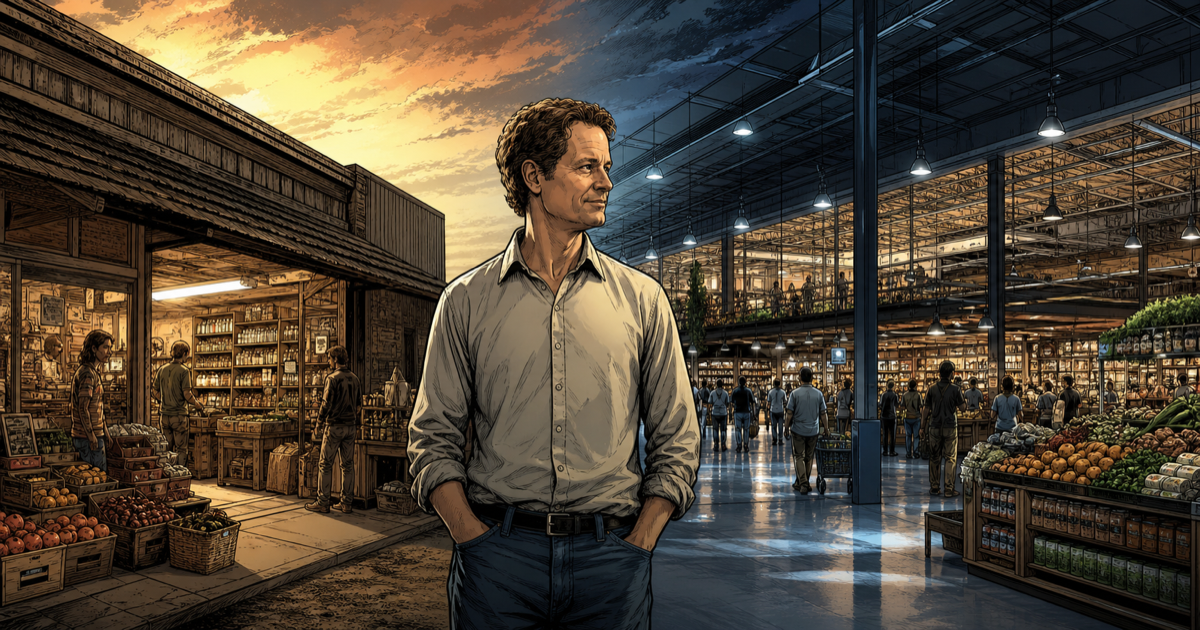
Mackey was a college dropout who became absorbed by food, philosophy, and the cooperative culture surrounding natural groceries in 1970s Austin. In 1978, he and his then-partner Renee Lawson opened SaferWay, a small vegetarian natural-food store. The name teased Safeway, but the business was no joke: the pair lived above the store after being pushed out of their apartment for storing food inventory there.
SaferWay was earnest but constrained. The store’s strict product philosophy limited its market, while the founders learned the unforgiving economics of rent, spoilage, inventory, and thin grocery margins. In 1980, they joined with Craig Weller and Mark Skiles, operators of Clarksville Natural Grocery, to open the first Whole Foods Market.
The combination mattered. Whole Foods was larger, more ambitious, and less doctrinaire than many health-food shops. It offered natural products without making customers feel they had entered a private club. The store treated produce, prepared food, meat, bakery, and discovery as an experience rather than a collection of beige bins.
Then disaster arrived. In 1981, flooding in Austin damaged the store and destroyed inventory. Employees, customers, suppliers, and neighbors helped clean and restock. The episode became part of the company’s internal mythology because it showed that Whole Foods had built something beyond transactions: a local constituency wanted the store to survive.
That community did not eliminate the need for hard retail execution. Mackey learned to pair ideology with merchandising. Stores could advocate better food while still being colorful, abundant, convenient, and commercially disciplined. That was the core innovation.
| Year | Milestone | Why it mattered |
|---|---|---|
| 1978 | SaferWay opens in Austin | Mackey tests a natural-food retail thesis |
| 1980 | First Whole Foods Market opens | A broader, supermarket-style format replaces the tiny shop model |
| 1981 | Austin flood damages the store | Community support strengthens the company’s identity |
| 1992 | Whole Foods goes public | Public capital enables faster geographic expansion |
| 2017 | Amazon agrees to acquire Whole Foods for $13.7 billion | Logistics and technology become part of the grocery strategy |
| 2022 | Mackey retires as CEO | Founder-led culture enters a new phase |
How did Whole Foods build a national grocery empire?
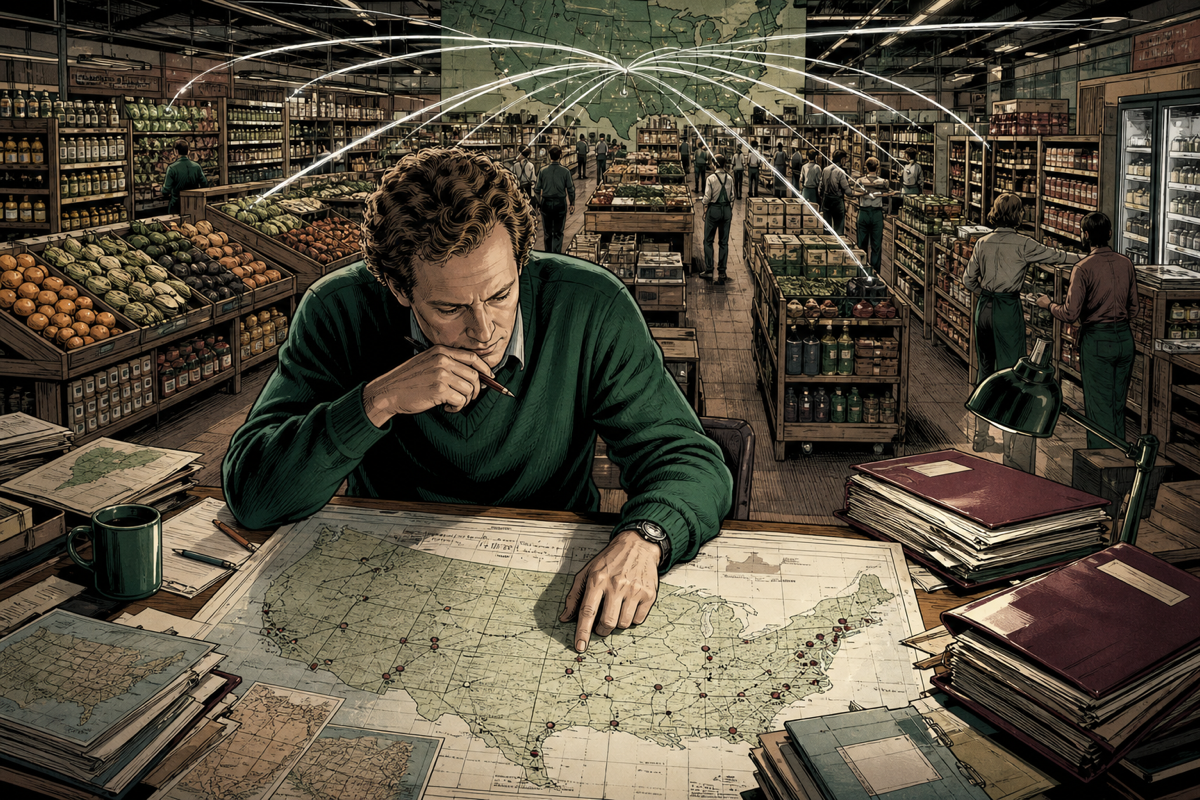
Whole Foods expanded through a mixture of new stores and acquisitions. Regional natural-food chains already understood their customers and supplier networks. Buying them offered Whole Foods local knowledge, experienced teams, and immediate geographic density. The company acquired businesses such as Bread & Circus, Fresh Fields, and Wild Oats as it assembled a national footprint.
The strategy was faster than building every market from scratch, but integration required judgment. A natural-food customer in Boston did not necessarily shop like one in Texas or California. Whole Foods gave stores meaningful local discretion, preserving regional products and allowing teams to shape merchandising. That autonomy helped stores feel embedded rather than cloned.
At the same time, the company needed shared standards. Quality rules, store design, purchasing power, information systems, and brand expectations made the chain recognizable. Whole Foods’ operating challenge was to centralize enough to gain scale without sanding away the local texture customers valued.
Its stores became theatrical. Produce looked abundant. Prepared-food counters turned grocery shopping into lunch or dinner. Cheese, bakery, seafood, and specialty departments created reasons to browse. The format attracted affluent customers willing to pay for selection, convenience, and trust.
That positioning created the nickname “Whole Paycheck.” Premium prices funded labor-intensive stores and higher-quality assortments, but they also narrowed the audience and gave competitors a target. Conventional supermarkets expanded organic sections. Costco, Trader Joe’s, and regional grocers pressured value perception. What had once been a distinctive category began to look like a feature every serious grocer could copy.
Mackey framed the company through “conscious capitalism,” arguing that businesses could serve customers, employees, suppliers, communities, and investors together. The philosophy gave Whole Foods a language for its mission. It also increased scrutiny whenever wages, supplier relations, animal welfare, pricing, or executive behavior appeared inconsistent with that promise.
By the mid-2010s, same-store sales pressure and activist-investor attention exposed the limits of the model. Local autonomy could create complexity. Premium positioning looked vulnerable. The founder who had spent decades resisting conventional corporate thinking now faced the possibility that independence itself was the constraint.
Why did John Mackey sell Whole Foods to Amazon, and what is his legacy?
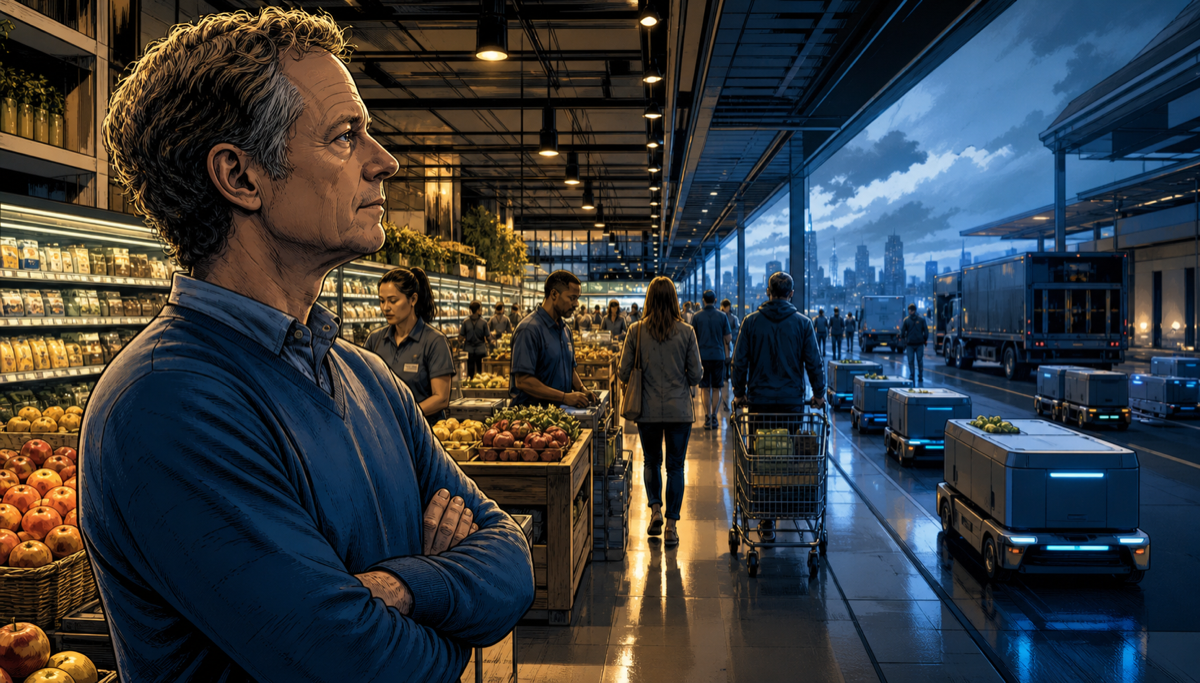
Amazon’s 2017 agreement to buy Whole Foods for $13.7 billion was a collision of complementary assets. Amazon had technology, data, Prime membership, capital, and logistics ambition. Whole Foods had hundreds of physical locations, perishable-food expertise, trusted supplier relationships, and customers with attractive spending profiles.
For Whole Foods, the deal offered shelter from public-market pressure and access to capabilities that would be expensive to build independently. For Amazon, the acquisition created an instant grocery footprint and a network of urban and suburban locations close to valuable households.
The marriage also revealed the tension inside the Whole Foods idea. Efficiency can lower prices and improve availability, but excessive standardization can weaken the local discovery and team autonomy that made the stores distinctive. Technology can remove friction, yet grocery shopping is also sensory and social. The strategic task was not to make Whole Foods behave like a warehouse. It was to use Amazon’s systems without erasing Whole Foods’ reason for existing.
Mackey remained chief executive until 2022. His legacy is complicated in the way consequential founder legacies usually are. He built a market-making company and a recognizable philosophy, while public comments and management choices sometimes generated controversy. The business helped expand demand for organic and natural products, yet its premium format did not make that food universally affordable.
The central lesson is sharper than either worship or dismissal: mission became powerful when translated into an operating system. Whole Foods won because store design, supplier standards, prepared food, decentralized merchandising, and employee culture reinforced one another. When those systems became expensive or inconsistent, the mission alone could not protect performance.
What is John Mackey’s net worth?
Public estimates vary with asset values and reporting dates. Forbes and other business publications have published historical estimates, but private holdings make a precise current number difficult to verify. The more durable figure in Mackey’s story is the $13.7 billion price Amazon agreed to pay for Whole Foods in 2017.
How did John Mackey make his money?
Mackey’s wealth came primarily from founding, leading, and holding equity in Whole Foods Market as it grew from one Austin store into a public national retailer and was later acquired by Amazon.
Did John Mackey invent Whole Foods alone?
No. Whole Foods was built with co-founders and early partners including Renee Lawson, Craig Weller, and Mark Skiles, followed by thousands of employees, suppliers, and regional teams.
Why was Whole Foods strategically valuable to Amazon?
It gave Amazon an established physical grocery network, perishable-food operations, supplier relationships, and direct access to a valuable customer base. Amazon contributed technology, logistics, capital, and Prime integration.
John Mackey’s real achievement was not making health food respectable. It was making a once-fragmented subculture legible as a scalable retail system. The empire proved that values can be commercial architecture—but only when every aisle can carry their weight.
💡 Key Insights
- ▸ A niche becomes a category when the customer experience is redesigned for a broader audience.
- ▸ Decentralized culture can drive local relevance, but scale eventually demands shared systems.
- ▸ Acquisitions accelerate geography only when the operating identity survives integration.
- ▸ Mission creates differentiation, yet it also raises the cost of inconsistency.