Kiichiro Toyoda: From Looms to Toyota's Just-in-Time Machine
Kiichiro Toyoda converted textile engineering wealth into an automobile company and planted the operating ideas that became Toyota's production system.
View all stories about this mogul
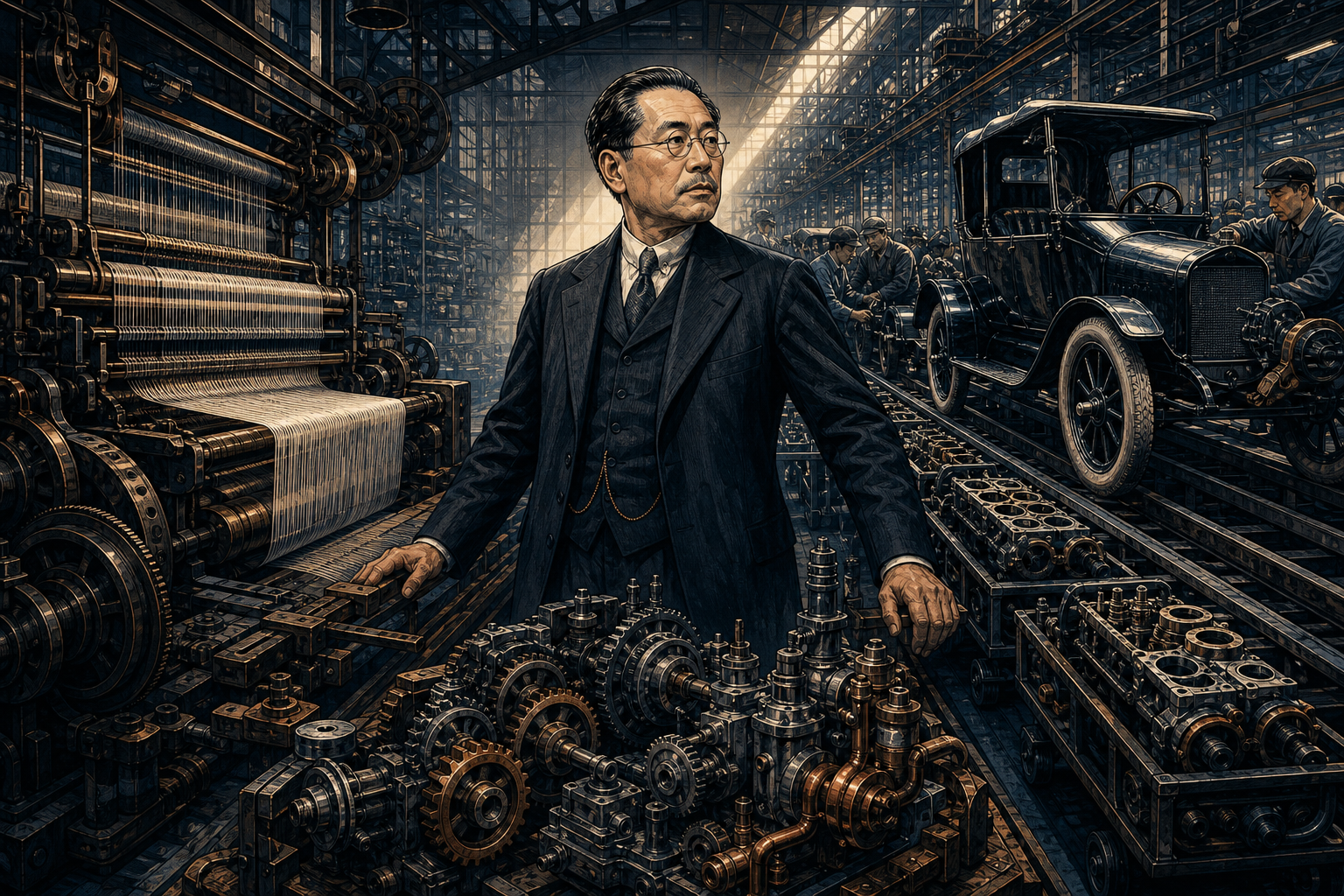
Kiichiro Toyoda inherited a textile machinery enterprise and chose to risk its strength on an industry Japan had not yet mastered. The company he created would eventually teach the world a different way to manufacture.
Toyota’s production system is usually associated with later architects such as Taiichi Ohno and Eiji Toyoda. Kiichiro’s role came earlier. He established the automobile venture, insisted that parts should arrive when needed, and confronted the brutal constraint of building vehicles without American scale or capital.
Why did Kiichiro Toyoda leave a successful loom business for cars?
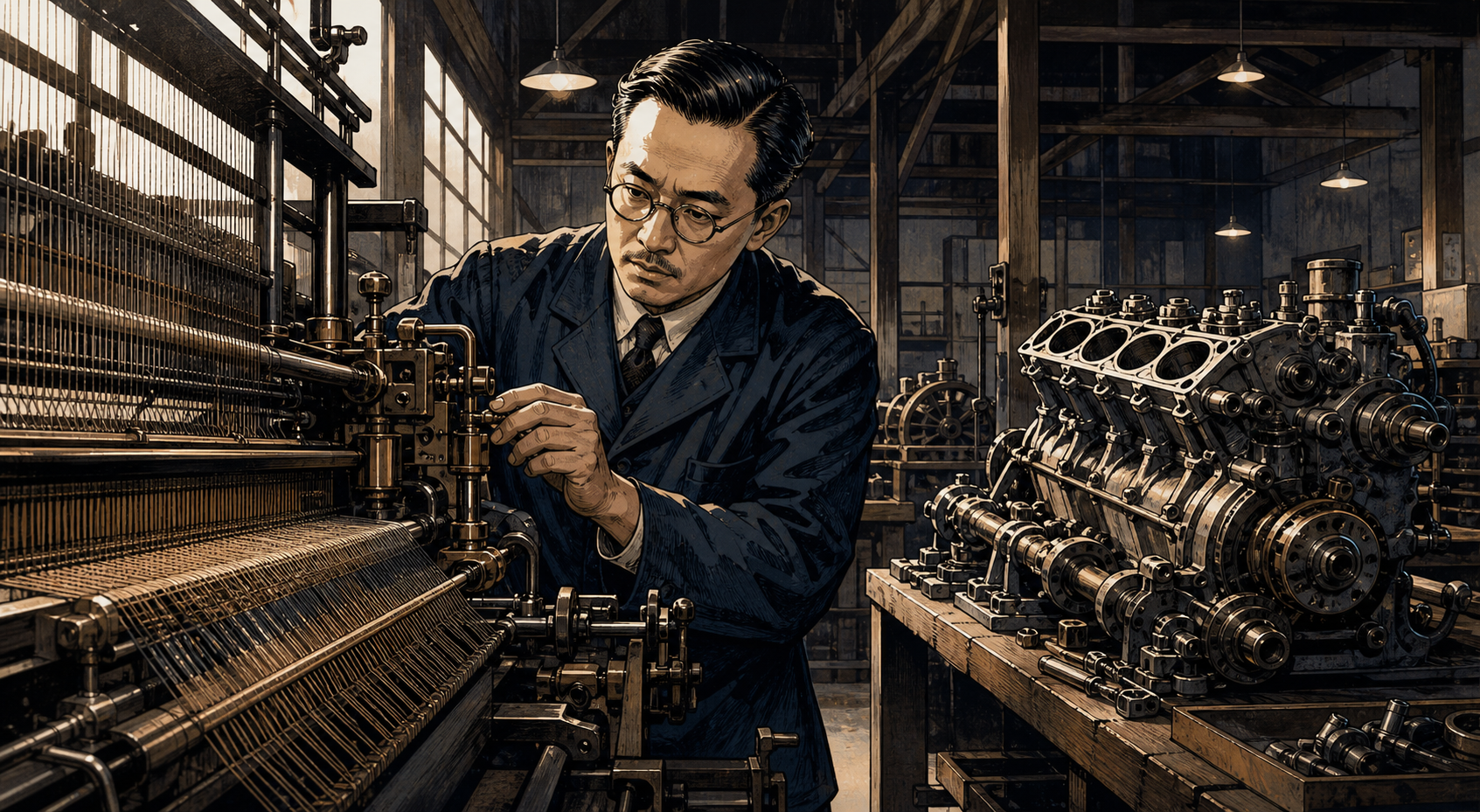
Kiichiro was born in 1894, the son of inventor Sakichi Toyoda. The family’s automatic loom business was built on practical engineering: detect a broken thread, stop the machine, and prevent defective cloth from multiplying. That principle—equipment should expose abnormalities rather than hide them—would later echo through Toyota manufacturing.
Revenue from textile machinery, including rights associated with Sakichi’s loom technology, helped fund Kiichiro’s automotive ambitions. He studied engines, production methods, and overseas factories at a time when foreign manufacturers dominated Japan’s young automobile market.
An automobile division began within Toyoda Automatic Loom Works in the 1930s. Engineers reverse-engineered components, experimented with materials, and developed passenger cars and trucks. Toyota Motor Company was established as a separate business in 1937.
The move was not a clean leap from one finished technology to another. Japan lacked a mature supplier network, deep automotive expertise, and the vast demand that supported American mass production. Kiichiro had to build a company and an industrial ecosystem simultaneously.
How did scarcity shape Toyota’s just-in-time idea?
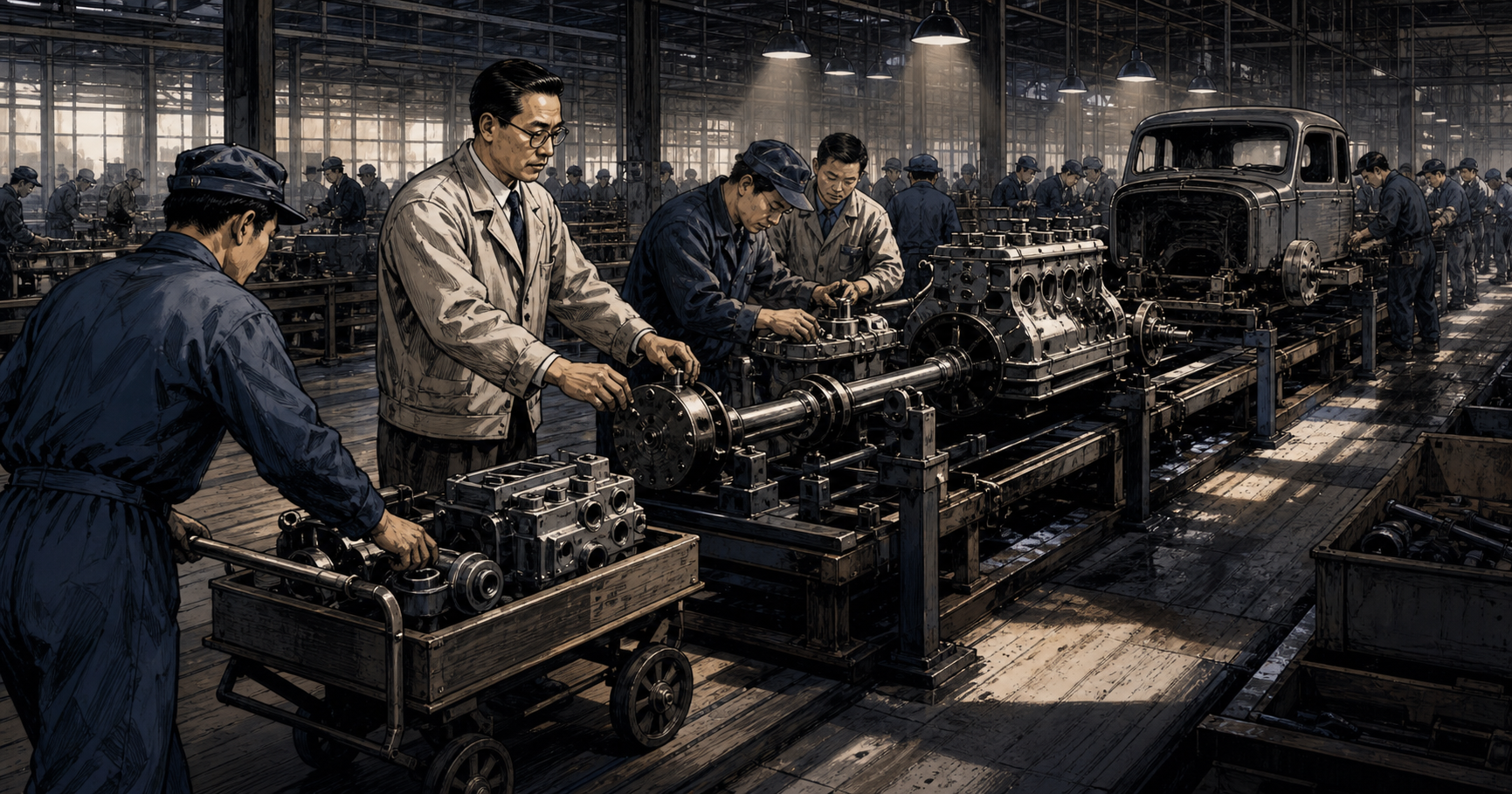
Large inventories conceal problems but require cash, floor space, and confidence that forecasts are right. Toyota had little room for any of those luxuries. Kiichiro argued that production processes should receive the necessary parts in the necessary quantity at the necessary time.
This was the seed of just-in-time. It did not mean running a fragile factory with no buffers by decree. It meant linking processes so actual need pulled work forward, exposing delays, defects, and imbalances that excess inventory would mask.
The approach required coordination across machining, assembly, transport, and suppliers. A late or defective component became immediately visible. That visibility was uncomfortable, but it created pressure to solve causes rather than accumulate protective stock forever.
World War II forced production toward trucks, and the postwar economy brought shortages, inflation, labor conflict, and weak demand. Toyota’s survival depended on conserving resources while learning to produce a greater variety of vehicles in smaller volumes than American plants.
What did Kiichiro leave after Toyota’s postwar crisis?
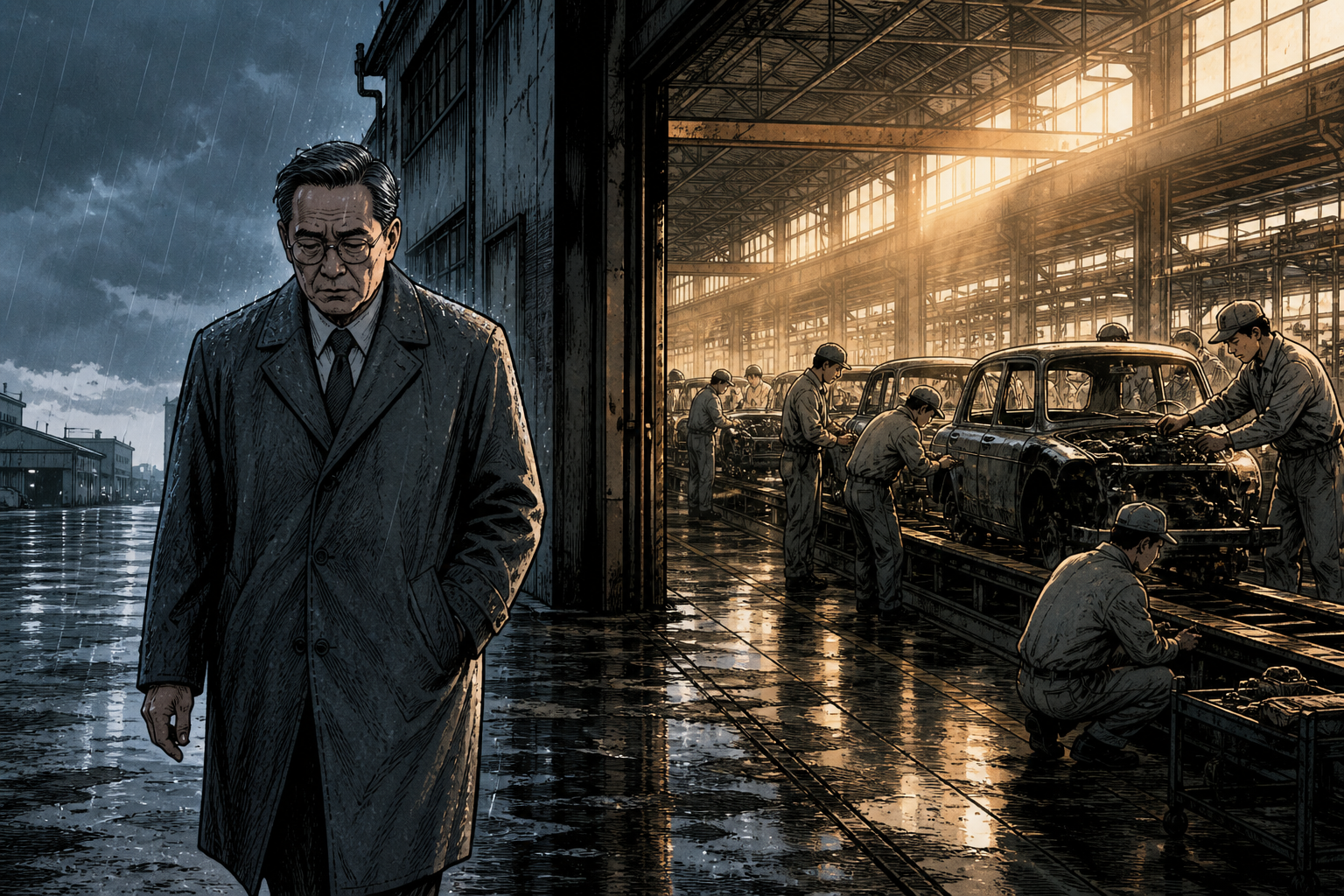
In 1950, a financial crisis forced Toyota to separate sales and manufacturing activities and reduce employment. A major labor dispute followed. Kiichiro resigned as president, accepting responsibility in an effort to resolve the conflict. He died in 1952 before returning to lead the company.
His ideas continued without him. Later leaders and engineers developed the Toyota Production System through pull signals, standardized work, continuous improvement, built-in quality, supplier development, and relentless observation of the factory floor.
Toyota’s later global scale can make its origins look inevitable. They were not. The early company nearly failed, and just-in-time emerged from constraint rather than abundance. The system succeeded because it joined technical methods with management behavior: problems had to be visible, people needed authority to respond, and improvement had to repeat every day.
Kiichiro Toyoda’s legacy is therefore larger than founding an automaker. He connected the logic of an automatic loom to the flow of a vehicle factory and treated scarce capital as a reason to synchronize work. The empire that followed was built not by copying the biggest factories, but by asking what a smaller, resource-constrained producer had to learn to survive.
💡 Key Insights
- ▸ A successful core business can finance a more uncertain adjacent industry when technical capabilities transfer.
- ▸ Capital scarcity can become an operating discipline rather than a permanent disadvantage.
- ▸ Flow improves when production responds to actual downstream need instead of optimistic forecasts.
- ▸ A founder's most durable product may be the questions embedded in the operating system.