Marc Lore: The Serial Commerce Bets Behind Jet.com, Walmart, and Wonder
Marc Lore repeatedly sold ambitious commerce companies, challenged Amazon, and kept returning to the hardest problem in retail: changing unit economics.
View all stories about this mogul
Marc Lore keeps returning to businesses where the spreadsheet says no.
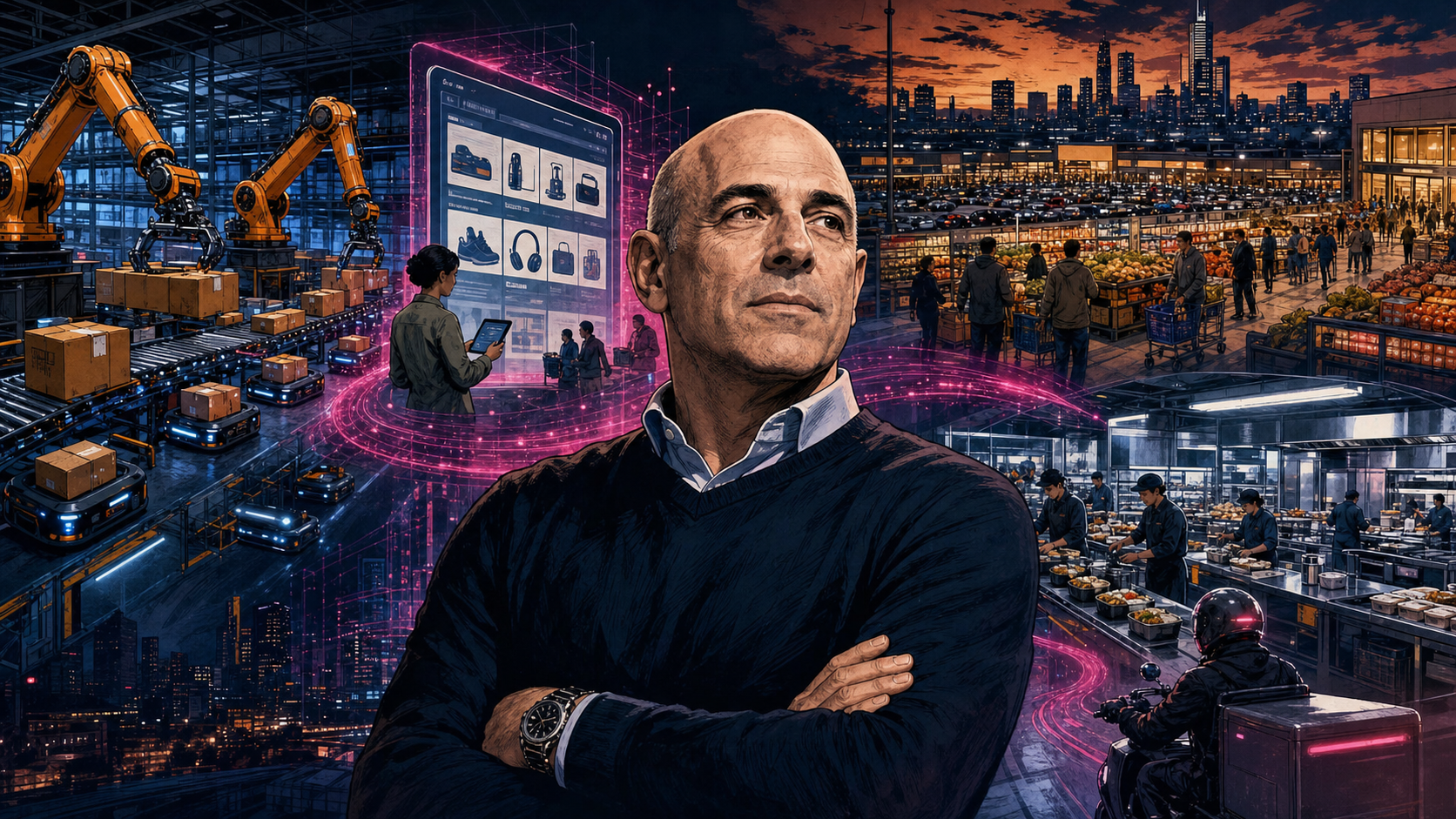
Diapers delivered cheaply. A new marketplace taking on Amazon. Restaurants rebuilt as delivery infrastructure. Each idea attacks convenience by reorganizing inventory, software, labor, and logistics. Each also carries the same threat: growth can look magnificent while every order loses money.
Lore’s career moved through The Pit, Quidsi, Jet.com, Walmart, and Wonder. The companies differ, but the operating obsession is consistent. He searches for a structural equation—basket size, routing, automation, assortment, density—that can make an apparently impossible consumer promise economical at scale.
How Did Diapers.com Teach the Cost of Convenience?

Lore co-founded Quidsi, best known for Diapers.com, with Vinit Bharara. Bulky, low-margin products were a punishing category for e-commerce, but they were also predictable, urgent, and frequently reordered. Parents valued reliability enough to form strong habits.
Quidsi invested in warehouses, automation, customer service, and fast delivery. It expanded into adjacent sites for household, beauty, and pet products. The operational knowledge became the asset: how to pick, pack, route, and retain customers in categories where shipping could erase profit.
Amazon acquired Quidsi in 2010 after intense competition. Accounts of the period describe aggressive price pressure that made independence harder. For Lore, the outcome delivered capital and a close view of how a dominant platform uses scale.
It also created the founding premise for Jet.com: Amazon could be challenged if a marketplace made the economics of each shopping basket visible and rewarded customers for choices that lowered fulfillment cost.
Why Was Jet.com More Than an Amazon Clone?

Jet launched in 2015 with enormous funding and an ambitious pricing engine. Discounts could change depending on which items were purchased together, where inventory sat, whether the buyer waived returns, and how the order could be fulfilled. The interface tried to convert hidden logistics savings into visible consumer savings.
The original membership model changed quickly, but Jet’s growth and talent attracted Walmart. In 2016, Walmart agreed to buy the company for roughly $3.3 billion in cash and stock. The price was not just for revenue. Walmart was buying technology, a founder, a team, and urgency in its contest with Amazon.
Lore led Walmart’s U.S. e-commerce operation. The retailer accelerated online assortment, pickup, delivery, and digitally native acquisitions. Jet’s own brand was eventually discontinued, yet Walmart emerged with a much stronger e-commerce posture.
That outcome complicates the usual acquisition scorecard. A purchased product can disappear while the strategic capabilities it catalyzed survive.
Can Wonder Rewrite the Restaurant Stack?

After Walmart, Lore turned to food. Wonder began with mobile kitchens designed to finish meals near customers, then shifted toward physical locations combining multiple restaurant concepts, pickup, dine-in, and delivery. It also expanded through major acquisitions, including meal-kit and restaurant-delivery assets.
The thesis is broader than another delivery app. Traditional platforms connect restaurants, couriers, and consumers but control little of food production. Wonder seeks more control over menus, kitchen workflows, procurement, technology, and the customer experience.
Control can improve consistency and contribution margin, but it creates fixed costs. Kitchens need real estate, equipment, staff, utilization, and local density. Acquisitions add brands and demand while multiplying integration risk.
Lore is again betting that software plus operational redesign can change the unit economics of convenience. The bet is credible because of his history—and dangerous for exactly the same reason. Prior success can attract enough capital to test a thesis at enormous scale before the evidence is conclusive.
The Real Lesson
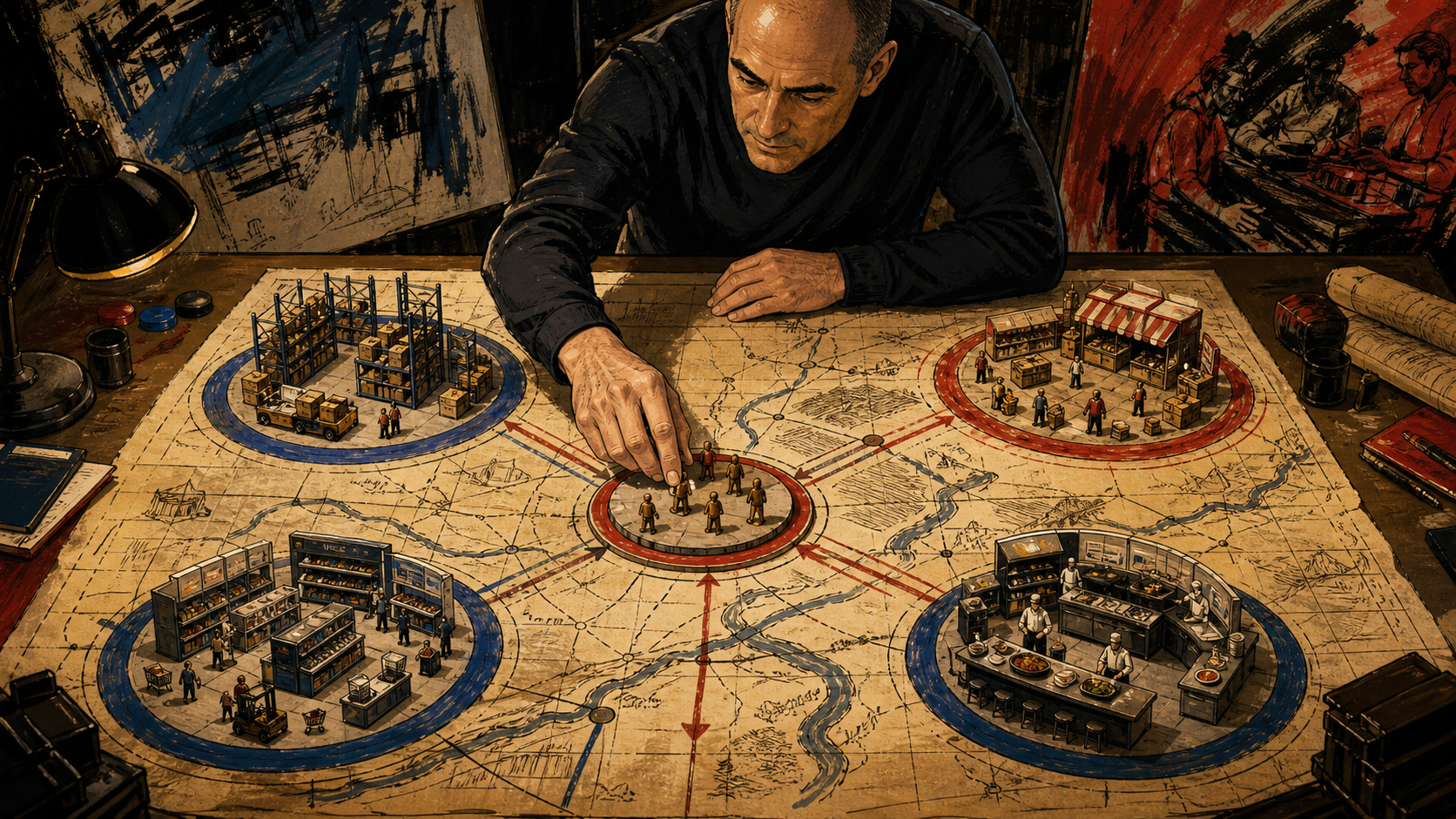
Lore’s career is a case study in serial-founder compounding. He carries forward recruiting networks, investor trust, acquisition experience, and a mental model of retail costs. The next company begins with assets the first founder did not have.
But the deeper pattern is his refusal to treat consumer convenience as magic. Every promise—low price, fast delivery, broad choice—must be paid for by inventory placement, labor productivity, basket density, supplier terms, or capital.
The real lesson is not that bold commerce startups always work. It is that the most defensible consumer experiences emerge when someone finds a better economic structure underneath them. Lore’s bets remain fascinating because he keeps trying to rebuild that structure, even when the spreadsheet initially says it cannot be done.
💡 Key Insights
- ▸ Serial founders reuse accumulated market knowledge, networks, and credibility—not just ideas.
- ▸ A price advantage is only durable when fulfillment and basket economics support it.
- ▸ Acquisitions can buy talent and strategic urgency even when the acquired brand disappears.
- ▸ Vertical integration creates differentiation and an unforgiving fixed-cost burden.