The Ice King's Fall: Nirav Modi, India's Diamond Dream, and the $2 Billion Heist
Nirav Modi didn't just sell diamonds; he sold a dream of unparalleled luxury and Indian ambition on the global stage. But beneath the dazzling façade of celebrity endorsements and glittering boutiques lay a colossal $2 billion bank fraud that would shake India's financial foundations and turn a billionaire mogul into an international fugitive.
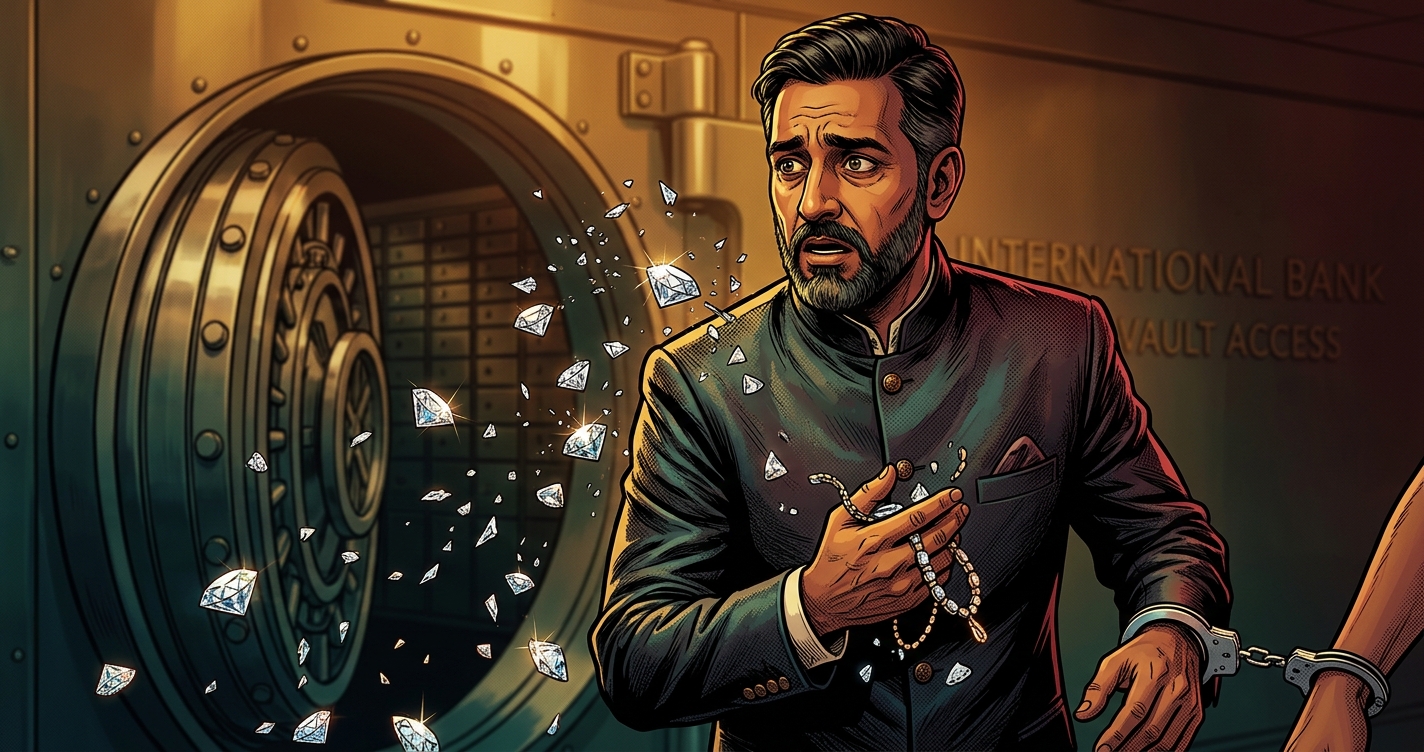
View all stories about this mogul
💎 Chapter 1: The Glittering Promise of India’s Bling Boom

Picture this: It’s the early 2000s, and India is roaring. Not just rumbling, but full-throated, chest-thumping, “we’re here to play” roaring. The economy is shedding its socialist skin, globalization is a fresh breeze, and a new breed of Indian entrepreneur is looking beyond the dusty bazaars to the glittering avenues of New York, London, and Paris. This isn’t just about software engineers and call centers anymore; this is about luxury. This is about proving that India, the ancient land of maharajas and legendary jewels, could not only cut and polish the world’s finest diamonds but also design, brand, and sell them to the global elite.
The diamond industry, particularly, was undergoing a seismic shift. For decades, India had been the world’s cutting and polishing powerhouse, the anonymous engine room behind the dazzling displays in Fifth Avenue windows. But the ambition was growing, like a nascent sparkle in an uncut stone. Why just be the craftsman when you could be the artist? Why just supply when you could own the narrative? This was the fertile ground, the diamond-dust-filled air, that would give rise to Nirav Modi, a name that would, for a brief, blinding moment, encapsulate this audacious new Indian dream. He wasn’t just going to sell diamonds; he was going to sell aspiration, draped in platinum and set with stones that whispered exclusivity. He was going to carve out a niche where Indian luxury wasn’t just good enough; it was the standard. The stage was set, the spotlights were warming up, and the world was about to be introduced to a new kind of diamond king.
✨ Chapter 2: The Scion’s Sparkle – Enter Nirav Modi

Okay, so let’s rewind a bit. Every epic saga needs an origin story, and Nirav Modi’s begins not with a bang, but with the quiet hum of diamond-cutting wheels in Antwerp, Belgium. Born into a long lineage of diamantaires, the man was practically genetically predisposed to the sparkle. His grandfather had been a pioneering figure in the Indian diamond trade, venturing to Antwerp when it was the undisputed global hub. His father continued the legacy, and young Nirav, instead of chasing degrees, dropped out of Wharton (the prestigious business school) to dive headfirst into the family business in Mumbai. He was 19, restless, and clearly not cut out for the traditional academic grind. He wanted to get his hands dirty, or rather, diamond-dusty.
He started at the very bottom, learning the ropes from his uncle, Mehul Choksi, a name that will become increasingly significant as this story unfolds. Choksi, already a formidable figure in the diamond world, ran Gitanjali Gems, a major player. But Modi wasn’t content to merely inherit or assist. He had a vision, a glint in his eye that suggested he saw beyond the raw stone to the finished masterpiece, beyond the trade to the brand. He wanted to create something that wasn’t just about carat weight or clarity, but about artistry, emotion, and an unforgettable experience.
In 1999, he launched Firestar Diamond, focusing initially on supplying diamonds to major retailers globally. He mastered the intricacies of the wholesale trade, understanding the supply chain from mine to market. But the real game-changer came in 2010. That’s when he decided to shed the anonymity of the wholesaler and step into the dazzling, cutthroat world of luxury retail. He launched his eponymous brand, Nirav Modi, with a mission to create haute joaillerie that would rival the likes of Cartier and Tiffany. This wasn’t just about selling jewels; it was about selling a dream, a lifestyle, a piece of art that happened to be made of the most coveted stones on Earth. He was about to turn a family legacy into a global phenomenon, or so it seemed.
👑 Chapter 3: Crafting an Empire – The Nirav Modi Brand Ascendant

This is where Nirav Modi truly began to shine, transforming from a savvy diamantaire into a brand architect. He understood the power of aspiration better than most. While other Indian jewelers focused on intricate, traditional designs catering to the domestic market, Modi looked outwards. His vision was global, minimalist, and relentlessly modern, yet steeped in the timeless allure of exceptional craftsmanship. He wasn’t selling jewelry; he was selling wearable art, pieces that felt lighter, more fluid, almost magical in their construction. Think “Embrace” bangles that expand without a clasp, or “Constellation” necklaces where diamonds seemingly float on the skin.
He wasn’t just designing jewels; he was curating an image. His flagship boutiques were not mere stores; they were opulent temples of luxury. Imagine walking into a Nirav Modi salon in New York’s Madison Avenue, or London’s Old Bond Street, or Hong Kong’s Elements mall. The air was thick with quiet opulence, the lighting strategically designed to make every diamond sing, the service impeccable. These weren’t just transactions; they were experiences designed to make you feel like you were stepping into a different echelon of society.
Then came the celebrity endorsements, the ultimate accelerant for a luxury brand. Hollywood stars like Naomi Watts and Dakota Johnson graced red carpets dripping in Nirav Modi creations. Bollywood icon Priyanka Chopra became a global brand ambassador, her radiant smile synonymous with his sparkling jewels. These aren’t just pretty faces; they’re walking, talking billboards of aspiration. When a global icon wears your million-dollar necklace, it tells the world: this brand is legitimate, this brand is desirable, this brand belongs. He even became the first Indian jeweler to be featured on the cover of Christie’s catalog, a venerable institution in the art and auction world, for selling a magnificent Golconda diamond necklace.
“Nirav Modi understood that true luxury wasn’t just about the biggest rock, but about the story, the artistry, and the feeling of owning something utterly unique and effortlessly elegant.”
The press loved him. Feature articles gushed about his meteoric rise, his innovative designs, his shrewd business acumen. He was lauded as a visionary, a man who had put Indian luxury on the global map. His personal fortune soared, landing him on Forbes’ list of billionaires. He became the poster child for a new, confident India, one that could compete with the world’s best, not just in technology, but in the most exclusive echelons of taste and glamour. But beneath the dazzling veneer of success, a different kind of architecture was being built – one not of diamonds and platinum, but of intricate financial deception.
🎭 Chapter 4: The Glittering Illusion – Building the House of Cards
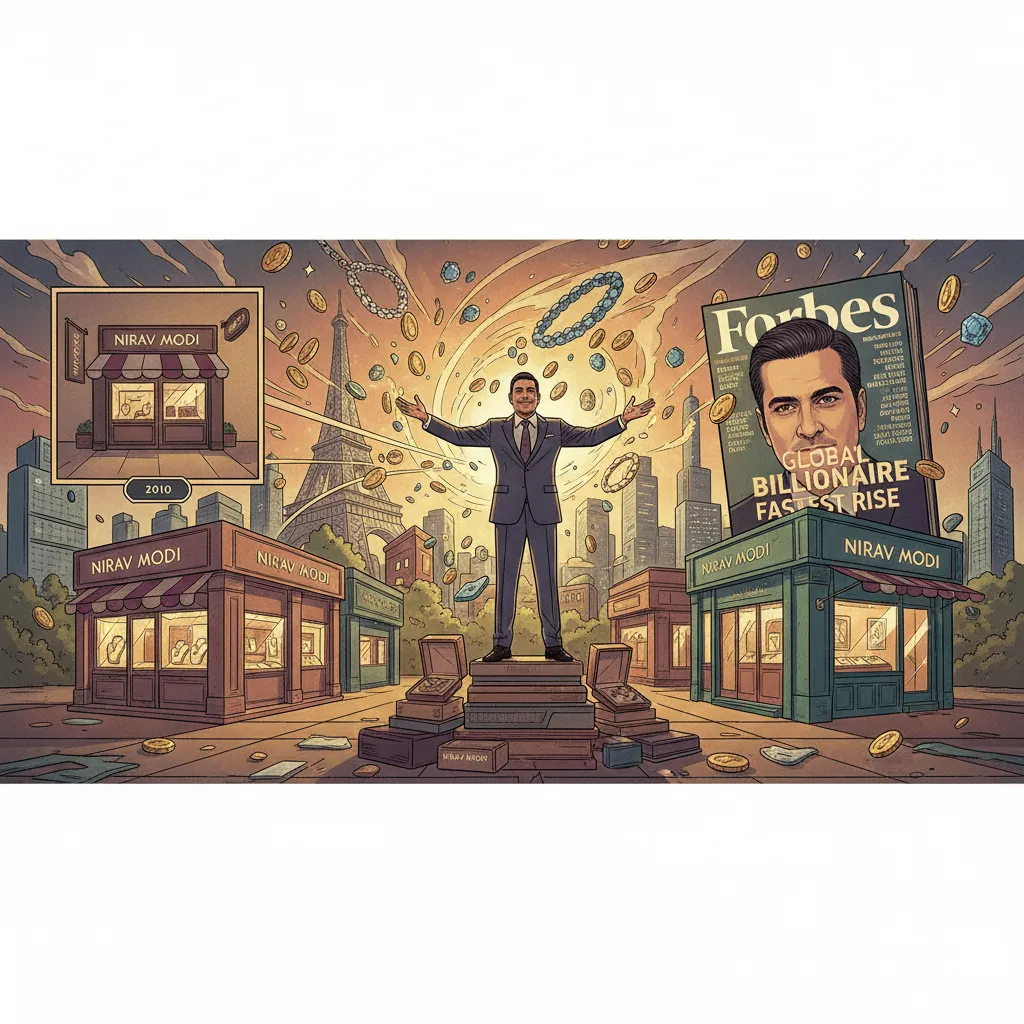
The rapid expansion of the Nirav Modi empire was nothing short of astonishing. From a single brand launch in 2010 to global boutiques and Forbes list recognition in a few short years, it was a growth trajectory that seemed almost too good to be true. And, as is often the case in these stories, it was. The luxury industry, particularly high-value jewelry, demands immense capital. You’re dealing with raw materials worth millions, inventory that sits for months, and a slow sales cycle even for the most exclusive pieces. How did Modi fund this breathtaking acceleration?
This is where we pull back the velvet curtain and peer into the less glamorous, but far more critical, world of international trade finance. The instrument at the heart of the alleged scam was the Letter of Undertaking (LoU). Now, don’t let the bureaucratic name fool you; in legitimate trade, an LoU is a powerful tool. Think of it as a bank guarantee. When an Indian importer (say, Modi’s companies) wants to buy diamonds from an overseas supplier, they can approach their bank in India (in this case, Punjab National Bank, or PNB). PNB, if it trusts the importer, issues an LoU to a foreign bank. This LoU is essentially a promise: “We, PNB, guarantee that if Modi’s company defaults on payment for these diamonds, we will pay you, the foreign bank, on their behalf.”
This guarantee allows the foreign bank to then extend short-term credit to Modi’s overseas suppliers, who then release the diamonds to Modi’s companies. It’s a system built on trust and inter-bank relationships, designed to facilitate international trade by mitigating payment risk. It’s supposed to be backed by collateral from the importer (Modi), and recorded meticulously in the bank’s core banking system.
But here’s the kicker: For an LoU to be issued, it needs to go through the proper channels. It needs to be entered into the bank’s core banking software, verified, collateralized, and approved. This is where the house of cards began to be constructed, brick by invisible brick. The brilliance, and ultimately the downfall, of the alleged scheme lay in its simplicity, its audacity, and the exploitation of glaring systemic weaknesses. Modi and his associates, it is alleged, found a way to bypass these critical safeguards, turning a legitimate financial instrument into a weapon of grand larceny. The stage was being set for a financial earthquake that would leave India’s banking sector reeling.
💣 Chapter 5: The Architect of Deceit – The PNB Fraud Unravels

The alleged fraud, at its core, was a masterclass in exploiting a critical vulnerability between an antiquated internal banking system and a modern global messaging network. Imagine a high-tech superhighway (the SWIFT network) connecting banks worldwide, running parallel to a dusty, rarely checked backroad (PNB’s internal core banking system). The alleged conspirators found a way to send messages on the superhighway without ever logging them on the backroad.
Here’s how it reportedly worked, chillingly simple in its execution: At the heart of the operation was a small, unassuming branch of Punjab National Bank in Mumbai’s Brady House. This branch, nestled in the bustling financial hub, was supposedly where the magic, or rather, the mayhem, happened. Two long-serving PNB employees, Gokulnath Shetty, a Deputy Manager, and Manoj Kharat, a single-window operator, were allegedly key players. These individuals, trusted by the bank, allegedly abused their positions for years.
The modus operandi was to issue fraudulent Letters of Undertaking (LoUs) and Foreign Letters of Credit (FLCs) on behalf of Nirav Modi’s companies and those of his uncle, Mehul Choksi’s Gitanjali Group. But here’s the crucial part: these LoUs were issued without any collateral, without following due process, and most damningly, without being recorded in PNB’s central core banking system (CBS).
Instead, Shetty and Kharat allegedly used their SWIFT terminals to directly send messages to overseas banks, primarily branches of Indian banks like Allahabad Bank and Union Bank of India in places like Hong Kong and Dubai. These messages, purporting to be legitimate LoUs from PNB, guaranteed payment for diamond imports by Modi’s and Choksi’s firms. Since the SWIFT messages originated from PNB’s official terminal, the foreign banks, trusting the system, would then extend credit to Modi’s companies.
“The genius of the PNB fraud wasn’t in its complexity, but in its audacious simplicity: bypassing core systems by exploiting trusted insiders and the blind faith in the SWIFT network.”
Because these transactions were never entered into PNB’s internal CBS, there was no digital paper trail, no alarm bells ringing. PNB’s senior management and audit teams were completely unaware of the billions of dollars in guarantees being issued in the bank’s name. It was a classic “ghost in the machine” scenario, a massive shadow ledger operating entirely outside official view. The money obtained through these fraudulent LoUs was then allegedly rotated through a labyrinthine network of shell companies, often used to pay off older, maturing fraudulent LoUs – a classic Ponzi scheme structure, but on an inter-bank, international scale. This elaborate deception allegedly continued for over seven years, from 2011 to 2018, growing bolder and bigger with each successful bypass, until the entire edifice finally, spectacularly, crumbled.
📉 Chapter 6: The $2 Billion Black Hole – The Scale of the Scam
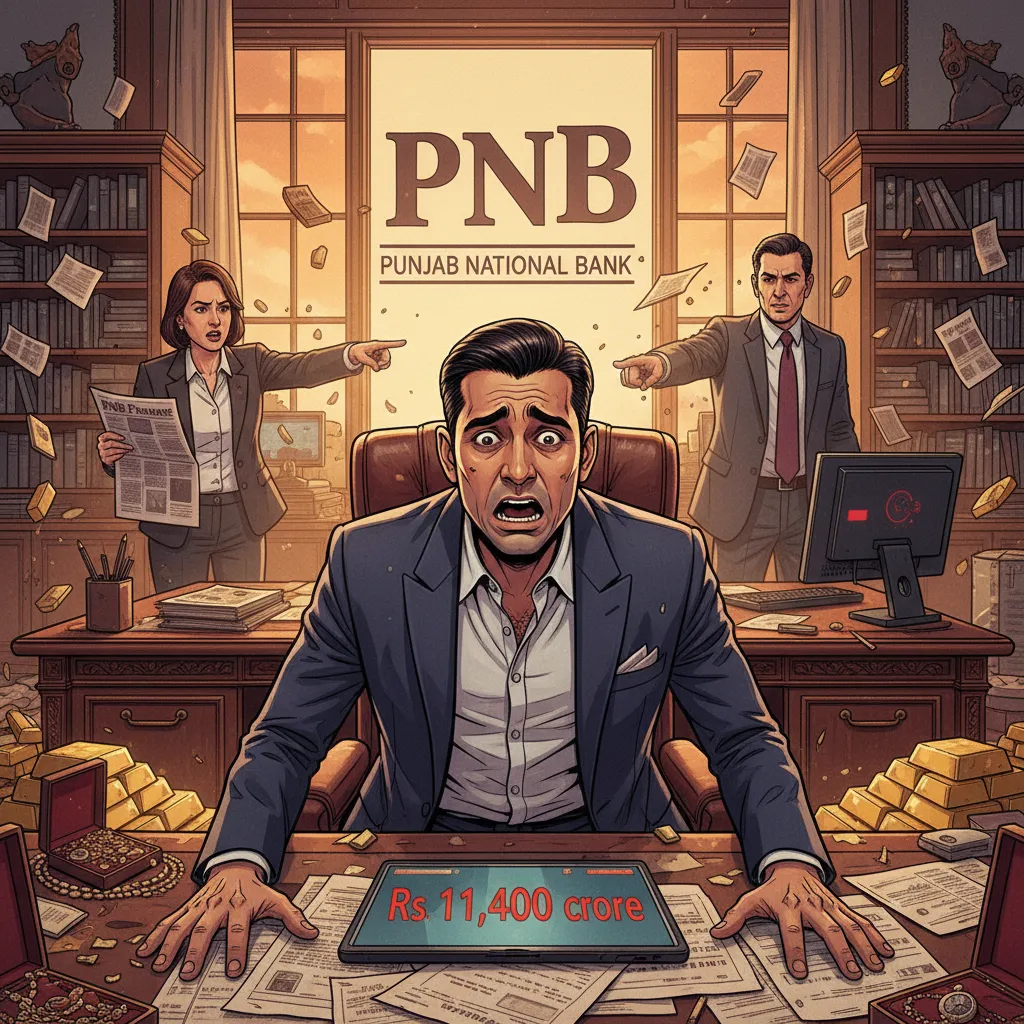
When the lid finally blew off the Punjab National Bank (PNB) fraud in early 2018, the numbers were staggering. Rs 11,400 crore. That’s approximately $2 billion USD at the time, making it the largest banking fraud in India’s history. Two billion dollars. Let that sink in. This wasn’t petty cash, this wasn’t a few rogue transactions. This was an industrial-scale financial engineering project, allegedly designed to siphon off public money through the veins of the international banking system.
The immediate impact on PNB was catastrophic. The bank, India’s second-largest state-owned lender, found itself staring down a gaping black hole of liability. It was suddenly responsible for honoring these fraudulent Letters of Undertaking (LoUs), which it had no record of, to other banks that had extended credit based on PNB’s purported guarantee. PNB’s stock plummeted, wiping out billions in market value. Its reputation, built over more than a century, was in tatters. Confidence in India’s public sector banks, already under scrutiny for non-performing assets, took a massive hit.
The fallout reverberated across the Indian financial sector. Other banks that had unknowingly participated in extending credit based on the fraudulent LoUs, such as Allahabad Bank and Union Bank of India, also faced significant losses and had to make provisions for bad loans. The Reserve Bank of India (RBI), the country’s central bank, came under intense pressure to explain how such a massive, years-long fraud could have gone undetected. The incident exposed deep-seated vulnerabilities: a lack of integration between SWIFT and core banking systems, insufficient oversight, and a culture of complacency within some public sector banks.
“The $2 billion PNB fraud wasn’t just a number; it was a punch to the gut of India’s financial integrity, exposing the chilling cost of unchecked ambition and systemic negligence.”
The scale of the fraud wasn’t just about the money; it was about the audacity. For seven years, a handful of individuals, allegedly aided by a diamond mogul and his associates, managed to exploit a system that was supposed to be robust, secure, and sacrosanct. They allegedly borrowed from Peter to pay Paul, using fresh fraudulent LoUs to settle maturing ones, maintaining the illusion of legitimate trade. The sheer volume of transactions, the intricate web of shell companies, and the deliberate exploitation of human and technological loopholes painted a picture of a criminal enterprise operating with chilling precision and unbridled greed. The glittering empire of Nirav Modi was revealed to be nothing but a mirage, built on a foundation of stolen billions. The dream had become a nightmare, and the stage was now set for the ultimate vanishing act.
💨 Chapter 7: The Grand Escape – Vanishing Act

The clock was ticking. As is often the case with elaborate financial schemes, the illusion could only be maintained for so long. The alleged Ponzi scheme of LoUs, constantly needing new “borrowings” to pay off old ones, was becoming unsustainable. Auditors, internal and external, were starting to ask tougher questions. The first whispers of trouble began to surface in late 2017, when Nirav Modi’s companies, facing maturing LoUs, reportedly approached Punjab National Bank (PNB) for fresh guarantees. But this time, the new PNB official in charge of the foreign exchange department, who had replaced the allegedly compromised Gokulnath Shetty (who had retired in May 2017), refused to issue new LoUs without proper collateral and without them being recorded in the CBS.
This refusal triggered a chain reaction. Suddenly, the wellspring of illicit credit dried up. The overseas banks, holding PNB’s guarantees, began demanding payment as old LoUs matured. With no new fraudulent LoUs to pay them off, the game was up. PNB launched an internal inquiry, and the magnitude of the alleged fraud slowly, horrifyingly, began to emerge.
But by the time PNB officially filed its first complaint with the Central Bureau of Investigation (CBI) on January 29, 2018, alleging a fraud of Rs 280 crore (which would soon balloon to $2 billion), Nirav Modi was already gone.
He had allegedly slipped out of India on January 1, 2018, weeks before the scandal broke publicly. His uncle, Mehul Choksi, followed suit a few days later, on January 4, 2018. It was a perfectly timed, almost theatrical exit. One day, a billionaire jeweler gracing the covers of magazines, hobnobbing with celebrities; the next, a phantom, leaving behind a trail of shattered trust and a colossal financial mess.
His flight sent shockwaves through India. How could a high-profile individual, whose companies were already under some scrutiny, simply walk out of the country when such a massive financial irregularity was brewing? It sparked outrage, accusations of political patronage, and a national debate about the effectiveness of India’s financial surveillance and law enforcement agencies. The image of the “economic offender” escaping justice became a potent symbol of a system that seemed to protect the powerful while punishing the poor. The diamond king had shed his crown, traded his bespoke suits for anonymity, and embarked on a new, far less glamorous, journey: that of an international fugitive. The hunt was on.
🕵️ Chapter 8: The Global Manhunt – From Billionaire to Fugitive
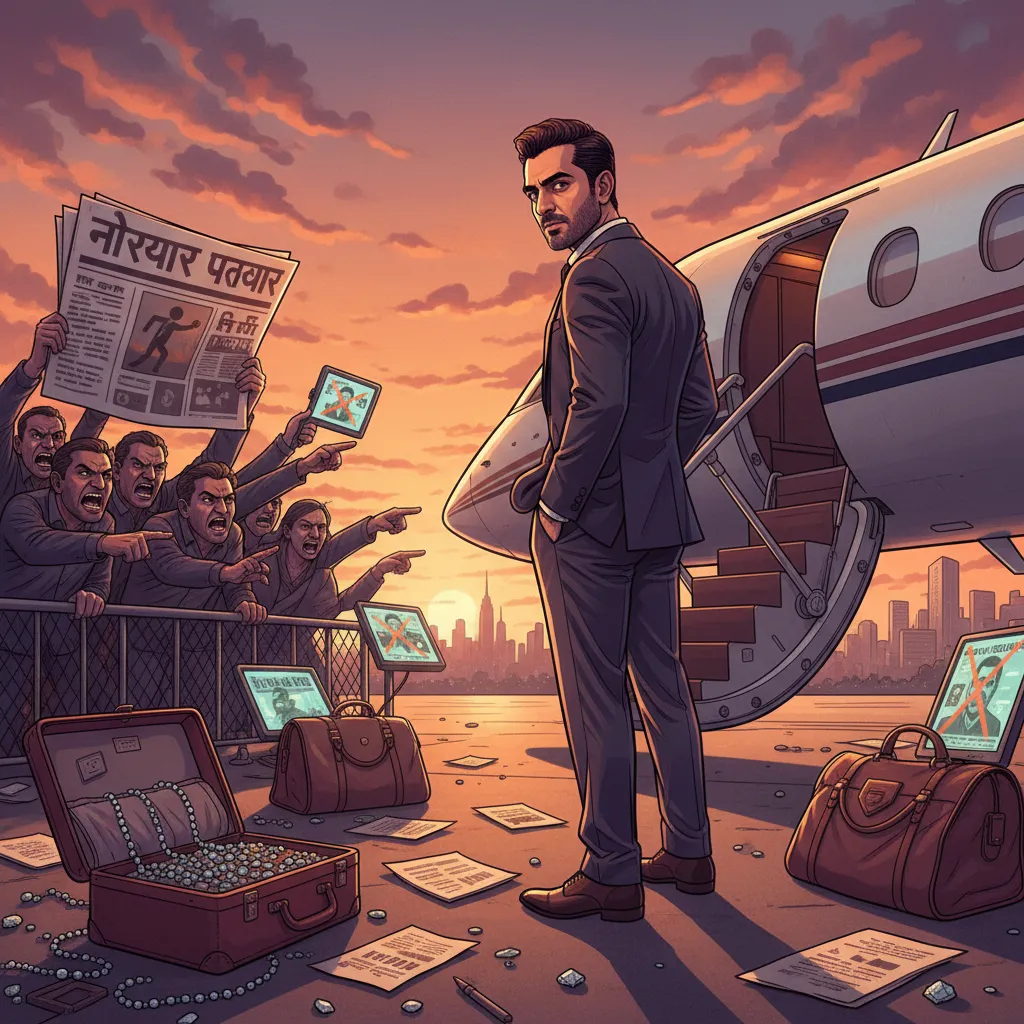
The moment Nirav Modi’s alleged vanishing act became public, the narrative flipped entirely. The man once celebrated as an Indian success story was now branded a “fugitive economic offender.” The Indian government, facing immense public pressure, launched a relentless pursuit. The Central Bureau of Investigation (CBI) and the Enforcement Directorate (ED), India’s premier investigative agencies, swung into action, initiating multiple cases of fraud and money laundering.
The first step was to secure an Interpol Red Corner Notice (RCN) against Modi, essentially a global alert requesting law enforcement worldwide to locate and provisionally arrest a person pending extradition, surrender, or similar legal action. The RCN was issued in June 2018, turning Modi from a domestic runaway into an internationally wanted man. Assets belonging to him and his companies in India and abroad were attached and seized, including properties, bank accounts, and, ironically, some of his famous diamond jewelry.
The trail eventually led to the United Kingdom, a common refuge for many individuals fleeing legal troubles in India. Reports began to surface in late 2018 and early 2019 suggesting Modi was living openly in London, residing in a luxurious apartment, and even attempting to set up a new diamond business. This infuriated the Indian public and government alike. How could a man accused of such a massive fraud be living a seemingly normal, albeit discreet, life in one of the world’s major financial capitals?
“The global manhunt for Nirav Modi wasn’t just about justice; it was a test of international cooperation, a high-stakes game of legal chess played across continents.”
The pressure mounted. Indian authorities formally requested Modi’s extradition from the UK. This initiated a complex and often protracted legal battle in the British courts. Extradition processes are notoriously slow, involving multiple levels of appeals and intricate legal arguments about human rights, prison conditions, and the sufficiency of evidence. It became a global spectacle, with every court hearing closely watched by media in both India and the UK.
Finally, in March 2019, following a tip-off, Nirav Modi was arrested in London. He was picked up from a bank in Holborn and appeared before Westminster Magistrates’ Court, where he was formally charged. He was denied bail, with the judge citing concerns about his ability to flee given his financial resources and the seriousness of the charges. The diamond king, once accustomed to private jets and opulent suites, found himself behind bars in Wandsworth Prison, a stark contrast to his former life of boundless luxury. The chase had ended, but the real legal battle was just beginning.
⚖️ Chapter 9: Life on the Lam – From London’s High Life to Prison Walls

The arrest of Nirav Modi in London marked a dramatic turning point, but it was far from the end of the story. His life on the lam, brief as it was, epitomized the audacious confidence of a man who believed he could outrun his past. Before his arrest, investigative journalists from The Telegraph famously tracked him down to a plush apartment in London’s West End, just a stone’s throw from Oxford Street. He was reportedly running a new diamond business, living under the radar but not entirely hidden. The images of him, sporting a handlebar mustache, wearing an ostrich-hide jacket, and nonchalantly refusing to answer questions, fueled public anger back in India. It painted a picture of a man who felt untouchable, even while accused of orchestrating a multi-billion-dollar fraud.
His arrest and subsequent incarceration in Wandsworth Prison brought a jarring dose of reality. From the glittering world of haute joaillerie, private viewings, and celebrity galas, Modi was plunged into the grim, stark reality of a maximum-security prison. His legal team immediately launched a vigorous defense against extradition, arguing on various grounds: the alleged political motivations behind the charges, the poor conditions in Indian prisons (specifically Mumbai’s Arthur Road Jail, where he was to be held), and his mental health.
The extradition hearings became a protracted legal saga, stretching for years in the UK courts. Each hearing was a public battle of wills, with Indian prosecutors presenting mountains of evidence and Modi’s defense lawyers meticulously scrutinizing every detail. The arguments often delved into the specifics of Indian law, the nature of the fraud, and whether there was a prima facie case against him. Modi himself appeared via video link from prison, a shadow of his former glamorous self.
His repeated bail applications were consistently denied by UK courts, who deemed him a significant flight risk, citing his access to vast resources and his prior escape from India. The judges meticulously detailed the gravity of the charges, the alleged scale of the fraud, and the strong evidence presented by the Indian authorities.
“From a penthouse in London to a cell in Wandsworth, Nirav Modi’s journey laid bare the brutal reality that even the most powerful moguls are not above the long arm of the law, however long it takes to reach them.”
Finally, in February 2021, a UK court ruled that Nirav Modi did indeed have a case to answer and that he could be extradited to India. District Judge Samuel Goozee stated that there was “ample evidence of a conspiracy to defraud” Punjab National Bank and that Modi had played a “central role” in the fraud. He dismissed arguments about Modi’s mental health and the conditions in Indian prisons, accepting assurances from the Indian government. Modi appealed this decision, fighting tooth and nail, but in December 2022, the High Court in London rejected his appeal, paving the way for his eventual extradition. As of early 2023, the last legal avenues for appeal in the UK were largely exhausted, bringing him ever closer to facing justice on Indian soil. The once-untouchable diamond king was now firmly within the grasp of the law, his fate seemingly sealed.
📈 Chapter 10: The Mogul’s Lessons – What Went Wrong (and Right for a Bit)
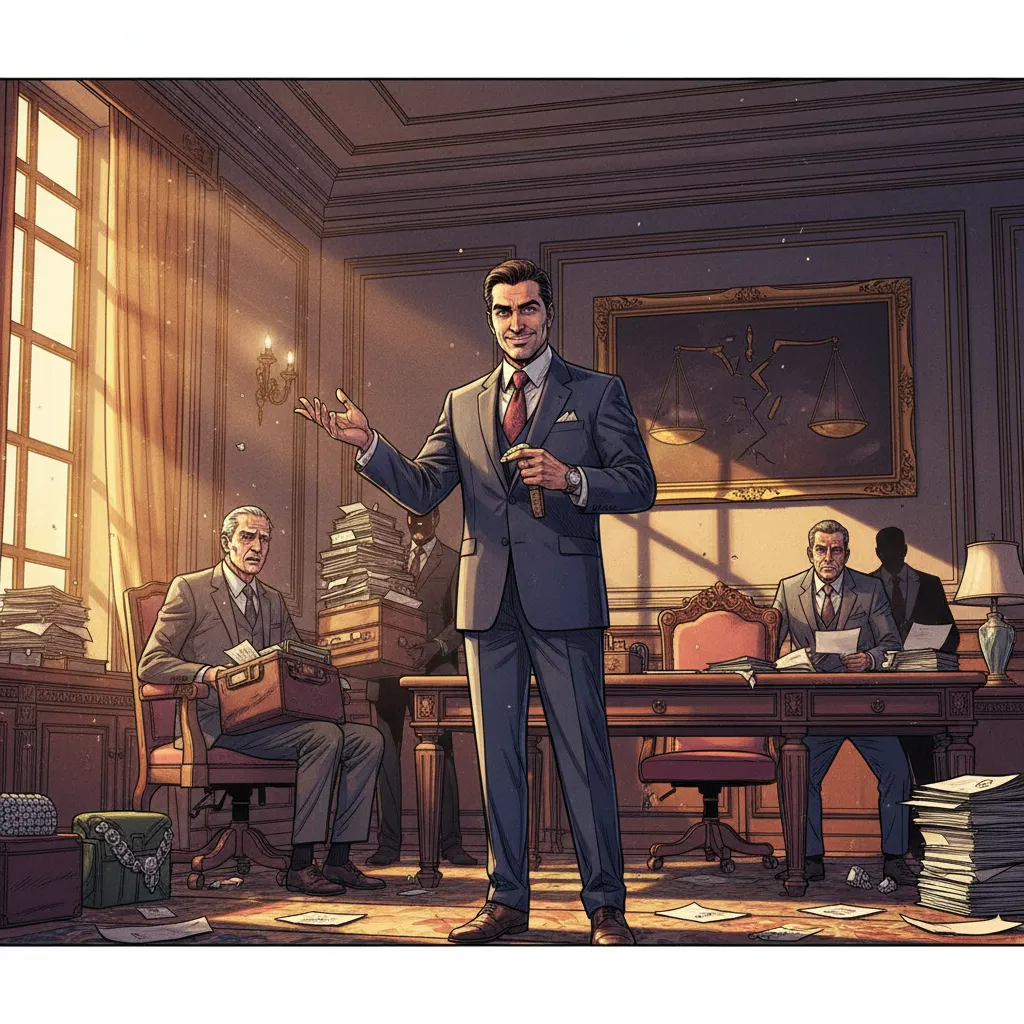
The saga of Nirav Modi is a masterclass in what goes wrong when ambition outpaces ethics, and when systemic weaknesses are exploited by ruthless opportunism. But it also offers critical insights for entrepreneurs, investors, and industry regulators.
1. The Allure of the Brand vs. The Reality of the Books: Modi’s initial success was undeniably brilliant. He built a global luxury brand from scratch, competing with centuries-old European houses. His genius lay in understanding aspiration, design, and celebrity power. This highlights that a compelling brand narrative and exceptional product can, for a time, mask fundamental financial irregularities. For entrepreneurs, the lesson is clear: build a robust brand, yes, but ensure its foundation is built on sound financial practices, not smoke and mirrors. For investors, never let the sparkle of a charismatic founder or a glamorous product blind you to the unsexy but vital due diligence of financial statements and internal controls.
2. Corporate Governance: More Than a Checkbox: The alleged fraud highlights catastrophic failures in corporate governance, both within Modi’s companies and at Punjab National Bank (PNB). Within Modi’s empire, there was allegedly a culture of deception and a complex web of shell companies designed to facilitate fraud and money laundering. At PNB, the failure was systemic: a lack of oversight, a bypass of core banking systems, and a failure to rotate employees in sensitive positions (like Gokulnath Shetty’s long tenure). This isn’t just about bad apples; it’s about a barrel left unguarded. Good governance isn’t a formality; it’s the bedrock of trust and sustainability.
3. The Perils of Unchecked Trust and Legacy Systems: The Achilles’ heel of the PNB fraud was the disconnect between the SWIFT messaging system and the bank’s core banking software. SWIFT was treated as a standalone, almost sacred, channel for international communication, while internal record-keeping was neglected. This created a perfect storm for fraud. The lesson for financial institutions is profound: integrate your systems, constantly audit them, and never assume that technology alone will prevent human malfeasance. Trust in employees must be balanced with rigorous checks and balances.
“Nirav Modi’s rise was a testament to brand building, his fall a brutal education in the fragility of trust and the absolute necessity of financial integrity.”
4. The Psychology of the ‘Mogul’: Modi embodied the archetype of the high-flying entrepreneur, seemingly unstoppable. These narratives can be intoxicating, leading to hero-worship that blinds stakeholders to potential red flags. The story reminds us that even the most celebrated figures can harbor dark secrets. For aspiring entrepreneurs, it’s a cautionary tale: true success is built on integrity, not just cleverness or charisma.
5. Regulatory Vigilance and Enforcement: The fraud exposed significant gaps in India’s regulatory framework and enforcement mechanisms. The sheer duration of the alleged fraud points to a need for more proactive and sophisticated financial surveillance. The subsequent actions by the RBI and government to tighten norms for LoUs and enhance inter-bank reconciliation are direct consequences of this painful lesson. This is a continuous battle; criminals will always look for new loopholes, and regulators must constantly adapt and evolve.
In essence, Nirav Modi’s saga is a vivid illustration that while the pursuit of wealth and grandeur can build empires, it’s the invisible pillars of ethics, transparency, and robust controls that determine if they stand the test of time, or crumble into a pile of shattered dreams and legal woes.
💥 Chapter 11: The Aftermath – Repercussions and Reforms

The Nirav Modi and Mehul Choksi fraud wasn’t just a scandal; it was an earthquake that rattled the foundations of India’s banking sector and forced a painful introspection. The repercussions were swift and far-reaching, leading to a flurry of reforms aimed at preventing such a catastrophic breach from ever happening again.
1. Tightening the Screws on LoUs: The Reserve Bank of India (RBI) immediately moved to overhaul the rules surrounding Letters of Undertaking (LoUs) and Letters of Credit (LCs). It mandated that all such transactions, even those routed through SWIFT, must be integrated with the core banking system (CBS) of the issuing bank. This effectively closed the critical loophole that Gokulnath Shetty and his alleged co-conspirators exploited. The RBI also restricted the issuance of LoUs, making them less common and requiring stricter collateral and scrutiny.
2. Enhanced Inter-Bank Reconciliation: The fraud highlighted a lack of robust reconciliation between inter-bank messages and internal records. The RBI pushed for more frequent and granular reconciliation processes, urging banks to cross-check SWIFT messages with their internal ledgers to detect discrepancies promptly. This aimed to bring transparency to the shadow ledger operations that allowed the fraud to fester for years.
3. Accountability and Personnel Changes: Punjab National Bank (PNB), reeling from the financial hit and reputational damage, initiated a massive internal cleanup. Senior executives were questioned, some were removed, and the bank undertook a comprehensive audit of its foreign exchange operations. The government also pushed for greater accountability in public sector banks, emphasizing performance metrics that went beyond mere lending to include robust risk management and fraud detection.
“The PNB fraud didn’t just expose a weakness; it ignited a firestorm of reform, forcing India’s banking system to confront its vulnerabilities head-on and rebuild trust, brick by digital brick.”
4. Asset Recovery and Legal Battles: Indian investigative agencies, primarily the Enforcement Directorate (ED) and the CBI, launched a massive asset recovery operation. Properties, bank accounts, luxury cars, paintings, and, of course, diamonds belonging to Modi and his associates, both in India and abroad, were attached and auctioned off. While recovering the full $2 billion is an arduous task, these efforts demonstrated the government’s resolve to claw back as much as possible and send a strong message to other economic offenders. The legal battles against Modi’s companies and alleged conspirators continue in India, with numerous arrests made and charges filed.
5. The Fugitive Economic Offenders Act: In response to a series of high-profile economic offenders fleeing the country, the Indian government enacted the Fugitive Economic Offenders Act in 2018. This law empowers authorities to confiscate properties of individuals who have an arrest warrant against them for scheduled offenses involving an amount of Rs 100 crore or more, and who refuse to return to India to face prosecution. This Act was a direct legislative consequence of cases like Nirav Modi’s, aiming to deter future escapes and expedite asset recovery.
The Nirav Modi saga, therefore, became a painful but potent catalyst for change. It forced India’s financial institutions to confront their blind spots, strengthen their defenses, and re-evaluate the delicate balance between facilitating global trade and safeguarding public funds. The aftermath continues to unfold, a testament to the long, arduous road to justice and systemic resilience.
👻 Chapter 12: The Ghost of Glamour – A Final Reflection

So, there you have it. The full, unvarnished tale of Nirav Modi, the man who dared to dream in diamonds, and allegedly built an empire on a colossal lie. It’s a story that began with the dazzling promise of Indian luxury on the global stage, a vision of audacious entrepreneurship, and ended with a staggering $2 billion hole in a national bank, an international manhunt, and a disgraced mogul languishing in a London prison.
His story is a vivid, graphic novel of ambition run wild. It’s about the magnetic pull of a brand, the seductive power of celebrity, and the intoxicating illusion of success. For a brief, shining moment, Nirav Modi wasn’t just a jeweler; he was a symbol. A symbol of what India could achieve, a testament to its burgeoning economic power and design prowess. He hobnobbed with Hollywood, charmed the fashion elite, and made millions believe that a piece of his art wasn’t just an expense, but an investment in their own aspirational identity.
But beneath the polished façade, the meticulously cut diamonds, and the velvet-lined boutiques, lay a chilling testament to human avarice and systemic vulnerability. The alleged Punjab National Bank (PNB) fraud wasn’t a sudden implosion; it was a slow, deliberate poisoning, a years-long exploitation of trust and technological gaps. It laid bare the uncomfortable truth that even in the most regulated industries, a few determined individuals, aided by insiders, can wreak havoc on an unimaginable scale.
The ghost of Nirav Modi’s glamour still lingers, a cautionary whisper in the corridors of power and finance. It reminds us that appearances can be deceiving, that the most brilliant marketing can camouflage the darkest secrets, and that the true measure of a mogul isn’t just their ability to build, but their commitment to build ethically.
His journey from a scion of a diamond family to a global billionaire, and then to an international fugitive, is a stark, unforgettable lesson. It’s a reminder that no matter how high you fly, how brightly you shine, or how powerful your connections, the laws of gravity – both financial and legal – eventually catch up. The diamond king’s crown has fallen, shattered into a million pieces, and all that’s left is the cold, hard reality of accountability. The sparkle has faded, replaced by the grim echoes of justice, still being sought, still being fought for, but ultimately, inevitable. This isn’t just a business story; it’s a human drama, a modern-day Greek tragedy played out on the global stage, with billions of dollars and countless shattered dreams as its tragic price.
💡 Key Insights
- ▸ The story of Nirav Modi is a stark reminder that even in the most glittering industries, financial controls and robust governance are paramount. Rapid expansion, especially through complex international trade financing, demands meticulous oversight to prevent rogue elements from exploiting systemic vulnerabilities. Entrepreneurs must build scalable systems, not just scalable dreams.
- ▸ For investors, this saga underscores the critical importance of due diligence, not just on a company's perceived brand value, but on its underlying financial health and the integrity of its leadership. A charismatic founder and a luxury façade can mask deep-seated operational and ethical flaws, making it imperative to scrutinize financial statements, audit reports, and banking relationships with a fine-tooth comb.
- ▸ The PNB fraud exposed gaping holes in India's banking sector, particularly regarding the integration of legacy systems with modern transaction networks like SWIFT. This highlights a broader industry lesson: technological advancements must be accompanied by comprehensive security protocols and continuous employee training to prevent sophisticated financial crimes, especially when dealing with high-value international transactions.