The Unsung Architect: Paul Allen's Epic Saga Beyond Bill Gates' Shadow
Everyone knows Bill Gates, but few grasp the true architect behind Microsoft's genesis. Paul Allen, the forgotten co-founder, navigated a dramatic split from his best friend, then unleashed an unprecedented torrent of innovation, philanthropy, and adventure that reshaped Seattle and the world. This isn't just a story about tech; it's a graphic novel of ambition, betrayal, and a billionaire's quest for meaning.

View all stories about this mogul
🚀 Chapter 1: The Ghost in the Machine

Let’s cut the crap. You know Bill Gates. You know Microsoft. You know the story, right? Garage, coding, billions, philanthropy, blah, blah, blah. It’s the Silicon Valley fairy tale, polished and gleaming, recited like a sacred text. But what if I told you that story is missing a vital, electrifying current? What if I told you the true origin wasn’t a solo act, but a volatile, brilliant duet, and one half of that duet got written out of the narrative, relegated to a footnote by the very force he helped unleash?
Forget what you think you know. Pull up a stool. I’m about to tell you the real saga of Paul Allen, the unsung architect, the quiet visionary, the dude who saw the future before anyone else, and then, after building the launchpad, watched his best friend blast off without him. This isn’t just a business story; it’s a Greek tragedy mixed with a sci-fi epic, a raw, unflinching look at genius, friendship, betrayal, and the audacious quest for meaning when you’ve already conquered the world.
Imagine a guy so far ahead of the curve, he literally invents the future, then spends the rest of his life living in that future, exploring its outer limits, funding its craziest dreams, and discovering its deepest secrets. That’s Paul Allen. He wasn’t just a rich guy; he was a human curiosity engine, a billionaire polymath who quietly, persistently, irrevocably changed the world, again and again, long after he walked away from the company that made his name.
This isn’t just about the money. This is about legacy. It’s about the raw, visceral pain of a broken bond, the relentless drive of a mind that couldn’t stop creating, and the profound impact of a man who refused to be defined by a single triumph, or a single tragedy. So, buckle up. We’re diving deep into the mind and myth of Paul Allen.
⚡ Chapter 2: The Spark of Genius in a Seattle Classroom
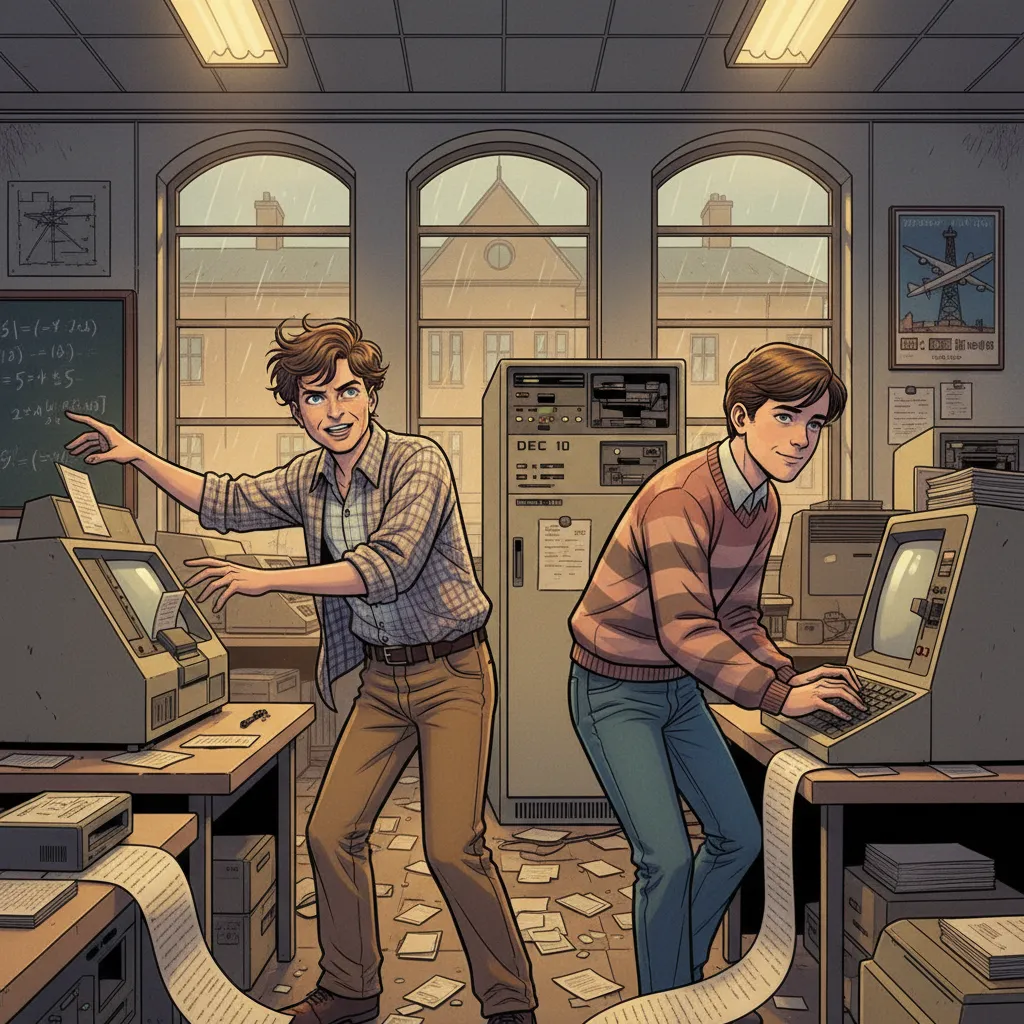
The year is 1968. Seattle. A city still defined by Boeing, rain, and a certain quiet ambition. Two kids meet in the Lakeside School computer lab. One is Bill Gates, already a whirlwind of intense, focused energy, a competitive force of nature even in his scrawny teenage years. The other is Paul Allen, two years older, a lanky, introspective kid with an unruly mop of hair and eyes that seemed to hold galaxies. Gates was the sharp-edged blade; Allen, the sprawling, intuitive network. They were an unlikely pair, a classic odd couple of nascent genius.
Their playground wasn’t a baseball field; it was a teletype machine connected to a mainframe miles away. The air crackled with the hum of the modem, the clatter of the printer, and the electric buzz of two young minds discovering a universe. They weren’t just playing games; they were dissecting the very fabric of computing. They were hacking, experimenting, pushing boundaries. While other kids were chasing girls or perfecting their jump shots, Paul and Bill were chasing bytes and perfecting their code.
Paul, the elder, was the “idea man,” a title he would later claim for his memoir. He was the one devouring technical journals, the one seeing the bigger picture, the one who could envision what computers could be long before anyone else. Gates, meanwhile, was the relentless executor, the taskmaster, the guy who could sit for hours, debugging lines of code with a ferocity that bordered on obsession. They were two halves of a perfect whole, a yin and yang of technological revolution. Allen’s brain was a sprawling, interconnected web of possibilities; Gates’ was a laser-focused drill, boring down to the solution.
They formed a pact, an unspoken agreement that would shape the future: they would build something together. They just didn’t know what yet. They started with small projects, like optimizing traffic flow in Seattle, or building a scheduling program for their school. These weren’t just academic exercises; they were proving grounds, testing their skills, forging their partnership, and honing their shared vision. It was here, amidst the clatter and hum of early computing, that the seeds of a global empire were sown. The world was about to change, and two high school kids, armed with nothing but raw intellect and boundless ambition, were about to light the fuse.
💡 Chapter 3: BASIC Instinct — The Birth of Microsoft
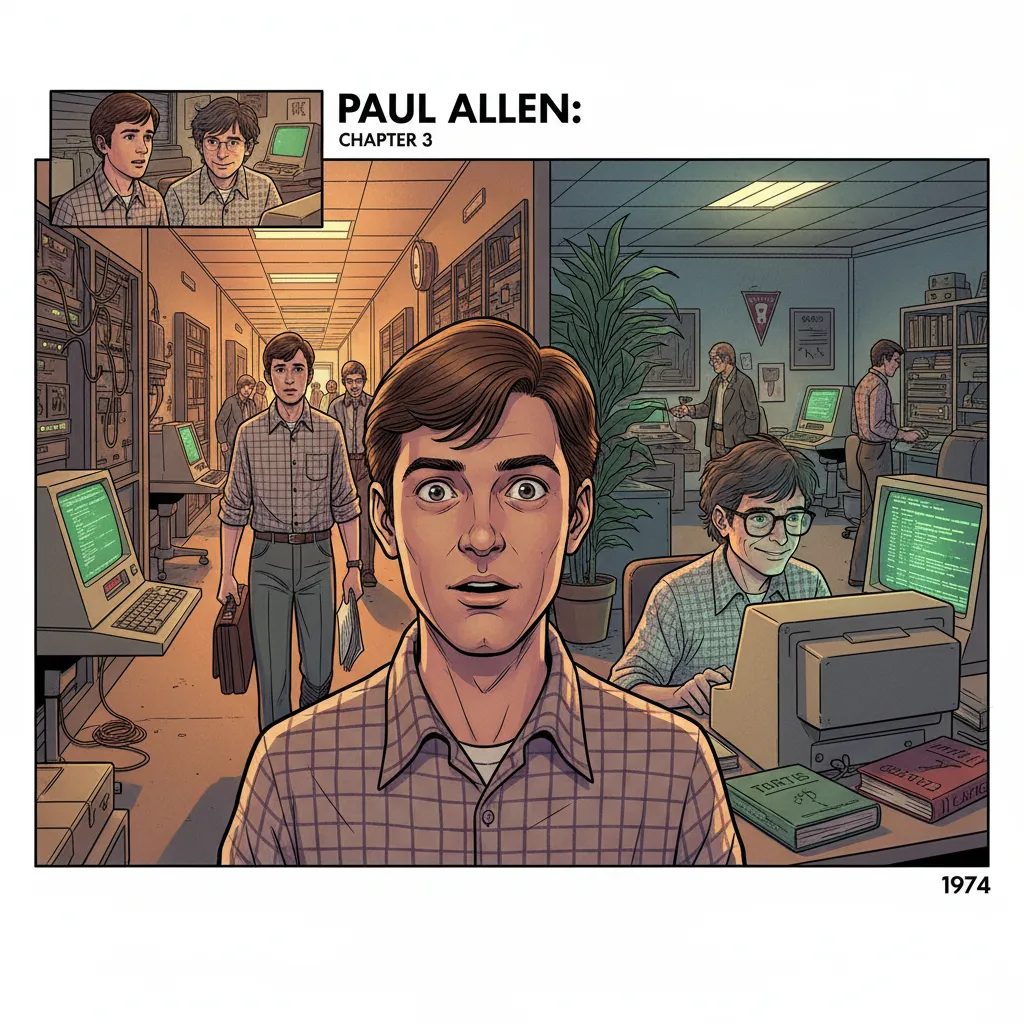
Fast forward to 1974. Paul Allen is working at Honeywell in Boston. Bill Gates is at Harvard, nominally studying law, but secretly still obsessed with code. One fateful day, Allen is walking through Harvard Square and sees something that stops him dead in his tracks: the January 1975 issue of Popular Electronics. On the cover? The Altair 8800, the world’s first true personal computer.
This wasn’t just a computer; it was a revelation. A machine for the masses. Allen sprinted to Gates’ dorm room, magazine in hand, heart pounding. “This is it!” he practically yelled. “The personal computer revolution has begun! And it needs a programming language!”
This was the moment. The spark ignited into a roaring flame. Most people saw a hobbyist’s toy; Allen saw the future. He instantly grasped that without software, this hardware was just a fancy paperweight. And what it needed most was an interpreter for BASIC (Beginner’s All-purpose Symbolic Instruction Code), a language simple enough for anyone to learn.
Gates, with his characteristic competitive fire, agreed. They knew if they didn’t do it, someone else would. The race was on. A tiny problem: they didn’t have an Altair. They didn’t even have a working BASIC interpreter. What they had was audacious confidence, raw talent, and a looming deadline.
They locked themselves in a Harvard lab, fueled by pizza and Diet Coke. Allen, with his uncanny ability to visualize code in his head, reverse-engineered the Altair’s processor from its instruction manual. He wrote a simulator on a DEC PDP-10 mainframe, allowing Gates to develop the BASIC interpreter without ever touching the actual hardware. It was a staggering feat of mental gymnastics and collaborative genius. Allen built the virtual machine; Gates wrote the code that ran on it.
Just weeks later, Allen flew to Albuquerque, New Mexico, home of MITS, the Altair’s manufacturer. He loaded their BASIC interpreter onto an Altair. It worked. On the first try. A hush fell over the room. The future had just arrived, packaged in lines of code written by two kids from Seattle.
On April 4, 1975, in Albuquerque, Microsoft was born. Not “Gates Co.” Not “Gates & Allen Software.” Microsoft. A portmanteau of “microcomputer” and “software.” Allen was the one who came up with the name. He was the one who saw the Altair. He was the one who built the simulator. He was the co-founder, in every sense of the word. The initial partnership was clear: Gates owned 60%, Allen 40%. It was a testament to Gates’ dominance even then, but 40% of the future was still a hell of a lot.
“From that moment on, our lives were consumed by software. We were young, we were driven, and we believed we could change the world with code. Paul saw the future, and I built the bridge to it.”
💻 Chapter 4: The IBM Deal – A Masterstroke and a Crushing Blow

Microsoft’s early years were a blur of intense work, innovation, and relentless growth. They moved back to Bellevue, Washington, closer to home. They hired brilliant minds, building a culture of intense competition and technological evangelism. But the real game-changer, the moment that propelled Microsoft from a successful startup to a global powerhouse, was the IBM deal.
It was 1980. IBM, the lumbering giant of the computing world, was making its move into personal computers. They needed an operating system, and fast. They approached Gates and Allen. The legend is often told that Gates, with his characteristic bravado, simply bought an existing OS (QDOS, or “Quick and Dirty Operating System” from Seattle Computer Products) for $50,000, rebranded it as MS-DOS, and then licensed it to IBM for a flat fee and a per-unit royalty, crucially retaining the rights to license it to anyone else.
The reality, as always, is more complex, and Allen’s role was absolutely critical. When IBM first came calling, they wanted to license a version of BASIC, and also asked if Microsoft could provide an operating system. Microsoft didn’t have an operating system. This was a massive problem, a potential deal-breaker.
This is where Allen’s incredible foresight and networking skills came into play. He knew of a small company called Seattle Computer Products and a brilliant programmer named Tim Paterson, who had developed QDOS, an OS similar to CP/M, the dominant OS of the time. Allen immediately recognized its potential. He convinced Gates that this was their golden ticket. He facilitated the initial meetings, understood the technical requirements, and was deeply involved in the negotiations that led to Microsoft acquiring the full rights to QDOS for a paltry sum.
Allen was the one who initially understood the technical fit and the strategic value of QDOS. He was the liaison, the negotiator, the one who saw the chessboard three moves ahead. Without Allen’s insight and hustle, Microsoft might have told IBM, “Sorry, we don’t do operating systems,” and the trajectory of computing would have been entirely different.
The IBM deal was a masterstroke, a move so brilliant it’s still taught in business schools. It made MS-DOS the de facto standard for PCs, paving the way for Windows, and transforming Microsoft into a behemoth. It created unimaginable wealth for Gates and Allen.
But for Allen, this period also marked the beginning of the end of his active involvement. The relentless pace, the cutthroat competition, the increasing demands of management – it all started to wear on him. He was the visionary, the big-picture thinker, not the operations guy. He loved the spark of creation, the thrill of invention, but the daily grind of running a rapidly expanding company began to feel like a cage. He thrived on exploring new frontiers, not managing existing ones. The seeds of discord, sown years earlier, began to sprout in earnest.
🌪️ Chapter 5: The Shadow in the Room – Partnership Dynamics and Growing Tensions

The relationship between Paul Allen and Bill Gates was always a complex dance of brilliance and friction. Gates was the relentless driver, the micro-manager, the one who would push and push until a problem was solved. Allen was the idea generator, the conceptualizer, the one who could see around corners and predict technological shifts. They complemented each other perfectly, but this very complementarity also created deep-seated tension.
As Microsoft exploded in size and influence, Gates’s control intensified. He became increasingly focused on the minutiae of the business, the deals, the code, the competitive landscape. Allen, meanwhile, felt more and more marginalized. His role as the visionary, the scout for new ideas, seemed to diminish in importance compared to Gates’s operational dominance.
Allen, by his own account, felt Gates became increasingly dismissive of his contributions. Gates, perhaps, saw Allen as less committed to the day-to-day grind, more interested in chasing new technologies than solidifying existing ones. The 60/40 equity split, initially agreed upon when Gates was still at Harvard and Allen was working, also became a source of quiet resentment. Allen had been the one with the steady income, the one pushing the vision, and yet he held the lesser share.
The pressure cooker environment of Microsoft, combined with their differing personalities, led to frequent clashes. Allen would propose exploring graphics interfaces or networking much earlier than Gates was ready to commit. Gates, always pragmatic and hyper-focused on the immediate task at hand, would often dismiss these ideas as premature or distractions. While Gates was right to prioritize the immediate needs of MS-DOS, Allen’s instincts often pointed to the next big wave.
“I began to feel like a passenger in my own company. The joy of creation was being replaced by the drudgery of corporate politics, and the relentless drive of my partner began to feel less like a collaboration and more like a steamroller.”
The breaking point, a moment of profound personal betrayal for Allen, occurred in 1982. Allen was battling Hodgkin’s lymphoma, undergoing radiation treatment. His body was weak, his mind reeling. During this incredibly vulnerable time, he overheard a conversation between Gates and Steve Ballmer, then Microsoft’s head of sales. They were discussing how Allen wasn’t contributing enough, how his share of the company was too large given his reduced involvement, and how they should dilute his equity.
Imagine that. Lying in bed, fighting cancer, and overhearing your closest friend and business partner plotting to strip you of your stake in the company you helped build. It was a gut punch, a betrayal that cut to the bone. Allen confronted them. Gates, initially defensive, later apologized. But the damage was done. The trust, already fraying, was irrevocably shattered.
This incident, more than any other, sealed Allen’s decision to leave. The company he co-founded, the dream he helped ignite, had become a source of pain and disillusionment. The partnership, once a source of electrifying synergy, was now a toxic environment. He was fighting for his life, and simultaneously fighting for his stake in his own legacy. He would recover from cancer, but the partnership with Gates would never truly heal.
💔 Chapter 6: The Diagnosis – A Forced Exit, or a Calculated Betrayal?

The cancer diagnosis was a seismic event in Paul Allen’s life. Hodgkin’s lymphoma. A brutal, terrifying reality that forced him to confront his own mortality at the tender age of 29. It was 1982, the year Microsoft was truly hitting its stride, soaring on the wings of the IBM deal. But for Allen, the focus shifted from lines of code to lines of chemotherapy, from market share to survival.
This health crisis, while profoundly personal, became the catalyst for his professional departure from Microsoft. The grueling treatments, the constant fatigue, the mental toll – it all made the relentless, cutthroat pace of Microsoft unsustainable. Allen, always more of a visionary than an operator, found his energy drained by the internal politics and the aggressive demands of Bill Gates.
But was it a forced exit, or a calculated betrayal? From Allen’s perspective, as detailed in his memoir Idea Man, it felt like a little of both. His illness provided Gates and Steve Ballmer with what they perceived as an opening to consolidate power and reduce Allen’s influence. The overheard conversation, where they mused about cutting Allen’s equity, wasn’t just a casual remark; it was a devastating revelation of their true intentions, delivered at his most vulnerable moment.
Allen was profoundly hurt. He felt stabbed in the back by the person he had brought into the tech world, the person he had called his best friend. The apology from Gates felt hollow, a damage control exercise rather than genuine remorse for the intent. This wasn’t just a business disagreement; it was a personal rupture of epic proportions.
He made the decision to step down from his day-to-day role at Microsoft in 1983. He officially resigned from the board in 1985, though he would remain a significant shareholder. The terms of his departure were negotiated, and while he maintained a substantial stake, the emotional cost was immense. He wasn’t just leaving a company; he was leaving a part of himself, a shared dream that had turned sour.
The narrative often paints Allen’s departure as a natural consequence of his illness, a graceful exit. But for Allen, it was far more complex. It was a painful severance, a realization that the partnership, once so vital, had become parasitic. He left with billions, yes, but also with a wound that would never fully heal, a ghost of what might have been if the friendship had weathered the storms of success.
His departure from Microsoft was not the end of his story; it was merely the end of Act One. It was a necessary amputation, allowing him to survive and eventually thrive, to redefine his purpose beyond the shadow of a company he helped create. He emerged from the crucible of cancer and corporate politics not broken, but transformed, ready to embark on a second, even more extraordinary, act.
🦅 Chapter 7: Life Beyond the Gates – Vulcan Takes Flight

Imagine walking away from one of the most successful companies in history with billions in your pocket, a clean slate, and a mind still buzzing with ideas. What do you do? Most people would retire to a private island, collect rare art, or just… exist. Not Paul Allen. His departure from Microsoft wasn’t a retreat; it was a re-ignition. It was the moment he truly unleashed his inner polymath.
In 1986, Allen founded Vulcan Inc., his private company that would serve as the mothership for all his future endeavors. He named it after the Roman god of fire and metalworking, a fitting tribute to his industrial roots and burning creative spirit. Vulcan was no ordinary investment firm; it was a sandbox for a billionaire’s wildest dreams, a launchpad for audacious projects that spanned the physical and digital worlds.
Vulcan became the embodiment of Allen’s sprawling intellect and insatiable curiosity. It wasn’t about maximizing profit at every turn; it was about exploring possibilities, pushing boundaries, and making an impact. He invested in everything from cable television to real estate, from biotech to brain research. He wasn’t just a venture capitalist; he was a venture artist, painting on the canvas of the future with billions of dollars.
One of Vulcan’s early ventures, and a testament to Allen’s prescient vision, was Asymetrix (later named Paul Allen Group), a software company focused on developing multimedia tools. He was thinking about interactive media and rich content long before the internet made it mainstream. He also invested heavily in cable TV and telecommunications, recognizing the importance of infrastructure for the coming digital age. He correctly predicted the convergence of media, computing, and communications.
But Vulcan wasn’t just about business. It was also the vehicle for his more passionate, less commercially driven pursuits. It housed his sports teams, his philanthropic foundations, his scientific institutes, and his explorations. It was a testament to a man who, having helped create the software revolution, then set out to explore every other frontier he could imagine.
The guiding principle of Vulcan wasn’t quarterly earnings reports; it was curiosity. It was a reflection of Paul Allen himself: an endlessly inquisitive mind, unconstrained by conventional wisdom, and empowered by immense resources. He built a team of brilliant minds, not just to manage his money, but to help him chase down every intriguing idea that sparked in his imagination. From the concrete jungles of Seattle’s South Lake Union to the deepest trenches of the ocean, Vulcan Inc. was Paul Allen’s personal Starship Enterprise, boldly going where no billionaire had gone before.
🏀 Chapter 8: The Sporting Life – Hoops, Helmets, and Hometown Pride

For most billionaires, owning a sports team is a vanity project, a trophy asset. For Paul Allen, it was a deeply personal connection to community, a way to channel his competitive spirit, and another canvas for his visionary approach. He wasn’t just an owner; he was a fan, a strategist, and a steadfast supporter of his adopted hometown, Seattle, and its Pacific Northwest neighbor.
His first foray into sports ownership came in 1988, when he purchased the Portland Trail Blazers of the NBA for a then-record $70 million. The Blazers were a struggling franchise, but Allen saw potential – not just in basketball, but in building a winning culture and connecting with a passionate fanbase. He invested heavily in the team, modernizing operations, and bringing in top talent. Under his ownership, the Blazers became a consistent playoff contender, a source of pride for Portland. He wasn’t afraid to spend, but he spent with purpose, always aiming for excellence.
Then came the Seattle Seahawks. In 1997, the team’s owner threatened to move the NFL franchise from Seattle to Southern California. The city was in an uproar. Paul Allen stepped in, literally saving the Seahawks for Seattle. He bought the team for $200 million and committed to building a state-of-the-art stadium, CenturyLink Field (now Lumen Field), which he largely financed himself. This wasn’t just a business deal; it was an act of civic patriotism. He understood what a professional sports team meant to the identity and soul of a city.
Under Allen’s stewardship, the Seahawks were transformed. He hired forward-thinking general managers and coaches, embraced analytics, and fostered a culture of innovation. His patience and investment paid off spectacularly. In 2014, the Seahawks, led by coach Pete Carroll and quarterback Russell Wilson, dominated the NFL and brought home the franchise’s first-ever Super Bowl trophy, a moment of unbridled joy for the entire Pacific Northwest.
Allen approached sports ownership with the same intensity and intellectual curiosity he applied to technology. He wasn’t content to be a silent partner; he was actively involved, thinking about fan experience, team dynamics, and long-term strategy. He saw these teams as more than just assets; they were community cornerstones, powerful symbols of regional identity.
His sports investments weren’t always immediately profitable, but that wasn’t his primary metric. He measured success in championships, in community engagement, and in the sheer joy of seeing his teams thrive. He built winning organizations, not just on the field, but within the larger ecosystem of Seattle and Portland, solidifying his status as a hometown hero long after his Microsoft days. He truly believed in the power of sports to unite and inspire.
🚢 Chapter 9: The Explorer – From Space to the Deep Sea
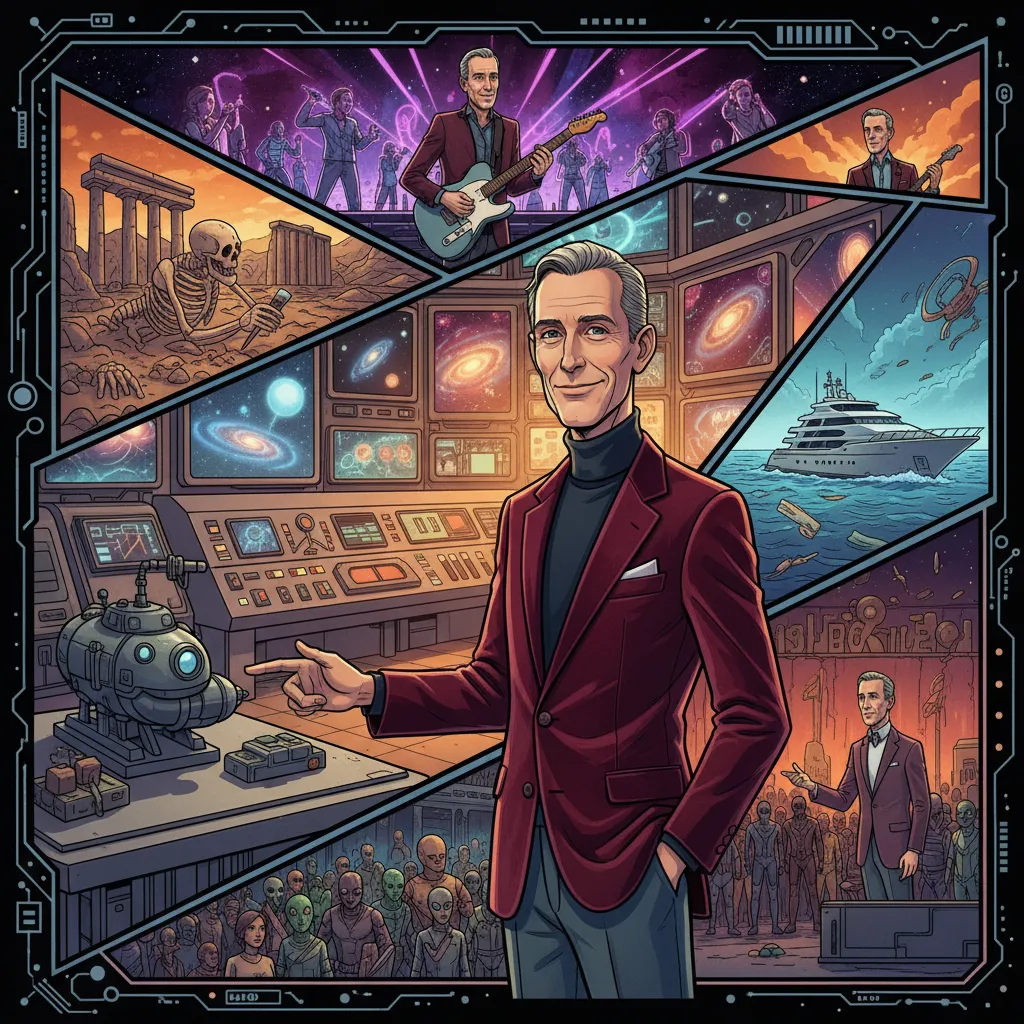
If you thought sports teams were the extent of Paul Allen’s extracurriculars, you haven’t been paying attention. This was a man who saw the entire universe as a playground for his intellect and resources. His curiosity wasn’t confined to Earth; it stretched into the cosmos and plunged into the deepest oceans.
His most audacious venture into space began in the early 2000s with SpaceShipOne. Teaming up with legendary aerospace engineer Burt Rutan and his company Scaled Composites, Allen funded the development of the first privately funded, crewed spacecraft to reach space. This wasn’t a government project; it was a billionaire’s gamble, an investment in the future of commercial spaceflight.
On October 4, 2004, SpaceShipOne, piloted by Brian Binnie, made its second flight beyond the Earth’s atmosphere, securing the Ansari X Prize and marking a pivotal moment in space exploration. Allen had poured over $25 million into the project, not for profit, but for the sheer thrill of pushing boundaries and proving that private enterprise could open up the final frontier. His vision paved the way for companies like SpaceX and Blue Origin. He wasn’t just dreaming of space; he was actively building the path there.
But Allen’s exploratory zeal wasn’t limited to the stars. He also had a profound fascination with the mysteries of the deep sea. He purchased a 414-foot research yacht, the M/Y Octopus, one of the largest and most technologically advanced private vessels in the world. This wasn’t a pleasure craft; it was a floating science lab, equipped with a remote-controlled submarine, a landing craft, and a full-time crew of scientists and explorers.
With the Octopus, Allen embarked on a series of incredible deep-sea expeditions. He funded and participated in missions to locate and explore historic shipwrecks, including some of the most famous vessels from World War II. His team discovered the Japanese battleship Musashi, the American aircraft carrier USS Lexington, and the USS Indianapolis, among many others. These weren’t just treasure hunts; they were acts of historical preservation, bringing to light incredible stories and honoring fallen sailors.
“The ocean holds more history and mystery than we can possibly imagine. To be able to bring these stories to the surface, to connect with the past in such a profound way, is an extraordinary privilege. It’s about understanding our world, and our place in it.”
He also used the Octopus for scientific research, from marine biology studies to mapping uncharted ocean floors. He invested in technologies to combat illegal fishing and protect endangered species. Paul Allen was essentially a real-life Jacques Cousteau, but with the resources of a tech titan. He proved that a single individual, armed with vision and wealth, could profoundly contribute to humanity’s understanding of its past and its planet. His life was a testament to the idea that the greatest adventures often begin not with a map, but with a question.
🧠 Chapter 10: The Seeker – Science, AI, and the Human Brain

Paul Allen’s intellectual curiosity wasn’t satisfied with sports or space or shipwrecks. His mind, the very instrument that had co-created Microsoft, remained intensely focused on the frontiers of human knowledge, particularly in science and artificial intelligence. He understood that unlocking the secrets of the brain and developing true AI were the next great challenges facing humanity.
In 2003, he founded the Allen Institute for Brain Science, a groundbreaking initiative dedicated to understanding the human brain. This wasn’t a typical academic institution; it was a “big science” approach, leveraging technology and collaboration to tackle problems too vast for traditional labs. Allen envisioned a massive, open-source data repository that would accelerate neuroscience research worldwide.
He poured hundreds of millions of dollars into the Institute, which produced the Allen Brain Atlas, a comprehensive, publicly available map of the mouse and human brain, detailing gene expression and neural connections. This resource revolutionized neuroscience, providing researchers globally with unprecedented access to data that would otherwise take decades and billions more to compile. It was a classic Allen move: identify a fundamental bottleneck, apply massive resources and technological prowess, and make the results freely available for the benefit of all.
But his scientific ambitions didn’t stop there. In 2014, he launched the Allen Institute for Artificial Intelligence (AI2), recognizing the transformative potential – and inherent risks – of AI. AI2 focused on “AI for the common good,” developing cutting-edge research in areas like natural language processing, computer vision, and machine reasoning. He was deeply concerned about the ethical implications of AI and believed in guiding its development responsibly.
Later, he also founded the Allen Institute for Cell Science and the Allen Institute for Global Health, expanding his “big science” model to other critical areas of biological research and infectious disease. His approach was always characterized by long-term vision, interdisciplinary collaboration, and a commitment to open science. He wasn’t just funding research; he was building institutions that would fundamentally change how science was done.
Allen understood that breakthroughs often required capital on a scale that governments or universities struggled to provide, coupled with a willingness to take risks and think differently. His Institutes were designed to be catalysts, accelerating progress by removing barriers and fostering innovation. He was investing in the very engine of human understanding, convinced that by unlocking the secrets of life and intelligence, humanity could solve its greatest challenges. It was a profound act of faith in scientific progress, driven by the mind of a man who had glimpsed the future and wanted to help build it, responsibly.
🙏 Chapter 11: The Philanthropist – A Billionaire’s Conscience
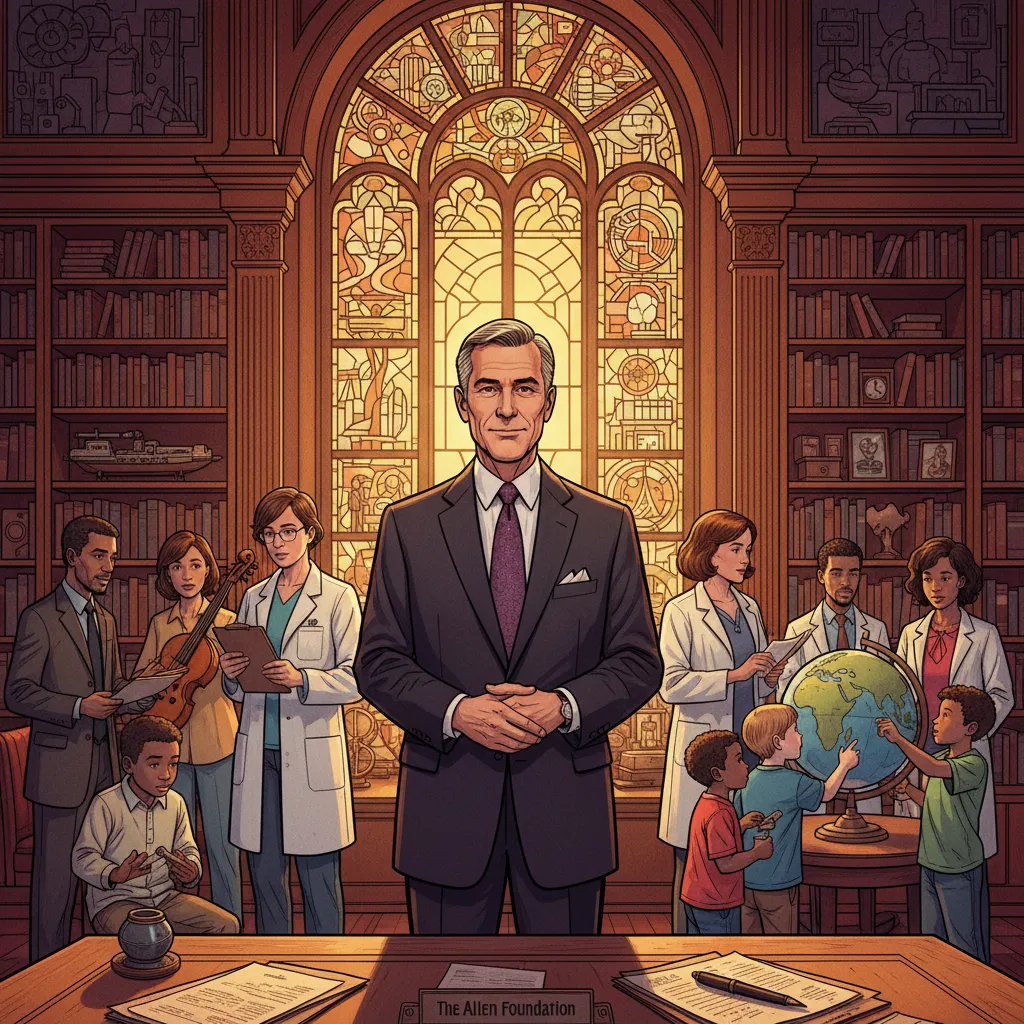
Beyond his entrepreneurial ventures, sports teams, explorations, and scientific institutes, Paul Allen was also one of the most significant, yet often understated, philanthropists of his generation. His giving wasn’t driven by public accolades; it was a deeply ingrained sense of responsibility, a quiet commitment to making the world a better place.
His philanthropic philosophy mirrored his diverse interests: it was broad, impactful, and often focused on areas that other donors overlooked. Through the Paul G. Allen Family Foundation, established in 1986, he donated more than $2.6 billion to a vast array of causes during his lifetime, with a commitment that his estate would continue his philanthropic legacy after his death.
In his beloved Seattle, his impact was monumental. He invested heavily in the arts and culture, creating the iconic Museum of Pop Culture (MoPOP), a visually stunning building designed by Frank Gehry. MoPOP wasn’t just a museum; it was a celebration of rock and roll, science fiction, and popular culture, reflecting Allen’s own passions as a musician (he was an avid guitarist) and sci-fi enthusiast. He also supported the Seattle Art Museum, the Seattle Public Library, and numerous other cultural institutions, transforming the city’s cultural landscape.
He was a staunch advocate for environmental conservation, pouring millions into protecting oceans, combating climate change, and preserving wildlife habitats, particularly in Africa. He funded innovative solutions for sustainable fishing, worked to protect endangered elephants, and supported research into renewable energy. His deep-sea explorations weren’t just for discovery; they were also for advocacy, highlighting the fragility of marine ecosystems.
Allen also tackled some of the most pressing social issues. He contributed significantly to addressing homelessness in Seattle, funding shelters, support services, and innovative housing solutions. He supported education, medical research (beyond his own institutes), and community development initiatives across the Pacific Northwest and globally.
His approach to philanthropy was often hands-on and strategic. He wasn’t content to just write checks; he wanted to understand the problems, to fund innovative solutions, and to measure impact. He applied the same analytical rigor to his giving as he did to his business ventures, seeking leverage and long-term results.
“If you want to make a real difference, you can’t just throw money at problems. You have to understand them, engage with them, and empower the people who are truly on the front lines. Philanthropy, at its best, is about igniting change.”
Paul Allen’s philanthropy wasn’t a post-script to his life; it was a central pillar, a testament to a man who, despite immense wealth, never lost his connection to humanity. He used his fortune to address suffering, celebrate creativity, and safeguard the planet, leaving an indelible mark that will benefit generations to come. He was a billionaire with a conscience, who understood that true legacy is built not just on what you accumulate, but on what you give away.
🌌 Chapter 12: The Echo – A Legacy Unfurls

Paul Allen passed away in October 2018 at the age of 65, after a renewed battle with non-Hodgkin lymphoma. The news sent a ripple of grief through the tech world, Seattle, and beyond. It was a poignant reminder of the brilliant mind that had touched so many facets of modern life, often from the shadows. His death brought a renewed focus on his incredible, multifaceted legacy, a legacy that often stood in stark contrast to the more dominant narrative of his former partner.
His story is a powerful counter-narrative to the idea that a single individual is responsible for monumental success. While Bill Gates was undoubtedly the relentless force that scaled Microsoft, Allen was the intuitive spark, the visionary who saw the future and dragged Gates along with him. He was the “idea man” whose early insights shaped the very foundations of the personal computer revolution. His early contributions to Microsoft, though often downplayed, were utterly indispensable. Without Paul Allen, there is no Altair BASIC. Without Paul Allen, the IBM deal might never have happened. Without Paul Allen, the name “Microsoft” itself might not exist.
His post-Microsoft life, however, is where his unique genius truly unfurled. Free from the constraints and conflicts of a corporate giant, Allen became a modern-day Renaissance man. He wasn’t content to simply enjoy his wealth; he deployed it, strategically and passionately, across an astonishing array of fields. He literally saved a major sports franchise for his hometown. He funded the first private spaceflight. He discovered some of history’s most important shipwrecks. He built institutes dedicated to unlocking the secrets of the brain and artificial intelligence, sharing their findings with the world. He became a titan of philanthropy, shaping the cultural and scientific landscape of Seattle and beyond.
His influence on Seattle alone is monumental. He helped revitalize the South Lake Union neighborhood, creating a hub for tech and biotech. He funded cultural institutions, museums, and public spaces, transforming the city into a vibrant metropolis. He wasn’t just a resident; he was an architect of Seattle’s modern identity.
Paul Allen’s story is a testament to the power of curiosity, the resilience of the human spirit in the face of adversity, and the profound impact one individual can have when unburdened by conventional expectations. He showed that true wealth is not just about accumulating capital, but about deploying it to push the boundaries of human knowledge, inspire new generations, and leave a lasting mark on the world.
He may have been the “other” co-founder of Microsoft, but his life was anything but secondary. It was an epic, sprawling saga of innovation, adventure, and generosity. He walked away from the biggest tech company in the world, not to retire, but to truly begin. And in doing so, Paul Allen carved out a legacy that is as unique, as brilliant, and as indispensable as the very pixels that light up our digital world. His echo continues to reverberate, a reminder that the greatest stories are often found just beyond the spotlight.
💡 Key Insights
- ▸ The true genesis of groundbreaking ventures often lies in the synergistic interplay of diverse talents. Don't underestimate the 'idea man' who sparks the vision, even if others later become the primary executors. Cultivating a culture that values and protects early visionaries is crucial for sustained innovation, preventing the loss of invaluable strategic foresight.
- ▸ Navigating co-founder relationships is a minefield, especially when stakes are astronomical. Clear equity structures, communication protocols, and even pre-nuptial agreements for businesses can mitigate conflict. But ultimately, personal integrity and mutual respect are paramount; without them, even the most successful partnerships can crumble under the weight of ambition, leaving lasting scars and missed opportunities for collaboration.
- ▸ True wealth isn't merely accumulated; it's deployed. Paul Allen's post-Microsoft life illustrates that a billionaire's capital, when channeled through a diversified portfolio of passion projects—from sports ownership to cutting-edge scientific research and deep-sea exploration—can generate a profound, multifaceted legacy far beyond the initial source of wealth. This redefines 'impact' for the ultra-rich, moving beyond simple philanthropy to active, visionary investment in humanity's future.