Richard Schulze: How Best Buy Survived the Superstore Wars
Richard Schulze built Best Buy by turning a damaged stereo store into a warehouse of choice, then watched the chain confront the internet and reinvent the economics of advice.

View all stories about this mogul
Richard Schulze discovered Best Buy’s future because a tornado damaged his store.
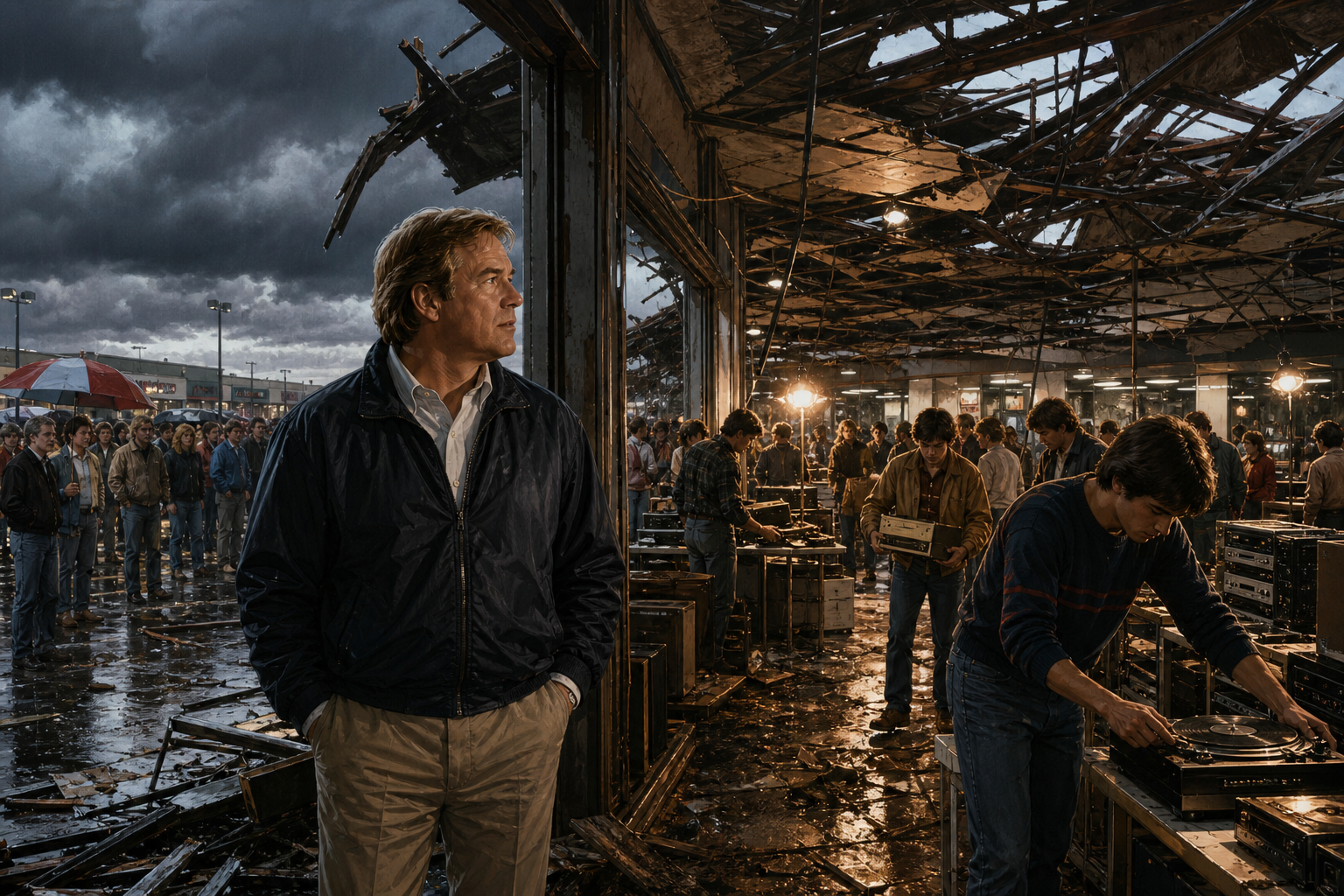
In 1981, severe weather hit the Sound of Music location in Roseville, Minnesota. Schulze moved salvageable inventory into a temporary sale environment, cut the frills, advertised aggressively, and watched customers swarm. The event revealed a brutal retail truth: many electronics buyers valued selection and price more than carpet, commissioned persuasion, and showroom ceremony.
The emergency format became a strategy. Sound of Music evolved into Best Buy, a category-killer superstore designed to make consumer electronics feel like a market rather than a negotiation.
How did Richard Schulze build Best Buy from Sound of Music?
Schulze opened Sound of Music in St. Paul in 1966. Specialty audio retail at the time often depended on knowledgeable commissioned salespeople guiding customers through expensive equipment. That approach could educate buyers, but it also created friction. Prices were harder to compare, shoppers feared being upsold, and store throughput depended on individual sales skill.
The tornado sale stripped the model down. Inventory was visible. Prices were loud. Customers moved faster. Schulze recognized that the accidental warehouse atmosphere could work permanently as electronics broadened from enthusiast equipment into household necessity.
In 1983, the company adopted the Best Buy name. The new stores expanded product variety and shifted toward a noncommissioned sales floor. The promise was psychologically powerful: browse without a salesperson calculating a percentage on every recommendation.
The model matched the era. VCRs, televisions, camcorders, computers, appliances, games, and mobile devices created successive replacement cycles. Best Buy could place multiple brands under one roof, use scale to negotiate with suppliers, advertise destination prices, and let customers compare products physically.
Scale created its own flywheel. More stores generated more purchasing power and brand awareness. More selection attracted more traffic. Traffic justified larger stores and deeper inventory. National advertising made the blue-and-yellow box familiar before customers entered the parking lot.
But category-killer retail is a demanding machine. Inventory becomes obsolete quickly. A television or laptop can lose value while sitting on a shelf. New formats require floor resets and staff training. Expansion can hide weak store economics until a product cycle turns.
Best Buy survived early rivals because it kept adapting its format. Chains including Circuit City, CompUSA, and RadioShack each held advantages at different moments. Schulze’s company combined mass selection with enough specialist knowledge to remain useful as products became more complex.
Why did the internet nearly break the Best Buy model?
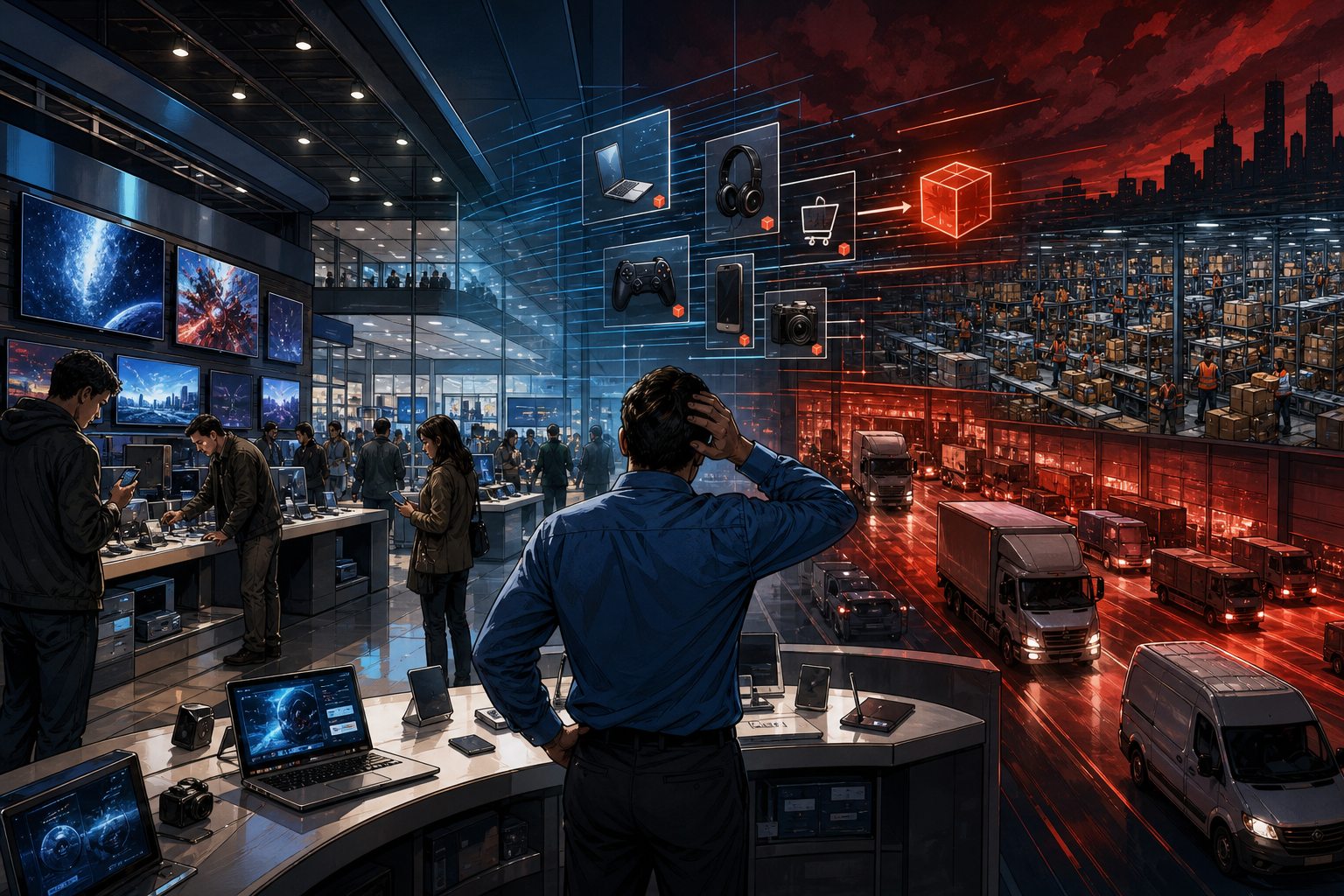
The internet attacked the superstore’s economics from both sides. Shoppers could inspect a product in person, scan its code, and order it elsewhere for less. That behavior became known as showrooming. Best Buy paid for the building, inventory, demonstration unit, and employee; an online competitor captured the sale.
Digital products also erased categories. Streaming weakened physical music and movies. Smartphones absorbed cameras, GPS devices, music players, and other profitable gadgets. PC growth slowed. The store still had thousands of square feet to support.
| Year | Turning point | Business meaning |
|---|---|---|
| 1966 | Sound of Music opens | Schulze enters specialty electronics retail |
| 1981 | Tornado sale succeeds | A stripped-down, high-volume format reveals itself |
| 1983 | Best Buy name is adopted | The company commits to consumer-electronics scale |
| 1985 | Best Buy goes public | Capital supports rapid superstore expansion |
| 2002 | Schulze steps down as CEO | Founder ownership separates from daily leadership |
| 2012 | Hubert Joly becomes CEO | “Renew Blue” confronts showrooming and weak execution |
By the early 2010s, Best Buy looked like a future case study in disruption. Sales pressure, leadership turmoil, and online competition fed a narrative that the chain would follow Circuit City into liquidation.
The turnaround under Hubert Joly did not pretend stores were irrelevant. It changed what the stores were for. Best Buy matched key online prices, improved the website, fixed in-stock execution, cut costs, and used stores for pickup and fulfillment. Vendor partnerships created branded spaces where manufacturers could demonstrate products and support trained staff.
Geek Squad, acquired in 2002 while Schulze still chaired the company, became strategically more important. As devices connected to homes and each other, installation, setup, repair, and advice created reasons to maintain a physical relationship.
The stores became distributed infrastructure. Inventory close to customers could support faster pickup and delivery. Employees could solve problems that product pages could not. The same real estate once described as a liability became an omnichannel asset—provided the systems behind it worked.
Schulze’s role in this chapter was complicated. He had stepped down as CEO in 2002 and later explored taking the company private during its crisis. The board instead backed a public-company turnaround. The founder’s original architecture mattered, but institutional survival required leadership willing to redesign it.
What is Richard Schulze’s lasting retail lesson?
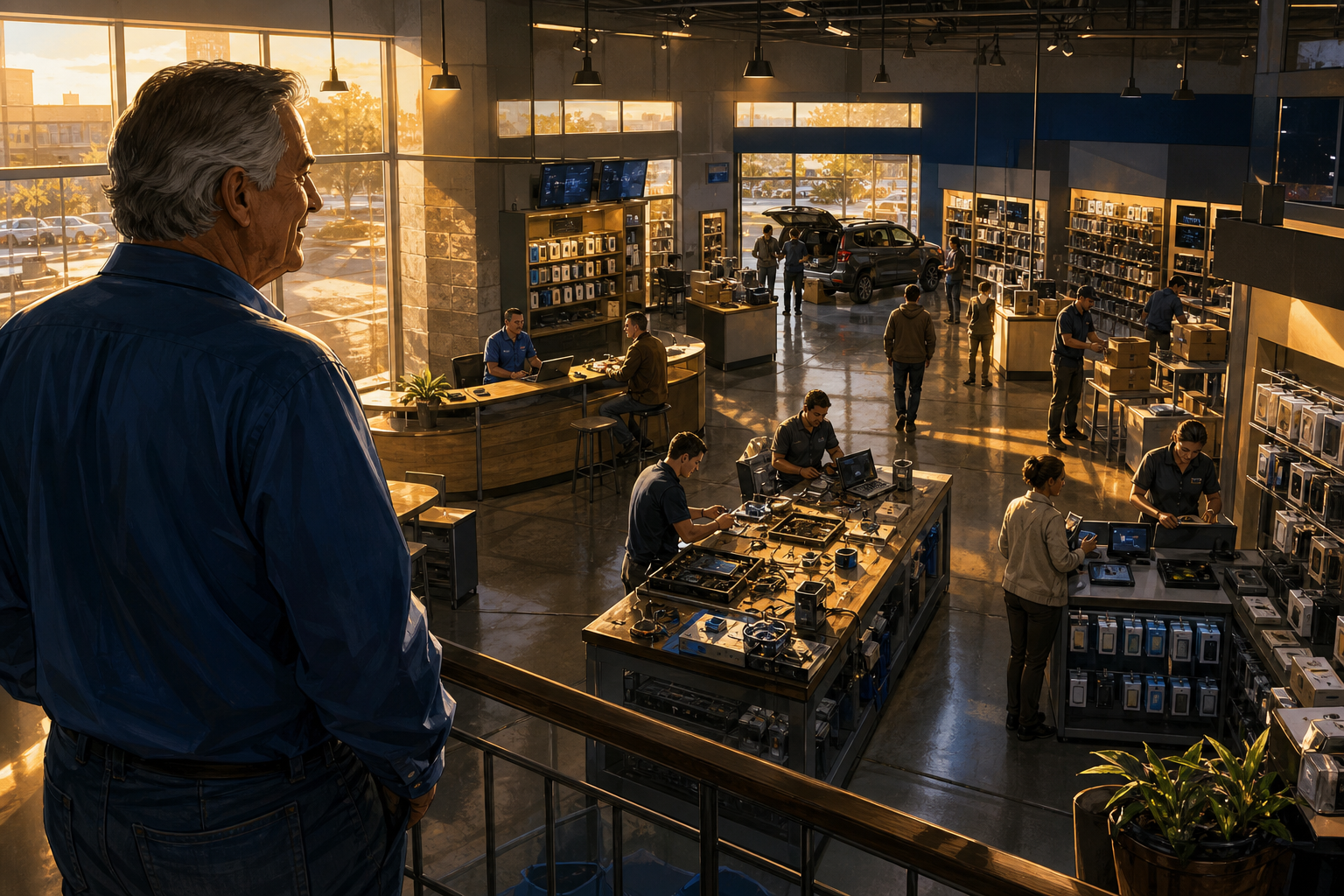
Best Buy did not survive because physical retail defeated the internet. It survived because the company stopped treating stores and digital channels as enemies.
Schulze’s first breakthrough followed the same pattern. The tornado sale did not improve the old Sound of Music experience; it revealed that customers wanted a different one. Decades later, showrooming forced another reframing. The store could no longer justify itself merely as a shelf. It had to become a demonstration floor, service desk, pickup point, local warehouse, and trust layer.
The deeper founder lesson is humility. Entrepreneurs often become attached to the form that produced success. Schulze’s greatest act was noticing that an emergency improvisation worked better than his carefully built store. Best Buy’s later leaders survived by showing the same willingness to reinterpret the asset.
Who founded Best Buy?
Richard Schulze founded Sound of Music in 1966. The company later adopted the Best Buy name and expanded into a national consumer-electronics retailer.
What did the 1981 tornado change?
The damage prompted a high-volume clearance sale with simplified presentation and aggressive pricing. Its success helped inspire the warehouse-style model that defined Best Buy.
Why did Best Buy outlive Circuit City?
No single factor explains it. Best Buy’s noncommissioned positioning, scale, product selection, later price matching, service capabilities, vendor partnerships, and omnichannel use of stores all contributed.
Did Richard Schulze lead the 2010s turnaround?
No. Hubert Joly became CEO in 2012 and led the Renew Blue turnaround. Schulze remained an important founder and shareholder, but the operational reinvention belonged to a later leadership team.
What is the real lesson?
Assets survive disruption when their job changes. A store built to hold inventory can become a place for trust, service, pickup, and local fulfillment. The building was not the strategy; the customer problem was.
💡 Key Insights
- ▸ A disaster sale revealed a lower-cost retail format that became the strategy.
- ▸ Choice and transparent prices beat commissioned pressure when electronics became mass-market goods.
- ▸ Physical stores survived by becoming service, pickup, and fulfillment infrastructure.
- ▸ A founder can create the original machine without being the best person to run every reinvention.