Robert Kuok: How Asia’s Sugar King Built a Quiet Commodity Empire
Robert Kuok moved from postwar sugar trading into flour, hotels, shipping, property, and media—building one of Asia's most discreet family empires.
View all stories about this mogul
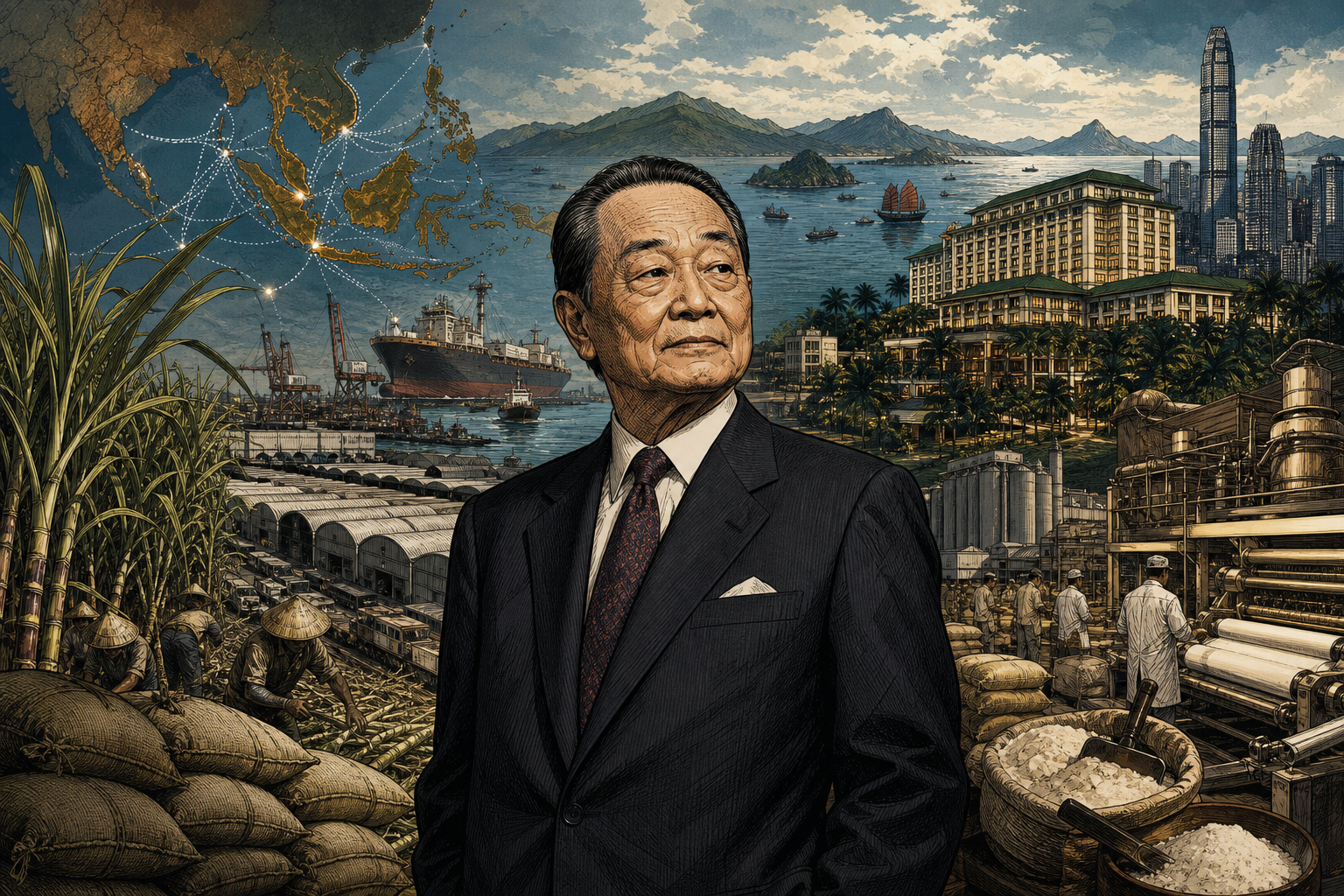
Robert Kuok built an empire in businesses most consumers notice only when they fail: sugar, flour, edible oils, shipping, warehouses, hotels, and the trade routes connecting them.
His public nickname, Asia’s “Sugar King,” captures the first great engine of his fortune but not the architecture that followed. Kuok learned to operate between farms and factories, governments and global markets, mainland China and Southeast Asia. He repeatedly moved from trade into the infrastructure around trade.
The result was not one famous company. It was a family-controlled network with interests associated over time with the Kuok Group, Kerry properties and logistics, Shangri-La hotels, Wilmar International, and Hong Kong’s South China Morning Post before its sale to Alibaba.
Kuok’s style was as important as his assets: cultivate information, protect relationships, avoid needless display, and keep optionality when politics and prices change.
A Postwar Education in Scarcity
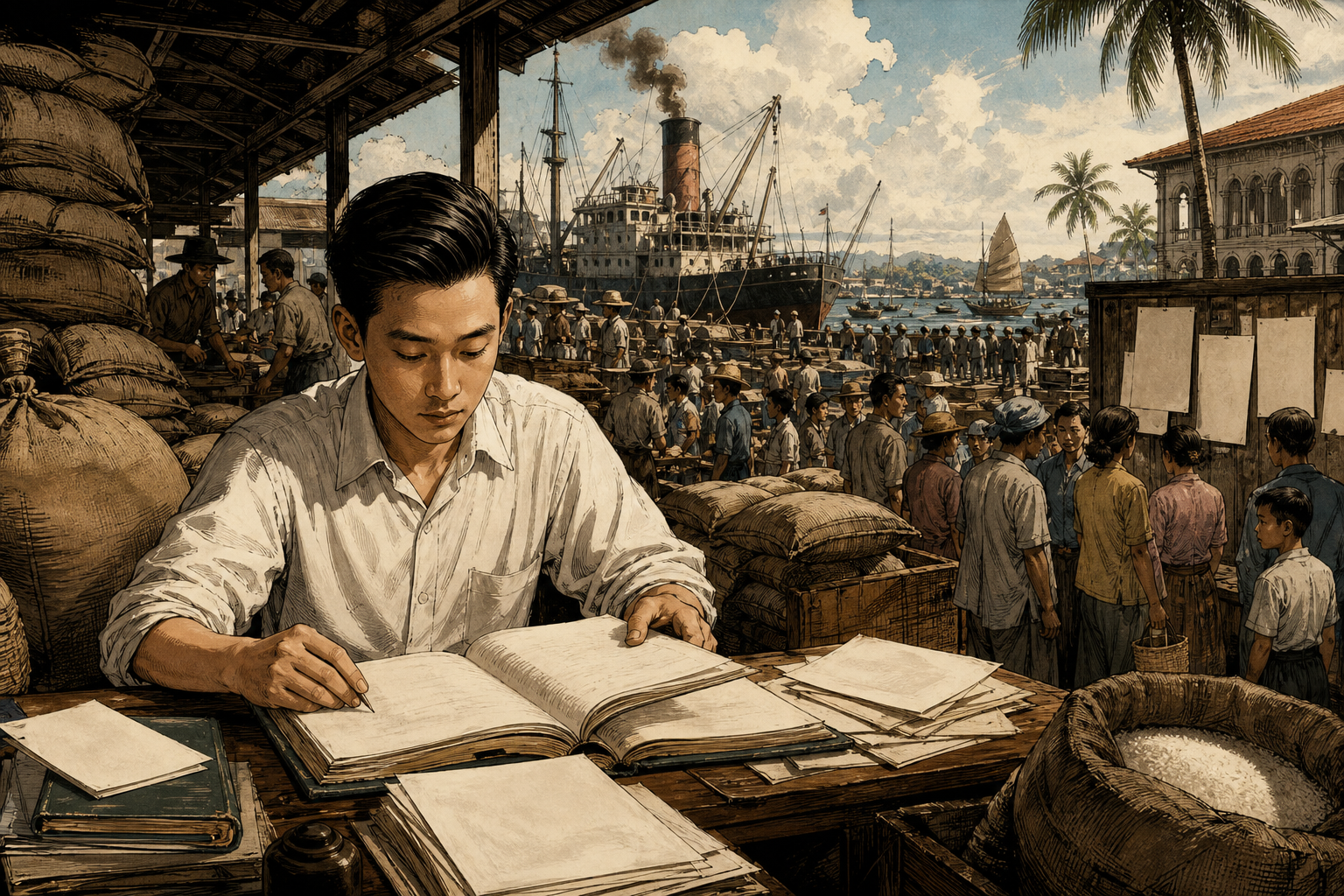
Kuok was born in Johor Bahru in 1923 to a family that had migrated from Fujian, China. His father built a trading business in British Malaya. The young Kuok grew up around multilingual commerce and the networks that connected Chinese family firms to colonial institutions and regional suppliers.
The Japanese occupation and the Second World War transformed that world. Scarcity made information and access decisive. Kuok worked for Mitsubishi’s rice-trading operation during the occupation, an experience he later described as a harsh education in administration, negotiation, and survival.
After his father’s death, family members formed Kuok Brothers in 1949. The early business traded sugar, rice, and flour. These were basic goods with thin margins and enormous political significance. Governments cared about supply and price. Buyers cared about reliability. Traders lived between weather, shipping, currency, credit, and policy.
Sugar gave Kuok a concentrated arena in which those skills compounded. He developed relationships with producers, refiners, officials, and international counterparties. His companies expanded from importing and trading toward refining and distribution, giving the group better information and more control over margins.
The “Sugar King” label emerged from this period, with accounts often crediting his businesses with a dominant share of Malaysia’s sugar market and a significant role in global trade. Exact market shares varied over time, but the strategic lesson is clear: Kuok did not merely bet on the price of sugar. He built position across the chain.
From Trading Margin to Industrial Control
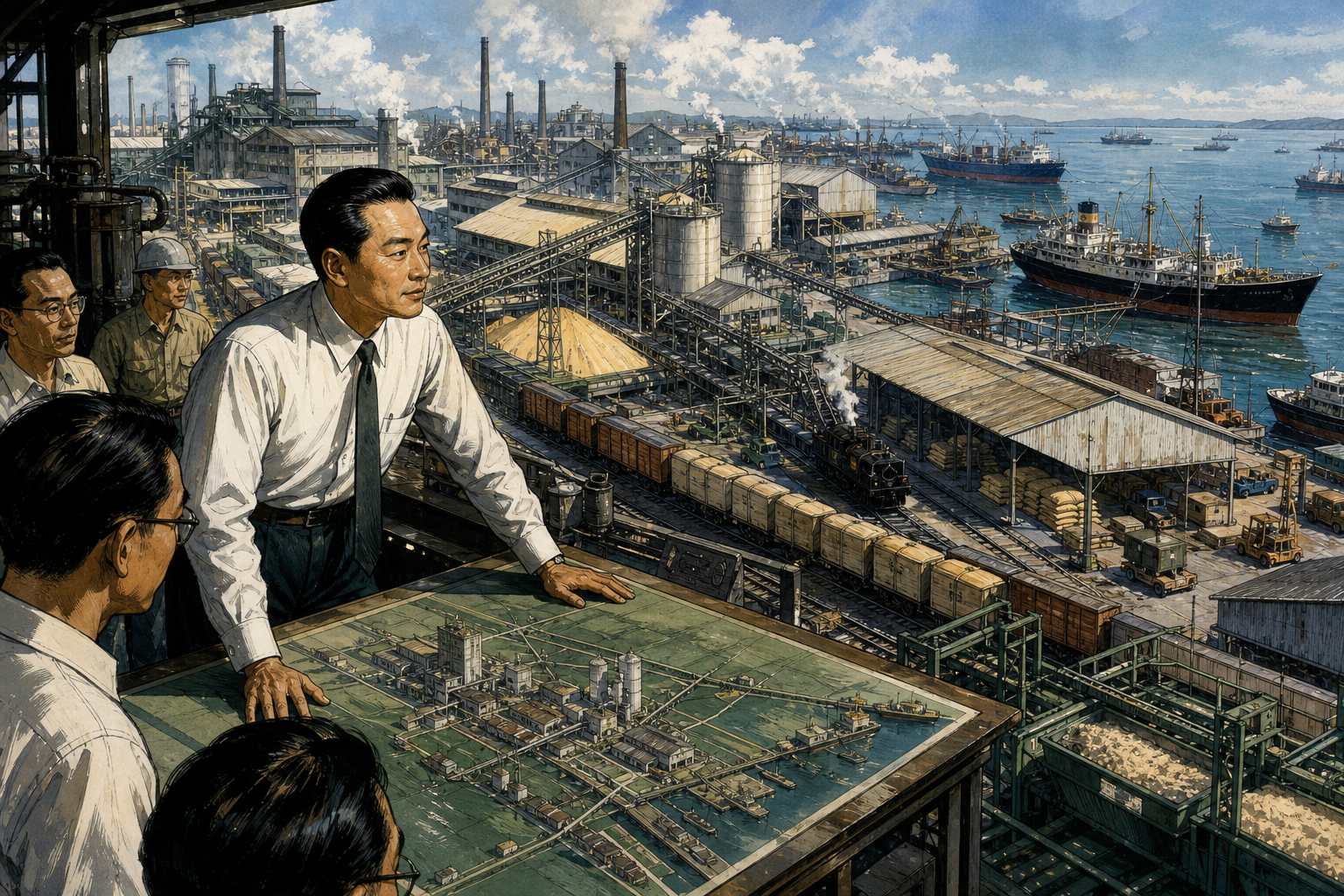
Commodity traders can earn exceptional returns, but their advantage can vanish with one policy change or a better-capitalized rival. Kuok repeatedly reinvested trading knowledge into assets that made the flow of goods harder to displace.
Flour milling was a natural extension. Demand was recurring, the product essential, and regional industrialization created scale. Shipping and logistics reduced dependence on outsiders. Warehousing and property connected trade to scarce urban land.
This was not vertical integration for presentation slides. Each asset solved a risk exposed by the previous business. If freight capacity was uncertain, shipping relationships mattered. If raw commodity margins compressed, processing captured more value. If cash flows needed diversification, hotels and property introduced different cycles and collateral.
Kuok also operated through partnerships and entities suited to local conditions. That flexibility can make the empire difficult to summarize, but it reflects how Asian family businesses often expanded: not through one branded parent visible to consumers, but through a web of holdings, joint ventures, and trusted managers.
Later, his nephew Kuok Khoon Hong co-founded Wilmar International, which grew into a major agribusiness group spanning oil palm, oilseed crushing, refining, consumer products, and distribution. Wilmar is a distinct listed company, yet its rise fits the family’s longer pattern of controlling flows rather than one isolated product.
The approach carried risks. Commodities expose businesses to environmental harm, labor scrutiny, geopolitical shocks, and brutal price cycles. Integration can protect margins while also multiplying capital requirements and operational consequences.
Shangri-La Turned Hospitality Into a Regional Network
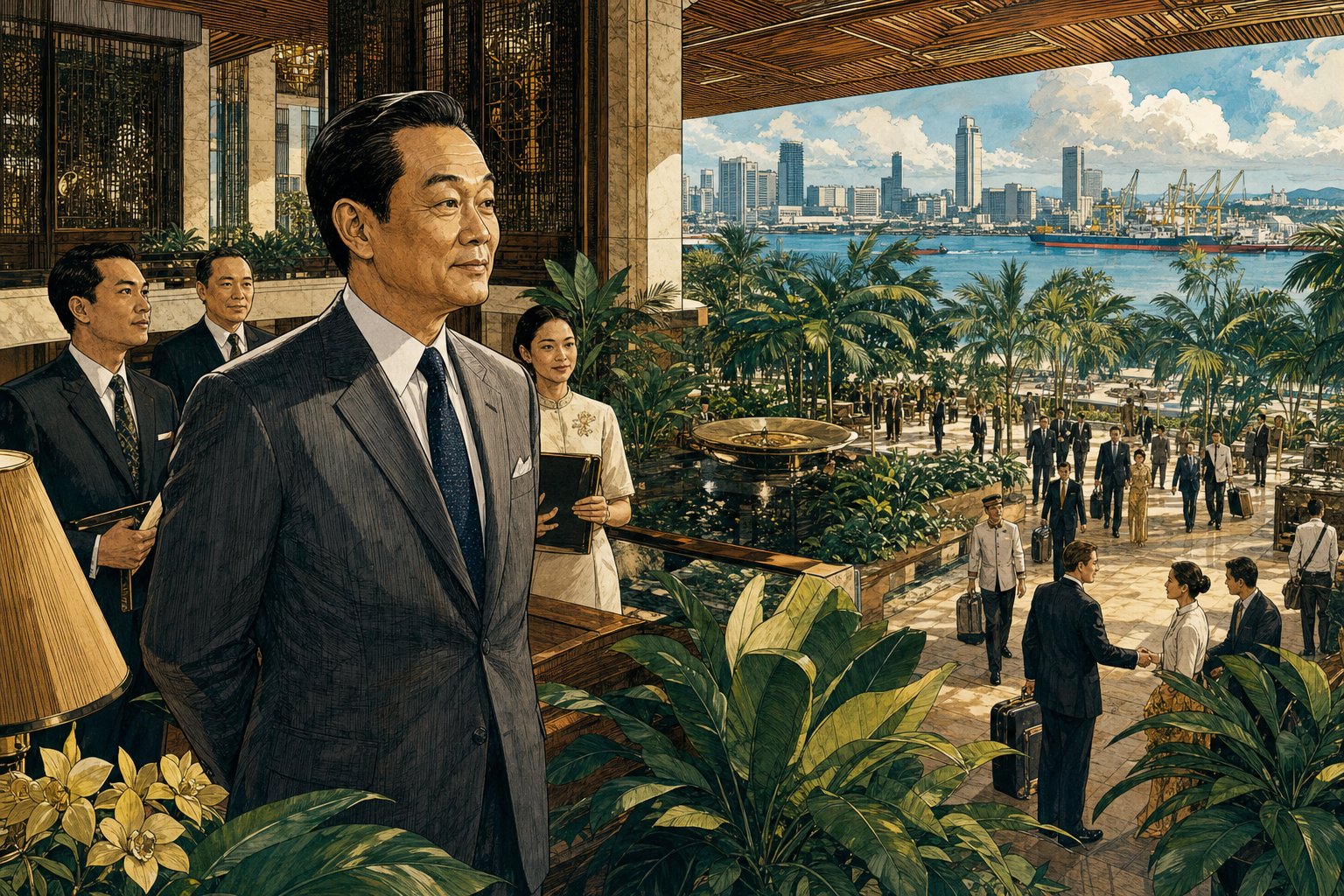
In 1971, Kuok opened the first Shangri-La hotel in Singapore. Luxury hospitality looked far removed from sugar, but it matched a macro view: Asian economies were industrializing, international travel was growing, and the region needed institutions capable of serving global business.
Hotels combined operations with real estate. A successful property generated room and food revenue while anchoring valuable land. A regional brand could transfer service standards, customer trust, and procurement knowledge across cities.
The name Shangri-La offered an image of Asian warmth and escape that traveled well internationally. The hotels became one of the group’s most visible consumer businesses, even as the underlying family empire remained private and discreet.
Expansion required long-duration capital. A hotel may take years to plan, build, and mature. Family control allowed Kuok to think across cycles without explaining every quarter to outside shareholders, though listed affiliates later introduced public-market discipline.
The strategy also positioned the group near decision-makers. Hotels host executives, diplomats, investors, and events. They are not merely rooms; in growing commercial centers, they can become nodes of information and relationships.
Kuok’s Hong Kong expansion added property, logistics, media, and proximity to China. His companies entered mainland markets early relative to many international peers, supported by cultural fluency and high-level relationships. That access generated opportunity and the recurring question surrounding every politically connected empire: where does commercial judgment end and influence begin?
The Power—and Risk—of Quiet Relationships
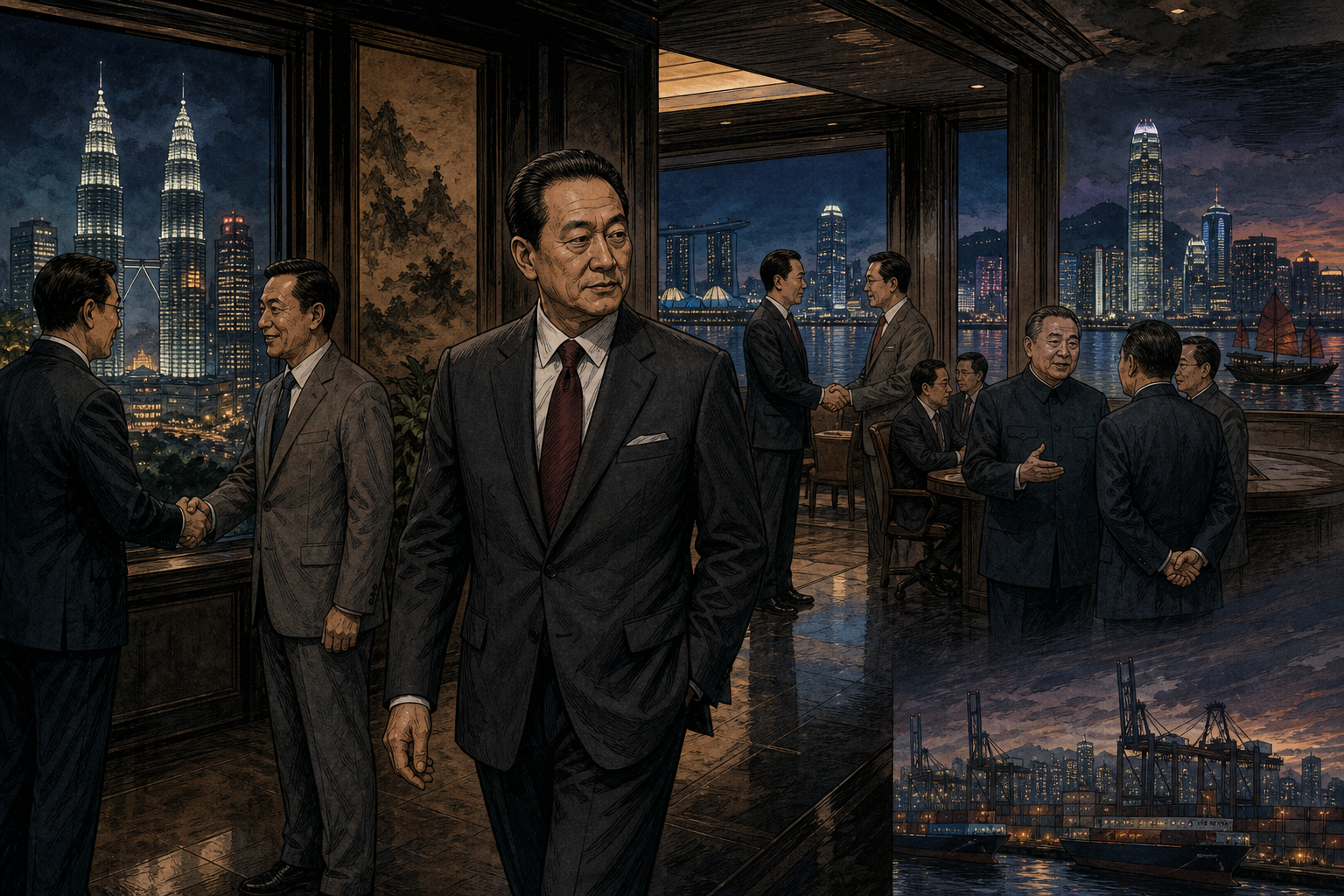
Kuok cultivated a reputation for privacy, diplomacy, and direct access across political divides. He could operate in Malaysia, Singapore, Hong Kong, and China while maintaining global commercial relationships.
In markets where governments shape land, licenses, food security, currencies, and cross-border trade, political understanding is not optional. Kuok appeared to treat relationships as long-term assets rather than opportunities for public display.
Discretion reduced reputational noise, but it also made the organization less legible. Private family empires can move patiently and protect sensitive negotiations. They can also concentrate decisions and leave outsiders uncertain about governance, related-party relationships, and succession.
The group’s ownership of the South China Morning Post illustrated both influence and strategic exit. Kuok-controlled interests acquired the Hong Kong newspaper in the 1990s. Alibaba purchased it in 2015. Media ownership placed the family near political narratives, but it was not a permanent attachment.
Succession is the central test of such an empire. Kuok’s children and extended family have held roles across group businesses, while professional executives operate major companies. The question is not simply who inherits shares. It is whether the next generation preserves capital allocation discipline, trust, and the ability to say no.
Relationships can open doors, but they cannot indefinitely rescue a poorly run refinery, hotel, or shipping network. Kuok’s durability came from pairing access with operating assets that customers continued to use.
The Real Lesson: Own the Flow, Not the Headline
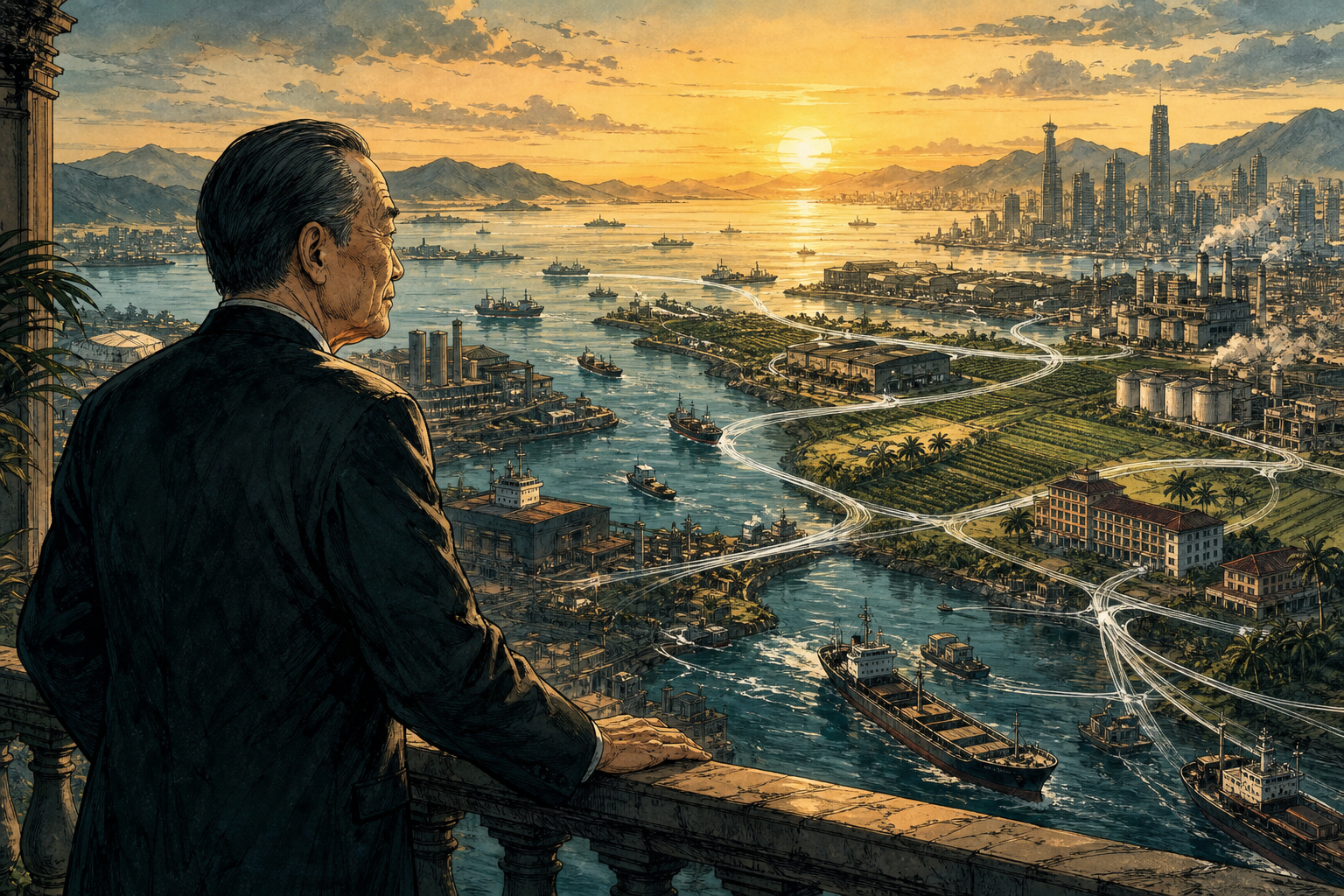
Robert Kuok’s career is a study in moving upstream and downstream from information. He learned where goods were scarce, then invested in the processing, transport, property, and relationships that determined whether those goods moved.
He diversified, but not randomly. Sugar connected to refining. Grain connected to flour. Trade connected to shipping and logistics. Regional growth connected to hotels and urban property. China connected to Hong Kong capital and networks.
The empire’s quietness was not the absence of ambition. It was a strategy for preserving room to maneuver across governments, generations, and cycles.
For entrepreneurs, the lesson is not to imitate a conglomerate before earning a core advantage. It is to identify which constraint repeatedly captures value around the original business. Sometimes the best expansion is the asset that makes your existing flow more reliable.
Kuok became famous for sugar, but sugar was only the classroom. The enduring fortune came from understanding that in essential industries, the person who controls the flow can outlast the person who captures the headline.
💡 Key Insights
- ▸ Commodity advantage comes from information, logistics, financing, and relationships—not merely predicting price.
- ▸ Moving from trading into processing and distribution can convert volatile margins into structural control.
- ▸ Geographic and political fluency became a form of capital in postwar Asian markets.
- ▸ Family ownership supports patience, but succession and governance determine whether patience survives generations.