Rose Blumkin: How Mrs. B Built Nebraska Furniture Mart Into Buffett's Favorite Retail Lesson
Rose Blumkin turned $500, ruthless pricing, and immigrant discipline into Nebraska Furniture Mart, then sold Warren Buffett a retail empire on trust and numbers.
View all stories about this mogul
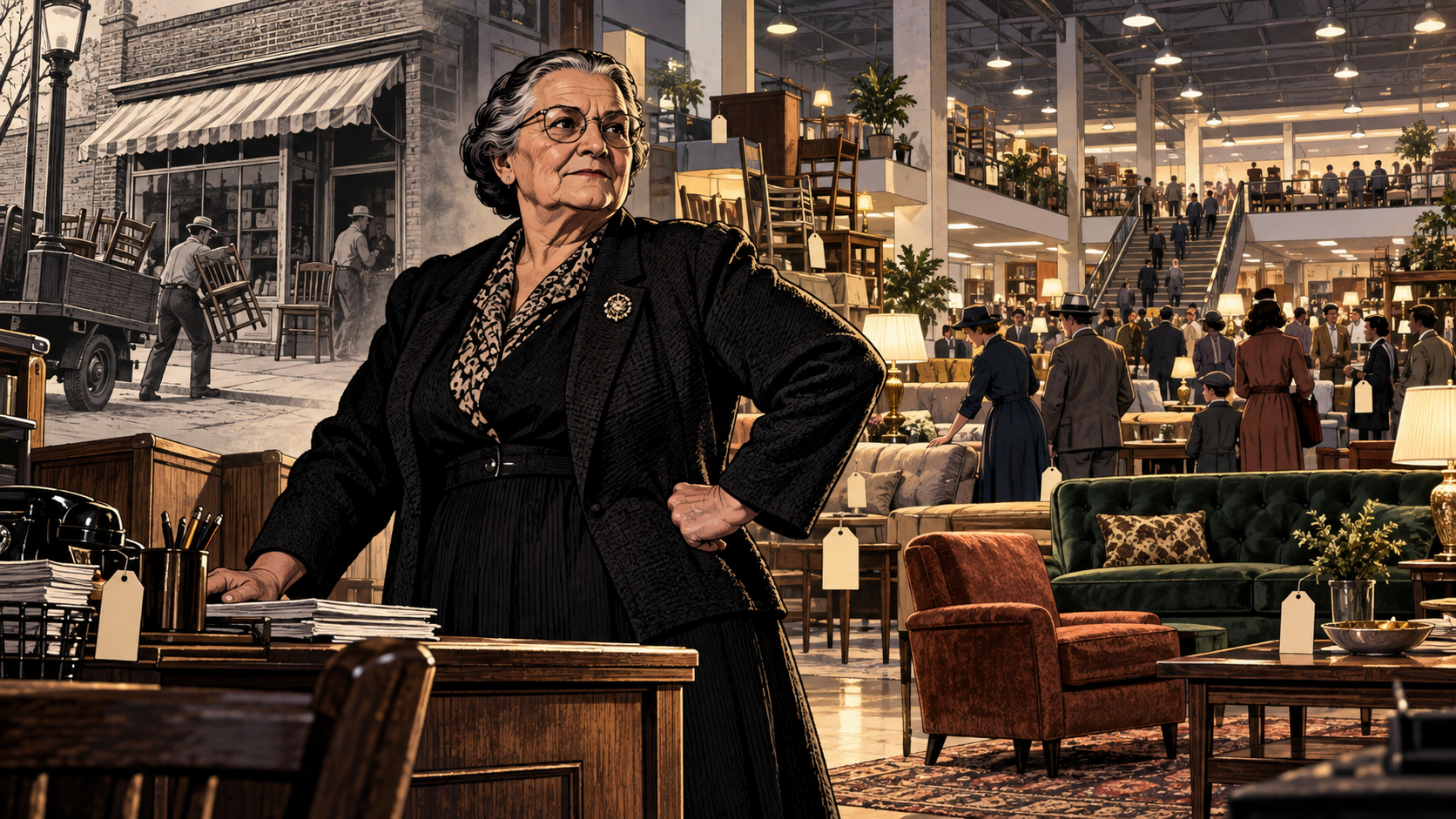
Rose Blumkin, known everywhere as Mrs. B, built Nebraska Furniture Mart from a $500 start into a retail machine so formidable that Warren Buffett bought control in 1983 with unusual speed and trust. The story is not sentimental immigrant folklore. It is the biography of a founder who turned low prices, sharp memory, and relentless work into one of Berkshire Hathaway’s most famous operating lessons.
How did Rose Blumkin build Nebraska Furniture Mart?
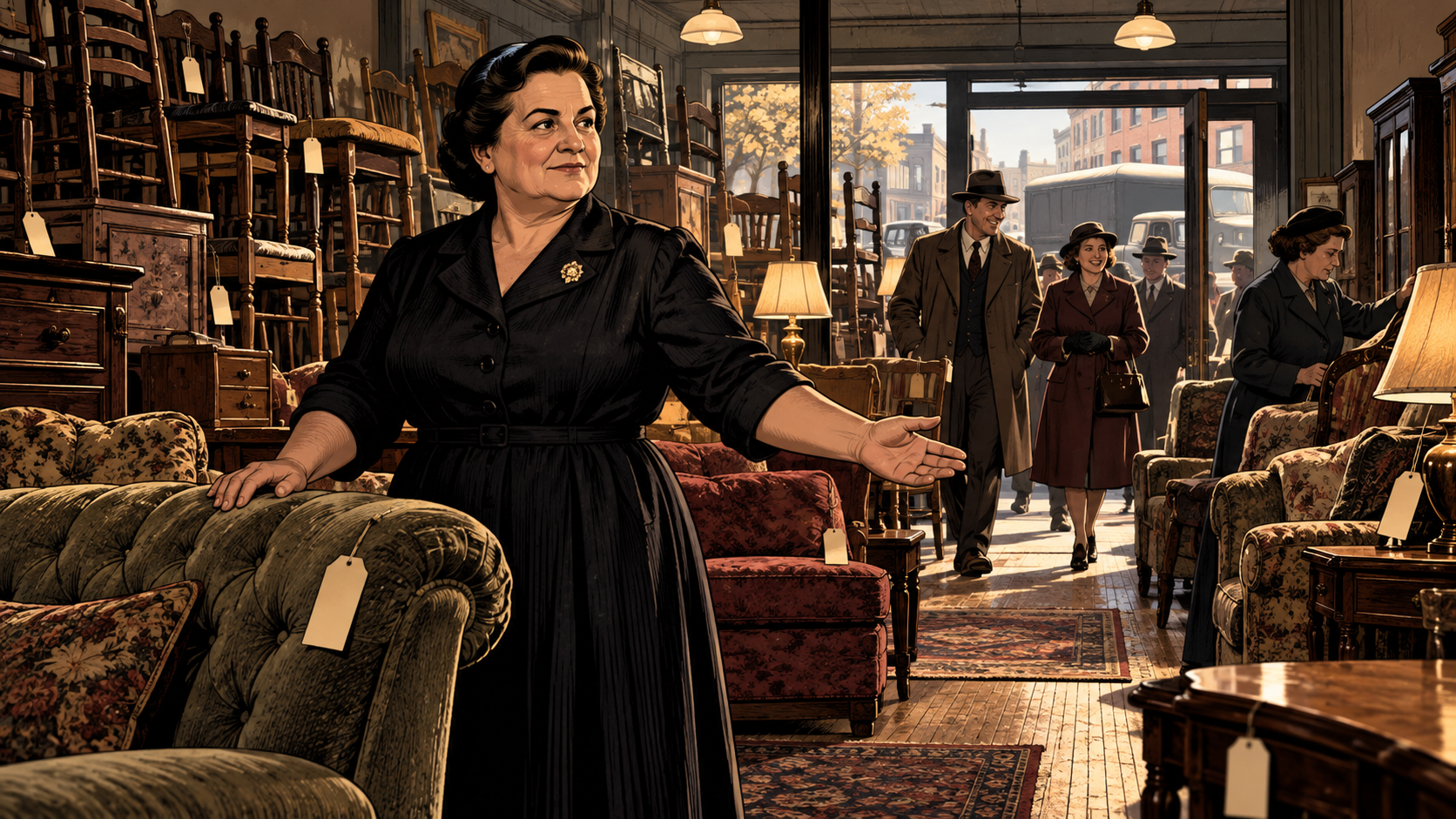
Rose Gorelick Blumkin was born in what is now Belarus in 1893 and immigrated to the United States. She settled in Omaha, Nebraska, with her husband Isadore. Her English was limited, but her commercial instincts were not. She understood cost, price, inventory, and trust with the directness of someone who could not afford abstract theories.
Nebraska Furniture Mart began in 1937 with $500. The exact origin story varies slightly by account, but the central facts are consistent: Mrs. B started small, sold furniture cheaply, and built a reputation that frightened larger competitors. Her famous operating principle was simple enough to become folklore: sell cheap and tell the truth.
That line worked because it was not a marketing department invention. It described the business model. If customers believed the price was honest, they came back. If suppliers tried to block her because she undercut rivals, she found other ways to buy. If a family needed furniture, she wanted the sale and the relationship.
The early Mart was not glamorous. It was a price battlefield. Mrs. B competed against established stores with better connections, more polish, and deeper comfort. She fought with volume, frugality, memory, and directness. She knew what goods cost. She knew what competitors charged. She knew which customers returned.
For readers searching “how Rose Blumkin built her empire,” the answer is not complicated, but it is difficult. She made the bargain believable every day. Low prices became a trust signal. Trust became traffic. Traffic became purchasing power. Purchasing power became more low prices.
Why did Warren Buffett buy Nebraska Furniture Mart?
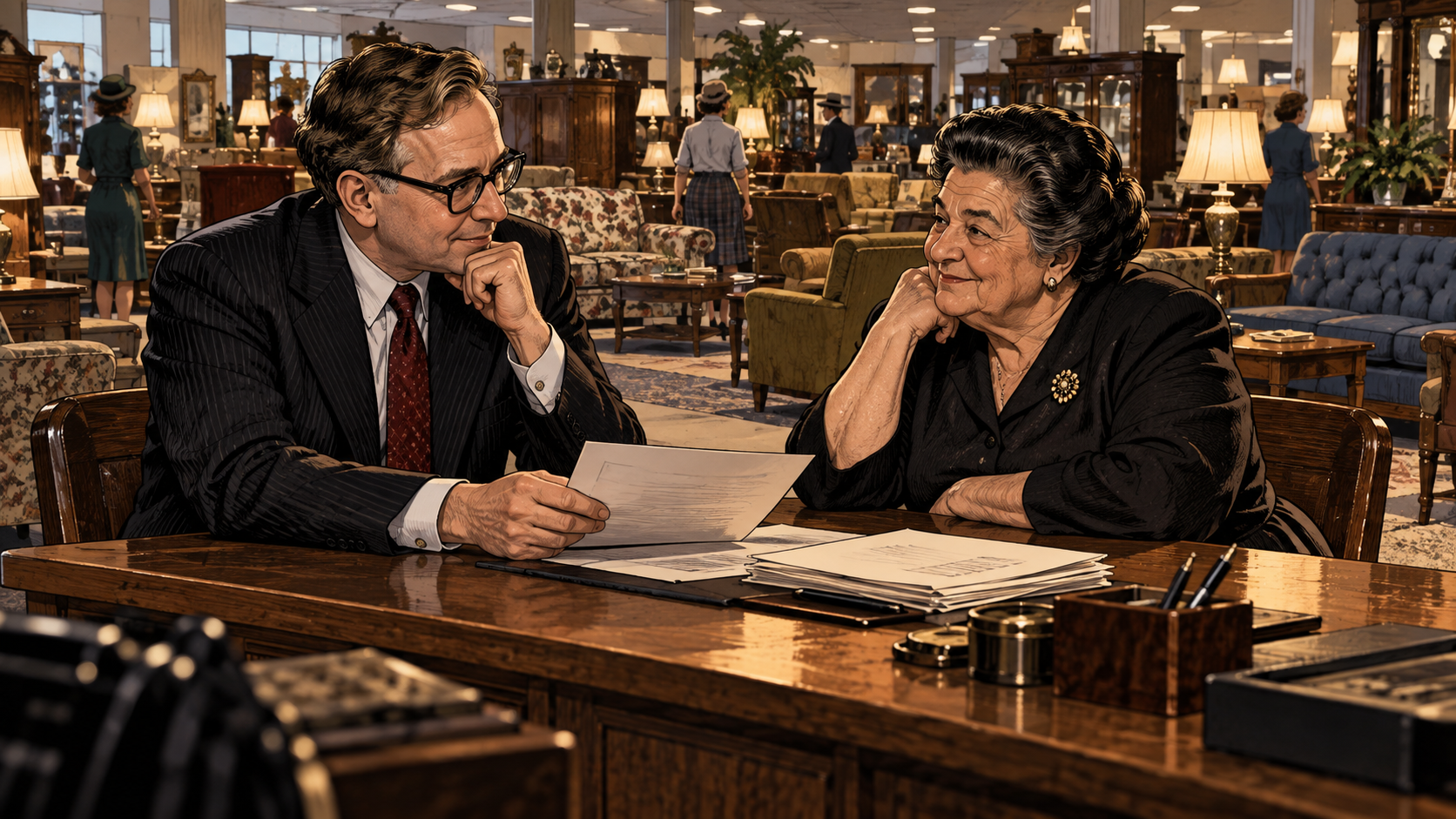
Warren Buffett loved businesses whose economics could be seen without a parade of consultants. Nebraska Furniture Mart was that kind of business. Customers filled the store. Inventory moved. The reputation was local and powerful. The founder was still close enough to the floor to know the truth faster than a report could summarize it.
Berkshire Hathaway acquired a majority interest in Nebraska Furniture Mart in 1983. Buffett later wrote about the transaction as a model of trust and simplicity. In Berkshire’s telling, the deal did not require the usual theater of investment bankers and armies of lawyers. It rested on the business, the Blumkin family, and Buffett’s confidence in what Mrs. B had built.
The purchase price is often reported as $60 million for a controlling stake, though public retellings sometimes vary on the precise percentage described. Berkshire’s own letters are the best anchor: Buffett emphasized the acquisition of a majority interest and his admiration for Rose Blumkin and her family.
The deeper reason Buffett bought NFM was that Mrs. B had created a durable local monopoly of trust. A furniture store is normally not a glamorous business. Margins can be pressured, inventory is bulky, and customers comparison shop. But NFM had scale, reputation, and cost discipline. Those are Berkshire traits.
Buffett also cared about managers who kept behaving like owners after selling. Mrs. B did not become a ceremonial founder. She remained part of the operating story, famously working into extraordinary old age. That continuity reduced Berkshire’s risk. The person who had built the culture was still reinforcing it.
| Year | Event | Why it mattered |
|---|---|---|
| 1893 | Rose Gorelick Blumkin was born | Her immigrant life shaped the frugal operating style |
| 1910s | Moved to the United States and later Omaha | Omaha became the market where she built scale |
| 1937 | Opened Nebraska Furniture Mart with about $500 | A small start became a retail institution |
| 1983 | Berkshire Hathaway acquired a majority interest | Buffett validated the business as a model Berkshire company |
| 1989 | Mrs. B briefly opened a competing outlet after a family dispute | Even in her nineties, her competitive instinct remained fierce |
| 1992 | Berkshire acquired the outlet operation | The family business was consolidated again |
| 1998 | Rose Blumkin died at 104 | Her operating lessons outlived the founder |
What was Rose Blumkin’s net worth?
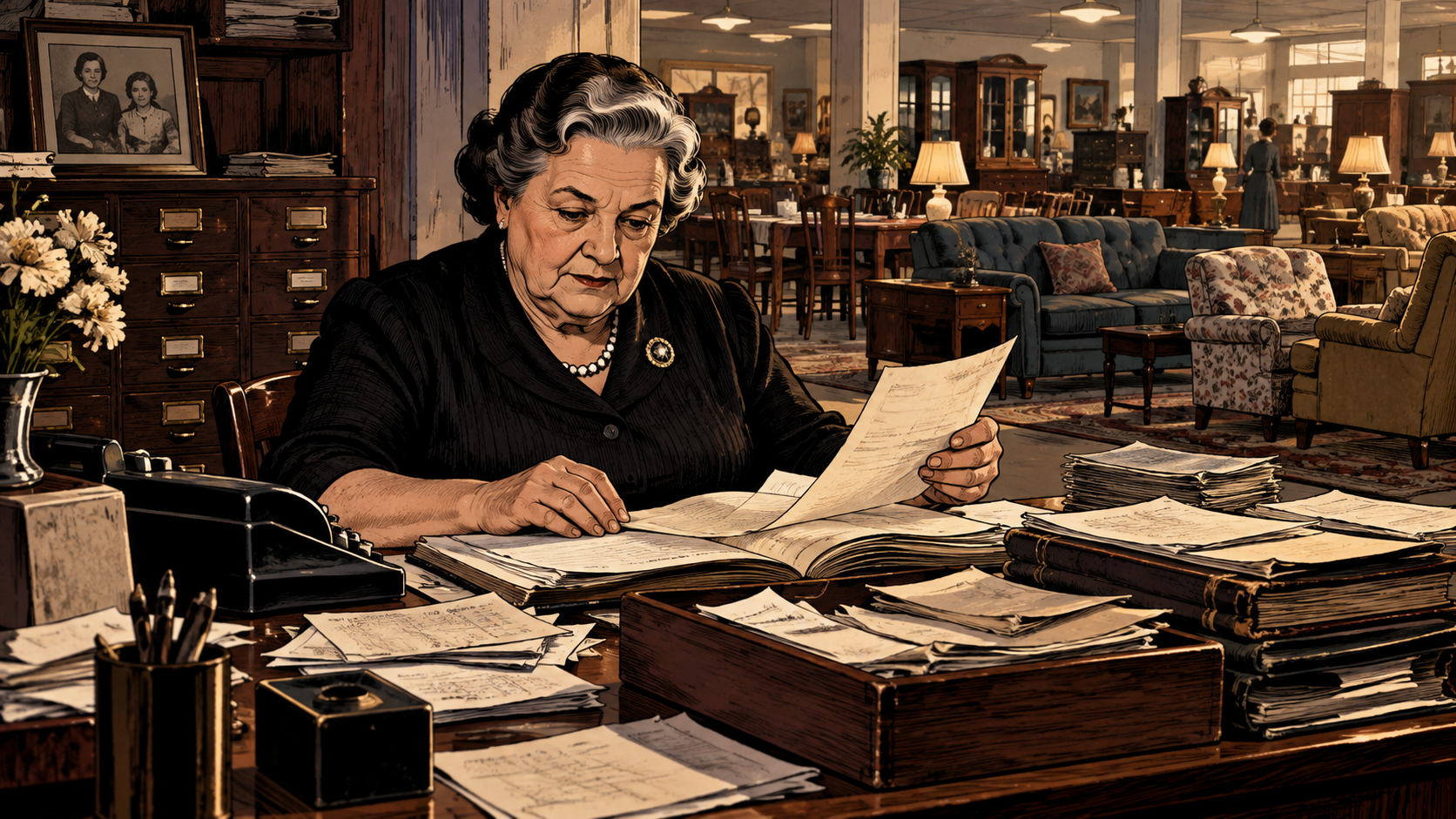
Rose Blumkin’s personal net worth is harder to state than the sale price of her company. She was not a modern founder with a constantly repriced public stock stake. Her wealth was tied to family ownership, the Berkshire transaction, retained interests, and estate decisions.
The number that matters most in the public business record is the Berkshire acquisition price: widely reported around $60 million for control of Nebraska Furniture Mart in 1983. That was an enormous validation of a company started with about $500.
But reducing Mrs. B to a net-worth figure misses the stronger lesson. Her wealth came from building a store that customers trusted to deliver real bargains. That trust had economic value because it lowered the need for persuasion. People came to NFM expecting the deal to be honest.
Buffett’s admiration was not based on luxury branding or fashion taste. It was based on retail physics. Buy well. Price sharply. Turn inventory. Keep overhead low. Make customers believe you. Repeat for decades. In an industry where many operators chase display and margin, Mrs. B won by making volume and reputation reinforce each other.
The “net worth of Rose Blumkin” question therefore has two answers. The narrow answer is that public sources do not provide a clean current-style billionaire ranking for her. The business answer is that she converted $500 of starting capital into a company valuable enough for Berkshire Hathaway to buy for tens of millions of dollars.
What happened after Mrs. B sold to Berkshire?
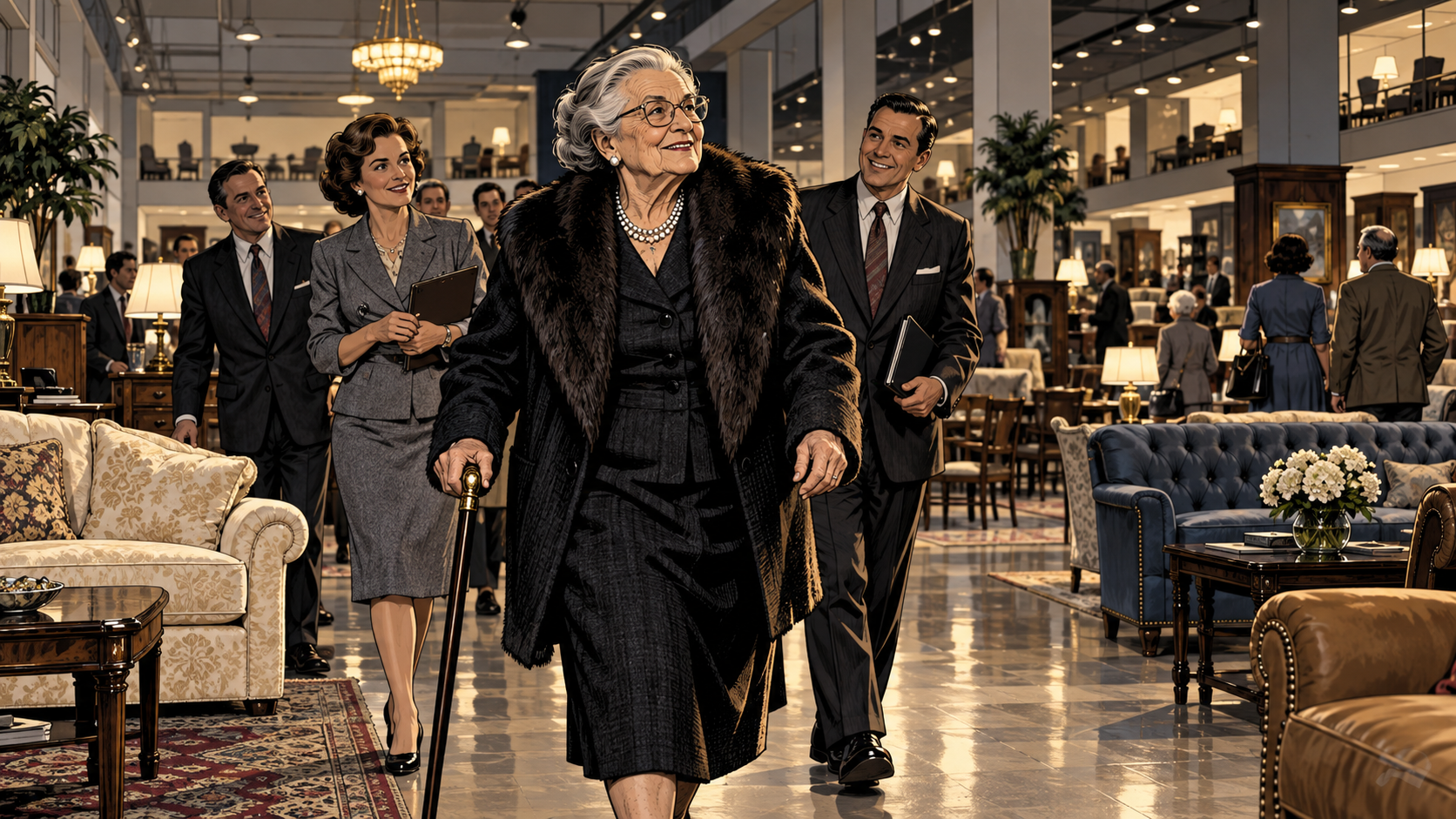
The sale did not end the drama. Mrs. B’s identity was wrapped around selling furniture. She continued working, and family tensions eventually produced one of the most remarkable late-career episodes in American retail. In 1989, when she was in her nineties, she opened Mrs. B’s Clearance and Factory Outlet across from Nebraska Furniture Mart after a dispute.
The episode sounds almost comic until you understand what it reveals. Her competitive advantage was personal and portable. Even after Berkshire bought control of the Mart, Mrs. B could still attract customers because the market trusted her. A founder’s reputation had become a commercial asset separate from the building.
Berkshire later acquired the outlet, bringing the operation back into the fold. For Buffett, the lesson was memorable: never underestimate a founder who still knows the customer better than everyone else in the room.
Mrs. B continued to be associated with the business deep into old age. She died in 1998 at 104. By then, Nebraska Furniture Mart had become part of Berkshire’s broader story about decentralized ownership: buy excellent businesses, keep capable managers, avoid unnecessary interference, and let durable economics work.
The post-sale chapter also complicates the founder myth. Selling a company does not always mean a founder becomes emotionally separate from it. For Mrs. B, the store was not an asset class. It was a life. That attachment could create tension, but it also explains the intensity that built the Mart in the first place.
Why is the biography of Rose Blumkin still a founder playbook?

Rose Blumkin’s biography remains useful because it strips retail down to basics. She did not build with venture capital, celebrity advertising, or software lock-in. She built with price, trust, and stamina.
The first lesson is that clarity beats ornament. Customers understood what NFM stood for. The promise did not need a long brand manifesto. Cheap prices and truthful dealing were enough because the store delivered them.
The second lesson is that cost discipline is cultural. A founder cannot ask the company to be frugal while behaving extravagantly. Mrs. B’s personal toughness gave the operating model credibility. Employees and family members could see that the standard applied at the top.
The third lesson is that local dominance can be as powerful as global ambition. Nebraska Furniture Mart did not need to become a fashionable coastal brand to become extraordinary. It won a market deeply enough that the economics became visible to one of the world’s most disciplined buyers of businesses.
The fourth lesson is that trust compounds slowly and can transfer into enterprise value. Buffett did not buy a pile of sofas. He bought a reputation, a customer habit, a family operating system, and a low-cost retail machine.
FAQ
What is Rose Blumkin famous for?
Rose Blumkin, known as Mrs. B, founded Nebraska Furniture Mart and built it into one of America’s most admired furniture retailers.
How did Rose Blumkin make her money?
She made her money by building Nebraska Furniture Mart from a small Omaha store into a dominant furniture retailer later acquired by Berkshire Hathaway.
What was Rose Blumkin’s net worth?
There is no precise modern public net-worth figure, but Berkshire Hathaway’s 1983 acquisition of control of Nebraska Furniture Mart is widely reported around $60 million.
Why did Warren Buffett admire Rose Blumkin?
Buffett admired her cost discipline, honesty with customers, work ethic, and the durable economics of the business she built.
What is the main lesson from Nebraska Furniture Mart?
The main lesson is that low prices, truthful dealing, and disciplined operations can compound into a powerful retail moat.
💡 Key Insights
- ▸ The biography of Rose Blumkin is a retail story about cost discipline, trust, and customer obsession without slogans.
- ▸ Nebraska Furniture Mart turned low prices into a moat because Mrs. B made credibility operational.
- ▸ The Buffett acquisition worked because the numbers were visible in the store before they were visible in audited statements.
- ▸ A founder can build an empire by making every customer believe the bargain is real.