Sam Walton: The Small-Town Merchant Who Built the Largest Company on Earth
He drove a pickup truck, flew his own plane, and visited competitors' stores obsessively. Sam Walton built Walmart from a single five-and-dime in Arkansas into the world's largest retailer — and the largest private employer in human history.

View all stories about this mogul
Sam Walton was the richest man in America, and he drove a 1979 Ford F-150 pickup truck with dog cages in the back. While other billionaires collected art, yachts, and mansions, Walton collected data — visiting competitors’ stores, measuring aisle widths, counting checkout lines, interrogating employees about what was selling and what wasn’t. He was a relentless, obsessive student of retail who built the world’s largest company from a single variety store in a small Arkansas town that most Americans couldn’t find on a map. By the time he died in 1992, Walmart had 1,928 stores, employed 371,000 people, and generated $55 billion in annual revenue. Today it generates over $600 billion and employs 2.1 million people — the largest private employer in human history.
Chapter 1: The Depression Kid (1918–1945)
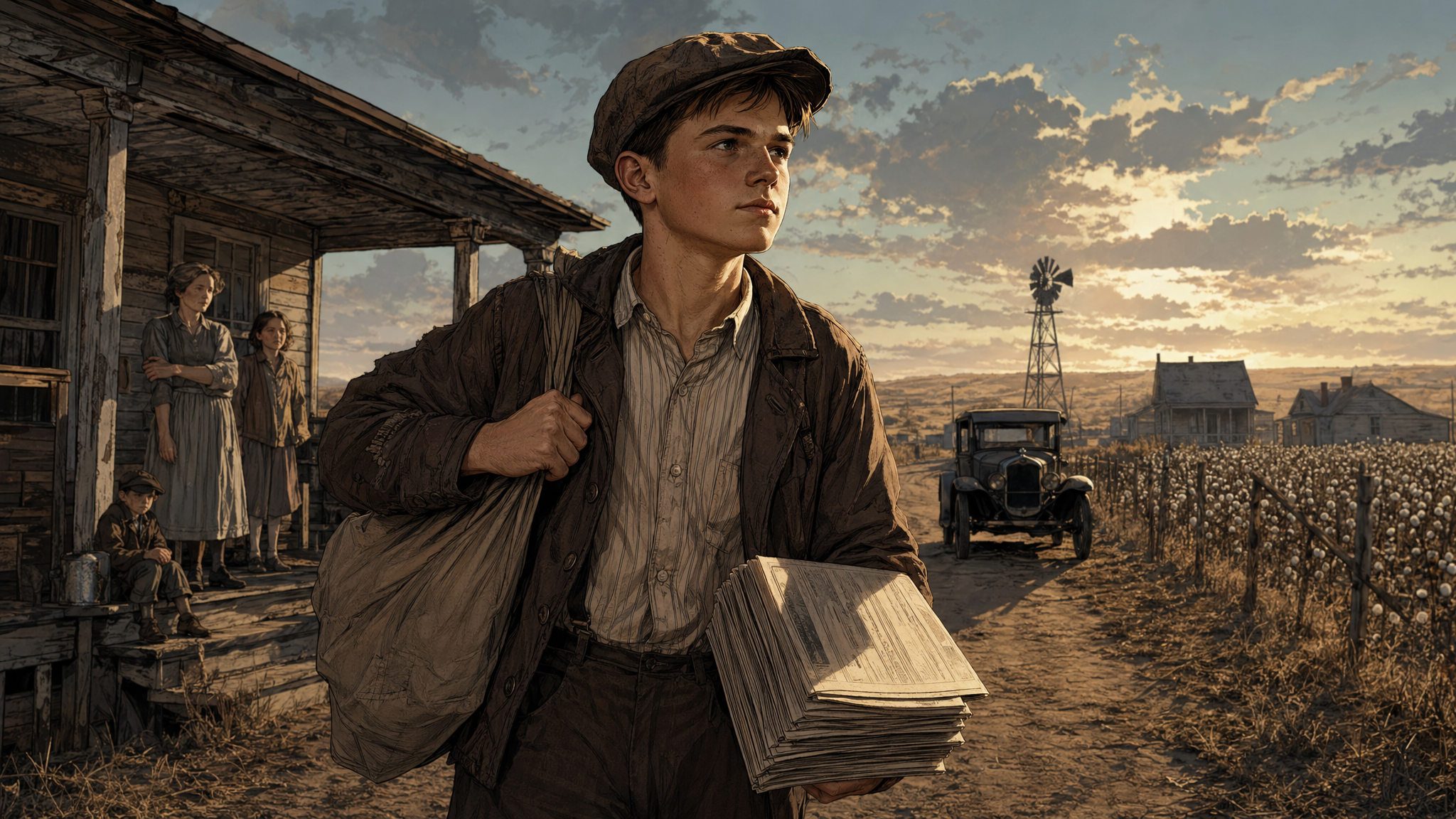
Samuel Moore Walton was born on March 29, 1918, in Kingfisher, Oklahoma. His family was not poor by Depression standards but was far from comfortable. His father was a farm mortgage agent — a man whose job was essentially repossessing farms from families who couldn’t pay their loans. It was grim work, and it gave young Sam an early, intimate understanding of financial hardship and the value of every dollar.
The family moved frequently through Oklahoma and Missouri during Sam’s childhood. At each stop, Sam found ways to make money: delivering newspapers, selling magazine subscriptions, raising and selling rabbits and pigeons. He was not motivated by greed but by a competitive drive that bordered on compulsion. He didn’t just want to sell magazines — he wanted to sell more magazines than anyone in the state. And he usually did.
He attended the University of Missouri, where he was president of his senior class, an ROTC leader, and a member of every organization that would have him. He graduated in 1940 with a degree in economics, worked briefly at JCPenney (where he learned the basics of retail), and then served in the Army during World War II, reaching the rank of captain. He emerged from the war with discipline, confidence, and a burning desire to own his own business.
Chapter 2: The Ben Franklin Store and the First Lesson (1945–1962)

In 1945, Walton used a $20,000 loan from his father-in-law and $5,000 of his own savings to purchase a Ben Franklin variety store franchise in Newport, Arkansas. The store was small, underperforming, and located in a town of 7,000 people. Within five years, Walton had made it the top-performing Ben Franklin franchise in the six-state region.
His methods were not sophisticated — they were exhaustive. He drove to competitors’ stores in other towns and studied every detail: their layouts, their prices, their merchandise mix, their staffing levels. He bought products directly from manufacturers whenever possible, bypassing the Ben Franklin supply chain to get lower prices. He experimented constantly — moving displays, trying new product categories, testing promotions. Every decision was informed by observation, not theory.
Then came the devastating lesson. Walton’s lease expired in 1950, and his landlord — seeing how successful the store had become — refused to renew it. Walton lost the business he had built from scratch. The experience scarred him permanently. From that day forward, Walton never signed a lease without favorable renewal terms. More broadly, he learned that success built on terms you don’t control can be taken away at any moment.
Chapter 3: Walton’s Five and Dime — Starting Over (1950–1962)
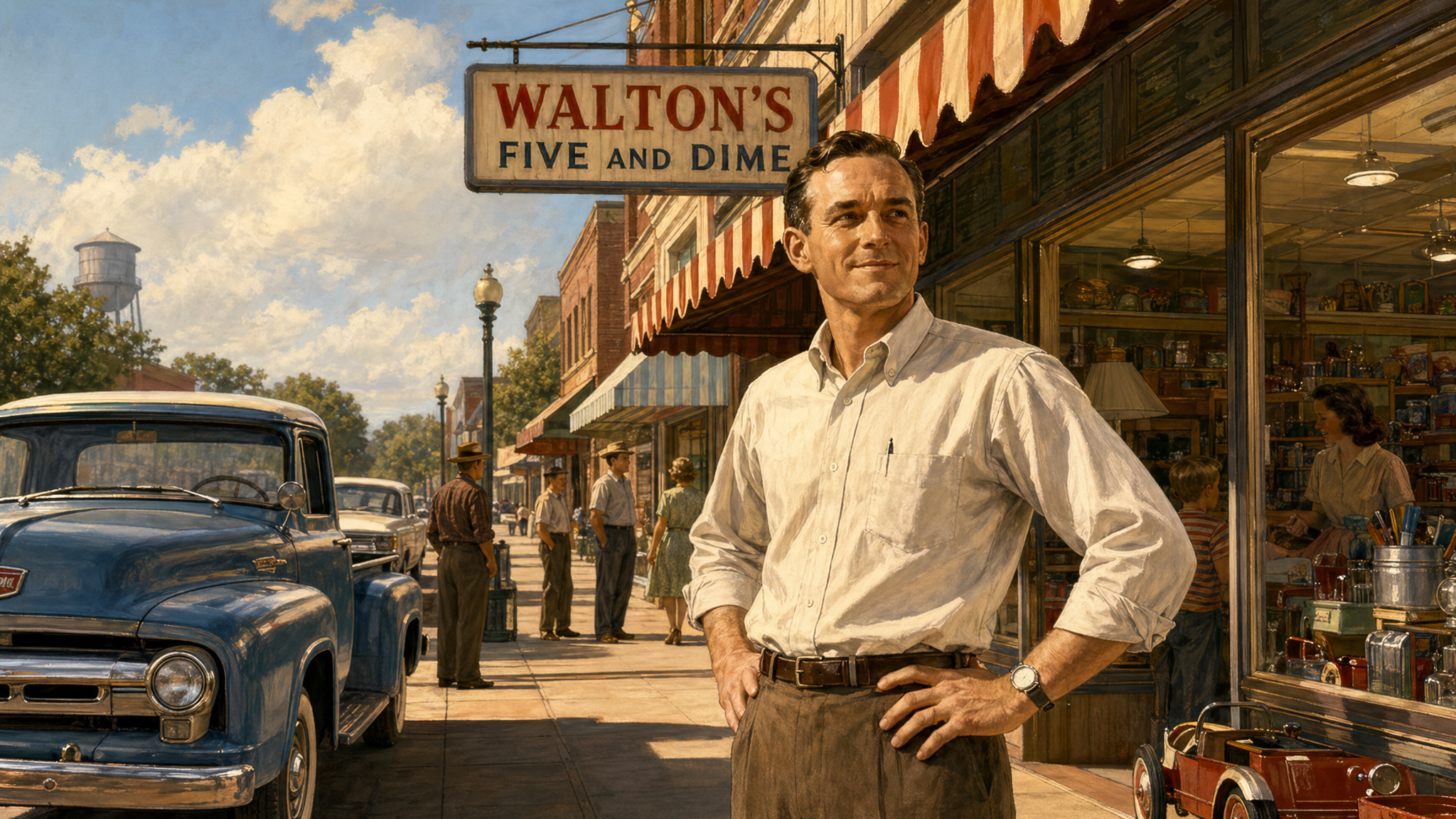
Walton moved his family to Bentonville, Arkansas — a town of 3,000 people in the northwest corner of the state — and opened Walton’s Five and Dime, another Ben Franklin franchise. He chose Bentonville partly because his wife Helen liked the small-town atmosphere and partly because the location was central enough to drive to multiple states in a day, allowing Walton to visit suppliers and study competitors efficiently.
Over the next twelve years, Walton expanded to fifteen variety stores across Arkansas, Missouri, and Kansas. He was learning the mechanics of multi-store retail: how to manage inventory across locations, how to train managers, how to maintain consistency while adapting to local markets. Each store was a laboratory where Walton tested ideas.
He also developed a practice that would become legendary: Saturday morning meetings. Every Saturday, Walton gathered his managers to review the week’s results, share ideas, and plan for the week ahead. The meetings were informal, data-driven, and sometimes heated. They created a culture of transparency and accountability that would scale from fifteen stores to thousands.
Chapter 4: The Birth of Walmart — Everyday Low Prices (1962–1970)
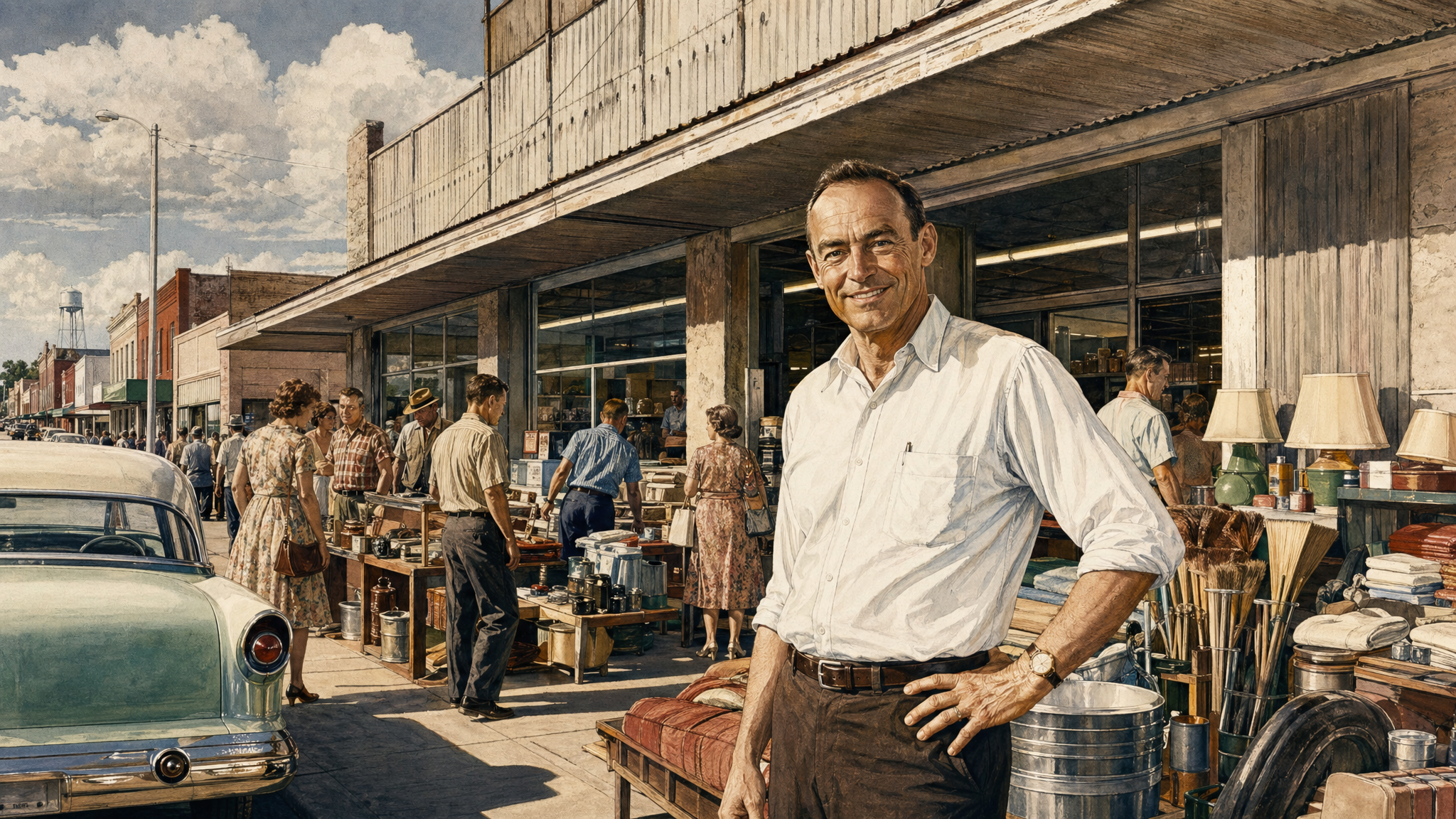
On July 2, 1962, Sam Walton opened the first Walmart Discount City in Rogers, Arkansas. The concept was simple: sell brand-name merchandise at the lowest possible prices, make up the thin margins through high volume, and locate in small towns that the major discount chains considered too small to bother with.
The timing was important. Discount retailing was emerging as a major force in the early 1960s — Kmart, Target, and Woolco all launched in 1962. But those chains focused on metropolitan and suburban markets. Walton focused on towns of 5,000 to 25,000 people — places where the nearest major retailer might be a two-hour drive away. In these towns, Walmart wasn’t competing with Kmart; it was competing with the local general store. And on price, the local general store couldn’t compete.
The first Walmart was not impressive. The store was in a converted feed mill, the displays were basic, and the selection was limited. But the prices were genuine — Walton’s obsessive cost management meant that Walmart could offer brand-name products at prices that undercut any competitor. Customers noticed. By 1970, Walton had eighteen Walmart stores generating $44 million in annual revenue.
Chapter 5: The IPO and the Distribution Revolution (1970–1980)
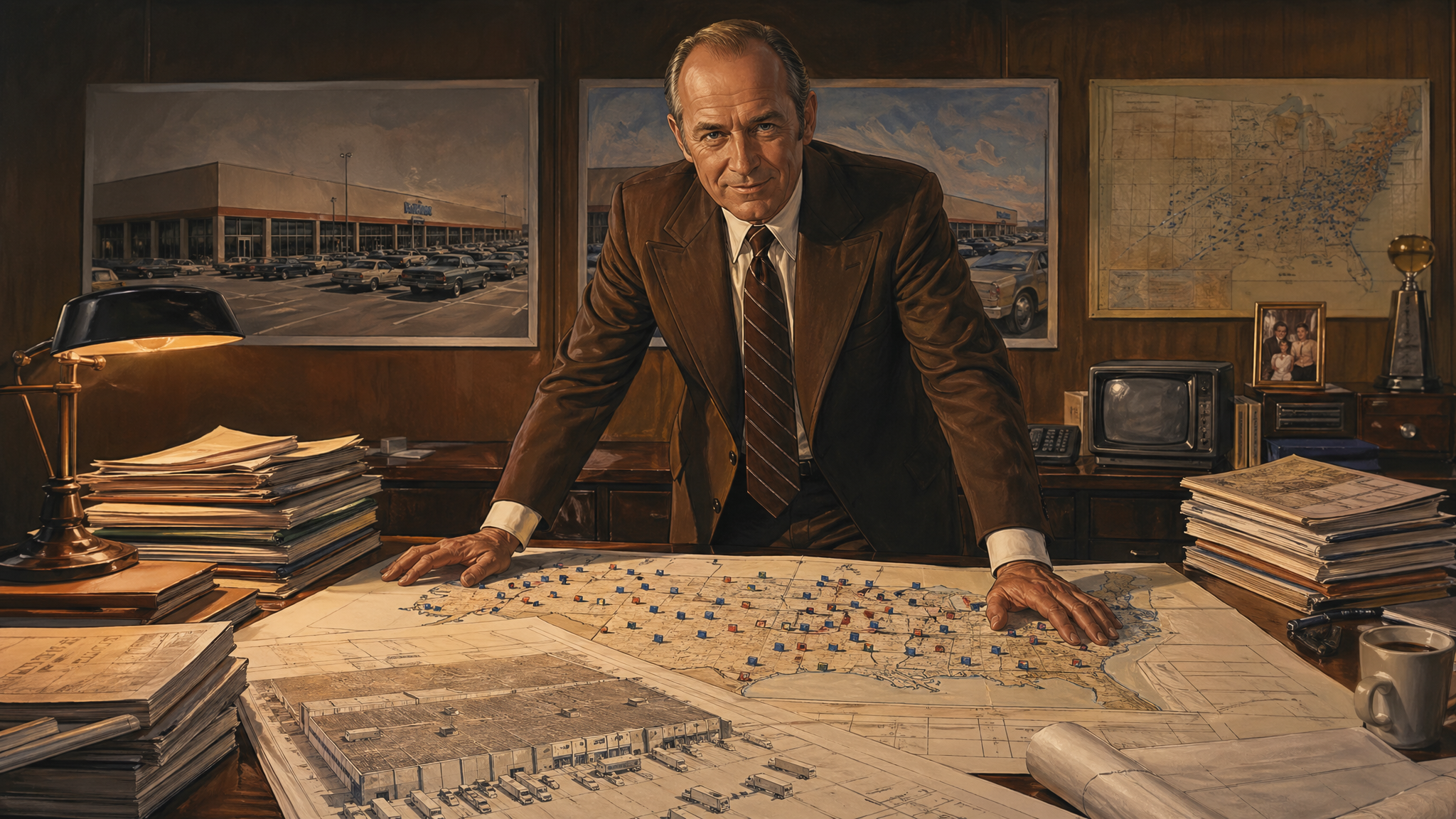
Walmart went public on October 1, 1970, at $16.50 per share. The IPO raised $3.3 million — modest by any standard — but it gave Walton access to the capital he needed to fund rapid expansion. Over the next decade, Walmart grew from 18 stores to 276 stores, with revenue increasing from $44 million to $1.2 billion.
The key to this growth wasn’t just opening stores — it was logistics. Walton invested heavily in distribution infrastructure, building warehouse distribution centers that could serve clusters of stores within a 300-mile radius. The distribution system was the competitive moat that made everything else possible. By receiving products at distribution centers and redistributing them to stores using Walmart’s own truck fleet, the company could maintain lower inventory costs and faster restocking than competitors who relied on third-party distribution.
Walton also invested in technology earlier than most retailers. Walmart was one of the first retailers to adopt computerized inventory management and barcode scanning. The technology allowed Walton to track what was selling in every store in near-real time, reorder efficiently, and identify trends before competitors noticed them. The combination of distribution infrastructure and information technology gave Walmart a structural cost advantage that would prove nearly impossible for competitors to replicate.
Chapter 6: The Relentless Expansion (1980–1990)
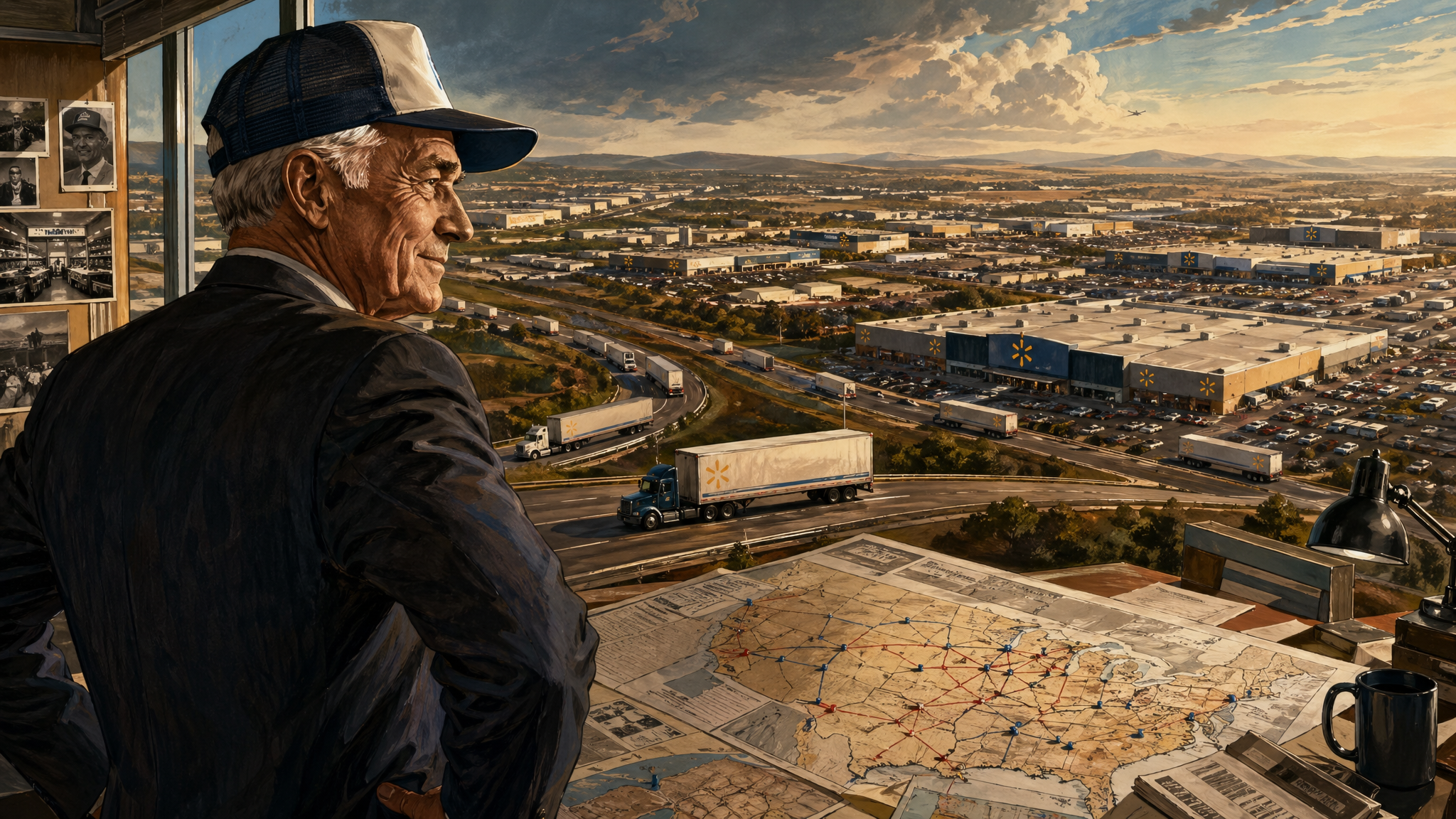
The 1980s were Walmart’s decade of explosive growth. Revenue went from $1.2 billion in 1980 to $26 billion in 1990. The number of stores grew from 276 to 1,528. By the end of the decade, Walmart had surpassed Kmart and Sears to become the largest retailer in America.
Walton’s expansion strategy was methodical. Walmart expanded outward from its Arkansas base in concentric circles, saturating one region before moving to the next. This approach ensured that new stores could be served by existing distribution centers and that brand awareness built naturally through word of mouth. By the time Walmart entered a new market, its distribution and supply chain infrastructure was already in place.
The relentless focus on cost reduction continued. Walton squeezed suppliers for lower prices, invested in more efficient distribution, and maintained a corporate culture of extreme frugality. Walmart’s headquarters in Bentonville were deliberately modest — executives shared offices, flew coach, and stayed at budget hotels. The message was clear: every dollar saved in overhead was a dollar that could be passed to the customer as lower prices.
Chapter 7: The Supplier Squeeze and the Walmart Effect (1985–1992)
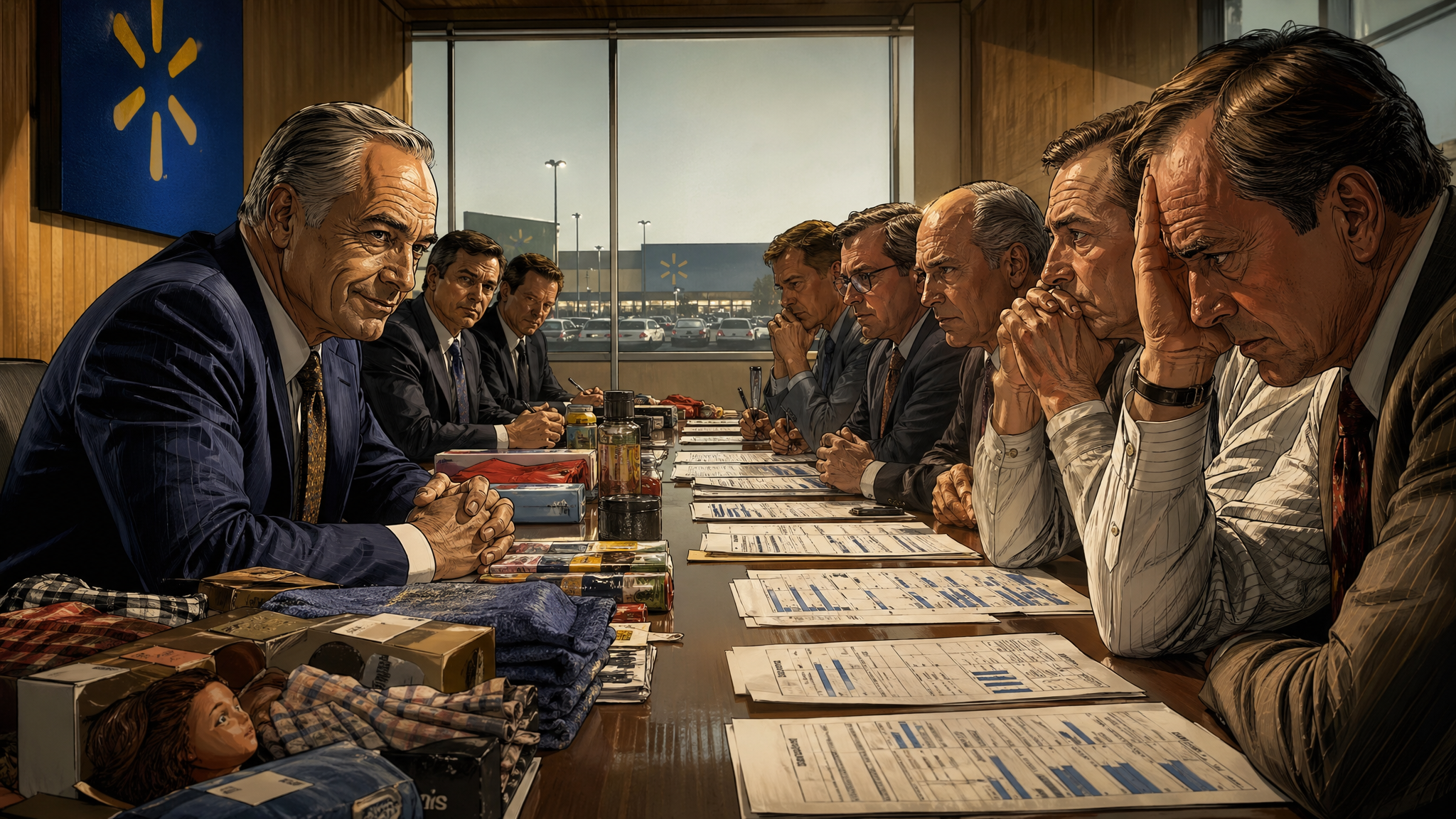
As Walmart grew, its relationship with suppliers shifted from negotiation to domination. Walmart became so large that for many manufacturers, it represented 20%, 30%, or even 50% of their total sales. A manufacturer couldn’t afford to lose Walmart as a customer, which gave Walmart enormous leverage in price negotiations.
Walton pioneered the practice of demanding that suppliers share detailed cost data — manufacturing costs, shipping costs, marketing expenses — so that Walmart could identify inefficiencies and demand lower prices. Suppliers who couldn’t or wouldn’t meet Walmart’s price demands were replaced. The system was brutally effective at reducing consumer prices but devastating for suppliers who were forced to cut costs, reduce quality, or offshore manufacturing to survive.
The “Walmart Effect” — the impact of Walmart’s pricing pressure on the broader economy — became a subject of intense debate. Economists estimated that Walmart saved American consumers tens of billions of dollars annually through lower prices. But critics argued that those savings came at a cost: lower wages for retail workers, destroyed small businesses in Walmart towns, and a race to the bottom in manufacturing quality as suppliers cut corners to meet Walmart’s price demands.
Chapter 8: Sam’s Culture — The Secret Weapon (1962–1992)
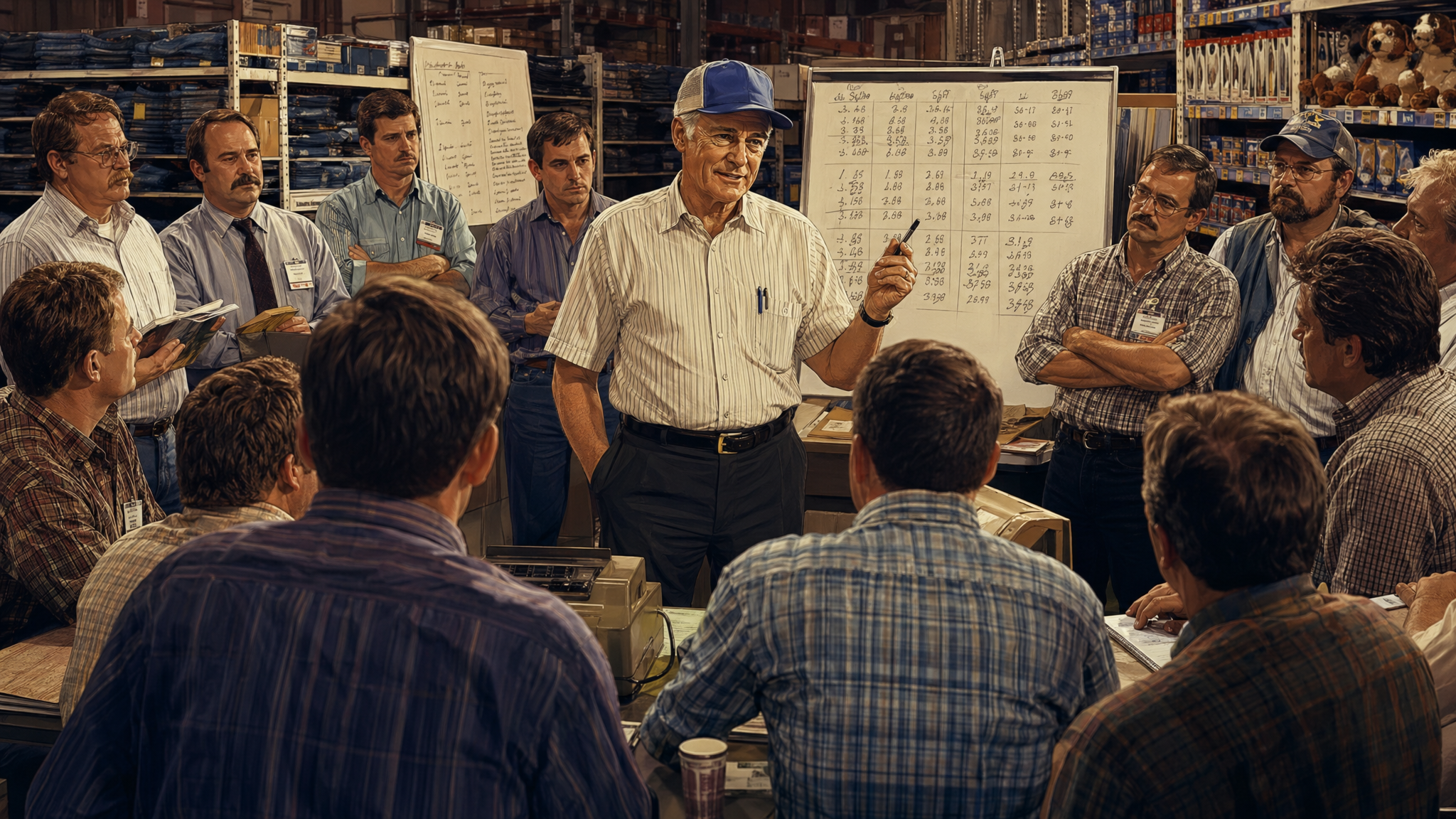
Walton built a corporate culture that was as distinctive as his business model. He called employees “associates” — a term that was radical in 1960s retail, where workers were treated as interchangeable. He implemented profit-sharing programs that gave associates a stake in the company’s success. He led company cheers at store openings and Saturday morning meetings. He visited stores personally, walking the aisles, talking to associates, and asking questions.
The culture was simultaneously egalitarian and demanding. Associates were treated with respect and given opportunities for advancement — Walmart promoted heavily from within. But expectations were high, hours were long, and the pace was relentless. Walton expected every associate to treat the company’s money as their own and to find ways to reduce costs in everything they did.
Walton’s personal frugality was legendary and genuine. He drove his pickup truck to the office every day. He flew economy class. He ate at the same diners as his associates. When he was named the richest man in America by Forbes in 1985, he was genuinely annoyed — not because the estimate was wrong, but because it brought attention he didn’t want and would make his suppliers think he could afford to pay more.
Chapter 9: Sam’s Club and International Ambitions (1983–1992)
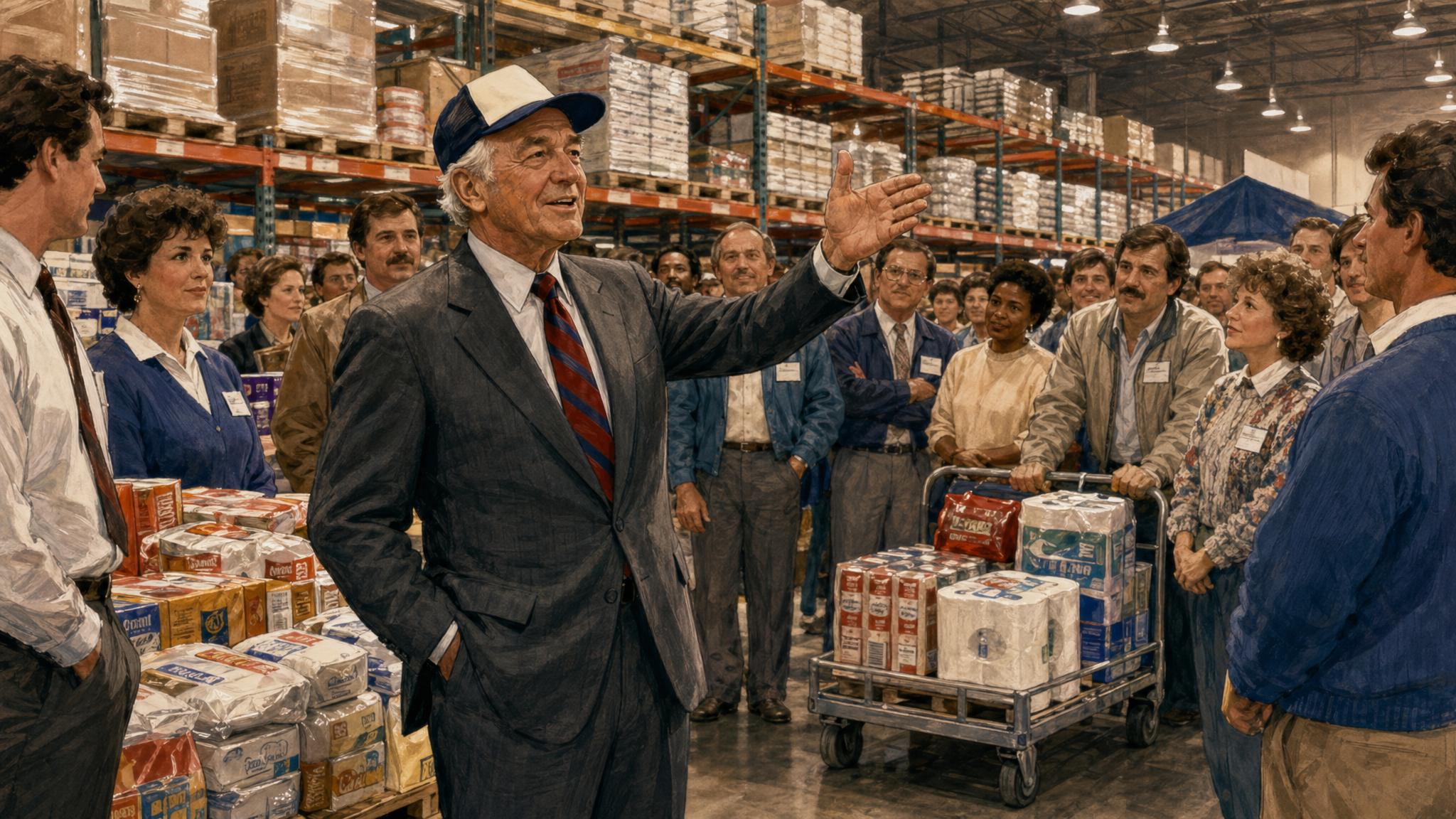
In 1983, Walton launched Sam’s Club — a membership-based warehouse club concept inspired by Price Club (which would later merge with Costco). Sam’s Club offered bulk quantities at wholesale prices, targeting small businesses and value-conscious consumers. The format was less polished than traditional Walmart but offered even lower prices on a narrower selection.
Sam’s Club grew rapidly, reaching 148 locations and $10 billion in revenue by 1992. The concept complemented Walmart’s discount stores by serving a different shopping occasion — stock-up trips for large quantities rather than regular weekly shopping. Together, the two formats gave Walton a retail presence that covered virtually every consumer need.
Walton also began Walmart’s international expansion, opening the first international store — a Sam’s Club in Mexico City — in 1991. The international expansion would accelerate dramatically after his death, eventually bringing Walmart to over 20 countries. But Walton had planted the seed: if the low-price, high-volume model worked in small-town Arkansas, why wouldn’t it work everywhere in the world?
Chapter 10: The Medal of Freedom and Final Days (1991–1992)
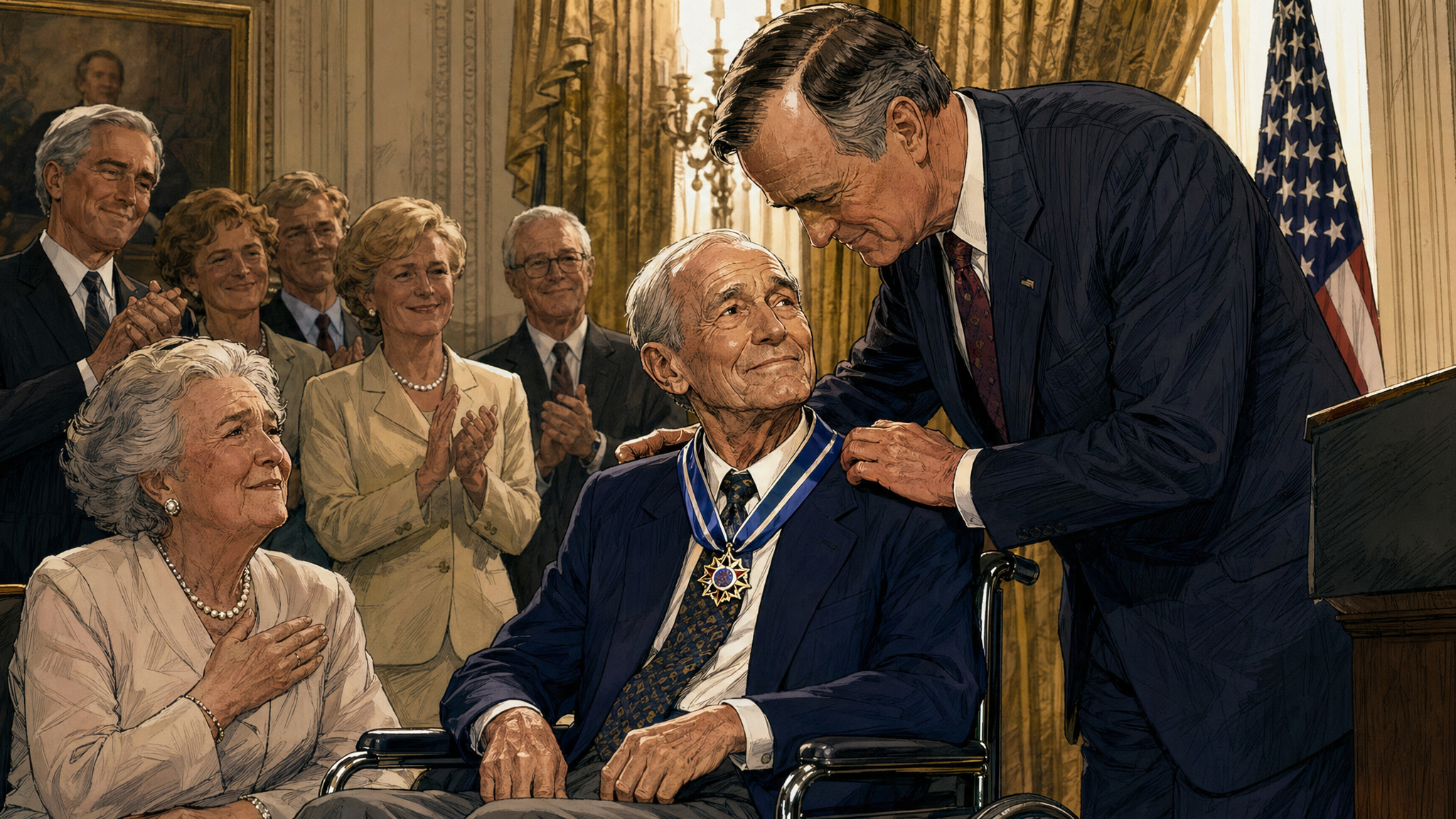
In March 1992, President George H.W. Bush awarded Sam Walton the Presidential Medal of Freedom — the highest civilian honor in the United States. By then, Walton was gravely ill with bone cancer and multiple myeloma. He accepted the medal in a wheelchair at the White House, frail but characteristically upbeat.
Walton had been diagnosed with cancer in 1990. He continued working through his treatment, visiting stores and attending Saturday morning meetings whenever his health allowed. His energy diminished but his intensity didn’t. Associates who saw him in his final months described a man who was still asking about sales figures, still wanting to know what the competition was doing, still focused on the business that had been his life’s work.
Sam Walton died on April 5, 1992, at the age of seventy-four. At the time of his death, his family’s combined net worth was estimated at approximately $25 billion, making the Waltons the wealthiest family in America. Walmart had 1,928 stores, 371,000 associates, and $55 billion in annual revenue. The company he had built in small-town Arkansas had become the largest retailer on Earth.
Chapter 11: The Legacy Machine — Walmart After Sam (1992–2025)
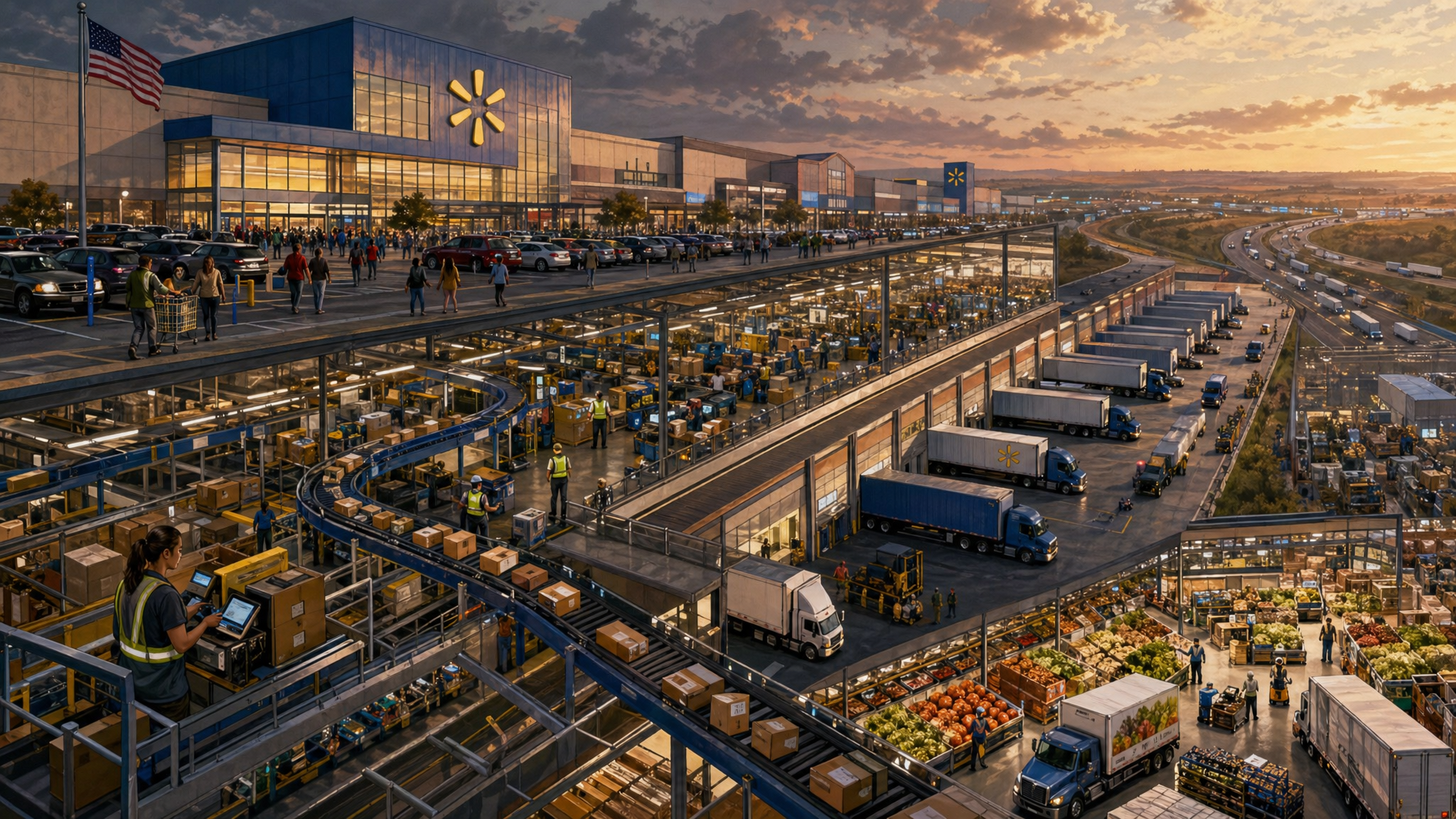
Walmart continued its explosive growth after Walton’s death. Revenue grew from $55 billion in 1992 to over $600 billion by 2025. The company expanded internationally, launched Walmart.com to compete with Amazon, and built a grocery business that made it the largest food retailer in America. The Walton family’s combined wealth grew to over $250 billion, making them by far the richest family in the world.
But Walmart also became a lightning rod for criticism. Labor advocates attacked its low wages and limited benefits. Environmentalists criticized its supply chain’s carbon footprint. Small-business owners blamed Walmart for destroying Main Street retail in thousands of American towns. The “always low prices” slogan that Sam Walton had championed was reinterpreted by critics as “always low wages.”
Walmart responded to some of these criticisms, raising its minimum wage, investing in sustainability, and improving benefits. But the fundamental tension between Walmart’s low-price model and its social impact remained unresolved. Walton had built a company optimized for consumer value, and the question of who bore the costs of that value — workers, communities, suppliers — would outlive him.
Chapter 12: Legacy — The Man Who Changed How America Shops

Sam Walton changed American retail more fundamentally than any single person in history. Before Walmart, retail prices varied dramatically by region and by store. After Walmart, prices were driven toward the minimum that efficient supply chains could deliver. Before Walmart, small-town Americans paid more for goods because they had fewer choices. After Walmart, they had access to the same low prices as urban consumers.
Whether this transformation was a net positive for America is one of the most debated questions in modern economics. Consumers gained through lower prices — the savings are estimated in the hundreds of billions. But communities lost local businesses. Workers faced wage pressure. Manufacturers moved production overseas to meet Walmart’s price demands. The full accounting is complex, contested, and probably impossible to resolve definitively.
What’s not debatable is Walton’s personal achievement. A man with no particular advantages — no family wealth, no advanced degree, no connections — built the largest company on Earth through relentless effort, obsessive attention to competition, and an unwavering focus on giving customers the lowest price possible. He drove a pickup truck, lived in a modest house, and spent his weekends visiting stores. He was the most ordinary-seeming extraordinary person in American business — and the empire he built from a single five-and-dime in Arkansas will likely outlast every company built by the tech billionaires who came after him.
💡 Key Insights
- ▸ Walton's genius was recognizing that small-town America was an underserved market. While competitors fought for urban and suburban locations, he built stores in towns that nobody else considered viable — and discovered that the aggregate purchasing power of rural America was enormous.
- ▸ The Walmart model inverted the conventional wisdom about retail: instead of high margins on low volume, Walton pursued low margins on high volume. Every penny saved on costs was passed to the customer, creating a loyalty loop that competitors couldn't break.
- ▸ Walton's obsessive study of competitors — he literally spent weekends visiting other retailers and taking notes — was the original competitive intelligence operation. His advantage wasn't that he was smarter; it was that he worked harder at understanding what worked.