Tory Burch: How a Kitchen-Table Launch Built an Accessible Luxury Empire
Tory Burch launched a lifestyle brand from her apartment, found a powerful price gap, and scaled a recognizable American look without starting as a designer.

View all stories about this mogul
Tory Burch did not launch with couture credentials, a European fashion house, or a giant store network. She launched with a point of view about a missing middle: clothes and accessories that felt polished and worldly without carrying the most intimidating luxury prices.
That gap became a global lifestyle business. The story is often reduced to the Reva ballet flat, but the deeper machine combined founder taste, disciplined merchandising, television-scale attention, direct retail, and a mission that eventually became institutional infrastructure for women entrepreneurs.
How did an apartment operation find a global market gap?

Burch worked in fashion public relations and marketing for designers and retailers before building her own label. That background gave her a view across product, image, editors, stores, and customers. She was not approaching fashion only as sketching; she understood how a brand traveled.
The company began in 2004, initially developed from her New York apartment. The first Nolita boutique opened with a finished lifestyle already visible: color, pattern, travel references, tunics, accessories, and interiors that made the shop feel like a home rather than a sterile luxury box.
The positioning was carefully balanced. Products needed enough design distinction to feel special, but enough practicality and price accessibility to reach professional women beyond the traditional luxury elite. This “accessible luxury” territory was crowded, yet Burch made it personal and consistent.
Early sell-through validated the concept. A 2005 appearance on Oprah Winfrey’s show created extraordinary awareness. Attention alone could have broken a weak operation; instead, it accelerated a product system that already had a clear customer and visual identity.
Why did the Reva flat become more than a hit product?
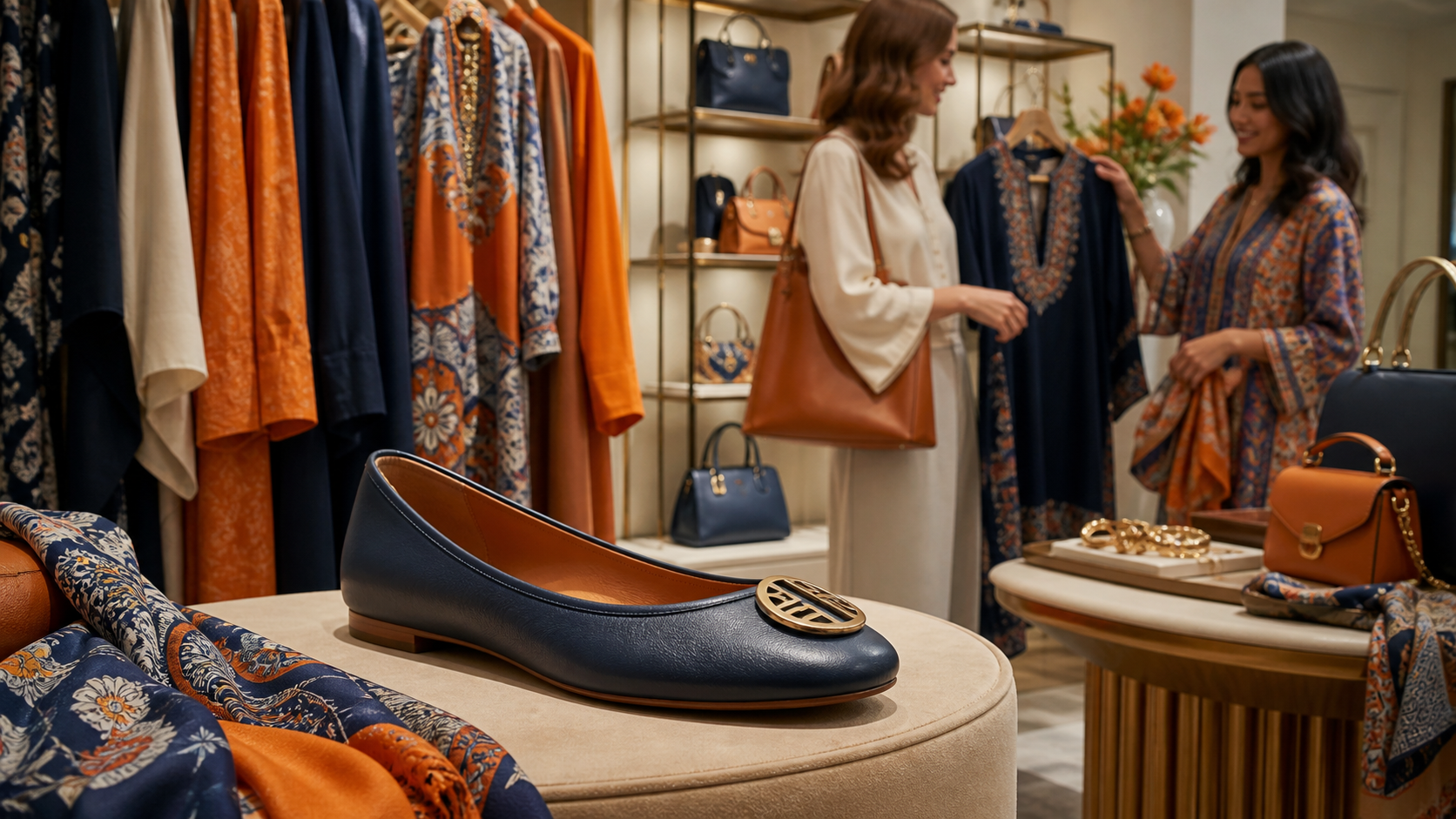
The Reva ballet flat, named for Burch’s mother, became a recognizable entry product. Its medallion made the brand visible, while the flat itself fit office, travel, and casual life. It was easier to buy and wear than a runway statement, yet distinctive enough to signal membership.
Hero products simplify customer acquisition. A shopper comes for the item she recognizes, then discovers handbags, ready-to-wear, jewelry, fragrance, sport, or home. The challenge is avoiding dependence on the icon. Fashion customers move on, copies spread, and a logo that once signals freshness can become overexposed.
Burch expanded through a mix of owned stores, e-commerce, department-store partners, and international distribution. Direct channels protected the full brand environment and customer relationship; wholesale extended reach. Managing that mix required inventory control and restraint. Too little distribution starves growth. Too much turns aspiration into discount-rack familiarity.
How did Burch turn founder identity into a durable institution?

The brand’s rise unfolded alongside a public commitment to women’s entrepreneurship. Founded in 2009, the Tory Burch Foundation developed programs involving capital access, education, fellowships, and networks. That made the mission more concrete than a seasonal marketing theme.
There was also a governance test. Tory Burch built the company with then-husband Chris Burch, and their later personal and business split created conflict around ownership and competing ventures. The company survived because the brand could not remain a household arrangement; roles, rights, leadership, and strategy had to become institutional.
The real lesson is that taste alone does not scale. Burch paired taste with an under-served price position, a clear retail environment, a gateway product, and channel discipline. The kitchen-table origin mattered because it produced focus. The empire endured because the business eventually became larger than the table—and larger than the founder’s personal story.
💡 Key Insights
- ▸ A clear price gap can be more valuable than inventing an entirely new category.
- ▸ One recognizable product can become a customer-acquisition engine for a broader lifestyle brand.
- ▸ Founder taste scales only when merchandising, distribution, and supply discipline scale with it.
- ▸ A mission gains durability when it is supported by an institution rather than campaign language alone.